



Niacinamide for Hyperpigmentation, Dark Spots and Brightening
Discover how niacinamide helps fade dark spots, brighten uneven skin tone and reduce hyperpigmentation by targeting melanin transfer - plus how to build a routine for visible results.
Author
askINKEY skincare advisor
Published
13 July, 2026
Time to read
10 minutes
Niacinamide is one of the most clinically studied brightening ingredients in skincare - and for good reason. At its core, niacinamide works by inhibiting the transfer of melanin (pigment) from the cells that produce it to the cells at the surface of the skin. This specific mechanism is what makes it directly relevant to dark spots, post-blemish marks, and uneven skin tone - and it is what separates niacinamide’s brightening function from its other well-known benefits, such as oil regulation and pore refinement.
This blog is specifically about niacinamide for hyperpigmentation and skin brightening. It does not re-cover oil control or general niacinamide 101 content - for a full overview of niacinamide’s complete function, visit the niacinamide pillar page. What this blog covers is the science behind melanin transfer inhibition, how niacinamide works on post-inflammatory hyperpigmentation (PIH), realistic timelines for dark spot fading, how niacinamide compares to other brightening actives, and how to build a targeted routine using the right combination of ingredients.
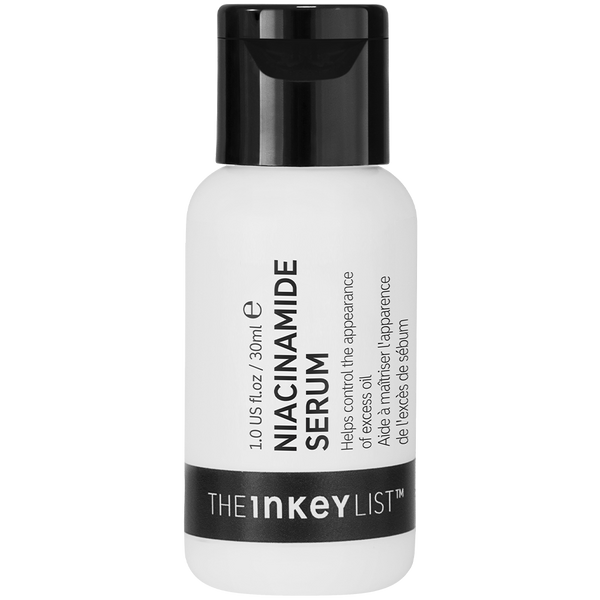
The two primary INKEY List products in focus throughout this blog are the 10% Niacinamide Serum (£12) - the core treatment serum - and the Omega Water Cream (£14), a moisturiser that delivers an additional 5% niacinamide at the hydration step. If you are still building a picture of what type of hyperpigmentation you are dealing with, the hyperpigmentation guide is a strong starting point before reading on.
What Makes Niacinamide Effective for Dark Spots and Hyperpigmentation?
Understanding why niacinamide works for dark spots requires going a step deeper than the headline claim. Niacinamide does not simply “brighten” skin in a vague, marketing-led sense. It acts at a specific, scientifically documented stage of the pigmentation process - and that specificity is precisely what makes it so effective and so broadly applicable across different skin concerns and skin tones.
The melanin transfer mechanism - the core science
Skin pigmentation is a multi-stage process. Melanocytes - the pigment-producing cells located at the base of the epidermis - synthesise melanin inside small organelles called melanosomes. Those melanosomes are then transferred to keratinocytes, the surface skin cells, where they accumulate and become visible as pigment. A dark spot, in simple terms, is an area where an above-average concentration of melanin has been transferred and deposited in surface skin cells.
Niacinamide’s primary brightening action happens at this transfer stage. It inhibits the movement of melanosomes from melanocytes to keratinocytes - meaning that even if melanin is being produced, less of it reaches the surface to become visible. This was demonstrated clearly in Hakozaki et al. (2002), a landmark study that showed niacinamide significantly inhibits melanosome transfer and produces measurable reductions in hyperpigmented spots with consistent use. Follow-up research by Greatens et al. (2005) confirmed that this inhibition is both reversible and concentration-dependent, reinforcing the importance of ongoing, daily application at the right percentage.
Why this mechanism matters for all types of hyperpigmentation
One of niacinamide’s most underappreciated strengths is that its mechanism operates independently of what triggered the excess melanin in the first place. Whether the hyperpigmentation is the result of UV exposure, inflammation from a blemish, or hormonal fluctuation, the transfer of melanosomes to keratinocytes is a common downstream step. By acting at this stage, niacinamide is effective across multiple types of hyperpigmentation - UV-triggered dark spots, post-blemish marks (PIH), and general uneven skin tone caused by repeated low-grade inflammation.
This is not the same as blocking melanin production at the synthesis stage, which is how tyrosinase inhibitors such as Vitamin C and Tranexamic Acid work. Niacinamide and those ingredients are complementary - each working at a different point in the pigmentation pathway - rather than interchangeable. This distinction becomes important when building a multi-active routine for stubborn or complex hyperpigmentation, which is covered in detail in later sections.
What the clinical evidence shows
Beyond the mechanistic research, the clinical evidence for niacinamide’s real-world effectiveness is substantial. Kimball et al. (2010) demonstrated statistically significant reductions in facial hyperpigmentation with consistent niacinamide use. Bissett et al. (2006) showed measurable reductions in hyperpigmented spots over a sustained application period, with the key variable being daily consistency rather than concentration above 10%.
The types of hyperpigmentation niacinamide targets best
Niacinamide is particularly well-suited to three concerns. First, post-inflammatory hyperpigmentation - the dark or red-brown marks left behind after a blemish or breakout heals. Second, UV-triggered dark spots and uneven skin tone from cumulative sun exposure. Third, general dullness and patchy tone caused by repeated low-grade inflammation or a compromised skin barrier. For a deeper breakdown of hyperpigmentation types, the what type of hyperpigmentation do I have guide offers a useful diagnostic framework.
One important distinction
Niacinamide does not block tyrosinase - the enzyme responsible for melanin synthesis itself. This is how Vitamin C and Azelaic Acid work. Niacinamide’s action is downstream of production, at the transfer stage. This is not a limitation; it is a complementary mechanism that makes niacinamide a powerful team player in a multi-ingredient brightening routine rather than a standalone replacement for other actives.
The science is clear: niacinamide for hyperpigmentation is not a trend or a marketing angle. It is a clinically validated brightening mechanism with over two decades of supporting research. With that foundation established, it is worth examining how this translates specifically to one of the most common and stubborn forms of pigmentation - post-inflammatory hyperpigmentation from blemishes and breakouts.
How Niacinamide Works on Post-Inflammatory Hyperpigmentation
Post-inflammatory hyperpigmentation - commonly referred to as PIH - is one of the most frequently searched skin concerns in the UK, and one of the most misunderstood. It is not a scar in the structural sense. It is not raised, it does not alter skin texture, and it is not permanent in the way true scarring is. PIH is, at its simplest, a melanin issue. Understanding it as such clarifies why niacinamide is one of the most well-suited topical ingredients to address it.
What PIH is and how it forms
When skin experiences inflammation - from a blemish, a breakout, or any other form of irritation - the body’s inflammatory response sends signals to the surrounding melanocytes. Those cells, interpreting the inflammation as a threat requiring a protective response, produce excess melanin. Even after the blemish itself has fully healed, that excess melanin remains deposited in the surrounding skin cells, showing up as a flat dark or red-brown mark on the surface. This mark is PIH.
The important distinction is that PIH is a surface-level melanin issue rather than a structural one, which means topical ingredients can effectively address it given consistent use and enough time. This is where niacinamide’s dual mechanism becomes particularly valuable. For a broader context on blemish-related marks, the acne scars guide and the how to get rid of post-blemish dark marks blog provide useful supporting information.
Niacinamide’s dual mechanism for PIH - anti-inflammatory plus transfer inhibition
Niacinamide addresses PIH at two distinct points. The first is preventative. Niacinamide has well-documented anti-inflammatory properties - it calms the inflammatory cascade that, when sustained or intense, signals melanocytes to overproduce melanin. For someone with niacinamide already established in their daily routine, this anti-inflammatory action works to reduce the severity of the melanin response when a blemish does occur. The result is often a less intense PIH mark, or a mark that fades more quickly.
The second mechanism is remedial. For PIH marks that already exist, niacinamide’s melanosome transfer inhibition gradually reduces the amount of visible pigment at the surface. As skin cells turn over naturally, the proportion of melanin-rich cells decreases when transfer is consistently inhibited, leading to a gradual but measurable lightening of existing marks.
Why niacinamide is particularly well-suited to post-blemish skin
Post-blemish skin is often reactive, sensitised, and in a compromised state - even after the visible blemish itself has resolved. Many brightening actives, particularly exfoliating acids at higher concentrations or strong tyrosinase inhibitors, can irritate already-sensitive post-blemish skin. That irritation is not merely uncomfortable - it can trigger a renewed inflammatory response, worsening the very PIH it is meant to treat.
Niacinamide does not cause purging. It does not irritate compromised skin. It is safe to use on actively inflamed or blemish-affected areas as well as on the healing marks left behind. This tolerability is not a secondary benefit - it is a meaningful clinical advantage for anyone dealing with recurrent breakouts and an ongoing cycle of PIH formation. For further reading on how uneven skin tone develops and is managed, the uneven skin tone guide is worth reviewing.
A note on skin tone and PIH severity
PIH is not equally distributed across skin tones. In medium to deeper skin tones, PIH tends to be more intense, longer-lasting, and more resistant to fading - because higher baseline melanin levels mean that inflammatory signals trigger a proportionally larger melanin response. This makes gentle, non-irritating brightening ingredients particularly important. Niacinamide’s anti-inflammatory profile and excellent tolerability across all skin tones make it one of the most clinically appropriate choices for PIH in darker complexions - where over-using irritating actives could compound rather than resolve the problem.
The gentle, dual-action nature of niacinamide for PIH makes it a cornerstone ingredient - but knowing how long to realistically expect before results become visible is equally important. That question is answered directly in the next section.
Does Niacinamide Brighten Skin - and How Long Does It Take to Fade Dark Spots?
The question of whether niacinamide brightens skin is one of the most commonly searched queries around this ingredient - and the answer is yes, on two levels. The first is targeted spot-fading via melanin transfer inhibition. The second is a broader improvement in overall skin radiance that comes from niacinamide’s supporting effects on the skin barrier. Both are real, both are clinically supported, and both require an honest, realistic timeline to appreciate.
Brightening vs. spot-fading - an important distinction
These two effects are related but not identical. Spot-fading refers to the targeted reduction of specific areas of concentrated pigmentation - a dark mark left by a blemish, or a patch of sun-triggered discolouration. Brightening refers to an overall improvement in skin luminosity, clarity, and evenness of tone - the kind of result where skin looks healthier and more even across the board, not just in one spot.
Niacinamide contributes to both. Spot-fading happens through the melanosome transfer inhibition mechanism described in earlier sections. The broader brightening effect has an additional contributing factor: niacinamide stimulates ceramide production in the skin, which strengthens the barrier, reduces transepidermal water loss, and results in skin that is better hydrated, more structurally intact, and inherently more reflective of light. Healthy, well-hydrated skin simply looks more radiant - and niacinamide contributes to that state both directly and indirectly.
A realistic week-by-week timeline for dark spot fading
One of the most important things to communicate about niacinamide is that visible results require consistency over time, not a dramatic overnight transformation. The following is a realistic, evidence-informed guide to what to expect:
-
Weeks 1-2: No visible spot fading yet. This is normal. The anti-inflammatory effect begins working relatively quickly, so some reduction in redness or active irritation may be noticeable, but the melanin transfer inhibition process takes time to produce visible surface changes.
-
Weeks 4-6: Gradual reduction in the intensity of post-blemish marks begins to become apparent for many users. Overall skin tone may start to appear more consistent and less patchy. This is the stage where steady progress is building beneath the surface.
-
Weeks 6-8: For many users, visible tone-evening is apparent at this stage. This aligns with the findings of Kimball et al. (2010), which demonstrated measurable hyperpigmentation reduction within this timeframe with consistent niacinamide use.
-
Weeks 8-12: Meaningful dark spot reduction is achievable for most users with established, daily use. Older pigmentation, deeper deposits, or marks on darker skin tones may require continued use beyond 12 weeks, but progress should be visible.
-
Beyond 12 weeks: For stubborn, deep, or longstanding hyperpigmentation, continued daily use remains effective. Bissett et al. (2006) demonstrated that sustained, consistent application is the key variable in outcomes - not increasing the concentration above the clinically validated 10%.
Why 10% concentration is the right target
The 10% Niacinamide Serum is formulated at this concentration deliberately. Clinical research supports 10% as the effective and well-tolerated threshold for hyperpigmentation. Going higher does not speed up results and increases the risk of irritation, which - as noted earlier in the context of PIH - can counterproductively trigger more melanin production. Consistent daily use at 10% will outperform intermittent use at higher percentages every time.
What affects how quickly you see results
Several factors influence the timeline. The depth and age of the pigmentation matters - newer marks fade faster than older, deeper ones. Skin tone plays a role, as higher baseline melanin levels mean the contrast between a dark spot and surrounding skin is greater, requiring more sustained inhibition to visibly close that gap. Whether new inflammation is continuously occurring is a significant factor - if breakouts are ongoing and new PIH is constantly forming, the overall tone may plateau even as existing marks are fading.
Perhaps the most important factor of all is SPF. Ultraviolet radiation directly stimulates melanocyte activity, meaning that unprotected UV exposure actively counteracts the melanin transfer inhibition that niacinamide is working to achieve. Using a broad-spectrum SPF consistently in the morning - such as the Dewy Sunscreen SPF 30 (£15) as the final step in an AM routine - is not optional when treating hyperpigmentation. Without it, progress will be significantly slower regardless of how well the rest of the routine is constructed. For more on this topic, the SPF for hyperpigmentation guide is highly recommended reading.
Understanding how niacinamide compares to other brightening actives is the logical next step - because while niacinamide is powerful, it works best when positioned correctly alongside complementary ingredients.
Niacinamide vs Other Brightening Ingredients - and How They Compare
No single brightening ingredient addresses every stage of the pigmentation pathway. Understanding how niacinamide sits relative to other actives - where it leads, where it complements, and where a different ingredient might be better suited - is essential for building a routine that genuinely delivers results. The following comparisons are based on mechanism, not marketing.
Niacinamide vs. Vitamin C
Vitamin C - as found in the 15% Vitamin C + EGF Serum (£16) - works primarily by inhibiting tyrosinase, the enzyme responsible for the synthesis of melanin itself. It also provides antioxidant protection against UV-induced oxidative stress, which is one of the primary triggers for melanin overproduction. Niacinamide, by contrast, works downstream of production at the transfer stage.
These are complementary mechanisms, not competing ones. Vitamin C is particularly strong in the morning, where its antioxidant function provides real-time defence against UV-triggered pigmentation. Niacinamide works effectively AM and PM, inhibiting the transfer of whatever melanin is produced. Together, they cover the production and transfer stages simultaneously. For UV-triggered pigmentation specifically, the combination is particularly effective. For more on Vitamin C’s role, the vitamin C pillar page provides full context.
Niacinamide vs. Tranexamic Acid
Tranexamic Acid - in the Tranexamic Acid Serum (£17) - works by interrupting the signalling pathway between keratinocytes and melanocytes that is triggered by UV exposure and inflammation. This is an upstream mechanism - it reduces the signal that tells melanocytes to produce more melanin in the first place. Niacinamide’s action is downstream, at the transfer stage.
Tranexamic Acid is generally considered the stronger dedicated brightening active of the two - particularly for UV-triggered pigmentation and melasma. However, niacinamide’s additional anti-inflammatory and barrier-supporting benefits mean that using both together delivers more comprehensive results than either alone. Both are exceptionally well-tolerated, safe for all skin tones, and non-irritating - which makes them a particularly intelligent pairing for those with sensitive skin or PIH. For more detail on Tranexamic Acid’s performance, the how long does tranexamic acid take to work blog provides a detailed timeline, and the tranexamic acid pillar page covers the full picture.
Niacinamide vs. Glycolic Acid
Glycolic Acid - as in the Glycolic Acid Toner (£14) - works at the surface level by accelerating the exfoliation of dead, pigmented skin cells. It does not directly inhibit melanin production or transfer; instead, it speeds up the natural skin cell turnover process, bringing newer, less-pigmented cells to the surface more quickly.
This is a surface mechanism, while niacinamide’s is cellular and regulatory. The two are complementary in that context: Glycolic Acid clears the surface backlog of pigmented cells, while niacinamide reduces how much new melanin reaches those cells in the first place. The important caveat is that Glycolic Acid is an exfoliating acid and is not suitable for actively inflamed, sensitised, or blemish-affected skin - it can cause irritation and worsen PIH in those contexts. Niacinamide has no such restriction and can be used safely on even reactive skin.
Niacinamide vs. Azelaic Acid
The 10% Azelaic Acid Serum for Redness Relief (£16) is perhaps the closest comparison to niacinamide in terms of its profile. Azelaic Acid is anti-inflammatory, well-tolerated across all skin types, effective for PIH, and particularly suited to sensitive and rosacea-prone skin. Unlike niacinamide, Azelaic Acid also inhibits tyrosinase, giving it an upstream production-blocking mechanism in addition to its anti-inflammatory action.
Both ingredients are safe, gentle, and effective for PIH. The decision to use one, the other, or both depends on the skin’s specific sensitivities and concerns. For a deeper dive into their interaction and whether they can be layered, the azelaic acid and niacinamide combination guide is an excellent resource, alongside the azelaic acid pillar page.
The picture that emerges from these comparisons is clear: niacinamide is not in competition with other brightening actives. It occupies a specific lane - melanin transfer inhibition, downstream of production, with strong anti-inflammatory and barrier-supporting properties - that makes it a reliable, well-tolerated foundation ingredient in any hyperpigmentation routine. The question then becomes not whether to use it, but how to combine it intelligently with other actives for maximum effect.
How to Combine Niacinamide with Vitamin C and Tranexamic Acid for Dark Spots
The most effective approach to treating hyperpigmentation and dark spots is a multi-pathway one - targeting melanin at different stages of the pigmentation process simultaneously. Niacinamide fits neatly into this strategy as the transfer-stage inhibitor, while Vitamin C and Tranexamic Acid address earlier stages. Here is how to combine them intelligently in a UK routine.
Niacinamide and Vitamin C - multi-pathway brightening from morning
The combination of Vitamin C and niacinamide targets two distinct stages: Vitamin C inhibits tyrosinase at the melanin synthesis stage, and niacinamide inhibits melanosome transfer downstream. Together, they deliver a more comprehensive anti-pigmentation effect than either ingredient alone.
It is worth addressing a frequently cited concern: the old claim that niacinamide and Vitamin C should not be used together because they form nicotinic acid - a compound associated with flushing. This concern is based on outdated research conducted under conditions not representative of modern skincare formulations or real-world application. At typical skincare concentrations and temperatures, the conversion is negligible and clinically irrelevant. The more relevant consideration is simply that both are active serums and should be applied as separate sequential steps with brief absorption time between them, not mixed together in the hand before application.
A recommended UK AM routine for Vitamin C and niacinamide together:
- Cleanser
- Hyaluronic Acid Serum - applied to damp skin for optimal absorption
- 15% Vitamin C + EGF Serum (£16) - tyrosinase inhibition and antioxidant defence
- 10% Niacinamide Serum (£12) - melanin transfer inhibition
- Omega Water Cream (£14) - moisturiser with 5% niacinamide for sustained brightening support
- Dewy Sunscreen SPF 30 (£15) - the non-negotiable final step
Niacinamide and Tranexamic Acid - upstream and downstream coverage
Tranexamic Acid interrupts the keratinocyte-to-melanocyte signalling that UV and inflammation trigger - this is upstream of production. Niacinamide inhibits the transfer of the melanin that is produced - this is downstream. The two mechanisms are not redundant; they are genuinely additive. For those dealing with stubborn PIH, melasma, or deep UV-triggered pigmentation, this combination offers more comprehensive coverage than either ingredient alone.
Both are exceptionally gentle. Neither causes irritation, purging, or increased photosensitivity. Both are safe across all skin tones. This makes the pairing particularly appropriate for anyone who has found more aggressive brightening approaches too irritating - and for those with medium to deeper skin tones where gentle, effective options are especially important.
A recommended UK AM and PM routine for Tranexamic Acid and niacinamide:
- Cleanser
- Hyaluronic Acid Serum - on damp skin
- Tranexamic Acid Serum (£17) - upstream signalling interruption
- 10% Niacinamide Serum (£12) - downstream transfer inhibition
- Omega Water Cream (£14)
- Dewy Sunscreen SPF 30 (£15) - AM only
For more on what to expect from Tranexamic Acid, how long does tranexamic acid take to work gives a clear, realistic timeline. The vitamin C and tranexamic acid for dark spots blog is also recommended reading for those considering a triple-active approach.
The triple-layer approach - covering three mechanisms at once
For those ready to build a more advanced brightening routine, combining Tranexamic Acid, niacinamide, and Vitamin C in the morning targets three different points in the pigmentation pathway simultaneously - upstream signalling, melanin synthesis, and melanin transfer. This is the most comprehensive approach available from topical skincare alone. However, it is best suited to those already comfortable with multi-step actives routines. If you are newer to brightening actives, start with niacinamide as the core, then add one complementary active at a time. The full AM and PM routine recommendations in the following section lay out exactly how to do this.
Building a Routine for Hyperpigmentation with Niacinamide - AM and PM
A well-constructed routine is the bridge between knowing what niacinamide does and actually seeing it work on your skin. The following section details the two key INKEY List niacinamide products, their individual roles, and complete AM and PM routines for treating hyperpigmentation - from a simple starting point through to a more advanced multi-active protocol.
The two INKEY List niacinamide products for hyperpigmentation
The 10% Niacinamide Serum (£12) is the primary treatment step. Formulated at 10% niacinamide alongside Hyaluronic Acid for hydration support, it delivers the clinically validated concentration for melanin transfer inhibition, PIH reduction, and anti-inflammatory brightening. It is suitable for use AM and PM and can be layered with other actives, as outlined below.
The Omega Water Cream (£14) is an oil-free moisturiser that delivers 5% niacinamide at the hydration step - meaning that niacinamide is not just present in the serum layer but is also sustained through the final moisturising step. Its formula includes a Ceramide Complex and Glycerin alongside the 5% niacinamide, supporting the barrier-health and radiance benefits described earlier. Clinically, 95% of users agreed their skin tone looked more even after 28 days of use. Together, the serum and the moisturiser deliver layered niacinamide from two different steps, reinforcing the ingredient’s presence in the skin throughout the day.
UK AM Routine for Hyperpigmentation
- Cleanser - a gentle, thorough cleanse to start
- Hyaluronic Acid Serum - applied to damp skin immediately post-cleanse for best absorption; hydration base layer
- Tranexamic Acid Serum (£17) - upstream melanin signalling inhibition; brightening treatment step
- 10% Niacinamide Serum (£12) - melanin transfer inhibition; anti-inflammatory brightening
- 15% Vitamin C + EGF Serum (£16) - antioxidant protection and tyrosinase inhibition; optional but powerful addition for UV-triggered pigmentation
- Omega Water Cream (£14) - moisturiser with 5% niacinamide; seals in actives and delivers sustained brightening support
- Dewy Sunscreen SPF 30 (£15) - the final, non-negotiable step; without daily SPF, UV exposure will actively restimulate melanin production and undermine every active applied beforehand
UK PM Routine for Hyperpigmentation
- Cleanser - remove SPF, makeup, and the day’s buildup thoroughly
- Hyaluronic Acid Serum - on damp skin
- Tranexamic Acid Serum (£17) - PM application continues the brightening treatment overnight
- 10% Niacinamide Serum (£12) - continued melanin transfer inhibition through the night
- Omega Water Cream (£14) - moisture and continued 5% niacinamide delivery
- Optional: Retinol Serum - applied after niacinamide; niacinamide both buffers against potential retinol irritation and supports skin cell turnover, accelerating the surface renewal that brings fresher skin cells to the surface. PM use only.
Layering tips for best results
Apply each serum individually - not mixed together in the palm before application. This ensures each ingredient functions as intended and absorbs properly. Allow a brief pause between active steps if skin is particularly sensitive. Niacinamide always goes before retinol when both are in use - niacinamide first as the buffer, retinol second for accelerated turnover. SPF is non-negotiable in the AM when treating hyperpigmentation - without it, the UV stimulation of melanin production actively works against every brightening active in the routine.
Starting simple and building up
If you are new to actives or new to a multi-step brightening routine, do not feel compelled to begin with the full protocol. A strong starting core is the 10% Niacinamide Serum and the Omega Water Cream used consistently AM and PM with SPF in the morning. Once that foundation is established and skin has adapted - typically after four to six weeks - Tranexamic Acid or Vitamin C can be introduced as an additional layer.
A note for deeper skin tones
For those with medium to deeper skin tones, where PIH is typically more intense and where the risk of irritation-triggered PIH from over-active routines is significant, the combination of niacinamide and Tranexamic Acid is particularly well-suited. Both are anti-inflammatory, non-irritating, and safe for long-term daily use. Avoid over-layering actives that could cause sensitisation - more is not always more, and a consistent two or three active routine used daily will always outperform an aggressive five or six active routine used sporadically or with skin that is frequently irritated. For further reading, both the hyperpigmentation guide and the uneven skin tone blog are useful resources.
The Science is Clear - Start with Consistency
Niacinamide for hyperpigmentation and dark spots is not a speculative claim built on trend. It is a well-documented brightening mechanism backed by over two decades of peer-reviewed clinical research - inhibiting melanin transfer, calming inflammatory triggers, and supporting the skin barrier in ways that collectively produce measurable, visible improvements in dark spots, post-blemish marks, and uneven skin tone.
The key principles are straightforward. Use niacinamide at 10% consistently, every day, AM and PM. Pair it with a complementary brightening active - Tranexamic Acid, Vitamin C, or both - to cover more stages of the pigmentation pathway. Always apply SPF in the morning as the final step, because without UV protection, the melanin cycle will continue to be restimulated regardless of the quality of the rest of your routine. Be patient - meaningful results take six to twelve weeks and come to those who stay consistent.
Whether you are addressing post-blemish marks, UV-triggered dark spots, or a generally uneven skin tone, the foundation is the same: start with a clinically validated concentration, build the routine incrementally, and let consistency do the work.
Shop the 10% Niacinamide Serum (£12) to start targeting dark spots and uneven tone from the transfer stage. Add the Omega Water Cream (£14) for 5% niacinamide reinforcement at the moisturiser step and clinically tested, visible skin tone improvement in 28 days.
Ready to build a routine tailored to your specific concerns? Build your own routine, take the skincare quiz to get a personalised recommendation, or shop the full hyperpigmentation collection to explore all the relevant actives in one place.
Frequently Asked Questions
Got a question?
Our askINKEY team are a friendly bunch of skincare experts with deep product knowledge and zero judgement. Whether you're an ingredient obsessive or just starting out, we'll make it make sense. No question too big. No question too small. We Give A Care, Every Day.


