



How & When to Use Niacinamide Serum: The Complete UK Routine Guide
Exactly how and when to apply niacinamide serum — the right order, the right timing, and how long results really take.
Author
askINKEY skincare advisor
Published
18 May, 2026
Time to read
17 minutes
Most people reading this already own a niacinamide serum. The bottle is on the shelf, it was affordable, the reviews were good, and then the practical questions started. Does it go on in the morning or at night? Before or after moisturiser? Every day, or a few times a week? And how long before anything actually changes? Knowing when to use niacinamide serum is the difference between a product that works and one that quietly sits in a drawer, and the answers are far simpler than the internet makes them look.
This guide covers the practical side only: how to apply niacinamide serum properly, whether niacinamide is better morning or night, exactly where it sits in your layering order, how often to use it, what a routine looks like for different skin types, a realistic timeline for results, and a full set of FAQs at the end. If you want the deeper explainer on what the ingredient is and how it behaves in the skin, our niacinamide page handles that in detail.
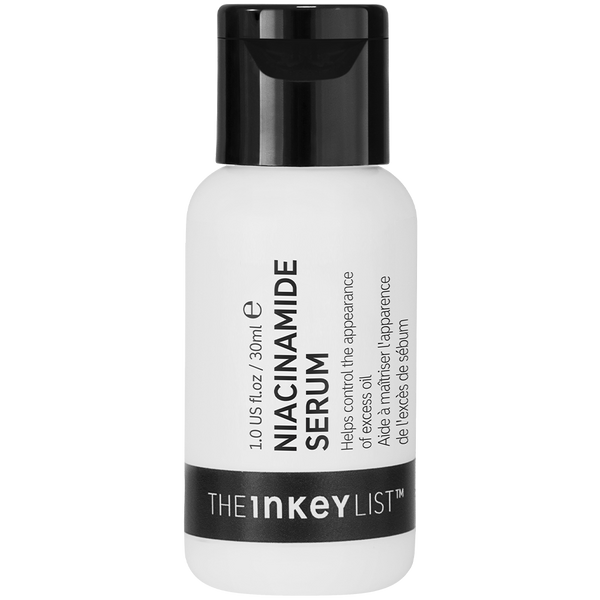
Everything below is built around the 10% Niacinamide Serum, £12 for 30ml, which is the product referenced throughout.
Let’s start with the easiest part: getting it on your face correctly.
How to Apply Niacinamide Serum, Step by Step
Learning how to apply niacinamide serum takes about thirty seconds, and the method matters less than most people fear. There is no special technique, no waiting game, no complicated ritual. There are, however, a handful of small mistakes that quietly stop the product doing its job, and they are worth knowing before you build a habit around them.
Here is the full sequence, start to finish.
- Cleanse first. Niacinamide should go onto clean skin. Applying a serum over the top of the day’s sunscreen, makeup and oil means it has to fight through a layer that was specifically designed to sit on the surface. Wash, pat dry or leave slightly damp, and move on.
- Dispense two to three drops. That is enough for a full face. We will come back to this, because it is the single most common thing people get wrong.
- Apply to the face and neck. Press the serum in with your fingertips rather than rubbing it around. Work outwards from the centre of the face, and take it down over the jaw and neck, which are almost always neglected and are just as exposed to daylight and friction as the cheeks.
- Give it a few seconds to absorb. A thin, water-light serum sinks in quickly. You are waiting for the surface to stop feeling wet, not setting a timer.
- Follow with moisturiser. This step is not optional, and we will explain why below.
- Finish with SPF in the morning. Always last, always the final layer before makeup.
That is the whole method. The reason this section exists is not the steps themselves, but everything that happens around them.
How Much Niacinamide Serum Should You Actually Use
Two to three drops. That is it, and it covers the entire face comfortably with a little left for the neck.
There is a persistent assumption in skincare that more product equals faster results, and it is worth dismantling directly. Your skin can only take up so much of any given formula at one time. Doubling the amount you apply does not double the effect. What it reliably does is shorten the life of a 30ml bottle from a couple of months to a few weeks, and leave a tacky film on the surface that makes everything applied afterwards, including SPF and makeup, sit unevenly.
If you find yourself needing four or five drops to cover your face, the issue is usually distribution rather than quantity. Warm the drops between your fingertips first, or apply to slightly damp skin, and the same amount will travel considerably further.
The Mistakes That Stop Niacinamide Working
The first and most common is applying it over a heavy cream. Layering order is not arbitrary, and a rich moisturiser forms exactly the kind of occlusive barrier that a lightweight serum cannot get through. If your niacinamide goes on after your night cream, it is essentially sitting on top of a closed door. The layering section below deals with this properly.
The second is rubbing rather than pressing. Vigorously massaging a serum into your face creates friction that skin does not particularly enjoy, especially if it is already feeling reactive or looks flushed. Pressing is gentler and just as effective. The serum absorbs because it is formulated to absorb, not because you worked it in hard enough.
The third is skipping moisturiser afterwards. A serum is a delivery step, not a finishing step. It is designed to be lightweight, which means it does very little to slow water loss from the surface of the skin. Moisturiser is what holds everything in place. Leaving it out is the equivalent of watering a plant and then leaving it in direct wind.
The fourth is inconsistency, which is less a technique error than a habit one, and it does more damage to results than any of the above. We cover realistic timelines further down, but the short version is that daily use is what produces change.
Wet or Dry Skin, and Does It Matter
Either works. Applying niacinamide to slightly damp skin helps the product spread further and can make a small amount go a long way. Applying it to completely dry skin is entirely fine and will not reduce how well it performs. Use whichever fits the routine you will actually stick to, and do not overthink it. This comes up again in the FAQs because it is asked constantly.
Patch Test Before Your First Use
Niacinamide is one of the better tolerated actives available, but skin is individual and a new product is still a new product. If yours is reactive, sensitive, or currently feeling compromised, run a patch test before you commit it to your full face. It costs you a couple of days and removes the guesswork entirely. Rather than turning this into a detour, our guide on why you should patch test walks through the method properly.
Application, then, is the straightforward part. The question people genuinely get stuck on, and the one that sends them searching in the first place, is timing.
When to Use Niacinamide Serum: Morning or Night
Here is the direct answer, before anything else: niacinamide can be used in the morning, at night, or both. There is no wrong time of day. It is not light sensitive, and it does not make skin more sensitive to the sun, which means none of the usual scheduling restrictions that apply to stronger actives apply here.
That single fact resolves most of the confusion around when to use niacinamide serum. What follows is simply a case for each option, so you can pick the one that suits your routine rather than the one you think you are supposed to choose.
The Case for Using Niacinamide in the Morning
Morning application suits anyone whose main concern is shine or the look of visible pores through the day. Niacinamide sits comfortably under SPF and makeup without pilling or adding weight, and because it absorbs quickly it does not slow your routine down.
If your skin tends to look glossy by mid-afternoon, having niacinamide on from the start of the day is the more logical choice. It also pairs neatly with the one product that genuinely should be in every morning routine.
The Case for Using Niacinamide at Night
Evening application suits anyone who prefers to keep their morning routine minimal, or who wants their treatment steps concentrated in the part of the day when nothing else is being layered over the top.
Night-time is also when most people use their recovery-focused steps, and niacinamide fits alongside those without complication. If you already use retinol in the evening, the two are frequently used together, though the sequencing question deserves a proper answer rather than a sentence. We cover it fully in our guide on whether you can use niacinamide with retinol, and if you are building an evening routine around retinol more broadly, it is worth reading what not to mix with retinol before you start combining things.
Can You Use Niacinamide Twice a Day
Yes, and for a lot of people it is the easiest option to stick to. Twice daily use means niacinamide simply becomes part of both routines rather than something you have to remember to slot in at a specific point.
There is no requirement to use it twice a day for it to work. Once daily is completely sufficient. But if you are the kind of person who finds a fixed habit easier than a selective one, morning and evening removes the decision entirely.
Niacinamide Morning or Night: How to Choose
If you are still undecided, use these as a shortcut.
- Choose the morning if shine management through the day is your priority, or if your evening routine is already crowded.
- Choose the evening if you prefer a fast morning routine, or if you want your treatment steps grouped together.
- Choose both if you would rather not think about it and want the simplest possible habit.
- Choose whichever you will actually do. A serum used consistently at the “wrong” time will always outperform one used sporadically at the “right” one.
SPF Is Non-Negotiable, Whatever Else You Use
This is worth stating plainly because it applies regardless of where niacinamide lands in your day. Sunscreen is the final step of every morning routine, every day, and it is the one product that protects the work everything else is doing. If you are actively targeting the look of uneven tone or post-blemish marks, skipping SPF will undo progress faster than any serum can build it.
Beyond that, the only other timing note worth making is a signpost rather than a section. Retinol is generally an evening ingredient. Vitamin C is generally a morning one, if you use it. Both topics have their own dedicated guides, and there is a specific caveat about combining niacinamide with high-strength vitamin C that we address in the FAQs below.
Timing settled, the remaining question is what goes on before it and what goes on after.
Layering Order: Where Niacinamide Sits in Your Routine
Thinnest to thickest. That single rule solves most layering questions.
If you remember nothing else from this section, remember that. Skincare layers in order of texture, from the most water-like to the richest, because thin formulas can pass through and around thicker ones but not the other way round. Sunscreen breaks the pattern by always going last in the morning, regardless of how it feels.
Niacinamide is a lightweight, water-based serum. That places it early in the routine, after cleansing and before anything with real weight to it.
The Full Routine Order, Step by Step
- Cleanser. Everything starts on clean skin. This is the only step where the goal is removal rather than addition.
- Toner, if you use one. Optional, and genuinely optional rather than politely optional. If you do use one, it goes here, because it is the lightest texture in the routine.
- Water-based serums. Anything thin and fast-absorbing belongs in this band, including hydrating serums.
- Niacinamide. Two to three drops, pressed in, a few seconds to settle.
- Richer serums or facial oils. If you use them. Heavier textures come after lighter ones.
- Moisturiser. The step that seals everything beneath it.
- SPF, in the morning only. Always the final layer.
Not every routine needs every step. A perfectly good routine is cleanser, niacinamide, moisturiser, SPF. Four steps, and it will outperform an elaborate ten-step routine used twice a week.
Where Hyaluronic Acid Fits Alongside Niacinamide
Hydrating serums and niacinamide layer together without any conflict, which makes this one of the most common pairings people ask about. Both are lightweight and water-based, so they sit in the same part of the routine.
Apply the hydrating layer first. Hyaluronic acid works by drawing water into the upper layers of the skin, which means it performs noticeably better when there is water available to draw on. Applying it to slightly damp skin, straight after cleansing, gives it something to work with. On completely dry skin in a dry room, it has considerably less to offer. Our Hyaluronic Acid Serum, £12 for 30ml, is the lightweight option for this step.
Once that has settled for a few seconds, niacinamide goes on top.
Why Moisturiser After Niacinamide Is Not Optional
Serums are concentrated and lightweight by design. They deliver ingredients efficiently, but they are not built to hold moisture in the skin over several hours. That is what a moisturiser does, and it is why the two are designed to work as a pair rather than as alternatives.
Skipping moisturiser after a niacinamide serum tends to produce exactly the outcome people are trying to avoid. Skin that feels tight, looks dull, and in the case of oilier skin types, compensates by producing more oil through the day.
For lighter finishes, our Omega Water Cream, £14 for 50ml, gives hydration without weight, which suits oilier and combination skin or anyone applying makeup over the top. For anyone who wants more comfort and more barrier support, the Bio-Active Ceramide Moisturiser, £20, is the richer option.
Ceramides, the Skin Barrier, and Why It Comes Up Constantly
A quick, plain-English explanation, because the term appears on half the products in the category.
Your skin’s outer layer works something like a brick wall. The cells are the bricks, and the lipids between them are the mortar holding everything together. Ceramides are a major part of that mortar. When there is enough of it, the wall holds water in and keeps irritants out. When it is depleted, by over-exfoliation, harsh cleansing, cold weather or simply overdoing actives, skin starts to feel tight, look red, and sting when products go on.
That is what people mean by a compromised or damaged skin barrier, and it is why ceramide-containing moisturisers pair so well with active serums. One does the work, the other keeps the wall in good condition while it happens.
How Long to Wait Between Layers
A few seconds. Long enough for each layer to stop feeling wet on the surface.
There is a widespread belief that you need to wait several minutes between steps for products to work properly. For a routine like this one, you do not. Give each layer a moment to settle so you are not dragging the previous one around, then carry on. The exception is SPF, which benefits from being applied to skin that has properly settled so it forms an even film, so give your moisturiser a little longer before you reach for it.
With the universal order established, the next questions are how frequently to use it and how the routine shifts depending on what your skin is actually doing.
How Often to Use Niacinamide and Routines by Skin Type
Once or twice daily, every day. That is the answer to how often to use niacinamide, and it applies to most people without modification.
Niacinamide does not require the cautious introduction that stronger actives do. There is no cycling schedule, no alternate-day protocol, no gradual build-up from once a week. It is well tolerated by most skin types at the strengths found in a leave-on serum, which is a large part of why it has become such a common starting point for people building their first routine.
The one sensible caveat: if your skin is very reactive, or if you are recovering from a compromised barrier, start once daily and increase from there once you know how it settles. That is general good practice with any new product rather than anything specific to this one.
What follows is a set of short, copyable routines by skin type. Each one is deliberately brief, with links out to the pages that cover each concern in depth.
Oily and Combination Skin
Niacinamide is a natural fit here. It helps manage shine through the day and improves the look of visible pores over time, which are usually the two things oilier skin types are actively trying to address.
A simple daily routine:
- Morning: Salicylic Acid Cleanser, niacinamide, Omega Water Cream, SPF
- Evening: Salicylic Acid Cleanser, niacinamide, Omega Water Cream
The Salicylic Acid Cleanser is £14 for 150ml, and the Omega Water Cream is £14 for 50ml. If you want to go further into what suits oily skin and what works against it, that page covers the full picture.
Blemish-Prone Skin
Niacinamide is frequently used in blemish-focused routines, both for the look of active blemishes and for the marks left behind afterwards. It pairs particularly well with salicylic acid, which works inside the pore, while niacinamide works on the surrounding appearance of the skin.
For the detail on how the ingredient behaves here, read does niacinamide help with blemishes. For the wider routine picture around blemishes and breakouts, the pillar page is the better starting point.
Skin That Looks Red or Feels Reactive
Niacinamide is a sensible choice if your skin frequently looks flushed or feels easily provoked, and it is gentle enough to sit in a routine built around calming things down rather than pushing them.
Pair it with a barrier-supporting moisturiser rather than layering it with exfoliating acids, and keep the rest of the routine short while skin settles. Our page on redness goes into what tends to help and what tends to make things worse.
Congestion and Visible Pores
If your main concern is congestion around the nose and chin, niacinamide belongs in the routine for its effect on the look of pore visibility over time. It works best alongside a cleanser that keeps the pores themselves clear. The blackheads page covers that combination properly.
Drier Skin
Niacinamide is perfectly usable on drier skin, provided it is followed by a moisturiser with enough substance to hold hydration in place. The Bio-Active Ceramide Moisturiser is the more comfortable choice here.
We have written about this in full, so rather than repeat it, read is niacinamide good for dry skin.
A Note on Building Your Own
None of these routines are prescriptive. They are starting points, and the correct routine is the one you can complete on a Tuesday night when you are tired. If you take one principle from this section, make it this: a short routine done daily beats a long routine done occasionally, every time.
For anyone whose routine is already established and who wants to add one more step, there is a single optional upgrade worth knowing about.
Optional Glow Step: Adding Exosome Glow Serum
This section is genuinely optional. The niacinamide routine described above works perfectly well on its own, and nothing here is required to get results from it. This is an addition for readers who already have the basics covered and are specifically chasing glow.
The Exosome Glow Serum is £20 for 30ml. It is a glow boosting step, and it sits early in the routine: after cleansing, applied to damp skin, before niacinamide and moisturiser.
The approved claims for this product are as follows.
- “100% saw more glowing skin, clinically proven*”
- “Clinic worthy rejuvenated skin in 14 days*”
- “55% reduction in visible signs of skin stress (redness, puffiness, visible irritation)***”
- “63% increase in skin renewal activity in 8 hours***”
- “6-in-1 skin rejuvenation: clinically proven to visibly improve radiance, hydration, tone, firmness, elasticity, and texture*”
- “Proven to deliver up to 12-hours of hydration**”
- “Helps support natural collagen production”
* 4-week clinical study of 26 people
** Clinical study of 31 people
*** In-vitro testing of Cica Exosomes showed a 55% reduction in pro-inflammatory markers and a 63% increase in markers associated with skin renewal after 8 hours.
Those figures apply to this product only. Nothing in this section describes niacinamide or any other product mentioned in this guide.
Which brings us back to the question every reader has once their routine is finally settled: how long is this going to take?
How Long Does Niacinamide Take to Work? A Realistic Timeline
The honest answer to how long niacinamide takes to work is longer than most people expect, and considerably longer than the point at which most people give up. Skincare timelines are governed by how skin actually renews itself, not by how quickly we would like to see change, and no serum at any price shortens that.
Here is a realistic progression.
- Weeks 1 to 2. Skin generally feels comfortable and well hydrated. That is mostly what you should expect at this stage. You are unlikely to see visible change in the mirror yet, and that is completely normal rather than a sign the product is not working. What you are really establishing in these two weeks is whether the serum agrees with your skin and whether the routine fits your day.
- Weeks 4 to 6. This is usually the first point where people notice something. Shine tends to feel more manageable through the afternoon, and skin texture starts to look a little smoother and more even. The changes are subtle and cumulative rather than dramatic, which is why they are easier to spot in photographs than in the mirror.
- Weeks 8 to 12. The longer game, and the stage most people never reach. The look of post-blemish marks and uneven tone softens gradually over this period. If that is your primary reason for using niacinamide, this is the window that matters, and it is worth reading niacinamide for hyperpigmentation, dark spots and brightening for what to realistically expect from this stage.
Why Consistency Beats Strength
There is a strong pull towards escalating. If a serum has not produced results in three weeks, the instinct is to reach for something stronger rather than to keep going with what you have.
Resist it. Daily use of a 10% niacinamide serum will outperform occasional use of anything stronger, because these ingredients work through repeated, uninterrupted exposure over weeks. Skipping four days out of seven does not deliver a slower version of the result. It largely resets the clock.
If you want to improve your odds, make the routine easier rather than more powerful. Fewer steps, products kept somewhere visible, and a realistic expectation of when to check progress. Set a mental review point at eight weeks and do not evaluate before then.
Does Niacinamide Cause Purging
Niacinamide is not typically associated with purging. Purging is generally linked to ingredients that accelerate cell turnover, and niacinamide does not work that way, so a sudden crop of blemishes after starting it usually has a different explanation.
That explanation is worth investigating rather than ignoring. It might be another product in the routine, a formula that does not agree with your skin, or something unrelated to skincare entirely. We have covered both sides of this properly: read can niacinamide cause blemishes for the ingredient-specific answer, and what is skin purging for how to tell the difference between purging and a genuine reaction.
Marks, Tone and the Long View
If you are using niacinamide specifically for the marks left behind after blemishes, patience is the entire strategy. Those marks fade on skin’s own timeline, and the role of a serum is to support that process rather than accelerate it dramatically.
Our guide to niacinamide for post-blemish marks covers what to expect in detail, and the post-blemish marks page explains the different types and why some respond faster than others. For broader uneven tone, the hyperpigmentationpage is the better resource.
One last thing on timelines. Daylight exposure will slow visible progress on tone and marks more than any other single factor, which loops back to the point made earlier about SPF being non-negotiable.
That covers the routine end to end. What remains are the specific questions that come up again and again.
Your Niacinamide Routine, Summarised
Apply it to clean skin, two to three drops, pressed rather than rubbed. Use it in the morning, at night, or both, because there is no wrong time of day and that single point answers the question more people search than any other on this topic. Layer thinnest to thickest, always finish with moisturiser, and always finish the morning with SPF. Use it daily rather than occasionally, and give it eight to twelve weeks before you judge the results.
That is the whole routine. The 10% Niacinamide Serum does not ask much of you beyond consistency, and that is rather the point. Good skincare should be simple enough to follow on your worst-organised evening and easy enough to stick to for long enough to work.
Ready to Start
You can shop the 10% Niacinamide Serum at £12 for 30ml, or browse the full range and shop all niacinamide if you would rather compare formats first. If you are not sure whether niacinamide is the right starting point for your skin, our Breakout Analyser Pro tool can help you work out where to begin.
Frequently Asked Questions
Got a question?
Our askINKEY team are a friendly bunch of skincare experts with deep product knowledge and zero judgement. Whether you're an ingredient obsessive or just starting out, we'll make it make sense. No question too big. No question too small. We Give A Care, Every Day.


