


Are pore strips bad for your skin?
Pore strips give an instant result but only work at the surface — here's what they really do to your skin, and what to use instead.
Author
askINKEY skincare advisor
Published
21 August, 2026
Time to read
16 minutes
Are pore strips bad for your skin? The honest answer is that they work at the surface only, the result is temporary, and repeated use comes at a cost to your skin barrier. A pore strip can genuinely lift debris sitting at the pore opening, and you will see it when you peel one off. What it cannot do is reach inside the pore canal, dissolve sebum, slow oil production or stop congestion coming back.
It is worth saying plainly why people love them. You apply a strip, you wait ten to fifteen minutes, you peel, and you get an immediate, visible, weirdly satisfying result. Very little in skincare gives you that. Dismissing it would be dishonest, because the appeal is real and it is the reason the format has survived decades of dermatologists gently suggesting otherwise.
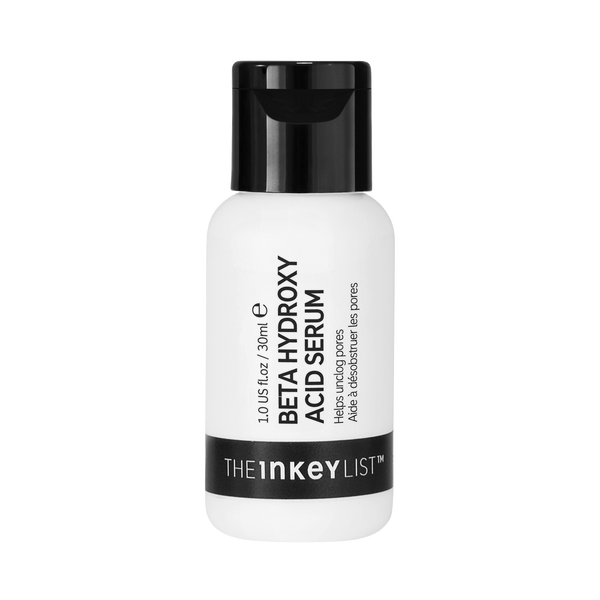
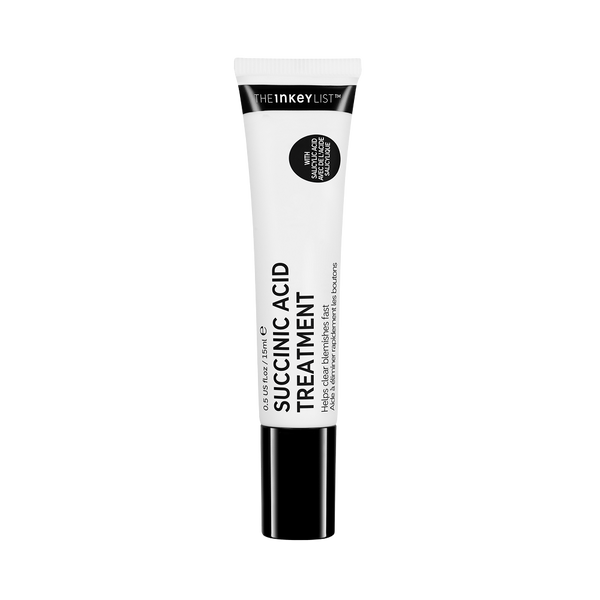
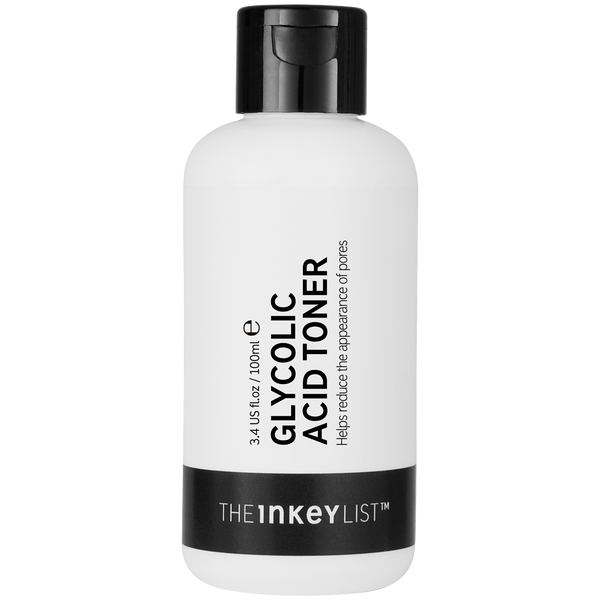
This guide covers what a pore strip physically does to your skin, whether blackheads genuinely come out, what the evidence says about barrier disruption, whether strips can make pores look bigger, who should avoid them entirely, and which ingredients do the job properly over time. Along the way we will look at the alternatives worth knowing about: the Salicylic Acid Cleanser (£14), the Beta Hydroxy Acid (BHA) Serum (£12), the 10% Niacinamide Serum (£12), the Succinic Acid Treatment (£13), the Glycolic Acid Toner (£14) and the Hydrocolloid Invisible Pimple Patches (£9).
What This Guide Covers
- What pore strips are and how blackhead nose strips actually work
- Do pore strips work on blackheads?
- Are pore strips bad for your skin? What the evidence shows
- Who should avoid pore strips completely
- What to use instead of pore strips
- A simple routine that keeps pores clear
- Frequently asked questions about pore strips
With the promise of the guide set out, the sensible place to start is with the mechanics. Before you can judge whether a pore strip is good or bad for your skin, you need to know what it is physically doing when you press it onto a damp nose.
What Pore Strips Are and How Blackhead Nose Strips Actually Work
Blackhead nose strips are, at their simplest, a piece of fabric or thin plastic coated in a powerful adhesive that activates when it meets water. You wet your skin, press the strip flat across your nose or another part of the T-zone, and wait while the adhesive dries and hardens. As it dries it bonds to anything sitting at or just above the pore opening. Then you peel, and the bond does the rest.
The nose is where the overwhelming majority of use happens, which is why “blackhead nose strips” has become almost a category name in its own right. It makes sense anatomically. The nose carries some of the largest and most visible pores on the face, it produces a lot of oil, and it sits right in the middle of your reflection every time you look in the mirror. It is the most scrutinised square inch of skin most people own.
Dermatologist Dr Sejal Shah describes pore strips as being like a strong plaster, and it is a hard analogy to improve on. It captures both the mechanism and its limitation in one image. Think about what happens when you rip a plaster off your arm. It comes away with hair, with dead skin, with whatever was loosely attached to the surface. It does not make a judgement about what deserves to stay and what deserves to go. A pore strip works on exactly the same principle. The adhesive does not know the difference between debris you want gone and skin you would rather keep.
The Sebaceous Filament Problem Nobody Mentions
Here is the single most useful thing to understand about pore strips, and it is the part that tends to change how people feel about them.
A large proportion of what comes away on a used strip was never a blackhead.
Sebaceous filaments are naturally occurring, thread-like collections of sebum and dead skin cells that line the inside of your pore canal. They are not a flaw, a failure of cleansing or a sign that you have done something wrong. They are normal skin anatomy, present on essentially everybody, and they exist to help channel oil from the sebaceous gland up to the skin’s surface. They are most visible on the nose and central face precisely because those pores are larger and more active.
They also look, to the naked eye and especially on the back of a used strip, almost identical to blackheads. Those tiny grey or beige columns standing up from the adhesive are frequently sebaceous filaments rather than congestion. You did not remove a problem. You removed a normal, functional part of how your skin works, and it will begin reforming almost immediately because your skin is supposed to produce it.
A genuine blackhead, by contrast, is a pore that has become properly blocked with a plug of sebum and dead skin cells, with the surface of that plug oxidising on contact with air and turning dark. Some of those do come away on a strip. But the satisfying haul you are examining is a mixture, and the balance is usually tilted further towards normal filaments than most people assume. If you want the full picture on what is actually forming inside your pores, our complete blackheads guide breaks it down properly.
What a Pore Strip Cannot Do
It is worth being precise about the limits, because this is where the marketing and the mechanism part ways.
- It works only at or just below the pore opening. The adhesive bonds to what it can physically touch. It has no way of reaching down into the pore canal.
- It does not dissolve sebum. There is no chemical action on the oil itself. This is purely mechanical extraction.
- It does not affect oil production. Your sebaceous glands carry on exactly as before, entirely unaware that anything has happened.
- It does not exfoliate inside the pore. Dead skin cells accumulating within the canal are untouched.
- It does not prevent anything. There is no residual or preventative benefit once the strip is in the bin.
There is one more thing worth flagging now, because it becomes important later. Most commercial strips are not simply adhesive on fabric. Formulas frequently include astringents to give that tight, clean sensation, along with fragrance, alcohol and film-forming agents. These add a chemical irritation risk on top of the mechanical one. You are not just pulling at your skin. In many cases you are pulling at skin that has been chemically dried out first, which compounds the effect considerably.
So that is the mechanism: a strong adhesive, a surface-level bond, and an indiscriminate pull. Which brings us to the question everyone actually wants answered, which is whether any of this delivers the result people are buying it for.
Do Pore Strips Work on Blackheads?
Yes. And also, not really. Both of those things are true at the same time, and the distinction between them is the entire point of this article.
Let us take the “yes” seriously first, because underselling it would be insulting to anyone who has watched a strip come away loaded with debris. An older study published in the International Journal of Cosmetic Science found that pore strips do effectively remove blackheads in the immediate term. The evidence supports what your own eyes have already told you. In the sixty seconds after you peel one off, your nose is measurably clearer than it was. That is a real result and there is no point pretending otherwise.
Now the “not really”, which is about time.
Blackheads and sebaceous filaments refill. Not eventually, not in some distant theoretical future, but within days to a few weeks depending on your skin. Your sebaceous glands did not pause. Cell turnover did not stop. The pore is a functioning structure with a job to do, and clearing its contents mechanically is roughly as permanent as emptying a bin that is still connected to a household. It restocks. The strip has done nothing whatsoever to slow the cycle that filled it in the first place.
“Pore strips will not stop blackheads or whiteheads from happening, nor will they shrink pores. They are simply a temporary cosmetic fix.” Dr Adam Friedman, dermatologist, speaking to Allure
That is the crux of it. A pore strip addresses the visible result of congestion while leaving every single cause of that congestion completely undisturbed. Oil production carries on. Dead skin cells continue accumulating inside the canal. The skin’s bacterial environment is unchanged. You have removed the evidence, not the mechanism.
Why Pore Strips Sometimes Do Not Work At All
There is a second layer to this, which is that even the short-term result is inconsistent. If you have ever peeled off a strip and found almost nothing on it, the variables below are usually the reason.
- Your skin needs to be genuinely damp. Not wet enough to dilute the adhesive, not dry enough that it never activates. Most disappointing results come down to this.
- The strip has to lie completely flat. Every crease and curve of the nose needs contact. Any part that tents away from the skin is doing nothing at all, and the sides of the nose are where this fails most often.
- It needs the full ten to fifteen minutes. Peeling early means peeling before the adhesive has properly hardened and bonded.
- Recent moisturiser or SPF will block it. Any occlusive layer sits between the adhesive and the pore, which is exactly what it is designed to do.
- Nose shape, skin texture and humidity all affect the outcome. A humid bathroom slows drying. Textured skin reduces contact area.
Which brings us to the honest explanation for why pore strips endure despite decades of dermatological scepticism. It is not that people are misinformed. It is that an instant, tangible, visible result is enormously satisfying in a way that a serum evaluated over eight weeks simply is not. You can hold the outcome in your hand. You can examine it in the light. Almost nothing else in a skincare routine offers that.
The catch is that the satisfaction is borrowed. It is borrowed against a pore that will refill within days, and against a barrier that quietly pays the interest. Which is exactly what we need to look at next.
Are Pore Strips Bad For Your Skin? What the Evidence Shows
The core problem is one of discrimination, or rather the total absence of it.
The adhesive on a pore strip is strong by design. It has to be, because it is being asked to extract compacted material from a pore against the resistance of the surrounding skin. But adhesion is not selective. When you peel, the bond breaks at whatever gives way first, and that includes the outermost layer of skin cells and the natural oils and lipids that form your protective barrier. Debris comes away. So does a portion of the surface that was doing an important job.
Dr Blair Murphy-Rose, board-certified dermatologist, makes the point directly: pore strips can irritate skin and often do more harm than good, precisely because the adhesive sticks to the skin around the pores rather than only to what sits inside them. The strip is not a precision instrument aimed at a pore. It is a broad adhesive surface pressed across thousands of pores and all the skin between them.
What the Skin Barrier Actually Does
It is worth pausing on this, because “barrier damage” gets used so often in skincare that it has started to sound like background noise.
Your skin barrier is the outermost layer of your skin, a dense arrangement of skin cells held together by a lipid matrix of ceramides, cholesterol and fatty acids. Its job runs in two directions at once. It keeps moisture in, preventing the water in your skin from simply evaporating away. And it keeps trouble out, blocking irritants, bacteria, pollution and environmental aggressors from reaching the more vulnerable layers beneath.
When that barrier is intact, skin behaves. It stays hydrated, it looks calm, it tolerates products, and it recovers quickly from minor insults. When it is compromised, everything gets harder. Moisture escapes faster, so skin feels tight and looks dull. Irritants penetrate more easily, so products that were previously fine start to sting. Redness appears and lingers. Skin becomes reactive, unpredictable and noticeably less able to regulate itself.
Every pore strip removes a portion of that layer. Not catastrophically, and not in a way that is necessarily visible after a single use. But the barrier takes time to rebuild, and if you are stripping weekly you are removing part of it again before the previous repair has finished. That is the real issue with pore strips: the disruption is cumulative between uses, and the deficit compounds quietly. Understanding what a damaged skin barrier looks like and how it behaves is genuinely useful here, because the symptoms are easy to misread as unrelated problems.
The Formula Compounds the Mechanical Stress
Remember those additives. Dr Mona Gohara has flagged the astringents in pore strip formulas as a problem in their own right. Astringents are included to deliver that squeaky, tightened sensation people associate with clean skin, but they work by drying the surface out.
Stack the two effects and you can see the issue. The formula dries and mildly irritates the skin. Then the mechanical removal pulls at that same already-compromised surface. It is not one insult, it is two arriving in sequence, with the second landing on skin the first has already softened up.
The physical force involved deserves acknowledgement too. Removing a properly bonded pore strip takes real effort. There is a moment of resistance and then a sharp release, and that force is being applied to some of the thinnest and most reactive skin on the face. The skin across the nose is not the same as the skin on your cheeks. It is thinner, it sits closer to a dense network of small blood vessels, and it responds accordingly. Micro-irritation and visible redness after a single use are common and entirely predictable.
Frequency is what turns a manageable risk into a genuine problem. Even dermatologists who accept the occasional strip as a harmless indulgence are unanimous that frequent use raises the likelihood of damage and sensitivity. A strip once in a blue moon on resilient skin is a very different proposition from a strip every Sunday night for two years.
There is also a counterintuitive point worth knowing. Healthline’s coverage of nose strip risks notes that removing sebaceous filaments can leave pores exposed to irritating dirt and oils. Those filaments were not decorative. Clearing them out entirely can leave the pore more vulnerable in the immediate aftermath, not less. The clean feeling is real, but so is the temporary exposure underneath it.
Do Pore Strips Make Your Pores Bigger?
Short answer: no. Pore strips do not permanently enlarge your pores.
Pore size is determined primarily by genetics, by your skin type, and by the volume of material sitting inside the pore at any given moment. It is not something a strip can structurally alter, however aggressive it feels.
While we are here, let us dispatch a related myth that refuses to die. Pores have no muscles. They do not open and close. Steam does not open them and cold water does not close them. Warmth can soften the sebum inside a pore, which makes its contents marginally easier to shift and is probably where the belief came from, but nothing is opening or shutting. There is no valve.
What genuinely changes is appearance. A pore packed with sebum and oxidised debris is physically stretched to accommodate that volume, and it reads as larger to the eye. Empty it and it relaxes slightly, so it looks smaller. Healthline notes that nose strips can temporarily make pores look smaller, and this is exactly the mechanism at work. The visual improvement is real. It is simply not durable, because oil production and cell turnover resume the moment the strip hits the bin, and the pore refills within days to a few weeks.
The more relevant concern is indirect. Skin that is repeatedly stripped and irritated can develop low-grade chronic inflammation, a persistent background state of aggravation rather than an acute reaction. Skin in that state looks less even, less smooth and more textured, and uneven skin makes pores appear more prominent by contrast. Smooth, calm, well-hydrated skin reflects light evenly and pores recede visually. Irritated, uneven skin does the opposite.
So the verdict is nuanced rather than alarming. Pore strips are not a direct cause of permanently enlarged pores. But they are also not an effective tool for improving how your pores look over time, and used frequently they may work against that goal by a different route entirely.
That is the general picture of risk. For some skin types, though, the calculation is not close at all.
Who Should Avoid Pore Strips Completely
Everything above applies to skin that is broadly healthy and resilient. Shift the starting point and the maths changes fast. The pattern is simple: any skin that is already compromised, sensitised or reactive faces disproportionate risk from an aggressive adhesive.
If you recognise yourself below, this is not about having difficult skin or doing something wrong. It is about matching your approach to what your skin can comfortably handle.
Sensitive skin. The adhesive is aggressive by design, and sensitive skin responds more intensely to both topical irritants and mechanical stress. Where resilient skin might show a flush of redness that settles in twenty minutes, sensitive skin can experience stinging, prolonged reactivity and irritation that takes days to fully calm down. There is a particular bind here for people who have sensitive skin and congestion at the same time, because the products that promise to clear the congestion are often the ones the skin least tolerates. Our guide to sensitive skin and breakouts is written for exactly that situation and is worth reading if both apply to you.
Eczema-prone skin. Dr Blair Murphy-Rose is unambiguous on this point, advising anyone with sensitive skin or eczema to stay away from pore strips entirely. The reasoning is straightforward. In eczema-prone skin the barrier is already more permeable and more reactive than average, which is the underlying feature of the condition rather than an occasional symptom. Applying a strong adhesive and forcibly removing it takes a meaningful portion of an already fragile barrier with it, and that is precisely the kind of trigger that can set off a flare.
Rosacea and redness-prone skin. This one is an unusually poor match, because pore strips combine two well-documented triggers in a single product. Physical force is one. Astringent-containing formulas are the other. Worse, the geography lines up badly: the nose and central face are simultaneously the primary application zone for strips and the most common site of rosacea activity. You would struggle to design a product more precisely aimed at the wrong place. If persistent facial redness is your main concern, our redness hub covers gentler routes to a calmer complexion.
Anyone using retinoids or exfoliating acids. Retinoids and chemical exfoliants work by accelerating cell turnover, which by design leaves the uppermost surface layers thinner and more freshly renewed. That is the benefit. It also means the surface is more vulnerable than usual. Applying an aggressive adhesive to skin in that state raises the risk of surface tears, broken capillaries and redness that outstays its welcome. If you are using these actives regularly, do not use strips on the same areas.
Dry or dehydrated skin. Adhesive removal strips away natural surface oils, which is a problem if you are already short of them. For dry skin this means increased tightness, flaking and that uncomfortable stretched sensation that no amount of moisturiser seems to fix immediately. Dehydrated skin, which is short of water rather than oil, suffers too, because a compromised barrier loses moisture faster. If your skin feels tight and looks dull rather than simply oily or dry, our guide to dehydrated skin explains the difference and how to address it.
Sunburned, broken or otherwise compromised skin. This one is non-negotiable rather than a judgement call. Never apply a pore strip to sunburned skin, to broken or grazed skin, or to skin with active open spots. The barrier in these areas is already breached, and adding forceful adhesive removal risks meaningful damage, prolonged healing and potential marking.
If you have read this list and found yourself in it more than once, that is genuinely useful information rather than bad news. It means the constructive half of this article, which is about what actually works instead, is where your attention is better spent.
What to Use Instead of Pore Strips
Here is the distinction that makes everything else make sense.
A pore strip works at the surface. It pulls out what is already sitting at the pore opening, once, mechanically. The ingredients below work inside the pore. They dissolve congestion where it forms, exfoliate within the canal, and reduce the raw material available to block it in the first place.
That is the shift from reactive to preventative. A strip responds to congestion that has already fully formed and become visible. These alternatives interrupt the process earlier, which is both less dramatic in the moment and considerably more effective over any timeframe longer than a fortnight.
Hydrocolloid Patches: The Direct Swap for the Pore Strip Habit
Let us start with the honest behavioural point, because it matters more than any ingredient argument.
People do not keep using pore strips because they have failed to read the evidence. They keep using them because they want an instant, visible, tactile result, and because peeling one off is genuinely satisfying in a way that applying a serum is not. A product assessed over eight weeks does not scratch that itch. That is a real human reason, not a mistake or a lapse in judgement, and any recommendation that ignores it is not going to survive contact with a Sunday evening.
So the most useful alternative is not the most scientifically elegant one. It is the one that gives you the same ritual.
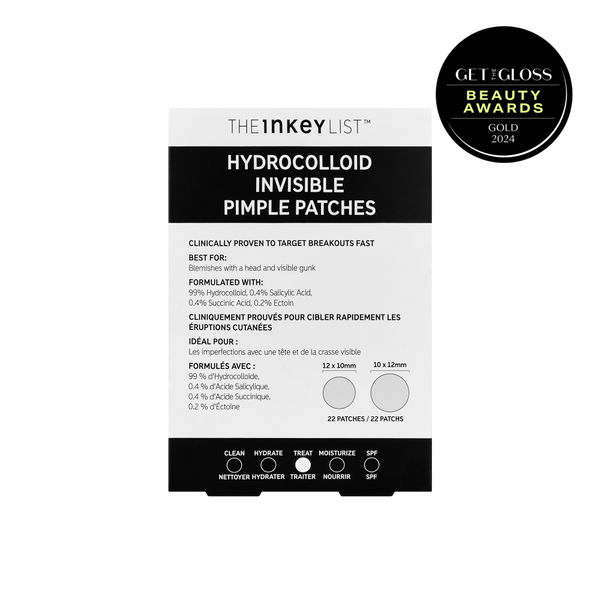
Hydrocolloid Invisible Pimple Patches (£9) deliver almost exactly the same experience. You apply one. You leave it on. You peel it off. You can see what came out, right there on the patch. The ritual is intact, the visible payoff is intact, and the satisfaction is intact.
What changes is the mechanism underneath. Rather than bonding aggressively to the surrounding skin and ripping across the barrier, a hydrocolloid patch draws fluid out of a surface blemish through absorption. It works with the skin rather than against it.
The formulation is built around 99% hydrocolloid, which extracts excess fluid, helps flatten blemishes and creates a protective seal over the area. That seal matters more than it sounds, because it also acts as a physical barrier against picking, which is the single most reliable way to turn a two-day blemish into a two-week mark. Alongside the hydrocolloid sit 0.4% salicylic acid to exfoliate and help unclog the pore, and 0.4% succinic acid to help calm the skin and reduce redness and excess oil.
They are invisible under makeup, they work overnight while you do nothing at all, and they are suitable for use on surface blemishes and whiteheads.
The swap is explicit: same satisfying result, none of the barrier cost.
BHA: The Core Alternative for Congestion
If hydrocolloid patches replace the habit, salicylic acid replaces the function.
Salicylic acid is a beta hydroxy acid, and its defining property is that it is oil-soluble. Most skincare actives are water-soluble, which means they work across the skin’s surface and stop where the oil begins. Salicylic acid is different. Because it dissolves in oil, it can travel into the sebum-filled pore canal itself.
That is the single scientific advantage over a pore strip, and it is decisive. Salicylic acid goes where a strip physically cannot reach. Dr Blair Murphy-Rose explains that the molecular size of salicylic acid enables it to travel into pores, where it dissolves sebum and helps prevent further clogging. A strip stops at the opening. BHA carries on down.
The prevention point is where it pulls decisively ahead. A pore strip can only remove congestion that has already fully formed. Salicylic acid clears existing build-up and helps stop it reforming, by keeping the pore lining exfoliated so dead cells and sebum have less opportunity to compact into a plug. One is a response. The other is an interruption.
The Beta Hydroxy Acid (BHA) Serum (£12) is the most direct swap for a pore strip habit. Applied 2-3 times per week, it helps unclog pores, target blackheads and reduce excess oil, working from inside the pore rather than across the top of it.
If you want to understand the ingredient itself in more depth, our salicylic acid ingredient page covers how it behaves across different skin types and concerns.
For the specific question of congestion, it is worth reading how salicylic acid works on blackheads, which gets into the detail of why an oil-soluble acid is so well suited to this particular problem.
Salicylic Acid Cleanser: Daily Pore Maintenance
A serum two or three times a week does the heavy lifting. A daily cleanse handles the maintenance in between.
The logic is simple. If pores are cleared of excess oil and surface debris every single day, build-up has far less opportunity to compact into a blackhead in the first place. You are removing the raw material before it has time to become a problem, rather than waiting until it is visible and then reaching for something aggressive.
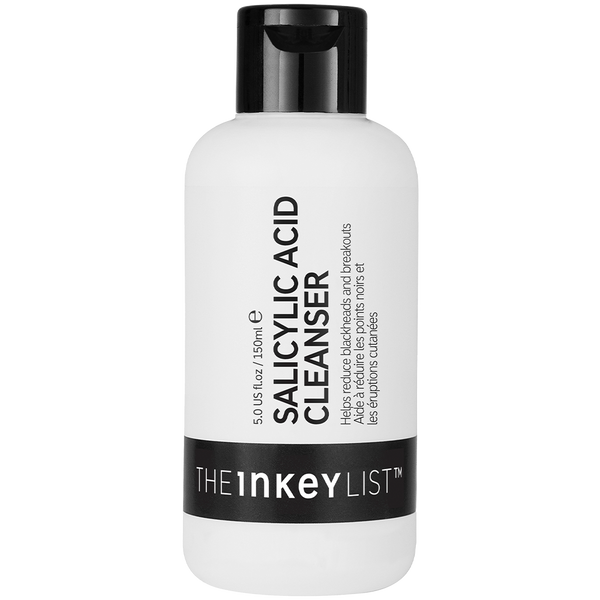
The Salicylic Acid Cleanser (£14) is formulated around 2% salicylic acid to help combat breakouts and blackheads, 1% zinc compound for oil control, and 0.5% allantoin to soothe. That last inclusion is doing quiet but important work, because an active cleanser without a soothing element is exactly how people end up with the tight, stripped feeling that sends them back towards harsher products.
As a daily cleansing step for blemish-prone and oily skin, it helps tackle breakouts and congestion without disrupting the skin’s natural balance. That balance is the whole point. The objective is not to strip your face, it is to keep pores clear while leaving the barrier intact.
Two practical notes. First, give it sixty seconds. Most people cleanse for around ten, which does not give the salicylic acid meaningful contact time with the skin. Massaging for a full minute makes a genuine difference. Second, it is not only for your face. Congestion on the chest and back responds to the same ingredient, and those areas are frequently ignored entirely.
Niacinamide: Oil Regulation and Prevention
BHA deals with congestion that already exists. Niacinamide works further upstream, on the supply.
Excess sebum is the raw material of a blackhead. It mixes with dead skin cells, compacts inside the pore, oxidises at the surface and darkens. Reduce the amount of oil being produced and you reduce the volume of material available to form that plug. It is prevention at the source rather than management at the outlet.
Niacinamide, a form of vitamin B3, helps regulate sebum production over time. Note the word regulate rather than eliminate. The goal is not to strip your skin dry, which tends to backfire by prompting even more oil production. It is to bring output into a more balanced range. If oiliness is your dominant concern, our oily skin hub covers the full picture.
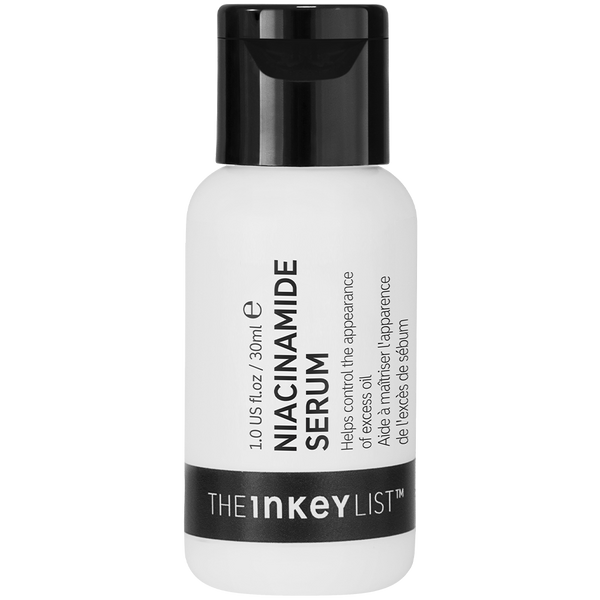
The 10% Niacinamide Serum (£12) helps reduce excess oil, minimise the visible appearance of pores over time, and calm redness and uneven tone. That last benefit connects back to the pore-size discussion earlier: calmer, more even skin makes pores look less prominent, quite apart from what is happening inside them. For a fuller explanation of the ingredient, see What is Niacinamide?
It is also worth understanding why your skin produces the amount of oil it does, since the causes range from genetics to climate to an overly stripping routine. Why is my skin so oily covers the common drivers and what is realistically within your control.
BHA clears what has already formed. Niacinamide slows what forms next. It pairs particularly well with BHA for exactly this reason, and the combination is covered properly in our guide to salicylic acid and niacinamide, the best duo for oily and blemish-prone skin.
Glycolic Acid Toner: Surface Exfoliation Without the Peel
Come back to the psychology for a moment. Part of the appeal of a pore strip is the sense that something is being physically removed from your skin. There is a tangible before and after.
Glycolic acid delivers that outcome more effectively and far more gently.
Glycolic acid is an alpha hydroxy acid, and it is the smallest one, which is why it penetrates efficiently. It works by loosening the bonds holding dead skin cells to the surface, so they shed at the rate they are supposed to rather than lingering and accumulating. This matters for pores because dead cell build-up combining with sebum is one of the primary drivers of a blocked pore. Clear the surface consistently and there is less debris available to be pulled into the opening in the first place.
The difference in approach is the whole argument. A pore strip removes dead cells by adhering to them and tearing them away along with living skin and protective lipids. Glycolic acid dissolves the glue holding them in place and lets them go on their own.
The Glycolic Acid Toner (£14), used 2-3 times per week, helps remove dead skin cells, reduce the visible appearance of blackheads and support smoother skin, without the barrier disruption that comes with mechanical removal. Our glycolic acid page covers how the ingredient behaves and how to introduce it sensibly.
If your congestion comes alongside frequent breakouts, it is worth reading about glycolic acid for blemish-prone skinbefore adding it, since pacing matters when combining exfoliating acids.
Succinic Acid Treatment: Targeted Action on Individual Spots
Not everyone reaching for a pore strip is dealing with general congestion. Some people are dealing with one specific, inconveniently timed breakout and want it gone.
A pore strip is a poor tool for that job. It applies adhesive across your entire nose or T-zone to address something occupying a couple of millimetres, meaning every surrounding pore and all the skin between takes the mechanical hit for the sake of one spot. It is the least targeted possible response to a highly targeted problem.
The Succinic Acid Treatment (£13) works the other way round. It is applied precisely where it is needed and nowhere else, so the rest of your skin is left entirely alone. For blemish-prone skin dealing with individual breakouts, this is the more precise and more skin-safe approach.
That covers the individual ingredients. The practical question is how they fit together without turning into a twelve-step routine nobody sustains.
A Simple Routine That Keeps Pores Clear
The effective approach to congestion is preventative rather than reactive, and it is a small number of consistent steps rather than an elaborate system. Here is what that looks like in practice.
Step 1: Cleanse. Two routes work. If your skin currently feels stripped by your routine, or you wear makeup and SPF daily, start with the Oat Cleansing Balm (£15) as a gentle first cleanse to melt everything away, then follow with the Salicylic Acid Cleanser (£13). Alternatively, use the Salicylic Acid Cleanser alone morning and evening. Either way, give it sixty seconds of contact time.
Step 2: Work inside the pore. The Beta Hydroxy Acid (BHA) Serum (£12) 2-3 times per week. This is the step doing the job a pore strip attempts, except from the inside. Start at 2-3 times weekly and ease back if you notice dryness.
Step 3: Regulate. The 10% Niacinamide Serum (£12) daily, to help manage oil production and visibly minimise pore appearance over time.
Optional weekly. The Glycolic Acid Toner (£14) 1-2 times per week, on evenings when you are not using BHA. Alternating rather than stacking keeps you clear of over-exfoliation.
Now the honest part about timelines. These ingredients work progressively, and meaningful change in congestion and pore clarity typically takes 4-8 weeks of consistent use. That is genuinely slower than a pore strip, which delivers in fifteen minutes. The difference is that at the end of eight weeks you have skin that produces less congestion, rather than a nose that was briefly clear eight weeks ago.
If congestion persists despite a consistent routine, it is worth speaking to a dermatologist or a licensed skincare professional. Professional extraction, performed properly with sterile tools, is considerably safer than any at-home mechanical method.
For the full picture on keeping blackheads from forming in the first place, our Blackheads Guide and our dedicated guide to how to prevent blackheads long-term both go deeper than we can here.
The Bottom Line on Pore Strips
The appeal of a pore strip is genuine and worth naming one more time. It is instant, it is visible, it is tactile, and it delivers a result you can hold up to the light and inspect. Very little else in skincare offers that kind of immediate feedback, and anyone who has used them knows exactly why they keep reaching for the box.
The trade-off is equally real. What you are buying is a temporary surface intervention with a cost attached to your barrier. The blackheads return. The pores refill within days to a few weeks. And each use takes something from the protective layer that keeps your skin hydrated, calm and resilient, a layer that needs time to rebuild and rarely gets it if you are stripping weekly.
For some people that trade is close to neutral. Occasional use on resilient skin is unlikely to cause lasting harm. But for sensitive skin, eczema-prone skin, redness-prone skin, or skin already sensitised by retinoids and exfoliating acids, the calculation moves decisively away from any benefit worth having.
What is genuinely encouraging is that the alternatives are not compromises. Salicylic acid dissolves congestion inside the pore canal and helps prevent it reforming, which is something no adhesive can do from the outside. Niacinamide helps regulate the oil that fuels congestion in the first place. Glycolic acid clears the dead surface cells that combine with sebum to block pores. And hydrocolloid patches deliver the same satisfying visible payoff that made strips appealing, without asking your barrier to pay for it.
Knowledge-powered skincare means understanding not just what a product does in the moment, but what it does to your skin over time. Those two things are frequently not the same, and pore strips are one of the clearest examples in the whole category.
You now have the information to make a better choice. What you do with it is entirely up to you.
Ready to Make the Switch?
The single easiest swap is the Beta Hydroxy Acid (BHA) Serum (£12). It is the most direct replacement for a pore strip habit, working inside the pore to dissolve congestion and help stop it reforming, two or three times a week.
If what you will genuinely miss is the instant visible satisfaction, start with the Hydrocolloid Invisible Pimple Patches (£9) instead. Same ritual, same peel-and-see payoff, none of the barrier cost. From there, the Salicylic Acid Cleanser (£14), 10% Niacinamide Serum (£12) and Glycolic Acid Toner (£14) build out the fuller routine at your own pace.
Not ready to buy anything? Take our Skincare Quiz for a personalised routine built around your skin, or try the Breakout Analyser Pro if breakouts and congestion are your main concern.
Frequently Asked Questions
Got a question?
Our askINKEY team are a friendly bunch of skincare experts with deep product knowledge and zero judgement. Whether you're an ingredient obsessive or just starting out, we'll make it make sense. No question too big. No question too small. We Give A Care, Every Day.


