
Hyaluronic Acid vs Ceramides: What’s the Difference and Do You Need Both?
Discover how these hydration heroes work differently, why they're more powerful together, and how to layer them for long-lasting, healthy-looking hydration
Author
askINKEY skincare advisor
Published
07 July, 2026
Time to read
13 minutes
If you have searched “hyaluronic acid vs ceramides,” you have probably landed here expecting a verdict. A winner. One ingredient to rule them all. The honest answer is that this framing is wrong - and understanding why will change how you think about hydration entirely.
Both hyaluronic acid and ceramides are hydration ingredients. But they work at completely different stages of the hydration process. One draws moisture into the skin. The other seals it in. Neither does the other’s job. That is not a competition - that is a system.
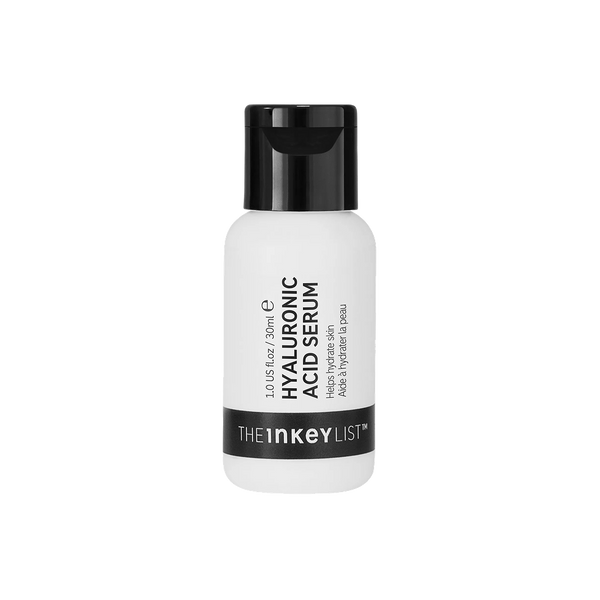
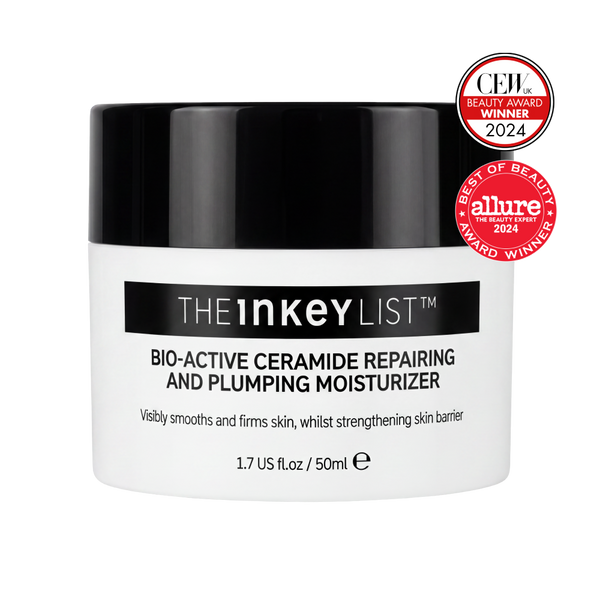
This guide will walk you through exactly what each ingredient is, how they differ, why they are more effective together, and how to layer them correctly in your routine. If you want the short version: our Hyaluronic Acid Serum(£9) draws water in, and the Bio-Active Ceramide Moisturiser (£19) seals it there. The rest of this blog explains the science behind why that pairing works so well - and how to make the most of it for your specific skin type.
What Hyaluronic Acid Actually Does for Your Skin
Hyaluronic acid is one of the most talked-about skincare ingredients on the market, and for good reason - but it is also one of the most misunderstood. Before getting into the hyaluronic acid vs ceramides comparison, it helps to understand what hyaluronic acid actually is and what it is genuinely capable of doing.
Hyaluronic acid (HA) is not a synthetic lab creation introduced to skincare from the outside. It is a molecule your body already produces naturally. It is found in your skin, your joints, and your connective tissue. Its primary biological role is to retain moisture - and it does this extraordinarily well. HA can hold up to 1,000 times its own weight in water, making it one of the most effective moisture-attracting substances known to science.
In skincare terms, hyaluronic acid is classified as a humectant. A humectant is an ingredient that draws water molecules toward itself - pulling moisture from the environment and from the deeper layers of the skin up toward the surface. Think of it as a sponge that actively reaches for water and holds it in place. When you apply a hyaluronic acid serum, you are giving your skin an immediate, concentrated dose of this moisture-attracting ability right where you need it.
Here is the part that most people do not know: your skin’s natural hyaluronic acid levels decline with age. Production begins to slow in your mid-twenties. By around the age of fifty, roughly half of your skin’s HA stores have already been lost. This gradual depletion is one of the key reasons skin begins to look drier, duller, and less plump over time. Replenishing it topically makes a measurable difference.
The INKEY List Hyaluronic Acid Serum is formulated with 2% multi-molecular hyaluronic acid, which is worth understanding. Not all hyaluronic acid is the same size. Larger HA molecules sit on the surface of the skin and hydrate the outer layers. Smaller molecules can penetrate deeper into the skin structure, delivering moisture at multiple depths rather than just on top. By using multiple molecular weights in one formula, the serum targets hydration across the full depth of the skin - not just the surface. It also contains Matrixyl 3000 Peptide, which supports firmer, more resilient-looking skin over time with consistent use.
The clinical data backs this up: the serum delivers instant hydration, and in a four-week study, 82% of users saw firmer and smoother skin. These are not abstract promises - they reflect what happens when the skin’s moisture levels are properly supported.
One more thing that is important to understand: hyaluronic acid is a hydrator, not a moisturiser. These are not the same thing. A hydrator draws water into the skin. A moisturiser creates a barrier that prevents water from leaving. HA does the first job brilliantly. It does not do the second job at all. If you want to know whether you might benefit from adding HA to your routine, these five signs are a good starting point.
Because it is water-based and oil-free, hyaluronic acid suits every skin type - including oily and blemish-prone skin. It does not clog pores, does not feel heavy, and does not cause any of the congestion that people sometimes associate with hydrating skincare. The key application tip: always apply it to damp skin, immediately after cleansing. HA needs surface moisture to bind to - on dry skin, its effectiveness is significantly reduced.
So HA draws water in. Brilliant. Now: where does that water go without something to keep it there? That is exactly the question that ceramides answer.
What Ceramides Are and Why Your Skin Barrier Depends on Them
If hyaluronic acid is one of the most searched skincare ingredients online, ceramides are not far behind - and yet most people have a far hazier understanding of what they actually do. That gap is worth closing, because ceramides are not just another moisturising ingredient. They are structural. They are architectural. They are, in many ways, the foundation that everything else depends on.
Ceramides are lipid molecules - that is, fats - that occur naturally in the skin. They make up approximately 50% of the lipid content found in the outermost layer of the skin, known as the stratum corneum. This is the layer your skin presents to the world: the one that interfaces with weather, pollution, UV exposure, heating, air conditioning, and everything else your environment throws at it.
INKEY uses a straightforward analogy that gets straight to the point: think of your skin cells as bricks and ceramides as the mortar between them. When the mortar is intact, the wall holds. Water stays inside. Irritants stay outside. The barrier functions. When the mortar degrades - when ceramide levels fall - the wall begins to crack. Water escapes through the gaps. Irritants, bacteria, and environmental aggressors can enter. The skin becomes dry, reactive, sensitive, and visibly compromised.
This is the critical distinction between what ceramides do and what hyaluronic acid does. Ceramides are not humectants. They do not draw water into the skin. Their job is entirely different: they repair and maintain the skin’s barrier, and in doing so, they prevent water from leaving. The technical term for water leaving the skin is transepidermal water loss, or TEWL - if you want to understand the science behind this process in more detail, this guide on TEWL is worth reading. The point here is simple: without adequate ceramides, even well-hydrated skin will lose that moisture faster than it can be replenished.
Like hyaluronic acid, ceramide levels decline naturally with age. Production begins to slow in the thirties. By the fifties, ceramide levels may have dropped significantly - and this is a key driver of the dryness, sensitivity, and visible signs of ageing that become more pronounced over time. But age is not the only factor. Ceramides are also depleted by harsh cleansers that strip the skin’s natural lipids, over-exfoliation with acids or physical scrubs, UV exposure, cold weather, and central heating - all things that most people encounter regularly without realising the impact they are having on their barrier.
The INKEY List Bio-Active Ceramide Moisturiser (£19) uses something called Bio-Active Ceramide NP - and the distinction from standard ceramides is meaningful. Most ceramide products use larger molecules that can only work on the surface of the stratum corneum. Bio-Active Ceramide NP has a shorter molecular chain, allowing it to penetrate multiple skin layers rather than sitting solely on top. This deeper action translates to more comprehensive barrier repair. Clinically, it has been shown to reduce six signs of ageing in 28 days, with 100% of participants seeing visible improvement. For a deeper comparison of how Bio-Active ceramides perform against standard ceramides, this blog covers it in full detail.
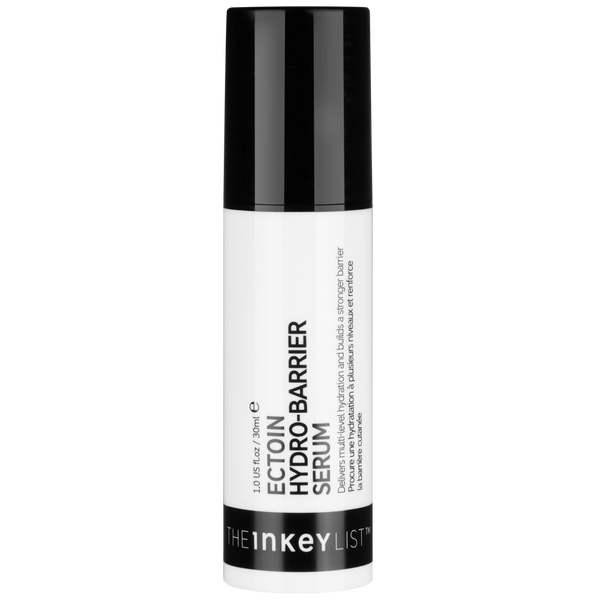
For skin that is particularly dehydrated, sensitive, or has a seriously compromised barrier, the Ectoin Hydro-Barrier Serum (£15) is worth knowing about. It combines ceramides with ectoin - a powerful protective molecule - and hyaluronic acid, making it a targeted treatment for skin that needs intensive barrier support before the moisturising step. More on how to incorporate it into your routine in the next section.
Understanding what ceramides do - sealing moisture in and keeping the barrier intact - makes the relationship between them and hyaluronic acid immediately clearer. They are not alternatives. They are partners in a process. Now it is time to put both ingredients side by side and see exactly how they differ.
Hyaluronic Acid vs Ceramides: The Key Differences Explained
This is the section that most people come to this blog for: a clear, honest comparison of two ingredients that are frequently pitted against each other in search queries. The question “is ceramide better than hyaluronic acid” or “which is better, ceramides or hyaluronic acid” is one of the most common formulations of this search - and the answer, bluntly, is that it is the wrong question.
There is no winner in the ceramide vs hyaluronic acid debate because they are not competing. They belong to entirely different functional categories of skincare ingredient and perform entirely different jobs. Comparing them as if one replaces the other is like asking whether a bucket or a tap is better at keeping you hydrated. You need both. Here is precisely how they differ.
Type of ingredient: Hyaluronic acid is a humectant - a water-attracting molecule. Ceramides are lipids - structural fats that form the skin’s barrier. These are not just different ingredients; they are different categories of ingredient entirely.
What they do: HA pulls moisture into the skin from its surroundings and from deeper layers. Ceramides form and reinforce the lipid matrix of the outermost skin layer, sealing moisture in and preventing water loss through the barrier.
Where they work: Depending on molecular weight, hyaluronic acid works at different depths of the skin. Ceramides work specifically in the stratum corneum - the outermost layer - where they slot into the lipid structure between skin cells and hold the barrier together.
Texture and format: Because HA is water-based, it is typically found in lightweight, watery serums. Because ceramides are lipid-based, they are most effective in richer moisturisers and creams where they can properly integrate into the skin’s lipid matrix.
Best suited for: Hyaluronic acid is the go-to for dehydrated, dull, or tight-feeling skin that lacks water. Ceramides are especially important for dry skin, a damaged or compromised barrier, mature skin, sensitivity, and those starting to notice visible signs of ageing.
Who needs it: HA suits all skin types - it is one of the most universally well-tolerated ingredients in skincare. Ceramides also suit all skin types but become particularly critical for those in their thirties and beyond, those using active ingredients like retinol or exfoliating acids, and anyone who notices their skin becoming more reactive or sensitive over time.
Here is a useful way to think about it. Imagine your skin is a glass of water. Hyaluronic acid fills the glass - it brings water to the party and holds it there. Ceramides are the glass itself. Without a solid glass, the water simply pours out. Without adequate ceramides, even a serum full of HA will see its moisture escape through a leaky barrier within hours. HA without ceramides can actually draw moisture upward and allow it to evaporate - particularly in dry environments - rather than keeping it locked in where skin needs it most.
This is one of the most important insights in this entire blog, and it directly addresses a common assumption: that a good moisturiser “does it all.” In reality, a moisturiser alone - even a very good one - is handling barrier support but not necessarily delivering the same targeted humectant action as a dedicated serum. A serum-plus-moisturiser layering approach - HA first, ceramide moisturiser second - creates a more complete and effective hydration system than either product used on its own.
So the answer to “which is better: ceramides or hyaluronic acid” is neither. They are sequential. One sets the stage. The other delivers the performance. And the practical framework for using them together has a name: the Moisture Sandwich.
The Moisture Sandwich: How to Use Hyaluronic Acid and Ceramides Together
The Moisture Sandwich is not a complicated concept. It does not require a ten-step routine or a bathroom shelf full of products. It is a simple sequencing principle that makes intuitive sense once you understand what each ingredient does: apply hyaluronic acid first to draw moisture in, then apply a ceramide moisturiser on top to seal that moisture in. That is it. That is the Moisture Sandwich.
But the details matter - and getting them right is the difference between a routine that genuinely works and one that only partially delivers.
Why order matters: When you apply hyaluronic acid without anything on top to seal it, the HA will do its job of drawing water toward the skin’s surface. However, in dry or low-humidity environments, that surface moisture can then evaporate into the air, taking your skin’s natural moisture with it. Applying a ceramide moisturiser on top creates a physical barrier that prevents this evaporation, locking the moisture that HA has gathered firmly into the skin. The two products are not redundant - they are completing each other’s work in sequence.
Why damp skin matters: Always apply your hyaluronic acid serum to damp skin, not dry skin. Hyaluronic acid is a humectant - it draws moisture from wherever it can find it. On damp skin, there is surface water immediately available to bind to, maximising the serum’s performance. On completely dry skin, HA may draw moisture from deeper layers instead, which can paradoxically leave skin feeling tighter. Pat your skin dry after cleansing but leave a little moisture behind, then apply your HA serum immediately.
The full routine, morning and evening:
For your morning routine:
- Cleanse
- Apply Hyaluronic Acid Serum (£9) to damp skin - press gently, do not rub
- Follow with Bio-Active Ceramide Moisturiser (£19) to seal everything in
- Finish with SPF - this step protects the barrier you have just worked to support
For your evening routine:
- Cleanse
- Apply Hyaluronic Acid Serum (£9) to damp skin
- Apply any targeted treatments (retinol, vitamin C, etc.)
- Finish with Bio-Active Ceramide Moisturiser (£19) as the final seal
This answers the question “can you use hyaluronic acid with ceramides” definitively: not only can you - you should. And the answer to “can I use ceramide with hyaluronic acid every day” is equally straightforward: yes, both are gentle enough for twice-daily use without irritation or sensitivity.
For oily or combination skin: You do not need to skip the ceramide step because your skin is oily. Oily skin can absolutely be dehydrated - lacking water, not oil - and the barrier still needs support. The texture of your ceramide product just needs to match your skin. The Omega Water Cream (£11) is the lighter-weight alternative: it contains 0.2% ceramide complex and 5% niacinamide in a gel-cream texture that sits comfortably on oilier skin without feeling heavy or contributing to congestion.
For skin that needs extra barrier support: If your skin is genuinely sensitised, dehydrated, or has a compromised barrier - perhaps from over-exfoliation, harsh weather, or reactive conditions - the Ectoin Hydro-Barrier Serum (£15) can be added as a second serum step between the HA serum and the ceramide moisturiser. It combines hyaluronic acid, ceramides, and ectoin in one formula, giving the barrier triple-level support before you seal everything in with moisturiser. This is particularly useful during periods when the skin is recovering or feeling more reactive than usual.
For more guidance on how to sequence this into a full skincare routine, this guide to building your skincare routinecovers layering order and timing in detail.
The Moisture Sandwich is the simplest, most evidence-backed way to get the most out of both ingredients. Two products. The right order. Real results. Now let us look at how this translates for different skin types.
Which Skin Types Need Hyaluronic Acid, Ceramides, or Both?
The short answer: almost everyone benefits from both. But skin type does influence which specific products and textures will work best for you - and that is worth addressing directly.
Dry skin needs both HA and ceramides, and needs them urgently. Dry skin struggles to maintain its natural lipid barrier, which means moisture escapes faster than it can be replaced. HA delivers that concentrated hydration hit. The Bio-Active Ceramide Moisturiser (£19) is the priority here - the richer texture is well-suited to chronically dry skin and provides the intensive barrier repair that this skin type needs consistently, not just occasionally.
Oily or blemish-prone skin still needs both - just in lighter formats. Oily skin is frequently dehydrated (water-deficient) even when it is producing excess oil; these are separate issues. The Hyaluronic Acid Serum (£9) is ideal - it is water-based, oil-free, and non-comedogenic. Pair it with the Omega Water Cream (£11) rather than the richer Bio-Active Ceramide Moisturiser. The gel-cream formula provides ceramide support without heaviness, and the 5% niacinamide helps manage the appearance of pores and uneven skin tone at the same time.
Sensitive or reactive skin often has a compromised barrier at the root of its sensitivity. Ceramides are particularly important here because a weakened mortar between skin cells is what allows irritants to trigger reactions. For sensitised or reactive skin, the Ectoin Hydro-Barrier Serum (£15) is a strong recommendation as a targeted treatment - ectoin has excellent evidence behind its ability to calm and protect stressed skin, and the combination of ectoin, ceramides, and HA in one product makes it one of the most comprehensive barrier-support options available.
Mature skin with anti-ageing priorities benefits enormously from the combination. Hyaluronic acid addresses the immediate dehydration that makes fine lines and creasing more visible - plumping the skin with moisture so surface lines are less pronounced. Ceramides go deeper: the Bio-Active Ceramide Moisturiser is clinically proven to reduce six signs of ageing in 28 days, with up to four times the visible wrinkle reduction compared to standard ceramides. For anyone whose primary concern is the visible signs of ageing, this pairing is one of the most effective and straightforward approaches available.
Skin using active ingredients - particularly retinol or exfoliating acids - needs both HA and ceramides as a matter of course. Actives work by accelerating cell turnover or dissolving dead skin cell bonds, which can disrupt the skin’s barrier and cause dryness, flaking, and irritation, especially when first introducing them to a routine. Using HA to keep skin hydrated and a ceramide moisturiser to buffer and support the barrier makes actives more tolerable without compromising their effectiveness. This is the Moisture Sandwich working as a protective framework around your treatment products. For more on how to pair ingredients safely, this guide to what not to mix with retinol is a useful reference.
All skin types and life stages: Both hyaluronic acid and ceramides are exceptionally well-tolerated. They are safe for all skin types, suitable during pregnancy and breastfeeding, and appropriate for sensitive conditions including rosacea and eczema-prone skin. There is no skin type for which these ingredients are inappropriate. The question is never whether to use them - it is which format suits your skin best.
If you are ready to build a full routine around these ingredients, this guide to building your skincare routine is a natural next step.
The Takeaway: Two Ingredients, One System
Hyaluronic acid and ceramides are not rivals. They never were. They are sequential partners in the same hydration process - one brings moisture in, the other keeps it there - and understanding that distinction changes everything about how you approach your skincare routine.
The Moisture Sandwich is the simplest, most practical way to put this knowledge into action: hyaluronic acid serum first on damp skin, ceramide moisturiser second on top. Two products. The right order. A complete hydration system. Skin type determines which specific textures suit you best, but it does not change whether you need both. Almost everyone does.
This does not have to be complicated. A well-chosen serum and a well-chosen moisturiser, applied consistently in the correct sequence, will outperform a shelf full of products used without a clear system. Start there. Build from there.
Shop the Moisture Sandwich
Shop the Hyaluronic Acid Serum - £9 and the Bio-Active Ceramide Moisturiser - £19. The complete Moisture Sandwich, starting from £9.
Not sure where to start? Take the INKEY Skincare Quiz for a personalised routine in 2 minutes.
Want to go deeper on either ingredient? Read the full guides: What is Hyaluronic Acid? and What are Ceramides?.