



How to Use Ectoin with Retinol (and Other Actives)
A complete layering guide to using ectoin with retinol and your other actives, so you get all the benefits with none of the irritation.
Author
askINKEY skincare advisor
Published
31 May, 2026
Time to read
15 minutes
This guide is for anyone using retinol, or about to start, who wants to understand exactly how ectoin fits into their routine. You will learn what ectoin actually does, how to layer it with retinol step by step, and how it works alongside niacinamide, vitamin C, hyaluronic acid, AHAs/BHAs and peptides.
Here is the short version. Ectoin is compatible with virtually every active in your routine. It goes first, every time, in both your morning and evening routine. Its job is to support your skin barrier before anything else touches your skin, which means everything you apply afterwards works more comfortably and, often, more effectively.
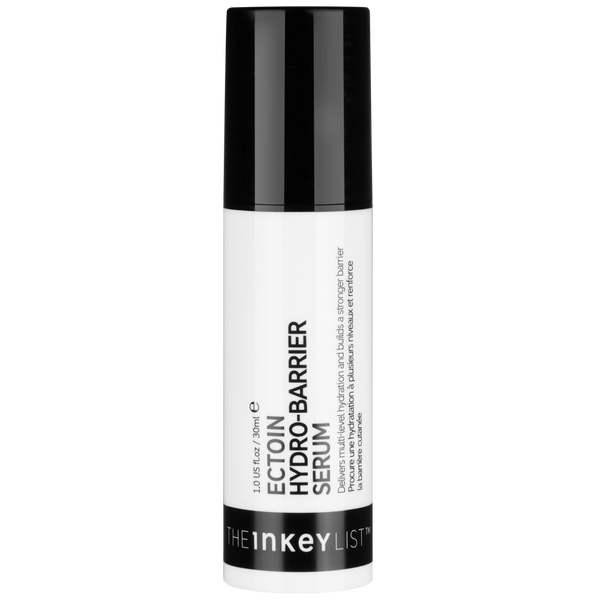
This entire guide is built around one product: the Ectoin Hydro-Barrier Serum, priced at £16. If you are looking for an ectoin skin barrier serum that slots neatly in front of retinol without getting in its way, this is the formula the rest of this article refers back to.
If you want the full ingredient science before you carry on, visit our ectoin ingredient page. If retinol is new to you, or you want a refresher on the basics before diving into layering specifics, our retinol ingredient page is the place to start.
Next, we will explain the science behind ectoin itself, before getting into exactly how it pairs with retinol.
What Ectoin Actually Does in Your Skincare Routine
Ectoin is not a new invention dreamed up in a lab for marketing purposes. It is a molecule that occurs naturally, produced by extremophile bacteria that survive in some of the most hostile environments on earth, including salt lakes, volcanic hot springs and scorching desert heat. These organisms needed a way to survive extreme desiccation, intense UV exposure and dramatic temperature swings, and over time they evolved ectoin as a kind of internal life-support molecule. It protects their own cellular structures from falling apart under stress. When that same molecule is used in skincare, it brings the same protective logic to human skin cells.
This is where ectoin starts to behave differently from the hydrating ingredients most people are already familiar with. A standard humectant, a hydrating ingredient that works by attracting and holding onto water, typically pulls moisture to the surface of the skin. Ectoin works in a more targeted way. It forms what scientists describe as “protective hydration shells” around individual skin cells, anchoring moisture directly at a cellular level rather than simply drawing it toward the surface. In practical terms, this means ectoin is not just making your skin feel hydrated. It is helping the structure of your skin barrier hold itself together more effectively.
The Ectoin Hydro-Barrier Serum is formulated with 2% ectoin, which sits within the clinically validated range of 1 to 7% used in dermatological research. It is combined with 2.5% Multi-Molecular Hyaluronic Acid and a 1% Barrier Blend made up of three ceramides. Together, this combination has been clinically shown to strengthen the skin barrier in as little as 15 minutes and restore visible skin bounce within 3 days. That is a meaningfully fast timeline for a hydrating serum, and it is one of the reasons ectoin has become such a popular addition to routines that also include stronger actives like retinol.
Safety is where ectoin continues to stand out. Unlike many potent actives, ectoin carries no photosensitivity risk, meaning it will not make your skin more reactive to sunlight. It requires no adjustment period, so there is no gradual introduction needed the way there is with retinol or exfoliating acids. It is suitable for all skin types, including sensitive and rosacea-prone skin, and it is considered ectoin pregnancy safe, making it one of the few genuinely universal ingredients in modern skincare formulation. For readers who want to understand barrier strengthening in more depth, our guide on damaged skin barriers breaks down exactly what a compromised barrier looks like and why repairing it matters, independent of which specific ingredient you use to do it.
If you want a third-party perspective on ectoin’s growing reputation, Allure’s breakdown of what ectoin is and how it works is a useful, independent read that reflects the same broad usability described here.
Ectoin was discovered in bacteria that survive extreme environments, and it protects skin cells from the same kind of stress those bacteria evolved to withstand.
For the full ingredient deep-dive, including more on the science and clinical data, our ectoin ingredient page covers everything in detail. This unique mechanism, protecting cells rather than simply hydrating the surface, is exactly what makes ectoin such a natural partner for retinol, which we will unpack next.
Why Ectoin and Retinol Make Such a Logical Pair
The question most people arrive at this guide asking is simple: can you use ectoin with retinol? The honest answer is not just yes. It is that the pairing is genuinely better than using either ingredient on its own, and understanding why requires a quick look at what retinol actually does to your skin.
Retinol works by accelerating cell turnover, which is the process by which your skin sheds old cells and generates new ones. This is how it smooths fine lines, evens out tone, refines texture and supports long-term collagen production. Because retinol breaks down when exposed to UV light, it should always be used in the evening, never in the morning. Full details on how retinol functions are available on our retinol ingredient page.
Here is the trade-off most retinol users eventually encounter. During the first 4 to 6 weeks of use, many people experience what is commonly called the adjustment period: dryness, flaking, redness and general sensitivity. This happens because retinol temporarily increases transepidermal water loss, often shortened to TEWL, which refers to the rate at which water escapes through your skin into the air. A higher TEWL means your barrier is temporarily more compromised and less able to hold onto hydration, which is exactly when irritation tends to show up.
This is precisely the problem ectoin is built to address. By reducing TEWL, calming reactive sensitivity and creating a more resilient, hydrated base before retinol is ever applied, ectoin does not slow down or interfere with how retinol works. It simply prepares your skin to receive it more comfortably. Think of it less as a workaround and more as proper groundwork.
This pairing tends to matter most in three common scenarios:
- Retinol beginners who want to start strong without triggering the worst of the adjustment period.
- People who have paused retinol in the past due to sensitivity and want a way back in that feels manageable.
- Experienced retinol users who want to protect their long-term barrier health rather than simply tolerating ongoing dryness.
It is worth being precise about what ectoin is not doing here. It is not neutralising retinol, diluting its strength, or changing its mechanism of action in any way. For a full breakdown of how different vitamin A derivatives work, see our Retinol vs Retinal guide, which compares the two forms in detail. Ectoin’s job stays entirely on the barrier side of the equation.
To make the comparison concrete:
- Retinol alone: effective renewal, but often accompanied by dryness, flaking and sensitivity in the early weeks.
- Ectoin alone: excellent hydration and barrier support, but without retinol’s cell turnover benefits.
- Retinol and ectoin together: retinol’s renewal benefits with significantly reduced irritation.
It is also worth noting what ectoin does not conflict with. Our guide on what not to mix with retinol lists several ingredients that genuinely do clash with retinol. Ectoin is deliberately absent from that list, because there is no conflict to flag.
Having established why this pairing works in theory, the next section walks through exactly how to put it into practice, step by step.
How to Layer Ectoin with Retinol: Step by Step
If you only take one rule away from this entire guide, make it this one: ectoin always goes first, immediately after cleansing, before any other serum or active touches your skin. Not second. Not after toner. First.
The reasoning is straightforward once you understand the mechanism. Applying ectoin onto clean, slightly damp skin creates a stable, hydrated base. This base is in place before any disruptive active, like retinol, makes contact with your skin, which means retinol is working on a foundation that is already better equipped to handle it.
Here is the full evening routine, laid out in order:
- Cleanse (a double cleanse is recommended on retinol nights, to properly remove makeup, SPF and daily build-up before introducing actives).
- Ectoin Hydro-Barrier Serum - £16.
- Wait 30 seconds.
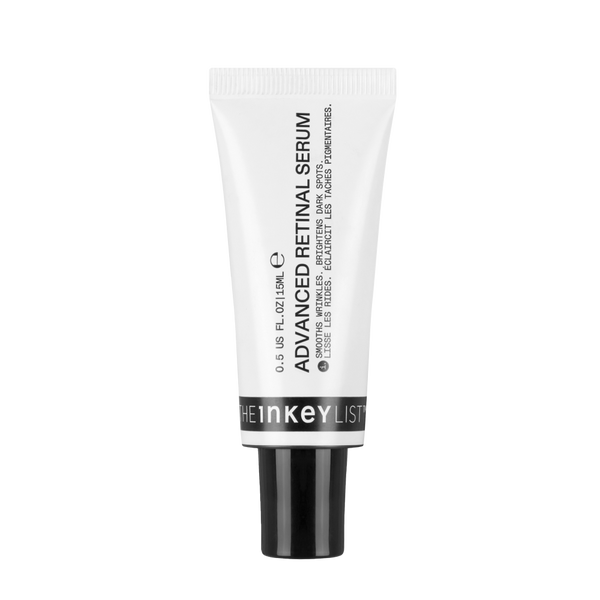
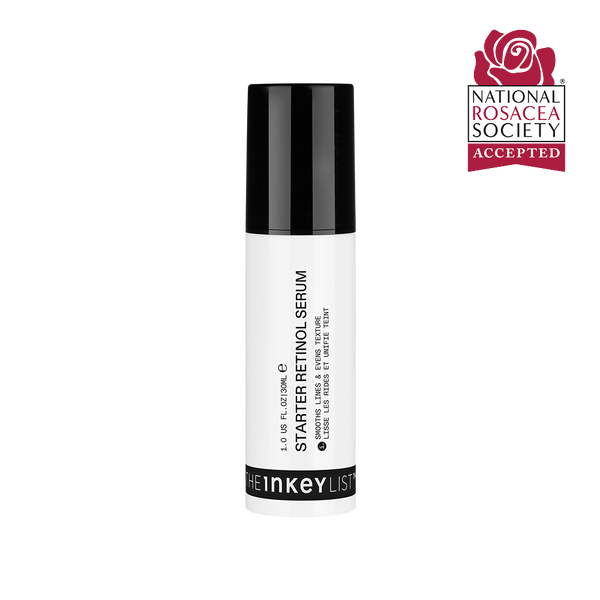
- Starter Retinol Serum - £13, or Advanced 0.2% Retinal Serum - £18 if you are an experienced user.
- Retinol Eye Cream - £13.
- Bio-Active Ceramide Moisturiser - £20.
That moisturiser step matters more than people often assume. When people ask what the best moisturiser after retinol actually is, the honest answer is whichever one properly seals in the actives you have just applied and reinforces your barrier overnight, which is exactly the role the Bio-Active Ceramide Moisturiser plays here.
For a broader primer on sequencing logic across your entire routine, not just the retinol-specific steps, our guide on how to layer skincare products is worth bookmarking.
A few common mistakes are worth calling out directly, because they are easy to make without realising it:
- Applying retinol before ectoin, which skips the protective base entirely.
- Skipping the 30-second wait between ectoin and retinol.
- Applying retinol to dry skin without using ectoin first.
- Using ectoin only at night, when it is just as valuable as part of your morning routine.
This PM pairing is just one piece of the puzzle. Ectoin’s role extends well beyond retinol nights, across your whole routine and your full stack of actives, which is exactly what the next section explores.
Can You Use Ectoin with Other Actives?
Retinol is the pairing most people search for, but it is far from the only one. Ectoin’s barrier-first mechanism means it slots in ahead of almost everything in your routine, and understanding how it works with each major active category will help you build a routine that suits your specific skin, not just a generic one.
Ectoin and Niacinamide
This pairing is particularly well suited to oily and combination skin types. The layering order follows the same logic as with retinol: ectoin first, wait 30 seconds, then apply the 10% Niacinamide Serum at £12. For readers building a three-step PM routine, this slots in neatly alongside retinol on nights when both are used, with niacinamide applied before the retinol step. For more on how niacinamide works more broadly, visit our niacinamide ingredient page.
Ectoin and Vitamin C
Vitamin C is strictly an AM-only ingredient and should never be paired with retinol in the same routine, since retinol belongs in your evening routine and vitamin C performs its antioxidant role best during the day. Using ectoin and vitamin C together in the morning effectively doubles down on environmental protection, with ectoin supporting the barrier while vitamin C helps defend against daily environmental stressors. Our 15% Vitamin C + EGF Serum, priced at £16, uses a stable ascorbyl glucoside form of vitamin C, which tends to be gentler than some other forms. Learn more on our vitamin C ingredient page.
Ectoin and Hyaluronic Acid
These two ingredients are often confused because both are associated with hydration, but they work in genuinely different ways. Hyaluronic acid attracts water to the surface of the skin, while ectoin anchors moisture at a cellular level and reinforces the barrier itself. The Ectoin Hydro-Barrier Serum already contains both ingredients, so most people will not need to layer a separate hyaluronic acid product on top. If you do want a dedicated option, our Hyaluronic Acid Serum is £12. For the full breakdown of how these two ingredients differ, read Ectoin vs Hyaluronic Acid: What’s the Difference?and our dedicated hyaluronic acid ingredient page.
Ectoin and AHAs/BHAs
Exfoliating acids work by loosening the bonds between dead skin cells, encouraging them to shed more readily. Applying ectoin beforehand supports your skin’s recovery after this process, helping manage the temporary rise in TEWL that exfoliation can cause. For a full explanation of transepidermal water loss and why it matters across your whole routine, see our guide on what TEWL is. The golden scheduling rule here is worth repeating clearly: never use an AHA or BHA and retinol on the same night. Alternate between them instead. Our Beta Hydroxy Acid Serum is £12, and for more complex routines involving azelaic acid, our azelaic acid and retinol guide covers the detail.
Ectoin and Peptides
This is one of the most conflict-free pairings in the entire guide. There are no known conflicts and no timing restrictions between ectoin and peptides, which makes it a strong combination for non-retinol nights or for anti-ageing-focused routines that do not include retinol at all. For readers wanting an extra step here, our Exosome Glow Serum, priced at £20, can be introduced as an optional addition, positioned before the retinol or retinal serum in more advanced routines. Exosomes are a newer area of skincare science, and our dedicated exosomes page explains the category in more depth. In clinical testing, 100% of participants saw more glowing skin, clinically proven, with clinic-worthy rejuvenated skin reported in 14 days. In-vitro testing of Cica Exosomes also showed a 55% reduction in visible signs of skin stress, including redness, puffiness and visible irritation, alongside a 63% increase in skin renewal activity in 8 hours. The formula is designed as a 6-in-1 skin rejuvenation treatment, clinically proven to visibly improve radiance, hydration, tone, firmness, elasticity and texture, and proven to deliver up to 12 hours of hydration*. It also helps support natural collagen production.
4-week clinical study of 26 people. Clinical study of 31 people. In-vitro testing of Cica Exosomes showed a 55% reduction in pro-inflammatory markers and a 63% increase in markers associated with skin renewal after 8 hours.
Here is the full compatibility picture at a glance:
- Retinol/Retinal: compatible, ectoin applied first to reduce irritation.
- Niacinamide: compatible, ectoin first, wait 30 seconds.
- Vitamin C: compatible, both used in the morning routine.
- Hyaluronic Acid: compatible, complementary rather than duplicate hydration.
- AHAs/BHAs: compatible, ectoin supports post-exfoliation recovery.
- Peptides: compatible, no timing restrictions, including the optional Exosome Glow Serum addition.
Having shown that ectoin is compatible with virtually everything, it is important to add a responsible caveat: just because ectoin plays well with every active does not mean every active plays well with every other active.
What to Be Mindful of When Layering Multiple Actives
Ectoin has no known incompatibilities, and that is genuinely one of its most useful properties. But that does not mean the rest of your routine is automatically conflict-free, and it is worth being honest about where real caution is still needed.
The most important rule in this entire guide, after the ectoin-goes-first principle, is this: never use retinol and an AHA or BHA on the same night. Both ingredients accelerate cell turnover, and using them together overloads the barrier rather than doubling the benefit. Alternate between them on different nights instead.
The second rule follows the same logic in a different direction: never use vitamin C and retinol in the same routine. Vitamin C belongs in the morning, retinol belongs in the evening, and keeping that AM versus PM separation intact avoids unnecessary irritation.
When you are building out a new routine, introduce one new active at a time. This is not just cautious advice, it is practical advice, because it means that if your skin does react to something, you can actually trace the reaction back to its source rather than guessing which of three new products caused it.
It is also worth naming the retinol “purging period” honestly. This temporary period of dryness, flaking or sensitivity is real, and ectoin helps manage it, but it does not eliminate it entirely. Give any new routine 6 to 8 weeks before judging whether it is working for you. Our guide on what skin stress actually is is a useful companion read if you want to understand the broader signs of an overloaded routine, and what not to mix with retinol covers the specific combinations to avoid in more detail. Our general layering guide is also worth revisiting at this stage.
If you are using a prescription retinoid rather than an over-the-counter retinol, check with your GP or dermatologist before adding new actives into your routine, since prescription-strength formulas can behave differently from cosmetic retinol.
This is also a good point to speak directly to anyone with sensitive or rosacea-prone skin. Ectoin’s gentle, barrier-supportive profile makes it a genuinely sound choice here, and ectoin rosacea compatibility is one of the more frequently asked questions we receive. If sensitivity is a recurring concern for you, our guide on how to hydrate sensitive skin without causing irritation goes into more detail on building a routine that supports rather than challenges a reactive barrier.
With the ground rules clearly established, it is time to move into concrete, ready-to-follow routines that put everything discussed so far into practice.
Sample AM and PM Routines Using Ectoin
Morning Routine: All Skin Types
- Cleanse.
- Ectoin Hydro-Barrier Serum - £16.
- Optional: 10% Niacinamide Serum - £12, or 15% Vitamin C + EGF Serum - £16.
- Moisturiser.
- SPF.
PM Routine: Retinol Beginner (2-3 nights per week)
- Cleanse (double cleanse recommended).
- Ectoin Hydro-Barrier Serum - £16.
- Wait 30 seconds.
- Starter Retinol Serum - £13.
- Retinol Eye Cream - £13.
- Bio-Active Ceramide Moisturiser - £20.
PM Routine: Retinol and Niacinamide (Experienced Users)
- Cleanse.
- Ectoin Hydro-Barrier Serum - £16.
- 10% Niacinamide Serum - £12.
- Optional: Exosome Glow Serum - £20, as an advanced, optional extra for those wanting additional glow-boosting support (see the approved clinical claims in the peptides section above).
- Starter Retinol Serum - £13, or Advanced 0.2% Retinal Serum - £18.
- Retinol Eye Cream - £13.
- Bio-Active Ceramide Moisturiser - £20.
PM Routine: Acid Night (Alternating with Retinol Nights)
- Cleanse.
- Ectoin Hydro-Barrier Serum - £16.
- Beta Hydroxy Acid Serum - £12.
- Bio-Active Ceramide Moisturiser - £20.
A few key principles hold true across every routine above:
- Ectoin is the constant, used first, in both AM and PM routines.
- Retinol stays PM-only, starting at 2-3 nights per week.
- Acid nights and retinol nights alternate, never overlap.
- Every routine is sealed with a moisturiser.
- Every morning routine finishes with SPF, without exception.
With your routines fully mapped out, the last practical step is a simple, shoppable summary of everything discussed.
Shop the Routine
This is everything mentioned throughout the guide, listed in the order you would use it, with a one-line reminder of what each product does and when to use it.
- Ectoin Hydro-Barrier Serum - £16 - barrier support and deep cellular hydration; first step after cleansing, AM and PM.
- 10% Niacinamide Serum - £12 - oil control and visible pore reduction; AM or PM, after ectoin.
- 15% Vitamin C + EGF Serum - £16 - brightening and antioxidant protection; AM only, after ectoin.
- Starter Retinol Serum - £13 - gentle cellular renewal for retinol beginners; PM, 2-3 nights per week.
- Advanced 0.2% Retinal Serum - £18 - faster renewal for experienced retinoid users; PM.
- Exosome Glow Serum - £20 - optional glow-boosting step; PM, after niacinamide and before retinol or retinal.
- Retinol Eye Cream - £13 - targets fine lines around the eye contour; PM, after retinol serum.
- Bio-Active Ceramide Moisturiser - £20 - seals and supports the barrier overnight; last step in your PM routine.
If you are still unsure exactly where to start, our Skincare Quiz can map out a personalised routine for you in a couple of minutes.
From here, it is worth stepping back from the product list and returning to the core philosophy that this entire guide has been building toward.
Conclusion
Ectoin is not complicated. It goes first, every morning and every evening, and that single consistent habit is what makes every active you apply afterwards more effective and more comfortable to use.
For retinol specifically, this translates into a real, measurable benefit: reduced transepidermal water loss, a calmer adjustment period, and a noticeably smoother introduction to one of the most effective anti-ageing ingredients available. This is not a workaround for retinol’s side effects. It is simply a smarter way to use retinol from day one.
The same pattern holds true across your entire active stack, whether that is niacinamide, vitamin C, acids or peptides. Ectoin first, barrier supported, actives working the way they are supposed to.
If there is one lasting takeaway from this guide, it is this: a simple routine used consistently will always outperform a complicated one used sporadically.
Ready to put this into practice? Shop the Ectoin Hydro-Barrier Serum at £16, explore our ectoin ingredient page or our retinol ingredient page for more of the science behind this guide, or take the Skincare Quiz for a personalised routine in two minutes.
Frequently Asked Questions
Got a question?
Our askINKEY team are a friendly bunch of skincare experts with deep product knowledge and zero judgement. Whether you're an ingredient obsessive or just starting out, we'll make it make sense. No question too big. No question too small. We Give A Care, Every Day.


