



Niacinamide for Acne Scars: What It Can (and Can’t) Do
Learn how niacinamide helps fade post-acne marks, reduce redness and strengthen the skin barrier, while understanding why true acne scars require different treatments.
Author
askINKEY skincare advisor
Published
17 July, 2026
Time to read
8 minutes
Niacinamide is one of the most searched skincare ingredients for post-blemish marks - and there is a very good reason for that. But whether it will work for you depends almost entirely on what type of mark you are actually dealing with. The answer is not a simple yes or no. It is a yes for some marks, a partial yes for others, and an honest no for structural scarring - and understanding that distinction is the difference between building a routine that genuinely works and spending months frustrated by a lack of progress.
This blog covers everything you need to know: the science behind how niacinamide affects PIH (post-inflammatory hyperpigmentation) and PIE (post-inflammatory erythema), what it genuinely cannot do for physical scarring, realistic timelines based on current clinical evidence, how it compares and pairs with other key ingredients, and how to build a routine around it that delivers results.
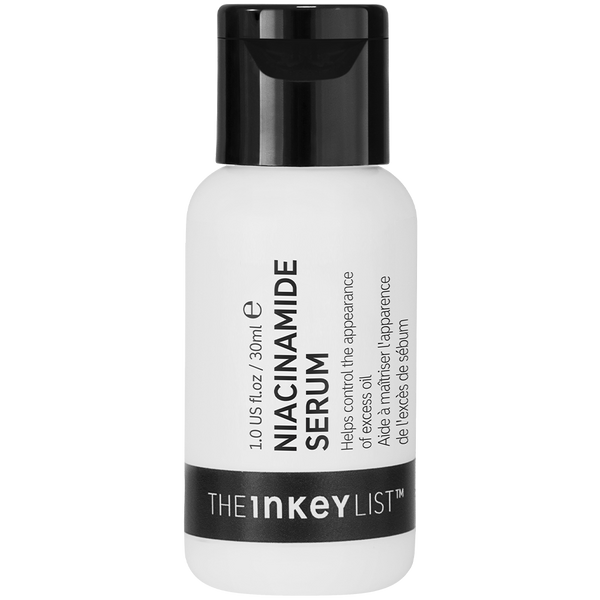
If you are ready to start, our 10% Niacinamide Serum at £10 is the most direct first step for anyone dealing with post-blemish marks. For a broader overview of the ingredient itself, our niacinamide ingredient guide covers the full picture. And if you want to understand post-blemish marks and blemish scars more comprehensively before diving into ingredients, the acne scars pillar page is the right place to start.
PIE, PIH, and True Scarring: Know What You Are Treating
Before any ingredient discussion can be useful, you need to know exactly what kind of mark you are dealing with. The term “acne scar” gets used loosely - and often incorrectly - to describe three very different things. Getting this right is not a technicality. It determines whether niacinamide is the right tool for you, whether it will work on its own, and what realistic results look like.
Post-Inflammatory Hyperpigmentation (PIH) is a flat, brown or dark mark left behind after a blemish heals. It is caused by excess melanin production triggered by the skin’s inflammatory response. When a blemish causes inflammation, the skin’s melanocytes - the cells responsible for producing pigment - go into overdrive and produce more melanin than usual. That surplus melanin becomes visible as a flat, discoloured patch. Critically, PIH involves no structural damage to the skin. There is no physical change to the dermis, no loss of collagen, no altered texture. It is purely a pigmentation issue, which means it is responsive to the right topical skincare ingredients.
Post-Inflammatory Erythema (PIE) presents as a flat, red or pink mark - most visible in lighter skin tones - and is caused by damaged or dilated blood vessels near the skin’s surface following inflammation. When a blemish causes enough inflammation, it can damage the fine capillaries beneath the skin, leaving behind that characteristic flushed or red discolouration. Like PIH, PIE involves no structural damage and no change in skin texture. It is a vascular issue rather than a pigment issue, which means it responds best to anti-inflammatory and redness-calming ingredients.
True atrophic scarring is where the picture changes significantly. Ice-pick scars (deep, narrow, pitted), boxcar scars (wide, defined edges, depressed), and rolling scars (wavy, undulating texture) all involve a physical loss of collagen in the dermis. They alter the actual structure and texture of the skin. This is not a pigmentation issue. No topical skincare ingredient - however well-formulated - can rebuild lost dermal collagen to the extent needed to reverse these physical changes.
A practical test can help you distinguish between PIE and PIH at home: press a clean fingertip firmly onto the mark for a few seconds. If the colour temporarily blanches or goes white under pressure, it is most likely PIE - a vascular response. If the colour remains unchanged, it is most likely PIH - a pigment deposit. Many people have both simultaneously, particularly if they have been dealing with persistent breakouts.
The majority of people who believe they have permanent ‘acne scars’ are actually dealing with PIH or PIE - both of which are genuinely responsive to targeted topical skincare when used consistently.
This is genuinely good news. Most people who use the phrase “acne scars” are, in fact, dealing with PIH or PIE - both of which respond meaningfully to the right ingredients, including niacinamide. For a deeper dive into all mark types, visit our acne scars pillar page, or read how to get rid of acne scars naturally for a broader treatment overview.
Understanding what you are treating sets the foundation for everything that follows - which is exactly why the science behind niacinamide’s mechanisms makes so much more sense once you know the difference.
How Niacinamide Works on Post-Blemish Marks: The Real Science
Niacinamide does not work on post-blemish marks in one single way. It works through several overlapping mechanisms - some targeting pigmentation, some targeting redness, and some working indirectly by protecting the skin from future damage. Understanding each of these separately makes it far easier to set accurate expectations and choose the right supporting ingredients.
Melanin Transfer Inhibition - the Core PIH Mechanism
For PIH, niacinamide’s primary mechanism is one of the most well-studied effects in cosmetic dermatology. Rather than stopping melanin from being produced, niacinamide interrupts the transfer of melanosomes - the cellular packages that contain melanin - from melanocytes (the pigment-producing cells) to keratinocytes (the surface skin cells). When this transfer is reduced, less melanin reaches the skin’s surface, and the visible dark mark becomes lighter over time. This mechanism has been established across multiple clinical studies and represents one of the more elegant and well-understood pathways for topical pigmentation management. Critically, it does not disrupt melanin production entirely (which would carry risks), but rather modulates its distribution in a measured, reversible way.
Upstream Anti-Inflammatory Action for PIH
Niacinamide also addresses PIH at an earlier point in the process. By calming the initial inflammatory response that triggers excess melanin production in the first place, niacinamide reduces both how dark a post-blemish mark becomes and how long it persists. This anti-inflammatory upstream effect means that consistent niacinamide use - particularly during and immediately after a blemish - can meaningfully reduce the severity of PIH before it fully develops. A 2024 systematic review on PIH treatments highlights the role of anti-inflammatory and melanin-modulating topicals as first-line approaches for PIH management across skin tones. For a full overview of niacinamide’s mechanisms beyond pigmentation, visit our niacinamide ingredient guide.
Redness Calming for PIE
For PIE - the red and pink marks caused by vascular damage - niacinamide works primarily through NF-kB pathway inhibition, a key molecular mechanism that reduces the inflammatory signalling responsible for sustaining dilated blood vessels near the skin’s surface. By damping down this inflammatory response, niacinamide helps the skin gradually calm and reduce the visible redness associated with PIE. This mechanism also explains why niacinamide is valued in formulations designed for sensitive and redness-prone skin more broadly.
Barrier Strengthening as an Indirect Protective Benefit
One of niacinamide’s most important but least discussed benefits for anyone dealing with post-blemish marks is its effect on the skin barrier. Niacinamide boosts ceramide synthesis - ceramides being the lipid molecules that hold the skin barrier together and prevent water loss. A stronger skin barrier means the skin is less reactive to environmental irritants, less prone to the inflammation that causes future blemishes, and therefore less likely to generate new PIH or PIE marks. This makes niacinamide not just a treatment for existing marks, but a preventive measure against future ones. For those currently dealing with active blemishes alongside post-blemish marks, our does niacinamide help with acne blog explores this dual role in more detail.
The SPF Synergy - A Critical Interaction
Perhaps the most clinically significant recent finding in this space is the synergistic relationship between niacinamide and daily SPF for PIH prevention. A 2025 randomised, investigator-blinded clinical trial published in Springer Naturefound that combining niacinamide with broad-spectrum sunscreen provided enhanced PIH prevention compared to either ingredient used alone. UV exposure is one of the primary triggers that darkens existing PIH marks and stimulates further melanin production. Without daily SPF, niacinamide’s pigmentation-fading work is being actively undermined with every hour of daylight exposure. This is not optional. It is non-negotiable.
The science is consistent, well-evidenced, and gives a clear picture: niacinamide is a genuinely effective ingredient for PIH and PIE when used correctly, consistently, and alongside appropriate photoprotection.
What Niacinamide Cannot Do: Honest Expectations for Blemish Scars
This is the section that matters most for trust - and for results. There is a significant amount of skincare content online that implies niacinamide can “fix” or “erase” acne scars comprehensively. That is not accurate, and believing it leads to frustration and wasted effort. Here is what niacinamide genuinely cannot do.
It Cannot Repair True Atrophic Scarring
Ice-pick scars, boxcar scars, and rolling scars involve a physical deficit of collagen in the dermis - a structural change beneath the surface of the skin. No topical ingredient, regardless of its concentration or formulation, can rebuild dermal collagen to the extent required to reverse these physical indentations. The skin simply cannot absorb a serum molecule deeply enough to restructure damaged tissue at that level. Treatments for true atrophic scarring - such as microneedling, laser resurfacing, subcision, or dermal fillers - work precisely because they operate at the dermal level in ways that topical products cannot. If your marks have a visible texture change - a dip, pit, or indentation that you can feel as well as see - niacinamide will not change that. Our retinol for scarring blog discusses which topical ingredients offer the best support for skin texture, alongside professional treatment options.
It Cannot Erase Deep or Old PIH Quickly
Very deep or long-standing PIH marks - particularly in medium to deeper skin tones where melanocyte activity is higher - require patience, consistency, and often additional depigmenting ingredients alongside niacinamide. Niacinamide alone at 10% is effective, but it is not a rapid-action treatment. Expecting visible results within two weeks is not realistic for deep or old marks. Expecting meaningful results over three to six months of consistent, daily use is.
It Cannot Work Sporadically
Niacinamide is not a spot treatment and is not a treatment to use only when you remember. Its mechanisms require consistent, daily exposure - both morning and evening - to maintain the suppression of melanosome transfer and the anti-inflammatory effects that lead to visible fading. Applying it three times a week produces a fraction of the results that twice-daily application delivers. Consistency is the single biggest variable within a user’s control.
It Cannot Compensate for UV Exposure
UV exposure darkens existing PIH, stimulates further melanin production in already-reactive skin, and directly undermines the fading progress that niacinamide is working to achieve. Without daily SPF, even the most well-formulated niacinamide routine will produce slower and less significant results. As the 2025 Springer Nature studyconfirms, niacinamide and SPF work synergistically - and the absence of one meaningfully reduces the effectiveness of the other.
The honest test is straightforward: if the mark is flat and its impact is purely visual (colour only, no texture difference), niacinamide can help. If the mark creates a physical indentation or raised texture, niacinamide addresses pigmentation only and will not change the structure. For a complete overview of blemish scar types and the full range of treatment options available, the acne scars pillar page is the most thorough resource.
How Long Does Niacinamide Take to Work on Post-Blemish Marks?
Timelines are one of the most common and most important questions for anyone starting a post-blemish routine - and one of the most frequently misrepresented. Here is an honest, evidence-informed breakdown.
PIE Responds Faster Than PIH
PIE - the red and pink marks caused by vascular damage - tends to respond more quickly to anti-inflammatory ingredients than PIH does to depigmenting ones. Visible calming of redness can begin within four to six weeks of consistent niacinamide use, with meaningful improvement in many cases by weeks eight to twelve.
PIH - the flat brown or dark marks caused by excess melanin - typically requires eight to twelve weeks before visible fading begins, and three to six months for significant improvement in deeper or older marks. This is not a flaw in the ingredient. It reflects the biology of melanin distribution and the skin’s natural cell turnover cycle.
A Realistic Timeline Milestone Guide
- Weeks 1-2: General skin tone calming begins. The skin barrier starts to strengthen. Redness reduction in PIE marks may begin to be perceptible.
- Weeks 4-6: Visible redness calming in PIE marks. Early-stage PIH may begin to look slightly less intense. Skin feels more settled and balanced overall.
- Weeks 8-12: Measurable PIH fading. Skin tone visibly more even. PIE marks should be significantly calmer. This is the earliest point at which a fair evaluation of the routine’s effectiveness can be made.
- Months 3-6: Significant fading of deeper or older PIH marks. Continued improvement in skin tone uniformity. Best results for those who have maintained both niacinamide and daily SPF throughout.
The Variables That Influence Your Timeline
Several factors affect how quickly - or slowly - your results appear. Skin tone matters: deeper skin tones with higher baseline melanocyte activity may find PIH more persistent and slower to fade. The age of the mark matters: a mark from last week will respond faster than one from two years ago. The depth of the original blemish matters: a superficial spot leaves a lighter mark than a deep, inflamed cyst. SPF consistency matters enormously, as discussed. And the use of complementary ingredients alongside niacinamide can meaningfully accelerate the timeline.
Consistency Beats Concentration
One of the most practical insights from clinical use of niacinamide is that consistency of application is more important than concentration. Daily twice-daily use of a 10% formulation outperforms sporadic use of a 20% formulation every time. The results accumulate with repeated, sustained exposure - not with one-off high-dose applications.
For more detail on how and when to apply niacinamide within a routine context, our how and when to use niacinamide blog is a practical complement to this guide. And for those interested in Tranexamic Acid as a complementary ingredient, our Tranexamic Acid ingredient page explains how it works alongside niacinamide for PIH.
INKEY Products with Niacinamide for Post-Blemish Marks
Building the right product routine around niacinamide does not have to be complicated or expensive. Here is every INKEY product that plays a meaningful role in a post-blemish routine, with clear guidance on what each one does and why it earns its place.
Our 10% Niacinamide Serum - £10
This is the starting point. Formulated with 10% niacinamide and 1% Hyaluronic Acid, it is lightweight, fragrance-free, and suitable for all skin types. The 10% concentration sits in the clinically supported range for visible pigmentation and redness benefits without causing irritation. It is designed for use morning and evening as the dedicated treatment step in your routine. If you use one product from this list, this is it.
Our Omega Water Cream - £11
The moisturiser step that also contributes to your post-blemish routine. With 5% niacinamide, a Ceramide Complex (omegas 3, 6, and 9), and 5% Glycerin, it reinforces the barrier-strengthening work begun by the serum while delivering a second dose of niacinamide at the moisturiser step. In an independent consumer trial, 95% of users agreed their skin tone looked more even after 28 days of use. It layers seamlessly over the 10% Niacinamide Serum.
Our 360 Skin Clearing Serum - £16
Formulated for active blemishes and post-blemish marks simultaneously. With 1% Dioic Acid, 2% Salicylic Acid, and 0.4% Dendriclear, it addresses both the source of new marks (active breakouts) and the marks already left behind. Particularly useful for anyone still experiencing breakouts alongside existing post-blemish discolouration.
Our Azelaic Acid Serum for Redness Relief - £16
A UK-specific addition to the post-blemish routine. With 10% Azelaic Acid, it is particularly well-suited to PIE - the red and pink marks - where its anti-inflammatory and mild exfoliating properties complement niacinamide’s redness-calming action. Azelaic Acid also has well-documented depigmenting properties that work alongside niacinamide for PIH. A natural pairing.
Our Dewy Sunscreen SPF 30 - £15
Non-negotiable. Not optional. Not just a summer product. Daily SPF is the single most important protective step in any post-blemish routine, and our Dewy Sunscreen at £15 delivers broad-spectrum protection in a lightweight, skin-comfortable formula that works with the rest of the routine rather than against it. Without it, you are working against yourself. Sunscreen is not the final step in a routine - it is the step that determines whether every other step actually works.
For the full collection of products designed for blemish scars, visit our blemish scars collection.
Niacinamide vs Other Ingredients: What to Use Alongside It
Niacinamide works well in combination with several other key ingredients - and understanding how each pairing functions makes it easier to build a routine that targets PIH and PIE from multiple angles simultaneously.
Niacinamide + Tranexamic Acid: The PIH Power Pairing
Tranexamic Acid works by a different mechanism to niacinamide - it inhibits the interaction between keratinocytes and melanocytes at the source of pigmentation stimulation, rather than at the transfer stage. Used together, they address PIH at two separate points in the process, which is why this pairing is often the fastest route to visible results for persistent post-blemish marks. Our Tranexamic Acid Serum at £16 is formulated to work alongside niacinamide in the same routine. Learn more at our Tranexamic Acid ingredient page.
Niacinamide and Vitamin C: Do They Actually Conflict?
One of the most persistent myths in skincare is that niacinamide and Vitamin C cannot be used together - the concern being that they react to form niacin, which causes flushing. This myth has been thoroughly debunked under normal cosmetic formulation and storage conditions. In practice, combining niacinamide with Vitamin C provides complementary depigmenting mechanisms (Vitamin C inhibits tyrosinase, the enzyme involved in melanin synthesis, while niacinamide inhibits melanosome transfer) alongside Vitamin C’s antioxidant protection against UV-induced pigmentation. Our 15% Vitamin C + EGF Serum at £15 pairs well with niacinamide in an AM routine. For more on Vitamin C, visit our Vitamin C ingredient guide.
Niacinamide and Retinol: Skin Renewal Support
Retinol accelerates skin cell turnover, which physically speeds up the replacement of melanin-laden surface skin cells with new ones - making it a useful complement to niacinamide’s transfer inhibition. In a PM routine, niacinamide applied after retinol can also help buffer some of the initial irritation that retinol causes in new users, supporting skin barrier tolerance. For a detailed look at retinol’s role in post-blemish skin, our retinol for scarring and post-acne marks blog is essential reading.
Niacinamide + Azelaic Acid: The PIE Specialist Combination
For predominantly red or pink post-blemish marks (PIE), combining niacinamide with Azelaic Acid creates a particularly targeted approach. Azelaic Acid’s anti-inflammatory, antimicrobial, and mild keratolytic properties complement niacinamide’s redness-calming and barrier-strengthening actions. Our Azelaic Acid Serum for Redness Relief at £16 is the ideal partner. For more context on Azelaic Acid’s role in post-blemish skin, our does azelaic acid help with acne scars blog covers it in depth.
Niacinamide + Glycolic Acid: Exfoliation to Accelerate Fading
Chemical exfoliation accelerates the rate at which melanin-loaded surface skin cells are shed, which speeds up the visible fading of PIH marks. Our Glycolic Acid Toner at £13 is best used two to three times per week in a PM routine, applied before niacinamide. The combination of exfoliation plus melanin transfer inhibition addresses PIH from two complementary directions. For further context on exfoliation and post-blemish marks, our salicylic acid for acne scars blog explores chemical exfoliants in this context.
Each of these pairings is additive, not conflicting. Building your routine from a niacinamide foundation and adding complementary ingredients based on your mark type gives you a genuinely multi-mechanism approach to post-blemish skin.
Routines, Expert Tips, and Frequently Asked Questions
The Foundation Routine (AM)
For those starting out, simplicity is the right approach. Four steps cover the essentials:
- Cleanse - our Salicylic Acid Cleanser for oily or blemish-prone skin, or our Glycerin Gentle Purifying Cleanserfor drier or more sensitive skin.
- Treat - our 10% Niacinamide Serum (£10). Apply to clean, dry skin before any other serums or moisturisers.
- Moisturise - our Omega Water Cream (£11). Locks in hydration and delivers a second niacinamide hit at the moisturiser step.
- Protect - our Dewy Sunscreen SPF 30 (£15). Every single morning. Non-negotiable.
The Foundation Routine (PM)
- Cleanse.
- Treat - our 10% Niacinamide Serum (£10).
- Moisturise - our Omega Water Cream (£11).
The Full Routine for Faster Results (AM)
For those who want to accelerate PIH fading with a multi-mechanism approach:
- Cleanse.
- Treat - our Tranexamic Acid Serum (£16). Apply first as the dedicated brightening treatment.
- Brighten - our 15% Vitamin C + EGF Serum (£15). Antioxidant protection and tyrosinase inhibition.
- Balance - our 10% Niacinamide Serum (£10). Melanosome transfer inhibition and barrier support.
- Moisturise - our Omega Water Cream (£11).
- Protect - our Dewy Sunscreen SPF 30 (£15).
The Full Routine for Faster Results (PM)
- Cleanse.
- Treat - our Tranexamic Acid Serum (£16).
- Exfoliate (2-3 times per week only) - our Glycolic Acid Toner (£13). Skip on nights when using retinol.
- Renew (alternate nights) - our Retinol Serum. Accelerates cell turnover and surface shedding of melanin-rich cells.
- Balance - our 10% Niacinamide Serum (£10). Applied after retinol to support barrier tolerance.
- Moisturise - our Omega Water Cream (£11).
Expert Tips Worth Following
- Do not stop using niacinamide when an active blemish appears. This is precisely when it is most valuable - applied during the inflammatory phase, it can reduce the severity of the PIH mark that forms afterwards.
- Apply niacinamide before retinol in the PM routine, not after. The order in the full routine above applies niacinamide last among serums - this is correct because niacinamide at this position also supports barrier tolerance for retinol users.
- Do not mix serums in the palm of your hand before applying. Apply each product separately to allow it to absorb into the skin before the next is applied.
- Use a Hydrocolloid Pimple Patch on active blemishes to protect them from picking and from the environment - reducing the inflammatory damage that causes post-blemish marks in the first place.
- Give the routine a genuine eight weeks before evaluating results. Changing products before the eight-week mark makes it impossible to know what is working and what is not.
- Use our Breakout Analyser Pro to track your skin’s progress and get personalised guidance on your specific concerns.
For personalised routine guidance, our skincare quiz matches your skin type and concerns to a tailored product recommendation.
The Honest Verdict on Niacinamide for Post-Blemish Marks
Niacinamide is one of the most effective, best-evidenced, and most accessible topical ingredients available for PIH and PIE. Its mechanisms are well-understood, well-studied, and genuinely meaningful for anyone dealing with flat discolouration left behind by blemishes. It interrupts melanin transfer for PIH, calms the inflammatory response driving both mark types, strengthens the skin barrier to prevent future damage, and works synergistically with daily SPF to deliver results that are measurably better than either alone.
What it cannot do is equally important to understand. It will not reverse structural atrophic scarring. It will not deliver overnight results. It will not work if used sporadically or without daily photoprotection. Setting those expectations clearly from the start is what makes the difference between a routine that builds genuine, lasting improvement and one that disappoints.
The clearest path forward: start with our 10% Niacinamide Serum at £10. Add our Dewy Sunscreen SPF 30 at £15 every morning without exception. Give it eight weeks. Add Tranexamic Acid and Vitamin C for a faster, multi-mechanism approach to PIH. Add Azelaic Acid if PIE is your primary concern. Stay consistent, and the results will follow.
The skin is not a quick-fix system. But given the right tools, used the right way, it has a remarkable capacity to improve.
Shop the 10% Niacinamide Serum - £10
Frequently Asked Questions
Got a question?
Our askINKEY team are a friendly bunch of skincare experts with deep product knowledge and zero judgement. Whether you're an ingredient obsessive or just starting out, we'll make it make sense. No question too big. No question too small. We Give A Care, Every Day.


