



Salicylic Acid for Acne Scars: Does It Really Work?
Salicylic acid won't erase true acne scars, but it's a genuine ally against the dark and red marks blemishes leave behind — here's exactly how, and what to pair it with.
Author
askINKEY skincare advisor
Published
07 July, 2026
Time to read
12 minutes
Does salicylic acid help with acne scars? The honest answer is: it depends entirely on what you mean by “scar.” If you’re dealing with pitted, textured skin, salicylic acid will not fix that. But if you’re looking at dark or red marks left behind after a blemish has healed, salicylic acid is genuinely one of the more useful ingredients you can reach for. This isn’t a hedge or a marketing dodge - it’s the clearest, most accurate answer we can give you, and the rest of this article explains exactly why.
Too much skincare content blurs the line between “scar” and “mark,” and that confusion leads to disappointment, wasted money, and sometimes unnecessary worry. So let’s be upfront: salicylic acid is a brilliant, well-studied ingredient for keeping pores clear and fading the discolouration that lingers after acne and blemishes heal. It is not a collagen-rebuilding, texture-filling treatment for true structural scarring. Those are two very different jobs, and no single ingredient - however good - can do both.
What this piece will walk you through is simple and sequential: the science of how salicylic acid actually works on skin, the crucial difference between true scars and post-blemish marks, what salicylic acid can and can’t realistically deliver, and a full, flexible INKEY routine for anyone trying to fade marks and manage blemish-prone skin at the same time. No hype, no overpromising - just a clear, judgement-free answer to a question that genuinely deserves one.
Before we get into routines and product steps, though, there’s one thing we need to nail down first, because the word “scar” is doing a lot of heavy lifting in everyday conversation, and it’s usually describing two completely different skin conditions.
Acne Scars vs Post-Blemish Marks: Why the Difference Matters
Here’s the thing almost nobody tells you clearly enough: most people who say “I have acne scars” are not actually talking about scars in the clinical sense. They’re talking about marks. And that distinction changes everything about what will and won’t help.
True, structural acne scars are changes in the skin’s texture. They happen when a deep, inflamed breakout damages the collagen and tissue within the dermis - the deeper, structural layer of skin that sits beneath the surface. When that collagen is damaged during healing, the skin can’t always rebuild itself perfectly flat, and the result is a physical indentation or textural change you can usually feel as well as see. Dermatologists typically describe three main sub-types: ice pick scars (narrow, deep, and sharply defined), boxcar scars (broader, with more clearly defined edges), and rolling scars (shallow, wave-like depressions with soft edges). If you’re not sure which category you might fall into, our guide on Types of Acne Scars: How to Identify Yours breaks down how to tell them apart, and What Causes Acne Scars and How to Prevent Them explains the full backstory of how and why that deeper damage occurs in the first place.
Post-blemish marks are a completely different story. These are flat - not indented, not raised - areas of discolouration that appear after a blemish has healed. They come in two main forms. The first is post-inflammatory hyperpigmentation (PIH), which shows up as brown, tan, or dark marks and is caused by excess melanin production in response to inflammation. The second is post-inflammatory erythema (PIE), which presents as red, pink, or purplish marks caused by lingering dilation or damage to the small blood vessels near the skin’s surface. Crucially, neither PIH nor PIE involves any loss of collagen or structural damage - they are surface-level and, given enough time and the right support, they generally fade on their own. If brown or dark discolouration beyond blemish marks is a broader concern for you, our hyperpigmentation pillar page goes into more depth on the wider topic.
Why does this distinction matter so much for an article about salicylic acid specifically? Because salicylic acid’s entire mode of action takes place at the skin’s surface and within the lining of the pore itself - it simply does not reach, or act upon, the deeper dermal layer where true scarring occurs. That means it has no mechanism by which it could rebuild lost collagen or smooth out a textural indentation. It was never designed to, and no amount of consistent use will change that. What it can do - meaningfully and measurably - is support the skin’s natural turnover process at the surface, which is exactly the layer where PIH and PIE live. So when someone asks “does salicylic acid help with acne scars,” the real, useful answer almost always hinges on which of these two categories they’re actually describing.
According to the British Association of Dermatologists, acne scarring results from a disruption to the normal wound-healing process following inflamed breakouts, and the resulting textural change is generally considered permanent without dedicated dermatological intervention such as resurfacing treatments.
This isn’t meant to be discouraging - quite the opposite. Once you know which one you’re dealing with, you can stop wasting time, money, and hope on products that were never going to solve your specific concern, and start using the right tools for the job. For the majority of people dealing with “scars” from the occasional spot or breakout, the honest news is actually good: what they’re seeing is very likely a post-blemish mark, and that is squarely within salicylic acid’s wheelhouse.
With that boundary clearly drawn, it’s time to get into the science - specifically, how salicylic acid actually behaves on skin at a molecular level, because that mechanism is the key to understanding both its genuine strengths and its very real limits.
How Salicylic Acid Actually Works on Skin
Salicylic acid belongs to a family of exfoliating ingredients called Beta Hydroxy Acids, or BHAs. What sets it apart from its more famous cousins, the Alpha Hydroxy Acids (AHAs) like glycolic and lactic acid, is a single but important chemical property: salicylic acid is oil-soluble, while AHAs are water-soluble. This might sound like a minor technical detail, but it’s actually the whole reason salicylic acid has built such a strong reputation for blemish-prone and oily skin specifically.
Because it’s oil-soluble, salicylic acid can travel through the sebum (the skin’s natural oil) that lines the inside of a pore, allowing it to actually penetrate into the pore itself rather than simply sitting on the skin’s surface. Once inside, it gets to work on what’s often described as the “glue” holding dead skin cells together - specifically, the intercellular bonds that cause dead skin cells to clump and stick rather than shed normally. This is salicylic acid’s keratolytic action, and it’s the foundation of everything it does. By gently loosening that cellular glue, salicylic acid helps clear out the buildup of dead skin cells, oil, and debris that would otherwise accumulate inside the pore and contribute to blockages.
That unclogging action matters more than it might initially seem. A blocked pore is essentially the starting point for a new blemish - when oil, dead skin cells, and bacteria get trapped together, inflammation often follows. By keeping pores clearer on an ongoing basis, salicylic acid helps reduce the frequency of new blemishes forming in the first place. And this is a genuinely important piece of the puzzle when we’re talking about post-blemish marks, because the single most effective way to have fewer marks is to have fewer new blemishes causing them. Prevention, in this sense, is doing a lot of quiet work behind the scenes.
At the same time, salicylic acid has a gentler exfoliating effect happening at the skin’s surface, separate from its deeper pore-clearing action. By encouraging the shedding of dead, pigmented, or discoloured surface cells, it accelerates the skin’s natural cell turnover rate. In plain terms, what does salicylic acid do here? It essentially nudges the skin to replace older surface cells - including ones carrying excess pigment from a healed blemish - with fresher ones more quickly than would happen left entirely to its own devices. This accelerated turnover is the precise mechanism behind its ability to help fade existing post-blemish marks over time; it isn’t instant, and it isn’t magic, but it is a real, biologically grounded process.
It’s worth pairing salicylic acid thoughtfully rather than relying on it in isolation. Niacinamide, for instance, is a frequent partner because it supports the skin barrier, helps regulate oil production, and works well alongside salicylic acid’s exfoliating action without cancelling each other out. If you want a deeper look at why this particular combination has become such a popular choice for oily, blemish-prone skin, our guide on Salicylic Acid and Niacinamide: The Best Duo for Oily, Blemish-Prone Skin covers the full rationale.
It’s also worth repeating, because it’s the crux of this entire article: everything salicylic acid does happens at the surface and within the pore lining - not in the deeper dermal layer where collagen lives and where true structural scarring originates. This isn’t a flaw in the ingredient; it’s simply outside its job description. Salicylic acid was never formulated to rebuild collagen, and comparing it to treatments that work in the dermis (like certain in-clinic resurfacing procedures) sets up an unfair and ultimately unhelpful expectation.
So, armed with a genuine understanding of the mechanism, the natural next question becomes far more specific and far more answerable: does salicylic acid actually help with marks in practice, and which type of mark responds best?
Does Salicylic Acid Help With Acne Scars? Breaking Down the Real Answer
Let’s answer this as directly as possible, because this is the question that brought most readers here in the first place: does salicylic acid help with acne scars? For true structural, textured, or pitted scarring - the kind caused by collagen damage in the deeper dermis - no, salicylic acid will not meaningfully change that texture. For post-blemish marks, particularly post-inflammatory hyperpigmentation, the answer is genuinely yes.
Is salicylic acid good for acne scars? For textured scarring: not effective. For post-blemish marks and discolouration: yes, it’s a solid, evidence-backed option.
That short, standalone statement is worth sitting with, because it captures the nuance that so much generic skincare advice glosses over. Let’s break down exactly why the answer splits this way.
For PIH - the brown or dark marks left behind after a blemish heals - salicylic acid’s accelerated cell turnover does real, tangible work. Pigmented surface cells get shed and replaced more quickly, which means the discolouration gradually becomes less visible over successive weeks rather than lingering for months. This isn’t an overnight transformation, but consistent use genuinely speeds up what would otherwise be a much slower, passive fading process. It’s one of the reasons salicylic acid shows up so often in dedicated hyperpigmentation-focused routines, alongside other actives built specifically for pigment, like vitamin C and tranexamic acid.
PIE is a different story, and it’s important to be honest about where salicylic acid’s strengths genuinely taper off. Red or pink post-blemish marks are primarily related to blood vessel changes near the skin’s surface rather than excess pigment, and salicylic acid isn’t formulated to directly target vascular redness. That doesn’t mean it’s useless here - keeping pores clear and reducing new breakouts still indirectly reduces the number of new red marks forming - but for actively fading existing redness, other ingredients are simply better suited to the task. Azelaic acid, for example, has a more direct anti-inflammatory and redness-reducing profile, and our article on Does Azelaic Acid Help With Acne Scars? explores that comparison properly. If PIE is your main concern, it’s genuinely worth reading our dedicated guide on How to Get Rid of Red Acne Scars (PIE) for a more targeted approach.
“Salicylic acid won’t erase true acne scars, but it’s a genuine ally against the dark and red marks blemishes leave behind.”
There’s also a persistent myth worth putting to rest here: some people avoid exfoliating acids out of fear they’ll “worsen” existing scarring, as though the acid might somehow dig deeper into the skin and cause more damage. This isn’t how salicylic acid works. Because its action is confined to the surface and the pore lining, it has no physiological mechanism by which it could worsen a true structural scar. The only real risk with any exfoliating acid is irritation from overuse, not an escalation of underlying scar tissue - and that’s an entirely manageable, avoidable risk with the right approach (more on that shortly).
One more piece deserves equal weight here: prevention is genuinely part of the “cure.” If salicylic acid is helping keep your pores clearer and reducing how often new blemishes form, you are - by extension - reducing the number of new marks that have the chance to appear in the future. It’s easy to focus entirely on fading what’s already there, but stopping new marks from forming is just as valuable a contribution, and arguably the more sustainable long-term win.
For readers who want to go deeper on specific ingredients for fading marks, our dedicated pieces on Niacinamide for Acne Scars and Vitamin C for Acne Scars are worth bookmarking alongside this one, since most effective routines for post-blemish marks combine more than one supporting active.
With the “does it work, and for what” question now properly answered, the obvious next step is making sure you actually use salicylic acid in a way that delivers these benefits without unnecessary irritation along the way.
How to Use Salicylic Acid for Fading Post-Blemish Marks
Knowing that salicylic acid can help is only half the equation - using it correctly is what actually determines whether you see results or just end up with irritated, sensitised skin and no real progress to show for it.
If you’re new to salicylic acid, resist the urge to dive in daily from day one. Starting every other day, or two to three times a week, gives your skin the chance to build tolerance gradually. Over several weeks, most people can comfortably increase frequency if their skin is responding well - but there’s no prize for rushing this, and slower, steady introduction tends to produce better long-term results with far less irritation along the way.
Where you use salicylic acid in your routine matters too. A salicylic acid cleanser offers a gentler, rinse-off introduction - the product has limited contact time with skin before being washed away, which makes it a lower-risk entry point, particularly for first-time users or more reactive skin types. A leave-on serum or treatment, by contrast, stays on the skin and continues working, which generally makes it the more potent, targeted option once your skin has already adjusted to the ingredient. Many people find the most balanced approach is combining both: a cleanser for daily, low-level pore maintenance, and a leave-on treatment used a few times a week for more concentrated exfoliation.
Some skin types genuinely need to approach salicylic acid with more caution. If you have very dry, sensitised, compromised, or generally reactive skin, start slower than you think you need to, and always patch test a new product on a small area before applying it across your whole face. Signs you’ve overdone it include excessive tightness, flaking, stinging, or visible redness that doesn’t settle within an hour or so - all signals to scale back frequency rather than push through.
There is one piece of this that genuinely isn’t optional: daily SPF. Exfoliating acids like salicylic acid increase your skin’s sensitivity to UV exposure, and unprotected sun exposure is one of the fastest ways to make existing pigmentation and post-blemish marks worse, or slower to fade. This single habit - sunscreen, every single morning, regardless of weather - arguably does more to support your mark-fading results than any other step in your routine. According to the NHS, daily SPF use is one of the most effective, low-cost ways to protect skin from both premature ageing and worsened pigmentation.
On timeframes: be realistic, because this is where a lot of people give up too early. Improvements in overall skin clarity and texture often become noticeable within a few weeks of consistent use - your pores may look less congested, and breakouts may become less frequent. Fading existing marks, however, is a slower process, often taking several weeks to a few months of consistent use before the change becomes obvious. The word doing the heavy lifting here is “consistent” - sporadic use delivers sporadic, underwhelming results, while steady, patient use is what actually moves the needle.
Layering deserves a mention too, particularly around retinol, one of the most common ingredients people want to combine with salicylic acid. Both are potent actives, and using them in the same application at the same time can increase the risk of irritation, especially for skin that’s new to either ingredient. A more sustainable approach is to stagger them - for example, salicylic acid in your morning or occasional evening routine, and retinol on alternate nights - rather than layering both at once. This way, you get the long-term benefits of each without overwhelming your skin barrier.
If you’re also managing active breakouts alongside fading marks, you may be weighing up salicylic acid against benzoyl peroxide, another well-known acne-fighting ingredient with a different mechanism. Our comparison piece, Benzoyl Peroxide vs Salicylic Acid, walks through which might suit your specific situation better, or whether a combined approach makes sense.
With the how-to groundwork properly laid, it’s time to pull everything together into one clear, actionable routine - so you know exactly what to use, in what order, and why each step earns its place.
The Full INKEY Routine for Post-Blemish Marks and Blemish-Prone Skin
This is the part where the science becomes a plan you can actually follow. Importantly, this routine is designed to be modular, not mandatory in full - you’re meant to pick the steps relevant to your specific concern, whether that’s active breakouts, dark marks, redness, or a combination of all three.
-
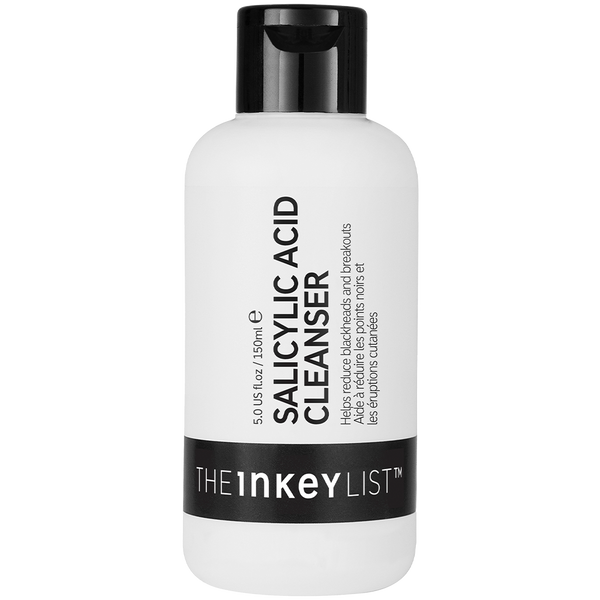
Cleanse: Start with the Salicylic Acid Cleanser, £14. This is a non-stripping daily face wash that works to manage pore congestion and help prevent new marks from forming in the first place, making it a strong, low-irritation foundation step for most blemish-prone routines.
-
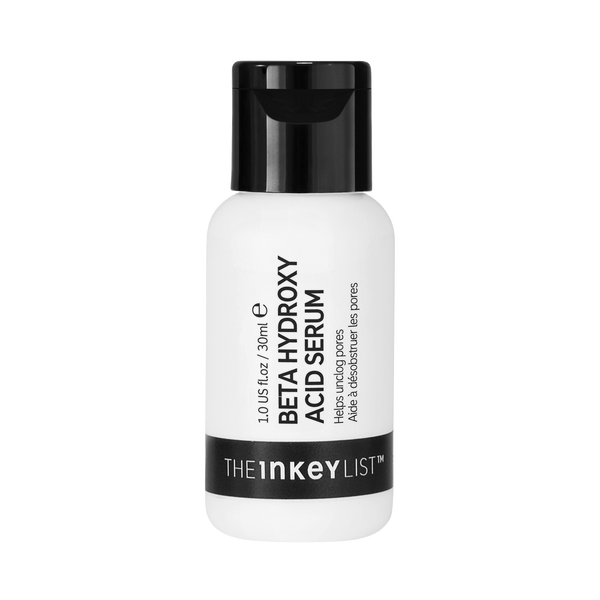
Treat active breakouts and texture: For a deeper level of exfoliation, the Beta Hydroxy Acid (BHA) Serum, £12, is a leave-on treatment designed for a few applications a week. This is where most of the pore-clearing, blemish-preventing heavy lifting happens once your skin has built up some tolerance.
-
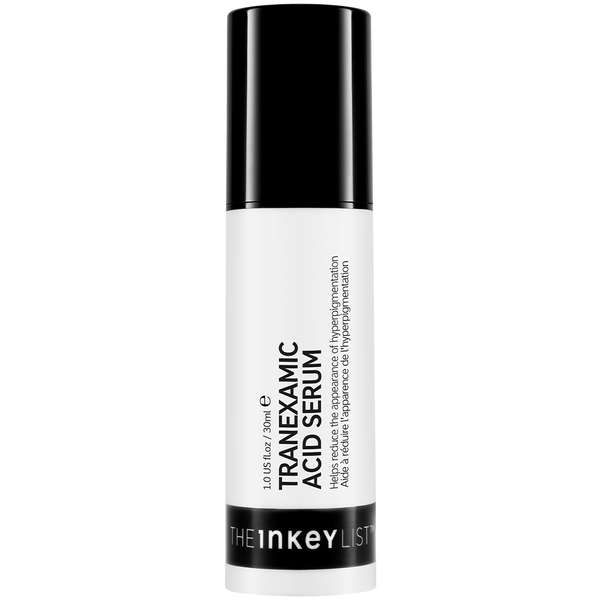
Target dark marks (PIH): If brown or dark post-blemish marks are your primary concern, the Tranexamic Acid Serum, £17, is formulated specifically to address this kind of discolouration, working alongside the turnover support that salicylic acid provides. For a deeper dive into why this ingredient pairs so well with pigment concerns, our piece on Vitamin C for Acne Scars and Niacinamide for Acne Scars are both worth exploring alongside this step.
-
Brighten and even tone: A Vitamin C Serum adds antioxidant support and helps even overall tone when used in your morning routine, complementing the pigment-fading work already happening from your tranexamic acid and salicylic acid steps.
-
Control oil and support an even-looking complexion: A Niacinamide Serum is particularly well suited to oily, blemish-prone skin managing both visible pores and lingering marks, helping to balance the overall look and feel of the skin.
-
Hydrate and support the barrier: Even oily and blemish-prone skin needs hydration, and the Omega Water Cream offers a lightweight, oil-free moisturiser specifically suited to combination and blemish-prone skin types that still want to avoid heaviness or added shine.
-
Protect, non-negotiably: Every single morning, finish with Dewy SPF 30. This step protects your skin from the sun sensitivity that comes with exfoliating acids, and crucially, prevents existing marks from darkening further or taking even longer to fade.
Optional, targeted step: for those still experiencing active breakouts across all three stages at once - excess oil, active blemishes, and the post-blemish marks left behind - the 360° Skin Clearing Serum is designed to address all three simultaneously, making it a useful addition for more complex or stubborn skin concerns.
A word on how to actually use this list: this isn’t a “buy everything and use it all at once” instruction. Build what you genuinely need based on what you’re seeing in the mirror. If PIH is your main concern, steps one, two, three, and seven form a strong, focused core. If you’re dealing primarily with active breakouts and oil, steps one, two, five, six, and seven might be your priority. The flexibility here is deliberate - skincare that respects your actual skin, rather than selling you a one-size-fits-all bundle, tends to get used consistently, and consistency is what actually produces results.
Bringing It All Together
If there’s one thing worth carrying away from everything above, it’s this: salicylic acid cannot erase true acne scars, but for the vast majority of people dealing with post-blemish marks - the brown or red discolouration that lingers long after a breakout has actually healed - it is a genuinely effective, well-evidenced tool. The distinction between “scar” and “mark” isn’t pedantic; it’s the single most useful piece of information you can have before choosing a routine, because it determines whether your expectations are realistic or set up to disappoint you.
Consistency, patience, and daily sun protection are what separate people who see real change from people who give up too early or undo their progress without realising it. None of this requires a complicated eleven-step routine or an overwhelming shopping list - it requires the right ingredients, used correctly, for long enough to let your skin’s natural processes actually do their work. That’s the whole philosophy behind clear, honest skincare guidance: proven ingredients, realistic expectations, and routines built around what your skin actually needs rather than what’s trending.
Before choosing your own routine, it’s worth taking a moment to properly identify your specific mark type - our guide on Types of Acne Scars: How to Identify Yours is a genuinely useful starting point if you’re still not certain whether you’re dealing with PIH, PIE, or true textured scarring.
What to Do Next
If post-blemish marks are your main concern and you’re ready to start, the simplest next step is building out the core of the routine covered above: the Shop Salicylic Acid Cleanser for daily pore maintenance, alongside the Shop Tranexamic Acid Serum for targeted dark mark support.
If you’re still working out exactly what your skin needs, there’s no pressure to commit to a full routine today. Spend some time with our Explore the Salicylic Acid pillar page to understand the ingredient in more depth, or look into the pillar pages for tranexamic acid, niacinamide, or vitamin C to figure out which combination genuinely fits your skin rather than guessing. Clear information first, purchase decisions second - that’s always going to be the more useful order of operations.
Frequently Asked Questions
Got a question?
Our askINKEY team are a friendly bunch of skincare experts with deep product knowledge and zero judgement. Whether you're an ingredient obsessive or just starting out, we'll make it make sense. No question too big. No question too small. We Give A Care, Every Day.


