



Glowing Skin in 14 Days: The Exosome Glow Routine
Author
askINKEY skincare advisor
Published
04 February, 2026
Time to read
10 minutes
There is a date in the diary, a fortnight to go, and skin that looks tired rather than radiant. It is a familiar position to be in, and it is usually the moment people start searching for a shortcut.
Most people, though, are not planning around a single night. They want to know how to get glowing skin as a general rule, in an ordinary week, without a ten step routine or a complicated schedule. The useful thing is that the answer is the same in both cases. A simple routine, done properly and done daily, is what shifts skin from flat to luminous. The promise here is specific: clinic worthy rejuvenated skin in 14 days*.
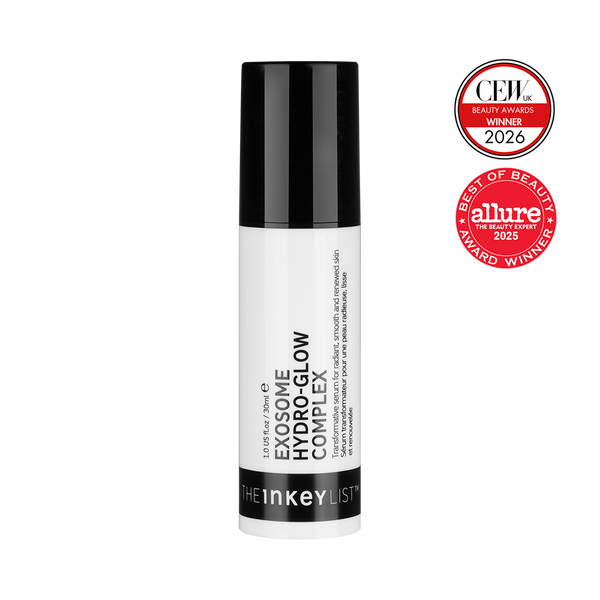
This article is a practical routine guide. You will get a full morning routine, a full evening routine, clear guidance on how to layer a glow serum with the products you already own, a ten minute emergency version for when time has run out, a week by week guide to what to expect, and straight answers to the questions people actually ask. The hero of the routine is the Exosome Glow Serum, powered by 1% plant-derived Cica Exosomes.
What you will not find here is a science lecture. If you want to understand the ingredient itself in depth, we have written everything you need to know about exosomes in skincare separately, and it covers that ground properly. This page is about what to do, in what order, starting tonight.
Before the routine, though, it is worth understanding what glow actually is and why it disappears in the first place.
Why Your Skin Loses Its Glow
Most advice on how to get glowing skin treats glow as though it were a single mysterious quality that some people have and others do not. It is not. Glow is a physical property, and it comes down to four things happening at once.
Skin looks radiant when it is well hydrated, evenly toned, smooth in texture, and reflecting light in one direction rather than scattering it in twenty. That last point is the one people miss. A smooth, hydrated surface behaves a little like a still lake. Light hits it and bounces back cleanly. A dry, rough, uneven surface behaves like choppy water, breaking that light into a hundred directions so the overall impression is flat and grey. Dullness, in other words, is rarely a separate condition. It is usually the absence of those four things.
Which makes the causes much easier to identify.
Dehydration is the most common and the fastest to fix. Dehydrated skin lacks water rather than oil, which is why oily skin can be dehydrated too. It looks tight, feels uncomfortable, and loses its bounce. Fine lines look more pronounced than they really are.
A build-up of dead skin on the surface does exactly what it sounds like. Skin naturally sheds, but the process slows with age, with cold weather, and when the barrier is under pressure. The result is a layer of dull, uneven cells sitting between the light and the fresh skin underneath.
Uneven tone scatters light in a different way. Patches of redness, lingering marks, and pigmentation all interrupt the even canvas that reads as radiance.
A stressed or weakened barrier undermines everything else. Your barrier is the outermost layer of skin, and its job is to hold water in and keep irritants out. When it is compromised, hydration escapes, redness becomes more visible, and skin reacts to products it used to tolerate. Barrier stress is often self-inflicted, caused by too much exfoliation, too many actives introduced at once, or water that is too hot.
Then there is everything life does to your face without asking. Poor sleep. Central heating that runs the humidity in a room down to desert levels. Cold wind on the commute. Long-haul flights. Stress. Alcohol. And, above all of these, skipping SPF, which quietly undoes tone and texture progress faster than almost anything else can build it.
What Fourteen Days Can Realistically Change
Being honest about the timeline matters more than being impressive about it, so here is the truthful version.
Hydration and radiance move first. Water is the fastest thing to restore, and it produces the most immediately visible change. Within the first few days of consistent hydration, skin usually feels more comfortable and looks less tight and papery. Skin comfort follows next, as the barrier stops being pushed and starts holding onto moisture properly. Tone and texture take the longest, because those depend on surface renewal rather than water content, and renewal runs on its own schedule.
That is the arc the fourteen days follow. It is also why the two week mark is the honest point to judge results rather than day three.
The Exosome Glow Serum is formulated around 1% plant-derived Cica Exosomes and is designed to work across all four of the qualities described above rather than just one. Specifically, it offers 6-in-1 skin rejuvenation: clinically proven to visibly improve radiance, hydration, tone, firmness, elasticity, and texture*. It also helps support natural collagen production, which is part of what makes the fourteen day window meaningful rather than arbitrary.
If the broader shift towards glow-focused skincare interests you, The Glow Revolution covers where the category came from and where it is heading.
Consistency beats intensity. Fourteen days of a simple routine will do more than three days of an aggressive one.
That line is the single most important idea in this article, and it is worth sitting with for a moment, because it runs against instinct. When skin looks tired, the urge is to escalate. Stronger acid. Higher percentage. Two masks instead of one. The problem is that escalation stresses the barrier, and a stressed barrier is dull by definition. You end up further from glow than when you started, having worked harder to get there.
The routine below is deliberately unglamorous. Five steps in the morning, five in the evening, most of them things you are probably doing already. Its power is entirely in repetition.
And it starts the moment you wake up.
The AM Glow Routine: Five Steps
Mornings have one job: get skin hydrated, comfortable and protected before the day happens to it. This is not the moment for heavy actives or ambitious experiments. It is the moment for a clean base, a good glow serum, and sunscreen.
Here is the full morning lineup before we get into the detail of each step.
Step 1: Cleanse Gently
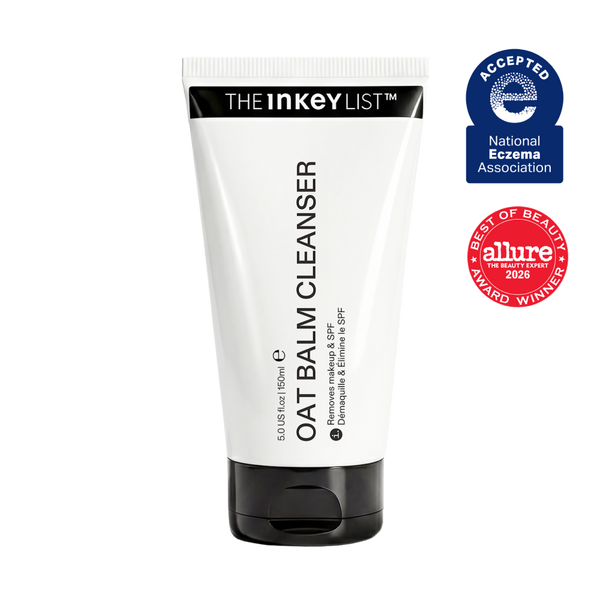
Start with the Oat Cleansing Balm. Your skin has spent the night doing its own work, and the morning cleanse only needs to remove the residue of last night’s products and whatever has settled on the surface. It does not need to strip.
This matters more than it sounds. Over-cleansing in the morning leaves the barrier compromised for the rest of the day, which means every step after it has to work harder just to get you back to baseline. A gentle start makes the serum, the moisturiser and the SPF all more effective.
One caveat, clearly stated. If your skin is oily or blemish-prone, the Salicylic Acid Cleanser is likely a better morning fit for you, because salicylic acid is oil-soluble and works inside the pore to help with blackheads and breakouts. This is a targeted swap, not a universal glow step. If your skin is dry, sensitive or reactive, stay with the balm.
Step 2: Tone
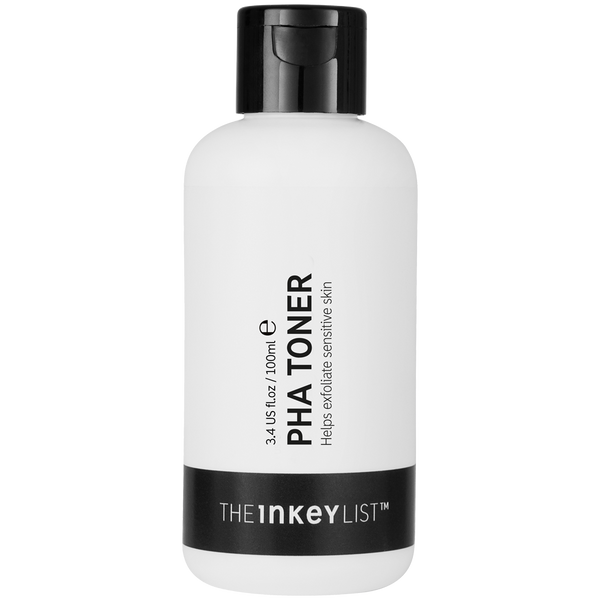
Follow with the PHA Toner. PHAs are polyhydroxy acids, an exfoliating acid family with a larger molecular size than AHAs, which means they work more gradually on the surface and tend to suit daily use better. You can read more about how they behave on our PHA ingredient page.
The reason a toner belongs in a glow routine comes back to that still-lake principle. Gentle, regular exfoliation keeps the surface smooth, and a smooth surface reflects light cleanly. This is one of the most direct levers you have on radiance.
Step 3: Treat
Apply the Exosome Glow Serum to damp skin. This is the hero step, and damp application is not a throwaway instruction. Applying to skin that is still slightly wet from toner gives the formula more water to work with and helps it spread and absorb evenly.
Two to three drops is enough for the whole face. Press it in rather than rubbing. It is proven to deliver up to 12-hours of hydration**, which is what makes it a genuinely morning-appropriate step rather than something you save for bedtime. It carries you through the working day.
Step 3b: Optional Brightening
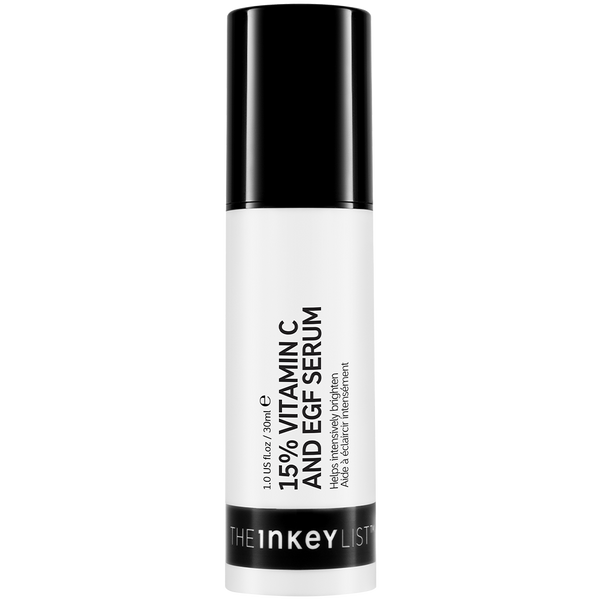
If your main concern is dullness or uneven tone specifically, add the 15% Vitamin C + EGF Serum after the glow serum.
This formula uses a stable form of vitamin C, which matters practically rather than just technically. Pure L-ascorbic acid is effective but notoriously unstable and can be irritating at higher percentages. A stable derivative gives you the brightening benefit with considerably less drama, which makes daily use realistic.
This step is optional. If tone is not your issue, skip it.
Step 4: Hydrate and Seal
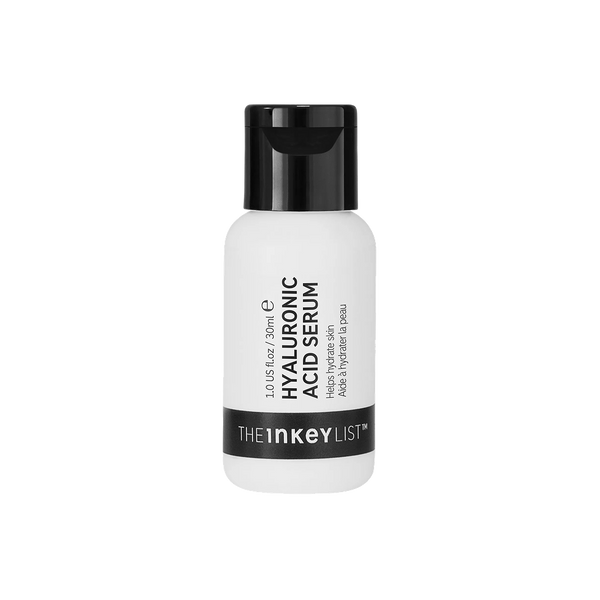
If you want an additional hydration layer, apply the Hyaluronic Acid Serum to damp skin. Hyaluronic acid draws water into the upper layers of skin, and it works best when there is water available to draw, which is why damp application matters here too.
Then moisturise. Whichever moisturiser suits your skin type, its role is to seal everything underneath it so the hydration you have just applied stays where you put it.
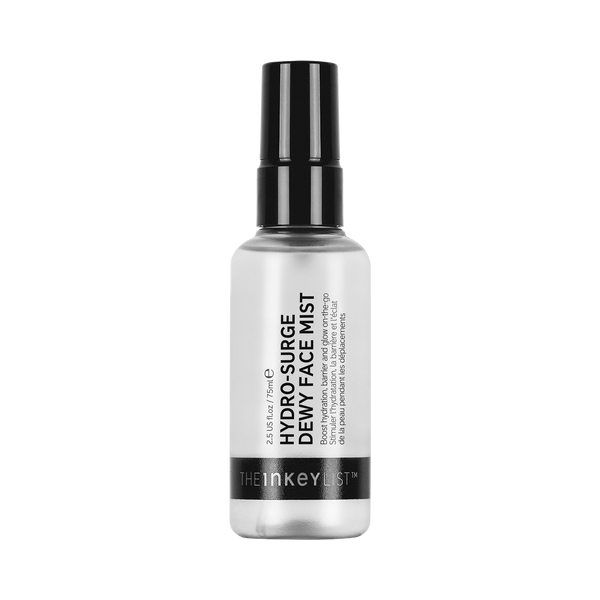
The Hydro-Surge Dewy Face Mist is a useful optional extra, either as a mid-routine damp-skin prep or as a refresh later in the day. Keep it in the fridge. On a warm morning or after a bad night’s sleep, a cold mist does something for how skin looks and feels that is out of all proportion to the effort involved.
Step 5: SPF, Non-Negotiable
Finish with Dewy Sunscreen SPF 30, and treat this as the step you do not skip.
There is no version of a glow routine that works without daily SPF. UV exposure drives uneven tone, rough texture and loss of firmness, and it does so faster than any serum can build progress in the opposite direction. Skipping sunscreen while running a fourteen day glow routine is like filling a bath with the plug out. You can do it, but you are working against yourself the entire time.
Apply it as the final step, generously, every morning, including the grey ones. UVA passes through cloud and glass, so a British winter is not the exemption people assume it is.
That is the morning. Five steps, roughly three minutes once it is habit.
Mornings are about protection. Evenings are about renewal, and that is where the more interesting work happens.
The PM Glow Routine: Overnight Renewal
Night is when your skin gets on with things. It is not fending off UV, pollution, air conditioning or makeup. Blood flow to the skin increases, water loss through the skin rises, and surface renewal runs at its most active. Whatever you apply in the evening lands in considerably more receptive conditions than anything you apply at eight in the morning.
Which is why the evening routine is the one worth protecting, even though it arrives at the exact point in the day when motivation is at its lowest.
Step 1: Double Cleanse
Begin with the Oat Cleansing Balm on dry skin, massaged in to melt makeup, SPF and the day’s build-up. Then follow with a second cleanse to remove everything the balm has lifted.
Give it at least sixty seconds. Not a rushed pass, a genuine minute. Most people cleanse for around fifteen seconds, and a good deal of what a cleanse is meant to achieve simply does not happen in fifteen seconds. Sunscreen in particular is formulated to stay put, which is the whole point of it, and one hurried wash will not shift it entirely. Everything that follows performs better on properly clean skin.
A useful extra: the balm works as a ten minute nourishing mask. If your skin feels particularly dry, tight or weather-beaten, apply a generous layer, leave it, then remove as normal.
Step 2: Treat
Apply the Exosome Glow Serum to damp skin, as in the morning.
This is where the evening proof point sits. Testing showed a 63% increase in skin renewal activity in 8 hours*.
In plain English, eight hours is roughly one night’s sleep, and skin renewal activity is the ordinary process by which fresher skin comes to the surface. So what that figure describes is straightforward: applying it before bed means waking up to skin that looks fresher and more rested than it did the night before. Not transformed overnight, and nobody should promise that, but visibly better in the mirror in the morning. Repeated across two weeks, those individual nights are what accumulate into the visible result.
Step 3: Support the Barrier
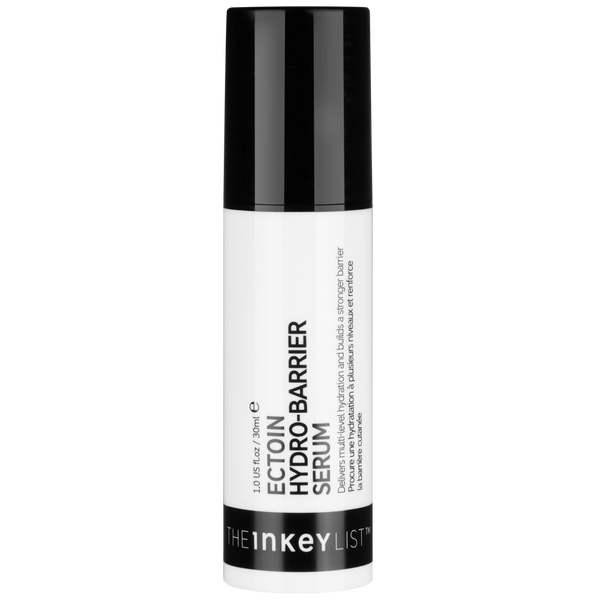
If your skin feels tight, reactive or generally uncomfortable, add the Ectoin Hydro-Barrier Serum.
Ectoin is an ingredient that hydrates while helping to strengthen the skin barrier, which is a genuinely useful combination. Most hydrators add water. Ectoin adds water and helps skin hold onto it.
Prioritise this step when your skin is feeling sensitised, after a period of over-exfoliation, during cold weather, or in the aftermath of a flight. A stressed barrier cannot glow, so barrier repair work is glow work, even though it does not feel like it at the time.
Step 4: Eyes
Apply the Caffeine Eye Cream to the under-eye area, tapping gently with your ring finger.
Caffeine helps with puffiness and the appearance of tired-looking under eyes, and this is one of the areas people notice most, both on themselves and on other people. Before an event, it is often the step that makes the visible difference.
Keep it in the fridge. The cold does its own work on puffiness alongside the formula. If your primary concern is dark circles rather than puffiness, that page goes into what is actually causing them, since the underlying reasons vary considerably from person to person.
Step 5: Moisturise
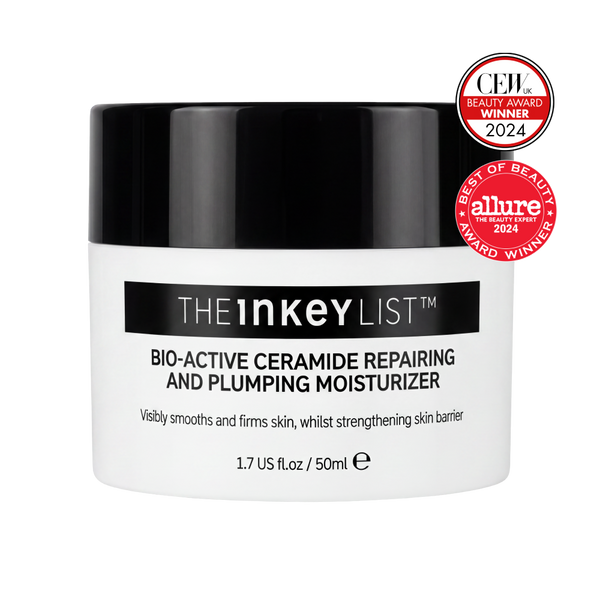
Finish with the Bio-Active Ceramide Moisturiser.
Ceramides are lipids that occur naturally in your skin barrier and help hold the surface cells together, which is why a moisturiser containing them supports the barrier rather than just sitting on top of it. The formula also contains peptides, which support the appearance of firmness and smoothness over time.
Applied last, it seals in every layer beneath it and keeps them working through the night.
Across the fourteen days, the Exosome Glow Serum also helps support natural collagen production, which is part of why firmness and elasticity feature in the results alongside the faster-moving hydration and radiance changes.
Once both routines are in place, the question that comes up next is always the same one: what can safely go with what.
How to Layer a Glow Serum With Everything Else
The most common reason people stall on a new serum is not scepticism about whether it works. It is uncertainty about where it fits. Nobody wants to spend two weeks accidentally cancelling out half their routine, or worse, irritating their skin by stacking things that should have been kept apart.
So here is the practical guidance, organised by what you are already using.
The universal rule. Cleanse, tone, then apply serums from thinnest to thickest texture, then moisturiser, then SPF in the morning. Watery formulas cannot get through heavier ones, so texture order is really about access. The Exosome Glow Serum goes on damp skin, early in the serum order.
With retinol. The Retinol Serum is an evening-only product. The Exosome Glow Serum can be applied before it, on damp skin, with the retinol following. If you are new to retinol, start on alternate nights and build up as your skin tolerates it rather than going straight to nightly. There are ingredients that genuinely should not share a routine slot with retinol, and rather than half-cover that here, our guide to what not to mix with retinol handles it properly.
With vitamin C. The 15% Vitamin C + EGF Serum belongs in the morning. The Exosome Glow Serum goes underneath it. That is the whole answer as far as layering is concerned. If what you actually want to know is how the two compare as glow ingredients, that is a different question with a longer answer, and we have written vitamin C vs niacinamide vs exosomes to address it.
With PDRN. The PDRN Serum is a natural layering partner rather than an alternative. These two sit alongside each other comfortably in the same routine, and using one does not mean forgoing the other. If you are trying to decide between them rather than combine them, PDRN vs exosomes weighs them up in detail.
With hydration boosters. Layer the Polyglutamic Acid Serum over the top. Polyglutamic acid is exceptionally good at holding water at the surface, so applying it after your other hydrating layers helps keep them in place rather than letting them evaporate off.
With exfoliating acids. PHA every day is fine for most people. Stronger acids need more thought. Space them away from your retinol nights rather than stacking both on the same evening, and if your skin starts feeling tight or looking red, reduce the frequency before you reduce anything else.
The reason the Exosome Glow Serum slots into so many different routines without much negotiation is the breadth of what it is doing. It offers 6-in-1 skin rejuvenation: clinically proven to visibly improve radiance, hydration, tone, firmness, elasticity, and texture*. A product working across six measures at once tends to complement a targeted active rather than duplicate it, which is precisely what makes layering straightforward.
If you arrived with a fixed idea about what can and cannot be combined, 5 exosome skincare myths debunked is worth a read, because several of the most persistent layering worries turn out to be based on nothing much at all.
Of course, all of this assumes you have fourteen days. Sometimes you have ten minutes.
The 10-Minute Emergency Glow
Plans move. Invitations arrive late. A wedding, a work event, a Valentine’s dinner someone forgot to mention until Thursday, or simply a night out that materialised out of nowhere. Whatever the occasion, the position is the same: the event is tonight and the routine has not been running for a fortnight.
This will not replicate two weeks of consistency, and nothing will. But it will meaningfully improve how your skin looks in the next hour, and every step below earns its place in the ten minutes.
Minutes 1 to 2: cleanse properly. Oat Cleansing Balm, the full sixty seconds, no shortcuts. It is tempting to rush this precisely because you are short of time, but a rushed cleanse undermines everything that follows it. Product cannot work through a layer of the day.
Minute 3: prep on damp skin. Hydro-Surge Dewy Face Mist, applied generously and left damp. Do not dry your face. Everything from this point absorbs better into skin that is still wet, and when the whole routine is ten minutes long, absorption speed genuinely matters.
Minutes 4 to 9: mask. Apply the Exosome Boosting Dry Sheet Mask. The dry sheet format is the reason this works in a short window. Rather than arriving pre-soaked in essence, the mask is dry and activates against the damp skin and product already on your face, which means it carries what you have applied deeper rather than simply sitting wet on the surface. No sliding, no dripping, and no waiting twenty minutes.
Five to six minutes is enough. Use them to do something else.
Minute 10: seal. Remove the mask, press in the Exosome Glow Serum, then apply the Bio-Active Ceramide Moisturiser. The moisturiser sits well under makeup, so this is not a step you need to skip if foundation is coming next. Give it thirty seconds to settle before you move on.
Under-eye quick win. If you have any warning at all, put the Caffeine Eye Cream in the fridge half an hour beforehand. Applied cold, it is the fastest visible improvement available to you, and the under-eye area is where tiredness shows first.
Spot emergency. For a surface blemish, apply a Hydrocolloid Invisible Pimple Patch. They are genuinely invisible under makeup, they stop you touching the area, and they are considerably kinder than any of the improvised alternatives people reach for an hour before leaving the house. For breakouts and blemish-prone skin generally, patches are the low-risk option when the timing is bad.
Ten minutes, and skin that looks hydrated, calm and considerably more awake than it did when you walked into the bathroom. Worth saying clearly: 100% saw more glowing skin, clinically proven*.
The emergency version works in a pinch. But the results people actually notice, the ones that hold up over weeks rather than hours, come from the fourteen day version.
Building the 14-Day Glow Habit
A skincare routine for glowing skin only works if you actually do it, which sounds obvious and is where almost everyone comes unstuck. The failure point is rarely the products. It is week two, when the novelty has worn off, the initial change has plateaued, and it is late.
So here is how to set the fourteen days up properly, and what to expect along the way.
Introduce Products Gradually
Do not start five new products on the same day. It is the most common mistake and the most avoidable one.
Add one product, use it for three or four days, and see how your skin responds. Then add the next. It takes a little longer to get the full routine running, but it means that if something does cause a reaction, you know precisely what it was. Start everything at once and you are left guessing, usually by eliminating products at random.
If something stings persistently, stays red, or leaves your skin feeling raw, stop. Simplify back to cleanser and moisturiser for a few days and let the barrier settle before reintroducing anything.
Patch Test First
A patch test means applying a small amount of a new product to a discreet area, the inner forearm or just behind the ear, and leaving it for twenty-four hours to check for a reaction before it goes anywhere near your face.
It takes almost no effort and it is particularly worth doing if your skin is sensitive or reactive, or if you have had a bad response to a product before. Our guide on why do I need to do a patch test explains the process in full, including how to interpret what you see.
Days 1 to 4: Hydration
The first few days are about water and comfort.
Skin should start feeling less tight, particularly first thing in the morning and after cleansing. That papery quality eases. Makeup usually sits better, because hydrated skin is a smoother base than dehydrated skin. It is proven to deliver up to 12-hours of hydration**, so the effect should carry through the day rather than fading by lunchtime.
Do not judge results yet. This stage is foundational, and the visible changes are still ahead.
Days 5 to 9: Comfort and Calm
This is where things settle.
Testing showed a 55% reduction in visible signs of skin stress (redness, puffiness, visible irritation)*. In practical terms, this is the window where skin stops looking irritated and starts looking even. Patchy redness across the cheeks and around the nose becomes less noticeable. Morning puffiness eases. Skin feels less easily provoked by cold weather, hot showers or a bad night.
It is also the point where evenness starts contributing to how radiant your skin looks, because an even surface reads as glow in a way a blotchy one never does.
Days 10 to 14: The Glow
The final stretch is when tone and texture catch up with hydration.
Texture is slower to change than water content, which is why this arrives last rather than first. But by the end of the second week, the four elements described at the start of this article are working together rather than separately, and that combination is what people actually recognise as glow. Clinic worthy rejuvenated skin in 14 days*.
Take a photo on day one in natural light, without makeup. Take another on day fourteen in the same light. Skin changes gradually enough that you genuinely will not register the difference day to day, and the comparison is more reliable than memory.
Keeping It Going
Fourteen days is the starting point, not the finish line.
The strange thing about skincare is that success is often what ends it. Skin looks good, the routine feels less urgent, and within a fortnight you are back to a hurried cleanse and whatever moisturiser is nearest.
Three things are worth holding onto permanently. SPF every single morning, because it protects everything else you have built. A proper cleanse every night, sixty seconds, no exceptions. And the Exosome Glow Serum as your consistent treatment step, morning, evening or both.
Everything else can flex around your skin, the season and how much time you have. Those three do the heavy lifting.
A handful of questions come up again and again, so here they are with straight answers.
The Routine, In Short
Cleanse gently, morning and night. Treat with the Exosome Glow Serum on damp skin. Support your barrier with hydration and ceramides. Protect with SPF every morning without exception.
Glow is not one product doing something remarkable. It is hydration, even tone, smooth texture and a healthy barrier all working at the same time, which is why a routine beats a hero product every time. Fourteen days is long enough to see it happen, provided you actually do it every day.
100% saw more glowing skin, clinically proven*.
Ready to start? The Exosome Glow Serum is the step that anchors the whole routine, morning and night.
If you would rather understand the ingredient before you commit, our exosomes ingredient page covers the detail properly.
Because at The INKEY List, We Give A Care.
*4-week clinical study of 26 people
**Clinical study of 31 people
*In-vitro testing of Cica Exosomes showed a 55% reduction in pro-inflammatory markers and a 63% increase in markers associated with skin renewal after 8 hours.
Frequently Asked Questions
Got a question?
Our askINKEY team are a friendly bunch of skincare experts with deep product knowledge and zero judgement. Whether you're an ingredient obsessive or just starting out, we'll make it make sense. No question too big. No question too small. We Give A Care, Every Day.


