



Salmon Sperm Serum: What Is It, Does It Work & Is Vegan PDRN Better?
The viral "salmon sperm" ingredient, explained simply — what PDRN actually does, and why the vegan version may be the smarter choice.
Author
askINKEY skincare advisor
Published
13 May, 2026
Time to read
15 minutes
Salmon Sperm Serum: What Is It, Does It Work & Is Vegan PDRN Better?
Salmon sperm serum is one of those skincare terms that stops you mid-scroll, and that is exactly why you are here. The name is doing a lot of work. Behind it sits an ingredient with a far less dramatic identity: PDRN, or Polydeoxyribonucleotide, a DNA-derived molecule that has been used in aesthetic medicine for decades and now has a growing body of peer-reviewed research behind it.
Here is the tension this article resolves. Most PDRN on the market today is salmon-derived, extracted from fish and purified for cosmetic and clinical use. But plant-derived vegan PDRN now exists, and the available data suggests it performs at least as well as the animal-derived original, with a lower irritation profile and none of the sourcing questions.
So this piece answers four things properly. What the name actually means and where the ingredient comes from. Whether topical PDRN genuinely works, judged against the real evidence rather than the hype. How an in-clinic treatment differs from a serum you keep on your bathroom shelf. And why vegan PDRN may be the smarter choice for most people.
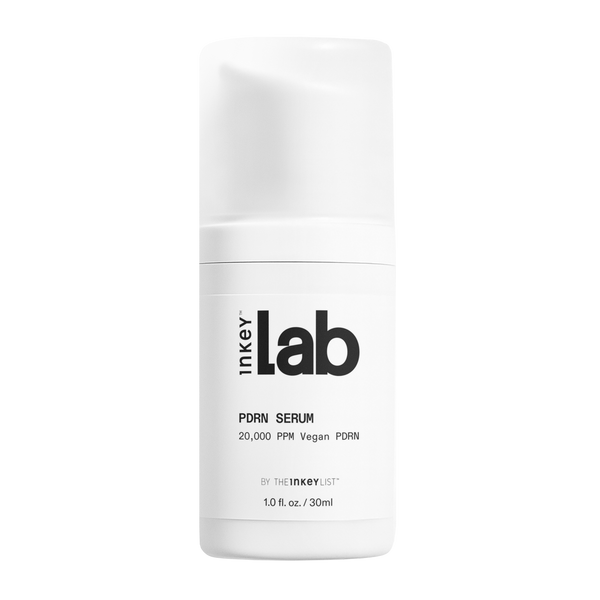
Where it is relevant, we will point to INKEY’s PDRN Serum: 20,000 PPM vegan PDRN, £18 for 30ml, 100% vegan, fragrance-free and confirmed safe to use during pregnancy. If you want the full cellular biology rather than the salmon angle, our full PDRN ingredient guide goes considerably deeper than this page will.
But first, let’s start with the name.
Salmon Sperm Serum: The Viral Ingredient Explained
“Salmon sperm serum” is not a product category. It is colloquial shorthand, invented by the internet, for skincare formulated with PDRN. No brand set out to call it that. The nickname stuck because it is memorable, slightly absurd and technically accurate about where traditional PDRN comes from.
Traditional PDRN is extracted from the milt of Oncorhynchus keta, the chum salmon. Milt is the seminal fluid of male fish, and it is used for a specific reason rather than a shocking one: it is exceptionally rich in DNA, and salmon DNA shares a high degree of similarity with human DNA. That similarity is what makes it biologically compatible with human skin. The raw material is then fragmented, purified and stabilised into a cosmetic or medical-grade ingredient. By the time it reaches a bottle, it bears no resemblance whatsoever to its origin. It is a clear, purified molecule with no scent and no fishy anything.
The ingredient’s route into your feed runs through medicine, not marketing. PDRN has been used in aesthetic clinics and wound care for decades, long before anyone filmed a get-ready-with-me about it. Its reputation was built in dermatology and regenerative medicine, where it was studied for tissue repair, scar management and post-procedure recovery. K-beauty, with its consistent appetite for bioactive ingredients that arrive from the clinical side rather than the cosmetic side, brought it into everyday routines. Western beauty media followed. Allure reported on the ingredient’s migration from niche clinics into mainstream skincare, and Medical News Today has covered both its origins and its sudden media presence.
The important point is the order of events. The clinical credentials came first. The viral name came second. That is the opposite of how most trending ingredients arrive, and it is the reason salmon sperm skincare has held attention rather than burning out in a fortnight.
What to Look for on the Label
If you want to identify PDRN on a product’s ingredient list, look for the INCI name: Hydrolyzed DNA. INCI, the International Nomenclature of Cosmetic Ingredients, is the standardised naming system that every cosmetic product sold in the UK uses on its back label. It is the reason two products can list the same active under the same name regardless of what the front of the pack calls it.
Reading INCI lists is a genuinely useful skill, and it is where a lot of marketing quietly falls apart. A product can put PDRN on the front of the box while including a negligible amount of it, positioned near the end of the ingredient list among the preservatives. Knowing what to look for is the difference between buying an active and buying a story about one.
It Is Not Just Another Hydrator
PDRN is often filed alongside hyaluronic acid and glycerin as a hydrating ingredient, and that undersells it. Hydrators work by drawing water into the skin or holding it there, which is valuable and immediately noticeable, but it is a surface-level mechanism. PDRN operates differently. Rather than delivering a benefit from the outside, it signals to the skin and supports the skin’s own renewal processes, encouraging the cells responsible for producing collagen, elastin and hyaluronic acid to do more of what they already do.
That distinction matters when you set expectations. A hydrator makes skin look better today. An ingredient that supports skin renewal makes skin behave better over weeks. PDRN does a bit of both, which is part of its appeal, but the meaningful benefits are cumulative.
One more thing to flag before the comparison later on: salmon is no longer the only source. Plant-derived vegan PDRN, produced from Artemisia capillaris, is now available and is what INKEY uses. That opens up a question worth taking seriously, which is whether the source changes the result.
Polynucleotide Serum: The Term You Will Hear in UK Clinics
If you have researched this ingredient in the UK, you have probably encountered “polynucleotides” more often than “PDRN”. That is not a different ingredient. It is a different vocabulary.
“Polynucleotide serum”, “PN serum”, “PDRN serum” and “salmon sperm serum” all point to the same class of DNA-derived molecules. The distinctions that do exist come down to chain length, source, concentration and molecular weight rather than to any fundamental difference in what the material is. Polynucleotides generally describes longer DNA chains, while PDRN describes shorter fragments, but the two terms are used somewhat interchangeably across the UK market and you will find them applied loosely by clinics and brands alike.
The reason UK readers meet the polynucleotide label first is straightforward: it is the language of UK aesthetic clinics. British practitioners overwhelmingly market injectable treatments as polynucleotide treatments. Search “polynucleotide serum” in the UK and you are usually looking at either a clinic page or a topical product hoping to catch clinic-adjacent search traffic. Search “PDRN” and you are more likely to land in the cosmetic and K-beauty world. Same molecule family, two different professional dialects.
Understanding what PDRN is, though, is not the same as understanding whether it works. That requires a quick look at the mechanism and a much closer look at the evidence.
Does Salmon Sperm Serum Actually Work? What the Evidence Shows
How PDRN Works, In Short
PDRN binds to and activates adenosine A2A receptors on skin cells. Those receptors sit on the surface of fibroblasts, the cells in the dermis responsible for producing collagen, elastin and hyaluronic acid. When they are activated, fibroblast activity increases.
The framing matters here. PDRN does not deliver collagen to your face. Topically applied collagen molecules are far too large to be useful in that way. Instead, PDRN signals the skin and helps support the skin’s natural collagen production, encouraging your own cells to build more of the structural molecules that keep skin firm, bouncy and hydrated. It is a supportive mechanism rather than a substitutive one, which is precisely why the results build gradually rather than appearing overnight.
There is one variable that determines whether any of this happens in a topical product: molecular weight. DNA fragments are large. A fragment that cannot penetrate past the surface of the skin cannot reach the fibroblasts it is meant to influence, however impressive the percentage on the front of the bottle. INKEY uses a low molecular weight PDRN specifically engineered for skin penetration, which is the difference between an ingredient that is present and an ingredient that is active.
That is the short version, and deliberately so. If you want the receptor cascades, the full mechanism and the wider ingredient context, read What is PDRN? or the long-form full PDRN ingredient guide.
What the Evidence Actually Says
Let’s be straight about the state of the research, because this ingredient is frequently oversold.
Injectable PDRN has the longest and most robust clinical track record. It has been studied and used in medical aesthetics and wound healing for decades, and that is where the strongest evidence sits. Topical PDRN is newer territory. The evidence base is growing and increasingly interesting, but it is younger and smaller, and anyone telling you a serum has the same weight of clinical backing as an injectable protocol is not being accurate. Knowing that up front should make the rest of this section more useful, not less.
Within topical formulation, two variables decide whether a product does anything: concentration and molecular weight. Healthline notes in its coverage of salmon sperm treatments that these are the factors determining whether the ingredient can actually reach the layers of skin where it works. Token inclusions at negligible percentages, added so a brand can print the letters PDRN on the carton, achieve very little. This is the single most common failure mode in the category.
On concentration, here is the specific data behind INKEY’s formula. In in-vitro and supplier studies conducted by INJIN, the ingredient supplier behind INKEY’s formula, 2% INJIN PDRN showed a 30% increase in fibroblast proliferation, a 25-35% increase in collagen synthesis over 8-12 weeks and a 45% improvement in hydration after 4 weeks.† These are supplier figures rather than independent third-party trials, and we would rather label them clearly than let them float unattributed. They are the reason INKEY formulates at 20,000 PPM, which is 2%, the concentration those studies used.
Independent peer-reviewed work supports the wider picture. A study on PubMed, with the free-to-read version available via PMC, examined a plant-derived polydeoxyribonucleotide across cell-based testing and a small clinical arm, and supports plant-derived PDRN more broadly as a viable alternative to animal-derived material. Two details from it are worth carrying forward. First, the researchers compared different molecular weight fractions and found the low molecular weight fraction performed best on cell proliferation, cell migration and the expression of genes associated with collagen and elastin. That is independent corroboration of the molecular weight point above, from a source with no commercial interest in INKEY’s formula. Second, its human testing was small and short, involving ten volunteers over two to four weeks, so it is a promising signal rather than a definitive verdict. Both things are true at once.
For the specific plant INKEY uses, the grounding sits elsewhere. A ScienceDirect study on Artemisia capillarisinvestigated the plant’s extract in the context of UVB-induced skin cell damage, finding protective effects against the cellular stress that UV exposure triggers. That research does not test PDRN derived from the plant, and we are not going to pretend it does. What it establishes is that Artemisia capillaris is a genuinely researched botanical in modern skin science rather than a convenient vegan substitute picked for marketing reasons.
That is the honest picture: a well-established injectable history, a younger but credible topical evidence base, real peer-reviewed support for plant-derived material, and supplier data that is clearly labelled as such.
What Real Customers Say
Clinical data tells you what an ingredient can do. Reviews tell you what people notice.
Across verified UK reviews the INKEY PDRN Serum holds 4.8 out of 5, with the feedback consistently returning to three things: smoother texture, a noticeable glow and better hydration. Those themes line up closely with what the ingredient and the surrounding formula would be expected to deliver, which is reassuring rather than surprising. The glow tends to be mentioned early, often within the first few applications. Texture and bounce come up in the longer-term reviews.
What to Expect and When
Realistic timelines prevent disappointment, so here is what the progression usually looks like:
- From first use: an immediate glass-skin glow, driven by the 18% emollient blend including shea butter and sunflower seed oil. This is the formula, not the PDRN, and it is worth being clear about that.
- After 4 weeks: improvements in skin texture, bounce and hydration begin to show.
- After 8-12 weeks: the cumulative benefits become fully apparent, with firmer, more resilient skin and a reduced appearance of fine lines.
PDRN rewards consistency. It is not an overnight fix, and anyone promising one is selling you something other than the ingredient. The upside is that consistency is easy here. Unlike retinol, there is no retinisation period, no purging phase and no photosensitivity to plan your week around. You apply it twice daily and let it accumulate.
A great deal of what people have heard about PDRN, though, comes from clinic treatments rather than serums. Which raises the obvious question about how different those two things really are.
Salmon Sperm Facial vs At-Home PDRN Serum: Clinic or Bathroom Shelf?
When most people first heard about this ingredient, they heard about a treatment, not a bottle. The salmon sperm facial arrived with celebrity coverage attached, and the resulting confusion is understandable: a lot of readers now assume a serum and a facial are versions of the same thing at different price points. They are not.
An in-clinic salmon sperm facial delivers PDRN or polynucleotides into the skin rather than onto it. That usually happens by injection with a fine needle, or via microneedling delivery, performed by a trained practitioner. In the UK, clinics almost always market this as a polynucleotide treatment rather than using the salmon language. Medical News Today covers the treatment and its rise in detail, and Healthline provides an independent overview of what the procedure involves.
The evidence point from earlier applies directly here, and it deserves stating plainly rather than buried: injectables have the longer and stronger evidence base. Delivering an active beneath the skin’s barrier removes the penetration problem entirely, which is why the clinical literature on injected PDRN is more extensive than the literature on topical PDRN. Any brand that tells you otherwise is asking you to ignore several decades of medical research.
What that clinical route asks of you in practice:
- A course, not a session. Practitioners typically recommend multiple treatments spaced several weeks apart, often three sessions or more, followed by maintenance appointments.
- Meaningful cost. Per-session pricing for polynucleotide treatments in the UK runs into the hundreds, and a full course multiplies that.
- Possible downtime. Redness, swelling and small bumps at injection sites are common immediately afterwards and usually settle within a few days.
- A qualified practitioner is essential. This is an injectable procedure. Where and with whom you have it done matters far more than the ingredient itself.
The at-home route asks for something completely different, and it is important to describe it honestly. A topical serum will not replicate an injectable treatment. Different delivery, different depth, different result. What a serum offers instead is daily, consistent, cumulative support at a fraction of the commitment. INKEY’s PDRN Serum is £18 for 30ml, used morning and evening. That is roughly a month of twice-daily use per bottle, with no downtime, no appointments and no recovery period.
What the at-home route gives you:
- Consistency over intensity. Twice a day, every day, is a genuinely different mechanism of benefit to four appointments a year.
- No downtime. You can apply it and leave the house immediately.
- Accessibility. £18 rather than a multi-session course.
- Control. You can stop, start, patch test, or slot it into an existing routine without booking anything.
The most sensible way to hold these two options is as complementary rather than competing. Plenty of people use a topical PDRN serum UK-wide to maintain their skin between clinic appointments, extending the value of treatments they have already paid for. Plenty of others use a serum as a first step, seeing how their skin responds to the ingredient before deciding whether to consider anything more invasive. Both are reasonable.
What is not reasonable is conflating them. A serum is not a discounted salmon sperm facial, and a facial is not an expensive serum. They sit at different points on a spectrum of cost, commitment and clinical intensity, and choosing between them should be a question of what you actually want rather than which one you saw first.
Whichever route you take, one question applies to every PDRN product on the shelf and every treatment on a clinic menu: where the PDRN itself came from.
Animal-Derived PDRN vs Vegan PDRN: Why the Source Matters
Source is usually framed as an ethical question. It is also an efficacy question, a sustainability question and a suitability question, and those four things happen to point in the same direction.
Start with the traditional option, fairly. Animal-derived PDRN is extracted from the milt of Oncorhynchus keta, chum salmon, then fragmented, processed and purified into a usable ingredient. It works. Its clinical evidence is genuinely well established in the medical literature, particularly in injectable form, and it is the material behind most of the research that gave this ingredient its reputation. Any argument for vegan PDRN that begins by pretending salmon-derived PDRN is ineffective is dishonest and, frankly, unnecessary.
The limitations are practical rather than performance-based. It is not vegan, which rules it out entirely for a significant number of people. It raises sustainability questions, because it depends on marine sourcing and fish farming supply chains that are difficult for a consumer to trace or verify. And it carries a theoretical consideration for anyone with fish or shellfish sensitivities. Purification is thorough and reactions are not commonly reported, but if you avoid fish-derived ingredients as a rule, a purified fish-derived ingredient is still a fish-derived ingredient.
This is where vegan PDRN changes the calculation. INKEY uses INJIN Vegan PDRN, derived from Artemisia capillaris, a resilient plant with a long history in traditional botanical medicine and a growing modern research base in skin science. The ScienceDirect research referenced earlier examined the plant’s extract against UVB-induced cellular damage, which tells you this is a botanical that skin scientists have taken seriously independently of the PDRN conversation. Separately, research on plant-derived PDRN published on PubMed, with the free-to-read version on PMC, supports plant-derived PDRN more broadly as a credible alternative to animal-derived material, and identified low molecular weight fractions as the best performing.
Then the question everyone actually wants answered: does vegan PDRN work as well?
Based on supplier studies using 2% INJIN PDRN, INJIN Vegan PDRN outperformed both animal-derived PDRN and other vegan PDRN alternatives on fibroblast proliferation and collagen synthesis, while showing a lower irritation profile.† Those are the same supplier studies detailed in full earlier, conducted by the ingredient supplier rather than an independent laboratory, and we would rather say so than dress them up as something they are not. Taken alongside the peer-reviewed picture, the reasonable conclusion is not that plant-derived PDRN is a compromise you accept for ethical reasons. It is that plant-derived PDRN is, on the available data, at least as good and arguably better.
The lower irritation profile is the part that tends to get overlooked, and it may be the most practically useful finding of the set. An active that delivers results while being gentler is not a minor footnote. It widens the group of people who can use it comfortably and consistently, and consistency is the entire mechanism by which PDRN delivers anything.
This matters most if you are:
- Vegan or vegetarian, and want an active with clinical credibility that does not require an exception to your principles.
- Sensitive to fish or shellfish, or simply prefer to avoid marine-derived ingredients entirely.
- Pregnant or breastfeeding, and looking for effective actives that are safe to continue during a period when most of the usual options are off the table.
- Concerned about sustainability, and uncomfortable with marine-sourced supply chains you cannot easily verify.
- Simply of the view that if a plant-derived version performs as well, there is no reason to use the fish one.
The brand position follows from the data rather than the other way around. INKEY is vegan and cruelty-free by default, and you can read our No Animal Testing Policy rather than take that on trust. The vegan option here requires no compromise on results, which makes it a straightforward choice rather than a values-based sacrifice.
INJIN Vegan PDRN is the science behind INKEY’s serum. What that looks like in the bottle is the next question.
Inside INKEY’s Vegan PDRN Serum: What £18 Actually Buys You
PDRN has arrived in skincare with a luxury price tag attached. Premium PDRN products routinely sell for well over £150 a bottle, and the price is often presented as evidence of the formulation’s seriousness. It usually is not. Price reflects positioning, packaging and margin far more reliably than it reflects concentration.
INKEY’s PDRN Serum is £18 for 30ml, at the clinically studied concentration, using the same ingredient supplier whose data appears in this article. That is the whole argument. Not a cheaper approximation of an expensive formula, but the same active at the same percentage from the same source, priced according to what it costs to make rather than what the category will tolerate. Accessibility is a principle here, not a promotion.
Here is what is actually in it.
20,000 PPM (2%) INJIN Vegan PDRN. This is the clinically studied concentration, the same 2% used in the supplier studies referenced earlier.† It is low molecular weight, engineered specifically for skin penetration, which as covered above is the variable that separates a functional topical PDRN from a decorative one. Two percent may sound modest if you are used to seeing 10% vitamin C or 5% niacinamide, but active concentrations are not comparable across ingredient types. For PDRN, 2% is the studied level.
18% emollient blend. Propylheptyl caprylate, shea butter and sunflower seed oil. This is where the immediate glass-skin glow comes from, and it is a substantial proportion of the formula rather than a rounding error. Emollients smooth the surface of the skin, which improves how light reflects off it, producing visible luminosity from the first application. They also support the skin barrier, which matters more than it sounds: a well-functioning barrier is the environment in which an active like PDRN can do its work. A compromised barrier undermines everything applied to it.
Glycerin. One of the most studied humectants in all of skincare, and one of the least glamorous. Glycerin draws moisture into the skin and holds it there, keeping skin comfortable and hydrated after the serum absorbs. It appears in this formula because it works, not because it photographs well on an ingredient list.
The texture is the part reviews mention first. It is silky and cushioning with a slight bounce, absorbing quickly without heaviness or tackiness. One pump covers face and neck comfortably. It sits well under other products, which matters for anyone running a multi-step routine, and it does not pill under sunscreen or makeup.
Using it is uncomplicated. Apply morning and evening after cleansing, onto dry skin, before your moisturiser. There is no photosensitivity, so morning use requires nothing beyond the SPF you should be wearing anyway. There is no introduction schedule and no build-up period.
It suits all skin types. It is fragrance-free, confirmed safe during pregnancy and breastfeeding, formulated at pH 4.0 to 4.5, and rated 4.8 out of 5 by verified customers.
Pairing It With the Rest of Your Routine
PDRN is unusually easy to combine with other actives, which makes it a straightforward addition to an existing routine rather than a disruption to one.
- Brightening pair: layer with Vitamin C in the morning for tone and glow. The two are entirely compatible, with no conflict and no need to alternate days.
- Deeper hydration: apply Hyaluronic Acid Serum to damp skin first and allow it to absorb, then follow with PDRN Serum on top. If you want to understand why damp application matters, read What is Hyaluronic Acid?.
- Barrier support: follow the PDRN Serum with Bio-Active Ceramide Moisturiser, £20.00, to seal hydration in and support the barrier overnight.
- Maximum glow stack: Exosome Glow Serum first, then PDRN Serum on top. More on how to run this combination in the routine section below.
Formula understood, the next reasonable question is whether it is safe for you specifically.
Is Salmon Sperm Serum Safe? Side Effects, Skin Types and Pregnancy
An ingredient with a name like this one attracts more safety questions than most, and they deserve specific answers rather than blanket reassurance.
The overall profile is good. Topical PDRN at 2% is well tolerated across all skin types, including sensitive skin. Its supportive, barrier-friendly mechanism means it tends to suit compromised skin rather than stress it further, which is not something you can say about most actives with visible results attached.
Side effects are rare and mild. Some people notice a slight tingling on first application, particularly if the skin barrier is already compromised through over-exfoliation, cold weather or an aggressive routine. It typically subsides within a few minutes and stops occurring altogether after a few days of use. There is no retinisation period, no purging phase and no photosensitivity, which places PDRN in a much easier category than retinoids or strong acids.
Sensitive skin is generally fine. PDRN is among the better-tolerated actives in modern skincare, and the vegan version studied by INJIN showed a lower irritation profile than the animal-derived alternative.† That said, sensitive skin is individual, and patch testing before full-face application is always the sensible route. Apply a small amount to the inner forearm or behind the ear, wait twenty-four hours, then proceed.
Pregnancy and breastfeeding are covered. INKEY’s PDRN Serum is confirmed safe for use during pregnancy and breastfeeding. That is genuinely useful, because pregnancy removes retinoids and several other renewal-focused actives from most routines, and the options that remain are limited. If you have specific concerns or an existing condition, speak to your healthcare provider first. That advice is not a formality.
Fish allergies are not an issue with the vegan version. This is worth stating plainly. INKEY’s PDRN is entirely plant-derived from Artemisia capillaris. There is no salmon in it, no fish-derived material of any kind and no marine sourcing anywhere in the supply chain. Traditional PDRN, as Medical News Today’s coverage describes, is a fish-derived material, so if you avoid those ingredients the source genuinely matters. Here it is a plant.
If you use prescription treatments, ask first. Anyone using prescription topicals or oral medication for a skin condition should consult a medical professional before introducing any new active. PDRN is gentle and unlikely to cause problems, but your dermatologist knows your treatment plan and we do not.
The pH sits at 4.0 to 4.5. That is within the optimal range for both ingredient stability and skin comfort, close to skin’s own naturally slightly acidic surface.
With safety established, the practical question is how to actually work it into your day.
How to Use PDRN Serum in Your Skincare Routine
Here is the good news: PDRN is one of the least demanding actives you will ever add to a routine. No introduction period, no alternate-day scheduling, no photosensitivity to work around and no adjustment phase where your skin looks worse before it looks better.
When: morning and evening, every day, from day one.
How: after cleansing, onto dry skin, one pump pressed gently into face and neck. Follow with moisturiser. In the morning, always finish with SPF 30 or higher.
Your morning routine:
- Cleanse
- PDRN Serum
- Moisturiser
- SPF 30+
Your evening routine:
- Double cleanse
- PDRN Serum
- Moisturiser or night cream
That is the whole thing. If you want to layer it with other actives, here is how each combination works.
Layering PDRN With Other Actives
With Vitamin C. Fully compatible. Layer both in the morning for brightening and tone alongside glow and renewal support. There is no conflict between the two and no reason to separate them across different days. Read What is Vitamin C? if you want the detail on how it fits into a morning routine.
With hyaluronic acid. Apply Hyaluronic Acid Serum to damp skin first and let it absorb, then apply PDRN on top. Hyaluronic acid needs moisture available to draw on, which is why the damp skin instruction is not optional.
With ceramides. Follow the PDRN Serum with Bio-Active Ceramide Moisturiser to seal everything in and support barrier function overnight.
With retinol. PDRN in the morning, retinol at night. This is the cleanest way to run both, and there is no need to choose between them. Retinol requires gradual introduction and brings photosensitivity with it. PDRN does neither, which makes it a natural morning partner to an evening retinoid. For a fuller comparison of the two, read PDRN vs Retinol, and if you are building a routine around retinol specifically, What Not to Mix with Retinol is worth ten minutes of your time.
The Glow Stack: PDRN and Exosomes Together
If you want the most luminous version of this routine, PDRN and exosomes layer together for an amplified glow.
Apply Exosome Glow Serum, £20.00, first. Then PDRN Serum on top. Then moisturiser. Both are lightweight enough that the combination does not feel heavy, and the order matters because the thinner texture goes first.
The Exosome Glow Serum is a glow boosting formula with its own clinical backing. In testing, 100% saw more glowing skin, clinically proven, delivering clinic worthy rejuvenated skin in 14 days. It is a 6-in-1 skin rejuvenation: clinically proven to visibly improve radiance, hydration, tone, firmness, elasticity, and texture*.
Pairing it with PDRN gives you immediate luminosity alongside cumulative renewal support, which is a sensible combination if glow is your primary goal. If you are new to the ingredient, What are Exosomes? covers the fundamentals, and if you are trying to decide between the two rather than combine them, PDRN vs Exosomes: What’s the Difference and Which Does Your Skin Need? answers that directly.
How Long Until You See Results
- First use: immediate glass-skin glow from the emollient blend.
- 4 weeks: improved texture, bounce and hydration.
- 8-12 weeks: the full cumulative benefits build.
Not sure where PDRN fits into what you already own? Take the INKEY skincare quiz for a personalised recommendation, or use the bundle builder to put a full routine together.
That covers the practical side. The remaining questions tend to be more specific.
Conclusion: The Bottom Line on Salmon Sperm Serum
Salmon sperm serum arrived as a viral curiosity and is staying as something considerably more substantial: one of the more clinically credible skin renewal ingredients now available at an accessible price. The name is unusual. The science is not.
The source argument is the one worth carrying away. Vegan PDRN from Artemisia capillaris is not a compromise made for ethical reasons and quietly paid for in results. On the available data it is the stronger choice, with better performance on fibroblast proliferation and collagen synthesis in supplier testing, a lower irritation profile, and suitability for a far wider group of people including vegans, anyone avoiding fish-derived ingredients and those who are pregnant.†
The clinic route remains a legitimate option with the longer evidence base behind it, and nothing here is intended to talk anyone out of it. A serum is the accessible daily option, not a replacement for professional treatment, and holding both of those things as true at the same time is the honest position.
What you get in the bottle is straightforward. INKEY’s PDRN Serum is £18 for 30ml at the clinically studied concentration: vegan, fragrance-free, pregnancy-safe, with no introduction period, an instant glow and renewal support that builds with every application.
The knowledge is yours. The decision is simple.
Start Your Skin Renewal
Shop the INKEY PDRN Serum, £18 / 30ml. Vegan PDRN. Instant glass skin. Clinical results. No BS.
- Not sure where PDRN fits in your routine? Take the skincare quiz for a personalised recommendation in two minutes.
- Build your full renewal routine and save up to 20% with the bundle builder.
- Deciding between PDRN and exosomes? Read the full comparison.
- Want to understand how PDRN and retinol work together? Read the guide.
- Discover more skincare knowledge at the INKEY blog.
†Efficacy data from clinical studies completed using 2% INJIN PDRN, conducted by the ingredient supplier.
*4-week clinical study of 26 people
**Clinical study of 31 people
*In-vitro testing of Cica Exosomes showed a 55% reduction in pro-inflammatory markers and a 63% increase in markers associated with skin renewal after 8 hours.
Frequently Asked Questions
Got a question?
Our askINKEY team are a friendly bunch of skincare experts with deep product knowledge and zero judgement. Whether you're an ingredient obsessive or just starting out, we'll make it make sense. No question too big. No question too small. We Give A Care, Every Day.


