



How to Get Rid of Dark Spots on Face: Causes, Types & Treatments
A clear, science-backed guide to understanding what causes dark spots and how to fade them with proven ingredients, the right routine, and daily SPF.
Author
askINKEY skincare advisor
Published
31 May, 2026
Time to read
13 minutes
If you’ve typed “how to get rid of dark spots” into a search bar more than once, you’re in good company. Dark spots, also known as pigmentation, dark patches, or uneven skin tone, are one of the most searched skin concerns in the UK, and for good reason. They’re stubborn, they’re visible, and most of the advice out there is either overly complicated or dangerously vague.
This guide is built to be practical, not theoretical. We’ll cover what actually causes dark spots, a light-touch look at how they differ from melasma, and the ingredients with real evidence behind them: Tranexamic Acid, Vitamin C, Niacinamide, Glycolic Acid, Azelaic Acid, and Retinol. From there, we’ll show you how to put those ingredients together into an AM and PM routine, and explain why SPF isn’t optional if you want any of it to work.
If you want the deeper biology, the hyperpigmentation pillar page is the science companion to this guide, covering melanin production in far more depth than we will here. This article is the practical, action-focused counterpart. You can also browse every relevant product in the hyperpigmentation collection if you’d rather shop as you read.
One thing worth saying upfront: an effective dark spot corrector isn’t about finding a miracle product. It’s about using the right dark spot serum ingredients, consistently, in the right order. That’s it. No shortcuts, no overnight transformations, just evidence-based skincare that does what it says.
Understanding the cause behind your dark spots is the first and most important step, and it’s exactly where we’ll start.
What Actually Causes Dark Spots on Your Face?
Dark spots happen when your skin produces too much melanin in a concentrated area. Melanin is the pigment responsible for your natural skin tone, and it’s made by cells called melanocytes. When something triggers those cells to go into overdrive, usually as a protective or inflammatory response, you end up with patches of skin that are darker than the surrounding area.
There are four main triggers worth knowing:
- UV exposure - sunlight stimulates melanocytes directly, which is why sun spots tend to appear on areas that get the most exposure, like the cheeks, nose, and forehead.
- Post-inflammatory response - when skin experiences trauma, including blemishes, cuts, or breakouts, it can trigger a localised surge in melanin as part of the healing process, leaving a mark behind.
- Hormonal changes - fluctuations from pregnancy, contraception, or other hormonal shifts can stimulate melanocytes, though this mechanism behaves differently from sun-triggered pigmentation.
- Ageing and cumulative sun damage - years of UV exposure add up, which is why sun spots become more common and more visible with age.
It’s also worth noting that skin tone affects how pigmentation shows up and how it responds to treatment. Deeper skin tones tend to be more prone to post-inflammatory marks, while lighter skin tones are often more prone to visible sun spots. Neither is “worse,” but it does mean the approach to treatment can look slightly different from person to person.
A quick but important distinction: dark spots and melasma are not the same thing. Melasma is a distinct, hormonally-driven form of pigmentation with its own patterns and triggers, and it deserves its own deep dive rather than a rushed explanation here. If you suspect what you’re dealing with is melasma rather than general dark spots, our dedicated melasma blog covers the mechanisms in full. We also have a damaged skin barrier guide worth a read, since a compromised barrier can actually worsen inflammatory pigmentation by keeping skin in a reactive state for longer.
The reason any of this matters is simple: identifying what’s actually causing your dark spots shapes which ingredients will be most effective for you. Someone dealing with post-blemish marks needs a slightly different emphasis than someone dealing with decades of sun exposure, even though there’s plenty of ingredient overlap between the two.
The most effective ingredients are not the most complicated ones - they are the ones backed by real evidence, used consistently.
For the full science on melanin synthesis and the tyrosinase enzyme that drives it, the hyperpigmentation pillar pagegoes much deeper than we need to here. For now, what matters is this: not all dark spots behave the same way, which means not all of them respond to the same approach. Let’s look at the different types.
The Different Types of Dark Spots (And Why the Distinction Matters)
Before you can choose the right ingredients, it helps to know roughly what kind of pigmentation you’re actually dealing with. You don’t need a dermatology degree for this, just a general sense of where your marks came from and how they behave.
Sun spots (solar lentigines, sometimes called age spots) are flat, brown or tan patches that build up from cumulative UV exposure over time. They typically show up on the cheeks, nose, and forehead, the areas that see the most sun, and tend to become more noticeable with age.
Post-blemish marks, often referred to as post-inflammatory hyperpigmentation or PIH, are flat discolouration left behind after a blemish or breakout heals. It’s worth being clear here: these are pigmentation, not structural scarring. True acne scars involve changes to the skin’s texture, like indentations, while PIH is purely about colour. This distinction matters because treating the two requires different approaches entirely. If textural scarring is your main concern, our acne scars guide covers that separately. PIH itself has its own dedicated blog if you want the deeper mechanisms behind why breakouts leave marks in the first place.
Melasma deserves another brief mention here, specifically because it’s commonly confused with the types above. It tends to be larger, more symmetrical, and driven by hormonal factors rather than isolated triggers like a single blemish or sun exposure event. The dark spots vs melasma distinction is genuinely important for choosing treatment, but we’re intentionally keeping this light-touch since we have a full blog dedicated to melasma specifically.
Freckles are a slightly different story. These are a genetic clustering of melanin, often becoming more visible seasonally (hello, summer) and fading somewhat in winter. They respond partially to brightening actives, but because they’re largely genetic, they tend to be more persistent than sun spots or post-blemish marks.
Finally, some people notice localised pigmentation in specific areas, like around the mouth or jawline. This can have a range of causes and is worth looking into separately rather than lumping in with general facial pigmentation.
Here’s the practical takeaway: once you have a general sense of what type of pigmentation you’re dealing with and what caused it, choosing ingredients stops feeling like guesswork. That’s exactly where we’re headed next.
The Best Ingredients to Fade Dark Spots
This is the section that matters most, because it’s where cause and type meet actual, usable solutions. Every ingredient below has a specific mechanism, meaning it works in a particular way for a particular reason. None of them are magic. All of them are backed by real evidence when used consistently.
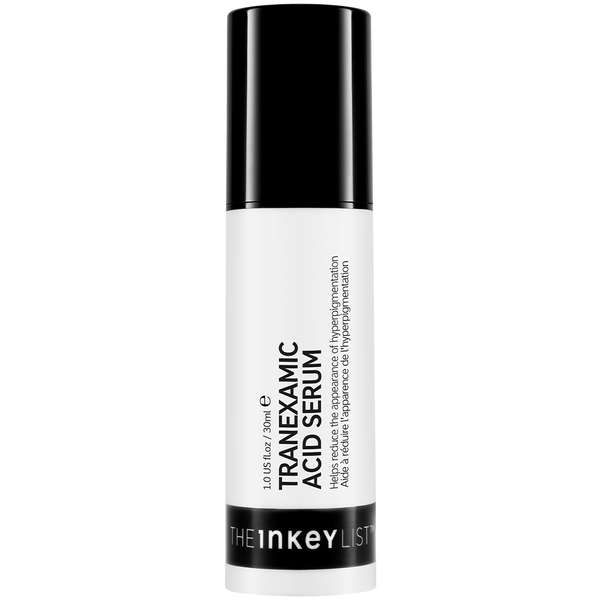
Tranexamic Acid works by blocking the inflammatory signalling pathway that triggers melanin overproduction in the first place, rather than just treating pigmentation after it’s appeared. It doesn’t cause photosensitivity, which means it’s genuinely safe to use both morning and night. Our Tranexamic Acid Serum is £17 for 30ml, and if you want to understand exactly what kind of timeline to expect, How Long Does Tranexamic Acid Take to Work? breaks it down week by week. For the full ingredient science, the Tranexamic Acid guide goes further into how and why it works.
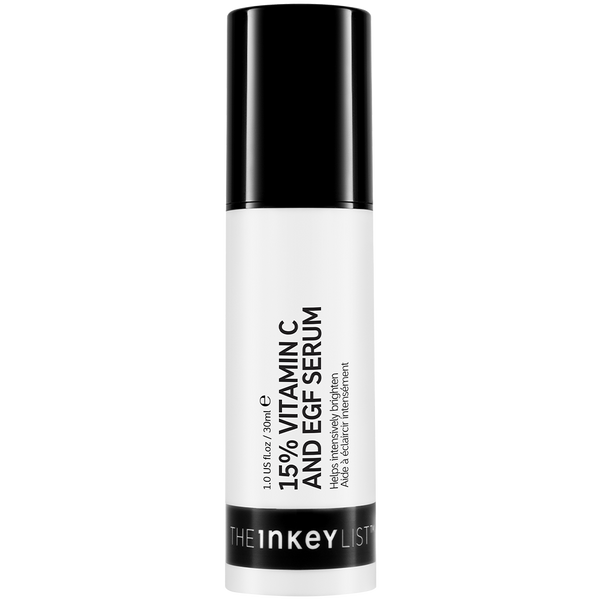
Vitamin C inhibits the tyrosinase enzyme responsible for melanin production, while also providing antioxidant defence against UV-related damage, making it a genuinely dual-purpose ingredient. A stabilised form like Ascorbyl Glucoside tends to be gentler on skin than more volatile forms of Vitamin C, which matters if you’ve found traditional formulas irritating in the past. Our 15% Vitamin C + EGF Serum is £16 for 30ml. If you’re trying to decide between brightening actives altogether, Vitamin C vs Niacinamide vs Exosomes vs PDRN: Which Glow Ingredient Does Your Skin Actually Need? lays out the comparison clearly, and it’s also where the idea of pairing in an Exosome Glow Serum first comes up, something we’ll explain properly in the next section. For deeper ingredient detail, see the Vitamin C guide.
Niacinamide regulates how melanin transfers into the skin’s surface cells (keratinocytes), while also helping to control oil production and calm visible redness. It’s a genuinely versatile ingredient that works well alongside almost everything else on this list. Our 10% Niacinamide Serum is £12 for 30ml. More detail is available in the Niacinamide guide.
Glycolic Acid is an AHA that accelerates cell turnover, essentially helping to shed pigmented surface cells faster than they’d naturally slough off. Our Glycolic Acid Toner is £15 for 100ml, and it should be used in the evening only, two to three times a week, not nightly. The Glycolic Acid guide covers usage rules in more depth.
Azelaic Acid inhibits tyrosinase in a similar way to Vitamin C, but with the added benefit of reducing redness, which makes it particularly useful where inflammation and pigmentation overlap, such as marks left behind from break outs or blemish prone skin. Our 10% Azelaic Acid Serum for Redness Relief is £16 for 30ml. Full ingredient detail is available in the Azelaic Acid guide.
Retinol accelerates deeper cell renewal, which makes it particularly effective for stubborn, longer-standing pigmentation that hasn’t responded well to surface-level treatment alone. For those just starting out, our Starter Retinol Serum is £13 for 30ml, while those with established tolerance may prefer the Advanced 0.2% Retinal Serum at £18 for 30ml. The Retinol guide explains the ingredient in more depth, and for anyone already using Retinol who wants to add a supportive layer, Boost Your Retinol Results with Exosomes is worth reading before the next section.
If you’re shopping for a dark spot serum, the thing to look for isn’t a long ingredient list or a dramatic before-and-after photo. It’s a clear mechanism of action, a defined reason the product should work for your specific concern. That’s the whole premise of a genuinely effective dark spot corrector.
Ingredients like these do a lot of heavy lifting, but they’re not the whole story. A complementary hydration step can support how these actives perform, and that’s exactly what we’ll look at next.
Exosome Glow Serum: A Complementary Glow and Hydration Step
Let’s be completely clear from the outset: the Exosome Glow Serum is not a dark spot treatment, and we’re not going to position it as one. What it is, is a glow and hydration layer that works well alongside the pigmentation-focused ingredients covered above, supporting the skin while those actives do the targeted work.
Formulated with plant-derived Cica Exosomes, the Exosome Glow Serum supports skin’s natural renewal and glow, helping skin look more radiant and hydrated while ingredients like Tranexamic Acid or Azelaic Acid work on pigmentation specifically. Think of it as the supporting layer in your routine, not the lead actor.
Here’s exactly what the product is clinically proven to do, based on approved testing:
- 100% saw more glowing skin, clinically proven*
- Clinic worthy rejuvenated skin in 14 days*
- 6-in-1 skin rejuvenation: clinically proven to visibly improve radiance, hydration, tone, firmness, elasticity, and texture*
- Proven to deliver up to 12-hours of hydration**
- Helps support natural collagen production
This is a glow-boosting formula, designed to improve how skin looks and feels day to day, rather than a pigmentation-specific treatment. Our Exosome Glow Serum (Exosome Hydro-Glow Complex) is £20 for 30ml, and it can be used either morning or evening, layered after your active serums and before moisturiser.
If you’re still deciding whether a brightening active or a glow-focused product like this one suits your skin better, Vitamin C vs Niacinamide vs Exosomes vs PDRN: Which Glow Ingredient Does Your Skin Actually Need? breaks the comparison down clearly. And if you’re already using Retinol as part of your dark spot routine, Boost Your Retinol Results with Exosomes explains how the two can work together.
To be fully transparent: this is an additive step, not a core requirement. Your dark spot routine will still work without it. But for anyone who wants an extra layer of hydration and radiance while their pigmentation-targeting ingredients do their job, it’s a genuinely useful addition.
Even the best ingredients, including this one, only work within a well-built routine. That’s exactly what we’re covering next.
How to Build an AM and PM Routine to Fade Dark Spots
Knowing which ingredients work is one thing. Knowing how to actually layer them into a daily routine, without irritating your skin or cancelling out their benefits, is where most people get stuck. Here’s how to do it properly.
Your morning (AM) routine
- Cleanse
- Hydrate (a lightweight hydrating step before actives)
- Active serum - Tranexamic Acid and/or Vitamin C
- Niacinamide
- Optional: Exosome Glow Serum
- Moisturise
- SPF - this is the non-negotiable final step, every single day
Your evening (PM) routine
- Cleanse (double cleanse if you’ve worn SPF or makeup during the day)
- Hydrate
- Tranexamic Acid
- Exfoliant night: Glycolic Acid Toner (two to three times weekly) alternated with Retinol nights - never combine the two in a single session
A few layering rules worth memorising:
- Apply products from thinnest to thickest consistency.
- Never mix Glycolic Acid and Retinol on the same night, your skin barrier will thank you.
- Keep Vitamin C in your AM routine only.
- Wait roughly sixty seconds between active layers to let each one absorb properly.
- Always patch test new products before introducing them fully.
Now, the part most guides gloss over: timelines. Early signs of improvement typically show up around two to four weeks. More visible fading tends to appear around six to eight weeks. Fuller, more noticeable improvement generally takes eight to twelve weeks or longer. This isn’t a lack of effectiveness, it’s simply how skin cell turnover and melanin regulation actually work. Managing your expectations honestly from the start makes the whole process far less frustrating.
One final point that can’t be overstated: SPF is what protects the progress every other step in your routine is making. Skip it, and you risk undoing weeks of consistent effort. For more detail on choosing the right formula, our SPF guidecovers the full picture, while SPF 30 vs SPF 50: Which Should You Actually Use? helps you pick the right strength, and Mineral vs Chemical Sunscreen: Which Is Right for Your Skin? is useful if your skin tends to react easily. Our Dewy Sunscreen SPF 30 is £15 for 50ml and makes a genuinely pleasant final step in any morning routine.
Building the right routine is half the battle. The other half is avoiding the habits that quietly undo it, which is exactly where we’re headed next.
What Makes Dark Spots Worse - Common Mistakes to Avoid
Even the best routine can be undermined by a handful of common habits. Knowing what to avoid is just as important as knowing what to use, so let’s go through the mistakes that tend to set people back the most.
Skipping SPF. This is, without question, the single most damaging and common mistake. UV exposure happens year-round in the UK, even on cloudy, grey days, which means skipping sunscreen leaves every other step in your routine working against an uphill battle it doesn’t need to fight.
Picking or squeezing blemishes. It’s tempting, but this habit deepens and prolongs inflammatory pigmentation, often turning what would have been a temporary mark into a much longer-lasting one.
Over-exfoliating or combining too many actives at once. More isn’t better here. Overloading your skin with multiple strong actives can damage the skin barrier, and a compromised barrier can actually trigger more pigmentation rather than less. If this sounds familiar, our damaged skin barrier guide explains exactly why this happens and how to recover.
Inconsistency. Stopping and restarting active ingredients resets your progress more than people expect. Skincare actives work cumulatively, which means gaps in use genuinely matter.
Mixing incompatible actives. Common culprits include using Retinol and Vitamin C in the same evening step, or combining Glycolic Acid and Retinol together. Both combinations increase irritation risk without adding extra benefit.
Giving up before the six to eight week mark. This is when most people begin to see meaningful change, and it’s also exactly when a lot of people abandon a routine out of frustration, right before results start showing.
If dehydration is part of your picture too, our dehydrated skin guide is worth a read, since dehydrated, compromised skin tends to be more prone to irritation-driven pigmentation in general. And if you want one central hub to keep coming back to as you build your routine, bookmark our dark spots pillar page.
None of these mistakes are failures, they’re simply fixable habits. And honestly, the questions people ask us most often tend to circle right back to these exact sticking points, which brings us neatly to the FAQ section.
Conclusion: Clear Skin Starts With the Right Knowledge
Dark spots are common, and for most people, they are genuinely treatable with the right approach. The path there isn’t about finding some elusive miracle product, it’s about three things done consistently: understanding what’s actually causing your pigmentation, choosing ingredients with real evidence behind them, and showing up for your routine daily.
To recap the proven actives covered in this guide: Tranexamic Acid blocks the inflammatory trigger behind melanin overproduction, Vitamin C and Azelaic Acid inhibit the enzyme responsible for pigment production, Niacinamide regulates how melanin transfers to the skin’s surface, Glycolic Acid accelerates the shedding of pigmented cells, and Retinol supports deeper renewal for more stubborn, longer-standing marks. Layered correctly, and supported by a glow and hydration step like the Exosome Glow Serum if you choose to add it, these ingredients genuinely work together rather than against each other.
And then there’s SPF, the step that protects everything else. Without it, even the most carefully built routine is fighting an uphill battle against daily UV exposure, which happens in the UK whether the sun is visibly out or not.
Be realistic about timelines. Meaningful change tends to show up around six to eight weeks, with fuller results closer to twelve weeks or beyond. That’s not a disappointing timeline, it’s simply how skin works, and knowing it upfront means you won’t give up right before the results start showing.
Ultimately, this comes back to a simple belief: effective skincare should be accessible and clearly explained, not complicated or wrapped in hype. If you want to go deeper into the science behind pigmentation, the hyperpigmentation pillar page is there whenever you’re ready, and the full hyperpigmentation collection has everything mentioned in this guide in one place.
Not sure where to start? Take the Skincare Quiz for a personalised routine recommendation built around your specific skin. Already know what you need? Shop the hyperpigmentation collection and start building your routine today.
*4-week clinical study of 26 people.
**Clinical study of 31 people.
*In-vitro testing of Cica Exosomes showed a 55% reduction in pro-inflammatory markers and a 63% increase in markers associated with skin renewal after 8 hours.
Frequently Asked Questions
Got a question?
Our askINKEY team are a friendly bunch of skincare experts with deep product knowledge and zero judgement. Whether you're an ingredient obsessive or just starting out, we'll make it make sense. No question too big. No question too small. We Give A Care, Every Day.


