



Dandruff vs Dry Scalp: Which One Do You Have?
Flakes but not sure why? Use our two-minute self-check to tell dandruff from dry scalp - and avoid the mistake that makes flaking worse.
Author
askINKEY skincare advisor
Published
22 August, 2026
Time to read
12 minutes
Dandruff and dry scalp both produce flakes and both cause itching, which is precisely why so many people get the two confused. The distinction matters because the causes are not the same and neither is the answer. Dry scalp is a lack of moisture in the skin on your head. Dandruff is linked to a naturally occurring yeast called Malassezia, and it usually shows up on a scalp that is oilier rather than drier. Working out which one you are dealing with is the difference between a routine that helps and a routine that quietly makes things worse.
This article gives you a step-by-step self-check you can do at home in about two minutes, explains the single most common mistake people make when they guess wrong, covers what to do if you think you have both, sets out how to recognise when your scalp needs professional advice rather than a cosmetic product, lists what makes each condition worse, and gives you a realistic timeline for seeing a difference. If you want the broader picture rather than the diagnostic deep dive, start with scalp health.
If you would rather skip straight to a starting point, the products below are the practical shortcut.
Where To Start If You Already Know What You Are Dealing With
If you have a rough idea of what is happening on your scalp, here is where to begin. If you do not, the self-check further down will sort it out in a couple of minutes.
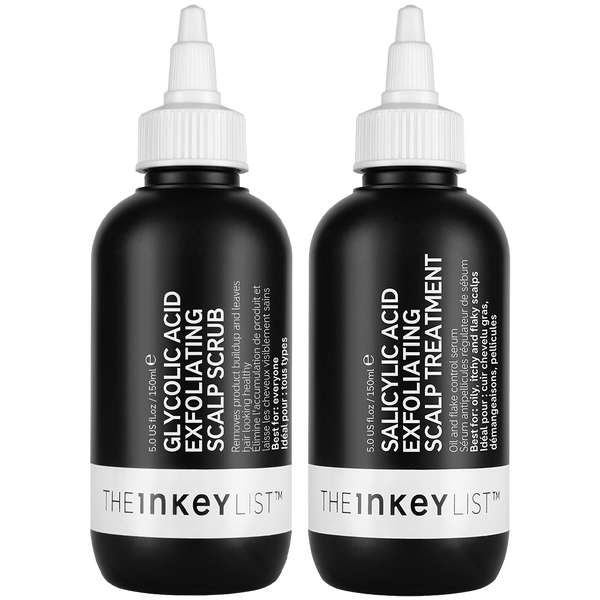
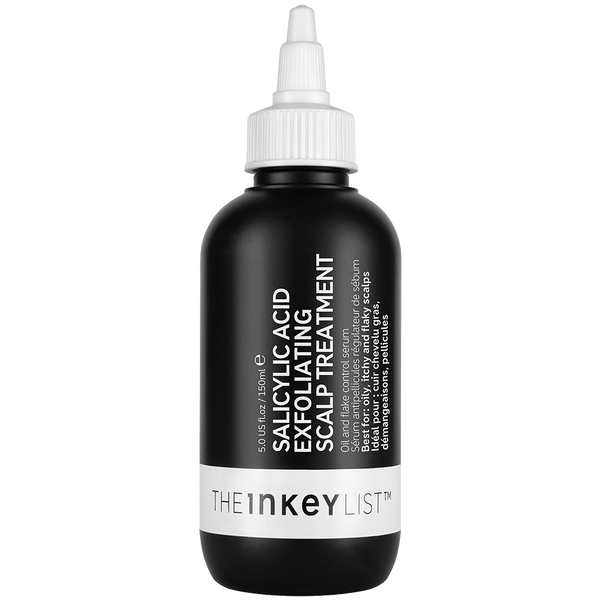
- Flakes, buildup and an oily scalp: our Salicylic Acid Exfoliating Scalp Treatment (£15). It combines 2% Salicylic Acid, 2.5% FLUIDIPURE 8G and 1% Panthenol, and is used pre-wash once or twice a week, left on for 10 minutes before you shampoo.
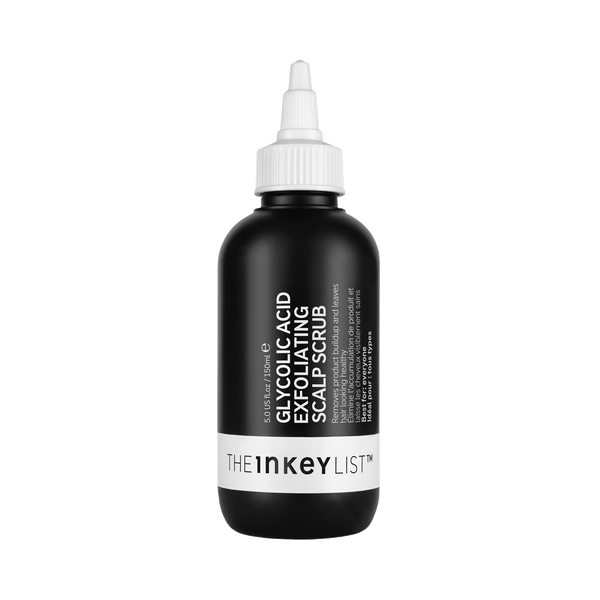
- Product buildup and dull roots: our Glycolic Acid Exfoliating Scalp Scrub (£14), which pairs chemical and physical exfoliation to lift away residue sitting at the root.
- Scalp support alongside your existing routine: our Caffeine Stimulating Scalp Treatment (£15), formulated with 1% caffeine and Redensyl.
Never use the Salicylic Acid Exfoliating Scalp Treatment and the Glycolic Acid Exfoliating Scalp Scrub in the same wash. Pick one per wash, and alternate them across separate wash days if you want to use both during the week.
Not sure which fits? Browse all scalp treatments to see the full range.
Most people, though, are not confident about which camp they fall into. That is exactly what the rest of this article is here to fix.
What Dry Scalp Actually Is, And What Dandruff Actually Is
Before you can tell the two apart, it helps to understand what is physically happening in each case. The visible symptom is similar. The mechanism underneath is not.
Dry scalp: a moisture problem
- What drives it: your scalp is not holding enough moisture. The skin on your head is skin, and like the skin anywhere else it can become dehydrated and start to shed.
- What it looks like: flakes tend to be small, fine and powdery, white or slightly greyish, and dry to the touch. They scatter easily.
- What it feels like: tight, sometimes rough or papery, occasionally sensitive after washing.
- What makes it happen: largely the same things that dry out the skin on your face. Cold weather, indoor heating, very hot water and harsh washing all strip moisture from the scalp.
Dandruff: an oil and yeast problem
- What drives it: dandruff is linked to Malassezia, a yeast that lives naturally on almost everyone’s skin. The NHS confirms that a yeast that naturally lives on the skin is one of the causes, and also makes the point that dandruff is not caused by poor hygiene.
- How the mechanism works: Malassezia feeds on the oils on your scalp. As it breaks sebum down it releases oleic acid as a by-product. Some people’s scalps react to that by accelerating skin cell turnover, and the visible result is flaking.
- What it looks like: flakes tend to be larger, thicker and waxier or greasier, ranging from white to yellowish.
- What it feels like: the scalp often feels oily rather than tight, particularly a day or two after washing.
Here is the point that reframes everything, and it is worth pausing on. A flaky scalp is not automatically a dry scalp. Flaking can absolutely be caused by too much oil rather than too little. If you take one idea away from this article, make it that one.
The mental model to hold onto is simple. Dry scalp is a moisture problem. Dandruff is a microbiome and oil problem. Every diagnostic cue that follows hangs off that split, and so does every sensible next step. It also explains why the same flaky scalp can respond brilliantly to one approach and get noticeably worse on another.
One more thing before the self-check, because it trips up almost everyone. An itchy scalp occurs with both. Itch on its own tells you very little about which condition you have, even though it is the signal most people rely on most heavily. NHS guidance on itchy skin covers the wider picture, but for our purposes the takeaway is that you need to look at the flakes and feel the scalp, not just register the itch. If you want the full overview of how all of this fits together, our full scalp health guide is the parent hub for this topic, and salicylic acid has more detail on the ingredient side.
Flaking on its own does not tell you which one you have.
Now that you know what each condition actually is, here is how to work out which one is happening on your own head.
The Two-Minute Scalp Self-Check You Can Do At Home
This is a sequential check. Work through it in order, in good light, and be honest about what you see rather than what you expect to see.
Do this check on day-old hair. A freshly washed scalp will lie to you.
- Wash, then wait 24 hours. Do not attempt this on a scalp you have just cleansed. Freshly washed hair temporarily hides both oil and flakes, and it will give you a false read on every step that follows.
- Check the flake. Part your hair in bright light and look at the flakes sitting on the scalp itself, not the ones that have already fallen onto your shoulders. Small, fine, dry, white or grey and powdery points towards dry scalp. Larger, thicker, waxy or greasy-looking and white to yellow points towards dandruff.
- Press and feel. Press a fingertip against your scalp near the part line and roll it slightly. If the skin feels tight, rough or papery, that suggests dryness. If your fingertip picks up a slick or greasy residue and you can still see flaking, that suggests dandruff.
- Check the rest of your skin. Dry scalp very often travels with dryness elsewhere: shins, forearms, hands, face. If the rest of your skin is comfortable and only your scalp is flaking, dryness becomes a much less likely explanation. Widespread dryness is often a barrier issue, and our guide to a damaged skin barrier is a useful next read if that describes you.
- Check the timing pattern. Dry scalp typically worsens in cold weather, in heated indoor air and after hot showers, and eases when conditions are milder. Dandruff tends to run on its own cycle. It can persist right through the year and often flares with stress, heat or sweat rather than with cold.
- Check what happens after washing. If washing relieves the flaking for a few days and it gradually creeps back as your scalp gets oilier again, that pattern leans towards dandruff. If washing makes tightness and flaking noticeably worse almost immediately, that leans towards dry scalp.
What your answers mean
- Mostly the first option in each step: the signals point towards dry scalp. Think moisture, gentleness and less frequent stripping.
- Mostly the second option in each step: the signals point towards dandruff. Think regular cleansing, managing oil and clearing buildup.
- A genuine mix of both: this is more common than most articles admit, and the next-but-one section deals with it properly rather than forcing you into a box.
That is how to tell if you have dandruff or dry scalp without leaving your bathroom. It is not a medical diagnosis, and it is not meant to be, but it is a far better basis for a decision than guessing from the flakes on a dark jumper.
Getting the answer wrong is extremely common, and it has real consequences for your scalp. Here is the mistake almost everyone makes.
The Most Common Mistake: Treating Dandruff Like Dryness
If you are flaking and your scalp feels oily, adding more oil is unlikely to be the answer.
The logic error runs like this. Flakes look like dry skin. Dry skin needs moisture. Therefore add oils, use richer products and stop stripping the scalp by washing so often. It is sensible reasoning that arrives at the wrong conclusion whenever the actual cause is dandruff.
Why oils can make dandruff worse
Malassezia feeds on the oils present on your scalp. If your scalp is flaking because of yeast activity in the first place, applying heavy oil treatments directly to it is effectively adding to the food supply. This does not happen to everyone and it is not a universal rule, but for some people it can make flaking worse rather than better. It is one of the more counter-intuitive things about scalp care and one of the easiest ways to spend months going backwards while doing something that feels caring and sensible.
Why washing less rarely helps
The second half of the instinct is to wash less, on the theory that you are preserving moisture. On a dandruff-prone scalp, reducing washing simply allows oil and product to accumulate. That is the opposite of what this scalp type needs. Regular, gentle cleansing generally helps more than it hurts here.
Put those two together and you get a loop. More oil and less washing produce more flaking. More flaking reads as worse dryness. Worse dryness prompts even more oil and even less washing. People can circle inside that loop for a very long time, becoming steadily more convinced that they have severely dry skin, when the underlying picture is the opposite.
If your self-check pointed towards dandruff, three things to do instead:
- Keep washing regularly rather than stretching out the gaps.
- Focus on gently clearing buildup and managing oil rather than layering richness onto the scalp.
- Give it weeks, not days, before you judge whether it is working. The NHS advises using an anti-dandruff product for around four weeks before deciding whether it has helped.
For buildup and oil specifically, our Salicylic Acid Exfoliating Scalp Treatment is clinically proven to visibly reduce flakes by up to 50% after 1 use.*
\4-week independent clinical study of 22 people under dermatological control.*
If you want to understand the ingredient itself rather than just the product, salicylic acid covers how it works on skin and scalp.
There is a reverse version of this mistake worth naming too. If your self-check pointed towards dryness, hitting the problem with aggressive, frequent exfoliation and very frequent hot washing will make the tightness and flaking worse, not better. When the issue is dryness, the answer is gentler and less often, not harder and more.
Plenty of people read both sets of signals and recognise themselves in each. If that is you, the next section is the one you need.
What If You Think You Have Both?
Yes, you can have both, and it is more common than the tidy either-or framing suggests. Here is how to handle it.
Scalps are not uniform surfaces. You can genuinely have an oily, flake-prone crown alongside a dry, tight hairline or nape. Seasonal shifts can move you between the two states across the year, so the scalp you had in July is not necessarily the scalp you have in January.
There is also a very common overlap driver that is worth recognising: over-correcting. Someone with dandruff who has responded by washing aggressively and exfoliating too often can end up with a scalp that is oily at the root and simultaneously dried out and irritated at the surface. At that point both sets of symptoms are real at the same time, because the routine created the second problem while chasing the first.
The fix is sequencing rather than doing everything at once.
- Deal with buildup, oil and flakes first. This is the more disruptive of the two issues and the one that tends to drive the visible flaking.
- Then bring comfort and hydration back in. Once buildup is under control, focus on soothing and supporting the scalp rather than continuing to strip it.
- Assess after a few weeks, not a few days. Resist the urge to change something every time you wash.
A realistic weekly rhythm looks like an exfoliating pre-wash treatment once or twice a week, with the remaining washes kept gentle. Do not attempt to attack both problems at maximum intensity simultaneously, because that is how the over-correction cycle started in the first place.
Do not use the Salicylic Acid Exfoliating Scalp Treatment and the Glycolic Acid Exfoliating Scalp Scrub in the same wash. If you want both in your week, alternate them across separate wash days.
If your scalp is on the sensitive side, our Salicylic Acid Exfoliating Scalp Treatment is fragrance-free, colour safe, vegan, formulated at pH 4.0 to 4.5, suitable for sensitive scalps and safe to use in pregnancy. For buildup and dull roots specifically, the Glycolic Acid Exfoliating Scalp Scrub is the alternative, and glycolic acid explains the ingredient in more depth. There is also a longer read on that particular use case in glycolic acid for scalp.
For soothing-focused advice rather than diagnostic advice, how to soothe an itchy or flakey scalp covers comfort in more detail.
There is one situation, though, where the right answer is not a product decision at all.
When It Is Not Just Dandruff: Inflammation Is The Dividing Line
Dandruff sits at the mildest end of a spectrum. Seborrhoeic dermatitis is the more significant version of the same underlying picture, and the two are closely related rather than entirely separate things.
The dividing line between them is inflammation. Dandruff on its own does not usually involve visible redness or swelling of the scalp. Seborrhoeic dermatitis does, and it commonly extends beyond the scalp to the eyebrows, the sides of the nose, behind and around the ears, and sometimes the chest. That spread is one of the clearest practical signals that you are looking at something more than everyday flaking, and it is also the main thing that separates seborrhoeic dermatitis from dry scalp, which stays confined to dryness and does not produce inflamed, greasy, well-defined patches.
Stop self-managing and get advice if you notice any of the following:
- A visibly red, sore or swollen scalp.
- Flaky, itchy patches appearing on your face or elsewhere on your body.
- Crusting, weeping or open areas on the scalp.
- Hair loss occurring alongside the flaking.
- No improvement after around four weeks of consistent, sensible care.
- Symptoms severe enough to disrupt your sleep or your daily life.
NHS dandruff guidance sets out a concrete threshold here: try an anti-dandruff product for around four weeks, and see a GP if there is no improvement after that, if your scalp is red or swollen, if the dandruff is very severe or your scalp is very itchy, or if you have flaky itchy patches elsewhere on your body.
In any of those situations, speak to your GP, pharmacist or a trichologist.
Cosmetic scalp products are not a substitute for medical advice. Our products can support scalp comfort, help with buildup and oil, and improve the look of flakes. They are not a treatment for a medical scalp condition, and diagnosis is a job for a professional. That is not a technicality, it is the honest position, and knowing where the line sits is genuinely useful information.
With that boundary clear, here is the everyday picture: what makes each condition worse, and how long change actually takes.
What Makes Each One Worse, And How Long Improvement Really Takes
Once you know which condition you are dealing with, two practical questions remain. What should you stop doing, and when should you expect to see something change?
What makes dry scalp worse
- Very hot water and long, hot showers.
- Indoor heating and cold, dry air.
- Over-washing with harsh cleansers.
- Frequent or aggressive exfoliation.
- High-heat styling aimed directly at the roots.
What makes dandruff worse
- Letting oil and product build up between washes.
- Heavy oils and rich, occlusive products applied directly to the scalp.
- Stress, which is widely reported as a trigger for flare-ups.
- Heat and sweat, including sweat left sitting on the scalp after exercise.
- Washing too infrequently.
How long before you see a difference
- Immediately: an exfoliating pre-wash treatment can make a visible difference to flakes after a single use. With our Salicylic Acid Exfoliating Scalp Treatment, 100% agree flakes look instantly reduced after 1 use, and it is clinically proven to reduce scalp oiliness and increase hydration levels after 1 use. Apply pre-wash, once or twice weekly, and leave on for 10 minutes before shampooing.
- The first two weeks: with consistent use, expect a reduction in visible flaking and buildup. Expect improvement, not a permanently resolved scalp.
- Around four weeks: this is the honest assessment point, and it aligns with NHS advice to give an anti-dandruff approach around four weeks before judging whether it has worked.
- Beyond four weeks with no change: that is your trigger to seek professional advice, as set out in the previous section.
\4-week independent clinical study of 22 people under dermatological control.*
Now the part that most brands leave out. This is management, not a permanent fix. Dandruff in particular tends to recur. If you find a routine that works and then stop it, flaking commonly returns, and that is not a failure of the routine or of your scalp. It is how the condition behaves.
Consistency also beats intensity by a wide margin. Once or twice a week, done reliably over a couple of months, will outperform an aggressive fortnight followed by nothing. The most common reason people conclude that nothing works is that they never gave any single approach long enough to demonstrate whether it did.
You can browse all scalp treatments to see the full range, and our scalp health guide puts all of this into the context of a complete routine.
A few specific questions come up again and again, so here they are.
The Takeaway
Dry scalp is about moisture and dandruff is about oil and yeast, and it is the flakes and the feel of your scalp, rather than the itch, that separate the two. Fine and powdery on tight skin points one way. Larger and waxier on an oily scalp points the other. Rather than guessing, do the self-check on day-old hair and let the evidence make the call for you.
Be realistic about what happens next. This is about management and consistency rather than a one-time fix, and four weeks of steady, sensible care will tell you far more than four days of intensity. If your scalp is red, sore or swollen, if flaky itchy patches appear elsewhere on your body, or if nothing has shifted after around four weeks, speak to your GP, pharmacist or a trichologist.
Clear guidance. Proven ingredients. Real results.
Find Your Routine
Still weighing up two options? Browse our scalp treatments to see everything in one place. For flakes, buildup and an oily scalp, start with our Salicylic Acid Exfoliating Scalp Treatment (£15), used pre-wash once or twice a week.
One last reminder: never use the Salicylic Acid Exfoliating Scalp Treatment and the Glycolic Acid Exfoliating Scalp Scrub in the same wash.
This article references guidance from the NHS. It is intended for general information only. Our products are cosmetic and are not intended to diagnose, treat or cure any condition. If your symptoms are persistent or severe, speak to your GP, pharmacist or a trichologist.
Frequently Asked Questions
Got a question?
Our askINKEY team are a friendly bunch of skincare experts with deep product knowledge and zero judgement. Whether you're an ingredient obsessive or just starting out, we'll make it make sense. No question too big. No question too small. We Give A Care, Every Day.


