



How to Reduce Hair Shedding: Causes & What Helps
Here’s how to tell normal hair shedding from hair loss, what causes it, and the simple scalp routine that can help calm things down.
Author
askINKEY skincare advisor
Published
10 October, 2026
Time to read
11 minutes
Finding a few more hairs than usual in your brush, your shower drain, or on your pillow can be unsettling, but it does not automatically mean something is wrong. Losing roughly 50 to 100 hairs a day is a completely normal part of the hair growth cycle, and most people never notice it because it happens gradually and evenly across the scalp. What people do notice is when that number creeps up, when shedding feels sudden, or when it seems to happen all at once after a stressful few months.
This temporary increase in shedding has a name: telogen effluvium. It is typically triggered by things like stress, postpartum hormone shifts, seasonal changes, illness, or sudden changes in diet, and in the vast majority of cases it resolves on its own once the underlying trigger passes. This guide is focused specifically on how to reduce hair shedding of this temporary, diffuse kind, not on progressive hair loss.
That distinction matters, because the solutions are different. If what you are actually noticing is a receding hairline, a widening parting, or patchy thinning that has developed gradually over many months, that points to a different pattern altogether, and you will get more useful guidance from our dedicated post on how to prevent hair loss and thinning hair. This post, by contrast, is about shedding: what causes it, how to tell it apart from hair loss, the scalp care that can genuinely help, and the everyday habits worth adjusting while your body works through it.
Before we get into routines and products, it helps to understand the foundation everything else sits on, which is scalp health. If you want the fuller picture beyond this article, our scalp health hub is a good place to dig deeper once you have finished here. For now, let’s start with the basics: what is actually happening inside your hair follicles to cause shedding in the first place, and why does it ramp up at certain points in life and not others?
What Causes Hair Shedding? Understanding the Hair Growth Cycle
Every single hair on your head is cycling through phases independently of the hairs around it, which is exactly why healthy shedding does not look like sudden bald patches. It looks like a steady, low-level turnover that is barely perceptible day to day. Understanding those phases is the quickest way to understand why shedding happens at all, and why it sometimes spikes.
Each hair follicle moves through three main stages. First is anagen, the active growth phase, where the hair is firmly rooted and actively lengthening, and this stage can last anywhere from two to seven years depending on genetics. Next is catagen, a short transitional phase lasting just a couple of weeks, where the hair follicle shrinks and growth slows down. Finally there is telogen, the resting phase, where the hair is no longer growing and is essentially waiting to be shed to make way for a new hair underneath. At any given time, the large majority of your hairs are in anagen, with only a small percentage in telogen, which is exactly why daily shedding stays in that modest 50 to 100 hair range for most people.
Problems start when something pushes an unusually large number of hairs into the telogen phase at the same time. Instead of a steady trickle of hairs being shed, you get a wave, and because hair takes around three months to actually fall out after entering telogen, the shedding you notice today is often a delayed reaction to something that happened two or three months ago. This is a detail that surprises a lot of people, and it is worth sitting with, because it means the stressful event, illness, or diet change you are trying to connect to today’s shedding might actually be a few months in the rear-view mirror.
So what actually pushes hairs into that resting phase en masse? The most commonly cited triggers include:
- Physical or emotional stress - a major life event, illness, surgery, or sustained high stress can shift a larger percentage of hairs into telogen.
- Fever or illness - the body under acute stress from infection often reflects that internally in the hair cycle a few months later.
- Crash dieting or rapid weight loss - sudden caloric or nutrient restriction is one of the more well-documented triggers.
- Iron or vitamin deficiency - inadequate iron, vitamin D, or other micronutrients can affect the hair growth cycle.
- Postpartum hormonal shifts - the dramatic hormone changes after childbirth are one of the most common and most talked-about shedding triggers.
- Seasonal shedding - many people notice more hair coming out in autumn, a pattern some research has observed as a seasonal rhythm.
- Stopping certain medications or hormonal contraception - changes to medication, including birth control, can temporarily disrupt the cycle.
A newer question we hear often is whether dehydration can cause hair shedding on its own. The honest answer is that dehydration is not considered a primary driver of telogen effluvium in the way that, say, postpartum hormones or crash dieting are. However, overall hydration and nutrition status do affect the broader health of your scalp and hair, and a well-hydrated, balanced scalp environment supports healthier-looking growth generally. In other words, drinking more water is unlikely to single-handedly stop shedding, but neglecting hydration alongside everything else is not doing your scalp any favours either.
The reassuring part of all this is that temporary shedding driven by an identifiable trigger is, by definition, temporary. Once the trigger resolves, whether that is recovering from illness, getting more consistent sleep, or your body adjusting postpartum, shedding typically calms back down within three to six months. That timeline can feel long when you are in the middle of it and checking your brush every morning, but it is a genuinely normal part of how the hair cycle resets itself.
Now that you understand why shedding happens, the next useful question is how to tell whether what you are experiencing actually fits this pattern, or whether it looks more like something progressive.
Hair Shedding vs Hair Loss: How to Tell the Difference
This is probably the single most useful distinction in this entire article, because the right next step genuinely depends on which category you fall into. Shedding and hair loss can look superficially similar day to day, but they behave very differently over time, and learning to spot the difference will save you time, money, and unnecessary worry.
Shedding, the kind this article is about, is diffuse. That means it happens broadly across the whole scalp rather than in one specific spot, and you typically notice it in places where loose hair naturally collects: more strands than usual in the shower drain, scattered across your pillow in the morning, or coming away when you run a brush through your hair. Crucially, shedding tends to be temporary. It ramps up, often in connection with an identifiable trigger, and then settles back down once that trigger has passed.
Hair loss, by contrast, tends to be localised or progressive rather than diffuse. Instead of “more hair everywhere,” it looks like a receding hairline that has crept backward over the course of a year, a parting that has gradually widened, or visibly reduced density concentrated in one particular area, such as the crown or temples, that has worsened steadily over months rather than fluctuating. Genetic and hormonal thinning patterns, often referred to as androgenetic hair loss, and autoimmune conditions like alopecia, fall into this hair loss category rather than the shedding category covered here.
If you are not sure which camp you fall into, a simple self-check can help clarify things:
- Has the change been happening for a few weeks to a few months, and can you connect it to something specific, like an illness, a stressful period, giving birth, or a significant diet change? That pattern points towards shedding.
- Has the change instead been a slow, gradual shift over a year or more, without any obvious single trigger you can point to? That pattern points towards hair loss rather than shedding.
To be direct about it: if you are noticing a receding hairline, a widening parting, or density that has been progressively thinning over an extended period, this article is not the one you need. You will get far more targeted, useful guidance from our companion piece on how to prevent hair loss and thinning hair, which is built specifically around that pattern and the different set of solutions it calls for.
If what you are describing sounds like the diffuse, trigger-linked pattern instead, you are in the right place, and the good news is that there is a straightforward, low-effort scalp routine that can genuinely support your scalp while your body works through it. That is exactly what we will walk through next.
Scalp Care That Can Help: Product Recommendations
It is worth being upfront about something before recommending any product: nothing is going to override biology. If your shedding is being driven by a hormonal shift, an illness, or a stressful period, the single most effective thing is for that underlying trigger to resolve, and for your body to be given time to reset. What scalp care can genuinely do is support the environment your hair is growing in, so that your follicles are not working against unnecessary congestion, buildup, or irritation on top of everything else going on internally. Think of it as removing obstacles rather than promising a cure.
With that framing in place, a simple two-step scalp routine makes sense for most people navigating temporary shedding: an exfoliating step before you wash, and a treatment step that stays on overnight.
Step one: exfoliate before you shampoo. The Glycolic Acid Exfoliating Scalp Scrub is designed to be used one to two times a week, applied to the scalp before your regular shampoo. It is formulated with 7% Glycolic Acid, an exfoliating acid that works to lift away product buildup, dead skin cells, and excess oil that can otherwise sit on the scalp and around the base of each follicle. A congested scalp is not necessarily the root cause of shedding, but a clearer, more balanced scalp surface is a sensible foundation to build on. In INKEY’s own consumer testing, 92% of users agreed their hair felt healthier after four weeks of consistent use, which is a meaningful signal for a product used just once or twice a week.
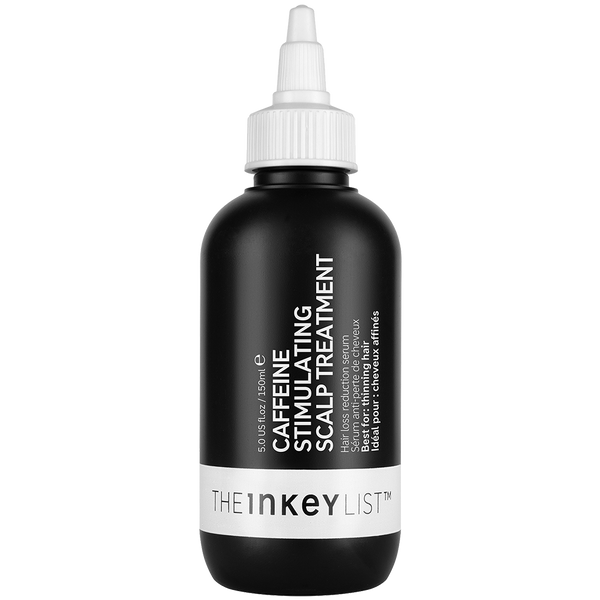
Step two: treat overnight. The Caffeine Stimulating Scalp Treatment is a leave-on formula designed to be applied at night, formulated with 1% caffeine alongside Redensyl, an ingredient studied for its role in supporting the hair’s natural growth cycle. Caffeine has been researched for its potential to help stimulate the scalp, and pairing it with Redensyl in a nightly leave-on format means it has hours of uninterrupted time on the scalp to do its work while you sleep. As with most scalp and hair treatments, consistency is the key variable: this is a product to use nightly for three months or more before expecting to judge results, not a one-week fix.
In terms of pricing, the Caffeine Stimulating Scalp Treatment is £15.00 for 150ml and the Glycolic Acid Exfoliating Scalp Scrub is £14.00 for 150ml, both currently in stock and ready to shop.
If your scalp tends to feel flaky or itchy alongside shedding, the Salicylic Acid Exfoliating Scalp Treatment is worth knowing about as an alternative pre-wash option, since salicylic acid is particularly well suited to calming an irritated, flake-prone scalp while still clearing away buildup. And if you would rather start both steps together without thinking too hard about sequencing, the Clean & Healthy Scalp Duo bundles the core routine in one place. You can also browse the ingredient more broadly via our glycolic acid collection if you are curious how it is used elsewhere in scalp and skin care.
What this routine will not do is override a major hormonal shift or replace proper nutrition if that is the true underlying cause of your shedding. That is exactly why the next section matters just as much as the products do: scalp care works best as one part of a broader picture that includes how you are eating, sleeping, and treating your hair day to day.
Lifestyle, Diet and Haircare Habits That Support Healthier Shedding Patterns
Products can only do so much if the rest of your routine is working against them, which is why the habits around your hair matter just as much as what you put on your scalp. None of what follows is exotic or complicated. It is mostly about removing friction and giving your body the basic inputs it needs to run the hair growth cycle properly.
Diet genuinely matters here, and not in a vague wellness-culture way. Protein is a structural building block for hair, biotin and iron both play recognised roles in supporting the hair growth cycle, and an overall balanced diet gives your body what it needs to prioritise hair growth, which, biologically speaking, is not an essential function your body protects at all costs the way it protects your organs. This is exactly why rapid weight loss or restrictive dieting is such a well-documented trigger for increased shedding: when your body is under sudden caloric or nutrient stress, hair growth is one of the first things deprioritised.
Stress management is not just a soft suggestion, it is physiologically relevant. Elevated stress hormones, particularly cortisol, are understood to play a role in pushing a larger share of hairs into the resting phase of the cycle. This does not mean you need to eliminate stress entirely, which is unrealistic for most people, but prioritising sleep, finding small ways to decompress, and being mindful during particularly demanding periods of life can genuinely support a healthier hair cycle over time.
Be gentler with your hair while shedding feels elevated. This is a simple, practical point that is easy to overlook: reducing heat styling, tight hairstyles like tight ponytails or braids, and harsh chemical treatments during a period of increased shedding helps avoid compounding the visible effect with additional breakage and tension. You are not causing the underlying shedding by straightening your hair occasionally, but adding mechanical stress on top of an already-elevated shedding phase can make things look and feel worse than they need to.
Scalp circulation is worth a mention, even though the evidence is more anecdotal than clinical. Gentle scalp massage, whether on its own or as part of applying a scalp treatment, is a simple, low-risk habit that many people find genuinely enjoyable and relaxing, and some believe it supports circulation to the scalp. It costs nothing, takes a couple of minutes, and pairs naturally with applying a scalp treatment at night.
Patience is, honestly, the hardest ingredient in all of this. Hair grows at roughly half an inch per month on average, which means visible change from any routine, lifestyle shift, or product takes real time to show up. This is why we consistently recommend giving any new routine a minimum of three months before judging whether it is working. Checking results after a week or two will almost always be discouraging, not because the approach is wrong, but because hair biology simply does not move that fast.
If your scalp feels consistently flaky, tight, or irritated on top of shedding, it is worth figuring out whether that is dandruff or simply a dry scalp, since the right approach differs between the two. Our breakdown on dandruff vs dry scalp can help you work out which one you are actually dealing with, and addressing it properly removes one more variable that could be compounding how your scalp feels during this period.
To sum up the habit side of things:
- Eat enough protein, iron, and overall balanced nutrition, and avoid crash dieting.
- Prioritise sleep and manage stress where you realistically can.
- Ease off heat styling, tight hairstyles, and harsh chemical treatments temporarily.
- Add gentle scalp massage into your routine, ideally alongside a treatment step.
- Give any new routine a genuine three-month trial before judging results.
The Bottom Line on Managing Hair Shedding
If there is one thing worth taking away from all of this, it is that some shedding is not a problem to solve, it is simply how hair works. The 50 to 100 hairs you lose on an average day are part of a healthy, functioning growth cycle, and even a temporary spike beyond that, triggered by stress, illness, postpartum changes, or a shift in diet, is usually a self-resolving part of that same cycle rather than a sign that something has gone permanently wrong. For most people, that kind of shedding calms back down within three to six months as the underlying trigger passes.
In the meantime, a simple two-step scalp routine, exfoliating before you wash with the Glycolic Acid Exfoliating Scalp Scrub and treating overnight with the Caffeine Stimulating Scalp Treatment, is a sensible, low-effort addition to support your scalp environment while your body does the real work. It is not a guaranteed cure, and anyone promising one is overstating what any topical product can do, but it is a genuinely evidence-informed way to give your scalp the best possible conditions to work with.
And if, after reading all of this, what you are actually noticing sounds less like diffuse shedding and more like a receding hairline or progressive thinning in one specific area, it is worth reading our dedicated guide on how to prevent hair loss and thinning hair instead, since the right next steps genuinely differ between the two. Clarity about which situation you are in will always serve you better than guessing, and it is the reason we built these as two separate guides rather than one. If you want to explore the full range of options once you know which category applies to you, our scalp treatments collection is worth a browse.
Hair biology rewards patience over panic, and clear information over fear-based marketing. That is the approach we have tried to take throughout this piece, and it is the same approach we would want for anyone standing in front of their bathroom mirror, slightly worried, trying to figure out what is actually going on.
If you have lingering questions about your specific shedding pattern, which step to start with, or how your particular routine fits into all of this, our askINKEY advisors are genuinely there to help, and no question is too small or too specific to ask. You can also try our Hair & Scalp Quiz if you would rather get a personalised routine recommendation based on your own hair and scalp needs. Either way, you do not have to figure this out alone, and getting a clear answer is usually a lot more reassuring than another night of searching symptoms online.
Frequently Asked Questions
Got a question?
Our askINKEY team are a friendly bunch of skincare experts with deep product knowledge and zero judgement. Whether you're an ingredient obsessive or just starting out, we'll make it make sense. No question too big. No question too small. We Give A Care, Every Day.


