



Salicylic Acid for Scalp: How a 2% BHA Scalp Treatment Works
How salicylic acid works on the scalp, why an oil-soluble BHA suits flakes and oiliness, plus exactly how to use a 2% scalp treatment and how often.
Author
askINKEY skincare advisor
Published
22 August, 2026
Time to read
15 minutes
Salicylic acid is a beta hydroxy acid, better known as a BHA. Unlike most exfoliating acids, it is oil-soluble, and that one property is the reason it behaves differently on the scalp than water-soluble acids do. Water needs a watery environment to move through. Oil-soluble ingredients can work into an oily one, and the scalp is one of the oiliest areas of skin on the body.
This article is about the ingredient itself rather than scalp care in general. Here is what it covers:
- How salicylic acid works on the scalp, in plain English
- Who a salicylic acid scalp treatment actually suits
- What is inside a 2% formula, active by active
- Exactly how to apply it, and for how long
- How often to use it, and why more is not better
- Treatment versus salicylic acid shampoo
- How salicylic acid compares with glycolic acid
- What salicylic acid will not do for your scalp
- Answers to the questions people ask most
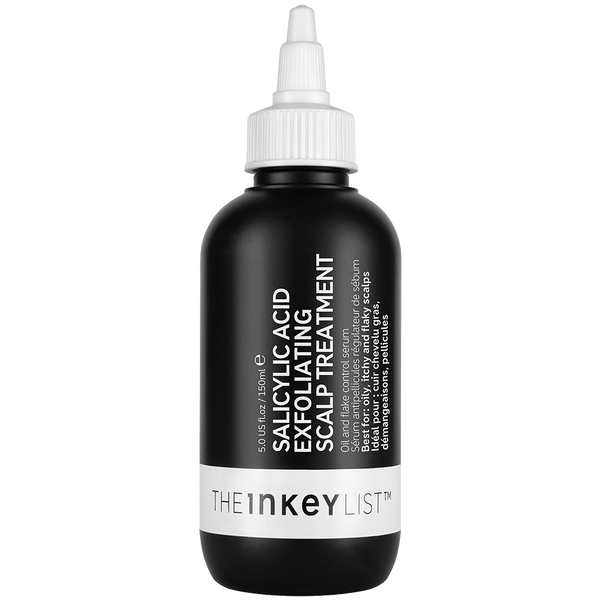
A quick definition before we go further, because it shapes everything below. A salicylic acid scalp treatment is a leave-on exfoliating step used before you wash your hair. It is not a shampoo, and it is not used instead of one. Our Salicylic Acid Exfoliating Scalp Treatment (£15) is the formula this article is built around, and it sits within our wider range of scalp treatments if salicylic turns out not to be your match.
One more piece of honesty up front. This is a cosmetic exfoliating treatment for flakes, oiliness and congestion. It is not a medicated product, and this article will be clear about the line between the two. For the broader picture beyond this single ingredient, our scalp health guide is the place to start, and our salicylic acid page covers the ingredient across the whole routine.
Everything that follows depends on understanding the mechanism, so that is where we will begin.
How Does Salicylic Acid Work on the Scalp?
Start with the chemistry, because it is simpler than it sounds.
Hydroxy acids are sorted into two broad families. Alpha hydroxy acids, or AHAs, include glycolic acid and lactic acid. Beta hydroxy acids, or BHAs, are represented in skincare almost entirely by salicylic acid. The difference between the two families comes down to where a particular chemical group sits on the molecule, and that small structural detail decides something very practical: whether the acid dissolves in water or in oil.
AHAs are water-soluble. They work across the surface of the skin, in the more hydrated upper layers. Salicylic acid is oil-soluble, or lipophilic, which means it is comfortable in a lipid-rich environment. On the scalp, that environment is everywhere. This is the single most important thing to understand about how salicylic acid works on the scalp, and it is why the ingredient earns its place in a scalp product rather than being a generic exfoliant with a new label.
What keratolytic actually means
You will see salicylic acid described as keratolytic. The word sounds aggressive and the reality is not.
The outermost layer of your skin is made up of corneocytes, which are flattened dead skin cells at the end of their life cycle. They are held together by protein structures that work rather like rivets, and they sit in a matrix of lipids that behaves like a soft cement. Normally these cells detach and fall away invisibly, a few at a time, without you ever noticing. That process is called desquamation and it is happening on your scalp right now.
Salicylic acid works on both parts of that bond. It degrades the protein rivets between corneocytes, which is why researchers often describe it more precisely as desmolytic rather than keratolytic. It also dissolves some of the lipid cement holding the cells in place. Loosen the rivets and soften the glue, and the cells that were clinging on release more readily. A systematic review of keratolytic agents sets out this mechanism across the class of ingredients that work this way.
Crucially, it is a surface-level action. Studies measuring corneocyte loss have found that salicylic acid increases shedding from the outer layer without meaningfully changing what is happening in the deeper, living layers of normal skin. It is accelerating something your skin already does, not overriding it.
Your scalp is skin. It sheds, it produces oil, and it responds to the right ingredients.
Why this matters more on the scalp than almost anywhere else
Facial skin has follicles and oil glands. The scalp has a far higher density of both. Every hair emerges from a follicle, and most follicles have sebaceous glands attached to them producing sebum.
That creates a specific set of conditions. You have a lot of oil, a lot of openings in the skin, and thousands of hair fibres providing something for loosened skin cells to catch on. On your arm, shed cells simply fall away and you never see them. On your scalp, they have somewhere to collect and something to cling to. They gather at the roots, mix with oil, and clump together until they are large enough to be visible as flakes.
This is where oil-solubility stops being a chemistry footnote and becomes the whole point. A water-soluble acid does useful work across the surface. An oil-soluble acid can work into an oily setting, including the follicle itself, where oil and shed cells collect together. Research into how topical actives behave on scalp skin reinforces the point that the scalp is its own environment, with its own barriers and its own behaviour, and that formulation has to account for that.
The mechanism, condensed to three lines:
- Oil-soluble, so it can work into the oily environment inside the follicle rather than only across the top
- Keratolytic, so it loosens the bonds holding dead skin cells together
- Exfoliating, so softened flakes lift and rinse away instead of building up at the roots
The scalp is skin, and pH still applies
At The INKEY List we come back to this point constantly, because it changes how people approach their hair care. Your scalp is skin. It has the same barrier, the same shedding cycle and the same responsiveness to well-formulated actives as the skin on your face. The reason we treat it as a separate category is habit and format, not biology. Our scalp health guide goes further into what a comfortable, well-functioning scalp actually looks and feels like.
Because it is skin, pH matters. Exfoliating acids need an acidic environment to stay effective, but pushing the pH too low buys efficacy at the cost of comfort. Our formula sits at pH 4.0 to 4.5, which keeps the salicylic acid working properly while staying comfortable on scalp skin, including for people who find their scalp reacts easily.
Understanding the mechanism is one thing. Knowing whether it applies to you is another, so let us look at who actually benefits.
Who Should Use a Salicylic Acid Scalp Treatment?
Salicylic acid is not a universal answer for every scalp. It is specific, and it is at its best against four recognisable experiences.
Visible flakes. If you regularly find white or pale flakes at your roots, on your parting, or on the shoulders of a dark jumper, and they build up between washes, that is exactly the pattern an exfoliating step is designed to address. Salicylic acid loosens the clumped cells so they rinse away rather than accumulating.
An oily scalp. If your roots look greasy within a day of washing, if your fringe separates into strands by the evening, or if your parting looks shiny while your lengths still feel dry, you are dealing with surface oil. An oil-soluble acid is well suited to that.
Congestion and scalp spots. Small bumps along the hairline, at the nape, or across the crown are common and rarely talked about. The scalp has the same follicles and oil glands as the rest of your skin, so it can experience the same kind of congestion. Salicylic acid is the ingredient most associated with that concern elsewhere on the body, and the logic carries over.
A coated feeling. Sometimes there is nothing dramatic to see. The scalp simply feels covered, hair falls flat at the root, and washing does not fully resolve it. An exfoliating step before shampoo gives the wash something cleaner to work with.
This may suit you if
- “My roots look greasy a day after washing”
- “I see flakes on my parting even when my hair is clean”
- “My scalp feels coated and my hair never feels properly clean”
- “I get small bumps along my hairline”
- “My scalp gets itchy as the week goes on”
On itch, honestly
An itchy flaky scalp is one of the most common reasons people search for a flaky scalp treatment, so it deserves a straight answer.
Removing surface build up and reducing visible flaking can make a scalp feel considerably more comfortable, and many people notice less itch as a result. But itch has many possible causes. It can come from dryness, from a reaction to a product, from washing too often or not often enough, or from an underlying skin condition that needs proper assessment. A cosmetic exfoliating treatment is not an anti-itch medication and will not resolve every cause.
Dry scalp or dandruff?
The short version: dry scalp flakes tend to be small, fine and dry, with skin that feels tight, and they often appear alongside dryness elsewhere. Dandruff flakes tend to be larger, oilier and more yellow in tone, on a scalp that can look shiny rather than tight. The two are frequently confused because both produce visible flaking, but the underlying picture differs. Our scalp health pillar covers the distinction properly, including what each one responds to.
Formula suitability
Suitability is often the deciding factor, so here it is plainly. The formula is suitable for all hair types, sensitive scalps and coloured hair, and it is safe to use during pregnancy and while breastfeeding.
It is fragrance-free, alcohol-free, sulphate-free, silicone-free and gluten-free. It is registered vegan with the Vegan Society and approved by Leaping Bunny. If you colour your hair, an exfoliating scalp step used before washing will not strip your colour, though as with any new product a patch test is sensible.
When to see someone instead
There is a point at which reaching for another cosmetic product is the wrong move.
If flaking is persistent and does not improve, if you have redness that does not settle, if the affected skin appears in defined patches rather than diffusely, if scaling is thick and firmly attached, or if your scalp is sore or painful, that warrants professional assessment rather than another bottle. The same applies if flaking extends beyond your hairline onto your face or ears, or if you notice changes to your nails alongside it.
Conditions such as seborrhoeic dermatitis and scalp psoriasis are clinical diagnoses with clinical management pathways. DermNet’s overview of seborrhoeic dermatitis and DermNet’s guide to scalp psoriasis describe what those conditions look like and how they are distinguished from one another. In the UK, NICE guideline CG153 sets out how psoriasis should be assessed and managed, and specifically identifies the scalp as a site where referral may be appropriate. A GP or a trichologist is the right first port of call. Getting a proper diagnosis is faster than working through the shelves by trial and error.
With the question of fit settled, the natural next step is knowing exactly what is in the bottle.
Inside the 2% Salicylic Acid Formula
Transparency is the reason this brand exists, so here is the formula broken down by active, percentage first.
- 2% Salicylic Acid - gently exfoliates the scalp, sloughs away dead skin cells and helps reduce the appearance of flakes and excess oil
- 2.5% FLUIDIPURE 8G - helps reduce the appearance of scalp redness
- 1% Panthenol - helps hydrate and moisturise hair, so an exfoliating step does not leave lengths feeling stripped
- pH 4.0 to 4.5 - keeps the acid effective while staying comfortable on scalp skin
Why 2% is the number that matters
Percentages only mean something in context, so it is worth explaining why 2% is the figure here.
Too low, and an exfoliating acid is present for the label rather than for the result. Too high, and you have a formula that may work quickly but is not appropriate for regular unsupervised use at home, particularly on skin as densely populated with follicles as the scalp. 2% is the concentration that delivers meaningful exfoliation while remaining suitable for use once or twice a week, week after week, which is what actually maintains results.
The supporting actives are doing real work too. FLUIDIPURE 8G addresses the appearance of redness, which matters when you are exfoliating an area that can look flushed. Panthenol is there because exfoliation should not come at the cost of condition. Hair passes through whatever you apply to your scalp, and an acid treatment that leaves lengths feeling rough is a treatment people abandon by week three.
Format, and why the applicator counts
The treatment is a lightweight, non-greasy liquid in a 150ml bottle with a nozzle applicator.
That applicator is a functional decision rather than a design one. It lets you part your hair and deliver the product directly onto the scalp, which is where the exfoliation needs to happen. Anything applied to your hands and then rubbed over your head largely ends up on the hair fibres.
There are no physical beads or grains in the formula. Physical scrubs have their place, but they need to be worked through and rinsed thoroughly, and they can be awkward in longer, thicker or textured hair. A liquid treatment rinses out cleanly and works chemically rather than by abrasion, which means you are not relying on how vigorously you rub to get a result.
What the testing showed
“100% agree flakes look instantly reduced after 1 use*”
“Clinically proven to visibly reduce flakes by up to 50% after 1 use*”
“Clinically proven to reduce scalp oiliness and increase hydration levels after 1 use*”
*4-week independent clinical study of 22 people under dermatological control.
Read those in context. They describe visible improvement after a single use, tested under dermatological control over four weeks. They are not claims about treating a condition, and the honesty section further down this article sets out plainly what this formula does not do.
For anyone tracking real-world feedback, the treatment currently holds a 4.2 out of 5 rating from 373 reviews, and has been featured in InStyle and Vogue. If you want the full story on this ingredient across your whole routine rather than just your scalp, our salicylic acid page covers it, and the salicylic acid collection shows where else it appears in the range.
Knowing what is in it leads directly to using it properly, which is where most results are won or lost.
How to Use Salicylic Acid on Your Scalp: Method and Contact Time
This is the section to screenshot. Exfoliating acids reward correct use and punish enthusiasm, so precision matters more here than anywhere else in the article.
At a glance: 1 to 2 times a week, before washing, leave for 10 minutes, then rinse and shampoo.
The method, step by step
- Shake the bottle well before use.
- Start with dry or damp hair, before you wash. This is a pre-wash step.
- Part your hair into sections so you can see the scalp.
- Apply directly to the scalp along each parting using the nozzle.
- Work across the whole scalp, section by section, rather than concentrating in one area.
- Massage in gently with your fingertips, not your nails.
- Leave on for 10 minutes.
- Rinse thoroughly.
- Shampoo as normal, then condition your lengths.
One action per step, in that order. The most common mistake is applying it to wet hair in the shower, where it dilutes and runs off before it has done anything useful.
How often to use salicylic acid on your scalp
Once or twice a week. That is the range, and there is no version of this where more frequent use produces better results.
Exfoliation follows a curve rather than a straight line. Up to a point you are helping your scalp shed cells it was ready to lose. Past that point you are working on cells it still needs, and an over-exfoliated scalp can feel tight, sensitive or reactive. If you are new to acids, start with once a week for a few weeks and see how your scalp responds before considering twice.
How long to leave salicylic acid on your scalp
10 minutes. That is the contact time the formula was tested at, and it is the figure the clinical results are based on.
Contact time is not a dial you can turn up. Twenty minutes does not produce twice the effect, and forty does not produce four times. The acid does the majority of its work early in that window, and extending it mainly increases the chance of discomfort without improving the outcome. Set a timer, do something else, come back.
Can you leave it on overnight?
No. Do not leave a salicylic acid scalp treatment on overnight.
It is a pre-wash treatment with a defined 10 minute contact time, and it is designed to be rinsed out. Leaving an exfoliating acid in contact with your scalp for eight hours offers no additional benefit and increases the likelihood of irritation. It also means sleeping with product on your pillow. The question comes up often enough that it appears again in the FAQ below, and the answer does not change.
Do not double up on exfoliation
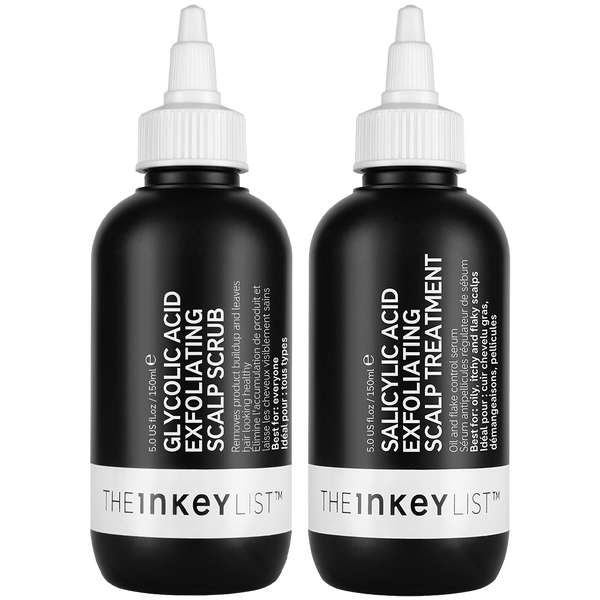
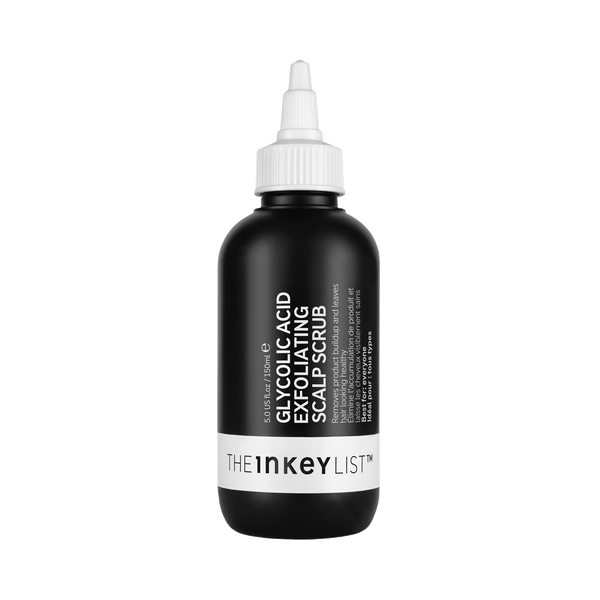
Use one chemical exfoliant per wash. Never use this treatment in the same wash as our Glycolic Acid Exfoliating Scalp Scrub (£14).
If you own both, alternate them across different wash days rather than layering them. They are both exfoliating steps and using them together is not a shortcut to a cleaner scalp, it is simply too much at once.
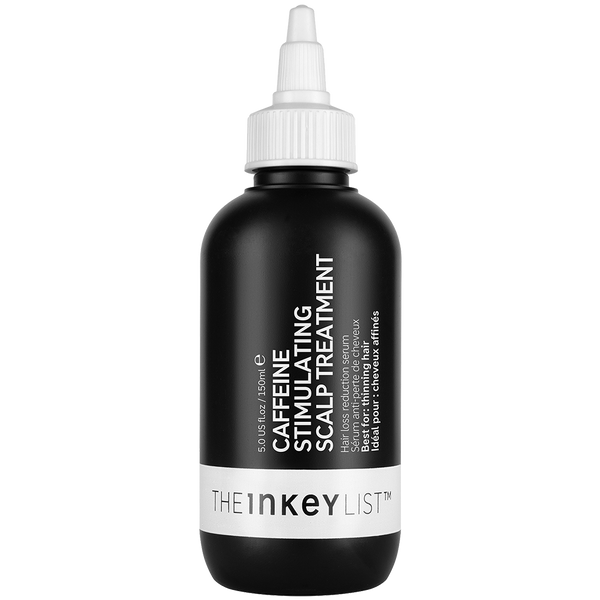
On the days in between, a leave-in step is a reasonable addition. Our Caffeine Stimulating Scalp Treatment (£15) is designed to stay on rather than rinse off, so it does not conflict with your exfoliating day. If you would rather buy the pairing together, the Clean & Healthy Scalp Duo (£27.55) covers it.
Safety notes
- For scalp use only
- Avoid the eye area, and rinse with water if any product gets in your eyes
- Do not apply to broken, irritated or sunburnt skin
- Patch test before first use, particularly if your scalp is sensitive
- No SPF is needed afterwards, since the product is rinsed out and your scalp is largely covered by hair
- Discontinue use if you experience persistent stinging, burning or discomfort
Where it sits on wash day
The sequence is straightforward: treatment first on dry or damp hair, 10 minutes, rinse, then shampoo, then condition your lengths. That is all you need for this particular step.
We are deliberately not rebuilding the entire scalp routine here, because it would repeat work done properly elsewhere. Our scalp health pillar covers the complete routine, including how often to wash and how to layer other steps.
With the method settled, the obvious question is why bother with a separate step at all when shampoos containing the same acid exist.
Scalp Treatment vs Salicylic Acid Shampoo, and How It Compares to Glycolic Acid
Salicylic acid shampoo is searched far more often than salicylic acid scalp treatment, so it is worth explaining what actually separates the two formats. The answer is not the acid. It is time and accuracy.
The difference is not the acid. It is how long it stays where you need it.
A shampoo is a cleansing product. You dispense it, dilute it with water, spread it across your hair, work it through and rinse it out. Total contact time is usually somewhere between thirty seconds and two minutes, and a good portion of the product spends that time on hair fibres rather than on scalp skin. Any active ingredient in a shampoo is working in a diluted state, in a short window, across an imprecise target.
A leave-on treatment inverts all three of those variables. It is applied undiluted, directly onto the scalp through a nozzle, and left in place for ten minutes. The acid gets meaningful contact time with the surface you actually want it to act on. That is the entire proposition behind our Salicylic Acid Exfoliating Scalp Treatment (£15).
What a leave-on treatment does well:
- Delivers the acid undiluted to the scalp itself
- Provides a defined 10 minute contact time
- Targets accurately via a nozzle applicator, so you know where it has gone
- Works as a periodic reset rather than a daily habit
What a shampoo does well:
- Cleanses hair and scalp, which a treatment does not do
- Fits into an existing routine with no extra time
- Can be used more frequently
- Requires no additional step to remember
Neither format is superior in the abstract. A salicylic acid shampoo can be a perfectly reasonable everyday option, and if one is working for you there is no reason to abandon it. It is simply doing a different job. The most useful way to think about it is that a shampoo cleanses with some exfoliating benefit, while a treatment exfoliates and is followed by cleansing. You still need to shampoo after using a treatment. It does not replace washing your hair.
Salicylic acid or glycolic acid?
Both are exfoliating acids and both belong in the scalp exfoliation conversation, but they are not interchangeable.
Salicylic acid is oil-soluble. It can work into the oily environment inside the follicle, which makes it the more natural fit for visible flakes, an oily scalp, congestion and scalp spots. Glycolic acid is water-soluble and the smallest of the AHAs, so it works across the surface of the scalp rather than into it, which suits a different set of concerns.
The practical rule of thumb: if your scalp reads as oily and flaky, salicylic is the logical starting point. If it reads differently, glycolic may be the better fit. Our glycolic acid for scalp article makes the case from the other side properly, and the glycolic acid ingredient page has the full detail. If you would rather see all the formats side by side before committing, the scalp treatments collection lays them out.
An honest comparison between formats naturally invites an honest account of the ingredient’s limits.
What Salicylic Acid Will Not Do for Your Scalp
We would rather tell you what this does not do than have you expect the wrong thing.
Overpromising is the fastest way to lose someone’s trust, and scalp concerns are an area where people have often already been disappointed more than once. So here is the plain list.
- It will not cure dandruff. This is a cosmetic exfoliating treatment that helps reduce the appearance of flakes. It is not a medicated product and it does not claim to be one.
- It will not treat seborrhoeic dermatitis or scalp psoriasis. Those are clinical conditions requiring clinical assessment and management.
- It will not make your hair grow. Exfoliating supports a cleaner, more comfortable scalp environment, but salicylic acid is not a hair growth active.
- It will not stop your scalp producing oil. Oil production is driven by factors a topical exfoliant does not control. It helps manage oiliness at the surface between washes.
- It will not fix everything in one use. The clinical results describe visible improvement after a single use, and consistent weekly use is what maintains that over time.
- It is not a replacement for washing your hair. It is a step before shampoo, not instead of it.
On flaking that does not resolve
If you have been using cosmetic products for months and your flaking has not meaningfully changed, the issue may not be one that cosmetic products address.
Persistent flaking, redness that does not settle, scaling that appears in defined patches, thick scale that adheres firmly to the scalp, soreness or pain, or flaking that extends onto your face or ears are all reasons to seek an assessment rather than continuing to experiment. DermNet’s scalp psoriasis resource describes how these conditions present, and NICE guideline CG153 sets out the UK clinical pathway for psoriasis assessment and management, including when referral is appropriate. A GP or a trichologist can tell you in one appointment what you might otherwise spend a year guessing at.
One more redirection worth making. If your actual concern is shedding, thinning or reduced density rather than flaking or oiliness, exfoliation is not the answer and this is not the product for it. Our guide on how to prevent hair loss and thinning hair addresses that properly. And if you want to understand the wider picture your scalp sits within, scalp health remains the most complete resource we have.
That covers the limits. Now the questions people ask most.
Conclusion
- Salicylic acid is an oil-soluble BHA, so it works into the follicle to loosen dead skin cells and help reduce the appearance of flakes and excess oil
- Use it once or twice a week, before washing, for 10 minutes, then rinse and shampoo
- It is a cosmetic exfoliating step, not a medicated product, and persistent, red, patchy or painful flaking needs a GP or trichologist
- Your scalp is skin, and it deserves the same considered, ingredient-led approach you give your face
If you want the wider context around everything covered here, our scalp health guide is the fuller picture, and the scalp treatments collection is where to look when you are ready to choose.
Where to Start
If flakes, oiliness or congestion are the concern, our Salicylic Acid Exfoliating Scalp Treatment (£15) is built for it. For the paired routine, the Clean & Healthy Scalp Duo (£27.55) covers both steps, and the 3 Month Hair Growth Trio (£40.50) is there if you are building something longer term.
Because at The INKEY List, We Give A Care.
Frequently Asked Questions
Got a question?
Our askINKEY team are a friendly bunch of skincare experts with deep product knowledge and zero judgement. Whether you're an ingredient obsessive or just starting out, we'll make it make sense. No question too big. No question too small. We Give A Care, Every Day.


