



Itchy, Flaky Scalp: Causes, Fixes and a Simple Scalp Care Routine
Itchy or flaky scalp? Here is what causes it, how to tell dry scalp from dandruff, and the simple weekly routine that makes the difference.
Author
askINKEY skincare advisor
Published
22 August, 2026
Time to read
8 minutes
An itchy scalp is one of the most common skin complaints there is, and in most cases the cause is identifiable once you know what to look for. A dry, flaky scalp usually comes down to a handful of habits, your environment, or a specific skin condition, and each of those needs a slightly different response. This article is built to help you work out which one you are dealing with before you spend money on the wrong product, and then to give you something practical to do about it. You will also find our scalp treatments, our wider hair and scalp range and our hair concerns guide if you would rather start with the products.
Here are the questions this article answers:
- What is actually happening when your scalp itches or flakes
- What causes an itchy scalp, from daily habits to skin conditions
- How to tell dry scalp from dandruff
- Which fixes genuinely help a dry, flaky scalp
- What a simple weekly scalp care routine looks like
- The mistakes that make an itchy scalp worse
- When to stop self-treating and see your GP
Everything that follows rests on one piece of biology, so we will start there.
What an Itchy or Flaky Scalp Actually Is
Your scalp is skin. That sounds obvious, but it is the single most useful thing to understand, because it reframes the whole problem. The scalp behaves according to the same rules as the skin on your face and body, and organisations like the British Skin Foundation treat it as exactly that. The difference is density. The scalp carries far more hair follicles and far more oil glands than facial or body skin, and that changes how it behaves day to day.
In practice, that density has four consequences. There is more oil, which can build up. There is more product contact, because shampoo, conditioner, dry shampoo, styling cream and heat protectant all land there and not all of it rinses away. There is less airflow, because hair covers it. And when the scalp sheds skin cells, those flakes get caught in hair rather than falling away unnoticed the way they would from your arm. That last point explains why scalp flaking feels so much more visible and more frustrating than dry skin anywhere else on the body.
This is also where scalp build up comes in. Build up is the accumulation of oil, dead skin cells and product residue sitting on the surface. It is not dangerous, but it can leave the scalp feeling coated, itchy and dull, and it can make flaking look worse than it is. Good scalp health is largely about keeping that layer in check without stripping the skin underneath.
It also helps to separate the three sensations people tend to lump together, because they overlap but they are not the same thing:
- Itchiness is an irritation response. It can happen with or without any visible flaking at all.
- Visible flaking is shedding skin, and the size, colour and texture of those flakes tells you a great deal about the cause.
- Tightness or dryness is a barrier and moisture issue, often noticeable straight after washing.
Working out which of the three is dominant for you is the first real step. Next, what triggers them.
What Causes an Itchy Scalp
Most itchy scalp causes fall into two groups. The first group is habits and environment, and it accounts for a large share of everyday cases. The second group is skin conditions, which need a different approach entirely. It is worth reading both before deciding which camp you sit in.
Here are the most common habit and environment triggers, and why each one does what it does:
- Stress and tiredness. Stress affects the skin barrier and can lower your threshold for irritation, so an itch you would normally ignore becomes hard to leave alone.
- Cold or dry weather and indoor heating. Low humidity pulls moisture out of the skin. Central heating compounds it, which is why a lot of people notice a dry, flaky scalp appearing in winter and easing off in spring.
- Harsh or stripping products. Strong cleansers remove more oil than the scalp can comfortably spare, which compromises the barrier and leaves skin dry and reactive.
- Over-washing. The mechanism is the same. Washing too often strips protective oils faster than they replenish, the barrier weakens, and the scalp responds with dryness and irritation. Ironically, that can trigger more oil production, not less.
- Under-washing and product build up. The opposite problem. Leave it too long and oil, dead cells and product residue accumulate, which can feel itchy and look flaky.
- Hot water. Very hot water dissolves and removes surface oils efficiently, and it also temporarily increases itch sensitivity. It feels lovely and it is one of the easiest things to fix.
The second group is different. Some itching and flaking is driven by a skin condition rather than anything you are doing, and no amount of routine tweaking will fully resolve it.
Dandruff is the most common of these. It is associated with excess oil and a yeast called Malassezia that lives on everyone’s skin but causes problems for some people. The NHS guidance on dandruff is a good, plain-English starting point on what it is and how it is usually managed.
Seborrhoeic dermatitis sits further along the same spectrum. It typically shows as redness with a greasy, yellowish scale, and it can appear beyond the scalp. The British Association of Dermatologists has a detailed patient information leaflet on it. Scalp eczema and scalp psoriasis are separate conditions again, with their own patterns and their own treatments. The National Eczema Society scalp eczema factsheet covers the eczema side clearly.
To be direct about it: we are not in a position to tell you which of these you have, and this article is not a diagnosis. What we can do is help you spot the difference between the two most commonly confused situations, which is where most people get stuck.
Dry Scalp or Dandruff: A Quick Self-Check
Dry scalp and dandruff get mixed up constantly, and it matters, because the right response to one is close to the opposite of the right response to the other. Dry scalp is a moisture problem. Dandruff is associated with oil and yeast. Treating a dandruff-prone scalp as though it is simply thirsty, or stripping a dry scalp as though it needs deep cleansing, tends to make both worse.
Four questions will get most people to the right conclusion:
- Flake size and colour. Small, fine and dry points towards dry scalp. Larger, white or grey points towards dandruff.
- Oily or tight? Press a clean fingertip to the scalp a day after washing. Oily leans towards dandruff. Tight and papery leans towards dry scalp.
- Is your skin dry elsewhere? Dry arms, legs or hands alongside a flaky scalp strongly suggest a general dryness issue rather than dandruff.
- What makes it worse? Cold weather and harsh products point to dry scalp. Going longer between washes and product build up point towards dandruff.
There is a third possibility worth naming. Seborrhoeic dermatitis presents as redness with a greasy, yellowish scale, and it can spread beyond the scalp to the eyebrows, ears, face and chest. That spread beyond the hairline is the clearest signal that you are looking at something that needs medical input rather than a routine change. The British Association of Dermatologists sets out what it involves and how it is usually treated.
We are being transparent here because it matters: this is guidance to help you understand your own scalp, not a diagnosis. If your flaky scalp is persistent, painful or spreading, your GP can confirm what is actually going on. If your self-check points towards dryness and build up, the next section is where to start.
How to Treat a Dry, Itchy or Flaky Scalp
Most people trying to work out how to treat dry scalp reach straight for a new shampoo. That is not wrong, but it skips the step that tends to make the biggest difference: what you do before you shampoo. Here is the full picture, in order of how much impact each change usually has.
Get your wash frequency right
There is no universal number, and anyone who gives you one is guessing. The right frequency sits between two failure modes. Wash too often and you strip protective oils faster than your scalp replaces them, weakening the barrier and inviting irritation. Wash too rarely and oil, dead skin and product residue accumulate into scalp build up, which itches and flakes in its own right. Fine, straight hair with an oilier scalp often needs more frequent washing. Coarse, curly or coily hair usually needs less. Adjust by one wash a week and give it a fortnight before judging.
Turn the water temperature down
Hot water is efficient at removing oil, which is exactly the problem. It strips the surface lipids that help your scalp hold onto moisture, and it can leave skin feeling itchier immediately afterwards. Lukewarm is the sensible default, and a cooler final rinse costs nothing.
Add a pre-wash exfoliation step
This is the step most people are missing. Scalp exfoliation targets the build up of dead skin cells and product residue that sits on the surface, which is often what is making flakes look worse than they are. Done on dry scalp before shampooing, it also means the treatment is working on the skin rather than being diluted through wet hair.
The method is straightforward. Part dry hair into sections so you can actually reach the scalp, apply along each parting, leave for approximately 10 minutes, then shampoo out as normal.
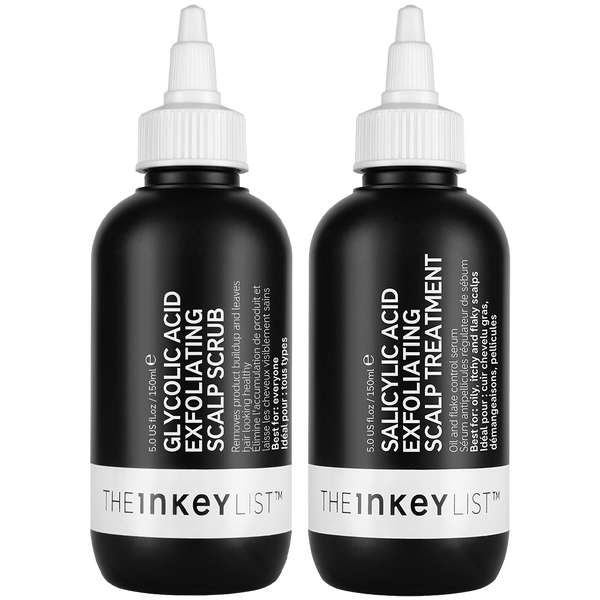
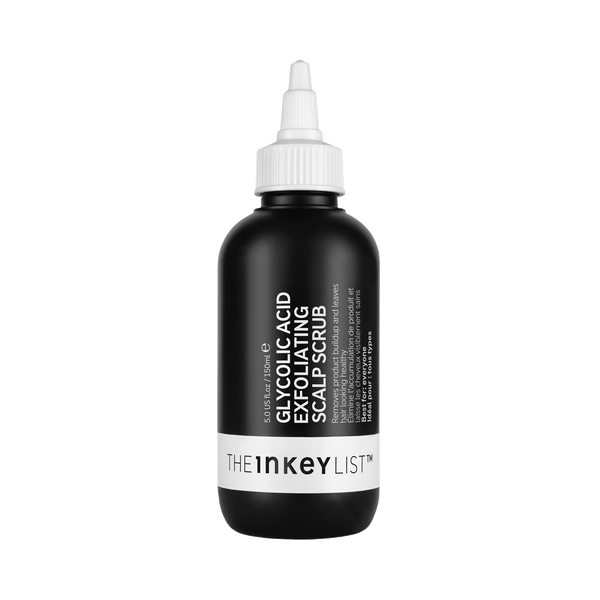
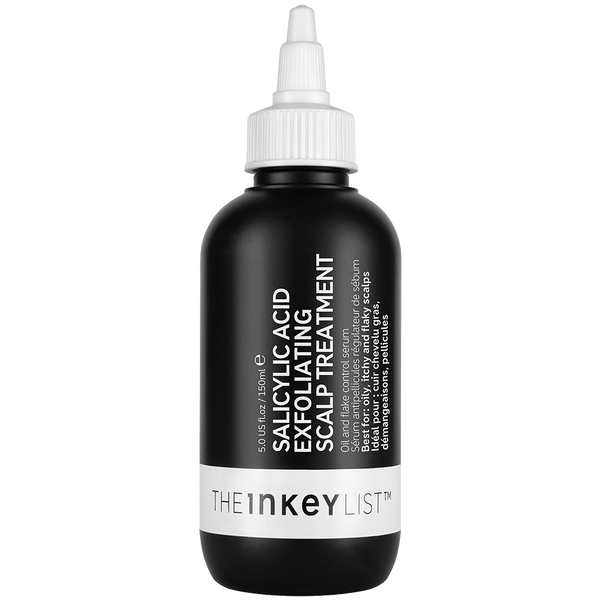
For flaky, itchy-feeling scalps, our Salicylic Acid Exfoliating Scalp Treatment (£15.00) is designed as a pre-wash treatment for exactly this. If your main issue is product build up rather than flaking, our Glycolic Acid Exfoliating Scalp Scrub (£14.00) removes build up and leaves hair looking healthy, and it is a CEW award winner. If you want the detail on the ingredient itself, we have covered how glycolic acid works on the scalp separately.
Whichever you choose, exfoliate sensibly. Be gentle rather than vigorous, never exfoliate skin that is broken or inflamed, and do not increase the frequency just because it feels productive. More is not better.
Stop scratching
Scratching gives about four seconds of relief and then makes everything worse. It aggravates irritation, can break the skin, and breaks the itch-scratch cycle open rather than closing it. If the urge is strongest at a particular time of day, that is useful information about your trigger.
Look after your scalp barrier
A compromised barrier loses moisture faster and reacts to more things. That is why gentle formulas and moderate washing matter more than any single hero product. Protecting the barrier is the difference between a scalp that stays comfortable and one that flares every few weeks.
To be clear about what these products do: they exfoliate, remove build up, reduce the look of flakes and support scalp comfort. They are not treatments for dandruff, seborrhoeic dermatitis, eczema or psoriasis, and if that is what you are dealing with, your GP is the right route. Now let us turn these individual fixes into something you can actually follow.
A Simple Weekly Scalp Care Routine
A scalp care routine only works if it is repeatable. This one is built around a single weekly anchor point, with everything else being small adjustments to what you already do.
- Choose one wash day to be your treatment day. Once a week is enough for most people. Twice a week suits heavier product users or oilier scalps. If your scalp is sensitive or currently irritated, stay at once.
- Start on dry hair and part it into sections. Four to six sections is usually enough to reach the whole scalp without wrestling with it.
- Apply to the scalp, not the lengths. This is a skincare step, not a hair mask. The product needs to reach the skin.
- Leave for approximately 10 minutes. Long enough to work, short enough to fit into getting ready.
- Shampoo out as normal, rinsing lukewarm. Follow with conditioner on the lengths if you use one.
- On non-treatment wash days, keep it gentle. Mild cleansing, lukewarm water, no aggressive scrubbing with fingernails.
If you would rather not choose between steps, our Clean & Healthy Scalp Duo (£27.55, was £29.00) pairs the exfoliating and stimulating steps together. They are our 10 minute scalp saviours, and the duo is the simplest way to cover both without building a routine from scratch.
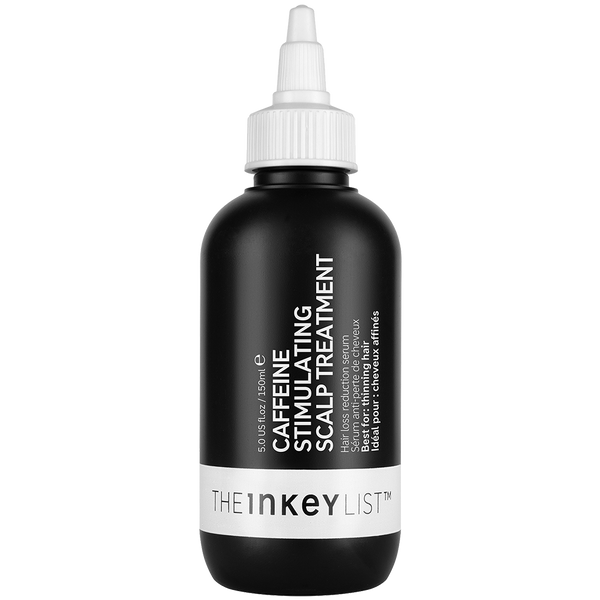
If hair density is also on your mind, our Caffeine Stimulating Scalp Treatment (£15.00) contains 1% caffeine and Redensyl and supports the natural hair growth cycle. It slots in as an optional addition rather than a replacement for the exfoliation step.
Two honest caveats. Consistency beats intensity every time, so a gentle routine you actually keep up will outperform an aggressive one you abandon. And give it time. Scalp comfort tends to improve over weeks, not overnight. Browse our full range of scalp treatments if you want to see the options side by side.
Knowing what to do is half of it. Knowing what to stop doing is the other half.
Mistakes That Make It Worse, and When to See Your GP
Mistakes that make an itchy scalp worse
- Scratching. The most common and the most counterproductive. It inflames the skin and can break it.
- Washing in very hot water. Strips oils and heightens itch, every time.
- Over-washing to feel cleaner. Usually makes dryness and irritation worse rather than better.
- Piling on more product to mask flakes. Dry shampoo and styling products layered over build up add to the problem you are trying to hide.
- Scrubbing aggressively instead of exfoliating gently. Physical force is not what removes build up, and fingernails on irritated skin cause damage.
- Exfoliating skin that is already broken or inflamed. Skip the step entirely until the skin has settled.
- Switching products every fortnight. You cannot judge what works if nothing gets a fair run. Give any change four to six weeks.
When to see your GP
Cosmetic routines have a ceiling, and it is important to know where it is. The NHS guidance on dandruff advises seeing a GP if your symptoms have not improved after around a month of using an anti-dandruff shampoo, or if your scalp is very itchy, red or swollen, or if patches are appearing elsewhere on your body.
Beyond that, book an appointment if you notice any of the following:
- Significant or unusual hair loss alongside the itching or flaking
- Pain, rather than itch
- Swelling, weeping, crusting or any other sign of possible infection
- Flaking or redness spreading to the eyebrows, ears, face or chest
- Symptoms that are steadily getting worse despite a gentle, consistent routine
If eczema is a possibility, the National Eczema Society scalp eczema factsheet is a useful thing to read before your appointment so you can describe what you are seeing.
We are not diagnosing anything here, and we would rather you got the right outcome than bought the wrong product. Persistent or worsening symptoms deserve a professional opinion. With that said, here are the questions we get asked most.
The Takeaway
Your scalp is skin, and it responds to the same logic as the rest of your skin. Dry scalp and dandruff are genuinely different problems that need different approaches, which is why identifying yours before you buy anything saves both money and frustration. For most people, a consistent, gentle routine with a weekly pre-wash exfoliation step, lukewarm water and a sensible wash frequency makes a noticeable difference over a few weeks. If your symptoms persist, worsen or spread, see your GP rather than cycling through more products. Our scalp treatments are there when you know what you are looking for.
Not sure where to start? You can ask INKEY and one of our team will help you work out what your scalp actually needs, with no obligation to buy anything. If you would prefer a full personalised routine across skin and hair, take our skincare quiz and we will build one for you.
Frequently Asked Questions
Got a question?
Our askINKEY team are a friendly bunch of skincare experts with deep product knowledge and zero judgement. Whether you're an ingredient obsessive or just starting out, we'll make it make sense. No question too big. No question too small. We Give A Care, Every Day.


