



Can Salicylic Acid Cause Breakouts?
Salicylic acid rarely creates new congestion, but it can make existing congestion surface faster. Here are the five reasons your skin might be reacting, how to tell which one applies to you, and what to change for each.
Author
askINKEY skincare advisor
Published
15 August, 2026
Time to read
11 minutes
Salicylic acid can be associated with a temporary increase in visible spots, but a breakout that appears after you start using it is not automatically a purge. Those two statements sound similar and they are not. So when people ask whether salicylic acid can cause breakouts, the honest answer is that it rarely creates new congestion, and it frequently changes the speed at which existing congestion becomes visible. What happens next depends entirely on which of several very different things is actually going on with your skin.
It is worth being clear about the vocabulary before we go further. “Purging” is a widely used consumer term rather than a formally defined clinical diagnosis. Dermatology literature describes the underlying effect well enough, in that faster cell turnover can surface congestion that was already forming, but there is no agreed clinical definition or set of diagnostic criteria attached to the word itself. That gap is precisely why advice online contradicts itself so often.
This article is the diagnostic layer rather than another definition piece. You will get the five most likely explanations for what you are seeing, a self-check to work out which one applies to you, realistic timings for each, and the specific change to make in your routine for each. If you want the foundations first, read how salicylic acid works and come back.
Below, we start with the short answer, then the mechanism, then the diagnosis.
The short answer
Quick answer: Salicylic acid does not usually cause new breakouts. It speeds up how quickly your skin sheds dead cells inside the pore, which can bring congestion that was already forming to the surface sooner than it would have arrived on its own. That is what people call purging, and it typically settles within 2 to 4 weeks. If spots are appearing in areas you do not normally break out in, or your skin is stinging, flaking or looking red, that points to irritation or over-use rather than purging.
That is the whole answer in about seventy words. Everything below explains how to tell which situation you are in.
If you would rather have the full explainer on the mechanism itself, what skin purging actually iscovers it in depth, and this page will stay focused on helping you decide what to do.
Where to start
If you have landed here mid-breakout and want somewhere sensible to begin, these are the four routes that make the most sense for most people.
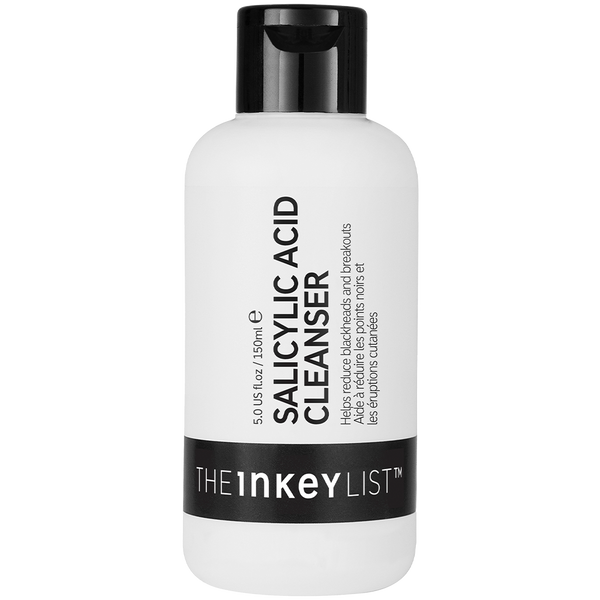
- Our Salicylic Acid Cleanser, 150ml (£14) - a rinse-off 2% formula, which is the lowest-risk way to introduce the ingredient because contact time is short.
- Our Beta Hydroxy Acid (BHA) Serum (£12) - the leave-on option, best suited to skin that already tolerates a salicylic cleanser well.
- Our 360° Skin Clearing Serum (£16) - a multi-stage option for persistent congestion that has not responded to a single active.
- Our Hydrocolloid Invisible Pimple Patches, pack of 22 (£9) - the immediate, low-risk thing to do tonight if you have an individual spot right now.
Not sure which of those fits your skin? Breakout Analyser Pro will give you a personalised starting point in a couple of minutes rather than asking you to guess.
Now for the part that makes the five causes make sense: what salicylic acid is actually doing once it reaches your pore.
How salicylic acid works inside the pore
Salicylic acid is classified as a beta hydroxy acid, and according to the FDA’s guidance on beta hydroxy acids it is by some distance the BHA most commonly used in cosmetics. The single property that matters most for this article is that salicylic acid is oil-soluble. Water-soluble alpha hydroxy acids largely work across the surface of the skin. Salicylic acid can travel into an oily environment, which means it can get inside the pore lining rather than working only on top of it.
That distinction is not marketing shorthand. A comprehensive review of salicylic acid as a peeling agent describes it as lipid-soluble and miscible with the lipids in the skin and in the sebaceous glands, which allows it to concentrate in the pilosebaceous unit, the technical name for the pore and the oil gland attached to it. In plain terms, it goes where the congestion is.
Once it is there, what does it do? The traditional description is keratolytic, meaning it softens and loosens keratin. DermNet describes it that way and notes that in blemish-prone skin it slows the shedding of cells inside the follicle so that follicles are less likely to clog, while also helping to break down blackheads and whiteheads. The peeling-agent review adds a useful refinement, which is that the action is more accurately described as desmolytic. Desmosomes are the tiny protein structures that hold neighbouring skin cells together, and salicylic acid disrupts that cell-to-cell adhesion rather than dissolving keratin filaments outright. Cutaneous bioassay work on salicylic acid as a keratolytic supports the same cell-cohesion effect.
Strip the terminology away and you get a very simple idea. Dead cells inside the pore are glued together. Salicylic acid loosens the glue. Cells that were stuck can now release.
Salicylic acid does not create new congestion. It changes how quickly existing congestion reaches the surface.
That single sentence is what the rest of this article pivots on. If a plug of dead cells and oil was already forming underneath, loosening it can bring it up sooner than it would have arrived by itself. Nothing new is being manufactured by the product. The timeline is being compressed. A spot that was quietly on its way in three weeks may now appear in five days, and because several of them tend to arrive at once, the experience feels like a sudden deterioration rather than an acceleration.
Why formulation matters as much as percentage
Here is where a lot of online advice goes wrong. People compare products by percentage alone, as though 2% always behaves identically to 2%. It does not. Irritation risk rises as pH falls, because more of the acid is present in its free, unbuffered form. A very low pH formula and a well-buffered formula can share the same number on the front of the bottle and feel completely different on the face.
That is the reasoning behind how our Salicylic Acid Cleanser is built:
- 2% salicylic acid, the concentration used to deeply cleanse pores and help reduce the look of blemishes and blackheads.
- pH 4.5 to 5.0, sitting close to skin’s own comfortable range rather than pushing as low as possible.
- 1% zinc compound, included to help control excess oil.
- 0.5% allantoin, included to soothe.
It is fragrance-free, vegan, and safe to use in pregnancy and breastfeeding. The formulation choices are not incidental. A rinse-off format with a moderate pH and two supporting ingredients is a fundamentally different proposition from a high-strength leave-on acid, and the difference shows up in how skin responds during the first fortnight.
If you want the complete ingredient picture rather than just the mechanism, our full guide to salicylic acid covers strengths, formats and pairings, and you can shop salicylic acid if you already know what you are looking for.
Understanding the mechanism is one thing. Working out whether what you are seeing in the mirror actually fits it is another, and that is where most people get stuck.
Purging vs breaking out
Before the criteria, the honest bit. Purging is a consumer term. It is not a formal clinical diagnosis, there is no agreed definition of it, and there are no diagnostic criteria a dermatologist could apply to your face to confirm it. The effect behind the word is real and reasonably well described in the literature. The word itself is folk vocabulary that the skincare industry adopted because it was useful. We think it is worth saying that plainly, because the absence of a definition is exactly why the guidance you find online contradicts itself, and why so many people cannot work out which camp they fall into.
What we can do is give you five discriminating signals. None is conclusive alone. Taken together, they are usually decisive.
Onset: when did it start?
Purging tends to begin quickly, within the first few days to roughly two weeks of starting a product or increasing how often you use it. That timing follows the mechanism, because you are accelerating a process that was already underway.
A reaction that appears months into stable, unchanged use is telling you something different. Skin that tolerated a product happily for a season and then rebelled is usually responding to something else: a new product elsewhere in the routine, a seasonal shift, hormonal change, or cumulative over-exfoliation that finally tipped over.
Location: where are the spots appearing?
This is the criterion people most often overlook, and it is one of the most reliable. Purging surfaces congestion that already existed, so it shows up where you already tend to congest. For most people that means the T-zone, chin and jaw.
Spots appearing in places you genuinely never break out in are a red flag for something other than purging. If you have never had a spot on your upper cheeks or temples in your life and both are suddenly covered, that pattern does not fit the mechanism.
Appearance: what do the spots actually look like?
Purging typically brings up smaller, more superficial lesions. Whiteheads and blackheads that come to a head reasonably quickly, do their thing and clear. They tend to look like an accelerated version of your normal congestion rather than something unfamiliar.
Deep, hard, painful lumps sitting under the skin that persist for weeks are not characteristic of purging. Neither is a spread of small uniform red bumps with no head on them, which is a much better match for irritation.
Duration: how long is each individual spot lasting?
Look at the lifecycle of a single spot rather than the overall picture. Purging spots move through their cycle faster than your usual breakouts. That is the whole point, since the process has been sped up.
A spot that sits in the same state for two or three weeks is behaving like an ordinary breakout that happened to coincide with your new product. How long skincare takes to work is worth reading alongside this, because unrealistic timelines are behind a lot of premature product-switching.
Trajectory: is it getting better or worse?
If you only apply one test, apply this one. Purging gets better week by week. Irritation does not.
Purging has a shape. Week one may look worse than week zero, week two roughly level, week three visibly calmer. The direction of travel is downward even if the first few days are unpleasant. A genuine reaction either stays flat or escalates. If you are in week three and it is worse than week one, you are not waiting out a purge.
Signs it is not purging
Run through this list honestly. Any of these points away from purging and towards irritation or over-use:
- Stinging or burning when you apply the product
- A tight, uncomfortable feeling after cleansing
- Flaking or visible peeling
- Widespread redness rather than individual spots
- Spots in areas you do not normally break out in
- Symptoms escalating week on week rather than easing
- Products that never used to sting now stinging
The American Academy of Dermatology’s guidance on how to safely exfoliate at home is clear that over-exfoliation can produce redness, irritation, a compromised barrier and even breakouts, which is why these markers matter so much. The British Association of Dermatologists’ patient information on salicylic acid is a useful UK-specific reference if you want a clinical perspective.
For the full explainer on the underlying process, including the wider science and how other actives behave, read our complete guide to skin purging. If you have landed firmly on the irritation side of the diagnosis, sensitive skin and breakouts is the more useful next read. And if your routine includes other actives, does azelaic acid cause purging covers a common source of confusion.
With the difference established, here are the five specific explanations that sit behind almost every “salicylic acid is breaking me out” experience.
The five real reasons salicylic acid can seem to cause breakouts
1. You are purging, and it is temporary
What it looks like: Small, superficial spots arriving quickly in your usual congestion zones, clearing faster than normal, and improving week on week.
Why it happens: Covered above. Existing congestion is surfacing sooner because the bonds holding those cells together have been loosened.
What to do: Hold your current frequency. Do not escalate, and do not abandon. The instinct when skin looks worse is to either use more of the product to fight it or drop it entirely, and both make it harder to read what is happening. Keep everything stable, support the barrier with hydration, and add nothing new while you wait. Reassess at four weeks with fresh eyes rather than daily.
Comfort matters during this window. Our Hyaluronic Acid Serum (£12) on damp skin followed by a lightweight moisturiser keeps skin hydrated without adding anything that could complicate the picture.
2. You are over-exfoliating
This is the most common cause by a wide margin, and almost nobody self-identifies with it.
What it looks like: Skin that feels tight after cleansing, looks shiny or slightly waxy rather than healthily glowy, stings from products that never used to sting, develops small bumps, and paradoxically produces more oil as it overcompensates.
Why it happens: The stacking problem. Consider a fairly ordinary routine: a salicylic cleanser, a BHA serum, an exfoliating toner a few nights a week, a scrub on Sundays, and a clay or acid mask when skin looks congested. That is four or five exfoliating steps. The person using them experiences it as one skincare routine, because it happens in one sitting and feels like a single decision. Skin experiences it as five.
Most people who think salicylic acid broke them out are simply using too many exfoliating steps at once.
What to do: count your exfoliating steps honestly, then cut down to one. Read every label in your routine and mark anything containing an acid, an enzyme, a physical scrub particle or a “resurfacing” claim. Keep the single most useful one, drop the rest, and reduce to two or three times a week before rebuilding. AAD guidance recommends matching frequency to your skin type and method, and applying a moisturiser immediately after exfoliating.
This also answers the question people ask constantly, which is whether you can use salicylic acid every day. Some people can, particularly in a well-buffered rinse-off format. Many cannot, especially alongside other actives. Starting daily is the mistake. Earning daily over several weeks is fine. What products should I not layer together is the practical companion piece here.
3. Your barrier is compromised from stacking actives
What it looks like: Skin that is reactive to almost everything, looks flushed or inflamed rather than spotty, feels simultaneously tight and greasy, and seems to reject products it previously liked.
Why it happens: Your skin barrier is the outermost protective layer, and its job is to hold water in and keep irritants out. When it is compromised it loses water faster and lets irritants in more easily. The result is skin that is inflamed, reactive and bumpy, which most people read as breaking out. It is not congestion. It is a defence system that has been worn down.
The usual culprits are combinations rather than single products: salicylic acid layered with retinol, salicylic acid with a strong vitamin C, salicylic acid with benzoyl peroxide, or several acids used on the same night. What not to mix with retinol and salicylic acid and retinol, can you use them together cover the pairings that go wrong most often.
What to do: pause all actives for one to two weeks. Run the simplest possible routine, which is cleanse, hydrate, moisturise, protect. Then reintroduce one active at a time with a fortnight between additions. It feels slow. It is considerably faster than repeating this cycle three times.
Our Ectoin Hydro-Barrier Serum (£16) supports skin through the recovery window, and our Bio-Active Ceramide Moisturiser (£20) helps reinforce the barrier itself. If this description fits you closely, the damaged skin barrier edit is a sensible place to look.
4. It is irritation, not a breakout
What it looks like: Small, uniform red bumps that appeared quickly, often across a wider area than your normal breakouts, accompanied by stinging, warmth, tightness or flaking. Crucially, these are not comedones. There is no plug, no head, nothing to come out.
Why it happens: The skin is responding to something it finds too harsh, whether that is concentration, frequency, format or the company the product is keeping in your routine. Peer-reviewed work on over-the-counter options for blemish-prone skin notes that tolerability and irritation are among the main limitations on how well these ingredients work in real use, which is a polite way of saying that the best formula is the one your skin will actually accept.
The trap is that irritation bumps look enough like spots that people respond by adding more active products, which is precisely the wrong move. Blemish products will not resolve irritation, because there is no congestion to clear. They will extend it.
What to do: stop the active entirely rather than reducing it. Let skin calm for one to two weeks, cleanse gently, keep the routine minimal, then reintroduce slowly and patch test first. Swapping to our Oat Cleansing Balm (£15) during recovery removes friction from the cleansing step, and our Omega Water Cream (£14) provides lightweight, barrier-friendly hydration for skin that is oily but currently upset.
5. The rest of your routine is the problem
What it looks like: Congestion that persists or worsens even though the salicylic acid step looks entirely reasonable on paper.
Why it happens: This is the cause almost nobody checks, because attention naturally falls on the newest and most active product. Meanwhile a rich balm left on overnight on oily skin, a heavy occlusive layered over congested areas, or a moisturiser mismatched to your skin type may be doing more to drive congestion than the acid is doing to clear it.
Format matters enormously and is routinely ignored. A rinse-off salicylic cleanser behaves very differently on skin from a leave-on serum, because contact time is measured in seconds rather than hours. Someone with dry or sensitive skin may get everything they need from the cleanser alone and nothing good from adding a leave-on acid on top. Find your skin type if you are not certain, because format matching starts there.
Look wider, too. Hair products migrating onto the hairline, forehead and back. Heavy body products on the chest and shoulders. Pillowcases and phone screens. And the simplest logical point of all, which is that a breakout starting in the same week as a new salicylic product does not prove the product caused it. Skin has plenty of other inputs.
What to do: change one variable at a time and give each change two weeks. Changing four things at once guarantees you will never know which one mattered.
Once you have identified your cause, the question is always the same: how long should this take, and when should I stop waiting?
How long it should last, and how to introduce it without the flare-up
The typical adjustment window is 2 to 4 weeks. Most people notice a clear improvement inside a month, and the trajectory should be visibly downward well before the four-week mark.
Judging whether the ingredient is genuinely right for you is a separate and longer question. Allow 6 to 8 weeks of consistent use before making that call, in line with standard dermatology guidance on assessing results from any topical routine. Skin cell turnover simply does not move faster than that, and switching at week two means you never actually tested anything.
When to stop and get advice
Waiting things out has limits. Stop using the product and speak to a GP or a dermatologist if:
- Spots are appearing in areas you do not normally break out in
- Lesions are deep, painful or cystic
- Symptoms are worsening rather than easing
- There is significant swelling, burning or widespread redness
- Nothing has settled beyond 6 weeks
Seeing a professional is a sensible, practical step rather than an admission that skincare has failed you. Some skin needs prescription support, and there is nothing to be gained from spending another three months rotating products.
How to introduce salicylic acid without triggering a flare-up
Most reactions are introduction problems rather than ingredient problems. This sequence prevents the majority of them:
- Start two to three times a week, not daily. This directly answers whether you can use salicylic acid every day, and the honest answer is eventually, possibly, but not at the start.
- Introduce one new active at a time and give it two weeks before adding anything else, so that if something goes wrong you know exactly what caused it.
- Patch test before full-face use. The FDA’s own advice on BHA products is to test on a small area first and to stop if you experience irritation or prolonged stinging. Why do I need to do a patch test explains how to do it properly.
- Always follow with a moisturiser. AAD guidance is to moisturise immediately after exfoliating, and this is not optional for acids.
- Start with a rinse-off format before a leave-onif your skin is sensitive or you are new to the ingredient.
- Wear sunscreen daily. Regulatory guidance on BHAs recommends sun protection alongside their use. Our Dewy Sunscreen SPF 30 works well over a hydrating serum.
Using salicylic acid should not require enduring discomfort as the price of results. In a 4-week independent consumer trial of 66 people, 92% agreed their skin did not feel tight or stripped after using our Salicylic Acid Cleanser (£14), 90% agreed their skin looked visibly clearer after 3 days, and 93% agreed their skin instantly looked less oily. Comfort and efficacy are not a trade-off if the formula is built properly.
If you are still choosing a format, the exfoliants edit lays out the options, and our skincare routine guide covers how to structure the whole thing.
Building a routine that keeps skin clear, and who should be more cautious
A good routine around salicylic acid is mostly restraint. Here is what that looks like across a day.
In the morning, cleanse gently. This is not the moment for your active, since skin has spent the night doing repair work and does not need stripping at 7am. Follow with a hydrating or barrier-supporting serum, then a lightweight moisturiser suited to your skin type, then sunscreen. Our Omega Water Cream (£14) suits oily and blemish-prone skin because it hydrates without weight, and our Dewy Sunscreen SPF 30 finishes the routine without a heavy occlusive layer. Browse moisturisers if nothing you own currently fits.
In the evening, cleanse first, and double cleanse if you have worn makeup or sunscreen, because an active cannot work through a film of the day. Our Oat Cleansing Balm (£15) removes that first layer, followed by our Salicylic Acid Cleanser (£14). The complete guide to double cleansing covers the technique if you have not done it before.
Then your active, on designated nights only. That might be our Beta Hydroxy Acid (BHA) Serum(£12) for congestion and blackheads, or our 360° Skin Clearing Serum (£16) if breakouts are persistent and a single active has not been enough. On the nights in between, skip the active entirely. That is the part people find hardest and the part that works.
Finish with hydration and a moisturiser every night, active or not. If oil control and redness are ongoing concerns, our 10% Niacinamide Serum (£12) pairs well with salicylic acid, and salicylic acid and niacinamide, the best duo for oily, blemish-prone skin explains why the combination works.
Individual spots and body breakouts
For a single spot rather than general congestion, targeted action beats escalating your whole routine. Our Succinic Acid (£13) can be applied directly to an individual blemish, and our Hydrocolloid Invisible Pimple Patches (£9) protect a spot overnight while discouraging you from touching it.
Salicylic acid also works on the chest, back and shoulders, where congestion is extremely common and rarely discussed. The skin there is thicker and often tolerates the ingredient well. Cleanse after sweating rather than hours later, rinse thoroughly so nothing is left sitting on the skin, and be mindful that conditioner running down your back is a genuine and frequently missed contributor. Salicylic acid for blackheads goes deeper on congestion specifically.
Who should be more cautious
Sensitive skin. Start with rinse-off formats only and use them twice a week before considering anything more. Sensitive skin and breakoutscovers this in detail.
Dry skin. Prioritise barrier support first and question whether a leave-on acid is necessary at all. A cleanser plus a good moisturiser is often the whole answer.
An already compromised barrier. Repair first, add actives later. Using an acid on a barrier that is already struggling extends the problem rather than solving it.
Pregnancy and breastfeeding. Our 2% rinse-off Salicylic Acid Cleanser is safe to use in pregnancy and breastfeeding. Leave-on and higher-strength formats are a different conversation, so read your guide to pregnancy-safe skincare and check your wider routine with a healthcare professional.
If you have more than one concern running at once, our complete skincare concerns guide and the blemishes and breakouts edit will help you prioritise.
The bottom line
So, can salicylic acid cause breakouts? Not usually in the sense of creating new congestion. It can make existing congestion visible sooner, and that temporary surfacing is what people mean by purging, a consumer term rather than a formal clinical diagnosis. When a breakout follows salicylic acid, it is almost always one of five things: a genuine purge, over-exfoliation, a compromised barrier, irritation rather than congestion, or something else in your routine entirely. Expect a genuine purge to settle within 2 to 4 weeks with steady week-on-week improvement. Stop and get advice if symptoms worsen, spots appear in unusual areas, or nothing has settled beyond six weeks. For the ingredient foundations, read our guide to salicylic acid. Skincare gets considerably easier once you understand what your skin is actually doing.
Working out which of the five causes applies to you is quicker with a guided assessment than with guesswork. Breakout Analyser Pro walks you through it and points you towards a sensible next step for your skin specifically. If you would rather rebuild the whole routine from scratch, build your routine will structure it for you. And if you already know what you need, the blemishes and breakoutsedit is there when you want it.
Frequently Asked Questions
Got a question?
Our askINKEY team are a friendly bunch of skincare experts with deep product knowledge and zero judgement. Whether you're an ingredient obsessive or just starting out, we'll make it make sense. No question too big. No question too small. We Give A Care, Every Day.


