



The Best Cleanser for Acne-Prone Skin: What Actually Works
Cleansing is the most overlooked step in a blemish-prone routine — here's how to choose the right cleanser and actually get results from it.
Author
askINKEY skincare advisor
Published
30 April, 2026
Time to read
18 minutes
Most people with acne-prone skin spend their energy on serums and spot treatments, then treat cleansing as the thing they rush through before the routine “really” starts. That order is backwards. Cleansing is the step that decides what condition your skin is in before anything else touches it, so if you get it wrong, every product downstream has to work harder for less.
There are two ways it usually goes wrong. Either the cleanser strips skin raw and leaves it tight, reactive and producing even more oil, or it is so basic that it rinses off the day without doing anything about the congestion sitting inside your pores. The middle ground is a cleanser that clears thoroughly without stripping, and in a rinse-off format the ingredient doing most of that work is salicylic acid.
This article covers what to look for in a cleanser, why salicylic acid suits blemish-prone skin at a mechanical level, which INKEY cleansers fit which skin, how to build the routine around them, what actually causes breakouts, the mistakes that quietly make things worse, and the questions people ask most. Start with what causes clogged pores if you want the background first.
Why Your Cleanser Is the Foundation for Acne-Prone Skin
Cleansing is the only step in your routine that physically removes things from your face. Everything else adds. Serums deliver actives, moisturisers add hydration and lipids, SPF adds protection, but the cleanser is the single step whose entire job is subtraction. When your skin is congestion-prone, subtraction is not a minor detail. It is the whole game.
Over the course of a normal day, your skin accumulates a surprising amount of material. Consider what is sitting on your face by the evening:
- Excess sebum your skin produced through the day, which is heavier if you have oily or combination skin
- SPF, which is designed to cling and resist sweat and water, and which does not simply melt away under a splash
- Makeup, including long-wear and transfer-resistant formulas built specifically not to move
- Sweat and the salt left behind when it evaporates
- Airborne pollution and general environmental grime
- Dead skin cells that have loosened but not yet shed properly
None of that is dramatic on its own. Collectively, and repeatedly, it is exactly the mixture that settles into pores and starts the congestion cycle. A cleanser is the only tool you have that removes it.
The two ways cleansing goes wrong
Here is the tension that makes choosing a cleanser for acne-prone skin genuinely difficult. Push too hard and you damage the skin barrier, the outermost layer that holds moisture in and keeps irritants out. Once that barrier is compromised, skin often responds by producing more oil, not less, which is the exact opposite of what you wanted. It is worth understanding what a damaged skin barrier actually is, because the symptoms are frequently mistaken for something else entirely.
A compromised barrier is easy to recognise once you know what you are looking for. Skin feels tight after washing, sometimes for hours. It can be shiny across the T-zone and flaky around the nose and mouth at the same time, which feels contradictory but is not. Serums that never bothered you suddenly sting on application. Skin reacts to things it used to tolerate. If that list sounds familiar, your cleanser is a reasonable first suspect.
Go too gentle and you have the opposite problem. A cleanser that only lifts surface grease will leave the deeper congestion untouched, and blackheads, closed bumps and that uneven, slightly gritty texture across the nose and chin will simply persist. Understanding what causes clogged pores makes it clear why a purely surface-level wash falls short: the blockage forms inside the pore, not on top of it.
The goal, then, is thorough without harsh. Those two qualities sound opposed but they are not, and formulation is what reconciles them.
Why frequency makes the cleanser foundational
There is a second, less obvious reason the cleanser matters more than its reputation suggests: contact frequency. A serum touches part of your face. A spot treatment touches one spot. A face mask happens when you remember. Your cleanser covers every part of your face, every single day, usually twice.
That consistency compounds. A modest, well-formulated action applied twice daily for months will out-perform an aggressive one applied erratically, because skin responds to sustained conditions rather than isolated events. This is also why the cleanser is the best place to put a gentle exfoliating active. You are already doing the step. The active comes along for the ride and requires no additional discipline.
Being honest about what a cleanser cannot do
A cleanser is a foundation, not a cure. It clears the surface, it helps keep pores clear, and it creates the conditions in which the rest of your routine can work. It will not override hormones, it will not rewrite your genetics, and it will not resolve deep cystic breakouts on its own.
That honesty matters, because unrealistic expectations are the most common reason people abandon a routine that was actually working. If you know what a cleanser is for, you can judge it fairly, and you can put the right products alongside it instead of asking one wash to do everything.
If you are still deciding what type of cleanser suits you generally, whether gel, cream, balm or micellar, our guide to which INKEY cleanser is right for you walks through the full range in one place.
With the case for the cleanser made, the practical question is what actually separates a good one from a mediocre one.
What to Look For in a Cleanser for Acne-Prone Skin
Ingredient lists are long, marketing copy is confident, and almost every cleanser on the shelf claims to be suitable for breakouts. A short set of criteria cuts through most of it. Here is what genuinely matters when your skin is blemish-prone, in rough order of importance.
An active that works inside the pore, not just on the surface
This is the single biggest differentiator, and it is where most cleansers quietly fall short. Plenty of washes will lift oil off the surface of your skin. Far fewer contain an ingredient that can travel into the pore itself, where the blockage actually forms.
Congestion does not begin on the surface. It begins inside the pore lining, where sebum and dead skin cells bind together into a plug. A surface-level cleanser removes the evidence of that process without touching the process itself, which is why skin can feel clean and still break out. An oil-soluble active changes that equation entirely, and salicylic acid is the most established example. The next section takes the mechanism apart properly.
A base that cleans without stripping
The squeaky-clean feeling has one of the most persistent reputations in skincare, and it deserves to be retired. That tight, faintly squeaky sensation is not proof your skin is clean. It is the feeling of a barrier that has been over-stripped of the lipids holding moisture in.
Ironically, this is often what starts a cycle. Skin feels tight, so it feels dry, so it compensates by producing more oil, so you wash more aggressively to manage the oil. Round it goes. A well-formulated cleanser leaves skin feeling comfortable and clean at once, which is unremarkable but correct. Comfortable is the target.
Supporting ingredients that soothe and balance
A cleanser built entirely around one aggressive active is a blunt instrument. The better formulas pair the active with ingredients that soothe, hydrate and help balance oil, so the overall effect on the skin is measured rather than punishing.
This matters especially for blemish-prone skin, which is frequently both oily and sensitised at the same time. Those two states coexist far more often than people expect, and a formula that acknowledges it will be more usable in the long run. Since sebum production sits at the centre of this, it is worth reading what is oily skin to understand why some skin produces more of it.
A format that suits your skin and your day
Texture is not just preference, it is function.
Gel cleansers tend to suit oily and combination skin. They rinse cleanly, feel light and refreshing, and handle surface oil well without leaving residue.
Cream and milk cleansers suit drier, more reactive skin, or a morning cleanse when you simply need to refresh rather than deep clean.
Balm and oil cleansers are for breaking down what water-based cleansers physically cannot: SPF, long-wear makeup and heavier sebum. Oil dissolves oil, which is straightforward chemistry rather than marketing.
If you wear SPF or makeup daily, and you should be wearing SPF daily, one water-based wash is doing a job it was not designed for. This is the entire argument for double cleansing and we will come back to it. If you are unsure which category you fall into, what’s your skin type is a useful five-minute detour, since dehydrated skin and oily skin need different formats despite frequently appearing on the same face.
Fragrance and heavy oils, in proportion
No alarmism here, because fragrance is not automatically a problem and plenty of people use fragranced products happily for years. That said, blemish-prone and easily irritated skin often does better with simpler formulas and fewer variables. If your skin is currently reactive, reducing what you are asking it to tolerate is a sensible experiment. If it is not, this is not something to worry about.
What not to look for
A few things are actively counterproductive, and they are common.
Harsh physical scrubs. Rough particles create micro-damage on inflamed skin and can spread bacteria across the face rather than removing it. Chemical exfoliation is more precise and considerably kinder.
The highest available percentage. More active is not more result. Beyond a well-formulated, sensible level, additional percentage points mostly buy irritation, and irritated skin breaks out more. If you have already been down this road, what to do if you have over-exfoliated is the recovery route.
Multiple strong actives in one wash. A cleanser stacking several aggressive exfoliants sounds thorough and behaves like sandpaper. One well-chosen active, used consistently, beats three fighting each other.
One of these criteria carries far more weight than the rest for blemish-prone skin, so it deserves a proper explanation.
Salicylic Acid: The BHA That Reaches Inside the Pore
Salicylic acid is a beta hydroxy acid, usually shortened to BHA. Strip away the chemistry and “beta hydroxy acid” simply describes where a particular chemical group sits on the molecule. That structural detail sounds like trivia, but it produces the single property that makes this ingredient so well suited to blemish-prone skin.
Oil-soluble is the whole point
Here is the part worth understanding properly, because everything else follows from it.
The inside of a pore is lined with sebum. That is not a malfunction, it is simply what pores do. Now think about what that means for a water-soluble ingredient, which is most of them. Water and oil do not mix. A water-soluble active arrives at the mouth of a pore lined with oil and can go no further. It does useful work on the surface, and the surface is where it stays.
Salicylic acid is oil-soluble. It can travel through sebum, which means it can reach the pore lining where congestion actually begins.
Oil-soluble means it can get to where the problem starts, not just where the problem shows.
That one property is the entire reason this ingredient has stayed in blemish routines for decades while trends have come and gone. It is not working harder than other acids. It is working somewhere else.
What that means for your skin
Once inside the pore, salicylic acid helps loosen the bond between the dead skin cells and the sebum they are mixed into. That mixture is the plug at the centre of most congestion, so loosening it helps in a few visible ways.
It helps with blackheads, which are pore blockages that have oxidised and darkened where they meet the air. It helps with the general congestion across the nose, chin and forehead that never quite becomes a spot but leaves texture uneven. And it helps with those closed, bumpy areas under the surface that you can feel more than see, and that resist every other approach.
For a deeper look at the mechanism specifically as it applies to nose and chin congestion, salicylic acid for blackheads: how it works covers the practical detail.
Why 2% is the number that matters
2% salicylic acid is the level to look for, and it is the only concentration figure in this entire article for good reason.
Higher is not automatically better. Past a well-formulated, sensible level, extra percentage mostly buys irritation, and irritation on blemish-prone skin tends to produce more breakouts rather than fewer. A well-formulated 2% in a rinse-off base sits at a level most people can use regularly, which matters more than intensity, because consistency is what produces change.
Formulation also does an enormous amount of unglamorous work here. The same percentage in two different bases can behave very differently on skin depending on pH, the surfactants used, and what else is in the formula to buffer and soothe. Percentage is a headline, not the full story.
Rinse-off versus leave-on, honestly
A fair objection: a cleanser is only on your face for a minute or so, then it goes down the drain. How much can it possibly achieve?
The honest answer is that a rinse-off works differently from a leave-on, and pretending otherwise would be overselling it. A leave-on BHA serum stays on the skin and keeps working for hours. A cleanser has a short contact window and does a lighter version of the same job.
What makes the cleanser worthwhile is repetition. You are doing this step twice a day, every day, without needing to remember anything extra. Sustained low-level action across weeks and months adds up in a way that occasional intensity does not. It is also the reason the 60-second rule later in this article matters so much, because rushing the rinse removes the only contact time the active had.
Leave-on products exist for a reason, and if your congestion is stubborn, pairing the cleanser with a leave-on version of the same active family is the logical next step rather than a redundant one.
How this differs from AHAs like glycolic acid
The other family you will see everywhere is the AHAs, alpha hydroxy acids, of which glycolic acid is the best known. The key difference is solubility. AHAs are water-soluble, so they work across the skin’s surface, helping with texture, dullness and uneven tone. BHAs are oil-soluble, so they work into the pore.
Neither is superior. They are answering different questions. If your main concern is congestion and blemishes, the BHA is the more targeted choice. If it is surface texture and radiance, the AHA has the edge. Our full comparison, glycolic acid vs salicylic acid: which is right for your skin, lays out when each one makes sense.
A reasonable follow-up question is why this active rather than benzoyl peroxide, which occupies similar shelf space. They work by different routes, and salicylic acid or benzoyl peroxide: which is better for acne covers that comparison in full.
With the mechanism clear, here is how it translates into specific cleansers.
The Best INKEY Cleansers for Acne-Prone Skin
Rather than listing everything we make, here are the cleansers matched to the situations people actually find themselves in.
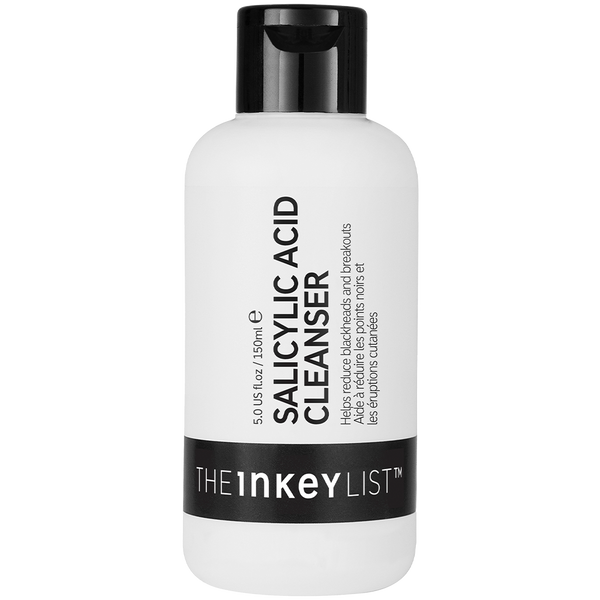
Salicylic Acid Cleanser: the everyday core
If you have oily, combination or blemish-prone skin and you want one cleanser doing real work, this is the starting point.
The Salicylic Acid Cleanser is built around 2% salicylic acid in a rinse-off gel base. It helps clear pores of the oil and dead skin cell build-up that leads to congestion, helps reduce the appearance of blackheads, and helps keep excess oil in check across the T-zone. Because it is formulated with a non-stripping base, it does that job without leaving skin tight and uncomfortable afterwards, which is the balance most blemish-focused washes miss.
It has earned over 1,300 reviews, which tells you it has been stress-tested across a lot of very different faces.
One thing worth knowing: this is not a face-only product. Blemishes and blackheads appear on the chest, back and décolleté for exactly the same reasons they appear on the face, and those areas are frequently ignored entirely. The cleanser can be used in the shower on all of them. If breakouts across your back or shoulders are a recurring frustration, what is back acne explains why those areas behave the way they do.
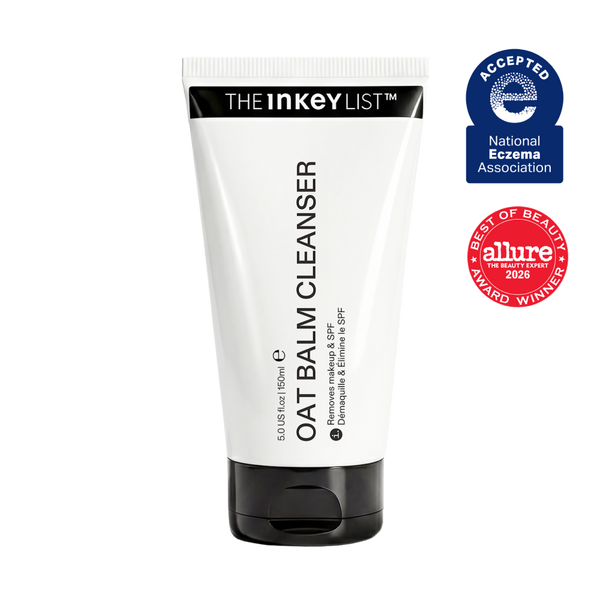
Oat Cleansing Balm: the first cleanse
If you wear SPF or makeup daily, this is the step most likely to be missing from your routine.
There is understandable hesitation here. If your skin is oily and breaking out, deliberately putting an oil-based balm on your face feels like the wrong direction. It is not, and the reason is simple chemistry. Oil dissolves oil. Modern SPF and long-wear makeup are formulated to resist water and sweat, which means a water-based wash is being asked to remove something specifically engineered to stay put.
The Oat Cleansing Balm breaks all of that down so it can be lifted away cleanly. It is formulated with colloidal oat, which makes it a comfortable option for skin that is sensitive, irritated or generally easily provoked, and it rinses without leaving a heavy film.
The practical benefit is not really about the balm itself. It is about what it makes possible for the next step.
The pairing logic
Here is why the two work better together than either does alone.
Your first cleanse breaks down SPF, makeup and the day’s surface grime. Your second cleanse then reaches actual skin rather than spending itself dissolving your sunscreen. Without that first step, a salicylic acid wash uses most of its contact time getting through the layer on top and never properly reaches the pores it was formulated for.
That is the whole argument. Not two products for the sake of it, but two steps with distinct jobs, so the active one can do what it is designed to do.
If you would rather not assemble the pairing yourself, the Breakout Double Cleanse Duo is exactly this combination packaged together, and the wider Double Cleanse Duos collection covers other skin types and concerns.
For anyone wanting to extend the same active into a leave-on step, the Deep Cleanse Duo pairs the cleanser with the BHA serum, giving you the rinse-off and leave-on versions of the same approach.
An honest caveat before you start
If your skin is currently sore, stinging, flaking or visibly reacting, this is not the moment to introduce an exfoliating wash. Adding an active to a compromised barrier reliably makes things worse before it makes them better, and the sensible move is to calm things down first with something gentle, then reintroduce the active once skin is comfortable.
If that describes where you are right now, sensitive skin and breakouts: how to treat without stripping and the best cleansers for sensitive skin are the more useful places to go next. Come back to this once skin has settled.
To see the full range of options for congestion and blemishes in one place, browse the Blemishes & Breakouts collection.
Choosing the cleanser is half the work. Using it properly is the other half.
How to Build an Acne-Prone Skin Cleansing Routine
A good cleanser used badly will underperform a mediocre one used well. Here is the routine, with the reasoning behind each step.
Your morning routine
1. Cleanse, gently. People frequently ask why a morning cleanse is needed when they only slept. Overnight your skin produced oil, shed cells and transferred whatever was on your pillowcase back onto your face. There is also last night’s products still sitting there. A gentle cleanse gives your morning skincare a clean surface to work on. If your skin runs dry, water alone can be enough some mornings, but oily and blemish-prone skin generally benefits from a proper wash.
2. Hydrate. A lightweight hydrating layer while skin is still slightly damp. Hyaluronic acid is the reliable choice here because it draws water into the upper layers without adding oil or weight.
3. Targeted serum, if you want one. This is where Niacinamide Serum earns its place for oily and blemish-prone skin. Niacinamide helps balance oil production, helps reduce the look of visible pores, and helps calm redness. It also pairs particularly well with salicylic acid, which we cover in salicylic acid and niacinamide: the best duo for oily, blemish-prone skin.
4. Moisturise. Non-negotiable, including for oily skin. Omega Water Cream is oil-free and lightweight, so it hydrates without adding heaviness or clogging pores.
5. SPF. Every day, regardless of weather or season, and especially if you are using exfoliating actives, which make skin more sensitive to UV. If you are concerned about post-spot marks, this is the most important product you own for that specific worry, because UV darkens and prolongs them. Dewy Sunscreen SPF 30 is designed to wear comfortably under everything else, and what is SPF covers the basics if you want the background.
Your evening routine
1. First cleanse. Balm onto dry skin, massaged in for a minute or so to break down SPF and makeup, then emulsified with a little water and rinsed. This is the step that makes step two work. The complete guide to double cleansing covers the technique properly, and if you are wondering whether every night is necessary, how often should you double cleanse answers it.
2. Second cleanse. The salicylic acid wash, now reaching actual skin. This is where the active does its work.
3. Targeted steps. Hydrocolloid Invisible Pimple Patches for individual surface spots, worn overnight. The Succinic Acid Treatment for individual blemishes that have come to the surface, and succinic acid: what you need to knowexplains how it works. The 360 Skin Clearing Serum if you want something addressing the full breakout cycle including the marks left behind. The Beta Hydroxy Acid (BHA) Serum as the leave-on counterpart to your cleanser, on the nights your skin can take it.
4. Moisturise. Always, and particularly on nights you have used actives.
How long to actually cleanse
Sixty seconds. That is the single most useful adjustment most people can make, and it costs nothing.
The average cleanse lasts a fraction of that. Cleanser goes on, gets rinsed almost immediately, and the active inside it never had meaningful contact with the skin. Then the conclusion is that the product did nothing.
Massage it in for a full minute. Time it on your phone the first few times, because your instinct for how long a minute takes while standing at a sink is genuinely poor. Work across the T-zone, around the nose, along the jaw and hairline, all the places congestion gathers and where a quick splash never reaches.
Water temperature and drying
Lukewarm, not hot. Hot water strips lipids from the barrier and leaves skin tight and flushed. Then pat dry with a clean towel rather than rubbing, because dragging a rough towel across inflamed skin adds irritation for no benefit.
Hydration is not optional
The most common misunderstanding in blemish-prone skincare is that oily skin does not need moisture. Hydration and oil are not opposites. Skin can be oily and dehydrated at the same time, and it very often is, particularly when it has been over-washed.
When you strip skin dry, the barrier is compromised, water escapes more easily, and skin frequently compensates by producing more oil. Skipping moisturiser to control shine tends to produce more shine. Use something lightweight and oil-free, and let your skin stop overcompensating.
Introduce things slowly
One new active at a time, with a couple of weeks between additions. If you add three products at once and your skin reacts, you have no way of knowing which one caused it.
Patch test before committing anything new to your whole face, and check skincare ingredients you should not mixbefore layering actives, because some combinations are better separated across different evenings.
If you would rather have this built for you, Breakout Analyser Pro generates a personalised routine based on what your skin is actually doing.
A routine makes more sense when you understand what it is working against.
What Causes Breakouts (and What Your Cleanser Can Help With)
This is the section where we draw a clear line between what a cleanser genuinely influences and what it cannot touch. Knowing the difference is what stops you blaming a product that was never designed for the job.
The basic mechanism
The chain is straightforward. A pore produces sebum. Dead skin cells that should have shed cleanly instead stick together with that sebum and form a plug. Bacteria that live harmlessly on everyone’s skin multiply in the blocked, oxygen-poor environment. The immune system responds, and inflammation is what you see as a spot.
A cleanser intervenes at the first link. It removes surface oil before it accumulates and helps clear the dead skin cells that would otherwise bind into a plug. Break the chain early enough and the later stages have less to work with. For a fuller picture, what is acne and what causes clogged pores cover the biology in more depth.
What a cleanser genuinely helps with
Surface oil build-up, including through the day if your skin runs oily. Dead skin cell accumulation that leads to rough texture and blocked pores. SPF and makeup residue that would otherwise sit on skin overnight. Sweat and general daily congestion. Blackheads, which are among the most cleanser-responsive concerns there are.
That is a genuinely useful list. It covers the everyday, mechanical causes of congestion, which for many people is the majority of what they are dealing with.
If excess oil is your main issue, why is my skin so oily and what is oily skin explain what drives sebum production and what actually influences it.
What a cleanser cannot fix
Hormones. Hormonal fluctuation drives sebum production directly, which is why breakouts often follow a monthly pattern or appear along the jaw and chin. No cleanser will out-wash a hormonal cycle. Hormonal acne: what causes it and how to manage it and adult acne: why it happens after 25 cover this properly, and the second is worth reading if you assumed this was something you would grow out of.
Genetics. Pore size, sebum output and how readily your skin inflames are substantially inherited. You can manage the expression. You cannot change the underlying tendency.
Stress. Stress influences hormones, which influence oil production, and it also tends to disrupt sleep and routine. Does stress cause acne unpacks the connection.
Certain medications. Some affect skin as a side effect. That is a conversation for a doctor, not a skincare shelf.
Deeper cystic breakouts. These form far below the surface and a rinse-off product cannot reach them. Cystic acne: what it is, what causes it and how to treat it explains why they behave differently.
A cleanser is a foundation, not a cure. It handles the surface causes of congestion consistently and well, and that is a real, worthwhile job.
On diet
Diet gets discussed with more confidence than the evidence supports. There are some associations researchers continue to examine, and individual experiences vary considerably. What is not helpful is treating breakouts as a moral verdict on how you eat. Skin is not a report card. Does diet cause acne: what the science actually says gives you the measured version.
Different spots behave differently
Blackheads are open, oxidised pore blockages. Whiteheads are closed blockages beneath the surface. Papules are the inflamed red bumps without a visible head. Deeper cystic spots sit well below the surface and are genuinely painful.
A cleanser does most of its work at the congestion end of that spectrum. Blackheads and general blockage respond well. Inflamed and cystic spots need different support.
One thing frequently mistaken for blackheads is sebaceous filaments, the small grey dots across the nose that are a normal structural feature rather than a blockage. They can be minimised but not eliminated, and chasing them is a common source of over-exfoliation. Sebaceous filaments vs blackheads shows you how to tell them apart.
Post-spot marks are a separate concern
The dark or red patch left after a spot heals is not the spot. It is a mark, and it needs a different approach: ingredients that address pigmentation and tone, plus daily SPF, because sun exposure deepens these marks and extends how long they last. What are acne scars and post-blemish marks explains the distinction and the timelines involved.
When to see a professional
If your breakouts are persistent despite a consistent routine, if they are painful, if they are cystic, or if they are leaving scarring, see a GP or a dermatologist. Prescription options exist, they work, and there is nothing about reaching for them that means you failed at skincare. Some skin needs medical support, and recognising that early prevents scarring that is much harder to address later.
Understanding the causes makes the most common cleansing mistakes easier to recognise.
Common Cleansing Mistakes That Make Breakouts Worse
Most cleansing failures are behaviour problems rather than product problems. Here are the ones that come up most, each with the correction.
Over-cleansing and over-exfoliating. When skin breaks out, the instinct is to wash more and exfoliate harder. It reliably backfires. You damage the barrier, skin compensates with more oil, and you have manufactured a new problem alongside the original one. Twice daily is enough for almost everyone. If you have already overdone it, what to do if you have over-exfoliated is the recovery path, and what is a damaged skin barrier explains what you are repairing.
Chasing the squeaky-clean feeling. Tightness is a warning sign, not a success metric. If your face feels taut after washing, the cleanser removed more than it should have. Aim for comfortable.
Water that is too hot. It feels thorough and strips lipids from the barrier. Lukewarm only.
Scrubbing with a rough flannel or gritty scrub. Physical abrasion on inflamed skin creates micro-damage and spreads bacteria. Fingertips are the right tool.
Rinsing too quickly. The 60-second point again, because this is the most common reason people conclude an active did nothing. It had no contact time. Give it the full minute before judging it.
Skipping moisturiser because skin is oily. The dehydrated-oily loop in action. Stripped skin often produces more oil, not less. Why oily skin gets dehydrated too explains the mechanism, and the best moisturiser for oily skin covers what to use instead of nothing.
Stacking too many actives at once. An acid wash, then an acid toner, then a retinol, all on the same night, is a recipe for a compromised barrier. Space them out. What not to mix with retinol, skincare ingredients you should not mix and salicylic acid and retinol: can you use them together cover the combinations worth separating.
Skipping SPF while using exfoliating actives. Exfoliation increases UV sensitivity, and UV darkens post-spot marks. Wearing SPF is what protects the progress you are making.
Not sticking with it long enough. Skin cell turnover takes time, so judging a product after a few days tells you almost nothing. How long does skincare actually take to work sets realistic expectations.
Picking at spots. It pushes inflammation deeper, extends healing and makes post-spot marks considerably worse. Use Hydrocolloid Invisible Pimple Patches instead, which both protect the spot and physically stop you touching it.
Aggressive extraction. Squeezing blackheads and using harsh pore strips damages surrounding skin. How to get rid of blackheads on your nose and are pore strips bad for your skin cover the better approach.
Pillowcases, phone screens and makeup brushes. Not the cause of your breakouts, but easy wins. Change pillowcases regularly, wipe your phone, wash your brushes. Small, unglamorous, genuinely helpful.
These mistakes generate a predictable set of questions, so here are the answers.
The Takeaway: Consistency Beats Intensity
The cleanser is the foundation of a routine for acne-prone skin, and getting it right makes everything after it work better. That is the whole argument, and it holds up because cleansing is the only step that removes rather than adds, and the only one you do reliably twice a day.
The short version of what to look for: an oil-soluble active that reaches inside the pore where congestion actually starts, a base that cleans without leaving skin tight, and a format that fits how you actually live, which means a first cleanse if you wear SPF or makeup daily.
Be honest with yourself about the rest. A cleanser will not out-work hormones or genetics, and anyone promising otherwise is selling you something. What it will do, consistently and well, is handle the surface causes of congestion. That is a real job and worth doing properly.
Most cleansing failures are behaviour problems rather than product problems. Washing too often, rinsing too fast, skipping moisturiser, giving up in week two. Fix those and you will get more from whatever is already in your bathroom. Consistency beats intensity, every time.
Start with the cleanser that matches your skin. The Salicylic Acid Cleanser suits oily, congested and blemish-prone skin, and the Oat Cleansing Balm is your first cleanse if you wear SPF or makeup daily. The Breakout Double Cleanse Duo pairs them if you would rather not decide.
Not sure where to begin? Breakout Analyser Pro builds a routine around what your skin is actually doing, or take our skincare quiz for a quicker steer. To see everything in one place, browse the Blemishes & Breakouts collection.
Frequently Asked Questions
Got a question?
Our askINKEY team are a friendly bunch of skincare experts with deep product knowledge and zero judgement. Whether you're an ingredient obsessive or just starting out, we'll make it make sense. No question too big. No question too small. We Give A Care, Every Day.


