



Hyaluronic Acid: Are You Using It Correctly?
Hyaluronic acid only works if you apply it correctly. Here is the damp-skin technique, the sealing step most people skip, and how much to actually use.
Author
askINKEY skincare advisor
Published
01 June, 2026
Time to read
12 minutes
Hyaluronic acid is one of the most popular skincare ingredients on the market, and one of the most misused. It sits in bathroom cabinets everywhere, yet the gap between how most people apply it and how it actually needs to be applied is surprisingly wide. That gap is not just the difference between good results and no results. Get the technique wrong and hyaluronic acid can actively leave skin feeling more dehydrated than before you used it.
This guide covers everything that determines whether your hyaluronic acid serum works: the correct application technique, the sealing step most people skip, where it fits in a full routine, whether to use it morning or evening, which ingredients it pairs best with, and the environmental factors that quietly undermine even a well-built routine. It also covers the signs that something is off, and what to do about each one.
This is not a "what is hyaluronic acid" blog. If you want that foundation first, our full hyaluronic acid guide covers the ingredient in depth. What you will find here is the practical, technique-focused guide that makes the difference between a serum that delivers and one that disappoints.
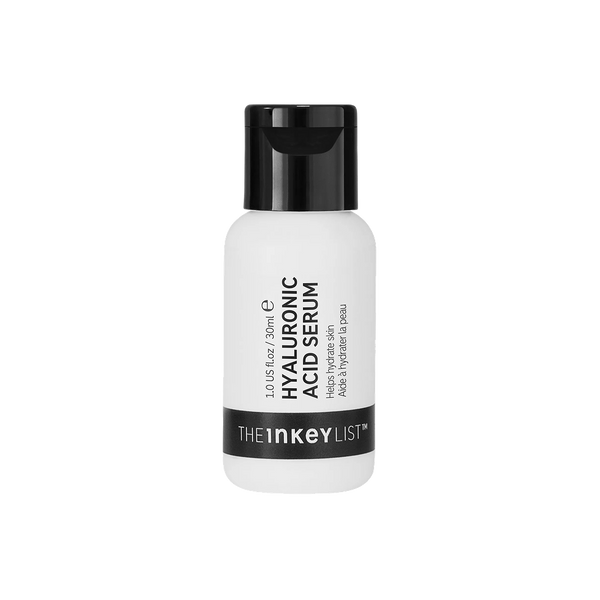
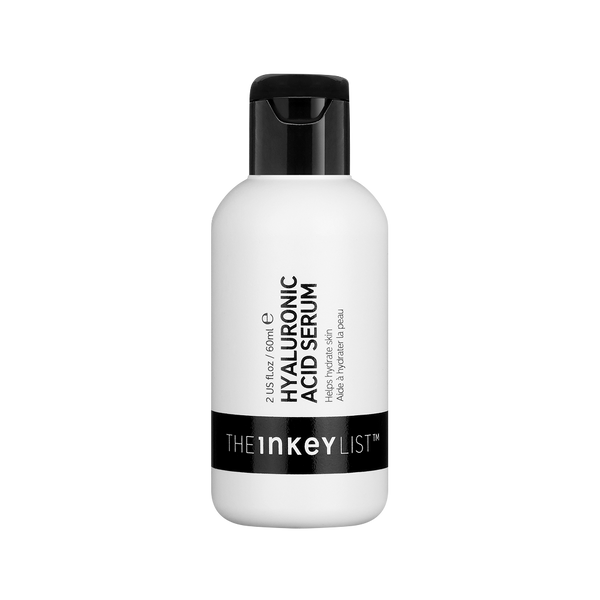
Our hero product throughout this guide is the Hyaluronic Acid Serum, £12 for 30ml, formulated with a 2% multi-molecular hyaluronic acid blend that is clinically proven to deliver instant hydration when applied correctly. For anyone dealing with a compromised or particularly sensitive skin barrier, our Ectoin Hydro-Barrier Serum (£16, 30ml) offers deep barrier-level hydration alongside hyaluronic acid and is worth considering as a companion or alternative depending on what the skin needs.
If you are experiencing persistent tightness, dullness, or surface fine lines that are not resolving, our dehydrated skin guide addresses the full picture. And if you are not yet certain whether hyaluronic acid is actually the right ingredient for your current skin concerns, 5 signs you need a hyaluronic acid serum is worth reading before going further.
The Biggest Hyaluronic Acid Mistake: Applying It to Dry Skin
Of all the ways hyaluronic acid can underperform, applying it to completely dry skin causes the most damage to results, and the most confusion about whether the product is working at all. It is also the most widespread mistake in skincare routines today, largely because the instruction to "apply to damp skin" rarely comes with a clear explanation of why. Once the science behind it is understood, the instruction becomes impossible to forget.
Hyaluronic acid is a humectant. That single word explains everything. Humectants work by attracting water molecules and binding them to the surface where they are applied, in this case the upper layers of your skin. They do not generate moisture from nowhere. They pull it from an available source. In the context of skincare application, that source is either the moisture sitting on the surface of freshly cleansed skin, or the ambient humidity in the air around you.
When skin is completely dry before application, when you have cleansed, waited a few minutes, and then reached for your serum, two things happen. First, there is no surface moisture available for the hyaluronic acid to draw from. Second, and more significantly, it begins pulling moisture from the only other available source: the deeper layers of your own skin. In a humid environment in summer, this effect is minimal. In a heated flat in January, or a climate-controlled office, the result is the opposite of hydration. The serum draws moisture upward through the skin layers, where it then evaporates from the surface. You apply a hydrating serum and end up with skin that feels drier. The product is not at fault. The application is.
The correct technique is straightforward. After cleansing, pat the face gently with a clean towel, not vigorously, not until completely dry. Leave a faint residue of moisture on the skin surface. Then apply the Hyaluronic Acid Serumwithin 30 to 60 seconds of cleansing. That window matters. The moisture on the skin surface is the working environment the formulation needs. Miss it, and results are significantly reduced.
In terms of how much product to use: 2 to 3 drops is sufficient for the full face and neck. Using more does not deliver more hydration. Hyaluronic acid has a saturation point on the skin surface, and exceeding it tends to leave a slight tackiness that can actually impede the absorption of anything applied on top. Less is genuinely more here.
One practical issue many people encounter, particularly in heated rooms during colder months, is that skin dries out between cleansing and applying the serum even with the best of intentions. Heating systems are remarkably efficient at stripping surface moisture in seconds. If this happens, a light mist of our HydroSurge Dewy Face Mist or simply splashing the face with water immediately before the serum recreates the damp skin environment the product needs.
The clinical data behind our Hyaluronic Acid Serum specifically supports application to damp skin. This is not a generic industry tip that applies loosely to all HA products. It is a formulation-specific recommendation built into how the product was tested and validated.
For readers who want to take this principle further, the technique known as skin flooding extends the damp-skin approach across multiple hydrating layers. The what is skin flooding guide covers this in full.
If skin persistently feels tight, uncomfortable, or dull even after correcting the application technique, the issue may go deeper than the surface. These can be signs of dehydrated skin, a condition that affects the skin at a structural level and does not resolve entirely through serum application alone.
Why Hyaluronic Acid Always Needs to Be Sealed With a Moisturiser
There is a widespread and genuinely damaging misconception in skincare: that hyaluronic acid is itself a moisturiser. It is not. Understanding this distinction is not pedantic. It is the difference between a routine that works and one that consistently underdelivers.
Hyaluronic acid is a humectant. A moisturiser, specifically the occlusive and emollient components of a good moisturiser, is something different. Occlusives form a physical barrier on the skin's surface that slows Trans-Epidermal Water Loss, the technical term for moisture evaporating through the skin into the surrounding air. Humectants attract water. Occlusives keep it there. These are two different jobs, and hyaluronic acid only does one of them.
Think of it this way. Applying hyaluronic acid to damp skin is like filling a glass with water. Applying a moisturiser on top is like putting a lid on the glass. Without the lid, the water evaporates, particularly in any environment where the air is dry, warm, or both. A heated room in winter, an air-conditioned office in summer, a long-haul flight, all of these accelerate Trans-Epidermal Water Loss.
This is the mechanism behind the frequently heard complaint that "hyaluronic acid makes my skin drier." It is not the ingredient failing. It is the occlusive step being skipped. The solution is simple, consistent, and non-negotiable: apply a moisturiser on top of your hyaluronic acid serum, every single time, while the skin is still slightly tacky from the serum.
The question then becomes which moisturiser. For oily, combination, and blemish-prone skin types, the Omega Water Cream (£14, 50ml) is the recommended sealing step. It is a lightweight water-gel formula enriched with Omega 3, 6 and 9 fatty acids that provides an effective occlusive seal without any heaviness, greasiness, or risk of congestion.
For dry, mature, or barrier-compromised skin, where a richer seal is needed, the Bio-Active Ceramide Moisturiser (£20, 50ml) is the more appropriate choice. Ceramides are the structural lipids that form the skin's barrier naturally, and a ceramide-rich moisturiser provides both the occlusive seal needed to lock in the hyaluronic acid's hydration and the barrier-rebuilding actives that dry and more mature skin specifically benefits from.
The transition from serum to moisturiser should happen quickly. Do not wait for the serum to "sink in" before applying the moisturiser. Apply within 60 to 90 seconds of serum application.
The Correct Layering Order for Hyaluronic Acid in Your Routine
One of the most commonly searched questions about hyaluronic acid is deceptively simple: where does it go? In a routine with a cleanser, multiple serums, an eye cream, a moisturiser, and an SPF, the order of application has a direct and meaningful impact on whether each product can actually do its job.
The guiding principle is consistency with one underlying rule: apply products from thinnest to thickest consistency. Lighter, water-based products go on first because they penetrate the skin quickly and completely. Heavier creams and oils go on last because they form a sealing layer.
Begin with your cleanser, which does two jobs. It removes impurities and, crucially, leaves the skin in the damp state that hyaluronic acid requires. Immediately after patting skin gently dry, apply 2 to 3 drops of the Hyaluronic Acid Serum to the face and neck.
After hyaluronic acid, any targeted treatment serums come next. In a morning routine, this typically means a vitamin Cserum applied on top of the HA. In an evening routine, this means retinol or another targeted active applied after HA has been absorbed. Both are applied after hyaluronic acid, not before.
Following serums, the eye area deserves specific attention. The skin around the eyes is the thinnest on the face and loses moisture faster than any other area. Our Caffeine Eye Cream (£12) addresses puffiness and dark circles at the eye contour. Apply after serums, using the ring finger to press, never drag, the product gently around the orbital bone.
Moisturiser follows the eye cream and seals the full routine. In a morning routine, SPF is always the final step.
A common layering mistake worth addressing directly: applying a niacinamide serum or vitamin C serum before hyaluronic acid. Both are also water-based, which leads many people to assume the order between them is interchangeable. Hyaluronic acid applied to damp skin immediately after cleansing creates an optimally hydrated base that can actually improve the absorption and tolerability of the active applied on top.
For those who want amplified barrier hydration, our Ectoin Hydro-Barrier Serum (£16) pairs exceptionally well with the Hyaluronic Acid Serum. The correct order is HA first, Ectoin second.
To summarise a morning routine: cleanse, apply HA serum to damp skin, apply vitamin C or other AM active, apply eye cream, apply moisturiser, apply SPF. For an evening routine: cleanse, apply HA serum to damp skin, apply Ectoin or other hydrating serum if using, apply retinol or other PM active, apply eye cream, apply moisturiser.
Hyaluronic Acid Morning or Night: When and How Often to Use It
Few skincare questions generate as much unnecessary anxiety as this one. Retinol is PM only. Vitamin C is optimally AM. AHAs and BHAs come with frequency restrictions.
Hyaluronic acid is different. It is one of the very few skincare ingredients that is genuinely unrestricted in terms of timing. It can and should be used morning and evening. It is gentle enough for twice-daily use across every skin type. There is no build-up period, no tolerance threshold to manage, and no sun sensitivity concern.
In the morning, hyaluronic acid creates the hydrated, plump base that the rest of the routine benefits from. Skin that starts the day properly hydrated holds makeup more evenly and resists the dehydrating effects of environmental exposure more effectively. This is particularly important in winter, when overnight heating can significantly deplete surface moisture while you sleep.
In the evening, hyaluronic acid works in a different context. The skin's overnight repair cycle is enhanced by a properly hydrated environment. There are also no environmental stressors during sleep, no wind, no cold, no UV, no pollution.
For those who use retinol in the evening, hyaluronic acid applied first is genuinely important, not optional. Retinol can cause dryness, flaking, and sensitivity, particularly in the first weeks of use. HA applied to damp skin before retinol creates a hydrated skin surface that cushions the active. The full guide is at can you use hyaluronic acid with retinol.
For those who want to take the evening routine a step further, our Exosome Glow Serum (£20, 30ml) is a strong evening addition. Applied after the hyaluronic acid serum and before the moisturiser, it helps strengthen the skin barrier and leaves skin looking smoother and more refined with consistent use. Read more about exosomes.
On how much and how often: 2 to 3 drops twice daily is the right quantity and frequency for most people. More product at each application does not improve results.
The single most important timing consideration is not morning versus evening. It is the window between cleansing and application. Apply within 30 to 60 seconds of cleansing.
What to Use With Hyaluronic Acid: Ingredient Pairing Guide
Hyaluronic acid is one of the most straightforward ingredients to navigate, because it is compatible with almost everything. This is not a vague reassurance, it is chemistry. Hyaluronic acid is pH-neutral and non-acidic. It does not interact negatively with the mechanism of any commonly used skincare active.
With retinol. Apply HA first, on damp skin, allow it to absorb, then apply retinol on top. Full guide: can you use hyaluronic acid with retinol.
With vitamin C. A morning pairing. Applying HA first provides the hydrated base that makes vitamin C application more comfortable. Full guide: can you use hyaluronic acid with vitamin C.
With niacinamide. Particularly effective for oily, combination, and blemish-prone skin. Niacinamide regulates sebum production and supports the skin barrier; HA provides hydration without adding oil. Apply HA first. Full comparison: hyaluronic acid vs niacinamide.
With Ectoin. The most powerful hydration pairing in our range. HA attracts moisture to the uppermost layers; Ectoinworks deeper while repairing the barrier. Apply HA first, then Ectoin. Full breakdown: ectoin vs hyaluronic acid.
For oily or blemish-prone skin. Hyaluronic acid is non-comedogenic and does not add oil to the skin's surface. It addresses the dehydration that oily skin frequently experiences beneath the surface. See is hyaluronic acid good for oily skin and is hyaluronic acid good for acne-prone skin.
On what not to pair HA with: there is very little. The one practical consideration is with high-concentration leave-on exfoliating acids, AHAs like glycolic acid or BHAs like salicylic acid. These are best applied and allowed to absorb before layering HA on top. This is a sequencing preference, not a compatibility issue.
Climate, Environment, and Signs Your Hyaluronic Acid Is Not Working
Hyaluronic acid does not exist in isolation. It functions within a physical context: the humidity level of the air, the temperature of the room, the season.
In humid environments, hyaluronic acid performs at its best. The ambient air contains sufficient moisture for HA to draw from effectively. Many people find their HA routine works brilliantly in summer and begins to feel less effective as autumn and winter arrive. The product has not changed. The environment has.
In dry or cold environments, including heated homes in winter and air-conditioned offices in summer, the moisturiser sealing step becomes entirely non-negotiable. Many people find that switching from Omega Water Cream to the Bio-Active Ceramide Moisturiser (£20) in winter provides the richer occlusive seal that drier, colder air demands.
A practical adaptation for very dry conditions is to lightly mist the face with our HydroSurge Dewy Face Mist or splash with water immediately before applying HA.
Recognising when hyaluronic acid is not performing correctly is the final piece. Each sign points to a specific, correctable issue.
Skin feels tight or dry shortly after applying HA. Almost always indicates the serum was applied to skin that was too dry, or the moisturiser sealing step was skipped.
Skin looks consistently dull despite regular HA use. Hydration is not being retained effectively. If dullness persists after correcting technique, this may point toward a damaged skin barrier.
Makeup sits patchily or does not adhere evenly. A reliable indicator of dehydrated skin at the surface level.
Fine surface lines more pronounced during the day. These are dehydration lines, not permanent wrinkles. They resolve with corrected technique.
Slight stickiness after applying the serum. Too much product, or application to skin that was already dry.
For the ingredient-curious: hyaluronic acid often appears on ingredient lists as sodium hyaluronate. Our guide on sodium hyaluronate vs hyaluronic acid addresses the difference.
The Correct Hyaluronic Acid Routine: A Clear Summary
Apply to damp skin within 30 to 60 seconds of cleansing. Use 2 to 3 drops only, across the face and neck. Seal with a moisturiser immediately after, while skin is still slightly tacky. Use it morning and evening, consistently. Layer before heavier serums and actives, not after. And in dry or cold environments, treat the moisturiser seal as essential, not optional.
Every one of those steps is uncomplicated. None requires new products or a complete routine overhaul.
Shop the Routine
Start with the hero step: our Hyaluronic Acid Serum at £12 for 30ml, a 2% multi-molecular formula clinically proven to deliver instant hydration when applied correctly to damp skin and sealed with a moisturiser.
For deeper barrier hydration: our Ectoin Hydro-Barrier Serum at £16 for 30ml pairs directly with the Hyaluronic Acid Serum. Apply HA first, Ectoin second.
Build your complete hydration routine and save up to 20% with the Bundle Builder.
Not sure where to begin? Take our Skincare Quiz for a personalised routine recommendation.
Frequently Asked Questions
Got a question?
Our askINKEY team are a friendly bunch of skincare experts with deep product knowledge and zero judgement. Whether you're an ingredient obsessive or just starting out, we'll make it make sense. No question too big. No question too small. We Give A Care, Every Day.


