



Pigmentation Around the Mouth: Why It Happens and How to Treat It
Dark patches around your mouth or upper lip? Here's what's really causing it, and the science-backed routine that can help fade it for good.
Author
askINKEY skincare advisor
Published
01 June, 2026
Time to read
18 minutes
Pigmentation around the mouth is one of the most common concerns we hear about, and yet it’s rarely talked about in the same breath as general facial pigmentation. If you’ve noticed darkening on your upper lip, in the corners of your mouth, along your chin, or across the philtrum (the little groove between your nose and upper lip), you are not imagining it, and you are certainly not alone.
This isn’t a flaw. It isn’t a sign that your skin is somehow “unhealthy.” And it definitely isn’t one single, mysterious condition. Pigmentation around the mouth is an umbrella term that covers several different, overlapping causes - and those causes can look remarkably similar on the surface while needing quite different approaches underneath.
That’s exactly why so many people try product after product with little to show for it. Treating dark skin around the mouth effectively starts with understanding why it’s happening, not just reaching for whatever claims to brighten. In this guide, we’ll walk through what this type of discolouration around the mouth actually is, the five most common causes behind it, how to work out which one (or combination) applies to you, the ingredients with real evidence behind them, and a full routine to help fade and prevent it going forward.
Let’s start with the basics.
What Is Pigmentation Around the Mouth?
Pigmentation around the mouth isn’t a single skin condition with one tidy definition. Instead, it describes a build-up of excess melanin in a very specific, localised area of the face - the upper lip, the corners of the mouth, the chin, and the philtrum. Melanin is the pigment responsible for the colour of our skin, hair, and eyes, and when it’s overproduced in small, concentrated zones, it shows up as visible discolouration.
In practice, this usually presents as flat patches of brown, tan, or grey-brown colouring, rather than anything raised, textured, or bumpy. That distinction matters. If what you’re seeing has texture, swelling, or feels different to the touch, that’s a separate concern worth mentioning to a dermatologist. But flat, colour-based darkening around the mouth is squarely what we’re addressing here.
This pattern can affect literally any skin tone. However, it often appears more visually pronounced on medium to deeper skin tones, simply because melanocytes (the cells responsible for producing melanin) tend to be more reactive and more numerous in these skin types. That doesn’t mean deeper skin tones are more “prone” to a problem - it just means the pigment response is naturally more visible when it does occur.
It’s worth separating this from the broader concept of hyperpigmentation, which refers to any patch of skin that has darkened due to excess melanin, anywhere on the face or body. Pigmentation around the mouth is really a localised pattern of hyperpigmentation - and because it’s confined to one specific, delicate facial zone, identifying the exact cause matters more here than it might elsewhere on the face. The skin around the mouth is thinner, more mobile, and exposed to a unique set of daily triggers (think: talking, eating, wiping, hair removal) that other areas of the face simply don’t experience in the same way.
If you want to understand the fuller landscape of hyperpigmentation types before narrowing in on this specific pattern, our breakdown of Types of Hyperpigmentation: Melasma, PIH, Sunspots and Freckles is a useful companion read. It covers the broader categories that often feed into what you’re seeing specifically around your mouth.
Above all, the most important thing to know at this stage is reassurance: pigmentation around the mouth is common, it is not a marker of poor skin health, and it responds well to the right, consistently applied approach. The key word there is right - which is why we need to look at what’s actually causing it before reaching for a single product as a fix.
With a clear definition in place, let’s break down the five distinct reasons this type of pigmentation develops in the first place.
The 5 Causes of Pigmentation Around the Mouth
Pigmentation around the mouth rarely has one single cause. More often, it’s the result of one dominant trigger, sometimes layered with a second or third. Understanding each of these individually is the foundation for treating them effectively, so let’s go through them one by one.
Hormonal pigmentation (melasma-type darkening). This type is triggered by fluctuations in hormones - commonly during pregnancy, while taking the contraceptive pill, or through other hormonal changes across the menstrual cycle or life stages. It’s typically symmetrical, appearing evenly across the upper lip or chin, and is made noticeably worse by heat and UV exposure. If this sounds familiar, it’s worth reading our dedicated guide on what melasma is and how to treat it, since the mechanisms and management overlap significantly with this pattern.
Post-inflammatory hyperpigmentation (PIH). This is the mark left behind once a blemish or breakout around the mouth or chin has healed. The inflammation from the spot itself triggers the skin to overproduce melanin as part of its healing response, leaving a flat brown or tan mark that can linger long after the original spot has disappeared. We go into far more depth on this specific mechanism, and how to treat it, in our guide on post-inflammatory hyperpigmentation (PIH).
Sun exposure and UV-triggered pigmentation. UV radiation is one of the most powerful stimulators of melanin production in the skin, and the lip and perioral area is thin, delicate, and very commonly under-protected with SPF compared to the rest of the face. Sun exposure doesn’t just create new pigmentation - it actively deepens any discolouration that’s already there, which is why this cause so often compounds the other four. You can read more about UV’s role in triggering and worsening pigmentation on our SPF pillar page.
Friction and irritation from hair removal. This cause is particularly specific to this part of the face. Repeated waxing, threading, or shaving around the upper lip creates micro-trauma to the skin, and over time, that repeated low-level trauma can trigger localised darkening as the skin’s melanin response kicks in defensively. If you regularly remove hair from this area, this is well worth considering as a contributing factor.
Skin irritation or dermatitis-type darkening. Reactions to lip products, certain toothpaste ingredients, or frequent contact with saliva (from drooling or persistent lip-licking) can all cause a low level of ongoing irritation. Over time, that irritation can lead to the same kind of post-inflammatory darkening described above, just from a different root cause. Those with more reactive or easily irritated skin may want to explore our sensitive skin pillar page for a wider view of how irritation shows up and how to manage it.
It’s genuinely common for these causes to overlap. Someone might have hormonal pigmentation that’s then made worse by inconsistent SPF use, or post-blemish marks compounded by irritation from a new lip balm. This is precisely why identifying your dominant cause (or causes) matters so much before choosing your ingredients - a routine built for post-inflammatory marks won’t necessarily address hormonal pigmentation in the same way, even though both can look like a brown patch on the upper lip.
Now that you’ve seen the five causes laid out individually, let’s help you work out which one (or combination) is most likely behind what you’re seeing in the mirror.
How to Identify Which Type You Have
Think of this as a quick, practical mirror-check rather than a diagnosis. You don’t need to be a dermatologist to spot some useful clues - you just need to look at the pattern, the timing, and what’s been happening in your life and routine recently.
Start with pattern and timing. If you’re noticing symmetrical patches that seem to intensify in summer, with heat, or alongside hormonal changes like pregnancy or starting a new contraceptive pill, that’s a strong signal pointing towards hormonal pigmentation. This type tends to be fairly even on both sides of the mouth or across the chin, rather than appearing as an isolated single mark.
Next, consider what came before the mark appeared. If a patch of discolouration showed up directly where a spot or breakout used to be, that’s a classic sign of post-inflammatory hyperpigmentation. The darkening is essentially an echo of the original blemish, left behind once the inflammation has resolved.
Then ask yourself about sun exposure. Does the discolouration seem to get noticeably worse after a sunny holiday, a few unprotected days outdoors, or across the summer months generally? If so, UV-triggered pigmentation is very likely playing a significant role, even if it’s not the sole cause.
If the darkening is concentrated specifically on the upper lip, particularly if you wax, thread, or shave that area regularly, friction-related pigmentation deserves a close look. This one tends to sit right along the area where hair removal happens, rather than spreading more broadly.
Finally, think about recent changes to products or habits. Did the darkening appear around the same time as a new lip balm, a switch in toothpaste, or do you notice you lick your lips or drool more than usual (including overnight)? Irritation-based darkening often has a traceable trigger if you think back over the past few weeks or months.
Here’s a quick way to summarise the self-check:
- Symmetrical, worse in summer or with hormonal shifts = hormonal pigmentation
- Appeared where a spot used to be = post-inflammatory hyperpigmentation
- Worse after sun exposure or holidays = UV-triggered pigmentation
- Concentrated on the upper lip, linked to hair removal = friction-related pigmentation
- Linked to a new product, lip-licking, or drooling = irritation-based darkening
It’s genuinely normal to tick more than one of these boxes - many people do, and that’s not a complication, it’s simply the reality of how skin responds to multiple triggers over time. The routine later in this guide is built with that overlap in mind, so you won’t need to pick just one category to treat.
If you want a deeper self-assessment framework that covers hyperpigmentation more broadly (not just around the mouth), our guide on Types of Hyperpigmentation: Melasma, PIH, Sunspots and Freckles is a great next step. And if you’re noticing dark spots elsewhere on your face too, not just around your mouth, How to Get Rid of Dark Spots on Face widens the lens further.
Once you’ve got a sense of your type (or types), it’s time to look at the ingredients that are actually proven to work on them.
The Most Effective Ingredients for Pigmentation Around the Mouth
This is where the science comes in - and it’s worth understanding why each of these ingredients works, not just adding them to a routine because they’re popular. Pigmentation, wherever it appears on the face, responds best to a targeted combination of actives, used consistently over time.
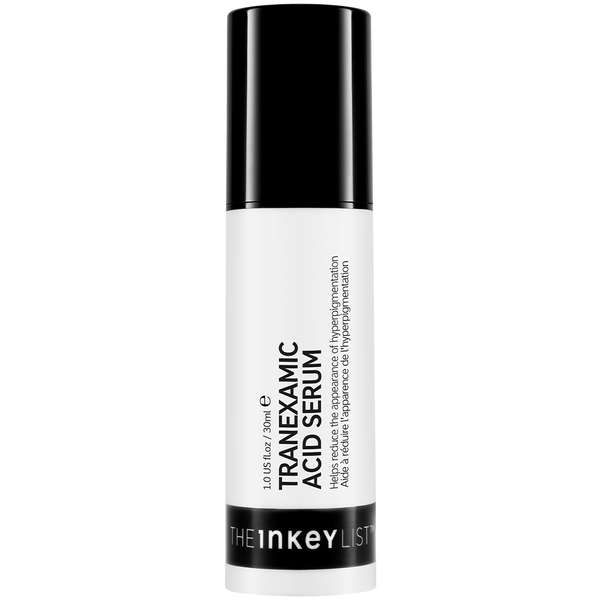
Tranexamic Acid is the hero ingredient for this particular concern, and for good reason. Rather than working at the surface, it interrupts the signalling process between skin cells that triggers excess melanin production in the first place. Because it works “upstream” like this, it’s effective across multiple causes at once - hormonal, UV-triggered, and post-inflammatory pigmentation can all respond to it. If you’re wondering how quickly you might expect to see change, our guide on how long tranexamic acid takes to work sets realistic timelines. You can read more about the ingredient itself on our tranexamic acid pillar page.
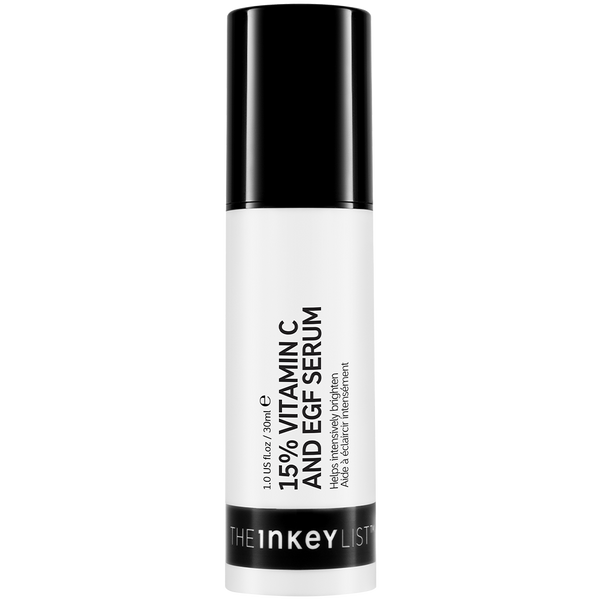
Vitamin C brightens the complexion and supports a more even tone, while also offering antioxidant protection against further UV-triggered pigmentation forming. It pairs particularly well with tranexamic acid, since the two work through different mechanisms towards the same goal. We’ve covered the science behind combining them in Vitamin C and Tranexamic Acid for Dark Spots, and you can explore the ingredient more broadly on the vitamin C pillar page.
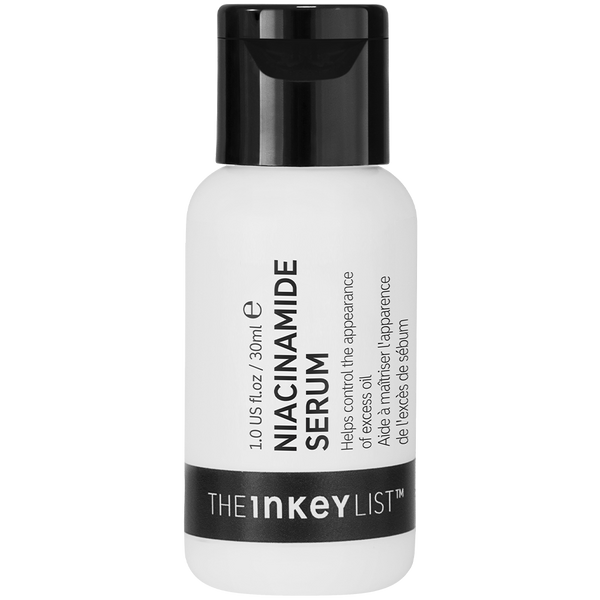
Niacinamide helps calm visible redness and supports overall tone and texture, which makes it especially useful where irritation or post-blemish marks are a bigger part of the picture. It’s a gentler, multitasking ingredient that works well alongside more targeted actives. Learn more on the niacinamide pillar page.
Azelaic Acid is a good option for those with sensitive or irritation-prone skin around the mouth, since it’s gentle enough for reactive skin while still meaningfully working on uneven tone and post-blemish marks. For a deeper look at how it supports pigmentation-prone, sensitive skin specifically, see Azelaic Acid for Dark Marks and Uneven Skin Tone, or explore the azelaic acid pillar page.
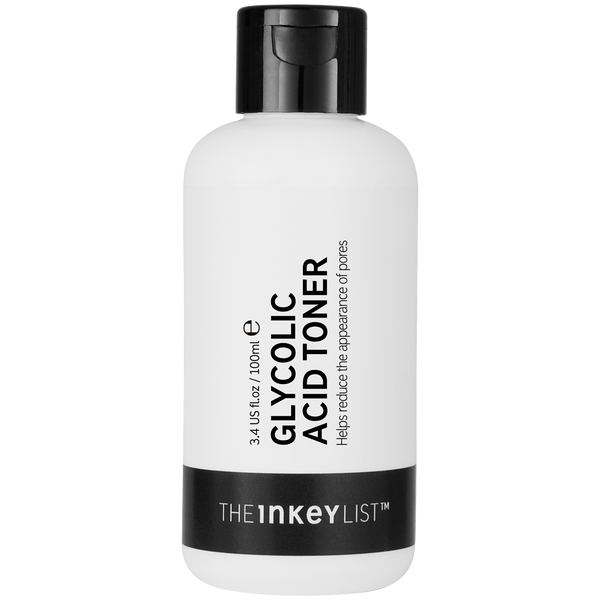
Glycolic Acid supports gentle surface renewal, encouraging pigmented skin cells to turn over more quickly so that discolouration fades at a faster rate over time. It’s a supportive exfoliating step rather than a standalone fix, and you can find more detail on the glycolic acid pillar page.
SPF, used daily, is non-negotiable. This is perhaps the single most important point in this entire guide. Without consistent sun protection, the progress made by every other ingredient above can be undone, since UV exposure is one of the biggest triggers and aggravators of pigmentation around the mouth specifically. You can read more on the SPFpillar page, and if you want the deeper evidence on this link, Does Sunscreen Really Help with Hyperpigmentation? lays it out clearly.
Treating pigmentation isn’t about finding one miracle ingredient - it’s about understanding what’s driving it, and using proven actives consistently alongside daily SPF. This is a principle worth holding onto as you build your routine, because consistency outperforms intensity every time when it comes to fading pigmentation.
One important note: the skin around the mouth is thinner and often more reactive than the rest of the face. This means patch testing matters, and so does introducing actives gradually, particularly stronger exfoliating ingredients like glycolic acid. If you find you tolerate actives poorly in this area, Mandelic Acid: Benefits, Uses and What to Use Instead is worth reading as a gentler alternative to have in your back pocket.
With the “why” behind each ingredient now clear, let’s bring it all together into one practical, step-by-step routine you can actually follow.
A Full Routine to Fade and Prevent Pigmentation Around the Mouth
Knowing which ingredients work is only useful once it’s translated into something you can actually do, consistently, without overthinking it every morning and night. Here’s a clear, structured routine broken into cleanse, treat, hydrate, and protect.
Step 1 - Cleanse. Start with a gentle cleanse, being particularly careful around the mouth if friction or irritation is a contributing cause for you. Avoid scrubbing or tugging at this delicate area, since added mechanical irritation can work against everything else in the routine.
Step 2 - Treat with Tranexamic Acid Serum (£17.00). This is your core active step, designed to target excess melanin production at the source. Apply it after cleansing as the foundation of your pigmentation-focused routine.
Step 3 - Layer or alternate in the morning. Use Vitamin C + EGF Serum (£16.00) for brightening and antioxidant protection, or reach for Niacinamide Serum (£12.00) instead if redness or post-blemish marks are more of a concern for you specifically. You don’t need both at once - choose based on what matches your dominant cause.
Step 4 - Consider Azelaic Acid for sensitive or irritation-prone skin. Azelaic Acid Serum (£16.00) can work as a gentler alternative or addition if your skin reacts easily, giving you pigmentation support without the risk of further irritating an already-sensitive area.
Step 5 - Introduce gentle renewal a few times a week. Glycolic Acid Toner (£14.00) used two to three times weekly supports surface renewal and faster fading. Patch test first, given how delicate this part of the face is, and build up frequency slowly.
Step 6 - Hydrate. Support your skin barrier with Hyaluronic Acid Serum (£12.00), keeping the area comfortable while actives are being introduced. A well-hydrated barrier tolerates active ingredients far better than a compromised one, so don’t skip this step. You can learn more about hydration’s role in barrier support on the hyaluronic acid pillar page.
Step 7 - Protect, daily, without exception. Finish every morning with Dewy Sunscreen SPF 30 (£15.00). This is the step that protects everything else you’ve just done - skip it, and you risk undoing weeks of consistent effort.
A few practical notes to carry into your routine:
- Introduce one new active product every few weeks, rather than all at once, particularly around the delicate mouth area
- Patch test new actives, especially exfoliants like glycolic acid, before applying them regularly
- Be realistic about timelines - visible fading typically takes several weeks of consistent use, not overnight results
- Prioritise SPF above everything else if you can only commit to one new habit right now
Please note that product prices and exact names are correct at the time of writing but may be subject to change, so it’s worth checking the current UK site for the latest details before purchasing.
Bringing It All Together
Pigmentation around the mouth was never one single condition to begin with - it’s a pattern made up of several overlapping causes, from hormonal shifts and sun exposure to post-blemish marks, friction, and irritation. Identifying which of these applies to you is genuinely the most important step in treating it effectively, because it determines which ingredients and habits will actually move the needle for your skin.
The encouraging part is that the science here is well established. With the right combination of ingredients - tranexamic acid, vitamin C, niacinamide, azelaic acid, and glycolic acid - used consistently, and daily SPF protecting that progress along the way, visible improvement is genuinely achievable. You don’t need a complicated ten-step routine to see change. You need clarity on what’s causing your pigmentation, proven ingredients that target it, and the consistency to let them work.
If you’re ready to build a fuller routine tailored to your skin, our hyperpigmentation pillar page is a great place to continue exploring. If you’d rather start small, begin with one targeted step - the Tranexamic Acid Serum is a sensible first addition rather than overhauling your entire routine overnight. And if pigmentation shows up for you beyond just the mouth area, our dark spots pillar page widens the picture further.
Clear guidance, proven ingredients, real results - that’s really all this comes down to.
Frequently Asked Questions
Got a question?
Our askINKEY team are a friendly bunch of skincare experts with deep product knowledge and zero judgement. Whether you're an ingredient obsessive or just starting out, we'll make it make sense. No question too big. No question too small. We Give A Care, Every Day.


