

What Is a Humectant? The Complete Skincare Guide
Discover how ingredients like glycerin and hyaluronic acid attract and retain moisture, why they're essential for healthy skin, and how to use them for long-lasting hydration
Author
askINKEY skincare advisor
Published
02 July, 2026
Time to read
16 minutes
A humectant is a class of skincare ingredient that attracts water molecules and binds them to the skin. If you have ever noticed the word “humectant” on a product label and wondered what it actually means - or whether it matters - this guide is for you. Humectants are one of three functional categories of moisturising ingredients, the others being emollients and occlusives. Understanding the difference between these three categories, and knowing how to use them correctly together, is one of the most practically useful things you can learn about skincare.
This blog covers everything: the humectant definition, how humectants work at a skin level, the difference between humectants, emollients, and occlusives, the best humectant ingredients to look for, how to apply them correctly in a daily routine, and the most common myths that lead people to use them incorrectly.
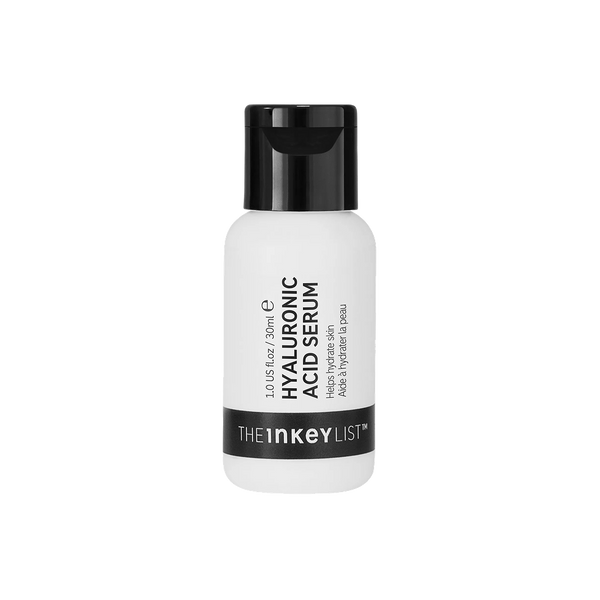
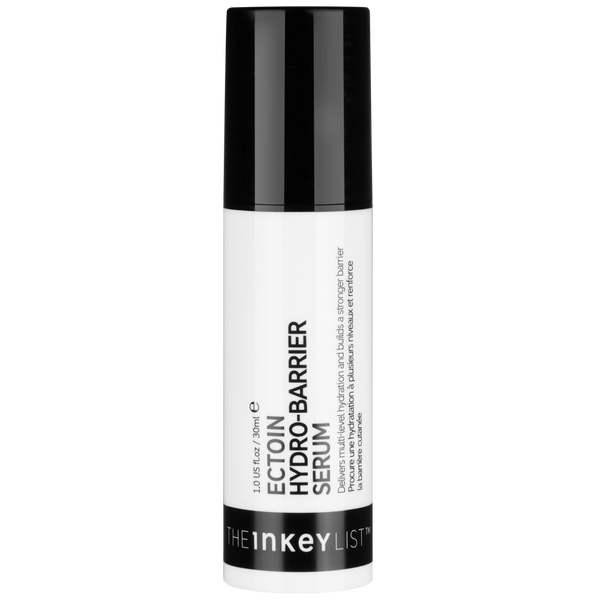
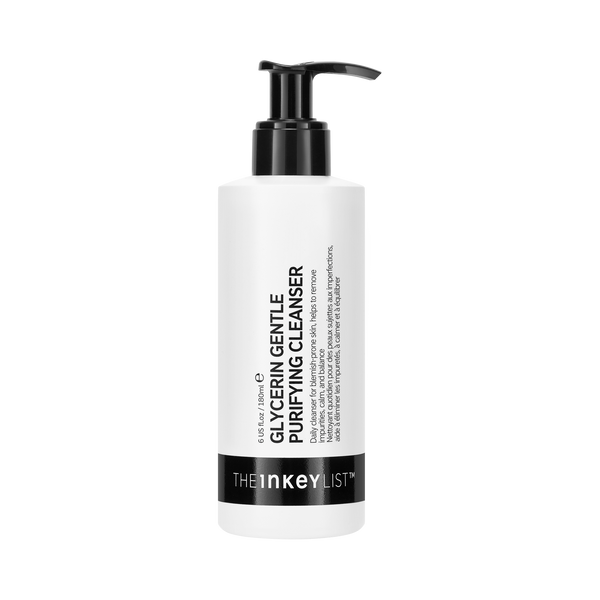
Two of the most important humectants in skincare appear in our Hyaluronic Acid Serum (£9 / 30ml) and Glycerin Gentle Purifying Cleanser (£13 / 180ml) - and both are excellent real-world examples of humectants at work. For anyone dealing with persistent dehydration or a compromised skin barrier, the Ectoin Hydro-Barrier Serum (£15 / 30ml) is worth understanding as a barrier-humectant hybrid. If you are not sure whether your skin is dehydrated, the dehydrated skin guide is a useful starting point. And if you want to understand transepidermal water loss before diving into humectants, the TEWL explainer sets that groundwork clearly.
What Is a Humectant? The Definition Explained Simply
The word “humectant” comes from the Latin humectare, meaning to moisten. It is a fitting etymology for an ingredient category whose entire purpose is to attract and hold water. A humectant works by drawing water molecules towards itself and binding them - pulling moisture from the surrounding environment and from the deeper layers of the skin up into the stratum corneum, the outermost layer of the skin that most directly determines how hydrated your complexion looks and feels.
A humectant attracts water. It does not seal it in. This distinction is fundamental, and it matters enormously in terms of how you use these ingredients. Many people assume that applying a hyaluronic acid serum alone is sufficient for well-hydrated skin. It is not - and understanding why requires grasping this core principle. The humectant does the drawing. Other ingredients do the sealing. Both steps are necessary for lasting hydration.
Humectants sit within a three-part framework of moisturising ingredients that cosmetic scientists have long used to understand how skin hydration works. The three categories are humectants, emollients, and occlusives. Each plays a distinct role, and effective moisturisation typically requires all three working together. This framework will be explored in depth later in this guide, but it is worth introducing early so you can begin to see how the pieces connect.
What makes humectants particularly valuable in skincare is their versatility. They are not confined to a single product format. You will find them in serums, cleansers, moisturisers, toners, and mists - often without the product being explicitly labelled a “humectant product.” Glycerin, for example, appears in everything from gel cleansers to rich barrier creams, because it functions effectively across a wide range of formulation textures and pH environments. Hyaluronic acid is similarly ubiquitous.
The skin also produces its own humectant compounds naturally, as part of what scientists call the Natural Moisturising Factor - or NMF. The NMF is a collection of water-soluble compounds found within the cells of the stratum corneum, including amino acids, lactic acid, urea, and pyrrolidone carboxylic acid (PCA). These compounds collectively maintain the skin’s own moisture balance and help prevent transepidermal water loss. When the NMF is depleted - through harsh cleansing products, over-exfoliation, environmental stressors, or the natural process of ageing - the skin loses its built-in ability to retain moisture efficiently. This is precisely where topical humectant ingredients become so important: they supplement what the skin can no longer produce or maintain on its own.
To summarise the definition plainly: a humectant is an ingredient that pulls water into the skin. Glycerin and hyaluronic acid are the two most widely recognised examples. They are found across formats, work across all skin types, and are among the most well-researched ingredients in all of cosmetic science.
Knowing what a humectant is, though, is only the beginning. Knowing how one actually works at a biological level - and why that changes how you should be applying your serum - is where the real utility lies.
How Humectants Work: The Science Behind Skin Hydration
Humectants work through a process called hygroscopy - the ability of a substance to attract and absorb water molecules from its surrounding environment through hydrogen bonding. This is not a passive process. Humectant molecules are chemically structured in a way that actively seeks out and binds to water, making them highly effective at pulling moisture towards the skin.
There are two primary sources from which a humectant can draw water when applied to skin. The first is ambient humidity - the moisture present in the air around you. The second is the deeper layers of the skin itself, specifically the dermis, which sits beneath the stratum corneum. In a high-humidity environment, a well-applied humectant will draw predominantly from the air, supplementing the skin’s surface moisture from an external source. This is the ideal scenario. In low-humidity conditions, however - think centrally heated rooms in winter, air-conditioned offices, cold outdoor air, or long-haul flights - the situation changes. With less atmospheric moisture to draw from, the humectant can begin to pull water upward from the deeper layers of the skin instead. Without something to trap that moisture at the surface, it can then evaporate off into the dry surrounding air, leaving skin feeling tighter and more dehydrated than before.
This is not a flaw in the ingredient. It is a characteristic of how hygroscopic molecules behave - and understanding it leads directly to one of the most important application rules in skincare.
Apply humectants to damp skin. After cleansing, pat the skin gently to remove excess water, but leave a faint layer of surface moisture behind. Apply the humectant serum immediately - ideally within 30 to 60 seconds of rinsing. This surface moisture gives the humectant an immediately accessible water source to interact with, significantly boosting its effectiveness regardless of ambient humidity.
Our Hyaluronic Acid Serum is clinically demonstrated to deliver better hydration results when applied to damp skin using this method. It sounds like a small detail. It is not. It is the difference between a humectant performing as it is designed to, and a humectant drawing from the wrong source.
Think of it like this: a sponge placed on a dry surface has to work significantly harder to absorb water than a sponge placed on a surface with moisture already present. The humectant is the sponge. Your damp skin is that moist surface. Give it what it needs to work.
This also connects directly to the concept of the Natural Moisturising Factor, introduced in the previous section. When the NMF is functioning well, the stratum corneum maintains its own internal water balance relatively effectively. But ageing, environmental damage, over-cleansing, and excessive exfoliation all deplete NMF compounds over time, reducing the skin’s innate capacity to hold water. Topical humectants step in to support this process - but they need to be followed by ingredients that lock that moisture in at the surface, which brings us to the critical issue of transepidermal water loss.
TEWL is the process by which water passively evaporates from the skin’s surface and escapes into the surrounding environment. All skin experiences some degree of TEWL - it is a normal physiological process. But when the skin’s barrier is compromised, TEWL increases significantly, leading to chronic dehydration that does not resolve with humectants alone. If you suspect that your skin falls into this category, the dehydrated skin guide and the article on how to tell if your skin is dehydrated are both worth reading alongside this one.
The takeaway from this section is this: humectants are powerful, but they are one part of a system. They draw water in. Other ingredients must seal it there. This is why understanding the three-category framework is not optional - it is essential.
Humectant vs Emollient vs Occlusive: The Three Categories of Moisturisation
Effective skin hydration is not a single-ingredient job. Cosmetic scientists have long categorised moisturising ingredients into three distinct functional groups - humectants, emollients, and occlusives - and the most effective skincare routines and moisturiser formulations work with all three simultaneously. Each category performs a different role, and knowing which ingredients belong to which category helps you understand why certain products feel the way they do, and why layering matters.
Humectants attract and bind water molecules to the skin. They draw moisture in from the environment or from deeper skin layers and hold it within the upper layers of the stratum corneum. Common humectant examples include glycerin, hyaluronic acid, ectoin, polyglutamic acid, sodium hyaluronate, panthenol, and urea. Humectants are typically lightweight, water-based, and absorb quickly. They are the first layer in any effective hydration routine.
Emollients do not add water to the skin. Instead, they fill in the microscopic gaps between skin cells in the stratum corneum - gaps that form when the skin’s natural lipid matrix is depleted or disrupted. By filling in these spaces, emollients smooth skin texture, reduce roughness, and help the outer skin layers feel soft and supple. Common emollient examples include plant oils (such as rosehip, jojoba, and marula), squalane, fatty alcohols like cetearyl alcohol, and shea butter. Our Omega Water Cream (£11) contains emollient ingredients that help condition the skin’s surface while remaining lightweight enough for oily and combination skin types.
Occlusives form a physical or semi-physical seal on the skin’s surface that slows the rate at which water can evaporate through transepidermal water loss. They do not add hydration directly - instead, they preserve the hydration that the humectant has drawn in and the emollient has conditioned. Common occlusive ingredients include ceramides, petrolatum, dimethicone, beeswax, and lanolin. Ceramides deserve particular mention here: they are the primary lipid component of the skin’s natural barrier, and replenishing them with topical skincare has a meaningful impact on TEWL reduction and overall barrier integrity. Our Bio-Active Ceramide Moisturiser (£19) delivers ceramides alongside other barrier-supporting ingredients, making it one of the most comprehensive options in the routine for locking in the hydration a humectant delivers.
The three must work together. A humectant alone draws water in, but without an emollient to smooth the surface and an occlusive to seal it, that moisture can evaporate before it has any lasting impact on skin feel or appearance. Conversely, an occlusive applied without a humectant underneath may reduce TEWL, but it is not adding new hydration - it is only preventing the loss of whatever water is already there.
The correct layering order is straightforward: humectants first (thinnest, most water-based), followed by emollients, then occlusives (richer, cream-based). In practice, many products contain ingredients from more than one category - a moisturiser might contain glycerin (humectant), squalane (emollient), and ceramides (occlusive) all in a single formula. This is by design, and it is exactly the approach behind products like the Bio-Active Ceramide Moisturiser, which is built to function across all three categories in a single step.
It is also important to recognise that this is not a rigid hierarchy of importance - all three categories matter. The goal is simply to apply products in an order that allows each ingredient to reach where it needs to be and perform its intended function without being blocked by something richer applied first.
Now that you understand the framework, the next logical question is: which specific humectant ingredients should you be looking for on the label?
The Best Humectant Ingredients in Skincare - And What They Actually Do
Yes - glycerin is a humectant. And yes - hyaluronic acid is a humectant. These are the two questions that come up most frequently in searches about humectant ingredients, so they are worth confirming directly before going deeper. Both are exceptionally well-researched, both are suitable for all skin types, and both are genuinely among the most effective water-attracting ingredients available in modern skincare formulation. Here is what each major humectant ingredient actually does, and where you will find it.
Glycerin - also known on ingredient labels as glycerol or glycerine, all three names referring to the same compound - is one of the oldest and most extensively studied humectants in cosmetic science. It is a simple polyol (a type of alcohol with multiple hydroxyl groups) that demonstrates exceptional water-attracting properties even at relatively modest concentrations. Glycerin is also one of the primary components of the skin’s own Natural Moisturising Factor, which makes it particularly compatible with the skin’s biology. It is found in our Glycerin Gentle Purifying Cleanser (£13), where it serves the dual function of a gentle cleansing agent and an active humectant - meaning the act of cleansing itself deposits moisture rather than stripping it. Full ingredient detail is available on the glycerin pillar page.
Hyaluronic Acid - a polysaccharide (a long-chain sugar molecule) that occurs naturally in the skin, joints, and connective tissue. Its most-cited property is its remarkable water-holding capacity: a single molecule of high-molecular-weight hyaluronic acid can hold up to 1,000 times its own weight in water. In skincare formulations, molecular weight matters significantly. High-molecular-weight hyaluronic acid sits at the skin’s surface and provides immediate visible plumping and smoothing. Low-molecular-weight hyaluronic acid penetrates more deeply into the upper layers of the stratum corneum to deliver hydration where it is harder for surface-level humectants to reach. Multi-molecular formulas - like our Hyaluronic Acid Serum (£9) - target hydration at different depths simultaneously for a more comprehensive result. For a detailed guide on using it correctly, Hyaluronic Acid: Are You Using It Correctly? is essential reading. The hyaluronic acid pillar page covers the full science.
Sodium Hyaluronate - the sodium salt form of hyaluronic acid. It performs the same humectant function but has a lower molecular weight by default, allowing it to penetrate slightly more readily. When you see sodium hyaluronate on an ingredient list, it is doing the same job as hyaluronic acid.
Ectoin - a naturally derived extremolyte originally found in microorganisms that survive extreme environmental conditions (high salinity, UV radiation, temperature extremes). What makes ectoin particularly interesting as a skincare ingredient is that it operates as both a humectant and a barrier-supporting active simultaneously. It forms a protective hydration shell around skin cells and has demonstrated meaningful efficacy in both attracting water and reducing inflammatory stress on the skin. Our Ectoin Hydro-Barrier Serum (£15) combines 2% ectoin with 2.5% multi-molecular hyaluronic acid and a ceramide barrier blend - making it one of the most multi-functional hydration serums in the range. If you are deciding between ectoin and hyaluronic acid as a primary serum, Ectoin vs Hyaluronic Acid: What’s the Difference? provides a clear comparison. The ectoin pillar page has full ingredient detail.
Polyglutamic Acid (PGA) - a naturally derived polymer with exceptional moisture-holding capacity, often cited as holding even more water than hyaluronic acid by weight. PGA also has the additional benefit of inhibiting the enzyme hyaluronidase, which breaks down the skin’s own hyaluronic acid - meaning it can help preserve the skin’s natural hydration reserves in addition to attracting new water.
Panthenol (Pro-Vitamin B5) - a well-tolerated humectant with the added benefit of soothing and supporting skin repair. It is particularly valuable in formulations designed for sensitive, reactive, or compromised skin.
Urea - a naturally occurring NMF component and highly effective humectant at lower concentrations (below 10%), with gentle keratolytic (softening) properties at higher concentrations. Often found in foot and body products, but increasingly in facial skincare as awareness of its efficacy grows.
Aloe Vera - a plant-derived humectant with a high water content and mild soothing properties. Frequently used in gel formulations.
One important clarification: niacinamide is not a humectant. It is a form of vitamin B3 with barrier-supporting, brightening, and pore-minimising properties - genuinely useful, but operating through a different mechanism entirely. The niacinamide pillar page covers what niacinamide actually does in detail.
With a clear picture of which ingredients qualify as humectants and what each one does, the next step is understanding exactly how to use them day to day.
How to Use Humectants in Your Skincare Routine - Step by Step
Understanding the science behind humectants is valuable. Knowing exactly where they fit into a real skincare routine - and how to apply them in a way that maximises their effectiveness - is what actually changes your skin. Here is how to build a humectant-led routine correctly, morning and evening, from the first cleanse to the final step.
Step 1 - Cleanse without stripping. The foundation of any effective hydration routine is a cleanser that removes impurities without disrupting the skin’s surface moisture or lipid barrier. Harsh, high-surfactant cleansers can strip the NMF and leave skin feeling tight immediately after washing - which is not a clean feeling, it is a dehydrated one. Our Glycerin Gentle Purifying Cleanser (£13) is formulated with glycerin as an active ingredient, meaning it cleanses and deposits humectant simultaneously. The skin is cleaner after use - but critically, it is also more hydrated at the surface, which sets up the next step perfectly.
Step 2 - Apply your humectant serum to damp skin, within 30-60 seconds of cleansing. After rinsing your cleanser, gently pat the skin with a clean towel to remove excess water, but do not dry completely. Leave a faint residue of surface moisture on the skin. Apply your humectant serum immediately while this surface moisture is still present. For our Hyaluronic Acid Serum (£9), 2-3 drops is the correct amount for the face and neck - press it gently into the skin rather than rubbing. The surface moisture provides the immediate water source the humectant needs to function at its best. Waiting until skin is fully dry before applying significantly reduces the efficacy of the step.
Step 3 - Layer a barrier-strengthening serum if needed. If your skin is persistently dehydrated, prone to tightness, or showing signs of a compromised barrier - such as dehydration lines versus true wrinkles - a second serum step may be appropriate. Our Ectoin Hydro-Barrier Serum (£15) is designed to sit after the hyaluronic acid serum, while the skin is still slightly tacky from the first step. It combines ectoin’s humectant and barrier-protecting properties with multi-molecular hyaluronic acid and ceramides, making it a genuinely functional second serum rather than a redundant layer. Apply in the same manner - 2-3 drops, pressed gently into the skin.
Step 4 - Seal with a moisturiser. This step is non-negotiable. A humectant without a moisturiser over the top is an incomplete routine. The moisturiser provides the emollient and occlusive functions that lock in the moisture the serum has attracted. For oily and combination skin types, our Omega Water Cream (£11) delivers a lightweight yet effective layer of emollient conditioning without heaviness or greasiness. For dry or mature skin types - where the barrier tends to be more significantly depleted and TEWL rates are higher - our Bio-Active Ceramide Moisturiser (£19) is the more appropriate choice, delivering ceramides alongside other barrier lipids to effectively reduce water loss and support long-term hydration.
Step 5 (morning only) - Apply SPF as the final step. In the morning, the routine should always close with a broad-spectrum sunscreen. UV exposure accelerates the depletion of the skin’s NMF, degrades hyaluronic acid within the dermis, and significantly accelerates the visible signs of ageing - which directly impacts skin hydration and barrier function over time. Finish with Dewy Sunscreen SPF 30 as the last product in your AM routine.
Optional - Face mist as a pre-serum or mid-day step. If your environment is particularly dry (centrally heated offices in winter, air-conditioned spaces in summer), or if you want to reset skin hydration during the day without a full routine, our HydroSurge Dewy Face Mist can be used either before the serum step (to add surface moisture for the humectant to interact with) or as a standalone mid-day refresh. For a detailed look at what makes a hydrating face mist actually effective, What to Look for in a Hydrating Face Mist is a helpful companion read.
On frequency: humectants carry no use restriction. They can and should be used morning and evening, every day. There is no sensitisation risk, no adaptation period, and no maximum frequency. If you are building a routine from scratch, How to Build Your Skincare Routine walks through the broader structure. And if you have oily skin and are wondering whether this routine applies to you - it does. Oily skin and dehydrated skin are not mutually exclusive, and Why Oily Skin Gets Dehydrated Too explains exactly why.
The routine is clear. But humectants attract a significant amount of misinformation - and some of those myths actively discourage people from using them correctly. It is worth addressing those directly.
Common Humectant Myths and Misconceptions: What You Actually Need to Know
For a relatively straightforward category of ingredient, humectants generate a surprising amount of confusion online. Some of that confusion is harmless. Some of it leads people to avoid effective ingredients, apply them incorrectly, or expect them to do something they were never designed to do. Here are the most common myths - and the clearer truth behind each one.
Myth 1: “Humectants dry your skin out if the air is dry.”
This is probably the most widely repeated concern about humectants, and it is worth addressing carefully because there is a kernel of real science behind it. In very low-humidity conditions, humectants can draw from deeper skin layers if there is insufficient atmospheric moisture available. But this is an application problem - not an ingredient problem. Apply the humectant to damp skin immediately after cleansing and always follow with a moisturiser to seal the surface. Done correctly, humectants remain effective and non-drying even in winter, in heated rooms, or in dry climates. The guide to hydrating sensitive skin without causing irritation addresses this further for those with more reactive skin.
Myth 2: “Hyaluronic acid is a moisturiser.”
Hyaluronic acid is a humectant. This distinction matters. It attracts water. It does not seal it in. A complete moisturiser - in the formulation sense - contains humectants, emollients, and occlusives working together. When you apply a standalone hyaluronic acid serum without following it with a moisturiser, you have completed only one third of the hydration equation. The Hyaluronic Acid: Are You Using It Correctly? guide covers this common error in detail.
Myth 3: “More humectant equals more hydration.”
Not true. 2-3 drops of a humectant serum per application is sufficient for the face and neck. Applying a larger quantity does not deliver additional hydration - the excess product simply sits on the skin’s surface without enhancing absorption. Concentration and application method matter far more than volume.
Myth 4: “Oily skin doesn’t need humectants.”
This is completely false, and it is one of the most consequential myths in everyday skincare because it leads oily-skin individuals to skip hydration entirely - which can worsen oiliness, not improve it. Humectants add water to the skin, not oil. They are non-comedogenic. Oily skin and dehydrated skin are entirely separate conditions that can and frequently do coexist. Why Oily Skin Gets Dehydrated Too dismantles this myth thoroughly.
Myth 5: “Drinking more water gives you hydrated skin.”
Drinking adequate water is important for overall health - but it does not directly translate into better skin hydration at the surface level in the way that topical humectants do. The mechanisms are simply different. Topical humectants deliver water-attracting activity directly to the stratum corneum, where skin hydration is determined. Internal hydration does not efficiently reach the outermost skin layers through systemic circulation in any meaningful concentration. Think of them as complementary habits, not interchangeable ones.
With the myths addressed, it is time to bring the key questions together in one place.
The Clearest Path to Hydrated Skin Starts Here
Humectants are not complicated once you understand the three core principles. First: a humectant attracts water into the skin - but always follow it with a moisturiser that can seal that moisture in. Second: application to damp skin is not an optional refinement, it is what makes humectants work as they are designed to. Third: humectants, emollients, and occlusives are a system - each category plays a distinct role, and effective hydration depends on all three working together in the right order.
The most effective humectant products in our range are the Hyaluronic Acid Serum, the Glycerin Gentle Purifying Cleanser, and the Ectoin Hydro-Barrier Serum. Together, they address hydration at every stage of the routine - from the cleanse that sets the surface moisture foundation, to the serum that actively draws water in, to the barrier-repair step that protects what has been built.
Skincare does not need to be complicated. But it does need to be correct. Understanding what humectants are, why they work the way they do, and how to use them in the right order is all you need to build a genuinely effective hydration routine - regardless of your skin type, your budget, or how many products you are currently using.
Shop the Routine
Hyaluronic Acid Serum - £9 / 30ml. Apply to damp skin after cleansing, morning and evening.
Ectoin Hydro-Barrier Serum - £15 / 30ml. Pairs with the Hyaluronic Acid Serum to deliver hydration and barrier repair simultaneously.
Bio-Active Ceramide Moisturiser - £19 / 50ml for dry or mature skin. Omega Water Cream - £11 / 50ml for oily or combination skin.
Bundle Builder - select your routine and save up to 20%.
Take the Skincare Quiz for a personalised routine built around your specific skin concerns in under 2 minutes.
Frequently Asked Questions
Got a question?
Our askINKEY team are a friendly bunch of skincare experts with deep product knowledge and zero judgement. Whether you're an ingredient obsessive or just starting out, we'll make it make sense. No question too big. No question too small. We Give A Care, Every Day.


