



Dry Skin Around the Nose: Why It Happens and How to Fix It
The nose is one of the oiliest parts of your face, so flaking there usually isn't dry skin at all - here's what's really going on, and how to fix it.
Author
askINKEY skincare advisor
Published
16 September, 2026
Time to read
13 minutes
Dry skin around the nose shows up as fine flaking around the nostrils, rough or tight patches in the creases either side of the nose, and sometimes a faint redness that spreads down towards the mouth. It lifts when you smile. It catches on makeup. It comes back a few days after you thought you had sorted it. And it tends to behave differently from dryness anywhere else on the face, which is exactly why the usual advice so often fails to shift it.
Here is the part that changes how you approach it: the nose is one of the oiliest areas of the entire face. It has one of the highest concentrations of oil glands you will find on your skin. So flaking there is usually not classic dry skin at all. It is far more often a disrupted barrier, too much exfoliation concentrated in the T-zone, friction from tissues or glasses, or a reaction to something else going on in the skin. Reaching for a richer cream on its own is the instinctive response, and it is frequently the wrong one.
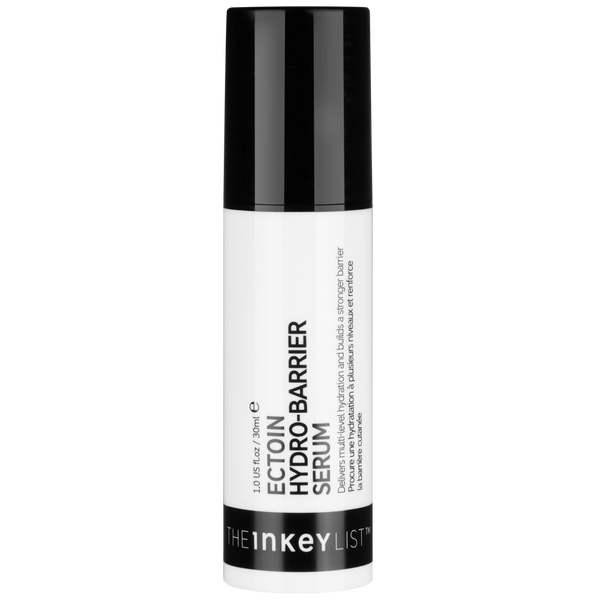
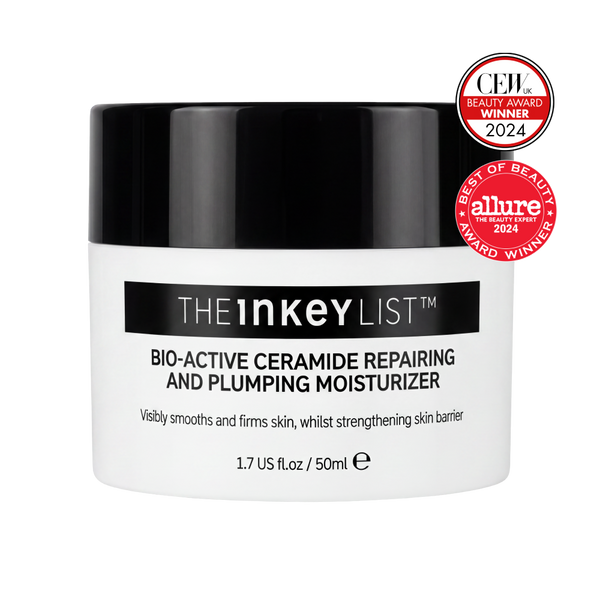
If you want the shortcut, this zone responds best to two steps working together rather than one product doing everything. Our Ectoin Hydro-Barrier Serum (£16) draws water into the skin, supports the barrier and soothes the look of irritation. Our Bio-Active Ceramide Moisturiser (£20) then seals that water in and helps rebuild the barrier structure that let it escape in the first place. Serum hydrates, moisturiser holds and repairs. Used together they address both halves of the problem, which is why we point to the pair rather than either one alone. You can browse the wider dry skin collection for the rest, or our skincare quiz will build you a personalised routine.
What this article covers:
- What dry skin around the nose actually is, and why the oily-but-flaky combination is so common
- The specific causes that apply to this zone, from over-exfoliating the T-zone to nose pads and tissues
- How to tell dryness, dehydration and a compromised barrier apart
- A step-by-step morning and evening routine, plus a seven day reset plan
- Why hydrating and sealing work better as a pair than either does alone
- The ingredients that genuinely help this particular area, and why
- The habits making it worse, and how to stop flaking around the nose returning
Before the detail, here is the short version for anyone who wants the essentials first.
What dry skin around the nose actually is
Dry skin around the nose is usually flaking, tightness and roughness caused by a disrupted skin barrier rather than a genuine lack of oil. Because the nose is one of the most sebum-rich areas of the face, the skin there can produce plenty of oil while still losing water, which is what causes the surface to flake.
In practice, that looks like:
- Fine white flakes that lift and become obvious when you smile, talk or apply makeup
- Tightness immediately after cleansing, particularly across the bridge and sides of the nose
- Rough, slightly raised patches tucked into the creases either side of the nostrils
- Mild redness around the nose that comes and goes
The contradiction trips almost everyone up. You can have a shiny T-zone by midday and flaking around your nostrils at the same time, and it feels like your skin is contradicting itself. It is not. Oil and hydration are two different things. Oil sits on the surface as a sealant. Water sits within the skin as hydration. A sebum-rich zone can be generously supplied with the first and still be short of the second, especially when the barrier that holds water in has been worn down. We have covered why oily skin gets dehydrated too in detail if you want the full mechanism.
The reassuring part is that this is usually a fast fix. In most cases, flaking around the nose settles noticeably within one to two weeks once the barrier is supported and whatever was irritating it has been removed. The question is what that irritant is, and around the nose there are a handful of usual suspects.
Why the skin around your nose gets dry and flaky
The nose is sebum-rich, so flaking here is different
The nose and the creases running down either side of it carry one of the densest concentrations of oil glands anywhere on the face. Research measuring follicle density and sebum output consistently puts the nose and forehead well above the cheeks, and studies of nasal skin have found the glands towards the tip of the nose are both more numerous and larger than elsewhere. That single fact reframes the whole problem. When skin flakes in an area that is swimming in its own oil, a shortage of oil is very unlikely to be the explanation.
What is far more likely is that the barrier holding water inside the skin has been compromised. Think of it as two separate systems: oil is the roof, water is what is stored underneath it. You can have an intact roof and an empty tank. Around the nose, people usually misread the flakes as a signal to go richer, so they layer a heavy cream over a rough surface. The cream sits on top, the flakes become more visible, and the skin feels no better.
Practical takeaway: before you add anything richer, ask whether the flaking is a water problem rather than an oil problem. Around the nose, it almost always is. Then fill the tank before you patch the roof, which is precisely why hydrating serum comes before moisturiser rather than instead of it.
The nose is one of the most sebum-rich areas of the face. So when it flakes, the cause is rarely a lack of oil. It is almost always a barrier that needs supporting, not a heavier cream on top.
Over-cleansing and over-exfoliating your T-zone
The T-zone takes the most punishment because it is the oiliest, and we tend to treat oiliness as something to be defeated. Scrubs get concentrated on the nose. Strong foaming washes get worked into it for longer. Exfoliating acids, clay masks and pore strips all end up targeted at the same few square centimetres, often in the same week.
Every one of those removes some of the lipids that hold the barrier together. Do it repeatedly and the surface gives up: it flakes, tightens and becomes reactive. The cruel irony is that the flaking then reads as texture, which prompts more exfoliation, which deepens the problem. Over-exfoliation of the T-zone is, in our experience, the single most common cause of persistent flaking around the nose, and it is entirely self-inflicted.
Practical takeaway: cleanse for around 60 seconds with something gentle, and stop treating your nose as a problem area that needs punishing. It needs supporting. If you have stripped those lipids out, replacing them is the direct fix, which is where a ceramide moisturiser earns its place.
Cold snaps, central heating and hard water
British weather is genuinely hard on this part of the face. Cold outdoor air holds very little moisture, and stepping from that straight into a centrally heated room creates a swing in temperature and humidity that the skin struggles to keep up with. Do that several times a day through winter and the surface never fully settles.
There is a measurable mechanism behind it. According to the British Skin Foundation, speaking with Consultant Dermatologist Dr Adil Sheraz, the amount of ceramides in the skin decreases over the winter months, and since ceramides are vital to maintaining the barrier, dryness, scaling and dull-looking skin become more likely. Central heating compounds it by dropping indoor humidity, which increases water loss from the skin surface.
That detail is worth pausing on, because it explains why the two-step approach matters more between October and March than at any other time of year. Your skin is losing water faster to dry indoor air, and it has fewer ceramides available to hold the barrier together. Hydration alone tops up the water. Ceramides alone do not add water. Doing both is what actually closes the gap, and it is why our Bio-Active Ceramide Moisturiser (£20) sits over our Ectoin Hydro-Barrier Serum (£16) rather than replacing it.
Hard water is the third factor, and much of the UK has it. Minerals in hard water interfere with how cleansers rinse away, leaving residue that can leave skin feeling tight and looking dull after washing. The nose shows it first because it is a high-exposure, high-friction area that also happens to be where most of us scrub hardest.
Practical takeaway: through the colder months, assume your skin needs more support than it did in July, and adjust before the flaking starts rather than after.
Blowing your nose when you are ill
This is the most obvious cause on the list and the one people most often overlook, usually because they are too busy feeling unwell to connect the two. Repeated friction from tissues wears the surface down mechanically. Add moisture sitting on the skin and then evaporating, over and over across a few days, and the barrier around the nostrils takes a genuine battering.
The flaking and redness that follow a cold are not a change in your skin type. They are mechanical damage, and they respond to mechanical logic: reduce the friction, then help the surface rebuild. The mistake is waiting until the skin is already raw and sore before doing anything about it, by which point everything stings.
Practical takeaway: use the softest tissues you can find, pat rather than rub, and start the soothe-and-seal pair at the first sniffle rather than on day four when it already hurts. Ectoin calms the rawness, ceramides rebuild what the tissues have worn away.
Glasses and face coverings
If you wear glasses, you have two small pads applying constant pressure to precisely the spot where flaking tends to appear. Add the movement of your face throughout the day and you have low-grade, continuous friction in a fixed location. It is no coincidence that glasses wearers so often get a persistent rough patch exactly where the pads sit.
Face coverings create a different version of the same problem. They trap warm, humid air against the skin, which softens the surface, and then rub at the bridge of the nose every time you move or speak. Softened skin plus friction is an efficient way to wear down a barrier.
Practical takeaway: keep nose pads clean and check they are not clamped too tightly, and resist the urge to exfoliate the resulting roughness away. Friction damage needs support, not sanding.
Retinol, acids and other actives
Here is a detail that explains a lot of otherwise baffling flaking. When you apply a serum across your whole face, product does not distribute evenly. It pools in the creases, and the folds either side of the nose are the deepest creases on most faces. So the concentration of active that lands there is higher than anywhere else, every single time you apply it.
That is why retinol and exfoliating acids so often cause flaking around the nose first, while the cheeks and forehead look completely fine. It is not that your nose is more sensitive in principle. It is that it is receiving more product.
Practical takeaway: apply actives to the broader planes of the face and let them feather towards the nose rather than being pressed into the creases. Build frequency slowly.
Oily skin can still flake
This closes the loop on the contradiction. Oily and blemish prone skin flakes around the nose constantly, and it happens most in people using products designed to reduce oil. Mattifying formulas, strong washes and frequent exfoliation all push the surface in the same direction: less oil, less water, weaker barrier, more flakes.
The fix is not more oil control. It is oil-free hydration alongside barrier support, which means you can keep shine in check without stripping the surface. The pairing logic still holds here, you just change the second step: keep our Ectoin Hydro-Barrier Serum (£16) as your hydrating layer, then seal with our Omega Water Cream (£14) rather than a richer texture. We have written separately about the best moisturiser for oily skin if that is your main concern.
Practical takeaway: if you are oily and flaking, add hydration before you subtract anything else, and still seal it. Skipping the moisturiser is what leaves the hydration with nowhere to go.
Causes are one thing. The terminology is where most people get genuinely stuck, so let us clear that up quickly.
Dry skin, a damaged barrier, or dehydration: what is the difference
These three get used interchangeably and they are not the same thing. Here is the short version, because each already has a home elsewhere on the site.
Dry skin is a skin type, and it means not enough oil. It tends to be consistent across the whole face and consistent over time, rather than flaring in one spot. If that sounds like you, our full guide to dry skin covers the causes, symptoms and routine properly.
Dehydrated skin is a condition, and it means not enough water. It can happen to any skin type, including very oily skin, and it comes and goes depending on weather, routine and habits. Our guide to dehydrated skin goes deeper.
A compromised barrier is damage to the skin’s protective surface. It tends to bring tightness, sensitivity, stinging when you apply products that never used to sting, and flaking. Our guide to a damaged skin barrier explains what to do about it.
The nose verdict, stated plainly: around the nose it is most often the second or the third, and very frequently both at once. A genuinely dry skin type is the least likely explanation in this specific zone, because this specific zone produces more oil than almost anywhere else on your face. If you read the dry skin definition above and thought that is me, all over, all year, then the pillar page is where you will get more value than here. If you read the barrier description and winced in recognition, the damaged skin barrier collection is your starting point.
Note the practical consequence of the verdict. If the problem is usually dehydration and barrier damage together, then a routine that only addresses one of them will only ever half work. Water without structure evaporates. Structure without water has nothing to hold. That is the reasoning behind pairing a hydrating, soothing serum with a ceramide moisturiser rather than choosing between them.
Occasionally, though, flaking around the nose is not really a skincare problem at all, and it is worth knowing how to spot that.
When flaking around the nose might be something else
Most flaking around the nose responds to gentler care within a couple of weeks. Some of it does not, and being honest about that matters more to us than keeping you on the page.
A few signs suggest something beyond everyday dryness. Persistent redness that never fully settles. Flakes that feel greasy rather than dry, and look slightly yellowish rather than white. Flaking that keeps returning to the exact same creases no matter what you do. Or flaking around the nose that shows up alongside a flaky scalp or eyebrows.
That combination may point to seborrhoeic dermatitis, which is common, manageable, and worth discussing with a professional rather than self-diagnosing from an article. As the British Skin Foundation puts it, in conversation with Consultant Dermatologist Dr Adil Sheraz:
“Seborrhoeic dermatitis is probably the most common of the three and results in a flaky rash sometimes with greasy feeling flakes around the nose, forehead and scalp.”
We are not going to cover it further here, because the British Association of Dermatologists publishes a patient information leaflet that is more authoritative than anything we could write. If you recognise both the facial flaking and a flaky scalp, NHS advice on dandruff is a sensible next read, since the two can be connected.
If persistent redness around the nose is your main concern rather than flaking, we have written about Ectoin for redness-prone skin, and the redness collection is a gentle product route.
None of this is cause for alarm. The practical rule is simple: if it keeps coming back, does not improve with a few weeks of gentle care, or is genuinely uncomfortable, speak to a GP or a pharmacist. A professional can tell you in minutes what an article cannot.
For the large majority of people, though, the answer is a routine change you can start tonight.
How to treat dry skin around the nose: a step-by-step routine
The principle behind all of this: do less, hydrate on damp skin, and support the barrier consistently. Every step below is chosen for a sebum-rich zone, not for dry skin generally.
The two steps that do most of the work
Before the full routine, it is worth isolating the part that matters most, because if you only change two things, change these.
Step one, hydrate and soothe. Our Ectoin Hydro-Barrier Serum (£16) goes onto damp skin. Ectoin is a molecule that surrounds itself with water and helps the skin hold onto it, while supporting the barrier and calming the look of irritation. Around the nose you usually need all three at once, which is why this is the serum we point to for this zone specifically.
Step two, seal and rebuild. Our Bio-Active Ceramide Moisturiser (£20) goes straight over the top. Ceramides are the lipids that hold your barrier together, and they are exactly what over-cleansing, over-exfoliating and tissue friction strip out. This step does two jobs at once: it locks in the water the serum just delivered, and it replaces the structure that let that water escape.
Why they work better together than apart is straightforward. Hydration applied to a compromised barrier leaks away, so the serum alone tends to feel lovely for an hour and wear off by lunchtime. A ceramide moisturiser applied to dehydrated skin has less water to hold onto, so it rebuilds structure around a tank that is still low. Run them in sequence and each one makes the other work harder. That is the whole approach, and everything below is built around it.
Your morning routine
- Cleanse gently, or simply rinse. If the skin around your nose is sore, lukewarm water alone is a perfectly legitimate morning cleanse. If you would rather use something, our Hydrating Cream-to-Milk Cleanser (£15) removes the night’s residue without stripping the surface you are trying to rebuild.
- Apply hydration to damp skin. This matters more than the product itself: humectants pull water from whatever is available, so applying to slightly damp skin gives them something to work with. Our Ectoin Hydro-Barrier Serum (£16) is the pick for this zone. If you mainly want pure hydration, our Hyaluronic Acid Serum (£12) does that job well and layers happily underneath the same moisturiser.
- Seal it in with ceramides. Our Bio-Active Ceramide Moisturiser (£20) is the step that stops the hydration you just applied from evaporating, and it suits skin that is dry or actively flaking. If you are oily or blemish prone and still flaking around the nostrils, our Omega Water Cream (£14) is the lighter seal. Browse the full range of moisturisers or the oil-free moisturisers if shine is a concern.
- SPF, every morning. A compromised barrier is more vulnerable, not less. Our Dewy Sunscreen SPF 30 (£15) sits comfortably over hydration, and there is more in the SPF collection.
The nose-specific bit: press both the serum and the moisturiser into the creases either side of your nose rather than sweeping across them. Sweeping skips the folds entirely, which is precisely where the flaking lives. Most people moisturise their whole face diligently and genuinely miss the one square centimetre that needs it.
Your evening routine
- Cleanse properly. Our Oat Cleansing Balm (£15) melts away makeup and SPF while staying gentle, with 1% colloidal oatmeal to help visibly reduce redness and soothe. Massage it around the nose rather than scrubbing at it.
- Pause the actives. Retinol and exfoliating acids come out of the routine entirely while the skin is flaking. Not reduced. Out. This is the step that does the heavy lifting for most people, and it costs nothing.
- Hydrate on damp skin. Same serum step as the morning, same damp-skin principle.
- Seal, a little more generously than in the morning. Overnight is when the skin does its repair work, and ceramides are the raw material it repairs with, so this is the moment to be less sparing with our Bio-Active Ceramide Moisturiser (£20). Pay particular attention to the folds beside the nostrils.
One extra option worth knowing: the Oat Cleansing Balm also works as a 10-minute nourishing mask to soothe and hydrate dry skin. On an evening when your nose feels tight and raw after a day of tissues, that is a genuinely comfortable ten minutes.
The 7-day reset
If you want to be told exactly what to do, do this.
- Days 1 to 3. Gentle cleanser, Ectoin serum on damp skin, Bio-Active Ceramide Moisturiser over the top, SPF in the morning. Nothing else. No acids, no retinol, no scrubs, no clay, no pore strips, and nothing new. Resist every temptation to intervene.
- Days 4 and 5. Carry on exactly as above, keeping the serum-then-moisturiser pair morning and evening without variation. If the skin around your nose still feels tight, use the cleansing balm as a short soothing mask once during these two days.
- Days 6 and 7. Assess honestly. Flaking should be visibly reduced and the creases should feel smoother. Only now consider reintroducing actives, starting at once or twice a week and keeping them away from the folds either side of the nose. Keep the hydrate-and-seal pair running underneath whatever you add back.
Most people see clear improvement within one to two weeks. If your skin reacts to nearly everything, read our guide to hydrating sensitive skin without causing irritation before rebuilding, and our sensitive skin page covers how to approach a reactive skin type generally. If seven days changes nothing at all, revisit the signposting section above.
Knowing the steps is useful. Knowing why these particular ingredients suit this particular zone is what stops you undoing the progress later.
The ingredients that actually help
Ectoin
Ectoin is a molecule that surrounds itself with water and helps the skin hold onto it, while also supporting the barrier and calming the look of irritation. In plain English, it does three jobs at once. That is why it suits the nose so well: this zone usually needs hydration, barrier support and soothing simultaneously, and most single ingredients only offer one of the three.
It is particularly useful in two scenarios. After a cold, when the skin around your nostrils is raw from tissues and stinging at anything you apply. And for glasses wearers, where constant low-grade friction means the barrier never gets an uninterrupted chance to recover. Read more on Ectoin if you want the detail.
What it does not do is seal. Ectoin brings water in and calms things down, but something has to keep that water there, which is where the next ingredient comes in.
Ceramides
Ceramides are lipids that sit between your skin cells and hold the barrier together. When that structure is disrupted, water escapes more easily and the surface starts to flake. The British Skin Foundation point noted earlier is relevant here: ceramide levels in the skin fall over the winter months, which is a large part of why flaking around the nose spikes between October and March.
For this zone, ceramides are the rebuilding ingredient. If flaking keeps returning to the same creases either side of your nostrils despite everything else being right, that is the structure of the barrier failing rather than a hydration shortfall, and ceramides are what address it.
This is the half of the equation people most often skip. They add a hydrating serum, notice it helps for a few hours, and conclude it did not work. What actually happened is that the water went in and then straight back out through a barrier that was never repaired. Our Bio-Active Ceramide Moisturiser (£20) is the step that closes that gap, which is why we treat it as the partner to the serum rather than an optional extra on the end of the routine. If you also get flaking under the eyes, we have covered dry, flaky skin under the eyes separately.
Hyaluronic Acid
Hyaluronic acid is a humectant, which means it draws water into the skin and holds it there. It addresses the water side of the equation rather than the oil side, and that is precisely the right target for a sebum-rich zone where oil was never the missing piece.
The application detail matters more than people realise. Apply hyaluronic acid to damp skin and seal it with a moisturiser. Applied to bone-dry skin in a dry, centrally heated room, a humectant has very little water available to draw on and will underperform. This one adjustment often makes the difference between a serum that works and one you assumed did not suit you.
Colloidal oat
Colloidal oat is finely milled oat suspended in a formula, and it is genuinely comforting on skin that has been physically worn down. Its value around the nose is straightforward: when the skin around your nostrils is sore from tissues, sore from a mask, or sore from a pair of glasses, it soothes rather than challenges.
It also helps visibly reduce redness, which counts for a lot in a zone positioned in the exact centre of your face. Redness around the nose is the most visible redness there is, and reducing it improves how skin looks well before the barrier has finished rebuilding underneath.
Niacinamide
Niacinamide helps with oil balance, the look of visible pores and uneven texture, and all three of those cluster around the nose more than anywhere else. For the reader who is oily, gets blackheads across the nose and still flakes in the creases, niacinamide is a sensible inclusion.
The caveat is important. Niacinamide is a supporting player here, not the solution. It will not rebuild a barrier that has been over-exfoliated into submission. Pair it with ceramides or ectoin rather than relying on it alone, and be patient about texture while the flaking settles first.
Adding the right ingredients helps. Removing the wrong habits usually helps faster.
What to stop doing
Most readers are already doing at least two of these. Stopping them tends to produce quicker results than anything you could add.
Stop scrubbing the flakes off. Physically removing flakes takes healthy surface skin with them, which restarts the cycle you are trying to end. The flakes are a symptom of a struggling barrier, not the problem itself, and abrading them away treats the evidence rather than the cause.
Stop layering heavy cream straight over flakes. Rich product applied to a dry, flaking surface tends to sit on top of the texture and make it more obvious, which is why people conclude their expensive cream “did nothing”. Hydrate on damp skin first, then seal over it. Sequence matters as much as the product, and it is the reason we keep describing these as two steps rather than one.
Stop over-exfoliating the T-zone. This is the most common single cause of flaking around the nose, and it is the hardest habit to break because exfoliation feels productive. Pull acids and scrubs entirely for a week and see what happens. The mechanism is straightforward: repeated exfoliation of one concentrated area produces a damaged skin barrier in that area specifically, stripping out the very ceramides you then have to put back.
Stop using harsh foaming cleansers. If your skin feels tight and squeaky afterwards, that is not cleanliness, it is stripping. Squeaky is a warning sign, not a target.
Stop picking and peeling. Lifting a flake almost always takes more than the flake, leaving a rough patch that tempts you to pick again three days later. Around the nose this becomes a genuine loop, partly because the area is so easy to reach and so visible in the mirror.
Stop piling on new products at once. When skin is compromised, every additional product is another variable you cannot isolate. Strip back to four steps, let things settle, then rebuild one product at a time. The dehydrated skin collection is a reasonable place to start a simpler routine.
Once it has calmed, the goal shifts from fixing to maintaining.
How to stop dry skin around the nose coming back
The reason flaking around the nose recurs is that most of us only act once it has already appeared. Barrier support works far better as a default setting than as an emergency response, and this zone needs a year-round approach rather than a seasonal panic.
The simplest way to make that stick is to keep the hydrate-and-seal pair as your baseline all year and change only the weight of the second step with the seasons.
A seasonal checklist for UK skin:
- Autumn and winter: keep our Ectoin Hydro-Barrier Serum (£16) as the hydrating step and seal with our Bio-Active Ceramide Moisturiser (£20). This is the pairing that matters most in the colder months, given that the skin’s own ceramide levels drop over winter at exactly the point central heating is pulling more water out of it.
- Spring and summer: the serum stays the same and the seal gets lighter. Our Omega Water Cream (£14) works for milder months and for oilier skin year round.
- Every month: keep SPF going. Winter sun is weaker but not absent, and a recovering barrier benefits from the protection. The SPF collection has the options.
Reintroduce actives slowly and deliberately once the flaking has settled. Apply them to the broader areas of your face and go lightly around the nose, remembering that product pools in those creases. Two or three times a week is plenty for most people, and going harder rarely produces better results in this zone. Keeping ceramides in the routine underneath is what lets most people tolerate actives at all here.
A few environmental habits carry more weight than they appear to. Use lukewarm water rather than hot, especially on a hard water supply. Keep indoor rooms from getting too dry where you reasonably can during the heating months. Pat your face dry rather than rubbing, since a towel is just friction with better branding.
Two specific situations deserve planning ahead. During cold and flu season, start the serum and moisturiser pair around your nostrils at the first sign of a cold rather than once it is already sore. Keep soft tissues and both products next to each other so the routine is automatic. And if you wear glasses, keep the nose pads clean and check periodically that they are not sitting too tightly, because a slightly loose fit prevents a fortnight of rough patches.
If you would like this built into a full routine rather than assembled piece by piece, our skincare quiz will put together a personalised plan.
The takeaway
Flaking around the nose is one of the most misread skin concerns there is, because the obvious conclusion is the wrong one. In one of the oiliest zones on your face, flaking is very rarely a signal that you need richer or stronger products. It is almost always a barrier asking to be left alone for a fortnight.
Three things matter more than anything else you could buy: be gentler than feels productive, hydrate on damp skin rather than dry, and seal that hydration in with ceramides so it stays where you put it. Our Ectoin Hydro-Barrier Serum(£16) and our Bio-Active Ceramide Moisturiser (£20) are built to be used exactly that way, one after the other, and together they cover both halves of what usually goes wrong here.
If you would rather browse first, the dry skin collection is a good starting point, or take our skincare quiz for a personalised routine built around your skin rather than someone else’s. Because at The INKEY List, we give a care.
Frequently Asked Questions
Got a question?
Our askINKEY team are a friendly bunch of skincare experts with deep product knowledge and zero judgement. Whether you're an ingredient obsessive or just starting out, we'll make it make sense. No question too big. No question too small. We Give A Care, Every Day.


