



Dry Skin and Breakouts: Why You Get Both, and the Routine That Handles Them Together
Dry skin that still breaks out isn't a contradiction. Here's the science behind it, and the routine that treats both at once.
Author
askINKEY skincare advisor
Published
14 September, 2026
Time to read
18 minutes
Skin can feel tight, rough or flaky and still break out. Both things can be true on the same face, in the same week, sometimes in the same patch of cheek. This is far more common than the skincare aisle suggests, and it is not a sign that you are doing something wrong.
Here is the important bit, stated plainly before anything else. Dry skin doesn’t directly cause breakouts, but it creates the conditions that make them far more likely. Dryness is not the trigger. It is the environment. Change the environment and the pattern usually changes with it.
The reason these two concerns feel like a contradiction is that they are marketed as opposites. Hydration gets sold to one group of people, oil control gets sold to another, and anyone who experiences both ends up buying from both aisles. The result is a routine at war with itself: a stripping cleanser in the evening, a rich cream to undo the damage, a strong active when a spot appears, then three days of flaking. Two routines that cancel each other out, alternating forever.
This article is built to end that cycle. It covers how to tell dry skin from dehydrated skin, because the two need different things. It explains the four mechanisms that link dryness and congestion, in plain English. It walks through the everyday habits that quietly keep the loop running, the ingredients that genuinely do both jobs at once, and a complete morning and evening routine you can start tonight. There is also a full FAQ section and honest guidance on when skincare is not the answer.
If you would like a read on your own skin before you go further, the Breakout Analyser Pro gives you a personalised starting point in a few minutes. It is a useful anchor for everything that follows.
Dry, blemish-prone skin at a glance
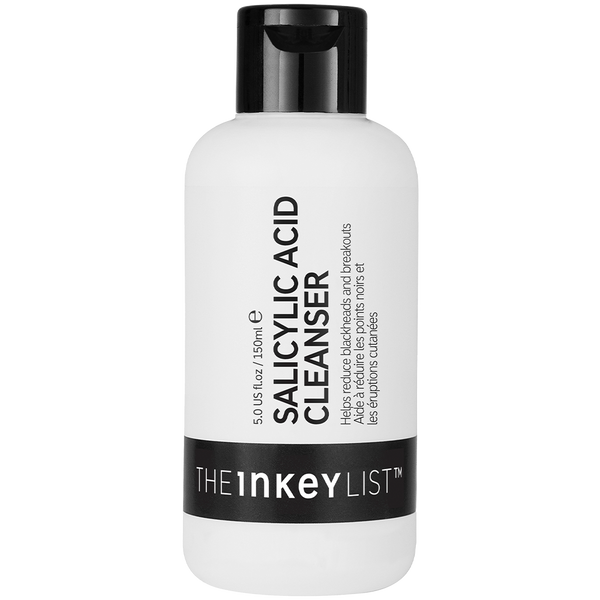
- Salicylic Acid Cleanser - 150ml - £14. A daily cleanser that works inside the pore without stripping the whole face.
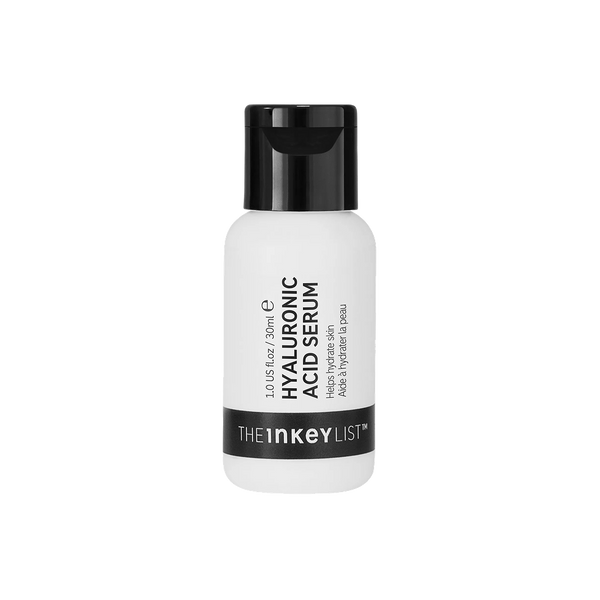
- Hyaluronic Acid Serum - £12. Lightweight water-binding hydration with no oil and no congestion.
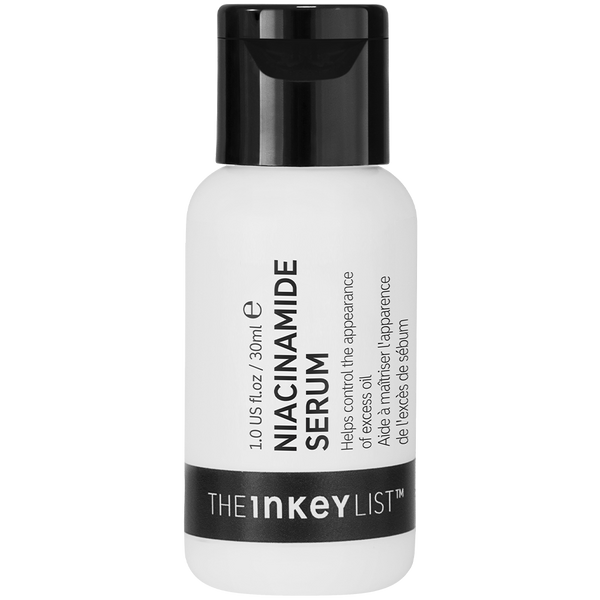
- 10% Niacinamide Serum - £12. Helps manage excess oil and supports barrier function at the same time.
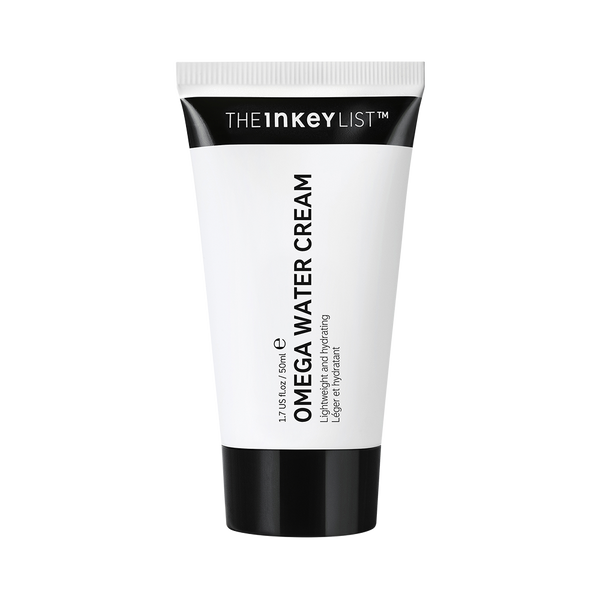
- Omega Water Cream - £14. Oil-free moisture that helps protect against moisture loss.
Those four products are the spine of the routine at the end of this article. Everything else is an optional addition for specific situations.
Before you change a single product, though, the first job is working out which concern you actually have. Dry skin and dehydrated skin look similar in the mirror and behave very differently in practice, and they need different things from you.
Dry skin vs dehydrated skin: which do you actually have?
Most people who describe their skin as dry have never checked whether it is dry or dehydrated. It sounds like a technicality. It is not. It is the single distinction that determines whether the products you buy will work, because one concern is about oil and the other is about water, and the fixes are not interchangeable.
Dry skin is a skin type. It produces less oil than average, and it always has. The tendency is largely genetic and hormonal, it stays broadly consistent over time, and it is something you were born with rather than something that happened to you. Dry skin can shift with age and season, but it does not arrive one month and vanish the next. It is the baseline your face returns to.
Dehydrated skin is a temporary state. It lacks water, not oil. Crucially, any skin type can become dehydrated, including skin that is visibly oily. Dehydration is driven by what is happening around you and to you: cleansers that are too harsh, central heating, air conditioning, cold wind, long-haul flights, a run of late nights, alcohol. It comes and goes. It responds quickly once you address the cause.
You can absolutely have both at once. A person with genuinely dry skin who has been over-cleansing through a cold winter has dry skin that is also dehydrated. And either state can sit alongside breakouts, which is the whole reason this article exists. Dry skin can be blemish-prone. Dehydrated skin can be blemish-prone. Neither is a contradiction.
Signs your skin is dry
- It feels consistently tight, rough or flaky, no matter which products you use.
- There is little to no shine at any point in the day, including late afternoon.
- It feels genuinely uncomfortable rather than just looking dull.
- Makeup clings to dry patches and emphasises texture.
- It improves noticeably with richer, lipid-containing formulas rather than watery ones.
Signs your skin is dehydrated
- It feels tight immediately after cleansing but looks shiny by the afternoon.
- It looks flat, dull or tired rather than uncomfortable.
- You can see fine dehydration lines, particularly on the cheeks and under the eyes, that soften when you hydrate.
- It fluctuates with the season, your travel, your sleep and your alcohol intake.
- Skin feels better within days of a gentler cleanser, not weeks.
The reason this matters commercially, and practically, is that the two concerns need different building blocks. Dehydrated skin primarily needs humectants, the water-binding ingredients that pull moisture into the surface layers and hold it there. Hyaluronic acid is the obvious example. Dry skin needs those same humectants, but it also needs lipids, the oily components that dry skin genuinely produces less of. Ceramides and omega fatty acids sit in that category. Give dry skin a humectant serum alone and you have added water to a surface that cannot hold onto it. Give dehydrated oily skin a heavy lipid cream and you have added something it did not need in the first place.
If you read both checklists and still are not certain, that is a completely normal outcome, especially if your skin has been through a rough few months. The What’s your skin type? guide walks through the distinctions in more detail. Readers who recognise themselves in the first list will find more depth on what dry skin actually is, and anyone who matched the second list should start with what dehydrated skin is instead, because following a routine built for the wrong concern is how people lose six months.
Once you know which one you are dealing with, the next question is the interesting one. Why does either of them sit so comfortably alongside breakouts?
Why dry skin and breakouts happen together
Worth repeating before we go into the detail, because the framing matters. Dryness does not directly cause a breakout. What it does is change the environment your skin is working in, and that environment makes congestion considerably more likely. Think of it as the difference between striking a match and leaving petrol on the floor. One is the cause. The other is the condition that makes the outcome far more probable.
There are four things going on, and they connect to each other in a loop.
Mechanism 1: a weakened barrier lets irritants in and water out
Your skin barrier is the outermost layer, and the easiest way to picture it is as a brick wall. The skin cells are the bricks. Holding them together is a mortar made of lipids: ceramides, fatty acids and cholesterol, in a fairly specific ratio. That mortar has two jobs. It keeps water inside your skin, and it keeps the outside world out.
When skin is dry, there is less lipid available to make good mortar. The wall develops gaps. Water escapes more easily through those gaps, which makes skin drier still, and external irritants pass inward more easily through the same route. Pollution, fragrance, harsh surfactants, cold air.
The practical consequence is that skin becomes more reactive. It stings at products it used to tolerate, it flushes more readily, and it takes longer to settle down afterwards. This helps explain why skin feels sensitive and looks red during a dry spell, and why that redness seems to hang around for days rather than hours. A damaged skin barrier is less a dramatic event than a slow erosion, which is exactly why it is so easy to miss until skin is visibly struggling.
Mechanism 2: dryness can trigger compensatory oil production
Here is the part that surprises people. When the barrier is struggling and water is escaping, oil glands can respond by producing more oil in an attempt to compensate for what is being lost.
This is why so many people describe their skin as confusing. The cheeks feel parched and tight. The forehead, nose and chin are shiny by lunchtime and congested by the end of the week. It reads as “combination skin”, but often it is dryness and a compensatory oil response happening in the same face at the same time.
The reason it concentrates where it does is anatomical. Sebaceous gland density is significantly higher across the forehead, nose and chin than it is on the cheeks, so any increase in oil production shows up there first and most visibly. If you have ever wondered why your T-zone behaves like oily skin while the rest of your face behaves like a desert, that is the explanation. Treating the whole face as oily because of that strip is one of the most common routes into a barrier problem.
Mechanism 3: dead skin cells build up more readily on dry skin
Skin sheds dead cells continuously, and it is supposed to. That shedding process depends partly on water content in the surface layers, because the enzymes involved need a certain level of moisture to work efficiently.
When skin is dry, that process slows down. Dead cells linger on the surface and around the pore opening instead of releasing cleanly. They then combine with oil inside the pore, and that mixture is the starting point for a blocked pore. Add the compensatory oil from Mechanism 2 and you have both ingredients of congestion arriving at once.
This is the direct link between dryness and blackheads, and it explains something readers often find puzzling: why dry skin can look dull, rough and textured even during periods with no active breakouts at all. That is cell buildup without the congestion stage. The relationship between barrier condition, cell turnover and congestion is well recognised in dermatology writing, and Medical News Today’s medically reviewed overview of dry skin and acne covers the same ground from a clinical perspective. If you want to go deeper on the mechanics, our guide to what causes clogged poresunpacks the process step by step.
Mechanism 4: over-stripping with harsh actives makes both problems worse
The fourth mechanism is the one you control, which is either frustrating or encouraging depending on the day.
Most products aimed at congestion are formulated for skin that produces plenty of oil. High-strength actives, foaming cleansers designed to leave skin squeaky, alcohol-heavy toners. Used on a barrier that is already thin, they remove far more than the excess. They take the mortar with them.
That worsens dryness, which feeds straight back into Mechanism 1, which triggers more compensatory oil under Mechanism 2, which meets slower shedding under Mechanism 3, which produces more congestion, which prompts a stronger product. The routine has become the problem.
That loop is the single most useful thing to understand in this entire article. Each mechanism feeds the next, which is precisely why addressing dryness and congestion as two separate projects never fully resolves either one. Hydrate without clearing and the congestion stays. Clear without hydrating and you deepen the dryness that is driving the congestion. The only approach that holds is one that does both at once, consistently, at a strength your barrier can actually tolerate.
Understanding the loop also explains why a handful of extremely common habits keep it spinning, often in people who are doing everything they have been told to do.
The mistakes that make dry skin and breakouts worse
Everything in this section is free. No product required, no purchase involved. In a lot of cases, removing what is working against your skin produces a bigger visible change than adding anything new, and it produces it faster. Each of these is genuinely common, and none of them are your fault. They are all consequences of advice written for a different skin type.
Over-cleansing. Twice a day is enough for almost everyone, and once a day is sometimes better during a dry spell. Washing more frequently than that, or reaching for a high-foam cleanser that leaves skin feeling squeaky, removes more from a thin barrier than it should. Squeaky is not clean, it is stripped. Aim for around 60 seconds of gentle massage and let the formula do the work instead of scrubbing at your face with a flannel. If skin feels tight and uncomfortable five minutes after cleansing, the cleanser is too harsh for you.
Stacking too many acids. Layering several exfoliating acids, or using a strong one every single day, is the fastest route to a compromised barrier that exists. It is also the most tempting mistake, because the logic feels sound: if one acid helps a bit, surely two help twice as much. They do not. More actives is not more results, it is usually fewer results and more redness. Introduce one new active at a time and give it a fortnight before you consider adding anything else. And if you started something new recently and your skin got briefly worse before it got better, read our complete guide to what skin purging is before you bin the product, because abandoning something at week two is how people miss the results at week six.
Skipping moisturiser because you are breaking out. This is the most counterproductive habit on the list, and it is everywhere. The thinking is that moisturiser will make things greasier and therefore worse. What actually happens is that withholding moisture worsens dryness, which feeds the compensatory oil cycle described in Mechanism 2, which produces more of exactly what you were trying to avoid. The answer when you are breaking out is not to go without. It is to choose a lighter, oil-free moisturiser that hydrates without sitting heavily on the skin.
Picking and squeezing. Everyone knows. Everyone does it anyway, usually at 11pm under a bathroom light that flatters nobody. It is worth being specific about the cost rather than just issuing a warning: breaking the skin surface extends how long a blemish stays visible, spreads the contents sideways under the skin, and meaningfully increases the chance of a mark that outlasts the spot by months. The practical alternative is physical. Put a Hydrocolloid Invisible Pimple Patch over the top. It covers the spot, absorbs what it can and, most usefully, puts a physical barrier between the blemish and your fingers.
Using hot water. Minor compared to the others, but worth correcting because it costs nothing. Very hot water strips lipids from the surface and leaves skin flushed and tight. Lukewarm is enough to cleanse effectively.
A note on expectations. Switching to a gentler routine can feel underwhelming for the first week or two. There is no immediate dramatic payoff, and if you are used to the tight squeaky feeling of a stripping cleanser, gentler products can initially feel as though they are not doing anything. Stay with it. Barrier recovery is considerably slower than barrier damage, and skin that has been over-processed for months does not settle in a weekend. If your skin has become genuinely reactive through over-use of actives, our guidance on sensitive skin is a sensible place to start while things calm down.
With the obstacles cleared, the question becomes which ingredients actually do both jobs at once, rather than solving one problem while creating the other.
Ingredients that work for dry, blemish-prone skin
The ingredients below have one thing in common. Each of them addresses congestion or hydration without creating the opposite problem, which is the specific requirement of skin that is both dry and breaking out. For each one, here is what it is, why it suits this particular combination, and which product delivers it.
Salicylic Acid
Salicylic acid is a beta hydroxy acid, or BHA, and its defining characteristic is that it is oil-soluble. That single property is why it matters here. Water-soluble acids work across the surface of the skin. An oil-soluble acid can pass through the oil in the pore and work inside it, loosening the mixture of sebum and dead skin cells that forms a blockage in the first place.
Why it suits dry skin specifically: it targets the blockage rather than stripping the entire face. You are addressing the pore, not sandpapering your cheeks. This is also why formula and frequency matter far more than raw percentage. A well-buffered salicylic acid in a cleanser, used daily, is usually a better fit for dry skin than a high-strength product used aggressively twice a week.
The Salicylic Acid Cleanser is the non-stripping daily option and the one most dry, congested skin should start with, because it rinses off rather than staying on the skin. For more targeted work, the Beta Hydroxy Acid (BHA) Serum can be used one to two times a week on areas that stay congested.
Niacinamide
Niacinamide is vitamin B3, and it is unusually versatile. It helps manage excess oil, helps reduce the appearance of blemishes and redness, helps refine the look of pores, and supports barrier function while it does all of that.
That last point is the reason it earns a permanent place in this routine. Most ingredients marketed for congestion work partly by drying skin out, which is a reasonable trade for genuinely oily skin and a bad trade for dry skin. Niacinamide is the rare exception that helps strengthen the skin barrier while it works on oil and the appearance of blemishes. For skin that is dry and congested at once, that combination is close to ideal.
The 10% Niacinamide Serum delivers it at a meaningful concentration. If you want the detail on how it performs against congestion specifically, we have written it up in full in Does Niacinamide Help With Blemishes?
Hyaluronic Acid
Hyaluronic acid is a humectant, which means it draws water into the surface layers of skin and holds it there. It adds hydration with no oil whatsoever and does not contribute to congestion, which makes it one of the safest ways to address dryness on skin that breaks out.
There is a technique point that changes the result considerably. Apply it to damp skin. A humectant needs available moisture to bind to, so applying it to a face that is already bone dry gives it far less to work with. Cleanse, pat lightly so skin is still damp rather than wet, then apply. If your skin has already dried, a spritz of Hydro-Surge Dewy Face Mistbeforehand gives the serum something to hold onto.
The Hyaluronic Acid Serum is the straightforward way in. For more on why it suits congested skin, see Is Hyaluronic Acid Good for Blemish-Prone Skin?
Ceramides and Omega Fatty Acids
Back to the brick wall. Ceramides are a major component of the mortar holding your skin cells together, and dry skin tends to have less of them available than other skin types. Omega fatty acids 3, 6 and 9 are building blocks of the same lipid layer.
Topping these up topically helps strengthen the skin barrier and helps protect against moisture loss. That is the mechanism in full: you are supplying the same categories of lipid your skin uses to hold its own structure together, which supports barrier function and helps skin hold onto its water. For dry skin that breaks out, this is the step that stops the whole cycle restarting, because a barrier with better resilience is less prone to the compensatory oil response and the slowed shedding described earlier.
The Omega Water Cream is oil-free and light, and it is the best fit for most dry and congested skin. It delivers the lipid support without the weight that tends to worry people who are breaking out. For skin that is very dry, or showing early lines alongside dryness, the Bio-Active Ceramide Moisturiser is the richer option.
Ectoin
Ectoin is a hydrating active that helps strengthen the skin barrier while it hydrates, and helps skin cope with the daily environmental stress it is exposed to. It is particularly useful in the specific scenario where skin is dry, reactive and easily irritated at the same time, which is a common state for anyone who has been over-using actives and is trying to get back to baseline.
The Ectoin Hydro-Barrier Serum is the one to reach for on the evenings when your skin feels tight, touchy and generally unimpressed with everything you own.
Targeted extras for active breakouts
Three options for when something specific is happening, rather than as daily staples.
- The 360° Skin Clearing Serum is designed for skin dealing with blemishes at several different stages at once, which is the usual reality rather than one tidy spot at a time.
- The Succinic Acid Treatment is a targeted option for individual spots, applied precisely rather than across the face.
- Hydrocolloid Invisible Pimple Patches work on surface spots and have the useful side effect of leaving all the surrounding dry skin completely untouched, which is more than can be said for anything you spread across a whole cheek.
What to be cautious with
- High-strength denatured alcohol, common in older toners and some fast-drying formulas. It evaporates quickly and takes moisture with it.
- Heavy pore-blocking oils used as a fix for dryness. Dry skin needs lipids, but not every oil suits congested skin.
- Gritty physical scrubs. They create micro-damage on a barrier that is already thin, and they do nothing inside the pore, which is where the actual blockage sits.
- Several strong acids layered at once. Covered above, worth repeating, because it is the mistake with the highest cost.
Clearing congestion, though, is only half the job. There is a stage that almost nobody writes about, which is what your skin looks like once the breakout has actually settled.
Bringing back glow after a breakout
Here is the situation nobody warns you about. The breakout calms down. The congestion clears. And your skin still does not look right. It reads flat, uneven in tone, a bit tired, with marks where the spots used to be. The problem has technically resolved and the radiance has not come back with it.
This happens because clearing congestion and restoring radiance are two different jobs. Salicylic acid deals with the blockage. Niacinamide helps with oil and the appearance of blemishes. Neither is specifically designed to bring back the light-reflecting quality that makes skin look healthy rather than merely clear.
That is where an optional glow step earns its place. The Exosome Glow Serum sits after your hydrating serum and before moisturiser. It is worth being precise about what it is and is not: it is an optional addition, it does not replace salicylic acid or niacinamide, and it is not a blemish product. It is there for the stage after the breakout, not during it. If exosomes are new to you, our explainer on what exosomes are covers the background.
On the results, the clinical detail is as follows:
100% saw more glowing skin, clinically proven*
Clinic worthy rejuvenated skin in 14 days*
6-in-1 skin rejuvenation: clinically proven to visibly improve radiance, hydration, tone, firmness, elasticity, and texture*
Proven to deliver up to 12-hours of hydration**
It also helps support natural collagen production.
What to expect from post-blemish marks
The marks left behind once a spot has gone are their own separate concern, and they deserve a realistic answer rather than an optimistic one.
They fade gradually. Not overnight, not in a fortnight, and the timeline depends on your skin tone and how deep the original blemish was. Picking at the spot in the first place extends the timeline considerably, which is the practical reason to leave things alone rather than a moral one. Our guidance on post-blemish marks goes into the different types and what influences how quickly they settle.
The single most useful habit for marks is daily SPF. Sun exposure makes existing marks darker and makes them linger far longer than they otherwise would, and no serum will outpace an unprotected mark in daylight. If you do one thing for the marks left behind by a breakout, wear sunscreen every morning. It is dull advice and it is the advice that works.
4-week clinical study of 26 people. *Clinical study of 31 people.
Everything is now on the table. Here is how it assembles into something you can actually follow.
Your AM and PM routine for dry, blemish-prone skin
The governing principle is simple. One routine that hydrates and clears at the same time, used consistently, will always outperform alternating between a “hydration routine” when skin feels dry and a “breakout routine” when it does not. Alternating means your skin never gets a stable environment long enough to settle. Consistency is doing most of the work here, more than any single product on the list.
Morning
- Cleanse once. Salicylic Acid Cleanser to address congestion before the day starts. If skin is feeling especially dry or reactive that morning, swap to the Oat Cleansing Balm instead. Skipping the acid for a day will not undo your progress.
- Hydrate on damp skin. Hyaluronic Acid Serum, applied while your face is still damp from cleansing. If you got distracted and skin has already dried, mist first with Hydro-Surge Dewy Face Mist so the humectant has moisture to bind to.
- Optional glow step. Exosome Glow Serum, if radiance is part of what you are after.
- Target. 10% Niacinamide Serum to help manage oil through the day while supporting barrier function.
- Moisturise. Omega Water Cream for most people. Bio-Active Ceramide Moisturiser if your skin is very dry.
- SPF, every morning. Dewy Sunscreen SPF 30. Not optional, particularly if you have marks you would like to fade. More on why in our guide to SPF.
Evening
- First cleanse. Oat Cleansing Balm to remove makeup, SPF and everything the day deposited on your face.
- Second cleanse. Salicylic Acid Cleanser, now working on genuinely clean skin rather than through a layer of sunscreen. If two cleanses sounds excessive, the complete guide to double cleansing explains why the order matters.
- Hydrate on damp skin. Hyaluronic Acid Serum. Swap to the Ectoin Hydro-Barrier Serum on evenings when skin feels tight and reactive.
- Optional glow step. Exosome Glow Serum.
- Target as needed. 10% Niacinamide Serum as standard, or the 360° Skin Clearing Serum when several blemishes are active at once. For individual spots, apply a Hydrocolloid Invisible Pimple Patch or the Succinic Acid Treatment directly.
- Moisturise. Omega Water Cream or Bio-Active Ceramide Moisturiser, depending on how dry skin feels that night.
Weekly
Use the Beta Hydroxy Acid (BHA) Serum one to two times a week, in place of your evening niacinamide step rather than in addition to it. Never on the same night as any other exfoliating acid. If you are unsure whether your skin can handle it yet, wait another fortnight. There is no prize for getting there first.
If you are starting from scratch
Four products. That is the entire starting routine.
Use those four, morning and night, for four weeks before you judge anything. Then add one new product every two weeks if you want to build further, so that if something does not agree with you, you know exactly what it was. The Bundle Builder is there if you would rather assemble it in one go.
A routine will not be the whole answer for everyone, though, and it is worth being honest about where the line sits.
When to see a professional
Skincare supports skin. It does not replace medical care, and there are situations where continuing to experiment with serums is simply the wrong use of your time and money.
Speak to a GP, a pharmacist or a dermatologist if any of the following apply:
- Your breakouts are painful, deep or cystic, the kind that sit under the skin rather than on it.
- They are leaving marks or scarring behind.
- They have not improved after around three months of a consistent, gentle routine.
- Your dryness is cracking, weeping or intensely itchy.
- Your skin is affecting your confidence day to day. That reason is enough on its own, and it does not need to be accompanied by anything on the list above.
The NHS guidance on acne sets out what is available through primary care in the UK, and the British Association of Dermatologists patient information is a reliable read before an appointment.
One more thing worth flagging. Persistent dryness accompanied by itching, scaling or well-defined patches can indicate a skin condition such as eczema or dermatitis rather than simple dryness. Those need a proper diagnosis and often a prescription, not a new serum. If that sounds like your skin, book the appointment rather than reformulating your routine for a fourth time.
The takeaway: conditions can be changed
Dry skin does not directly cause breakouts. It creates the conditions that make them more likely, and that distinction is genuinely good news, because conditions are something you can change. Causes are fixed. Environments are adjustable.
The strategy fits in a single line. Support the barrier, hydrate without heaviness, clear congestion gently, and stay consistent for long enough to see it work.
On timings, be realistic with yourself. Hydration improves within days, and you will probably notice skin feeling more comfortable in the first week. Congestion takes around four to six weeks of consistent use before the change is obvious. The first fortnight of any new active is frequently unremarkable, and that is not a sign it is failing.
None of this requires a ten-step routine or a shelf that needs its own furniture. Four well-chosen products, used morning and night, genuinely do the job. The people who get results are not the people with the most products. They are the people who used the right four for long enough.
Find your starting point
If you would like a personalised read on breakout-prone skin, the Breakout Analyser Pro is the most thorough place to start. If you would rather something quicker, the Skincare Quiz takes about two minutes and will point you in the right direction.
Putting the whole routine together in one go is easiest through the Bundle Builder. And if you are still weighing up which route makes sense for your skin, our askINKEY advisors are on live chat and are happy to talk it through with no obligation to buy anything at all.
Frequently Asked Questions
Got a question?
Our askINKEY team are a friendly bunch of skincare experts with deep product knowledge and zero judgement. Whether you're an ingredient obsessive or just starting out, we'll make it make sense. No question too big. No question too small. We Give A Care, Every Day.


