


Black Friday: up to 40% off everything
Shop now ›
Ectoin for Rosacea-Prone Skin: The Barrier-First Approach That Actually Works
Rosacea-prone skin needs more than "gentle" — it needs a barrier-first routine, and ectoin is the ingredient the science says can actually help.
Author
askINKEY skincare advisor
Published
29 May, 2026
Time to read
12 minutes
Rosacea-prone skin is not simply sensitive skin. It is a distinct, chronically inflamed skin type with a measurably compromised barrier, an overactive vascular response, and a frustrating tendency to react to ingredients that cause no issue for anyone else. Managing it well requires a considered, ingredient-led approach — one that prioritises barrier repair and inflammation control above everything else. That is exactly where ectoin comes in.
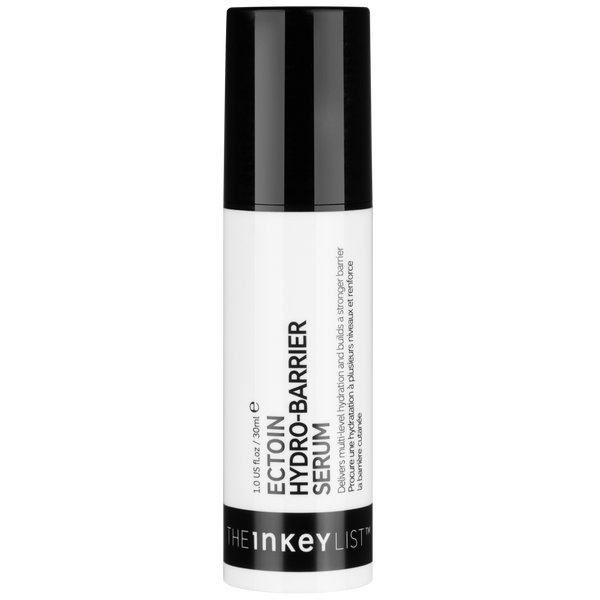
Ectoin is a naturally derived molecule with clinically demonstrated barrier-strengthening and anti-inflammatory properties. It has no known rosacea triggers, requires no introduction period, and works from the very first application. Our Ectoin Hydro-Barrier Serum (£16) is clinically proven to hydrate and strengthen the barrier in 15 minutes — and is specifically suitable for sensitive and rosacea-prone skin.
In This Guide
- What rosacea-prone skin actually is and how it differs from other sensitive skin types
- Why the skin barrier is central to every rosacea flare-up and why fixing it comes first
- Why ectoin is particularly well-suited to rosacea-prone skin — the science, clearly explained
- Which ingredients actively help rosacea-prone skin, and which to avoid entirely
- A complete AM and PM skincare routine built around ectoin, step by step
- Practical dos and don'ts that make a real difference to how rosacea-prone skin behaves day to day
What Is Rosacea-Prone Skin? (And Why It Reacts Differently)
Rosacea-prone skin is one of the most misunderstood skin types in skincare. It is frequently lumped in with general sensitive skin or dismissed as skin that simply needs gentler products. In reality, it is something more specific — and more complex.
Rosacea is a chronic inflammatory skin condition. It does not come and go the way a breakout does. The underlying inflammation is persistent, even when the skin looks relatively calm on the surface. What changes is not the inflammation itself, but the degree to which it is expressed — and that expression is heavily influenced by environmental triggers, product choices, and the integrity of the skin barrier.
The Four Subtypes of Rosacea
- Erythematotelangiectatic rosacea (ETR) — persistent redness, visible broken capillaries, flushing, heightened sensitivity. The most common presentation.
- Papulopustular rosacea — redness alongside papules and pustules that resemble breakouts but are inflammatory in origin rather than clogged pores.
- Phymatous rosacea — thickening of the skin, most commonly around the nose.
- Ocular rosacea — affects the eyes and eyelids. Requires medical attention.
Research published in the Journal of Investigative Dermatology confirms that rosacea-prone skin exhibits significantly diminished barrier function, with elevated transepidermal water loss (TEWL) and measurably decreased hydration compared to non-rosacea skin, alongside chronic low-level inflammation and a heightened vascular response.
Common rosacea triggers include temperature extremes, UV exposure, alcohol and spicy food, stress and hormonal fluctuations, and certain skincare ingredients — particularly fragrance, high-strength exfoliating acids, and alcohol-based products.
Note: This blog covers topical skincare ingredient education, not medical treatment. Anyone with a formal rosacea diagnosis should consult a dermatologist for clinical care. For products formulated with redness-prone skin in mind, see our redness range.
The Skin Barrier and Rosacea: Why They Are Directly Connected
The skin barrier — the stratum corneum — keeps the good in and the bad out. In rosacea-prone skin, elevated TEWL and increased permeability mean irritants penetrate more easily, triggering inflammation that damages the barrier further. This is the rosacea-barrier cycle: a compromised barrier lets irritants in, irritants trigger inflammation, inflammation damages the barrier further, and the cycle repeats.
Breaking this cycle means addressing the barrier first. High-strength exfoliating acids, denatured alcohol, and fragrance all actively strip the barrier and make things worse. The fix is a barrier-first approach: ingredients that rebuild the lipid matrix, reduce TEWL, and support repair — before any treatment actives are introduced.
For more, see our guide on what TEWL is and how to prevent it, and explore our damaged skin barrier range if barrier repair is your main concern alongside rosacea.
Why Ectoin Is Particularly Suited to Rosacea-Prone Skin
Ectoin addresses barrier compromise, chronic inflammation, and hydration deficit simultaneously — without the risk factors that make rosacea-prone skin so hard to formulate for.
Discovered in extremophile bacteria that survive in salt lakes and volcanic hot springs, ectoin protects cellular membranes against heat, UV, and osmotic stress. Applied topically, it brings that same stabilising chemistry to human skin. See our full ectoin ingredient page for the science, or our comparison guide on ectoin vs hyaluronic acid to understand how the two work differently.
The Anti-Inflammatory Case
Ectoin inhibits pro-inflammatory cytokines (IL-1β, IL-6, TNF-α) and downregulates the NF-κB pathway — the specific inflammatory pathways implicated in rosacea flare-ups, not generic calming action.
The Barrier-Repair Case
Ectoin forms stable hydration "shells" around skin cells, stabilising the lipid bilayer of the stratum corneum and measurably reducing TEWL — exactly the mechanism rosacea-prone skin needs.
The Clinical Evidence
A randomised, double-blind, vehicle-controlled trial of a 2% ectoin formulation across 104 participants over four weeks showed significant improvements in hydration and elasticity, with no side effects reported. A 2022 systematic review of ectoin-containing formulations across inflammatory skin diseases confirmed excellent tolerability and safety, including in sensitive populations.
The Safety Case
Ectoin is fragrance-free, alcohol-free, and does not cause photosensitivity. No purging risk, no introduction period needed. Our Ectoin Hydro-Barrier Serum (£16) contains 2% ectoin, 2.5% multi-molecular hyaluronic acid, and a 1% Barrier Blend of three ceramides.
"Ectoin is an effective natural substance with an excellent tolerability and safety profile, representing a beneficial alternative as basic therapy… for patients with inflammatory skin diseases."
— Kauth & Trusova, Dermatology and Therapy, 2022
The Best Ingredients for Rosacea-Prone Skin (And What to Avoid)
Ingredients to Look For
- Ectoin (2%) — anti-inflammatory, barrier-strengthening, hydrating, no known rosacea triggers. See our ectoin ingredient page.
- Niacinamide (10%) (UK price to confirm before publishing) — visibly reduces redness, regulates sebum, strengthens the barrier over time. Particularly useful for rosacea-prone skin that also experiences excess oil. See our niacinamide ingredient page. Our Niacinamide Serum delivers 10% niacinamide in a lightweight, fragrance-free formula.
- Azelaic Acid (10%) (UK price to confirm before publishing) — one of the most well-established ingredients for redness-prone skin, with mild exfoliating properties and no barrier-stripping risk at typical concentrations. See our azelaic acid ingredient page. Our Redness Relief Solution is a 10% azelaic acid serum explicitly formulated and tested for sensitive and rosacea-prone skin.
- Ceramides — the lipid components that make up the barrier's structural matrix, and consistently depleted in rosacea-prone skin. Present in the Ectoin Serum's Barrier Blend and the star ingredient in our Bio-Active Ceramide Moisturiser (£20).
- Multi-Molecular Hyaluronic Acid — a humectant with no actives, exfoliants, or known irritants, ideal as a hydration layer. See our hyaluronic acid ingredient page. Our Hyaluronic Acid Serum (£12) can be layered under the Ectoin Serum for extra hydration.
- Colloidal Oatmeal — dermatologically proven to reduce visible redness and calm sensitised skin. Our Oat Cleansing Balm (£15) uses colloidal oatmeal and oat kernel oil to cleanse and soothe simultaneously.
- Glycerin — a gentle, universally tolerated humectant with no irritation potential across any rosacea subtype.
For a curated selection, browse our redness collection.
Ingredients to Avoid
- Fragrance (synthetic "parfum"/"fragrance" and natural essential oils like lavender, citrus, peppermint, rose) — the most important item on this list
- High-strength exfoliating acids — glycolic acid, high-strength lactic or salicylic acid can strip barrier lipids and trigger flushing
- Denatured alcohol and ethanol — highly drying and can trigger visible flushing
- Menthol, camphor, and eucalyptus — found in "cooling" products; known rosacea triggers
- High-strength retinoids — common source of irritation and barrier disruption; if used, start low, infrequent, and always pair with a barrier serum first
A Rosacea Skincare Routine Built Around Ectoin: Step by Step
For a broader framework, see our complete skincare guide.
Morning Routine
- Cleanse — Oat Cleansing Balm (£15) with lukewarm water only.
- Barrier Serum — Ectoin Hydro-Barrier Serum (£16) to slightly damp skin, 2–3 drops, pressed and patted — never rubbed.
- Optional Targeted Serum — Redness Relief Solution or Niacinamide Serum after the ectoin step. Skip entirely if skin is flaring.
- Moisturise — Bio-Active Ceramide Moisturiser (£20). Add Hyaluronic Acid Serum (£12) beforehand if extra hydration is needed.
- SPF — Dewy Sunscreen SPF 30 (£15), a formula suitable for sensitive and rosacea-prone skin.
Evening Routine
- First Cleanse — Oat Cleansing Balm to remove SPF and makeup.
- Second Cleanse — brief, gentle water-based cleanse.
- Barrier Serum — Ectoin Hydro-Barrier Serum again, to damp skin.
- Optional Targeted Treatment — Niacinamide first (lighter), then azelaic acid, if skin is stable.
- Moisturise — Bio-Active Ceramide Moisturiser to support overnight repair.
Key Routine Rules
- Patch test every new product for 24–48 hours before facial use
- Apply ectoin serum to damp, not dry, skin
- Introduce one new product at a time, one week apart
- Never layer multiple actives before the barrier is stable
- Lukewarm water only — never hot
- Pat dry, never rub
- When flaring, pare back to cleanser, ectoin serum, and moisturiser only
Rosacea Skincare Dos and Don'ts
Do:
- Patch test everything
- Apply with gentle patting motions
- Use lukewarm water
- Simplify your routine when flaring
- Introduce new products one at a time
- Apply ectoin to damp skin
- Wear SPF every single morning, year-round
- Track your personal triggers
- Store skincare away from heat and sunlight
Don't:
- Use fragranced products
- Over-exfoliate
- Stack multiple actives before the barrier is stable
- Steam your face
- Rub your face with a towel
- Expect rapid results — rosacea is chronic and barrier repair is cumulative
- Assume all "sensitive skin" products are safe without checking the ingredient list
- Apply very cold products directly to an active flare
The Barrier-First Approach: Why It Changes Everything
Rosacea-prone skin needs a specific response: a compromised barrier, elevated inflammation, and a disproportionate vascular response. The barrier-first approach rebuilds the skin's own defences first, so that targeted ingredients like azelaic acid and niacinamide can actually work once applied to skin that can buffer them.
A gentle cleanser, an ectoin barrier serum, a targeted serum when stable, a ceramide moisturiser, and daily SPF. That's it. Consistency over weeks and months — not perfection in any single routine — is what moves the needle.
Ready to Start? Here Is What to Do Next
Frequently Asked Questions
Got a question?
Our askINKEY team are a friendly bunch of skincare experts with deep product knowledge and zero judgement. Whether you're an ingredient obsessive or just starting out, we'll make it make sense. No question too big. No question too small. We Give A Care, Every Day.


