



The Best Cleansers for Sensitive Skin: How to Cleanse the Right Way
Your skin should feel comfortable after cleansing, not tight — here's how to tell if your cleanser is the problem.
Author
askINKEY skincare advisor
Published
30 April, 2026
Time to read
14 minutes
Cleansing is the step where sensitive skin most often goes wrong. It is the only part of your routine designed to remove things from your skin rather than add to it, which makes it the step with the greatest capacity to disrupt the barrier you are trying to protect. Get it wrong and every product that follows has to work harder. Get it right and the rest of your routine tends to fall into place.
This guide covers how to choose the best cleanser for sensitive skin, which formulas and habits to avoid, and how to cleanse so that a good product actually has the chance to work. The core principle is simple and worth holding onto: your skin should feel comfortable after cleansing, not tight. Tightness is information. It is not a sign that your skin is clean, it is a sign that something has been taken away that your skin needed.
We will look at three INKEY cleansers in detail later on, each suited to a different version of sensitive skin: the Oat Cleansing Balm, the Milk Cleanser and the Glycerin Gentle Purifying Cleanser. Before that, you need the reasoning that makes those recommendations make sense rather than sound like a list.
If you are not yet sure of your skin type, start with our guide to how to choose the right cleanser for your skin type, or work it out first with What’s Your Skin Type?. Choosing well starts with understanding what “sensitive” actually means, because the word covers two quite different situations.
What Sensitive Skin Actually Means
The word “sensitive” gets used for two different things, and the distinction matters because one of them is permanent and the other is fixable.
Sensitive skin is a skin type. It is largely something you are born with, written into how your skin is built and how readily it responds to the world around it. It reacts easily, it flushes easily, and it often runs alongside conditions such as eczema or rosacea. If your skin has behaved this way for as long as you can remember, you are most likely working with genuine sensitivity, and the goal is to manage it well rather than to cure it.
Sensitised skin is a state, not a type. It is something you develop, usually because of something you are doing. The most common causes are over-cleansing, over-exfoliating, and layering too many active ingredients at once. Here is the genuinely useful part: sensitised skin is reversible. Change the inputs and it settles.
The clearest way to tell them apart:
- Sensitive skin has been reactive for years, often since childhood, and tends to react to a wide range of things including heat, cold, stress and fabrics as well as products.
- Sensitised skin is a change you can date. It started after a new product, a new routine, a course of strong actives or a particularly enthusiastic period of exfoliation.
- Sensitive skin often comes with a family history or a diagnosed condition alongside it.
- Sensitised skin improves noticeably within a few weeks once you simplify what you are using.
- Both respond to the same immediate approach: reduce irritation, support the barrier, and stop asking your skin to cope with more than it can.
Your skin barrier, explained simply
Most of what happens with reactive skin comes back to the barrier, so it is worth understanding properly.
The outermost layer of your skin works like a brick wall. Your skin cells are the bricks. A mix of lipids, including ceramides, cholesterol and fatty acids, is the mortar holding them together. When that mortar is intact, the wall does two jobs at once: it keeps water in, and it keeps irritants out. When it is depleted, you are dealing with a damaged skin barrier, and almost every symptom of reactive skin traces back to it.
When the mortar is depleted, both jobs suffer. Water escapes more easily and irritants get in more easily. Dermatologists call the first part transepidermal water loss, which simply means water evaporating out through the skin. That is the mechanism behind the whole experience of a compromised barrier. It is why your skin feels dry no matter how much moisturiser you apply, and why products that never used to sting suddenly do. The stinging is not usually the product becoming harsher. It is your skin becoming more permeable to it.
The clinical literature on barrier function describes this relationship in detail, and it is consistent across conditions. Where the barrier is impaired, water loss rises and reactivity rises with it. This is also why everyday soaps and detergents are such frequent triggers. The National Eczema Society highlights soaps and detergents among the most common irritants precisely because they strip the skin’s own lipids, which is another way of saying they remove the mortar.
Here is the encouraging conclusion. A great many people who describe themselves as having sensitive skin are actually dealing with a temporarily compromised barrier. That is good news, because a barrier responds to what you do to it. If your reactivity arrived recently and can be traced to a change in your routine, you are very likely looking at a cleanser for reactive skin as the fix rather than a lifelong management plan.
Which raises the practical question you probably came here with. How do you know whether your cleanser is the thing causing the problem?
Signs Your Cleanser Is the Problem
Your cleanser is the most-used product in your routine and the least scrutinised. Most people change their serum before they change their face wash, which is backwards. Here is a quick self-check.
- Tightness after washing. This is the big one, and the “squeaky clean” myth is worth dismantling directly. That tight, taut feeling is not cleanliness. It is your barrier telling you it has lost oils it needed to keep. Skin that has been cleansed well feels comfortable, soft and unremarkable. It does not announce itself.
- Stinging or burning during or straight after cleansing. Pay particular attention around the nose and eyes, where skin is thinner and reacts first. A cleanser should be a neutral experience, not one you brace for.
- Redness that lingers. A brief flush from warm water and massage is normal. Redness still visible ten or fifteen minutes after you rinse is not. If your skin stays red well after cleansing, the formula is doing more than it should.
- Flaking or rough patches within days of switching products. New texture that appears shortly after a product change is one of the clearest signals you will get. Your skin is telling you the timeline.
- Rising reactivity across your whole routine. If serums and moisturisers that used to sit comfortably have started to sting, the instinct is to blame the stinging product. Usually the culprit is the cleanse that came before it, which left the barrier permeable enough for everything else to register.
- Oiliness that is getting worse. This one is counterintuitive. Stripping skin of its oils can prompt it to compensate by producing more, which is why a harsh cleanser can make skin oilier and more sensitive at the same time. If you have been reaching for stronger washes to control shine and the shine keeps returning, the cleanser may be driving the cycle rather than breaking it.
Give any new cleanser a fair trial, because skin needs time to adjust and one uncomfortable morning is not a verdict. But if you are consistently getting two or more of these signs, the cleanser is the variable to change first. It is the highest-contact, highest-impact product you use, and it is also the cheapest and fastest thing to swap.
Before you introduce anything new, it is worth understanding why you should patch test. It takes a couple of days and it removes almost all of the guesswork from a switch.
Once you have identified the cleanse as the problem, the next question is what a genuinely gentle formula looks like on an ingredients list.
What to Look For in a Cleanser for Sensitive Skin
The aim of this section is not to give you a shopping list. It is to make you someone who can pick up any cleanser, read the label, and form a reasonable judgement about whether it will suit you.
Formula characteristics worth looking for
- Fragrance-free. Added fragrance is among the most common causes of irritation in skincare, and it delivers no benefit to your skin whatsoever. It exists purely for the experience of using the product. There is also a labelling distinction worth knowing: a fragrance-free cleanser contains no added fragrance, whereas “unscented” can still contain masking fragrance, added specifically to neutralise the smell of other ingredients. Unscented describes how a product smells. Fragrance-free describes what is in it. For reactive skin, the second is the one that matters.
- Sulphate-free and SLS-free. Sulphates such as sodium lauryl sulphate are highly effective cleansing agents that produce a satisfying volume of foam. They are also efficient at removing the skin’s own lipids along with everything else. This is not marketing positioning, it is well documented: research into skin barrier dysfunctionshows that harsh surfactants deplete barrier lipids, raise water loss through the skin and slow the rate at which the barrier recovers afterwards. SLS is used so reliably as an irritant in dermatological testing that it has become something of a standard. NHS guidance on emollients reflects the same concern, noting that products containing SLS can irritate skin, particularly for those already prone to dryness or eczema. The good news is that gentler alternatives exist and work well. Coco-glucoside and cocamidopropyl betaine are mild surfactants that cleanse effectively without the same stripping effect, and they are exactly what our Glycerin Gentle Purifying Cleanser is built on. A sulphate-free cleanser is not a compromise on cleanliness, it is a different route to the same result.
- Non-foaming or low-foaming. Foam is created by surfactants, and the amount of it tells you about the formulation, not about the outcome.
Foam is a formulation choice, not a measure of clean.
A balm with no lather at all will remove waterproof makeup more thoroughly than a vigorously foaming wash. If you have spent years associating lather with efficacy, this is the single most useful assumption to let go of. A non-foaming cleanser can be the most effective product in your routine.
- A pH that respects your skin. Healthy skin sits slightly acidic, which supports what is often called the acid mantle: the thin protective film that helps keep the barrier functioning and unwelcome bacteria in check. Traditional soaps are strongly alkaline and disrupt it. A cleanser formulated within a compatible range works with your skin’s natural chemistry instead. Our Milk Cleanser sits at pH 5 to 6, comfortably within your skin’s own range.
- Short, purposeful ingredient lists. Every ingredient is a variable. Fewer variables means that if something does react, you have a far better chance of identifying what. This is a principle we hold to across the range: you do not need more skincare, you need clarity you can trust.
- Hypoallergenic and non-comedogenic labelling. Both are useful signals, and both deserve honest framing. A hypoallergenic cleanser has been formulated to minimise the likelihood of an allergic response, and non-comedogenic means it is formulated not to clog pores. Neither term is a guarantee for every individual, because skin is personal. Treat them as evidence that a formula was designed with reactivity in mind, then patch test anyway.
Hero ingredients worth having
- Oat kernel oil. Oat has a long history in the care of irritated skin, and oat kernel oil earns its place by being rich in ceramides and omega 3 and 6 fatty acids. Those are the same lipid families your barrier uses as mortar, which is why an oat cleanser can support the barrier at the same time as it cleanses. It is one of very few ways to make the removal step contribute something.
- Glycerin. A humectant, which means it draws water into the skin and holds it there. Glycerin is one of the most reliable and least controversial hydrators available, well tolerated across almost every skin type, and quietly effective in a way that flashier ingredients rarely are.
- Ceramides. The mortar in the brick wall. Skin that is dry, reactive or barrier-compromised is frequently short of them, and replacing them supports barrier strength directly rather than masking the symptoms of a weak one.
- Centella. Long valued for soothing, Centella helps calm the look of redness whilst supporting the barrier. It is a particularly good match for skin that is reactive and congested at once, because it addresses discomfort without adding anything stripping.
- Hyaluronic acid. Delivers immediate hydration and helps skin feel plump and comfortable rather than tight. In a cleanser it offsets the drying tendency of the step itself. In the serum that follows, it does the heavier lifting.
Knowing what belongs in a gentle cleanser is half the picture. The other half is what routinely causes trouble.
What to Avoid When You Have Sensitive Skin
Product choice is only part of the equation. Plenty of people with a genuinely good cleanser still have reactive skin, because how you cleanse can undo what you cleanse with.
- Harsh sulphates and SLS. Covered above, but worth restating as a habit rather than an ingredient: if a wash leaves your skin feeling stripped, no amount of moisturiser afterwards fully compensates.
- Added fragrance, including in products marketed as natural. Plant extracts and essential oils are still fragrance, and some are among the more reactive ingredients in cosmetics. Citrus oils, lavender and mint smell wonderful and can be difficult for sensitive skin. Natural is a description of origin, not of tolerability.
- High-strength actives in a cleanser. The logic here is straightforward. A cleanser is on your skin for perhaps sixty seconds before you rinse it off, so a strong acid in a rinse-off step delivers a modest benefit for a real irritation cost. If you want actives, put them in a leave-on step where contact time makes them worth it and where you control the frequency. This is precisely why this guide does not recommend active cleansers for sensitive skin, even though we make excellent ones for other skin types.
- Physical scrubs and gritty exfoliants. Abrasive particles create micro-damage on skin that is already struggling to hold itself together. The immediate smoothness is real, and so is the cost.
- Water that is too hot. Hot water dissolves lipids and increases flushing, and a hot shower is one of the most common unrecognised triggers for facial redness. Lukewarm is the target, every time.
- Over-cleansing. Twice a day is enough for the vast majority of people. If your skin is very reactive, water alone in the morning and a proper cleanse at night is a completely legitimate approach, not a shortcut.
- Friction. Flannels, muslin cloths, rough towels and cleansing brushes all add mechanical stress to skin that does not need any. Your fingertips are the gentlest tool you own, and they are free.
- Face wipes. Wipes combine the two things reactive skin tolerates least: friction from dragging, and residue left sitting on the skin afterwards. If you use them for convenience, it is worth reading why face wipes may not be doing your skin any favours and what works better.
One more point on layering. If your skin is currently reactive, pause strong actives such as retinol for a week or two whilst the barrier settles, then reintroduce them one at a time so you can tell what your skin actually objects to. Our guide on what not to mix with retinol covers the combinations most likely to cause trouble. And if you are sensitive and breaking out at the same time, resist the urge to escalate to something strong. That situation has its own approach, which we cover in sensitive skin and acne.
With the principles established, here are the three cleansers that meet them.
The Best INKEY Cleansers for Sensitive Skin
Sensitive skin is not one thing, so there is no single correct answer. The right cleanser depends on what you are actually asking it to do. Are you removing makeup and SPF at the end of the day? Are you managing dryness and dehydration? Or is your skin reactive and oily at the same time, which is more common than most people assume?
Three genuinely different formulas, three different jobs.
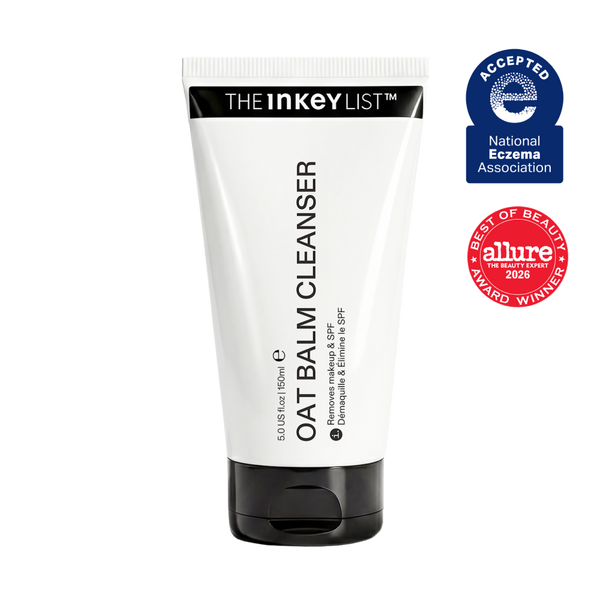
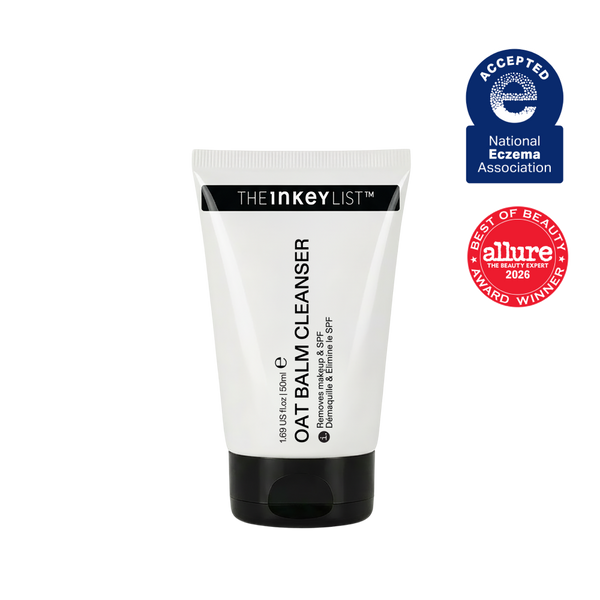
Oat Cleansing Balm: best for makeup and SPF removal
What it is and how it feels. A buttery balm that melts on contact with warm skin, then emulsifies into a light milk the moment you add water. It rinses cleanly with no greasy film and no residue, which is the difference between a balm that suits sensitive skin and one that leaves you reaching for a second wash to fix the first. As a cleansing balm for sensitive skin, it does the heaviest removal job in your routine with the least mechanical effort, because the balm dissolves makeup rather than requiring you to rub it off.
The ingredients that make it work. 5% Oat Kernel Oil delivers essential ceramides and omega 3 and 6 fatty acids, dissolving makeup whilst supporting your skin barrier. Sea Buckthorn Oil brings antioxidant properties that help soothe, balance and protect. The formula is designed so that the act of removal contributes something back, rather than simply taking away.
Who it is for. Dry, sensitive and irritated skin, and anyone who wears SPF daily or long-wear makeup regularly. It removes 100% of waterproof makeup and SPF in 30 seconds, and is clinically proven to deliver 12hr hydration**. It is also clinically proven to reduce skin redness after 4 weeks and clinically proven to support skin barrier function, which is a meaningful combination for a product whose job is removal. It holds the National Eczema Association Seal of Acceptance, which carries real weight if your sensitivity sits alongside eczema.
Based on a consumer trial with 29 participants
\*Based on a clinical trial with 29 participants over 4 weeks ***Based on a clinical trial with 23 participants over 24 hours*
When and how to use it. Evenings, on dry skin, as your first cleanse. Massage for a full sixty seconds before adding warm water to emulsify, then rinse. It is one of our most-loved cleansers, and it comes in 150ml at £15.00 or 50ml at £8.00 if you would rather try it before committing, which is a sensible way to approach anything new when your skin is reactive.
One important note, because transparency matters more than a clean sales page: this formula contains ingredients derived from nuts. If you have a nut allergy, please check with the askINKEY team before using it. They will give you a straight answer.
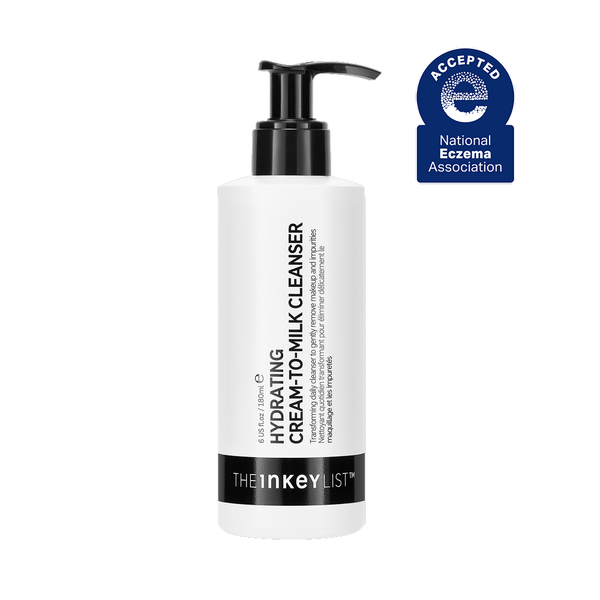
Milk Cleanser: best for dry, dehydrated and sensitive skin
What it is and how it feels. A cream that transforms into a light milk on contact with water. It does not foam, it does not squeak, and it leaves no tightness behind. If you have spent years finishing your cleanse and immediately needing moisturiser, this is what the alternative feels like. As a gentle face wash it is about as undemanding as cleansing gets, which is exactly the point.
The ingredients that make it work. 5% Rice Milk softens skin and supports the barrier for up to 12 hours post-cleanse. Hyaluronic Acid delivers clinically proven 24-hour hydration, so the step that usually removes moisture contributes some instead. The formula sits at pH 5 to 6, compatible with your skin’s natural pH range, and it is sulphate-free, SLS-free, alcohol-free, paraben-free, silicone-free, fragrance-free and non-comedogenic. It is also National Eczema Association approved.
Who it is for. Dry, sensitive and dehydrated skin, and anyone whose current cleanser leaves them tight. It is the water-based counterpart to the balm: use it alone in the morning, or as your second cleanse at night after the balm has done the removal work.
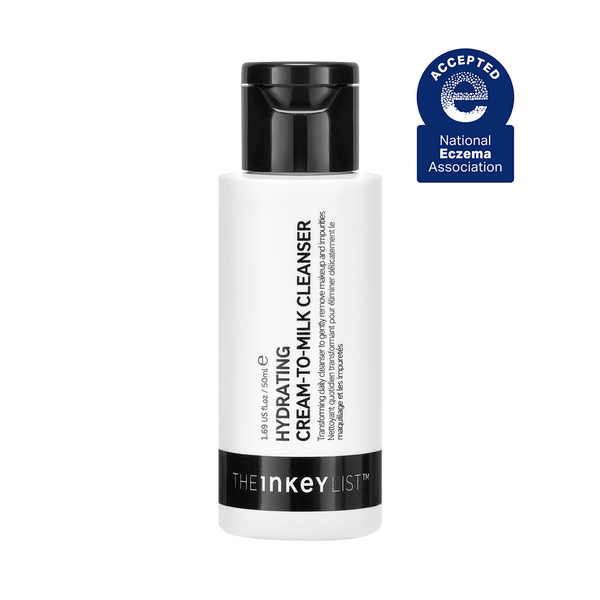
When and how to use it. Morning and evening, on damp skin, massaged in with fingertips for sixty seconds and rinsed with lukewarm water. Milk Cleanser is £15.00 for 180ml. There is a 50ml mini at £7.50 that appears from time to time, though it is currently out of stock.
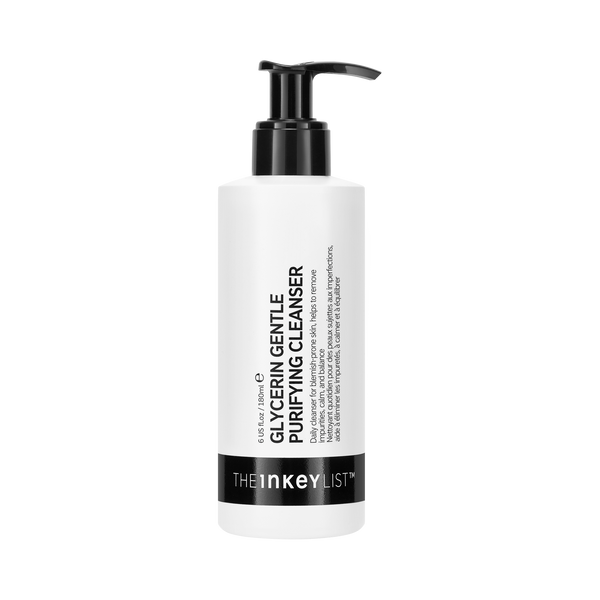
Glycerin Gentle Purifying Cleanser: best for sensitive and oily skin
What it is and how it feels. A lightweight gel that produces a soft, low, non-stripping lather. This is the answer for anyone who assumes that gentle means giving up the feeling of a proper cleanse. You still get lather. You just get it from mild surfactants rather than harsh ones, and your skin feels clean rather than stripped afterwards.
The ingredients that make it work. 20% Glycerin for deep hydration, 3% Centella Complex to help soothe and calm whilst supporting the barrier, and 2% Sea Water and Algae Complex to hydrate and smooth. It is formulated sulphate-free, SLS-free, fragrance-free, alcohol-free, silicone-free, paraben-free and non-comedogenic, using the gentler surfactants described earlier rather than SLS. It is clinically proven to support the skin barrier for 24 hours after application. It is also clinically proven to hydrate blemish-prone skin for 24 hours, oil-free.
Tested on 28 participants over 24 hours
Who it is for. Listed as suitable for sensitive, redness-prone, oily and dehydrated skin, which is an unusual combination and precisely why it works for the reader whose skin is reactive and congested at once. If harsh washes have been making your oiliness worse, this is the swap.
When and how to use it. Morning and evening on damp skin, or as a second cleanse after the balm. Glycerin Gentle Purifying Cleanser is £14.00 for 180ml.
If you would like to compare across the whole range, you can browse all INKEY cleansers. But the right cleanser only performs if your method is right, and that part is free to change.
How to Cleanse Sensitive Skin Properly
Technique is the most underrated variable in skincare. Plenty of irritation resolves without changing product at all, simply by changing how the product is used. Here is the method.
- Start with clean hands. Obvious, routinely skipped, and worth the ten seconds.
- Use lukewarm water. Not hot. Hot water increases redness and dissolves the lipids you are trying to keep. If it feels comforting on a cold morning, it is probably too warm for your face.
- Take sixty seconds. Contact time is what allows a formula to work. Rushing is the single most common reason a good cleanser underperforms, and most people cleanse for under fifteen seconds. With a balm, that means massaging on dry skin first, giving it time to dissolve makeup and SPF, before you introduce any water.
- Use fingertips only. No flannels, no muslin cloths, no cleansing brushes. Light pressure, small circular movements. You are dissolving, not scrubbing.
- Rinse thoroughly. Pay attention to the hairline, the jawline and around the nose, which is where residue collects and where congestion and irritation tend to appear as a result.
- Pat dry, do not rub. Use a clean, soft towel, and leave your skin slightly damp rather than bone dry.
- Apply your next step to damp skin. Humectants such as hyaluronic acid and glycerin work by drawing in water, so they perform better when there is water available to draw on. It also shortens the window in which your skin has any opportunity to feel tight.
On frequency: twice a day suits most people. If your skin is very reactive, water only in the morning with a full cleanse at night is a perfectly reasonable approach and not a compromise.
A quick word on double cleansing with sensitive skin
Sensitive skin can absolutely double cleanse, and it is often the better option if you wear SPF or long-wear makeup daily. Balm first to dissolve, then a water-based cleanser to finish. The risk was never double cleansing itself, it is doing it with two harsh products or too much friction. For the full method see the complete guide to double cleansing, and for how often you should be doing it, how often should you double cleanse answers that properly. If SPF removal is your main concern, how to remove sunscreen properly is the practical companion piece.
Cleansing sets up everything that follows, so it is worth knowing what to put on afterwards.
What to Apply After Cleansing
A good cleanse creates a short window where your skin is receptive and slightly damp. Here is how to use it.
Step 1: Hydrate on damp skin. Hyaluronic Acid Serum, £12.00. Lightweight hydration that helps skin feel plump and comfortable rather than tight. Apply within a minute of cleansing for best results.
Step 2: Support a compromised barrier. Ectoin Hydro-Barrier Serum, £16.00. Formulated with 2% Ectoin, 2.5% Hyaluronic Acid and a 1% Barrier Blend of three ceramides. This is the pick when your skin is reactive, stressed or simply uncomfortable, because it hydrates whilst strengthening the barrier rather than choosing between the two.
Step 3: Moisturise. Bio-Active Ceramide Moisturiser, £20.00. Restores lipids with bioactive ceramides to help strengthen and smooth. This is the mortar going back into the wall, in the most literal sense available in a jar.
Step 4: SPF every morning. Dewy Sunscreen SPF 30. Sun exposure aggravates redness and sensitivity, and daily protection is the most useful long-term habit for reactive skin. If you want the background, what is SPF covers it.
Optional extra. HydroSurge Dewy Face Mist for a hydration top-up during the day. Keep it in the fridge for an extra cooling, calming effect, which is genuinely useful when your skin is flushed.
Optional: Exosome Glow Serum for stressed, sensitive-feeling skin
This one is optional rather than essential, but it is listed as suitable for sensitive skin and it earns a mention for anyone whose skin looks stressed as well as feeling reactive.
Exosome Glow Serum, £20.00, is formulated to calm sensitive-feeling skin and soothe the look of irritation. It delivers a 55% reduction in visible signs of skin stress, including redness, puffiness and visible irritation, and a 63% increase in skin renewal activity in 8 hours. It is proven to deliver up to 12-hours of hydration,* and offers 6-in-1 skin rejuvenation: clinically proven to visibly improve radiance, hydration, tone, firmness, elasticity and texture. If you want to understand the ingredient before you consider the product, what are exosomes is the place to start.
\4-week clinical study of 26 people **Clinical study of 31 people ***In-vitro testing of Cica Exosomes showed a 55% reduction in pro-inflammatory markers and a 63% increase in markers associated with skin renewal after 8 hours.*
A few questions come up again and again, so here are the answers.
Bringing It All Together
The single most useful test is the one we opened with. Your skin should feel comfortable after cleansing, never tight. If it feels tight, something needs to change, and that one observation will tell you more than any ingredient list.
The best cleanser for sensitive skin is the one matched to what your skin is actually asking for. The Oat Cleansing Balm for makeup and SPF removal on dry, sensitive and irritated skin. The Milk Cleanser for dry, dehydrated and sensitive skin. The Glycerin Gentle Purifying Cleanser for sensitive skin that also gets oily or congested.
Method matters as much as formula, and it costs nothing to change: lukewarm water, sixty seconds, fingertips only, pat dry, next step on damp skin. If your sensitivity developed rather than being lifelong, remember that sensitised skin is reversible, and changing the cleanse is almost always the fastest improvement available to you. If you want to compare options across different skin types, our guide to how to choose the right cleanser sets them side by side. You do not need more skincare. You need clarity you can trust.
Where to Start
If you are ready to change your cleanse, the Oat Cleansing Balm at £15.00 is the place most people begin, and the 50ml at £8.00 is a low-commitment way to see how your skin responds first. Still unsure which of the three suits you? Take the skincare quiz for a personalised routine built around your skin, or shop all cleansers to compare the full range.
Because at The INKEY List, We Give A Care.
Frequently Asked Questions
Got a question?
Our askINKEY team are a friendly bunch of skincare experts with deep product knowledge and zero judgement. Whether you're an ingredient obsessive or just starting out, we'll make it make sense. No question too big. No question too small. We Give A Care, Every Day.


