



Can Niacinamide Cause Acne? Side Effects Explained
Think niacinamide is causing your breakouts? Discover why niacinamide doesn't cause acne or purging, the real reasons spots can appear after starting a new routine, and how to troubleshoot your skincare with confidence.
Author
askINKEY skincare advisor
Published
13 July, 2026
Time to read
10 minutes
Niacinamide is one of the most extensively researched and well-tolerated skincare ingredients available. Backed by decades of peer-reviewed science, it sits at the core of countless dermatologist-recommended routines - and for good reason. Yet the concern that niacinamide is causing breakouts or triggering a reaction is one of the most commonly raised questions we hear. That concern is worth taking seriously, and it deserves a clear, science-backed answer rather than reassurance based on nothing.
This blog covers: whether niacinamide can cause blemishes or spots, what purging is and why niacinamide cannot trigger it, every documented niacinamide side effect and what the clinical evidence actually shows, the real reasons breakouts appear after introducing niacinamide, and how to troubleshoot effectively if something is going wrong in your routine. It is not a general overview of what niacinamide does - for that, see our full niacinamide ingredient guide. For broader context on managing blemish-prone skin, our blemishes and breakouts guide covers everything you need.
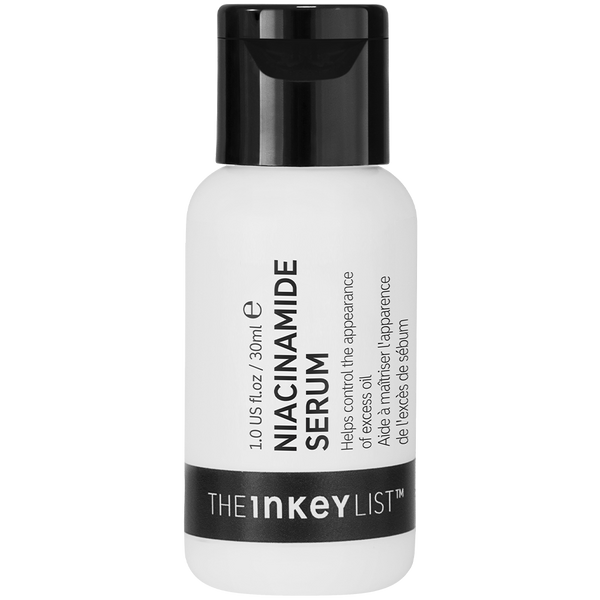
The product referenced throughout this blog is our 10% Niacinamide Serum at £12 - a fragrance-free, non-comedogenic formula built around one of the most clinically studied concentrations available. If you are also looking for more on what niacinamide specifically does for blemish-prone skin, our companion blog on niacinamide and breakouts covers that in detail.
What Niacinamide Actually Does Inside Your Skin
Understanding why niacinamide does not cause breakouts requires understanding how it works at a biological level. The ingredient’s reputation is not built on marketing claims - it is built on decades of controlled clinical research, and the mechanisms are well understood.
Niacinamide is the amide form of vitamin B3, also known as nicotinamide. It is water-soluble, stable across a wide pH range, and compatible with the vast majority of other skincare actives. Unlike niacin - the acid form of vitamin B3 - niacinamide does not cause vascular flushing when applied topically. This is an important distinction, because some people mistakenly assume any vitamin B3 derivative will cause a flushing or redness response. Niacinamide and niacin behave differently in the skin, and the two should not be conflated.
According to the 2024 Antioxidants study published in MDPI, niacinamide functions through four primary mechanisms that are directly relevant to breakout-prone skin. Each of these mechanisms works in direct opposition to the conditions that cause or worsen blemishes - which is why niacinamide, by its fundamental nature, is the opposite of a pore-clogging or spot-triggering ingredient.
Sebum regulation is the first and often most immediately noticed benefit. Niacinamide modulates lipid synthesis in sebocytes - the cells responsible for producing sebum - without stripping or drying the skin. Clinical data shows meaningful reductions in sebum excretion rate even at concentrations as low as 2%, with results measurable within four weeks of consistent use. For anyone whose breakouts are driven by excess oil production, this mechanism alone makes niacinamide one of the most useful ingredients available.
Anti-inflammatory action is the second mechanism, and arguably the most significant for blemish-prone skin. Niacinamide inhibits several key pro-inflammatory cytokines - specifically TNF-alpha, IL-1, IL-6, and IL-8 - that drive the redness, swelling, and irritation associated with breakouts. At 5%, clinical studies have recorded measurable reductions in inflammatory biomarkers within as little as two weeks. This anti-inflammatory property is also why niacinamide is commonly recommended for skin experiencing active sensitivity or redness - it calms rather than aggravates.
Skin barrier reinforcement is the third mechanism, and it works through ceramide synthesis. Niacinamide activates serine palmitoyltransferase, a key enzyme involved in producing ceramides - the lipids that hold skin cells together and regulate moisture retention. A stronger barrier means less transepidermal water loss, less susceptibility to environmental triggers, and less reactive skin overall. For anyone with compromised barrier function - a common feature of blemish-prone skin - this is a genuinely meaningful biological benefit.
Inhibition of melanin transfer is the fourth mechanism, relevant specifically to post-blemish marks and uneven skin tone. Niacinamide interrupts the signalling pathway through which melanin is transferred from melanocytes to surrounding keratinocytes. The result, with consistent use, is a gradual reduction in the dark marks and discolouration left behind after a spot has healed. This does not bleach or depigment the skin - it slows the transfer process, allowing existing marks to fade over time.
One critical point that underpins the entire purging question: niacinamide does NOT increase keratinocyte proliferation. This matters because accelerated keratinocyte turnover is the biological mechanism through which certain actives - specifically retinoids and exfoliating acids - trigger purging. Niacinamide has no effect on this process. The 2024 MDPI study confirms this explicitly. It is a detail we will return to in depth when examining the purging question directly.
Clinical tolerability data further reinforces niacinamide’s safety profile. In controlled testing, niacinamide caused no stinging at concentrations up to 10%, no irritation at concentrations up to 5%, and no irritancy over a 21-day use period at 5%. These are not anecdotal observations - they are the results of structured clinical trials. For more on the ingredient’s full profile, our niacinamide guide goes into greater depth, and our niacinamide serum blog covers what to expect when using it day to day.
With the biology established, the logical next question becomes: if niacinamide works this way, why do some people experience breakouts after introducing it?
Can Niacinamide Actually Cause Blemishes?
The direct answer is no. Niacinamide is non-comedogenic, meaning it does not block pores, and its anti-inflammatory properties actively work against the conditions that produce spots and blemishes. There is no credible clinical evidence linking niacinamide use to increased breakout frequency or severity.
That said, the experience of developing spots after introducing a niacinamide product is real and relatively common - and it is worth taking seriously rather than dismissing. The key is understanding that the timing of a breakout and the cause of a breakout are two different things. Niacinamide may be new to your routine when the spots appear, but that does not make niacinamide responsible for them.
Other ingredients in the formula are the most overlooked cause of post-introduction breakouts. When most people blame niacinamide for a reaction, they are actually reacting to something else in the same product. Skincare formulas contain many ingredients beyond the headline active - emollients, preservatives, thickeners, fragrances, and oils among them. Some of these can be comedogenic or irritating, particularly for oily or breakout-prone skin types. Before concluding that niacinamide is the problem, check the full ingredient list and cross-reference for known pore-cloggers. Our blog on what causes clogged pores is a useful starting point for identifying ingredients that may be contributing.
Introducing multiple new products simultaneously is another extremely common trigger. Many people overhaul their routine at once - new cleanser, new serum, new moisturiser - and then struggle to identify which product is responsible when their skin reacts. The skin cannot process several new variables at once, and a reaction is difficult to trace when multiple new ingredients have been introduced at the same time. If this sounds familiar, the troubleshooting section below provides a clear framework for isolating the cause.
Stress has a direct and well-documented relationship with breakout frequency. Elevated cortisol drives increased sebum production and can trigger inflammatory responses in the skin entirely independently of what you are applying topically. If a period of new breakouts coincides with a period of heightened stress, it is worth considering that connection before adjusting your skincare routine. Our blog on whether stress causes breakouts explores this relationship in detail.
Hormonal shifts are another significant factor that operates entirely outside the influence of niacinamide. Changes associated with menstrual cycles, contraception adjustments, perimenopause, or other hormonal events can trigger breakout cycles that have nothing to do with what you are applying to your face. If you have started a new niacinamide product at the same time as a hormonal change, the timing may simply be coincidental. Our blog on adult breakouts and why they happen covers the hormonal dimension in depth.
Dietary changes are less commonly considered but equally relevant. Research into the relationship between diet and blemish-prone skin - particularly around high-glycaemic foods and dairy - suggests that dietary shifts can directly influence breakout patterns. Our blog on diet and breakouts examines what the current evidence says about food and skin.
Seasonal skin changes affect many people without their realising it. Shifts in temperature, humidity, indoor heating, and environmental allergens can all alter skin behaviour - increasing oil production, reducing barrier function, or triggering sensitivity. A breakout that coincides with a change of season may be driven by climate rather than any product in your routine.
Coincidental timing with an already-active breakout cycle is perhaps the simplest explanation and one of the most frequently correct ones. If you start a new product during a period when your skin is already in an active breakout phase - driven by any of the factors above - it is easy to attribute the spots to the new product when the cycle would have occurred regardless.
The most important practical takeaway: when you are working through a routine audit and trying to identify the cause of new breakouts, niacinamide should be the last product you remove. Its anti-inflammatory and sebum-regulating properties make it one of the most useful tools you have when skin is in a reactive phase. Our blemishes and breakouts guide offers a broader framework for understanding and managing spot-prone skin.
The question we have not yet addressed directly is purging - a specific term that is frequently misapplied to niacinamide reactions. That distinction matters, and it deserves its own detailed explanation.
Niacinamide and Purging: The Complete Picture
Purging is a word that gets used loosely in skincare conversations, often to describe any initial breakout that follows a new product. But purging has a specific biological definition, and understanding that definition is essential to understanding why niacinamide categorically cannot cause it.
Purging is the accelerated surfacing of existing congestion within the pores, driven by a significant increase in the rate of keratinocyte proliferation. When skin cells turn over more rapidly than usual, material that was already developing beneath the surface - comedones, sebaceous filaments, microcomedones - is brought to the surface faster than it would have appeared naturally. The result is a concentrated period of breakouts, typically in areas where you already experience spots, that resolves once the skin has cleared and adapted to the new rate of cell turnover. This process is real and documented - but it is specific to a defined category of ingredients.
Only ingredients that accelerate keratinocyte proliferation can cause purging. That category includes retinoids (retinol, retinal, tretinoin), alpha hydroxy acids (glycolic acid, lactic acid, mandelic acid), and beta hydroxy acids such as salicylic acid at active exfoliating concentrations. These ingredients work, in part, by speeding up the skin’s natural cell renewal process - and purging is a known, manageable consequence of introducing them.
Niacinamide does not belong to this category. The 2024 Antioxidants study published on PubMed Central explicitly confirms that niacinamide has no effect on keratinocyte proliferation. It does not accelerate cell turnover. It does not bring congestion to the surface. It cannot, by any mechanism, cause purging. Healthline’s clinical review reaches the same conclusion: niacinamide is not associated with purging, and any breakout following its introduction is not a purge.
This is a distinction that matters practically as well as scientifically. If you are using niacinamide alongside a retinoid or an exfoliating acid and you are experiencing a breakout phase, the cell-turnover active is responsible for any purging response - not the niacinamide. In fact, the barrier-strengthening and anti-inflammatory properties of niacinamide make it a genuinely supportive ingredient to use alongside those actives, helping to mitigate some of the sensitivity and disruption they can cause. Our blog on salicylic acid and niacinamide as a combination explains how those two ingredients work together for blemish-prone skin.
Understanding the difference between purging and a genuine skin reaction is practically important, because they require different responses.
Purging, when it occurs from a legitimate cell-turnover active, typically presents in the areas where you already experience breakouts. The blemishes that surface are the same type as your usual spots - the same size, the same depth, the same character. Purging generally begins within the first one to two weeks of introducing the active ingredient, peaks around weeks two to four, and resolves fully within six to eight weeks as the skin adapts.
A reaction to a product is different in character. A reaction may present in areas where you do not normally break out. The breakouts or irritation may appear quickly after application - sometimes within hours. A reaction does not resolve on its own in the way purging does; it typically persists or worsens as long as the triggering ingredient continues to be applied. A reaction may also involve redness, sensitivity, itching, or a rash - symptoms that are not part of a standard purging response.
If you are beyond eight weeks of consistent niacinamide use and still experiencing worsening breakouts, or if you are breaking out in areas that are not your typical zones, this is almost certainly not a purge. It indicates a reaction to something in your routine - possibly, though unlikely, niacinamide itself, but more probably another ingredient or a combination of factors. The appropriate response is a systematic routine audit, which we cover in detail in the troubleshooting section. For more on how niacinamide interacts with breakout-prone skin, our dedicated blog on niacinamide and spots provides further context.
Real Niacinamide Side Effects: What the Science Actually Shows
Niacinamide has a genuinely favourable safety profile. Clinical trials have consistently found it to be well-tolerated across a wide range of skin types, and the incidence of documented side effects is low - particularly at the concentrations most commonly found in consumer skincare products. That said, side effects do exist, and it is worth being clear about what they are, how likely they are, and what to do if you experience them.
Mild flushing or tingling is among the rarest of reported side effects, and when it does occur, it is almost always associated with very high concentrations - typically 20% or above. At concentrations up to 10%, no stinging has been recorded in clinical testing. The mechanism behind any flushing response is also worth understanding: it is thought to be related to trace niacin contamination in some formulations rather than niacinamide itself. Niacinamide and niacin are structurally related but behaviourally distinct when applied to skin, and niacinamide at standard concentrations does not trigger vascular flushing. If you are experiencing any warmth or tingling at higher concentrations, switching to a 10% formula is the appropriate solution. Any sensation should resolve quickly and is not dangerous.
Redness or irritation is another rare response, and in the majority of cases it is caused not by niacinamide but by other components of the formula - fragrance (listed as parfum on ingredient labels), alcohol denat., or essential oils. These are common irritants, particularly for sensitive or reactive skin types, and they are frequently present in skincare formulas alongside niacinamide. If you are experiencing redness after introducing a niacinamide product, checking the full ingredient list for these common irritants is the first and most useful step. Our 10% Niacinamide Serum at £12 is fragrance-free, which makes it a useful benchmark if you are trying to determine whether niacinamide itself is the issue or whether the reaction is formula-driven.
Dryness or tightness following niacinamide use is not a typical or expected side effect of the ingredient. In fact, niacinamide’s role in ceramide synthesis means it actively supports moisture retention - it is, by mechanism, a hydration-supporting ingredient. If you are experiencing dryness while using niacinamide, the more likely culprits are your cleanser, an exfoliating acid, or a retinoid elsewhere in your routine. The solution is not to remove the niacinamide - it is to assess whether your moisturiser is doing enough to compensate for the barrier disruption caused by other actives. Our Omega Water Cream at £14 is a lightweight, non-comedogenic moisturiser that contains 5% niacinamide and works well as a follow-up step in a blemish-focused routine.
Contact dermatitis is a genuine but very rare response to niacinamide. It presents as persistent, widespread redness, itching, or a rash that does not resolve with continued use. This is a true allergic response rather than a tolerance issue, and it is not the same as mild irritation. If you suspect contact dermatitis - particularly if the reaction is severe, spreading, or accompanied by significant discomfort - discontinue use and consult a dermatologist. This is not a response to manage at home.
Sensitivity at higher concentrations is documented at 20% and above. At this level, some sensitive skin types may experience mild tingling or increased reactivity. For the vast majority of people, all of the clinical benefits of niacinamide are accessible at 10% - there is no compelling reason to seek out a 20% formulation unless under specific professional guidance. Acne Support UK confirms that 10% is the concentration at which niacinamide is most broadly recommended, with a strong tolerability record across diverse skin types.
To be unambiguous: blemishes, purging, and clogged pores are not documented side effects of niacinamide. They do not appear in clinical literature as outcomes associated with niacinamide use. The 2024 MDPI study reinforces this - the ingredient’s mechanisms are, without exception, opposed to the conditions that produce spots and comedones.
If you experience intense burning, severe widespread redness, a spreading rash, or persistent irritation that continues even after discontinuing the product, these are signs that you should consult a dermatologist rather than continuing to troubleshoot independently. Knowing when to seek professional advice is as important as knowing how to manage minor adjustments yourself.
Troubleshooting: What To Do If You Think Niacinamide Is Causing a Reaction
If you have introduced niacinamide and your skin is not responding as you expected, a methodical approach will tell you far more than simply removing the product. Work through the following steps before drawing any conclusions.
Step 1 - Audit everything that changed. Do not focus only on niacinamide. Think back: when did you first notice the reaction? What else was introduced to your routine at the same time or in the weeks preceding it? Write out your full current routine, including cleansers, toners, serums, moisturisers, eye products, and anything applied to the face - along with approximate dates of introduction where you can recall them. This timeline is often more revealing than any ingredient analysis.
Step 2 - Check the full formula, not just the headline active. A product labelled as a niacinamide serum still contains many other ingredients. Look specifically for comedogenic oils, fragrance (parfum), alcohol denat., essential oils such as lavender or eucalyptus, and any exfoliating acids that might be present at active concentrations. Our 10% Niacinamide Serum at £12 is fragrance-free and non-comedogenic - if you are unsure whether a formula is contributing to your reaction, it serves as a useful reference point for what a clean niacinamide formula looks like. The blog on what causes clogged pores is also useful for cross-referencing ingredients.
Step 3 - Reduce frequency before eliminating. Rather than removing niacinamide from your routine entirely, try reducing application to once daily - evening only - or to every other day. If symptoms improve over two to three weeks, you can gradually reintroduce it to twice-daily use. Complete elimination makes it harder to identify whether niacinamide was the problem or whether something else resolved the issue.
Step 4 - Check your concentration. If you are currently using a 20% formula, switch to 10%. The majority of sensitivity and mild irritation reports associated with niacinamide involve higher concentrations. Spend four to six weeks at 10% to assess whether the reduction resolves the issue.
Step 5 - Simplify the routine. If you cannot identify the cause through the steps above, strip the routine back to its basics: a gentle cleanser, a simple non-comedogenic moisturiser such as our Omega Water Cream at £14, and nothing else for one to two weeks. Observe whether your skin settles. Then reintroduce products one at a time, with a gap of at least two weeks between each addition, and monitor for changes. This is the most reliable method for isolating a problematic ingredient.
Step 6 - Consider lifestyle factors. Stress, dietary changes, and seasonal shifts can all drive breakout cycles that have nothing to do with your skincare routine. If your skin reacted around a period of heightened stress or a significant dietary change, explore those connections. Our blogs on stress and breakouts and diet and breakouts provide evidence-based context for both.
Step 7 - Know when to seek professional guidance. If you experience severe burning, a spreading rash, symptoms that worsen after discontinuing the product, or breakouts that intensify consistently over four or more weeks regardless of routine adjustments, consult a dermatologist. You can also use our Breakout Analyser Pro for personalised guidance on what your skin might need - it is a practical starting point if you are unsure which direction to take your routine. Our blemishes and breakouts guide is also a useful reference for broader context.
Using Niacinamide Safely, Especially If Your Skin Is Sensitive
The good news is that using niacinamide safely does not require complicated protocols. The evidence is clear that at 10%, niacinamide is well-tolerated by the vast majority of skin types - including sensitive, reactive, and breakout-prone skin. A few straightforward principles will give you the best chance of a positive outcome.
Start at 10%, not 20%. All of the benefits documented in clinical research are accessible at 10%. Sebum regulation, anti-inflammatory effects, barrier reinforcement, and the reduction of post-blemish marks have all been studied and confirmed at this concentration. There is no clinical rationale for beginning at a higher concentration, and doing so unnecessarily increases the likelihood of mild sensitivity.
If you have sensitive skin, introduce niacinamide gradually. Apply it in your evening routine only for the first one to two weeks. Once your skin has adapted - and it almost always does - add a morning application. Building up over two to three weeks is a simple and effective way to allow even reactive skin to adjust without incident.
The order of application matters. For a morning routine focused on blemish-prone skin: cleanse with our Salicylic Acid Cleanser at £14 - a well-suited option for oily and breakout-prone skin types - then apply your niacinamide serum, and follow with a moisturiser. For the evening: cleanse, apply niacinamide serum, and follow with moisturiser. If you are using a retinoid in your evening routine, apply niacinamide before the retinoid - niacinamide’s barrier-supporting properties make it a useful buffer, and the two ingredients are well-documented as a compatible and mutually beneficial pairing.
Application is straightforward. A pea-sized amount is sufficient for full-face coverage. Apply each step separately rather than mixing products in your palm, and allow a moment between steps. Niacinamide works well on both damp and dry skin - there is no strict requirement either way.
A complete blemish-focused routine built around niacinamide might include: our 10% Niacinamide Serum at £12 as the core daily treatment, our Omega Water Cream at £14 as a lightweight, non-comedogenic moisturiser with 5% niacinamide, our Salicylic Acid Cleanser at £14 for daily cleansing, our 360° Skin Clearing Serum at £16 for persistent blemishes that need targeted treatment, and our Hydrocolloid Invisible Pimple Patches at £9 for managing individual active spots overnight.
On ingredient pairings: niacinamide is notably compatible with a wide range of actives. Its combination with salicylic acid is particularly well-suited to blemish-prone skin - salicylic acid works inside the pore to dissolve congestion, while niacinamide addresses sebum production and inflammation at a cellular level. Our blog on salicylic acid and niacinamide as a combination covers the rationale and the routine in detail. Niacinamide also pairs effectively with vitamin C - the old concern that the two produce a compound called niacin when combined has been largely debunked in practical formulation contexts. Our blog on using niacinamide and vitamin C together addresses this in depth. For those using azelaic acid, niacinamide is an excellent complement given the overlap in their anti-inflammatory and pigmentation-targeting properties - see our blog on azelaic acid and niacinamide for more.
For a deeper reference on the ingredient itself, our niacinamide pillar page is the most comprehensive resource we have on everything from mechanism to routine building.
The Science Is Clear: Niacinamide Supports Skin, Not Sabotages It
Niacinamide does not cause blemishes. It does not cause purging. It does not clog pores. These are not marketing statements - they are conclusions supported by decades of peer-reviewed clinical research, confirmed by the most up-to-date mechanistic studies, and reflected in the consistently favourable tolerability profile recorded in controlled trials.
When breakouts appear after introducing niacinamide, the cause almost always lies elsewhere - in the formula surrounding the active, in other products introduced at the same time, or in external factors such as stress, hormonal shifts, diet, or seasonal change. The approach that serves your skin best is a systematic routine audit, not the instinctive removal of an ingredient that is, by every measure of its biology, working in your favour. At 10%, niacinamide is one of the safest, most effective, and most broadly applicable skincare actives available. Used correctly and consistently, it is among the best-evidenced tools for managing oily, blemish-prone, or sensitive skin.
If you are unsure where your breakouts are coming from or which products your skin actually needs, our Breakout Analyser Pro is a practical place to start - it provides personalised guidance based on your specific skin profile and concerns. Our blemishes and breakouts guide also covers the broader picture if you want to understand what is driving your skin’s behaviour beyond individual ingredients.
Build Your Routine Around What the Science Supports
Shop our 10% Niacinamide Serum - £12 and see what consistently applied, evidence-backed skincare can do for your skin.
Explore the full Niacinamide collection to find every product in our range that features this ingredient.
Not sure which products are right for your skin type and concerns? Take the Skincare Quiz for a personalised product recommendation.
Build a complete routine and save up to 20% with our Routine Builder - so you can get everything your skin needs without the guesswork.
Frequently Asked Questions
Got a question?
Our askINKEY team are a friendly bunch of skincare experts with deep product knowledge and zero judgement. Whether you're an ingredient obsessive or just starting out, we'll make it make sense. No question too big. No question too small. We Give A Care, Every Day.


