

Best Moisturiser for Dehydrated Skin: Why Ceramides Are the Fix Your Routine Is Missing
Dehydrated skin isn't a skin type, it's a fixable water-loss condition, and this guide breaks down exactly how ceramides help fix it for good.
Author
askINKEY skincare advisor
Published
04 October, 2026
Time to read
12 minutes
UK Edition
Best Moisturiser for Dehydrated Skin: Why Ceramides Are the Fix Your Routine Is Missing
If your skin feels tight after cleansing, looks dull no matter how much concealer you layer on, or seems to drink up every product you apply without ever feeling truly comfortable, you’re not imagining it. You’re likely dealing with dehydration, and it has nothing to do with how oily or dry your skin naturally is. It’s one of the most misunderstood conditions in skincare, and also one of the most fixable, provided you understand what’s actually happening beneath the surface and choose ingredients that address the real cause rather than just masking the symptoms. This guide walks through exactly that, starting with a direct answer for anyone who wants to skip straight to the solution.
Quick Answer - Our Pick for Dehydrated Skin
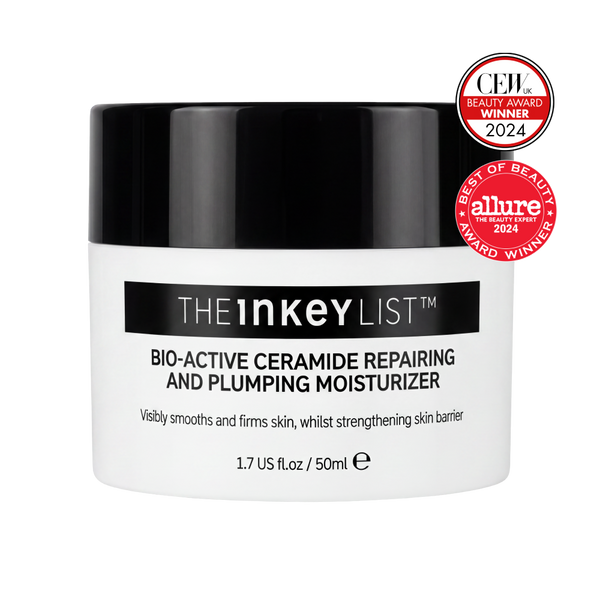
If you’re looking for the best moisturiser for dehydrated skin, our answer is the Bio-Active Ceramide Moisturiser, £20.00. It’s clinically proven to repair and strengthen the skin barrier from first use, deliver 24-hour hydration, and visibly reduce the appearance of wrinkles by up to four times**. The formula combines Bioactive Ceramide NP to firm and reinforce the barrier, 5% Gransil Blur to instantly soften the look of fine lines, and Shea Butter to comfort and soothe on contact.
If you want an even lighter layer of hydration underneath, you can pair it with our Hyaluronic Acid Serum, which we’ll come back to later when we map out a full routine. For now, that’s the short version. Keep reading and we’ll explain exactly why this combination works, and why dehydration needs a different kind of fix to the one most people reach for. You can also browse the full dehydrated skin edit if you’d rather see every product designed around this specific concern.
Having given you the quick answer, it’s worth earning that recommendation properly. To do that, we need to clear up one of the most common mix-ups in skincare: the difference between dry skin and dehydrated skin.
Dehydrated Skin vs Dry Skin - What’s the Real Difference?
This is the single biggest point of confusion we see, and it’s an easy one to fall into because the words “dry” and “dehydrated” are used interchangeably in everyday conversation. In skincare terms, though, they describe two genuinely different things.
Dry skin is a skin type. Dehydrated skin is a condition. Dry skin means your skin doesn’t naturally produce enough oil, or lipids, to keep itself comfortable. It’s something you’re more or less born with, and while it can be managed, it doesn’t tend to change dramatically over time. Dehydrated skin, on the other hand, means your skin is lacking water. It’s not about oil production at all, and crucially, it’s usually temporary and entirely fixable once you address the underlying cause.
The mechanism behind dehydration is something called transepidermal water loss, or TEWL for short. In simple terms, this is the rate at which water evaporates from your skin into the air. A small amount of water loss is normal and happens to everyone, but when it speeds up beyond what your skin can replace, you end up with dehydration. Our guide on what TEWL actually is goes into more depth on the science if you want to understand the full mechanism, but the short version is this: the faster your skin loses water, the more dehydrated it becomes, regardless of how much oil sits on the surface.
This is exactly why oily skin can be dehydrated too. Oil and water are not the same thing, and producing plenty of sebum doesn’t mean your skin is holding onto enough moisture underneath. In fact, dehydration in oily skin is incredibly common, and often gets misread as “needing less moisturiser” when the opposite is usually true. We cover this in more detail in why oily skin gets dehydrated too, but the key takeaway for this guide is simple: dehydration doesn’t discriminate by skin type. It can affect oily, dry, combination or sensitive skin, because it’s about water, not oil.
Dry skin = lacks oil. Dehydrated skin = lacks water.
That one-line distinction is worth remembering, because it changes what you should actually be shopping for. Here’s the part that ties everything together for the rest of this guide: when your skin barrier is compromised, whether through harsh products, environmental stress, or simply ageing, it becomes far less effective at holding water in. A weakened barrier accelerates TEWL, which accelerates dehydration, which weakens the barrier further. It’s a cycle, and breaking it is precisely what a barrier-repairing, ceramide-led moisturiser is designed to do. We’ll unpack that properly in the ingredients section, but first, let’s make sure you can actually spot dehydration on your own skin.
Understanding what dehydration is in theory is useful, but the real value comes from being able to recognise it on your own face. That’s exactly what we’ll walk through next.
Signs Your Skin Is Dehydrated (Not Just Dry)
Dehydration has a distinct set of signs, and once you know what to look for, they’re surprisingly easy to spot. Here are the most common signs of dehydrated skin:
- Tightness that shows up shortly after cleansing, even if you’ve used a gentle formula
- Fine lines that appear more noticeable around the eyes and mouth, particularly by the end of the day
- A dull, lacklustre complexion that doesn’t respond to brightening products the way you’d expect
- Skin that looks “thirsty” or slightly papery in texture, almost crepey in appearance
- Makeup that sits unevenly, clings to dry patches, or seems to “disappear” into the skin within hours
- Skin that feels oily to the touch yet still looks dull or tight in certain areas
One detail worth clarifying here, because it trips up a lot of people: there’s a real difference between dehydration lines and true wrinkles. Dehydration lines tend to be fine, superficial, and can appear or disappear depending on how hydrated your skin is that day. True wrinkles are deeper, structural, and linked to things like collagen loss and sun damage over time. If your “fine lines” seem to soften noticeably after a few days of consistent hydration, there’s a good chance they were dehydration lines all along rather than a permanent ageing concern. Our breakdown of dehydration lines vs wrinkles goes further into how to tell the two apart if you want a closer look.
A simple way to check for dehydration at home is the pinch test. Gently pinch a small area of skin, such as your cheek, and watch how quickly it bounces back. Well-hydrated skin springs back almost instantly. Dehydrated skin tends to hold the pinch slightly, sometimes showing faint lines where you pressed, before slowly settling back into place. It’s not a clinical diagnostic tool, but it’s a useful, quick gut-check you can do in seconds.
It’s also worth repeating something we touched on earlier, because it matters: dehydration can affect oily, combination, dry, or sensitive skin all at once. If you’ve always assumed your oily skin couldn’t possibly be dehydrated, or that your dry skin’s tightness was simply “how it is,” it’s worth reconsidering. For a fuller symptom breakdown, our guide on how to tell if your skin is dehydrated: 7 signs you might be missing covers additional, less obvious indicators.
Once you’ve recognised one or more of these signs in your own skin, the natural next question is why this is happening to you in the first place. That’s exactly what we’ll explore next.
What Causes Dehydrated Skin?
Dehydration doesn’t appear out of nowhere. It’s almost always the result of a combination of environmental, lifestyle, and skincare factors working together, sometimes without you realising it. Understanding the causes matters because it explains why reaching for “more moisturiser” alone often isn’t enough; you need a product that actively helps your skin hold onto water, not just one that feels nice in the moment.
Environmental causes tend to be the ones people notice first, because they’re seasonal and often sudden:
- Central heating and air conditioning, both of which strip moisture from the air around you
- Cold weather, which reduces the skin’s natural oil production and accelerates water loss
- Low humidity environments generally, including long-haul flights
- Prolonged sun exposure, which damages the skin barrier over time
Lifestyle and skincare habits are quieter contributors, but arguably more impactful over the long term:
- Not drinking enough water throughout the day
- High caffeine or alcohol intake, both of which have a dehydrating effect
- Poor or inconsistent sleep, which disrupts the skin’s natural repair processes
- Over-exfoliating, which can thin the skin’s protective surface
- Using harsh cleansers that strip natural oils and barrier lipids
- Skipping moisturiser altogether, particularly after cleansing or exfoliating
- Overusing active ingredients like retinoids or acids without adequate hydration support to balance them
Here’s the mechanism that ties all of this together, and it’s the single most important concept in this entire guide: your skin barrier is what keeps water in and irritants out. When that barrier is compromised, whether from weather, harsh products, or simply not giving your skin what it needs, it becomes far less efficient at retaining moisture. Water escapes faster than your skin can replace it, and because a weaker barrier is also a drier one, the cycle tends to worsen rather than resolve on its own. This is why a proper fix needs to target the barrier directly, not just add a temporary layer of surface hydration. For more detail on barrier function generally, our guide on how to strengthen your skin barrier is a useful companion resource.
This is also the exact point where ceramides enter the conversation, because they are quite literally part of what makes up a healthy skin barrier in the first place. If you’d like to understand the ingredient itself before we build the full case for it, our ceramides pillar page is worth a read. But for now, let’s dig into why ceramides specifically, out of every hydrating ingredient on the market, are the ones we’d recommend leading your routine.
Understanding these causes makes the next step feel obvious rather than like a sales pitch: if a weakened barrier is the root problem, the fix has to start by repairing that barrier. That’s exactly where ceramides come in.
The Best Ingredients for Dehydrated Skin (And Why Ceramides Lead the List)
If you take one thing away from this entire guide, make it this: not all hydrating ingredients work the same way, and understanding the difference changes how you shop for skincare permanently.
Ceramides are naturally occurring lipids that make up a significant part of your skin barrier. Think of your skin barrier like a wall, with skin cells as the bricks and ceramides (alongside other lipids) acting as the mortar holding everything together. When ceramide levels drop, whether through ageing, harsh products, or environmental stress, that wall develops gaps, and water escapes through them. Replenishing ceramides through a topical moisturiser helps rebuild that wall, which means your skin becomes genuinely better at holding onto water, rather than simply receiving a temporary surface-level top-up.
This is exactly the role our Bio-Active Ceramide Moisturiser is built to play. It’s formulated with Bioactive Ceramide NP to visibly firm, smooth, and strengthen the skin barrier, alongside 5% Gransil Blur, which works to instantly soften the appearance of fine lines, and Shea Butter, which comforts and soothes on application.
Clinically proven to repair and strengthen the skin barrier from first use, with 24-hour hydration for dry and sensitive skin, and a 4x visible reduction in the appearance of wrinkles**.
That’s not a vague marketing promise; it’s the specific, approved claim behind the formula, and it’s why this product sits at the centre of our recommendation for dehydrated skin specifically. A ceramide moisturiser for dehydrated skin works differently to a standard moisturiser because it’s not just sitting on top of your skin, it’s actively helping rebuild the structure that keeps water locked in.
That said, ceramides don’t work in isolation, and understanding how they interact with other hydrating ingredients is genuinely useful. Here’s where the distinction between humectants and barrier-lipids becomes important, because it explains why layering certain products together works so well rather than being redundant.
Humectants, like hyaluronic acid, work by drawing water into the skin from the environment and deeper layers. They’re brilliant at delivering a surge of hydration, but on their own, in very dry or low-humidity conditions, they can occasionally pull moisture from deeper skin layers if there’s nothing to seal that water in afterwards. That’s not a flaw in hyaluronic acid itself, it’s simply a reason why pairing it with something that locks moisture in matters. Our Hyaluronic Acid Serum works brilliantly as a complementary step for exactly this reason, applied before your moisturiser rather than instead of it.
Barrier-lipids and occlusives, ceramides included, work differently. Rather than drawing water in, they help reinforce the skin’s natural barrier so that water already present, plus whatever’s been drawn in by a humectant, actually stays put. This is the key piece of clear guidance worth remembering: humectants attract water, ceramides help lock it in. Used together, they complement rather than compete with each other, which is exactly why layering a hydrating serum underneath a ceramide moisturiser tends to outperform using either product alone.
There’s a third ingredient worth knowing about here too: Ectoin, a barrier-strengthening hydrator that works somewhat differently again. For those wanting extra reinforcement alongside their moisturiser, our Ectoin Hydro-Barrier Serum combines 2% Ectoin, 2.5% weighted Hyaluronic Acid, and a 1% ceramide barrier blend, making it a strong option for anyone experiencing more persistent or severe dehydration. For a closer comparison of how ectoin and hyaluronic acid differ, our guide on ectoin vs hyaluronic acid breaks it down clearly, and our piece on hyaluronic acid vs ceramidesexpands further on the humectant-versus-barrier-lipid distinction introduced above.
If you’d like to explore the broader ceramide range beyond the hero moisturiser, our page on the best ceramide products for every skin type covers the full line-up, and you can shop the category directly via our ceramides collection.
With the ingredient science covered, the natural next step is practical: how do you actually combine these products into a routine you’ll stick to every day?
Building a Routine for Dehydrated Skin
Knowing which ingredients work is one thing; knowing how to layer them correctly is what actually gets you results. Here’s a simple, effective routine built specifically around repairing dehydration, structured so you can follow it morning and night without overcomplicating things.
- Cleanse gently. Start with a cleanser that won’t strip your skin further. Our Oat Cleansing Balm is a good option here because it removes the day’s buildup, makeup, or SPF without pulling moisture or lipids away from the skin in the process, something a harsh, foaming cleanser is far more likely to do.
- Hydrate with a humectant serum on damp skin. Apply your Hyaluronic Acid Serum, or our Ectoin Hydro-Barrier Serum if you want additional barrier support, while your skin is still slightly damp from cleansing or a light mist. This technique, often referred to as skin flooding, helps maximise how much water the humectant can actually draw in. Our guide on what skin flooding is explains the method in more detail if you want to understand exactly why damp skin makes such a difference.
- Seal everything in with the Bio-Active Ceramide Moisturiser. This is the step that locks hydration in and actively reinforces your barrier at the same time, which is why it remains the core answer to “what’s the best moisturiser for dehydrated skin” throughout this entire guide. Applying it as your final step ensures the water drawn in by your serum doesn’t simply evaporate again within the hour.
If you prefer a lighter, oil-free finish, particularly for daytime wear or warmer months, our Omega Water Cream is worth knowing about as an alternative texture. It’s not positioned as a direct substitute for the ceramide moisturiser within this routine, but it’s a useful option for anyone who wants a lighter feel while still supporting hydration.
A couple of practical tips worth keeping in mind:
- Always apply your serums and moisturiser to damp, not dry skin wherever possible, as this improves absorption significantly
- Consistency matters far more than how many products you use; a simple three-step routine followed daily will outperform an elaborate ten-step routine followed sporadically
It’s also worth briefly reconnecting this to what we covered earlier about causes. Alongside your topical routine, small lifestyle adjustments genuinely help: staying on top of your water intake, being mindful of central heating or air conditioning exposure, and avoiding overly harsh cleansing habits all support the work your products are doing, rather than working against them.
If you want to build out the rest of your routine beyond these core steps, our guide on how to choose the best moisturiser for your skin type is a helpful next read, and the full dehydrated skin edit brings every product mentioned here together in one place.
With a complete routine mapped out, there are likely still a few specific questions lingering, the kind of thing you’d want answered quickly before deciding what to buy. Let’s cover those directly.
If you’re still unsure where to start, our full explainer on what dehydrated skin actually is is worth revisiting, and the Bio-Active Ceramide Moisturiser remains our direct answer to which product to reach for first.
With your questions answered, it’s worth stepping back and summarising what actually matters here before you make your next move.
The Takeaway
Dehydrated skin isn’t a flaw you’re stuck with, it’s a temporary, fixable condition rooted in water loss rather than a permanent trait tied to your skin type. Once you understand that the real issue is a compromised barrier rather than simply “needing more moisturiser,” the solution becomes much clearer: repair the barrier, support it with the right hydrators, and give your skin time to respond. Ceramides sit at the centre of that solution precisely because they rebuild what dehydration breaks down in the first place, rather than papering over the symptoms.
If you’re ready to put this into practice, shop our Bio-Active Ceramide Moisturiser directly, or browse the full dehydrated skin edit to build out your complete routine.
Clinical claim references:
Based on an independent clinical study of 20 participants over 28 days, measuring 6 signs of ageing including barrier function, fine lines, wrinkles, plumpness, firmness, and elasticity.
*Based on an independent clinical study of 30 participants over 12 weeks, comparing a 0.2% Ceramide NP formulation against a placebo formulation.
Frequently Asked Questions
Got a question?
Our askINKEY team are a friendly bunch of skincare experts with deep product knowledge and zero judgement. Whether you're an ingredient obsessive or just starting out, we'll make it make sense. No question too big. No question too small. We Give A Care, Every Day.


