



How Long Does Tranexamic Acid Take to Work?
Tranexamic acid works gradually: most people notice a difference in 2 to 4 weeks, with clearer, more even-looking skin around the 6 to 8 week mark.
Author
askINKEY skincare advisor
Published
12 May, 2026
Time to read
14 minutes
Most people see the first visible changes within 2 to 4 weeks, with clearer results on overall tone and post-blemish marks at around 6 to 8 weeks of consistent daily use. If you are asking how long does tranexamic acid take to work on deeper or long-standing pigmentation, the honest answer is 12 weeks or more.
That range exists for a reason. Pigment sits in layers within the skin, and skin cell turnover runs on its own schedule regardless of how good your routine is, so fading is gradual by nature rather than by accident.
This guide covers the week-by-week timeline, the factors that speed results up or slow them down, what to expect depending on your specific concern, how to pair tranexamic acid with the rest of your routine, how to tell whether it is actually working, and the questions people ask most often.
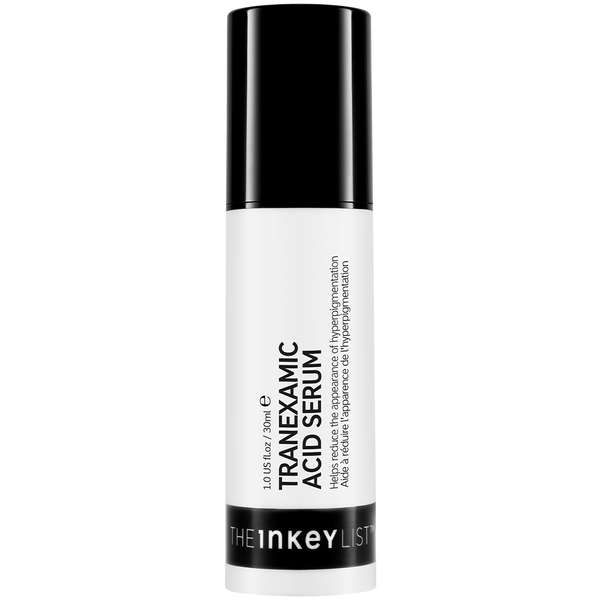
Everything here refers to our Tranexamic Acid Serum, £17.00 for 30ml, rated 4.2 stars across 332 reviews. If you want the wider context on why almost nothing in skincare delivers overnight, our guide to how long skincare takes to worksets realistic expectations across every active ingredient.
Here is how that timeline breaks down, week by week.
The Week-by-Week Tranexamic Acid Timeline
Knowing where you sit on the timeline is the difference between staying consistent and giving up two weeks before anything was ever going to show. Pigmentation fades on a schedule set by your skin, not by your patience. Here is what that schedule generally looks like.
- Weeks 1 to 2: nothing visible yet, and that is completely normal. You will not see pigmentation fading in the first fortnight. What you may notice is that skin feels more hydrated and comfortable, because the serum’s supporting formula gets to work long before the pigment-related benefits become visible. No fading at this stage is not a sign of failure. It is simply too early for the biology to have caught up.
- Weeks 2 to 4: the first subtle changes. This is usually when people start noticing that tone looks slightly more even, particularly in the mirror in natural daylight. Newer marks begin to soften at the edges rather than disappear outright. The change is quiet. If you are looking for a dramatic difference here, you will miss the real one.
- Weeks 6 to 8: the meaningful window. This is where most consistent users see genuine improvement in overall evenness and, in particular, in post-blemish marks. If you are going to judge whether the product is working for you, this is the earliest fair point at which to do it.
- Weeks 12 and beyond: the long game. Deeper pigmentation, melasma and older marks continue improving well past the three-month point. These concerns do not resolve on the same clock as a mark left behind by last month’s breakout, and expecting them to leads to a lot of unnecessary disappointment.
Why the 6 to 8 Week Mark Matters
There is a reason the 6 to 8 week window keeps appearing in skincare guidance, and it is not a marketing convention. It maps onto how quickly your skin physically replaces itself.
Every pigmented cell sitting in the upper layers of your skin has to be generated at the base of the epidermis, travel upward through each successive layer, and finally be shed at the surface. That journey cannot be rushed by applying more product. It takes the time it takes, and in healthy adult skin a full renewal cycle runs to several weeks.
Six to eight weeks is approximately one complete renewal cycle. That is the first point at which a meaningful proportion of the pigmented cells that were on your face when you started have actually been replaced by newer, less pigmented ones. Anything you see before that is a preview. Anything you see after is the actual result.
This is also why 8 weeks is the realistic point at which to judge before and after results. Not four weeks, not two. If you are photographing your progress or deciding whether to repurchase, eight weeks is the fair marker. Judging earlier is judging an incomplete process.
How Quickly Tranexamic Acid Works Compared to Other Actives
People often ask how quickly does tranexamic acid work relative to other brightening ingredients, expecting a straightforward ranking. It is more useful to understand the mechanism than the league table.
Tranexamic acid works upstream. Rather than removing pigmented cells that already exist at the surface, it targets the signalling that prompts pigment production in the first place. This is a genuinely different approach from exfoliation, and it explains the shape of the timeline. An exfoliating acid can make skin look brighter within days because it is physically removing surface cells. Tranexamic acid is quieter early on and more durable later, because it is reducing how much new pigment gets made in the first place.
The practical consequence is that the early weeks feel underwhelming and the later weeks compound. Anyone chasing a fast visible hit in week one is measuring the wrong ingredient with the wrong stopwatch.
Consistency Beats Intensity, Every Time
If there is one behavioural point in this entire article worth internalising, it is this one. Applying the serum every single day at a sensible frequency will always outperform applying it enthusiastically for five days and then forgetting about it for four.
Skipping days resets progress far more than most people expect. Because the ingredient works by suppressing pigment production on an ongoing basis, gaps in application mean gaps in that suppression, and your skin resumes its default behaviour in the interim. You are not simply pausing progress during those gaps. In some cases you are giving back ground you had already gained.
Using more product per application does not compensate. A generous layer applied sporadically is less effective than a modest amount applied daily. The compounding happens across days, not within them.
There is a version of this question phrased as how long does it take for tranexamic acid to work when used inconsistently, and the frank answer is: considerably longer, and sometimes not at all in any way you would notice. Consistency is not a nice-to-have on the timeline. It is the mechanism by which the timeline functions.
Those ranges shift meaningfully depending on your skin, your concern and your habits, so let us look at what actually changes them.
What Affects How Quickly Tranexamic Acid Works
Two people can buy the same serum on the same day, use it faithfully, and be looking at noticeably different skin eight weeks later. That is not a defect in the product. Several variables sit between the bottle and the result, and most of them are within your control once you know what they are.
The Type and Depth of Your Pigmentation
This is the single biggest determinant of speed, and it comes down to where in the skin the pigment is physically sitting.
Melanin produced in the epidermis gets transferred into surrounding cells and travels upward with normal turnover, which means it can be shed. But when inflammation or injury is significant enough, pigment can settle deeper, below the base of the epidermis, where it is not reached by the ordinary shedding process. That pigment stays put far longer.
There is even a visual cue. Pigment sitting in the upper layers tends to read as tan or brown. Pigment that has settled deeper often looks greyer or has a bluish cast, because of how light scatters at that depth.
The practical translation is straightforward. Surface-level post-blemish marks fade considerably faster than deep dermal melasma, because one is being carried out by a process that runs every six to eight weeks and the other is not.
How Long the Pigmentation Has Been There
Fresh marks respond faster than years-old ones. A mark from a breakout six weeks ago is still relatively shallow and still in active flux. A patch of pigmentation you have had since a summer holiday four years ago has had time to settle and, in many cases, to be repeatedly re-triggered by subsequent sun exposure.
This is worth factoring into your expectations before you start rather than after. If you are treating something long-standing, the 12-week-plus timeline is your realistic frame, and progress will be incremental rather than obvious.
Consistency of Use
Covered above, but it belongs on this list because it is a variable, not a given. Daily application is what compounds. If your honest answer to “am I using this every day” is “most days”, that is a legitimate explanation for slower-than-expected progress and it is the easiest one to fix.
Daily SPF: The Single Biggest Variable
If you take nothing else from this section, take this. Without daily broad-spectrum sun protection, UV exposure continues re-triggering pigment production while you are actively trying to reduce it. You are not standing still. You are working against yourself.
This is not an optional enhancement to a pigmentation routine. It is the foundation the entire routine rests on. Melanocytes remain responsive to UV long after the original inflammation or injury has healed, which means every unprotected day is a day your skin has the opportunity to rebuild what you are trying to fade.
Understanding what SPF actually does reframes it from a summer accessory into a year-round, non-negotiable step. UV reaches skin on overcast days and through windows. The exposure that undoes pigmentation progress is rarely the dramatic beach day. It is the accumulated ordinary daylight of a normal week.
Our Dewy Sunscreen SPF 30 is the sunscreen recommended alongside the Tranexamic Acid Serum specifically because it layers cleanly over serums without pilling or leaving a heavy finish, which matters enormously for whether you actually keep using it.
The Condition of Your Skin Barrier
A compromised barrier slows everything down, through a chain of consequences rather than a single mechanism.
When the barrier is disrupted, skin becomes more reactive. More reactive skin tolerates actives less well. Poorly tolerated actives get used less often, or abandoned entirely. And separately, barrier disruption is itself inflammatory, which is precisely the process that generates post-inflammatory pigmentation in the first place. You can end up producing new pigment while trying to fade old pigment.
Skin that feels tight, stings when products go on, or looks persistently flushed is telling you something useful. Addressing that first is not a detour from your pigmentation goal. It is a prerequisite for it.
Everything Else in Your Routine
Supporting ingredients accelerate progress. Over-exfoliation and general irritation slow it down.
The common failure pattern is enthusiasm. Someone decides to tackle their pigmentation properly, and adds a brightening serum, an exfoliating acid, a retinoid and a vitamin C all within the same fortnight. Skin becomes irritated, irritation drives inflammation, inflammation drives pigment, and the routine that was meant to fix the problem is now contributing to it.
Less, applied consistently, genuinely does outperform more, applied chaotically. Build slowly.
Now that the general variables are clear, it is worth looking at how the timeline differs depending on exactly which type of pigmentation you are dealing with.
Tranexamic Acid Results by Concern: Melasma, Post-Blemish Marks and Sun Damage
Pigmentation is not one condition. It is a category containing several quite different things that happen to look superficially similar, and they run on genuinely different clocks. Identifying which one you have is the fastest route to a realistic expectation.
If you are not certain which category applies to you, our guide to what type of hyperpigmentation do I have walks through how to tell them apart before you commit to a routine.
Melasma
Melasma is typically the slowest and most stubborn form of pigmentation to shift, and it is important to say that plainly rather than imply otherwise.
It usually presents as larger, symmetrical patches rather than discrete spots, most often across the cheeks, forehead, upper lip and bridge of the nose. It is frequently hormonally influenced, which means it can appear or intensify during pregnancy or with hormonal changes. And critically, it is prone to returning without rigorous, sustained sun protection, even after significant improvement.
Much of what makes melasma difficult is depth. It often has a dermal component, and pigment at that depth is not cleared by the epidermal turnover cycle that handles more superficial marks. This is exactly why the 12-week-plus timeline applies here and why patience is not simply encouragement, it is an accurate description of what is required.
The research picture is genuinely encouraging, though. A systematic review of tranexamic acid in post-inflammatory hyperpigmentation examined the evidence across delivery methods and found supportive results for tranexamic acid in addressing pigmentation of this kind. Separately, a randomised controlled study comparing topical 5% tranexamic acid solution with 3% hydroquinone cream in melasma found topical tranexamic acid to be a credible option in melasma management. A further study on a serum containing tranexamic acid, kojic acid and niacinamide evaluated on facial dyschromia supports the idea that tranexamic acid performs well alongside complementary brightening ingredients rather than in isolation.
When people search for tranexamic acid melasma before and after comparisons, the images that are worth learning from are the ones spanning three months or longer. Anything presented at four weeks is either an unusually responsive case or a generous interpretation of lighting. Melasma is a marathon, and progress photographs taken at consistent monthly intervals will tell you far more than daily mirror checks ever will.
One further note on melasma specifically: because it is so closely linked to UV and hormonal triggers, maintenance matters as much as initial progress. Improvement is not a finish line. It is a state that requires ongoing sun protection to hold.
Post-Blemish Marks
Post-blemish marks are usually the fastest to respond, and they are where most people see their first genuinely encouraging results, typically within that 6 to 8 week window.
These are the flat marks left behind after a breakout has healed. They can look pink, red, purple or brown depending on your skin tone and on what is causing the discolouration. They sit relatively superficially, which is precisely why they clear more readily. The epidermal turnover cycle is working in your favour here in a way it simply is not with deeper dermal pigment.
There is an important distinction to make, and it saves a lot of frustration. Flat marks left after a breakout are not the same as indented or raised blemish scars, and the two do not respond to the same approach. A flat mark is a discolouration issue, and a pigment-focused serum is a sensible response to it. Indented scarring is a change in the skin’s texture and structure, and no topical serum will fill it in. If your concern is textural rather than tonal, our guide on how to fade post-blemish marks explains the difference between the two properly, including why some marks look red and others look brown.
There is also a prevention argument that is easy to overlook. Every new breakout has the potential to leave a new mark behind. Fading existing marks while continuing to develop fresh ones is a treadmill. Reducing breakouts is therefore part of a pigmentation strategy, not separate from it.
This is where salicylic acid earns its place in a blemish-prone routine. As an oil-soluble ingredient it can get into pores and help keep them clear, which addresses the problem at the point where marks originate. Our Salicylic Acid Cleanseris a low-commitment way to include it, since it rinses off and is less likely to overwhelm skin already using other actives. For blemish-prone skin wanting a more comprehensive approach, the 360 Skin Clearing Serum works across the different stages at which blemishes form.
Used together, the logic is simple. One part of the routine reduces the marks you already have. Another reduces how many new ones you go on to acquire.
Hyperpigmentation and Sun Damage
Sun-induced pigmentation behaves differently from both melasma and post-blemish marks in one crucial respect: it is cumulative, and its trigger is ongoing.
Dark spots from UV exposure are the visible record of accumulated sun over years. They tend to appear on the areas that receive the most consistent exposure, which is why the face, backs of the hands, chest and shoulders are the usual sites. They often become more apparent from the mid-thirties onward, not because the damage occurred then, but because that is when accumulated exposure begins to surface visibly.
The defining challenge is that the trigger has not gone away. Unlike a post-blemish mark, where the causal event is over and finished, UV-driven pigmentation faces continued exposure every time you leave the house. Fading these spots without addressing that ongoing exposure is genuinely close to futile. This is why daily protection is not the final step in this particular routine but the first one, and why our guidance on choosing and using sunscreen properly is worth reading before you buy any brightening product at all.
For a full breakdown of how to approach sun-related dark spots specifically, including what to expect from different ingredients and how to layer them, read How to Get Rid of Dark Spots on Face. It covers that intent in far more depth than is appropriate here.
One area that catches people out is pigmentation in specific localised zones, particularly around the mouth, where the causes can differ from general sun damage and where the usual advice does not always apply cleanly. If that describes your concern, Pigmentation Around the Mouth addresses it directly.
With realistic expectations set for each concern, the useful question becomes how to make that timeline as short as it can reasonably be.
How to Get Faster Results: Routine, Application and Ingredient Pairing
You cannot outrun your skin’s renewal cycle. What you can do is remove every obstacle standing between the product and its best possible performance, which in practice is what separates a twelve-week result from an eight-week one.
Your Morning Routine
- Cleanse. Something gentle that does not strip. Our Fulvic Acid Cleanser works well in the morning because it cleanses without leaving skin tight, which matters when you are about to apply an active.
- Hydrate. A hydrating serum on damp skin creates a better base for everything that follows.
- Treat. Apply your Tranexamic Acid Serum to clean, slightly damp skin, covering the full face rather than spot-treating individual marks.
- Support. If you use vitamin C, this is where it goes, layered before your moisturiser.
- Moisturise. Lock in the layers beneath and support your barrier.
- Protect. Broad-spectrum SPF, every single morning, without exception. This is the step that determines whether the previous five were worth doing. If you are unsure how much to apply or how often to reapply, our complete SPF guide covers the practical detail that most people get wrong.
Your Evening Routine
- Double cleanse if you have worn SPF or makeup, which after following the morning routine above, you will have.
- Treat. Apply your tranexamic acid serum again, or alternate with your other evening active depending on how your skin is tolerating things.
- Retinol, if you use it. Evenings only, always. Retinoids and daylight are not a combination worth experimenting with.
- Moisturise to finish and support overnight barrier recovery.
Application Tips That Genuinely Matter
- Apply to clean, slightly damp skin. Damp skin improves how well the serum spreads and absorbs. Not soaking, just not fully dried off after cleansing.
- Treat the whole area, not just the spots. Pigmentation frequently exists at a level you cannot yet see. Treating the full face addresses what is developing as well as what has already surfaced.
- Consistency over intensity. Applying twice as much once every three days is not equivalent to applying a normal amount daily. It is worse.
- Do not layer too many actives at once. Adding one new product at a time, with a couple of weeks between introductions, lets you identify what is working and what is causing irritation.
- Patch test when introducing any new product. It takes very little time and prevents a reaction across your entire face. Our guide on why you need to do a patch test explains how to do it properly, because most people do it too briefly to learn anything useful.
The Ingredient Pairing Guide
Tranexamic acid is unusually easy to build a routine around. It is not a temperamental ingredient, and it plays well with most of what you are likely to already own.
Tranexamic acid and niacinamide. A genuinely complementary pairing. Niacinamide supports a more even-looking tone whilst also helping with oil balance and the appearance of pores, so you are addressing tone from two directions rather than duplicating effort. Our Niacinamide Serum layers underneath without any conflict, and this combination suits blemish-prone skin particularly well because it addresses both existing marks and some of the conditions that produce new ones.
Tranexamic acid and vitamin C. The pairing most associated with brightness, and for good reason. Vitamin C is a well-established antioxidant that also supports a brighter-looking complexion, and it approaches tone from a different angle than tranexamic acid does. Used in the morning, it also complements your SPF, since antioxidant support and sun protection work well in combination. Our 15% Vitamin C + EGF Serum, £16.00 and rated 4.5 stars across 660 reviews, is the pairing most frequently chosen alongside the Tranexamic Acid Serum. If your skin is on the sensitive side, morning vitamin C and evening tranexamic acid is a comfortable way to include both without crowding a single routine.
Tranexamic acid and hyaluronic acid. Universally compatible and the safest addition to any routine. Hyaluronic acidsupports hydration, and well-hydrated skin tolerates actives better, which loops directly back to consistency. Our Hyaluronic Acid Serum applied to damp skin before your tranexamic acid is a sensible default for almost everyone. If irritation is what has previously stopped you from sticking with an active, this is often the missing piece.
Tranexamic acid and retinol. Effective, but the pairing that needs the most care. Retinol supports cell turnover, which theoretically complements a pigment-focused ingredient nicely. In practice, introducing both simultaneously is how people end up with irritated, reactive skin and a pigmentation problem that is getting worse rather than better.
Introduce retinol slowly, at night only, and only once your skin is comfortably tolerating your tranexamic acid. Starting at two nights a week and building gradually is far more effective than starting nightly and stopping after ten days. Our Starter Retinol Serum at £13.00 is formulated for exactly this situation. Rated 4.8 stars across 105 reviews, it is a gentle retinol suited to sensitive skin and to anyone using a retinoid for the first time, which is the right starting point when you are already running another active.
Before you combine anything, it is worth reading what not to mix with retinol, because retinol has more genuine incompatibilities than tranexamic acid does and the interactions are where most routines go wrong.
For readers already comfortable with retinoids and looking for something with more presence, the Advanced 0.2% Retinal Serum at £18.00, rated 4.6 stars across 145 reviews, is the appropriate step up. It is not where to begin.
Doing everything correctly still leaves one question outstanding, which is how you actually know whether any of it is working.
How to Tell If Tranexamic Acid Is Working
Gradual change is remarkably difficult to perceive. You see your face every day, which makes you the least reliable possible judge of whether it has slowly changed over eight weeks. This is why so many people abandon products that were, in fact, working.
Take a Photograph on Day One
This is the most useful thing you can do, it takes thirty seconds, and almost nobody does it.
Photograph your face in consistent conditions: same spot, same time of day, natural light where possible, no makeup, no filters. Then repeat monthly. Consistency of conditions matters more than photographic quality, because lighting differences will manufacture improvements and regressions that do not exist.
Memory is simply not equipped for this task. Your brain updates its reference image continuously, so the version of your skin you are comparing against today is not the version from eight weeks ago. It is the version from yesterday. Against that comparison, nothing ever appears to change.
Early Signs Worth Looking For
- Newer marks softening at their edges. Fading rarely happens uniformly. Marks tend to blur outward before they lighten overall, so slightly less defined borders are an early positive signal.
- Overall tone looking more even. Often noticed before any individual spot has visibly changed. The general impression improves before the specifics do.
- Makeup sitting better. A practical, real-world indicator. When base products need less work to even things out, something underneath has genuinely changed.
- Fewer new marks appearing. Easy to miss because it is an absence rather than a presence, but it counts.
If It Does Not Seem to Be Working, Check These First
Before concluding the product has failed, work through this list honestly.
- Are you using it daily, or only when you remember? Be truthful. Four applications a week is a different routine from seven, and it produces different results.
- Are you wearing SPF every single morning? Every morning. Including cloudy ones, indoor days and winter.
- Is your skin barrier in good condition? If skin is tight, stinging or persistently red, a damaged skin barrier may be limiting both what your skin can tolerate and how well it heals. Repairing it comes first.
- Are you over-exfoliating or running too many actives at once? Irritation causes inflammation, inflammation causes pigment, and the routine becomes self-defeating.
- Has it actually been 8 weeks yet? More often than not, this alone is the answer.
The Honest Limit
If you have used tranexamic acid consistently for 12 weeks alongside daily SPF and seen no change whatsoever, it is reasonable to speak to a professional. This is particularly true with melasma, which frequently requires a combination approach and sometimes clinical input beyond what any topical routine can deliver.
Saying so is not a lack of confidence in the product. Skincare works within limits, and pretending otherwise helps nobody. A serum can do a great deal. It cannot do everything, and knowing where that boundary sits is more useful than being told it does not exist.
Real Results
“I’ve been using this alongside the Succinic Acid Treatment and the Salicylic Acid Cleanser for 3 months and my skin has improved so much.” — Hycent, verified reviewer, on a routine combining the Succinic Acid Treatment, the Salicylic Acid Cleanser and the Tranexamic Acid Serum
That detail matters. The result came from a consistent routine sustained over three months, which is precisely the timeline this article describes for post-blemish marks and pigmentation.
“You took my skin (and face) to another level! Thank you INKEY List.” — Zaklina, verified reviewer
For more customer accounts covering scarring and pigmentation specifically, read Real results with INKEY: scarring and hyperpigmentation.
That covers the broad picture. Here are the specific questions people ask most.
The Realistic Timeline, Summarised
How long does tranexamic acid take to work comes down to three markers worth holding onto: first visible changes at 2 to 4 weeks, meaningful results at 6 to 8 weeks, and continued improvement past 12 weeks for deeper or long-standing pigmentation.
Those numbers are not arbitrary. They track the pace at which your skin physically renews itself, which is a process no product can accelerate beyond a certain point. Understanding that is what turns an eight-week wait from a test of patience into a reasonable expectation.
Two behaviours determine your outcome more than any other choice you make. Apply it daily, and wear SPF every morning. Everything else is refinement. Skip either, and the timeline extends indefinitely regardless of what else you get right.
The most common reason people conclude a pigmentation product has not worked is that they assessed it at week three. If you take one practical step from this article, photograph your skin today and look again in eight weeks. The comparison will be more informative than every mirror check in between.
Our Tranexamic Acid Serum is £17.00 for 30ml and rated 4.2 stars across 332 reviews. Clear guidance, proven ingredients, and results that arrive on a realistic schedule rather than an imaginary one.
Ready to Start Your 8 Weeks?
Shop the Tranexamic Acid Serum, £17.00 for 30ml, 4.2 stars across 332 reviews.
Want to understand the wider picture before you buy? Learn more about hyperpigmentation, including what causes it and which ingredients address which type.
Not sure where to begin? Take our skincare quiz and we will build a routine around your skin rather than around a trend.
Frequently Asked Questions
Got a question?
Our askINKEY team are a friendly bunch of skincare experts with deep product knowledge and zero judgement. Whether you're an ingredient obsessive or just starting out, we'll make it make sense. No question too big. No question too small. We Give A Care, Every Day.


