



How to Store Vitamin C Serum (And Why It Turns Yellow)
Learn how to store your Vitamin C serum correctly to maximise its potency, prevent oxidation and keep it working effectively for longer with simple storage tips.
Author
askINKEY skincare advisor
Published
07 July, 2026
Time to read
10 minutes
You reach for your vitamin C serum one morning and notice it looks different. What was once a clear or barely-there pale liquid has shifted into something noticeably yellow, maybe even edging toward amber. You are not imagining it. Something has changed, and the question is whether that change matters enough to throw the bottle away or whether it is still worth using. This blog covers exactly that.
Here, you will find a clear explanation of why vitamin C serums oxidise and change colour, how to tell whether your serum has genuinely gone off, how long vitamin C serums actually last, and the most effective ways to store vitamin C serum to protect it from degradation. You will also find guidance on how the type of vitamin C used in a formula shapes the entire storage conversation, because not all vitamin C serums age the same way.
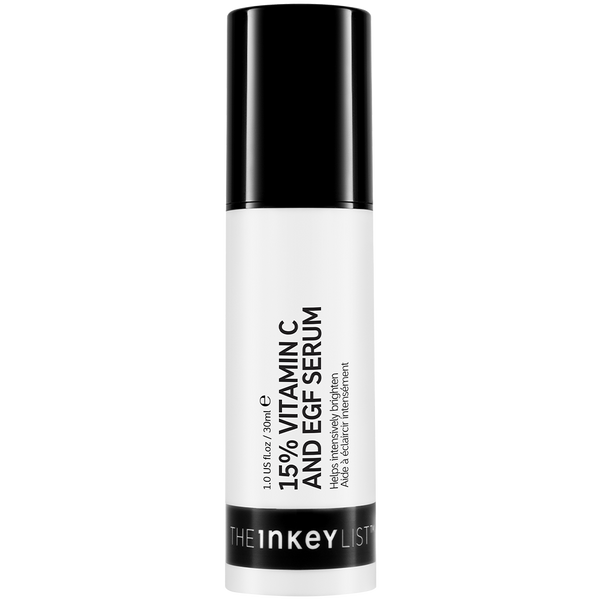
It is worth understanding upfront that there is a meaningful difference between unstable forms of vitamin C, like L-ascorbic acid, and more chemically stable derivatives that are designed to resist degradation. That distinction matters for how you store your serum, how long it lasts, and what you see happening to it over time. Our 15% Vitamin C + EGF Serum uses a stable derivative for exactly this reason. For a broader look at how the ingredient works on skin, the vitamin C ingredient page is a useful starting point.
Why Does Vitamin C Serum Turn Yellow or Orange?
The colour change that happens in a vitamin C serum is not random. It is a predictable chemical process called oxidation, and understanding it makes it far easier to store your serum correctly and recognise when it has passed its useful life.
Vitamin C serums, particularly those formulated with L-ascorbic acid, are inherently unstable compounds. L-ascorbic acid is the most biologically active, naturally occurring form of vitamin C, and it is also the most reactive. When it comes into contact with oxygen in the air, UV light, or heat, it begins to break down. This is the same fundamental chemistry that causes a cut apple to brown on the kitchen counter, or why orange juice loses its nutritional punch when left out. The ingredient is not designed to be stable in open air for extended periods, and exposure to the environment triggers its chemical deterioration.
The specific process driving the yellowing is the conversion of L-ascorbic acid into dehydroascorbic acid, commonly abbreviated as DHAA. As published research in dermatology via the National Institutes of Health confirms, this oxidative conversion is the primary mechanism behind the discolouration seen in vitamin C formulas. DHAA is not the same functional compound as ascorbic acid, and its accumulation in the formula is what produces that tell-tale shift in colour.
The colour progression follows a recognisable arc. A fresh L-ascorbic acid serum is typically clear or holds a very faint, almost imperceptible pale yellow tint. As early oxidation begins, the serum starts to take on a more definite light yellow shade. Left unchecked, that yellow deepens into an amber tone, then progresses further into orange, and eventually into a brownish colour as the formula becomes significantly degraded. Each step along that spectrum represents a further loss of antioxidant potency and brightening efficacy.
There is an important nuance here worth addressing directly. Not every vitamin C serum that starts out yellow is already oxidised. Some formulas begin with a naturally pale yellow tone because of the nature of their ingredients. The key is not the starting colour itself, but how much the colour shifts from what it looked like when first opened. A serum that was faintly yellow on day one and remains faintly yellow three weeks in is behaving very differently from one that has gone from pale to deep amber over the same period.
The three primary oxidation triggers are straightforward. Oxygen is the main driver, which is why every moment the cap is off and the formula is exposed to air, the degradation clock advances. UV light from natural or artificial sources accelerates the breakdown of ascorbic acid at the molecular level. And heat, whether from a warm bathroom, a sunny windowsill, or a steam-filled shower shelf, speeds up the chemical reactions that convert active vitamin C into its less effective oxidised forms.
Understanding this chemistry is the foundation for everything that follows. If you know what is driving the deterioration, the storage guidance starts to feel intuitive rather than arbitrary, and the question of whether your serum is still worth using becomes much easier to answer.
Is It Still Safe to Use an Oxidised Vitamin C Serum?
This is the question that follows almost immediately after noticing a colour change, and it deserves a clear, honest answer rather than a hedge. The short version is this: an oxidised vitamin C serum is generally not dangerous to apply to skin, but it is also not doing much for your skin once it has degraded significantly.
Light yellowing does not automatically mean the serum is unsafe or that it needs to go in the bin immediately. For many formulas, particularly L-ascorbic acid-based ones, a slight shift toward yellow signals the early stages of oxidation, meaning potency has begun to reduce but has not necessarily fallen off a cliff. Whether that loss is meaningful depends on how far the colour has shifted from the formula’s baseline and how quickly the change occurred.
The distinction that matters here is between a serum that naturally starts with a faint yellow tint versus one that has changed colour through oxidation over time. A light yellow tint from day one is often just a characteristic of the formula’s ingredients, not a sign of early degradation. A serum that was clear or pale when new and has since shifted to a deeper yellow, amber, or orange colour has undergone real oxidative change. The further it has travelled from its original appearance, the less effective it will be.
Orange or brown discolouration is a clearer and more decisive signal. At that stage, the serum has degraded significantly, and whilst applying it is unlikely to cause harm to the skin, the brightening and antioxidant benefits it was formulated to deliver will be minimal to nonexistent. At that point, replacing it is the practical call.
It is also worth knowing that a light, natural yellowing that does not affect the formula’s smell, texture, or performance is often nothing to worry about. A light yellow tint can simply reflect the nature of the ingredients used, and for stable vitamin C derivatives, a minor colour variation does not signal the same degree of functional loss that it would in an L-ascorbic acid formula. Natural oxidation in these formulas can cause a subtle colour shift without meaningfully compromising safety or performance.
Where an oxidised serum becomes a real missed opportunity rather than a safety risk is when you continue applying it expecting results it can no longer deliver. If you are counting on vitamin C to brighten skin, even out skin tone, and provide antioxidant protection, a significantly degraded serum is not going to hold up its end of that arrangement.
If you are concerned about when to replace skincare products more broadly, the guidance on skincare expiry dates and shelf life offers useful context beyond vitamin C specifically. And for a deeper look at how vitamin C functions as an ingredient, the vitamin C ingredient page provides comprehensive background.
How Long Does Vitamin C Serum Last?
Vitamin C serum shelf life is not a single fixed number. It depends on the form of vitamin C used, how the product is packaged, and crucially, how the formula is stored once opened. But there are useful benchmarks that give a clear practical picture.
An unopened vitamin C serum, stored in appropriate conditions, typically remains stable for one to two years from the date of manufacture. That is the general window for most formulas before oxidation becomes a meaningful concern, though the precise timeline varies depending on whether the active ingredient is L-ascorbic acid or a more stable derivative, and how well the packaging protects the formula from light and air.
Once a bottle is opened, the picture changes significantly. For L-ascorbic acid serums, the degradation window tightens considerably. These formulas are generally at their most effective for around three to six months after opening, and sometimes considerably less than that if stored in conditions that accelerate oxidation. A serum left on a warm, bright bathroom counter, opened and reclosed multiple times a day, will degrade faster than one kept in a cool, dark cabinet with the cap sealed firmly between uses.
Every product that has been opened carries a PAO symbol, which stands for Period After Opening. It appears as a small open jar icon, typically printed on the base or back of the packaging, with a number followed by the letter M. A symbol reading 6M means the product should be used within six months of opening. A symbol reading 12M means twelve months. This is the manufacturer’s guidance on the window during which the formula is expected to maintain its stability and efficacy after first use. It is one of the most useful pieces of information on any skincare product, and it is worth checking when you first open a new bottle so you have a clear reference point.
The form of vitamin C in a formula makes a meaningful difference to how long it stays effective. Does vitamin C serum expire faster depending on the type used? Yes, it does. Stable derivatives like ascorbyl glucoside are chemically structured to resist oxidative breakdown more effectively than L-ascorbic acid. They do not require the very low pH that L-ascorbic acid needs to remain stable, and they hold their integrity for longer under normal storage conditions. This translates to a longer practical window of effective use after opening.
Packaging design is also a factor that often gets overlooked. Formulas housed in opaque or dark glass bottles with UV-protective properties are better shielded from light degradation than clear containers. Pump dispensers are preferable to open dropper tops because they minimise the amount of air that enters the formula with each use. Every time a dropper is opened and closed, a small exchange of air takes place, and over weeks and months, that accumulates.
There are also early signs that a serum is approaching the end of its effective life even before a dramatic colour change is visible. A subtle shift in texture, perhaps slightly thicker or stickier than it originally felt, can signal that the formula’s composition has changed. A faint but noticeable difference in smell, where the serum develops an unusual or slightly off note, is another indicator worth paying attention to. Neither of these signals is definitive on its own, but in combination with any colour shift, they provide a useful picture.
For more context on expiry and when to replace products in your skincare routine, skincare expiry dates and shelf lifecovers the broader topic in useful detail. And if you are weighing up which vitamin C formula to use, our 15% Vitamin C + EGF Serum uses ascorbyl glucoside, which offers improved stability compared to L-ascorbic acid alternatives.
How to Store Vitamin C Serum Properly
Knowing the science of oxidation is one thing. Knowing exactly what to do with that information in your daily routine is another. Proper vitamin C serum storage comes down to a small number of consistent habits, each one directly tied to the three oxidation triggers identified above: air, light, and heat.
Keep your serum away from direct sunlight. This is perhaps the single most impactful storage change most people can make. UV light degrades L-ascorbic acid at a molecular level, accelerating the conversion to DHAA and pushing the serum toward that yellow-orange spectrum faster than almost anything else. A vitamin C serum sitting on a windowsill or on a well-lit open shelf is in constant contact with the very thing most likely to degrade it. Store it in a cupboard, a drawer, or a bathroom cabinet that keeps it shielded from natural and artificial light between uses.
Choose a cool, dark environment. Heat is the second major accelerant. The general sweet spot for vitamin C serum storage is a stable room temperature, typically in the range of 15 to 25 degrees Celsius. Most homes fall within this range, which means a cool bedroom shelf or a bathroom cabinet away from direct steam and heat is entirely adequate for most formulas. The official storage recommendation for our 15% Vitamin C + EGF Serum is exactly this: a cool, dry place between 15 and 25 degrees Celsius, out of direct sunlight.
The bathroom is a common storage location and it can work well, but with one caveat. If your serum lives directly in or immediately next to the shower, or in a space that regularly becomes very steamy and hot, those temperature and humidity fluctuations will add up over time. A cabinet that is not directly above the radiator or directly inside the shower enclosure is the better call. A cool, dark bedroom shelf or cabinet is equally suitable and avoids the steam entirely.
Can you store vitamin C serum in the fridge? This is a question worth answering clearly because it comes up often. For L-ascorbic acid serums, refrigeration can genuinely help slow the rate of oxidation, and it is sometimes actively recommended by formulators for this reason. The cooler, dark, and stable environment of a fridge is in many ways ideal for preserving an unstable compound. If you use an L-ascorbic acid serum and you live in a warm home or find your bathroom runs particularly hot, refrigerating it is a reasonable step.
For stable vitamin C derivatives like ascorbyl glucoside, refrigeration is not necessary. These formulas are designed to maintain their stability at room temperature without the additional intervention of cold storage. Keeping them in a cool, dark cabinet is perfectly sufficient, and refrigerating them offers no meaningful benefit over storing them correctly at room temperature.
Close the cap firmly after every use. This one is simple but easy to underestimate. Air exposure is the primary driver of oxidation, and every moment the cap is off, the formula is in contact with oxygen. Getting into the habit of closing the cap or pump head securely immediately after dispensing the product is one of the easiest and most effective ways to extend its life.
Avoid contact between the nozzle or dropper and your skin. When you touch the dispenser tip to your fingers or apply it directly to your face, you risk introducing bacteria, skin oils, and other contaminants into the formula. These do not just pose a hygiene concern; they can also contribute to formula degradation. Dispense the serum onto clean fingertips or the palm of a clean hand, and keep the nozzle or dropper clear of direct skin contact.
Pay attention to packaging. Opaque, dark, or UV-protective bottles are not just aesthetic choices. They are functional design decisions that protect the formula from light exposure between uses. Pump dispensers limit air exchange with each use compared to open dropper bottles, which is why formulas like the 15% Vitamin C + EGF Serum are packaged with a pump. The packaging is doing part of the preservation work for you, but it can only do so much if the serum is stored in poor conditions.
As research on vitamin C in dermatology confirms, exposure to light and heat significantly accelerates the degradation of L-ascorbic acid, which is why these storage guidelines are rooted in chemistry rather than convention.
Does the Form of Vitamin C Change How Stable It Is?
Not all vitamin C is the same in a formula, and that matters enormously for how well a serum holds up in storage, how quickly it oxidises, and what you should realistically expect from it over time.
L-ascorbic acid is the most biologically active form of vitamin C and the most commonly referenced in dermatological research. It is directly usable by skin cells without any conversion process, and when it is stable and potent, it delivers well-documented benefits for brightening, antioxidant protection, and collagen support. The challenge is stability. L-ascorbic acid is highly reactive to oxygen, light, and heat, and it requires a low pH environment, typically below 3.5, to maintain any meaningful stability within a formula. That low pH is also a reason why L-ascorbic acid serums can cause tingling, redness, or irritation, particularly for those with sensitive or reactive skin.
Because of these instability challenges, cosmetic chemists have developed a category of vitamin C derivatives: forms of the compound that have been chemically modified to resist oxidation more effectively whilst still delivering vitamin C activity to the skin. These derivatives are more stable at a wider pH range and do not require the aggressive acidic environment that L-ascorbic acid demands.
Ascorbyl glucoside is one of the most well-studied and widely used stable vitamin C derivatives. It is a compound formed by bonding L-ascorbic acid with glucose, which shields the active molecule from oxidative breakdown until it reaches the skin. Once applied, enzymes in the skin convert it into active ascorbic acid, where it can then perform its brightening and antioxidant functions. The result is a gentler, more stable delivery mechanism that is better suited to everyday use and to a wider range of skin types, including sensitive skin. For more on this, the guide on vitamin C on sensitive skin explores that angle further.
Our 15% Vitamin C + EGF Serum uses 15% ascorbyl glucoside as its active vitamin C ingredient. Because ascorbyl glucoside is inherently more stable than L-ascorbic acid, it does not undergo the same rapid colour progression, and it does not turn the deep brown associated with a significantly degraded L-ascorbic acid formula. This means the visual cues of degradation look different, and the serum maintains its integrity over a longer period under normal storage conditions. For anyone who has experienced the frustration of an L-ascorbic acid serum turning orange before the bottle is half finished, a stable derivative formula is a meaningful practical improvement. It is also an effective option for targeting hyperpigmentation and uneven skin tone without the instability drawbacks.
Another stable vitamin C derivative worth knowing about is sodium ascorbyl phosphate, which is used in the Vitamin B, C and E Moisturiser (£12). Sodium ascorbyl phosphate is a phosphate ester of vitamin C that converts to active ascorbic acid on the skin and, like ascorbyl glucoside, offers improved stability over L-ascorbic acid at a wider pH range. It provides a gentle, stable vitamin C option in a daily moisturiser format for those who prefer that delivery method.
The broader scientific literature on vitamin C in dermatology, including published research via the NIH, acknowledges the instability of L-ascorbic acid as one of the primary formulation challenges in vitamin C skincare, and the development of stable derivatives as a direct response to that challenge. Understanding this context helps explain why two vitamin C serums can behave so differently in storage, even when marketed for similar purposes. If you are particularly interested in how vitamin C compares to other brightening ingredients, the vitamin C vs niacinamide vs exosomes breakdown is worth exploring.
The formulation choice is not just a technical detail. It directly affects how long your serum stays effective, how you need to store it, and what results you can realistically expect to see over time.
Signs Your Vitamin C Serum Has Gone Off
Even with the best storage habits, vitamin C serums do not last indefinitely. Knowing what to look for across colour, smell, and texture gives you a clear, practical way to assess whether a serum is still worth using or whether it is time to replace it.
The most obvious signal is visual, and it tends to be the one people notice first. A serum that has shifted significantly from its original colour - from clear or pale yellow toward a deep yellow, amber, orange, or brown tone - has undergone meaningful oxidation. The further the colour has travelled from its starting point, the greater the degree of degradation. A deeply orange or brown vitamin C serum is one that has lost the majority of its active potency and is unlikely to deliver noticeable brightening or antioxidant results, regardless of how diligently it is applied. This is the clearest visual sign that the serum has gone off and should be replaced.
Smell is the second reliable indicator and one that is often overlooked. Fresh vitamin C serums typically carry either a faint, neutral scent or a very subtle citrus-adjacent note. If your serum has developed an unusual smell - something sour, rancid, or simply noticeably different from when you first opened it - that is a strong signal of chemical degradation. The formula’s composition has changed, and that change has produced byproducts that alter its odour profile. A meaningful change in smell, particularly if accompanied by any colour shift, is a reliable sign that the serum has gone off and should be replaced.
Texture changes are subtler but equally worth paying attention to. An oxidised vitamin C serum may develop a slightly different consistency from when it was first opened - perhaps slightly thicker, stickier, or viscous in a way that was not there before. If the serum no longer feels the same on your fingertips or applies differently than it did when new, note that as a sign that the formula’s chemistry has shifted.
A less obvious but still meaningful signal is a loss of visible results. If a serum that was previously delivering noticeable improvements in skin brightness and tone has stopped producing those effects, even when applied consistently and correctly, it may have lost its active potency even before a dramatic colour change has made that obvious. Results-based feedback from your own skin is a useful data point alongside the visual and sensory cues.
If two or more of these signals appear together, the practical call is to replace the serum. A vitamin C serum that has significantly oxidised cannot be salvaged through additional or more generous application. The active compound has converted to a form that does not deliver the same benefits, and continued use means missing out on the results the formula was designed to produce.
There is also a useful diagnostic to consider if a serum degrades quickly - within one to two months of opening - even when you have been storing it carefully. Rapid early degradation may indicate that the formula’s stability was not well-suited to your storage environment, or that the formula type itself, particularly L-ascorbic acid, is inherently more demanding in its storage requirements than your routine can consistently accommodate. In that scenario, switching to a more stable derivative formula like the 15% Vitamin C + EGF Serum may solve the problem at the formulation level rather than requiring increasingly precise storage habits.
For broader guidance on reading expiry signals across your skincare routine, skincare expiry dates and shelf life covers when and how to replace products generally.
How to Get the Most Out of Your Vitamin C Serum
Storing your serum correctly is essential, but storage is only one part of getting the best possible results from vitamin C. How you apply it, when you use it in your routine, and how consistently you use it all shape the outcome. These practical details are worth knowing clearly.
Morning is the best time to use vitamin C serum. The reason is rooted in how vitamin C functions as an antioxidant. During the day, skin is exposed to environmental aggressors - UV radiation from the sun, air pollution, and free radicals generated by both. Vitamin C, applied in the morning before those exposures begin, provides a layer of antioxidant protection that helps neutralise free radical damage before it accumulates. Using vitamin C in the morning positions it to work alongside your skin’s natural daytime defences, rather than at night when repair and renewal are already underway through other mechanisms. Always follow with SPF as the final step in your morning routine - vitamin C and daily sun protection work well together to support a brighter, more even complexion. For a detailed breakdown of routine timing, when to use vitamin C serum covers the full picture.
Apply to damp, cleansed skin. After cleansing, leave your skin slightly damp rather than patting it completely dry. Applying vitamin C serum to damp skin can improve its absorption and help it spread evenly. This is a simple application habit that takes nothing extra from your routine but can make a difference to how effectively the serum penetrates.
Use a pea-sized amount. More product does not mean more results with vitamin C serum. A pea-sized amount is sufficient to cover the face and neck, and using significantly more than that neither increases efficacy nor speeds up visible results. It does, however, use the product faster, which shortens the time a single bottle lasts and increases the chance of the remainder degrading before you can use it.
Start the clock on day one. The moment a new bottle is opened, oxidation begins. Correct storage habits from the very first use - not after you notice the colour starting to shift - give the formula the best possible chance of staying potent throughout its full PAO window. Waiting until degradation is visible to start storing it carefully is a missed opportunity.
Use it consistently. Vitamin C is not an instant-results ingredient. Its brightening and antioxidant benefits build with consistent, regular use over time. Independent clinical study data for the 15% Vitamin C + EGF Serum found that 87% of users agreed their skin looked brighter after four weeks of consistent use. That kind of result comes from regular daily application, not sporadic use whenever the bottle comes to mind.
Layer it correctly within your routine. Vitamin C serum should be applied after cleansing and before heavier serums, oils, and moisturiser. Applying it early in the routine, when skin is freshest and most receptive, gives the active ingredients the best opportunity to absorb. Waiting around 60 seconds between product layers allows each step to settle before the next one is applied. One important routine note: do not combine vitamin C with retinol, AHAs, BHAs, or PHAs in the same morning routine. These actives are better suited to an evening routine where they support skin renewal overnight, whilst vitamin C works during the day. There is useful guidance on this in can you use vitamin C and retinol together.
If you are pairing vitamin C with a hydrating ingredient like hyaluronic acid, that combination works well. Hyaluronic acid draws moisture to the skin and supports a comfortable, plump texture, and it does not interfere with vitamin C’s efficacy. Using hyaluronic acid with vitamin C explains how to layer them effectively.
For anyone with sensitive skin who has been cautious about adding vitamin C to their routine, stable derivative formulas are the more accessible entry point. They are gentler by design, and vitamin C on sensitive skin addresses that question directly with practical guidance.
What Vitamin C Serum Storage Tells You About Your Formula
Vitamin C serums turn yellow, and sometimes orange, and occasionally a deep, unmistakable brown, because of a well-understood chemical process. L-ascorbic acid, the most active and most reactive form of vitamin C, converts to dehydroascorbic acid when exposed to air, light, and heat. That conversion is the mechanism behind every colour shift you observe, and it is also the reason the serum becomes less effective as that colour deepens.
Whether a changed serum is still safe to use depends on how far the colour has shifted from its original state and whether there are additional changes in smell or texture. A serum that has darkened significantly, or that has developed an unusual smell or different texture, has degraded beyond its useful potency. Applying it is unlikely to cause harm, but it will not deliver the brightening or antioxidant benefits you are looking for.
Storing vitamin C serum in a cool, dark place, with the cap firmly closed after every use and away from direct sunlight, heat, and steam, is the most practical way to extend its effective life. Understanding the PAO symbol on your packaging gives you a clear, manufacturer-confirmed window for how long the formula should remain stable after opening.
Perhaps most significantly, the form of vitamin C in your serum changes the storage equation substantially. Stable derivatives like ascorbyl glucoside are designed to resist the oxidative degradation that makes L-ascorbic acid formulas so demanding in their storage requirements, and they maintain their integrity for longer under everyday conditions.
Ready to Try a Stable Vitamin C Formula?
You now have everything you need to store your vitamin C serum correctly, recognise when it has gone off, and understand why the form of vitamin C in a formula shapes the entire stability conversation.
If the instability of L-ascorbic acid serums has been a recurring frustration, our 15% Vitamin C + EGF Serum offers a stable alternative at £16. Formulated with 15% ascorbyl glucoside, it delivers brightening and antioxidant benefits without the rapid degradation or low-pH irritation associated with L-ascorbic acid. If you prefer your vitamin C in a daily moisturiser, the Vitamin B, C and E Moisturiser uses sodium ascorbyl phosphate, another stable derivative, at £12.
For readers who want to continue building their understanding of the ingredient, the vitamin C ingredient page is the place to go. And if you are still deciding which brightening ingredient is right for your routine, the vitamin C vs niacinamide vs exosomes guide offers a clear, evidence-based comparison to help you choose.
Frequently Asked Questions
Got a question?
Our askINKEY team are a friendly bunch of skincare experts with deep product knowledge and zero judgement. Whether you're an ingredient obsessive or just starting out, we'll make it make sense. No question too big. No question too small. We Give A Care, Every Day.


