

Does Retinol Expire? Storage and Shelf Life Explained
Retinol does expire, but it usually loses strength rather than becoming unsafe. Here's how long yours lasts, how to read the symbols, and how to store it well.
Author
askINKEY skincare advisor
Published
12 September, 2026
Time to read
13 minutes
Yes, retinol does expire, and it is one of the less stable actives in skincare. If you are asking “does retinol expire” because a bottle has been sitting in a drawer since last winter, here is the reassurance up front: in most cases the problem is lost strength rather than a safety risk. A retinol that is past its best usually does less than it should, not something it should not.
That distinction matters, because it changes what you do next. You are not dealing with a product that has turned hazardous. You are dealing with one you can no longer rely on to deliver a predictable result, which is a very different conversation.
Here is what this article covers:
- How long retinol lasts, both unopened and once opened
- Where to find the expiry information on your packaging, and why there may be no date at all
- How to tell if your retinol has degraded
- Whether expired retinol is unsafe or simply weaker
- How to store retinol so it holds its strength for longer
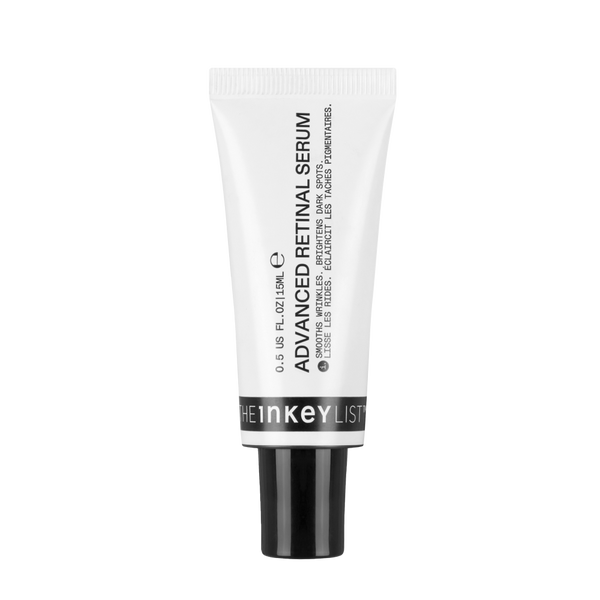
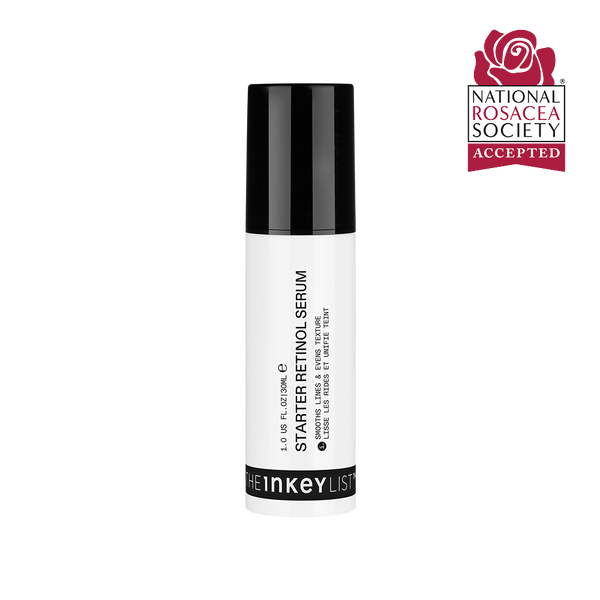
If your current bottle has clearly had its day, you can browse our full retinol range, where our Starter Retinol Serum (£13) is the accessible entry point and our Advanced 0.2% Retinal Serum (£18) is the step up. For the fuller picture on how retinol works and how to use it, our retinol guide is the place to start.
Does retinol expire? The short answer
Yes. Retinol degrades over time and loses potency as it does, which is precisely why every retinol product carries either a best before end date or a period after opening guide. Those markings are not decoration. They exist because the active in the bottle is measurably less stable than most of the other ingredients sitting alongside it on your shelf.
The point to hold on to, because the rest of this article rests on it, is that expired retinol generally becomes less effective rather than unsafe. The vitamin A content declines. The formula around it usually stays perfectly benign.
As a working rule, use a retinol within the period after opening shown on the packaging, which is commonly somewhere around 6 to 12 months once opened, and use an unopened bottle by its best before end date where one is shown. Those numbers are a sensible default rather than a law of nature, and the honest answer to “when does retinol expire” is that it depends heavily on the formulation, the packaging and how the product has been stored.
Just how heavily is the genuinely surprising part. Research on retinoid stability in commercial cosmetic products tested a range of retinoid products and found enormous variation between them.
Retinoid content in commercial products declined anywhere from 0% to 80% after six months at room temperature.
Read that range again. Same category, same six months, same ordinary room. One product lost essentially nothing. Another lost four fifths of its active. So yes, retinol can expire, and the far more useful question is not simply whether it can, but how quickly yours is likely to. To answer that, it helps to understand why retinol is so temperamental in the first place.
Why retinol is more fragile than most skincare actives
Retinol is not fragile by accident. It is fragile because of what it is chemically, and understanding that turns the storage advice later in this article from a list of arbitrary rules into something that actually makes sense.
According to the SCCS Opinion on Vitamin A, retinol is sensitive to four things in particular:
- Oxygen, which reaches the formula every time the bottle is opened
- Heat, which speeds up the rate of decline
- Light, especially direct sunlight
- Trace metals, which can be present in tiny amounts and affect stability
This is a vitamin A problem rather than a general skincare problem, and that is worth being clear about. Plenty of ingredients sit happily in a bathroom cabinet for a year without complaint. Retinol is simply not one of them, and the reason it gets singled out in storage advice is not marketing fuss. It is chemistry. If you want the broader view across your whole shelf, our full guide to skincare expiry dates, shelf life and storage covers how different products behave.
The single most useful finding in the degradation kinetics research is also the most counter-intuitive: light degradation was more pronounced than heat. The decline followed first-order kinetics, meaning it is a steady, predictable process rather than a sudden cliff edge on a particular date.
Most people have this the wrong way round. We worry about the steamy bathroom and think nothing of the serum sitting on a bright windowsill, catching the afternoon sun for months. On this evidence, the windowsill is the bigger threat. Heat matters, and we will come to it, but light is the one being routinely underestimated.
Not every form of vitamin A behaves identically, either. The SCCS notes that retinyl esters are somewhat more stable than pure retinol, and the stability testing found that newer derivatives generally performed better. This is where the distinction between different vitamin A forms becomes practical rather than academic, and if you are unsure which one you actually own, retinol vs retinal breaks down how they differ. Strength plays into it too, so what percentage retinol should I use is worth a read if you are choosing a replacement.
All of which explains something you may have noticed about retinol packaging. Formulators do not choose opaque bottles, airless pumps and air-excluding designs for the aesthetic. The SCCS specifically identifies opaque and air-excluding or airless packaging as helpful for preserving stability, alongside cool storage. When you see a retinol in a solid, light-blocking container with a pump rather than an open-mouthed jar, that is a formulation decision working on your behalf.
So the packaging is doing part of the job. The rest depends on time, which brings us to the timelines themselves.
How long does retinol last, unopened vs opened
Retinol shelf life splits neatly into two situations, and they behave differently enough to be worth separating.
Unopened. Does retinol expire if unopened? Yes, though more slowly. An intact seal limits how much oxygen reaches the formula, which removes one of the four main pressures on stability. That is a genuine advantage, but it is not immunity. Light and heat pass straight through a sealed cap, so an unopened retinol stored somewhere warm and bright will still lose potency while it sits there looking untouched. Where a best before end date is shown, treat it as your guide.
Opened. Once the seal is broken, the period after opening figure takes over, and for a retinol that is commonly in the region of 6 to 12 months. The critical detail, and the one most people get wrong, is that the clock starts when you first open the bottle rather than when you bought it. A product purchased in January and opened in August has been an opened product since August.
The reason the two differ comes down to exposure. Every use introduces fresh oxygen to the formula, and every use is another small increment of decline. A sealed bottle is degrading slowly in the background. An opened one is degrading slowly in the background and taking a small hit each time you use it.
Temperature is where the numbers get striking. The retinoid stability research found that at room temperature over six months, retinoid content declined by anywhere from 0% to 80%. At 40C over the same six months, the decline ranged from 40% to 100%. At the top end of that second range, there is nothing meaningful left.
Very few UK homes sit at 40C, so treat that as a stress test rather than a forecast. What it demonstrates is direction and magnitude: heat does not nudge the process along, it accelerates it substantially. Which is the real argument against storing a retinol on an open shelf directly above a shower, in a room that spikes in temperature and humidity twice a day, every day, for months.
The practical takeaway is straightforward. A retinol bought and forgotten in a drawer for two years is very likely weaker than its label suggests, even if the seal was never broken and the box looks pristine. Time alone does the work. If you are coming back to retinol after a gap like that, starting fresh is the sensible move, and retinol for beginnerscovers how to reintroduce it without overwhelming your skin. Our full retinol range is the place to look if that describes your situation.
Of course, none of these timelines help if you cannot find the relevant date on the bottle, which is where a lot of people get stuck.
How to find the expiry information on your retinol
Turn your retinol over and you are looking for one of two symbols. Only one of them will usually be there.
- The hourglass, which marks the best before end date
- The open jar, which shows the period after opening in months
Under Regulation (EC) No 1223/2009 Article 19, the date of minimum durability is shown as month and year, or day, month and year, and it must be preceded either by the hourglass symbol or by the words “best used before the end of”. The same framework applies to products sold here through the Cosmetic Products Enforcement Regulations 2013.
Here is the part that confuses people most, and it is worth stating plainly. A date of minimum durability is not requiredwhere the product’s minimum durability exceeds 30 months. In that case, the period after opening symbol applies instead, shown as a number inside an open jar: 6M, 12M, 24M and so on.
So if you have been squinting at your retinol looking for a best before date and cannot find one, nothing has gone wrong. There is very probably no date to find. The little open jar marked 6M or 12M is the information you are looking for, and it is telling you how long the product is expected to remain in good condition after you first open it.
For retinol specifically, there is an important caveat attached to that figure. A period after opening number assumes sensible storage. It is a guide rather than a guarantee. A retinol kept in a cool, dark drawer has a decent chance of honouring its 12M. The same product left in sunlight on a warm windowsill will not, and no symbol on the packaging can account for that. The label describes the product’s potential, not your bathroom.
This article stays deliberately retinol-specific, so if you want the general guide to cosmetic dates, symbols and how long different products last, our full guide to skincare expiry dates, shelf life and storage is the broader resource. And while you have the bottle in your hand, how to read an INCI list will help you decode the rest of what is printed on it.
Dates and symbols are one signal. The product itself gives you a few more.
How to tell if your retinol has gone off
If the date has rubbed off, or you genuinely cannot remember when you opened it, a sensory check is your next move. Three things are worth assessing.
Texture. Look for separation, unexpected thickening or thinning, or a grainy quality that was not there when the product was new. A formula that has changed consistency has usually changed in other ways too.
Smell. A rancid or sharp note where the product previously smelled close to neutral is one of the more reliable signals you have. Our noses are good at detecting this, and it is worth trusting yours.
Colour. Retinol can deepen from a pale ivory towards yellow over time. A slight yellow tint on its own is not automatically a sign the product is finished, and plenty of perfectly good retinols sit at the warmer end of the scale. A marked darkening alongside changes in texture or smell is a stronger indication it is past its best. For the full explanation of what the colour actually tells you, read why is retinol yellow.
Now the caveat that matters more than all three signals combined.
Retinol can lose a significant share of its potency with no visible change at all. A product that looks, feels and smells exactly as it did on day one can still have shed a large proportion of its active. Nothing in that 0% to 80% range announced itself on the outside of the bottle. Texture, smell and colour will catch the obvious cases, and they are worth checking, but they are a coarse filter rather than a precise instrument.
Which is why the date and the storage history are the more dependable guides. What you know about where the bottle has lived tells you more than what you can see in it.
Packaging offers a final clue. A clear glass dropper bottle has, by design, let in more light and drawn in more air with every use than an opaque airless pump. The SCCS Opinion on Vitamin A is explicit that opaque and air-excluding designs help preserve stability. Two retinols of identical age in different containers are not necessarily in the same condition.
Suppose your bottle fails the check. The next question is usually whether using it would actually be a problem.
Is it bad to use expired retinol?
For most people, the realistic outcome of using an expired retinol is reduced results, not harm.
Degraded retinol simply contains less active ingredient than it did, so it does less. That is the whole mechanism. It is not a product that has become hostile, it is a product that has become diluted by time.
Does expired retinol still work? Partially, and unpredictably. Given that the research recorded declines spanning 0% to 80% over six months at room temperature, you cannot know what strength you are actually applying. Two bottles of the same product, the same age, stored in different homes, can be meaningfully different products by the time they are half used.
A degraded retinol is not so much unsafe as unreliable.
That unpredictability causes a specific and very common frustration, and it is worth naming. Someone persists with a degraded retinol for weeks, sees no change in the look of their skin, and concludes that retinol does not work for them. In reality the routine was fine and the product had simply lost most of its strength. Before you write off an ingredient entirely, it is worth checking whether you gave a full-strength version of it a fair run. Our retinol guide is a good place to recalibrate what to expect and over what timeframe.
On irritation, the measured position is the honest one. There is no good evidence that a degraded retinol becomes more aggressive as it declines. If a product smells off, has visibly separated, or has been open far longer than its period after opening suggests, stop using it. Not because it is dangerous, but because you cannot rely on what is in it, and an unreliable active has no real place in a routine you are investing effort into.
There is a modest hygiene consideration too. Any product that has been open for a long time, particularly one in a jar or with a dropper that makes contact with skin, has had more opportunity to pick up contamination. That is an argument for replacing old products generally rather than anything specific to retinol.
And if a retinol has started to feel less comfortable than it used to, the cause is often elsewhere in the routine rather than in the bottle itself. What not to mix with retinol covers the combinations most likely to be responsible.
If unpredictability is the real problem, then good storage is the fix.
How to store retinol so it lasts
Storage advice for retinol is usually ordered by habit. It is more useful to order it by evidence, which means starting with light.
Light first. The research found light degradation more pronounced than heat, so this is the highest-value change you can make and it costs nothing. Keep retinol out of direct sunlight and off windowsills entirely. A closed drawer or cupboard beats an open shelf, even a shaded one, because ambient daylight across a room still accumulates over months.
Then heat. Avoid storing retinol on or near a radiator, and keep it out of the hottest part of the bathroom. The 40C data, with declines of 40% to 100% over six months, makes the argument without needing any embellishment. Warmth is not neutral. It is an accelerator.
Then air. Close the cap fully every single time, and screw it down rather than resting it. Opaque, airless and pump packaging protects the formula better than a clear dropper bottle, which is exactly why formulators reach for it, as the SCCS Opinion on Vitamin A sets out.
Cool storage can help slow degradation, but the fridge is not essential for a retinol kept somewhere dark and reasonably cool. For the full picture on chilling skincare, read should you keep your caffeine eye cream in the fridge.
One more free trick: if your retinol came in an opaque box, keep it in the box. It is an extra light barrier you already own, and it turns any drawer or cabinet into better storage than it was.
It also helps that retinol is a PM step. Using it in the evening keeps the bottle out of daylight at the moment it is most exposed, with the cap off and the formula open to the air. A small routine habit doing quiet structural work.
Different actives have different storage needs, so if vitamin C is also in your routine, how to store vitamin C serumcovers that one separately. And for everything else on your shelf, our full guide to skincare expiry dates, shelf life and storage is the broader reference.
Good storage protects your next bottle. Which leaves the question of what to do with the current one.
What to do if your retinol has expired
Replace it. There is no way to restore degraded retinol, no method for reviving it, and no benefit to persevering with a product whose strength you cannot predict. You are investing time and consistency into a routine, and an unreliable active quietly undermines both.
Dispose of the product with your household waste and recycle the packaging where your local facilities accept it. Bottles, pumps and cartons vary in what can be processed, so a quick check of your council’s guidance is worth the thirty seconds.
Replacing a retinol is also a natural moment to reassess rather than simply repurchase. Has your skin changed since you bought the last one? Was that strength genuinely right for you, or were you pushing through discomfort? Are you restarting after a long gap, in which case you are effectively beginning again? What percentage retinol should I use is a useful check before you commit.
If you are beginning or restarting, our Starter Retinol Serum (£13) is built for exactly that. It uses 1% retinyl acetate as a slow-release retinol, paired with squalane to hydrate and soothe, and it helps reduce the appearance of fine lines while supporting the look of smoother texture. For anyone already comfortable with retinol and looking for the next step, our Advanced 0.2% Retinal Serum (£18) is the stronger option.
If you would rather have the supporting moisturiser alongside your retinol from the start, our Beginners Retinol Duo (£26) pairs the two. Our Bio-Active Ceramide Moisturiser (£20) also works well layered over a retinol step to support the skin barrier, which tends to make the whole routine more comfortable to stick with.
For a full routine rather than a single product, our anti-ageing retinal routine and our intro routine for anti-ageing are assembled to work together, and you can browse everything in our anti-ageing collection or our retinol range.
One last thing if you are coming back after a break. Do not resume at the frequency you finished on. Skin that was comfortable with four nights a week eighteen months ago will not necessarily pick up where it left off, so build back gradually. Retinol for beginners walks through how to do that without irritating your skin.
The bottom line on retinol and shelf life
Does retinol expire? Yes, and it is more sensitive than most actives you will use, because oxygen, heat, light and trace metals all work against it from the day it is made. The usual consequence, though, is a weaker product rather than an unsafe one, and that is a far less alarming situation than it first appears.
Three things do most of the work. Check the best before date or the period after opening symbol so you know what you are working with. Store it away from light and heat, with light being the one most people underestimate. And replace it when you are genuinely unsure, because an active you cannot rely on is not worth building a routine around.
Good skincare should be predictable. Clear guidance, proven ingredients, real results, and a product you can trust to do what it says.
If your retinol has seen better days, our retinol range has a replacement for wherever you are in your routine, with our Starter Retinol Serum (£13) as the easiest place to begin. And if you are rebuilding from scratch, our retinol guide will walk you through it.
Frequently Asked Questions
Got a question?
Our askINKEY team are a friendly bunch of skincare experts with deep product knowledge and zero judgement. Whether you're an ingredient obsessive or just starting out, we'll make it make sense. No question too big. No question too small. We Give A Care, Every Day.


