



Types of Acne Scars: How to Identify Yours (Ice Pick, Boxcar, Rolling & More)
Not all acne scars are the same - learn how to identify the different types of acne scars and post-blemish marks so you can choose the most effective skincare routine for your skin.
Author
askINKEY skincare advisor
Published
17 July, 2026
Time to read
10 minutes
The term “acne scar” gets used to describe a wide range of completely different skin concerns - and the way you treat each one depends entirely on what you actually have. A flat pink mark left after a blemish is not the same thing as a deep, pitted ice pick scar. A raised, firm bump on your chest is not the same as a wave-like rolling texture on your cheek. Treating them as though they are the same will not get you anywhere.
This guide covers everything you need to know: a full breakdown of every type of post-blemish mark and structural scar, how to identify each one on your own skin, what topical skincare can and cannot realistically do for each type, and which ingredients are actually relevant. True structural scars - ice pick, boxcar, rolling, hypertrophic, and keloid - and post-blemish discolouration - PIE and PIH - are frequently confused with one another. That confusion leads to the wrong approach. This guide corrects it.
Shop our Blemish Scars Collection for ingredient-led solutions formulated around each of the concerns covered below, or explore our pre-built Hyperpigmentation & Acne Scar Treatment Routine for a targeted starting point.
What Are Acne Scars - And What Are Post-Blemish Marks?
Before you can choose the right approach, you need to understand one foundational distinction - and it is one that most skincare content gets wrong.
True structural scars involve permanent damage to the collagen architecture beneath the skin’s surface. They have texture. You can feel them with your fingertip when you run it across your skin. They are the result of what happens during the wound healing process after a blemish ruptures beneath the skin - a cascade of inflammation, tissue repair, and collagen remodelling that goes wrong in one of two directions.
Post-blemish marks - the flat red, pink, brown, or dark spots left after a breakout clears - are something else entirely. They are discolouration at the surface level. The collagen architecture beneath remains intact. No structural damage has occurred. They look like scars. They are not.
This distinction is not just semantic. It determines everything about how you approach them.
According to clinical research on acne scar pathogenesis and classification, acne scars form through a wound healing process that progresses through three stages: inflammation, granulation tissue formation, and matrix remodelling. During the final stage, fibroblasts produce enzymes that determine the architecture of the extracellular matrix. When the healing response is insufficient - producing too little collagen - the result is an atrophic, or depressed, scar. When the healing response is excessive - producing too much collagen - the result is a raised, hypertrophic or keloid scar.
The same research confirms that atrophic scars account for 80-90% of all post-blemish structural scarring. The vast majority of people dealing with pitted or textured skin are dealing with collagen loss, not collagen excess. Hypertrophic and keloid scars are far less common, though they do carry particular risk for certain individuals.
The NHS guidance on acne complications also confirms that persistent or severe blemishes - particularly inflammatory and cystic types - carry the highest risk of leaving structural scarring, and distinguishes between the different types of post-acne change.
Key Distinction
True structural scar: Involves damage to collagen beneath the skin’s surface. Has texture - you can feel it. Pitted or raised. Requires collagen-level intervention for significant improvement.
Post-blemish mark (PIE or PIH): Flat discolouration at the surface. No collagen disruption. Cannot be felt with a fingertip. Responds well to targeted topical skincare.
Understanding which category - or combination of categories - you are working with is the essential first step. Topical skincare works very differently on flat discolouration compared to structural scar tissue. You can also read our complete guide to post-blemish marks and how to fade them if discolouration is your primary concern - that guide goes into far greater depth on PIE and PIH specifically.
There are five main types of structural scarring that can follow a blemish - three atrophic, one hypertrophic, and one keloidal. Here is how to identify each one.
Atrophic Scars: Ice Pick, Boxcar, and Rolling
Atrophic scars are the most common type of structural acne scarring by a significant margin. They form when the skin’s healing process fails to replace enough collagen after a blemish ruptures beneath the surface. The result is a depressed or pitted appearance - the skin sits lower than the surrounding tissue because the scaffolding beneath it has been lost.
They appear most frequently on the cheeks, temples, and forehead - areas with the highest density of pores and sebaceous glands and therefore the highest likelihood of inflammatory breakout activity. There are three distinct subtypes of atrophic scar, each with a different shape, depth, profile, and clinical appearance. It is also extremely common to have more than one subtype at the same time - this is the norm, not the exception.
Ice Pick Scars: The Deepest and Narrowest Type
Ice pick scars are the most common atrophic subtype. According to clinical classification research, they represent approximately 60-70% of all atrophic acne scars.
Their appearance is distinctive: narrow (typically less than 2mm wide), deep, and sharply defined pits that extend vertically down into the dermis. Their cross-sectional profile is V-shaped - wider at the skin’s surface and tapering to a narrow point below. They look like the skin has been punctured by something thin and sharp - which gives them their name.
They form most commonly on the cheeks, and their cause is equally specific. Ice pick scars typically result from cystic or nodular blemishes where infected material tracked downward through the follicle, destroying tissue along a narrow but very deep channel. The depth of the damage is what defines them.
If you are unsure whether what you have is an ice pick scar or simply a large pore, try this: run a clean fingertip very lightly across the area in question. Ice pick scars feel like distinct, sharp pits - more defined and deeper than enlarged pores. You can feel their edges clearly.
Realistic topical skincare outcome: Ice pick scars are the most difficult atrophic subtype to improve with topical skincare alone. Their depth means that most topical actives cannot fully reach the damaged tissue. Ingredients like retinol and glycolic acid can improve surface texture and any associated discolouration over time, but significant structural improvement of the scar itself typically requires clinical procedures - TCA CROSS (a high-concentration acid applied directly into the scar), laser resurfacing, or punch excision. A dermatologist consultation is appropriate for moderate to severe ice pick scarring. You can also read how retinol supports skin renewal and post-blemish marks for a fuller picture of what this ingredient can realistically contribute.
Boxcar Scars: Round Depressions With Defined Edges
Boxcar scars account for approximately 20-30% of atrophic acne scars, making them the second most common subtype.
Their appearance differs clearly from ice pick scars. Rather than a narrow, tapering V-shape, boxcar scars present as round or oval depressions with sharply defined, near-vertical edges and a flat base - a U-shaped profile when viewed in cross-section. They are wider at the surface than ice pick scars, typically 1.5-4mm in diameter, and do not taper to a point below. They can be shallow (0.1-0.5mm depth) or deep (greater than 0.5mm), and this distinction matters significantly for treatment response.
They tend to appear on the temples and cheeks, and they result from inflammatory blemishes that destroy dermal tissue over a wider but less deep area than ice pick scars. Where ice pick damage is narrow and vertical, boxcar damage is broader and more lateral.
To identify them on your own skin: look for defined, punched-out circles or ovals with clearly visible edges. They resemble small craters. In direct lighting, the defined rim around each depression is usually visible. They feel different from rolling scars - boxcar edges are sharp, whereas rolling scars have sloping, undefined borders.
Realistic topical skincare outcome: Depth is the determining factor here. Shallow boxcar scars can show meaningful improvement with consistent topical skincare over 3-6 months - specifically, ingredients that support collagen renewal (retinol) and accelerate surface cell turnover (glycolic acid). Deep boxcar scars are significantly less responsive to topical treatment alone and are better candidates for clinical procedures such as laser resurfacing, subcision, or filler. Our Retinol Serum and Glycolic Acid Toner are the two most relevant topical options for shallow boxcar improvement.
Rolling Scars: Wave-Like Texture Across a Broader Area
Rolling scars represent approximately 15-25% of atrophic acne scars and have a very different cause from ice pick or boxcar scars - which is why their appearance is also so distinct.
Rather than a discrete pit or depression, rolling scars create a broader, wave-like or undulating surface texture. Their profile is M-shaped, and they are typically wider than 4-5mm. The edges are not sharp or defined - instead, the skin appears to slope gradually downward and then rise again, creating a rippled or rolling effect across the surface.
The cause is what makes them unique: rolling scars form due to fibrous bands of tissue called dermal tethering, which anchor the dermis to the subcutaneous tissue below. These bands pull the surface of the skin downward at their attachment points, creating the wave-like appearance. The tissue itself has not been destroyed in the same way as with ice pick or boxcar scars - it is being pulled from below.
This also means rolling scars can look significantly more or less prominent depending on lighting. Side-on or raking light tends to make them far more visible, while direct, flat lighting can minimise their appearance. Many people first notice their rolling scars in certain mirrors or under particular lighting conditions and assume their skin has suddenly worsened - in reality, it is the same skin in different light.
Realistic topical skincare outcome: Rolling scars are the atrophic subtype most likely to show some surface-level improvement with topical actives, because the structural damage is less extreme than ice pick scars. Consistent use of retinol and glycolic acid over several months can improve overall skin texture and the appearance of the rolling pattern at the surface. However, the underlying fibrous tethering that creates the rolling effect cannot be addressed by topical skincare - clinical subcision, which physically cuts the fibrous bands, is the procedure of choice for significant improvement.
Scar Identification Summary: Atrophic Types at a Glance
Ice Pick: Narrow (less than 2mm), deep, V-shaped pit. Sharply defined. Feels like a distinct hole. Most commonly on cheeks. Hardest to improve topically.
Boxcar: Round or oval depression, U-shaped with flat base and defined vertical edges. 1.5-4mm wide. Shallow or deep. Temples and cheeks. Responds better to topicals when shallow.
Rolling: Broader undulating or wave-like texture, M-shaped, wider than 4-5mm. Sloping edges, no sharp definition. Caused by fibrous tethering beneath the skin. More visible in side-on lighting.
Atrophic scars form when collagen is lost. But for some people, the healing process goes in the opposite direction - producing too much collagen, leading to raised scars above the skin’s surface.
Hypertrophic Scars and Keloid Scars: When the Skin Overbuilds
Raised acne scars are less common than atrophic scars but are important to understand and correctly identify, particularly because they require a very different approach - and in the case of keloids, professional input is essential.
Hypertrophic Scars: Raised but Contained
Hypertrophic scars form when the skin produces excess collagen during the healing process - the biological opposite of what creates atrophic scars. Rather than a deficit of collagen causing a depression, an overproduction of collagen causes a raised, firm lesion above the skin’s surface.
The defining characteristic of a hypertrophic scar is that it stays within the boundaries of the original blemish site. It does not spread beyond where the original breakout was. This boundary-respecting behaviour is the key difference between hypertrophic scars and keloids.
In appearance, hypertrophic scars are raised, firm, and typically pink or red, with a smooth surface. They are most common on the chest, back, and jaw or lower face - areas where blemishes tend to be deeper and more inflammatory. People with a personal or family history of hypertrophic or keloid scarring are at higher risk.
One important note: hypertrophic scars can flatten and fade over time - months to years - without any intervention. They are not permanent in the way that structural atrophic scars tend to be. UV exposure and continued inflammation can slow or prevent this natural fading process, which is where daily SPF and a consistent, barrier-supportive routine become relevant even for raised scars.
Topical skincare role: Supportive, not corrective. Keeping the area consistently hydrated, protected from UV, and barrier-supported can assist the natural fading process. Our BioActive Ceramide Moisturiser - clinically proven to firm, plump, and repair barrier function - is relevant here for hydration and barrier support, alongside our Dewy Sunscreen SPF 30 (£15) worn every morning to protect the area from UV.
Keloid Scars: When Scarring Grows Beyond Boundaries
Keloid scars are a more severe form of excess-collagen scarring. The defining feature of a keloid is growth beyond the boundaries of the original wound - sometimes significantly so. Where hypertrophic scars stay contained within the original blemish site, keloids spread outward, creating raised, firm nodules that are larger than the wound that caused them.
In appearance, keloids present as raised, firm nodules that can be pink, red, or significantly darker than the surrounding skin - they sometimes appear purplish or brownish. They may itch or feel tender. They occur most commonly on the chest, shoulders, and earlobes, though they can appear anywhere on the body.
According to clinical research on scar pathogenesis, hypertrophic and keloid scars are more common in people with medium to deeper skin tones, though this is not universal. Genetic predisposition is the primary factor - some individuals are simply more prone to overproducing collagen in response to injury, regardless of skin tone.
Keloids do not resolve on their own. They are not responsive to topical skincare. If you suspect you have a keloid scar - particularly if it is growing beyond the original wound site, itching, or causing discomfort - speak to your GP in the first instance. They can refer you to a dermatologist on the NHS or advise on private options. You can also refer to NHS guidance on acne complications for further information on when to seek help. Clinical options include intralesional steroid injections, cryotherapy, pulsed dye laser, or surgical approaches, typically used in combination. Anyone with a known tendency toward keloid formation should also be particularly cautious about any procedure that breaks the skin barrier, which should only be performed under specialist supervision.
Key Facts: Hypertrophic vs. Keloid Scars
Hypertrophic: Raised and firm, stays within the original wound borders, pink or red, can fade over time, partially responsive to topical barrier support and UV protection.
Keloid: Raised and firm, grows beyond the original wound borders, may itch or feel tender, does not resolve on its own, requires GP referral and dermatologist input - topical skincare is not an effective primary treatment.
Most people dealing with what they call acne scars are not dealing with structural scarring at all. They are dealing with post-blemish marks - flat discolouration that responds well to the right topical approach. Here is what that actually means.
PIE and PIH: Post-Blemish Marks That Are Commonly Mistaken for Scars
This is the section most readers will find most relevant to them, because post-inflammatory erythema (PIE) and post-inflammatory hyperpigmentation (PIH) are by far the most common concern left behind after a breakout - and the most commonly mislabelled as “scars.”
They are not structural scars. The collagen architecture beneath the skin is completely intact. What you are seeing is discolouration: changes in the skin’s pigmentation or vascularity at the surface level, triggered by the inflammation of a blemish. Because there is no structural damage, topical skincare can deliver real, visible, meaningful results - which is encouraging news for the majority of people reading this.
Understanding which type of post-blemish mark you have matters because PIE and PIH have different causes and respond to different ingredients.
PIE: Post-Inflammatory Erythema (Red, Pink, or Purple Flat Marks)
PIE presents as flat red, pink, or purple marks left at the site of a healed or healing blemish. These marks are caused by damaged or dilated blood vessels close to the skin’s surface - a vascular response to the inflammation that occurred during the breakout. They are not caused by excess melanin.
PIE tends to be more visible in people with lighter skin tones, where vascular redness is easier to detect against the surrounding skin. There is a simple self-test to identify PIE: press a finger firmly onto the mark. If the colour disappears briefly whilst your finger is pressing and then returns when you release - that is blanching, and blanching means PIE. The pressure temporarily empties the superficial blood vessels, which is why the redness disappears.
PIE can fade on its own over time, but the process is slow without targeted skincare intervention. Continued UV exposure and picking at breakouts will both slow or worsen the fading process.
PIH: Post-Inflammatory Hyperpigmentation (Brown or Dark Flat Marks)
PIH presents as flat brown, dark brown, or grey-brown marks. Unlike PIE, PIH is caused by excess melanin production triggered by skin inflammation. During a blemish, inflammation stimulates melanocytes - the cells responsible for pigment production - to release more melanin than usual. That excess melanin becomes deposited in the skin, leaving a dark mark long after the breakout itself has resolved.
PIH is more common and more pronounced in people with medium to deeper skin tones, where melanocyte activity tends to be more reactive to inflammation. But it can affect all skin tones. The same press test that identifies PIE can help identify PIH: press firmly on the mark. If the colour does not change - it stays dark regardless of pressure - that is PIH. Unlike PIE, PIH is not a vascular response and therefore does not blanch.
UV exposure is the single biggest obstacle to fading PIH. Sunlight stimulates further melanin production, which directly worsens existing PIH and slows the fading of marks that would otherwise improve. This is why daily SPF is non-negotiable as part of any PIH-targeted routine - not optional, not occasional. Our Dewy Sunscreen SPF 30 (£15) is designed for daily morning use and sits comfortably under makeup.
Many people have both PIE and PIH simultaneously, often on different parts of the face or even overlapping in the same area.
PIE vs. PIH at a Glance
PIE - Post-Inflammatory Erythema
- Appearance: Red, pink, or purple flat marks
- Cause: Damaged or dilated surface blood vessels
- Skin tones most affected: More visible in lighter skin tones
- Press test result: Blanches (colour disappears when pressed firmly)
- Key ingredients: Azelaic acid (vascular redness), niacinamide (anti-inflammatory)
PIH - Post-Inflammatory Hyperpigmentation
- Appearance: Brown, dark brown, or grey-brown flat marks
- Cause: Excess melanin production triggered by inflammation
- Skin tones most affected: More common and pronounced in medium to deeper skin tones
- Press test result: Does not blanch (colour unchanged when pressed)
- Key ingredients: Tranexamic acid, vitamin C, niacinamide, glycolic acid
For a comprehensive deep-dive into PIE and PIH - including a full ingredient guide, routine builder, and answers to the most common questions - visit our complete guide to post-blemish marks and how to fade them. You can also explore our hyperpigmentation guide for broader context on dark marks and uneven skin tone.
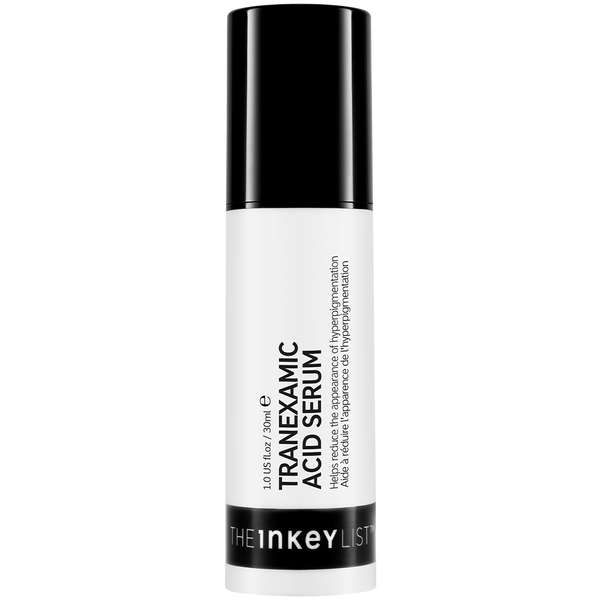
Our 10% Azelaic Acid Serum for Redness Relief is specifically formulated for vascular redness and PIE, while our Tranexamic Acid Serum - learn more about what tranexamic acid is and how it works - targets the melanin signalling pathways that drive PIH. You can also read whether azelaic acid helps with acne scars and blemish marks for more on this ingredient’s specific mechanisms.
Now that you know what each type looks like in theory, here is a practical self-assessment guide to help you work out which type - or combination of types - you are most likely dealing with.
How to Identify Your Scar Type: A Self-Assessment Guide
This guide is designed to help you narrow down what you are dealing with using only your eyes and fingertips. It is not a replacement for professional assessment, but it is a useful and often accurate starting point. Work through the steps in order.
Step 1 - Is it flat or does it have texture?
Run a clean fingertip very lightly across the area in question. Be honest about what you feel.
- Flat - no texture, no depth when you touch it: You are most likely dealing with PIE or PIH. Post-blemish discolouration, not a structural scar. Proceed directly to Step 5.
- Textured - you can feel a pit or a raised bump: You are dealing with a structural scar. Continue to Step 2.
Step 2 - Is it pitted (going into the skin) or raised (coming up from the skin)?
- Pitted - the skin goes downward when you touch it: Atrophic scar. Continue to Step 3.
- Raised - the skin comes upward, firmer than surrounding skin: Hypertrophic or keloid scar. Proceed to Step 4.
Step 3 - Which atrophic type?
Look closely at the shape of the depression. Good lighting matters here - raking light from the side often helps.
- Narrow (less than 2mm), deep, very distinct pit with a sharp opening you can feel clearly: Most likely an ice pick scar.
- Round or oval depression with a flat base and clearly defined vertical edges, wider than an ice pick pit: Most likely a boxcar scar.
- Shallow, wave-like or rolling texture over a broader area with no sharply defined edges - more of an undulation than a discrete pit: Most likely rolling scars.
- A combination of the above: Also very common. Many people have more than one atrophic subtype on different areas of the face simultaneously. This is the norm, not a complication.
Step 4 - Raised scar characteristics
- Raised, firm, pink or red, stays within the original blemish site: Most likely a hypertrophic scar.
- Raised, firm, growing beyond the borders of the original blemish, possibly itching or feeling tender: Most likely a keloid. Speak to your GP for a referral to a dermatologist.
Step 5 - PIE or PIH?
For flat marks with no texture:
- Press a finger firmly onto the mark for 2-3 seconds and release.
- Colour disappears briefly whilst pressing and returns on release (blanches): PIE - post-inflammatory erythema.
- Colour stays the same regardless of pressure (does not blanch): PIH - post-inflammatory hyperpigmentation.
- You see both types of marks on different areas of your face: Normal. Many people have both PIE and PIH simultaneously.
A note on self-assessment limitations:
Self-assessment is a useful starting point, but it has real limitations. Lighting conditions, skin tone, and the co-existence of multiple scar types can make identification genuinely difficult. If you are uncertain, your GP is the appropriate first point of contact - they can assess your skin and refer you to a dermatologist on the NHS where needed. See NHS guidance on acne and its complications for more on when to seek professional support.
For a personalised starting point for blemish-prone skin, you can also try our Breakout Analyser Pro - an AI-powered skin scanner backed by dermatologists. And once you know your concern, take our Skincare Quiz to build a routine matched to your specific needs.
Once you have identified your scar type, the next question is what topical skincare can realistically do - and where its limits are. Here is an honest breakdown by scar category.
What Topical Skincare Can (and Cannot) Do: Ingredients and Products by Scar Type
This section is where honesty matters most. Topical skincare is genuinely powerful for some of these concerns and genuinely limited for others. Knowing the difference upfront saves you both time and money.
For Structural Atrophic Scars (Ice Pick, Boxcar, Rolling)
Let us start with what topical skincare cannot do: it cannot restructure collagen architecture, fill pits, or reverse structural tissue loss. There is no cream, serum, or toner that can physically rebuild a deep ice pick scar. Anyone claiming otherwise is not being straight with you.
What topical actives can do is different - and still valuable.
Retinol stimulates fibroblast activity and promotes collagen synthesis over time. Applied consistently over months, it can gradually improve surface texture, increase skin cell turnover, and improve the appearance of the skin surrounding scarred areas. It does not fill the scar, but it can make the surrounding skin look healthier and smoother, which reduces the contrast. Glycolic acid - an alpha-hydroxy acid (AHA) - accelerates the shedding of surface skin cells, which improves overall texture and helps surface discolouration associated with scars clear more quickly. Together, these two ingredients represent the most evidence-backed topical pairing for atrophic scar appearance improvement.
For ice pick scars specifically: realistic topical expectations are modest for the structural element. Retinol and glycolic acid can improve surrounding texture and any associated post-blemish discolouration. For significant structural improvement of ice pick scars themselves, a dermatologist consultation is appropriate. TCA CROSS is the most targeted clinical procedure for this subtype.
For shallow boxcar and rolling scars: topical skincare can produce more visible improvement. Consistent use of retinol (collagen support, skin renewal, evening) and glycolic acid (AHA exfoliation, surface cell turnover) over 3-6 months can show meaningful results in surface texture. Deep boxcar scars remain less responsive to topical treatment alone.
Relevant products for atrophic scars:
- Our Retinol Serum - supports collagen renewal and long-term skin texture. Use in the PM only, introduced gradually.
- Our Glycolic Acid Toner - AHA exfoliation, surface cell turnover, improves texture. PM, 2-3 times per week.
- Our Salicylic Acid Cleanser - daily blemish prevention to reduce the risk of future breakouts and scarring. Read more about what salicylic acid can do for post-blemish marks.
You can also explore our guide to natural approaches to blemish scar improvement for broader context on topical support options.
For Post-Blemish Marks - PIH (Brown and Dark Marks)
This is where topical skincare genuinely delivers. PIH responds meaningfully to ingredient-led skincare because the collagen architecture is intact and the problem - excess melanin - is addressable at the surface level. Consistent use of the right ingredients, combined with daily SPF, can fade PIH marks significantly over 4-12 weeks.
The key ingredients for PIH and how they work:
Tranexamic acid blocks the melanin signalling pathway at the source, interrupting the chain of events that drives excess pigment production. It is one of the most targeted ingredients available for PIH. Our Tranexamic Acid Serum(£17) works at both the AM and PM stages of your routine. Read more about what tranexamic acid is and how it worksto understand the mechanism fully.
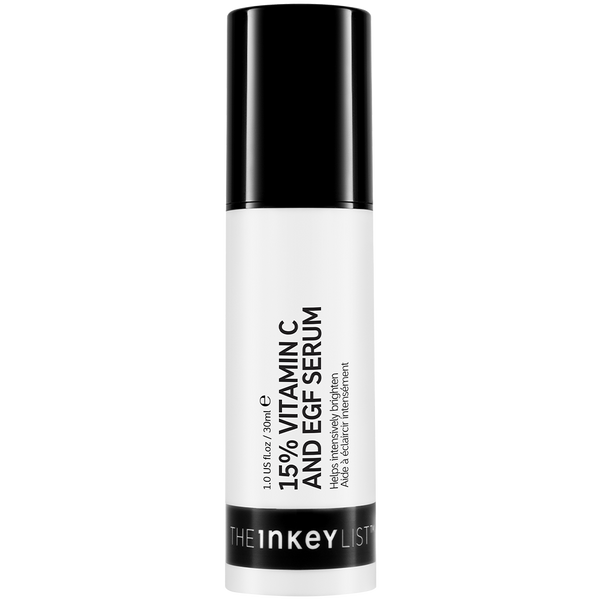
Vitamin C (15%) inhibits tyrosinase, the enzyme responsible for melanin synthesis, whilst also defending the skin against UV-triggered free radical damage that worsens PIH. Our 15% Vitamin C + EGF Serum (£16) is formulated for AM use. Learn more on our Vitamin C guide.
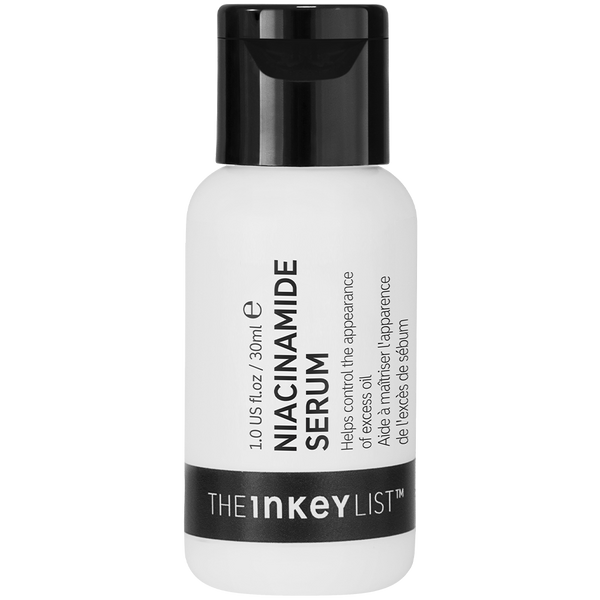
Niacinamide (10%) calms the skin inflammation that drives excess melanin production in the first place, and supports a more even skin tone over time. Our 10% Niacinamide Serum (£12) works well at both AM and PM.
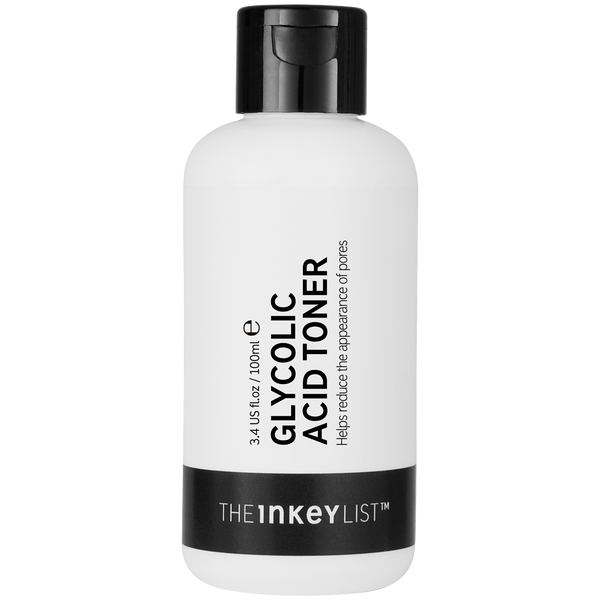
Glycolic acid accelerates surface cell turnover, shedding the pigmented cells faster than they would shed naturally. Our Glycolic Acid Toner (£14) is most effective when used 2-3 times per week in the evening routine.
Retinol supports long-term cell renewal and turnover, which assists PIH fading over time. Our Retinol Serum is best used in the evening only.
Daily SPF is non-negotiable for PIH. UV exposure actively worsens PIH by stimulating further melanin production. Without consistent sun protection, brightening ingredients cannot work effectively - they are working against an ongoing trigger. Our Dewy Sunscreen SPF 30 (£15) is designed for daily morning use and layers comfortably under other products.
For Post-Blemish Marks - PIE (Red and Pink Marks)
PIE requires a different ingredient focus because it is a vascular concern rather than a pigmentation concern. The goal is to calm the dilated blood vessels and reduce the inflammatory redness at the surface.
The key ingredients for PIE and how they work:
Azelaic acid (10%) is clinically proven to address vascular redness and is one of the most effective topical ingredients specifically for PIE. It works through multiple anti-inflammatory and anti-redness pathways simultaneously. Our 10% Azelaic Acid Serum for Redness Relief (£16) is suitable for both AM and PM use and is formulated for sensitive and redness-prone skin.
Niacinamide (10%) is anti-inflammatory and helps calm the surface redness associated with PIE alongside its broader skin-tone-evening benefits. Our 10% Niacinamide Serum (£12) supports both PIE and PIH concerns simultaneously.
Daily SPF remains important for PIE too - UV can exacerbate surface redness and slow the recovery process.
For Active Blemishes and Marks Simultaneously
If you are still dealing with active breakouts and post-blemish marks at the same time, a product that addresses both stages of the cycle makes sense.
Our 360° Skin Clearing Serum (£16) targets all three stages of the blemish cycle - including post-blemish mark fading - via 1% Dioic Acid and 2% Salicylic Acid. It is designed for blemish-prone skin managing ongoing breakouts alongside existing marks.
Our Hydrocolloid Invisible Pimple Patches protect active blemishes from being picked or squeezed - which is one of the most significant contributors to severe post-blemish marks. Protecting an active breakout with a patch dramatically reduces the inflammatory damage and therefore the mark it leaves behind.
A simple morning and evening routine for someone dealing with PIH and PIE alongside occasional breakouts might look like this:
Morning: Cleanse with our Salicylic Acid Cleanser, apply our 10% Niacinamide Serum (£12), layer our Tranexamic Acid Serum (£17) or 10% Azelaic Acid Serum for Redness Relief (£16) depending on your primary mark type, finish with our Dewy Sunscreen SPF 30 (£15).
Evening: Cleanse, apply our Glycolic Acid Toner (£14) 2-3 times per week, then our Retinol Serum on other evenings. Moisturise to support the barrier.
If you would prefer a pre-built option, our Hyperpigmentation & Acne Scar Treatment Routine brings together the key products in one targeted routine.
Knowing your scar type and the right ingredients to address it is the starting point. But there are situations where topical skincare alone is not enough - and recognising those situations is just as important.
When to See a Dermatologist {#when-to-see-a-dermatologist}
One of the things INKEY has always been clear about is this: topical skincare is powerful within its lane, but it has limits. Knowing when to seek professional input is not an admission of defeat - it is the smartest move you can make.
Speak to your GP if:
- You have moderate to severe ice pick scars - deep, numerous, or significantly affecting your confidence
- You have deep boxcar scars that have not responded after 3-6 months of consistent topical skincare
- You have any raised scar that may be a keloid - particularly if it is growing, itching, or causing discomfort
- Your post-blemish marks have not improved after 3-4 months of a consistent routine that includes daily SPF
- You are dealing with active cystic or nodular blemishes - treating the underlying cause aggressively, with professional help where needed, is the most effective way to prevent further structural scarring
Your GP can refer you to a dermatologist on the NHS, or advise on private options if appropriate. The NHS guidance on acne and its complications provides further detail on when to seek help and what treatment options may be available.
Clinical options for structural scars (brief overview):
For atrophic scars, clinical procedures include laser resurfacing (ablative or fractional), TCA CROSS (particularly effective for ice pick scars), microneedling, punch excision, and subcision (specifically for rolling scars to cut the fibrous tethering bands). Research on acne scar management supports the use of these combined clinical approaches for significant structural improvement.
For hypertrophic and keloid scars, options include intralesional steroid injections, cryotherapy, and pulsed dye laser - typically in combination and under specialist supervision.
These are clinical procedures, not topical skincare. They require a trained professional and, in many cases, multiple treatment sessions. This guide is not clinical treatment planning - for that, you need a dermatologist.
Putting It All Together
Different types of acne scars and post-blemish marks require fundamentally different approaches. Treating a PIH mark the same way you would approach a structural ice pick scar will not work for either. The first step in getting this right is knowing what you actually have - and this guide gives you the tools to make that identification.
For the majority of people - the vast majority - the concern is PIE or PIH. Flat discolouration with no structural damage, fully reachable by targeted topical skincare. With the right ingredients, consistent use, and daily SPF including our Dewy Sunscreen SPF 30 (£15) every morning, meaningful fading is achievable over 4-12 weeks. That is genuinely good news, and it is backed by the science of how these ingredients work at the cellular level.
For structural scars, topical skincare plays a supportive and surface-level role. Retinol and glycolic acid can improve overall skin texture and the appearance of shallower atrophic scars over time. For deep ice pick scars, significant hypertrophic scarring, or keloid concerns, speaking to your GP is not just helpful - it is the appropriate and most effective path forward. Seeking that input is not a last resort; it is the right decision.
Clear guidance, proven ingredients, and honest expectations - that is what gets real results. Your skin is specific. Your approach should be too.
Where to Go Next
- Shop our Blemish Scars Collection - browse all products relevant to post-blemish marks and scar-prone skin
- Take our Skincare Quiz - build a personalised routine matched to your specific skin concern in 2 minutes
- Build Your Own Routine and Save Up to 20% - create a custom routine at a lower price
- Read our full guide to post-blemish marks - the comprehensive resource for PIE, PIH, ingredient guides, and routine building
Frequently Asked Questions

Got a question?
Our askINKEY team are a friendly bunch of skincare experts with deep product knowledge and zero judgement. Whether you're an ingredient obsessive or just starting out, we'll make it make sense. No question too big. No question too small. We Give A Care, Every Day.


