



Milia Under the Eyes: Why They Form There & How to Treat Them Safely
Milia under the eyes are small, hard, keratin-filled bumps, not acne, and here's why they form there and how to treat them safely without picking or irritating the delicate eye area.
Author
askINKEY skincare advisor
Published
14 October, 2026
Time to read
13 minutes
Milia under eyes are small, hard, white bumps that form just beneath the surface of the skin, and they are one of the most common - and most misunderstood - under-eye concerns. If you’ve noticed tiny pearly bumps clustered around your eyes that do not come to a head, do not hurt, and do not seem to respond to your usual skincare, you are very likely dealing with milia. This guide explains exactly what milia are, why the under-eye area is so prone to them, how to tell them apart from other bumps, and how to treat them safely without irritating one of the most delicate areas of your face.
Before going any further, it is worth clearing up a common misconception: milia are not acne. They are not whiteheads, they are not a sign of poor hygiene, and they are not caused by dirt sitting on the skin. In the UK, milia are also widely known as “milk spots,” a term most people associate with newborn babies, but adults get them too, and the under-eye area is one of the most frequent places they show up. This blog will walk through why milia form specifically under the eyes, how to distinguish them from similar-looking bumps, and how to treat and prevent them safely and gently. Let’s start with the basics.
What Are Milia, Exactly? (And What They Are Not)
To treat milia correctly, you first need to know precisely what you’re dealing with, because treating the wrong type of bump with the wrong product can do more harm than good. So, what causes milia under eyes? In short: milia form when keratin, a structural protein that your skin produces naturally, becomes trapped beneath the surface of the skin instead of shedding away as it normally would. That trapped keratin hardens into a small, cyst-like bump just under the top layer of skin, and because it sits so close to the surface, it appears as a firm white or pale yellow dot.
This is a genuinely different mechanism to a spot or blemish, and the visual differences reflect that. A true milium (the singular form of milia) is:
- Firm and dome-shaped to the touch, rather than soft or fluctuating.
- White or pale yellow in colour, with no surrounding redness or inflammation.
- Without a visible pore opening, meaning there is no obvious “hole” the way there is with a blackhead or a typical spot.
- Unresponsive to squeezing in the way a blemish might be, because there is nothing building toward a head.
According to Cleveland Clinic’s overview of milia, milia (commonly called milk spots) are small cysts that form when keratin becomes trapped under the skin, and they most frequently appear around the eyes, cheeks, and nose. This is a useful independent confirmation of exactly what’s happening beneath the surface, and it also confirms that “milk spots” is a widely recognised term for the same condition, not a separate issue.
It’s worth repeating, because it genuinely changes how you should approach treatment: milia are not blemishes or acne, even though the skin involved can still be blemish-prone or prone to the occasional break out elsewhere on the face. The two things are not connected, and products formulated to fight breakouts, think strong salicylic acid spot treatments or harsh benzoyl peroxide gels, are not designed with this specific keratin-trapping mechanism in mind. They’re built to calm inflammation and unclog pores that already have an opening. Milia have no pore opening to unclog, which is exactly why a different, more targeted approach works better.
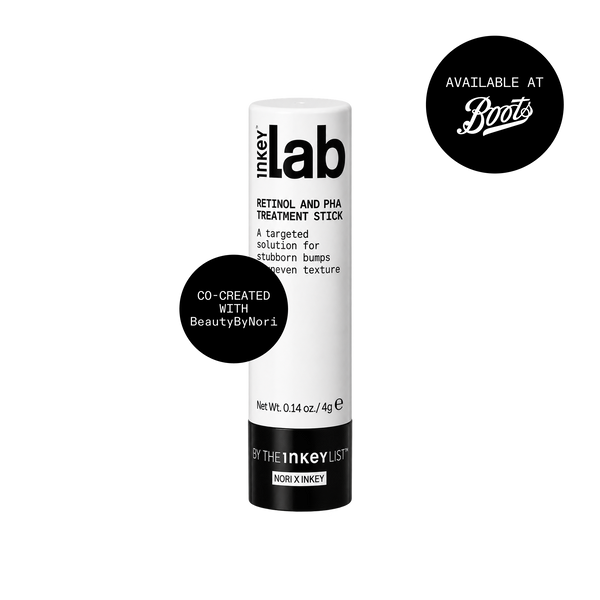
This is where a purpose-built option becomes genuinely useful rather than just another product on a shelf. Our Retinol & PHA Treatment Stick has been formulated specifically for small, hard bumps and uneven texture around the eyes, combining two ingredients known for supporting healthy skin cell turnover in a precise, targeted stick format. It’s designed to work with the way milia actually form, rather than treating them like an inflamed spot. For those wanting a complementary step for the wider eye area overnight, our Retinol Eye Cream is a good nightly pairing, supporting overall skin renewal around the eyes alongside more targeted treatment.
"Milia are keratin-filled cysts that form just under the surface of the skin. They are harmless and are not a type of acne", notes Cleveland Clinic, reinforcing that this is a structural, mechanical skin issue rather than an inflammatory or bacterial one.
Understanding this distinction matters because it reframes the whole approach. You’re not trying to “clear a breakout.” You’re trying to gently encourage trapped keratin to resolve and support the skin’s natural turnover process, without aggravating an area that has very little room for error. With that foundational understanding in place, the next logical question is why this particular patch of skin seems to attract milia more than almost anywhere else on the face.
Why Milia Form Specifically Under the Eyes
If you’ve ever wondered why milia seem to cluster stubbornly around the eyes rather than, say, the forehead or chin, the answer lies in the biology of the skin itself. The skin under the eyes is among the thinnest skin on the entire body, and it behaves very differently to skin elsewhere on the face. That difference is the key to understanding why this area is such a hotspot.
Thinner skin, fewer oil glands. The under-eye area has significantly fewer sebaceous (oil) glands compared to areas like the nose, chin, or cheeks. Oil glands play a role in keeping the skin’s surface naturally exfoliating and buffered, so an area with fewer of them often struggles more to shed dead skin cells and keratin efficiently. When that natural shedding process slows down, trapped keratin has a harder time resolving on its own, and it sits closer to the surface for longer, which is exactly the environment milia thrive in. Healthline’s explainer on milia under the eyes echoes this, noting that the thin skin and reduced oil gland activity around the eyes make the area particularly prone to trapped keratin compared to other parts of the face.
Product formulation matters more here than anywhere else. Heavy, rich eye creams and balms, often chosen specifically because the under-eye area feels like it needs “extra” nourishment, can actually work against this delicate skin. Thicker, more occlusive formulas sit on the surface for longer and can contribute to a build-up that traps dead skin cells and keratin underneath, especially when layered daily over months. This doesn’t mean rich formulas are inherently bad, but it does mean they’re not automatically the right choice for everyone, particularly those who are already milia-prone.
Incomplete removal is a quiet contributor. The eye area is notoriously easy to under-cleanse. Mascara, concealer, and daily SPF wear around the eyes can leave behind a fine residue that isn’t always fully removed with a quick cleanse, especially given how cautious most people are about scrubbing near their eyes. Over time, that incomplete removal can contribute to the kind of surface build-up that makes it harder for skin to shed normally.
Sun exposure plays a long-game role too. Cumulative sun exposure over the years can thicken and toughen the outermost layer of skin in a way that makes it more difficult for keratin to shed through its normal pathway, which is part of why milia become more common with age and sun exposure, not less. Sensible daily SPF habits around the eye area can help reduce this cumulative effect over time, alongside general sun-safety practices.
Genetics and skin type are the wildcard. Not everyone with thin under-eye skin or a rich eye cream habit develops milia, and some people seem to develop them no matter how careful their routine is. Individual skin type, genetics, and even hormonal factors all play a part, so if you’ve done “everything right” and still see milia appear, it isn’t a reflection of bad skincare habits. It’s simply how your skin behaves.
If heavy formulas are part of the picture for you, switching to something lighter for daytime wear can make a genuine difference. Our Caffeine Eye Cream is a notably lighter-weight option for those whose current eye cream may be feeling too rich or occlusive, offering hydration and a de-puffing boost without the heavier texture that can contribute to congestion in milia-prone skin.
Of course, milia are not the only thing that can show up under the eyes, and the under-eye area carries plenty of other concerns too, from puffiness to dark circles. If those are also on your radar, our dedicated Dark Circles & Under-Eye Puffiness resource covers those specifically, since they involve entirely different mechanisms (volume and pigmentation, rather than trapped keratin) and are worth treating as separate issues. With a clear picture of why milia favour this part of the face, it’s worth getting equally clear on how to tell true milia apart from other bumps that can look deceptively similar at a glance.
Milia vs Other Under-Eye Bumps: How to Tell the Difference
Getting the diagnosis right matters more than most people realise, because the “right” treatment for milia can do very little for a different type of bump, and vice versa. Before reaching for any product, it’s worth spending thirty seconds really looking at what you’re dealing with.
True milia tend to share a consistent set of features:
- Firm to the touch, with a dome-like shape that doesn’t flatten or shift under light pressure.
- White or pale yellow in colour, sitting just under the surface rather than sitting on top of it.
- No redness or visible inflammation surrounding the bump.
- No visible pore opening, meaning there’s no “hole” or central point the way there is with a blackhead or a typical spot.
- No head forms, no matter how long you leave it, because there’s no build-up working its way to the surface the way there is with a blemish.
Compare that to a whitehead or blemish, which generally looks and behaves quite differently. Whiteheads are usually mildly inflamed, often slightly tender, and do have a visible pore opening since they form when a hair follicle becomes blocked with oil, bacteria, and dead skin. Blemish-focused ingredients like salicylic acid are genuinely effective here because they target oil production and pore congestion directly, but since milia don’t involve a blocked pore or excess oil in the same way, that same ingredient often does very little for a true milium.
It’s also worth being clear that puffiness, under-eye bags, and dark circles are entirely different concerns, even though they’re all filed under “under-eye issues” in most people’s minds. Puffiness and bags are about fluid retention, fat pad position, or structural changes under the skin, a volume issue rather than a texture issue. Dark circles are typically about pigmentation or visible blood vessels beneath thin skin, a colour issue rather than a texture issue. Milia, by contrast, are purely a textural, surface-level issue caused by trapped keratin. If what you’re actually noticing is shadowing, hollowing, or swelling rather than small hard bumps, these related guides go into far more depth than we will here:
- How to Get Rid of Bags Under Eyes covers puffiness and volume concerns specifically.
- How to Get Rid of Dark Circles Under Eyes addresses the pigmentation side of things.
- Under-Eye Hollows & Tear Troughs explains structural volume loss, which is a different concern again.
Medical News Today’s overview of milia similarly draws this distinction clearly, noting that milia are keratin-filled cysts distinct from acne-related bumps, and that correctly identifying which you’re dealing with is the first step toward effective treatment. This lines up with everything above: milia have a very specific look and feel, and once you know what to check for, self-identifying is usually straightforward.
There is one caveat worth flagging honestly here: if you’re genuinely unsure, or a bump doesn’t fit neatly into either category, that’s a reasonable moment to get a professional opinion rather than guessing, something we’ll come back to later in this guide. For now, if what you’re seeing matches the firm, white, non-inflamed, no-pore description above, you can move forward confidently knowing you’re dealing with true milia, and the next section is exactly where you want to be.
How to Treat Milia Under the Eyes Safely at Home
This is the part most readers are here for: how to actually get rid of milia under eyes, safely, without making things worse. Before anything else, there’s one rule that matters more than any product choice.
Never pick, squeeze, or attempt to extract milia at home. It can be tempting, especially because milia sit so visibly close to the surface that they can look “easy” to pop out. They are not. The skin under the eyes is extremely thin, and attempting to extract a milium with your fingers, a pin, or a tool not designed for sterile extraction can easily lead to scarring, prolonged irritation, or infection in an area that is already more delicate than almost anywhere else on the face. This is worth repeating as clearly as possible: at-home extraction is one of the few genuinely risky things you can do in a skincare routine, and it is never worth it.
The safer, more effective approach is to support your skin’s own natural turnover process rather than forcing anything out manually. This means gentle, consistent exfoliation over time, not aggressive physical scrubbing, which will only aggravate thin under-eye skin without actually addressing the trapped keratin underneath.
Retinol is one of the most well-evidenced ingredients for supporting skin cell turnover. By encouraging the skin to shed surface cells more efficiently and regularly, consistent retinol use can help address the appearance of trapped keratin over time, gradually improving the look and texture of milia-prone skin. Cleveland Clinic notes that topical retinoids are a recognised approach that dermatologists may recommend for milia, which lends credible, independent backing to retinol’s role here.
PHA (polyhydroxy acid) works alongside retinol as a gentler exfoliating option. Compared to stronger AHAs like glycolic acid, PHA molecules are larger, meaning they penetrate the skin more slowly and tend to carry a lower irritation potential, which makes them particularly well-suited to a sensitive area like under the eyes. Used together, retinol and PHA offer a complementary combination: one supporting deeper cell turnover, the other providing gentle surface exfoliation, without introducing anything harsh.
This is precisely the combination behind our Retinol & PHA Treatment Stick, formulated specifically for small, hard bumps and uneven texture around the eyes. It helps visibly smooth the look of small, hard bumps and uneven texture around the eyes, and the stick format itself is a deliberate choice, not just a convenience. Because milia tend to cluster in very specific, small spots, a precise stick allows for targeted application exactly where it’s needed, without spreading active ingredients across the wider, already-delicate eye area where they aren’t necessary. This is for use in your PM routine only.
A few practical guidelines make a genuine difference to both safety and results:
- Patch test first. Apply a small amount to a discreet area and wait 24 hours before using it near the eyes, especially given how reactive this skin can be.
- Start slowly. Begin with two to three nights a week rather than every night, building up gradually as your skin adjusts.
- Apply to clean, dry skin. Damp skin can increase the absorption and irritation potential of active ingredients.
- Avoid the eyelid margin and waterline entirely. The product is designed for the surrounding skin, not the eye itself.
- Always follow with a suitable moisturiser to support the skin barrier, especially while introducing a new active ingredient.
- Use retinol-based products in the evening only, since retinol can increase photosensitivity.
It’s also worth setting honest expectations from the outset. This is a gradual process, not an overnight fix. Consistent use over several weeks is typically needed before you notice a visible improvement in texture, because you’re working with your skin’s natural renewal cycle rather than forcing an instant result. Healthline’s guidance on treating under-eye milia reinforces this same point: gentle, consistent exfoliation is the safest and most effective home approach, and patience is part of the process.
For those who want additional gentle exfoliation support earlier in their routine, our PHA Toner is a good complementary step, offering light exfoliation across the wider face before the more targeted treatment stick goes to work on the eye area specifically. With the core treatment approach now clear, it helps to see exactly where this fits into a full day-to-day routine, rather than being used as an isolated, one-off step.
Building a Safe, Gentle Under-Eye Routine Around Milia
A single product, no matter how well-formulated, works best as part of a considered routine rather than in isolation. If milia are a recurring concern for you, small adjustments across your whole under-eye routine, not just your treatment step, can make a meaningful difference to both results and comfort.
A simple AM/PM structure works well here:
In the morning: a gentle cleanse (even just rinsing with water if you haven’t worn anything overnight), followed by a lightweight, hydrating eye cream suited to daytime wear. This is not the moment for heavy, occlusive formulas, particularly if you already suspect your current eye cream might be contributing to congestion. Our Caffeine Eye Cream works well here, offering hydration and a lightweight de-puffing effect without the richer texture that can sit heavily on milia-prone skin throughout the day.
In the evening: thorough cleansing to properly remove makeup, SPF, and the day’s buildup around the eyes (an area that’s genuinely easy to under-cleanse), followed by the targeted treatment step. This is where our Retinol & PHA Treatment Stick fits specifically, applied precisely to areas of concern as part of your evening routine, followed by a suitable moisturiser to support the skin barrier overnight.
Application technique matters more than people expect. It’s a common habit to use too much eye cream, or to apply it too close to the lash line in an attempt to “treat everything,” when in fact a small amount applied with a light tapping motion, kept slightly further back from the lash line, is both safer and more effective. Overloading this area with product, however good the product is, can contribute to the very build-up that makes milia more likely in the first place. Our full guide on how to apply eye cream the right way walks through this technique in more detail, and it’s a genuinely useful five-minute read if you’ve never thought carefully about your application method before.
If milia are a recurring issue for you specifically, it’s also worth reconsidering your eye cream choice more broadly. Pairing a lighter formula for daytime with a targeted treatment step at night, rather than defaulting to a heavy, rich balm around the clock, directly addresses one of the contributing factors covered earlier: that thicker, more occlusive formulas can make it harder for keratin to shed naturally in an area that already struggles with this more than other parts of the face.
One principle is worth stating plainly, because it’s one of the most common routine mistakes people make when trying to address a stubborn skin concern: consistency matters far more than intensity. It can be tempting to add in extra actives, apply more frequently, or layer multiple exfoliating products at once in the hope of speeding things along. Around the eyes specifically, this usually backfires. Overdoing actives in this area tends to cause irritation, redness, or a compromised skin barrier, none of which will make milia resolve any faster, and all of which will likely set your progress back while your skin recovers. A steady, gentle, well-tolerated routine, followed consistently over weeks, will always outperform an aggressive one that your skin can’t actually handle.
It’s also worth remembering that a good home routine and professional care are not mutually exclusive. A considered routine like this works well on its own for many people, but it also works perfectly well alongside professional removal if that ever becomes necessary, supporting the surrounding skin and helping to prevent new milia from forming even if some existing ones need a dermatologist’s help to clear. That’s exactly where we’re headed next.
When to See a Professional, and How to Prevent Milia Returning
Most milia, especially when caught early and treated consistently and gently, can improve with the kind of at-home approach outlined above. But it’s worth being honest and clear about the limits of home care, because knowing when to seek professional help is just as important as knowing how to treat milia yourself.
If milia are persistent, widespread, or long-standing, and have not responded to several weeks of consistent, gentle at-home care, it is entirely reasonable, and often sensible, to see a dermatologist or qualified skincare professional. They have access to sterile, safe extraction methods specifically designed for this kind of keratin-filled cyst, methods that simply are not safe or appropriate to attempt yourself at home. Cleveland Clinic confirms that professional removal, typically using a sterile needle or small incision performed by a trained practitioner, is the recommended route for milia that don’t resolve on their own, precisely because it carries none of the scarring or infection risk associated with DIY extraction.
This brings us back, deliberately, to the point made earlier in this guide, because it bears repeating one final time: do not attempt to pick or extract milia yourself. The appeal is understandable, they can look so close to the surface that it seems like a simple squeeze would solve the problem, but the risk of scarring and infection on such thin, delicate skin is real and genuinely not worth it. If at-home care isn’t shifting things after a reasonable, consistent effort, professional removal is a safe, straightforward option, not a sign that anything has gone wrong with your routine.
Alongside knowing when to seek help, there are genuinely useful prevention habits worth building into your everyday routine, regardless of whether you currently have milia or are simply trying to reduce the likelihood of them forming:
- Cleanse thoroughly but gently, making sure makeup, SPF, and daily buildup around the eyes are properly removed each evening rather than quickly wiped in passing.
- Choose lighter formulas around the eyes if you know you’re prone to milia, saving richer, heavier balms for areas of the face where oil glands are more plentiful.
- Keep up consistent, gentle exfoliation rather than occasional, more intense sessions, since steady support for skin turnover is what actually helps prevent build-up over time.
- Avoid over-applying heavy products to the eye area specifically, even well-formulated ones, since more is rarely better in a zone with so few oil glands to naturally process it.
- Be thorough about removing SPF around the eyes, an area that’s easy to miss during evening cleansing, since leftover SPF residue can contribute to the same build-up that makes milia more likely.
Medical News Today’s guidance on milia echoes this same prevention philosophy, noting that gentle, consistent skincare practices, rather than aggressive intervention, are the most sustainable way to manage and reduce milia over time.
Perhaps most importantly, it’s worth closing this section with real reassurance: milia are common, genuinely common, and having them is not a sign of poor skincare, poor hygiene, or doing something wrong. They’re a normal textural quirk of skin, particularly in an area as thin and oil-gland-sparse as under the eyes, and treating them calmly and consistently, rather than anxiously, is the most effective mindset you can bring to this. “Milk spots” might sound like something that only affects babies, but plenty of adults deal with exactly the same thing well into adulthood, and there’s nothing unusual about that at all.
Bringing It All Together
To recap what matters most: milia under eyes are small, hard, keratin-trapped bumps, not acne, not whiteheads, and not a hygiene issue. They show up most often under the eyes specifically because that skin is thinner, has fewer oil glands, and has a slower natural turnover process than skin elsewhere on the face, making trapped keratin more likely to linger and more visible when it does.
The safest, most effective path forward is gentle, consistent care rather than anything aggressive or manual. Never pick or attempt to extract milia yourself. Instead, support your skin’s natural turnover with well-evidenced, gentle ingredients like retinol and PHA, applied precisely and consistently over several weeks, rather than expecting an overnight change. Our Retinol & PHA Treatment Stick offers exactly this kind of targeted, gentle approach, designed specifically for small, hard bumps and uneven texture around the eyes, and used as part of a considered evening routine rather than in isolation.
And if at-home care genuinely isn’t enough after consistent effort, a dermatologist can safely and quickly remove stubborn milia, there’s no need to manage this alone, feel self-conscious about it, or worry that you’re doing something wrong. Milk spots are common in adults, not just babies, and with the right, gentle approach, they’re a very manageable part of a skincare routine rather than a lasting concern.
Your Next Step
If you recognise the small, firm, white bumps described throughout this guide, a sensible next step is to introduce our Retinol & PHA Treatment Stick into your evening routine, applied precisely where needed and paired with a suitable moisturiser to support your skin overnight. Give it consistent time, patch test first, and build up gradually, exactly as outlined above.
And if milia aren’t your only under-eye concern, our Dark Circles & Under-Eye Puffiness page is worth exploring too, covering the colour and volume side of under-eye skin that this guide has intentionally kept separate from the texture-focused advice above.
Frequently Asked Questions
Got a question?
Our askINKEY team are a friendly bunch of skincare experts with deep product knowledge and zero judgement. Whether you're an ingredient obsessive or just starting out, we'll make it make sense. No question too big. No question too small. We Give A Care, Every Day.


