



Milk Spots vs Milia: Are They the Same Thing?
Milk spots and milia - are they the same thing? We explain what each one is, how to tell them apart from whiteheads, and the gentle way to care for skin prone to them.
Author
askINKEY skincare advisor
Published
14 October, 2026
Time to read
4 minutes
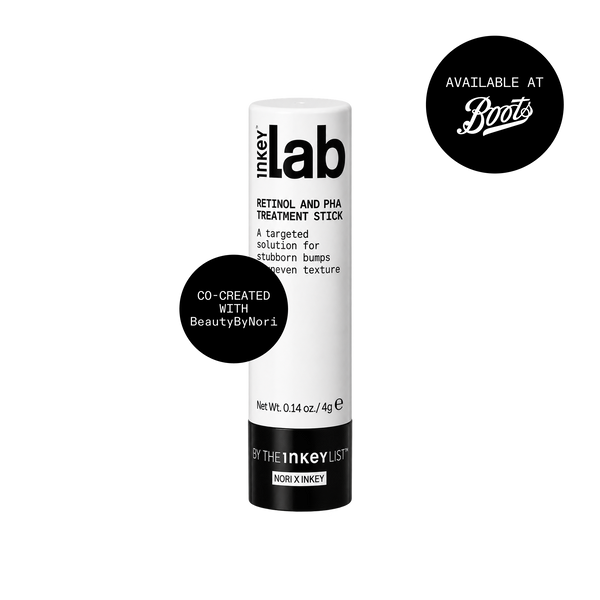
If you have noticed tiny, firm white bumps on your skin, you have probably seen them called a few different things. Milk spots. Milia. Sometimes even whiteheads. It is easy to get confused, so this guide clears it up simply. We explain what milk spots are, what milia are, whether they are actually the same thing, how to tell them apart from whiteheads, what causes them, and the gentle way to care for skin that is prone to them. If you want a targeted option, our Retinol and PHA Treatment Stick (£11.00) was designed for small, hard bumps and uneven texture, and we will come back to it later on.
What Are Milk Spots?
Milk spots is the everyday name a lot of people in the UK use for small, pearly white bumps that sit just under the surface of the skin. The name comes from how they look, like tiny drops of milk trapped beneath the skin. You will often hear the term used to describe the little white bumps that newborn babies can get, but adults get them too. In short, milk spots is simply a common, everyday word for something that has a proper clinical name.
What Is Milia?
Milia is the clinical term for those same small white bumps. Each one is a tiny pocket of keratin, a protein your skin makes naturally, that has become trapped just beneath the surface. Unlike a spot, milia have no opening to the surface, which is why they feel firm and look smooth rather than red or inflamed. They are harmless, they are not a sign of poor hygiene, and they are extremely common.
So Are Milk Spots and Milia the Same Thing?
Yes. Milk spots and milia are two names for exactly the same thing. Milk spots is the casual, everyday term, and milia is the clinical name used by skin professionals. If someone tells you that you have milk spots and someone else says milia, they are describing the same tiny trapped keratin bumps. There is no difference between them at all.
Milia vs Whiteheads: How to Tell Them Apart
This is where most of the confusion happens, because milia and whiteheads can look similar at a glance. The easiest way to tell them apart is to look closely at the surface.
Milia have no visible pore opening. They are firm, they do not move, and they cannot be squeezed out because there is nowhere for anything to go. They tend to stay the same for weeks or longer.
Whiteheads are a type of blemish. They form when a pore becomes clogged with oil and dead skin, and they usually have a visible opening at the surface. They are softer than milia and often sit alongside other signs of oily or congested skin.
So if the bump is hard, smooth and sealed, it is most likely milia. If it is softer, sits in a pore and appears with other blemishes, it is more likely a whitehead.
Do Babies and Adults Both Get Milk Spots?
Yes. Milk spots are very commonly associated with newborn babies, which is partly where the name comes from, and in babies they usually clear on their own without any treatment. Adults get them too, often around the cheeks, nose and eye area. The bumps around the eyes are a particularly common concern, and we cover that area in more detail in our guide to milia under the eyes.
What Causes Milia in Adults?
In adults, milia tend to form when dead skin cells and keratin are not shed properly and become trapped under the surface. A few things can make this more likely:
- A buildup of dead skin cells when natural cell turnover slows down
- Rich or heavy products that sit on the skin without being fully absorbed
- Long-term sun exposure, which can thicken the skin over time
- The skin simply not exfoliating itself as efficiently as it used to
Because the cause is usually a buildup rather than oil or bacteria, caring for milia is less about deep cleansing and more about gently supporting your skin to renew and shed as it should.
Should You Pick or Squeeze Them?
No. Because milia have no opening, there is nothing to squeeze out, and trying to force them can damage the skin, cause irritation and lead to marks or scarring. This is especially important around the delicate eye area. A gentle, consistent routine is a far safer approach than picking.
How to Care for Skin Prone to Milia
The gentlest way to support skin prone to milia is to encourage healthy cell turnover so dead skin does not build up and get trapped. Two ingredients are particularly helpful here.
Retinol supports natural skin renewal, helping your skin shed dead cells more effectively over time. PHA is a gentle acid that exfoliates the surface without being harsh, which makes it a good choice for sensitive-feeling skin.
Our Retinol and PHA Treatment Stick (£11.00) brings both of these together in a precise stick format, so you can apply it directly to small, hard bumps and areas of uneven texture rather than all over. It is designed for evening use only, and we walk through exactly how to use it in our full guide, meet the Retinol and PHA Treatment Stick. If you prefer to introduce a gentle acid across the whole face, our PHA Toner is another way to encourage smoother-looking skin, and keeping your barrier supported with our BioActive Ceramide Moisturiser can help your skin stay comfortable whilst you do.
Always introduce active ingredients slowly, use them in your evening routine, and follow with SPF during the day.
When to See a Professional
If you have a lot of milia, if they are not improving, or if they are in a sensitive spot such as very close to the eye, it is worth seeing a dermatologist or qualified skin professional. They can remove them safely using sterile tools, which is always better than attempting it yourself at home. There is no harm in milia, so this is about your comfort and confidence rather than anything urgent.
External authority links to add (UK): DermNet, patient.info and the Primary Care Dermatology Society (PCDS) are the trusted, NHS-aligned sources to cite within the "What Is Milia" and "When to See a Professional" sections.
Frequently Asked Questions
Got a question?
Our askINKEY team are a friendly bunch of skincare experts with deep product knowledge and zero judgement. Whether you're an ingredient obsessive or just starting out, we'll make it make sense. No question too big. No question too small. We Give A Care, Every Day.


