



Is It Milia, a Whitehead, or Syringoma? How to Tell Your Bumps Apart
Not sure if it's milia, a whitehead or syringoma? Our clear, science-backed guide helps you tell your bumps apart and treat each one the right way.
Author
askINKEY skincare advisor
Published
19 October, 2026
Time to read
18 minutes
Small bumps on the face are extremely common, and they are remarkably easy to mix up. One morning you notice a tiny white dot near your eye, press at it gently, and nothing happens. Is it milia? A whitehead? Something else entirely? This guide exists to answer exactly that. It explains the differences between milia, whiteheads and syringoma in plain, science-backed terms, so you can tell your bumps apart and approach each one correctly.
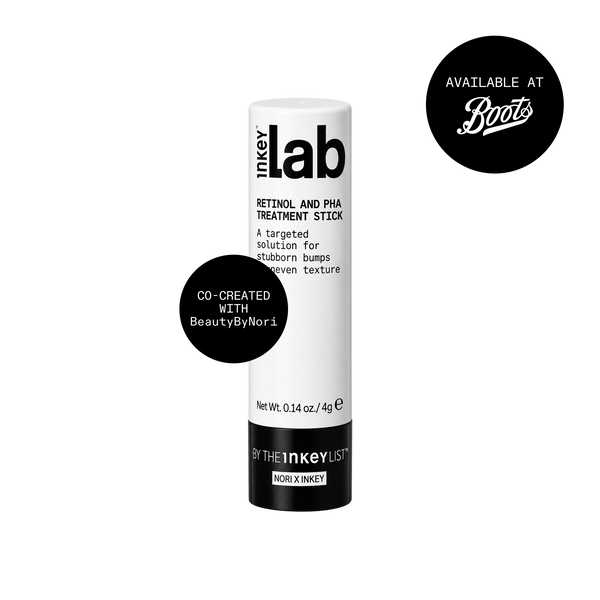
Here is what we will cover: what each type of bump actually is, how to spot the differences at home with a few simple checks, the other lookalikes that often cause confusion, and the sensible next step for each. The reassuring news first. Most of these bumps are harmless and very common. The important part is that the right approach depends entirely on correctly identifying what you are dealing with. Treating a whitehead like milia, or milia like syringoma, is how people end up frustrated, irritated, or picking at skin that should be left well alone. If you are dealing with milia-prone texture and want a gentle, targeted option, our Retinol and PHA Treatment Stick (£11) is designed for the look of small, hard bumps, while our Salicylic Acid Cleanser (£14) suits blemish-prone, oily or combination skin, and our Caffeine Eye Cream (£12) is a gentle choice for the delicate under-eye area where bumps so often appear.
One caveat deserves flagging right at the top. Syringoma in particular needs a professional diagnosis, and skincare will not clear it. Squeezing or picking at any bump, whatever it turns out to be, is never the answer. If you already know you are dealing with milia and simply want the full routine, you can jump straight to our guide on how to get rid of milia. Otherwise, the fastest way to narrow things down is the quick summary that follows.
The Quick Answer: Milia vs Whiteheads vs Syringoma
If you are short on time and just want to self-identify fast, this is the section for you. Each of these three bumps has a distinct signature, and once you know what to look for, the differences become surprisingly clear. Here is the at-a-glance version before we go deeper.
- Milia are small, firm, white or yellowish bumps with no visible opening. They sit just beneath the surface of the skin, they do not respond to squeezing, and they turn up most often around the eyes, on the cheeks and across the nose. If you have ever heard the term “milk spots”, that is another name for the same thing.
- Whiteheads are a clogged pore with a visible opening. They tend to be softer than milia, they are a form of blemish, and they typically show up in oilier areas or anywhere prone to congestion and breakouts. Unlike milia, whiteheads can change quickly.
- Syringoma are small, firm, skin-coloured to slightly yellow bumps, usually clustered symmetrically under the eyes or on the upper cheeks. They are harmless but persistent, caused by a benign overgrowth of sweat gland tissue, and they genuinely need clinical diagnosis.
Here is a simple decision cue to hold in your mind. If the bump has an opening and feels soft, it is likely a whitehead. If it is hard with no opening at all, it may be milia. And if you can see several firm, matching bumps clustered under both eyes that never come to a head and never seem to change, consider syringoma and see a professional before doing anything else.
This quick test covers the vast majority of the small white bumps on the face that people search for help with, including white bumps around the eyes and the occasional white bump on an eyelid. It will not replace a proper diagnosis, and it is not meant to. But it will usually point you in the right direction and tell you whether this is something you can approach at home or something that calls for expert eyes. If you want the naming side of things explained in more detail, our piece on milk spots vs milia unpacks exactly why milia go by so many different names.
With the shortcut out of the way, the rest of this guide breaks each bump down properly, one at a time, starting with milia.
What Are Milia?
Milia are small, hard, white or yellowish bumps that form when dead skin cells and a protein called keratin become trapped just beneath the skin’s surface. The defining feature, and the single most useful thing to remember about them, is that there is no opening. The bump is effectively sealed under a thin layer of intact skin. This is precisely why milia do not respond to squeezing. There is no pore opening for anything to come out of, so pressing and pinching simply irritates the area without achieving anything.
In terms of where they appear, milia are most common around the eyes, on the cheeks and across the nose. The skin around the eyes is particularly prone to them, which is one reason so many people first notice milia while looking closely in the mirror at their under-eye area. They often sit in small clusters, though a single milium on its own is perfectly normal too.
Milia have no opening, which is exactly why squeezing does not work.
So why do milia form in the first place? The underlying driver is a build-up of dead surface cells combined with slower natural skin cell turnover. When your skin does not shed its outermost cells as efficiently as it used to, those cells, along with keratin, can become trapped rather than sloughing away. In adults, a few additional factors can contribute. Heavy or occlusive products that sit densely on the skin, as well as cumulative sun damage over the years, are both associated with the appearance of milia. According to the clinical dermatology resource DermNet, milia are extremely common and occur in people of all ages, from newborns right through to adults, which is worth remembering if you have been treating yours as some unusual personal problem. They are not.
The headline reassurance is simple. Milia are harmless. They are a texture and cosmetic concern rather than a health one, and for many people they resolve gradually over time with a gentle, consistent approach that supports the skin’s natural renewal. What they are not is something to attack. Because they sit beneath intact skin, the sensible route is patience and the right supportive products rather than extraction at the bathroom mirror.
We are deliberately keeping this definition short, because the full removal routine deserves its own dedicated space, and it already has one. If you have identified milia and want the step-by-step approach, head to how to get rid of milia. If you are still wondering whether what you have is really a milk spot in the first place, milk spots vs milia will help you understand the terminology without the confusion.
By far the most common mix-up people run into is confusing milia with whiteheads, so those deserve a close look next.
What Is a Whitehead? (and why it is not milia)
A whitehead is a clogged pore with a visible opening. It forms when a mixture of oil, dead skin cells and everyday debris blocks the pore, creating a small raised bump that often has a pale or whitish top. In skincare terms, a whitehead is a type of blemish, and it is usually softer to the touch than milia. That softness is one of your first clues. Where milia feel firm and resistant, a whitehead tends to have a little more give.
The crucial distinction, the one that answers the “is it milia or a whitehead” question more reliably than anything else, comes down to the opening. Whiteheads have a visible opening and sit within the pore itself. Milia are sealed beneath the surface with no opening at all. If you look closely, ideally in good natural light, and you can see a tiny opening at the top of the bump, you are almost certainly looking at a whitehead rather than milia. If the surface is smooth and unbroken over a hard little lump, milia becomes far more likely.
Whiteheads turn up most often in oilier areas and anywhere prone to congestion and breakouts. Think the central panel of the face, the chin, and other zones where the skin produces more oil. This is in contrast to milia, which cluster most around the eyes and across the cheeks and nose, areas that are not necessarily the oiliest on the face.
- Opening: a whitehead has a visible opening, milia has none.
- Texture: a whitehead is usually softer, milia is firm and hard.
- Behaviour: a whitehead can appear and resolve over a matter of days, milia tends to stay put stubbornly.
That last point about timing is genuinely useful. Whiteheads can change quickly. They may appear seemingly overnight and settle down again within days, often in response to hormones, congestion or your skin’s natural cycle. Milia, by contrast, tend to stay put for weeks or longer, which is part of why they feel so persistent and why people become frustrated by them. So if a bump came up fast and looks like it is already on its way out, you are probably dealing with a blemish rather than milia.
For blemish-prone, oily or combination skin that is prone to whiteheads and congestion, a daily cleanser that keeps pores clear can make a meaningful difference. Our Salicylic Acid Cleanser (£14) is formulated to support clearer-looking, blemish-prone skin as part of a regular routine. It is worth being clear here that this is an option for congestion and blemishes, not a fix for milia, which are a different beast entirely. For broader, general education on blemishes and skin health, the British Association of Dermatologists is a credible UK clinical body whose patient information is worth a read.
The one bump that trips people up even more than whiteheads tends to be the lesser-known one, so let us turn to syringoma.
What Is Syringoma? The Lesser-Known Under-Eye Bump
Syringoma are small, firm, skin-coloured to slightly yellow bumps caused by a harmless overgrowth of sweat gland tissue. That is the plain-English version, and the two words to hold onto are “harmless” and “sweat gland”. Unlike milia, which are trapped keratin, and unlike whiteheads, which are clogged pores, syringoma arise from the skin’s own sweat duct structures growing a little more than they should. They are benign, meaning they are not dangerous, but they are also distinctive in how they look and behave.
In terms of location, syringoma typically appear clustered symmetrically under the eyes and on the upper cheeks, and sometimes on the eyelids. The symmetry is a telling feature. Where milia might show up as one or two bumps in slightly random spots, syringoma tend to appear as multiple matching bumps mirrored across both sides of the face. If you notice a little group of similar firm bumps under one eye and a strikingly similar group under the other, that pattern is worth paying attention to.
Behaviourally, syringoma are stubborn in the extreme. They are persistent, they do not come to a head, they do not respond to squeezing, and crucially they do not clear with normal skincare. This is where it becomes essential to set expectations honestly.
Syringoma needs a professional diagnosis, and skincare will not clear it.
Because syringoma can look so similar to milia and to other small bumps, they genuinely need a professional to confirm what they are. We want to be completely transparent about this: our products are not a treatment for syringoma, and you should not attempt to treat or remove it at home. This is not a limitation we are shy about. It is simply the honest picture of what skincare can and cannot do, and we would rather tell you plainly than have you waste time and money on products that were never going to work for this particular bump.
None of this is cause for alarm. Syringoma are harmless and reasonably common, particularly as skin matures. The main reasons to see a professional are, first, to get an accurate identification so you are not treating the wrong thing, and second, if the appearance bothers you, to discuss any cosmetic options a qualified practitioner can advise on. The clinical reference DermNet’s page on syringoma is an excellent, non-commercial place to read more about what they are and how they are typically approached.
If, after reading this, you suspect your under-eye bumps might actually be milia rather than syringoma, our guide to milia under the eyes goes into the specifics of that delicate zone. Now that all three bumps are defined, it is time to compare them head to head, starting with the confusion that comes up most.
Milia vs Whitehead: The Key Differences
This is the comparison most people arrive searching for, and for good reason. Milia and whiteheads can look deceptively alike at a glance, both small and pale, yet they are fundamentally different in structure, behaviour and the approach they call for. Getting the milia vs whitehead distinction right is the single most useful piece of self-assessment you can do. Let us lay out the differences across the dimensions that actually matter.
- Opening: A whitehead has a visible opening at the surface because it sits within the pore. Milia have no opening at all, sealed as they are beneath intact skin. This is the most reliable single test.
- Texture: Whiteheads are usually softer, with a little give when touched gently. Milia are firm and hard, like a tiny grain just under the surface.
- Depth: Whiteheads sit within the pore itself. Milia sit sealed beneath the surface of the skin, which is why they can feel embedded rather than surface-level.
- Behaviour over time: Whiteheads come and go, often resolving within days as part of your skin’s normal cycle. Milia are stubborn and persist, sometimes for weeks or months.
- Response to squeezing: A whitehead may respond to pressure, though you still should not pick at it. Milia do not respond at all, because there is nothing to press out.
- Typical locations: Whiteheads favour oilier, congestion-prone areas. Milia cluster around the eyes, on the cheeks and across the nose.
Reading these side by side, a pattern emerges. The “is it milia or a whitehead” question almost always resolves down to two things: whether there is an opening, and how the bump behaves over time. A soft bump with a visible opening that showed up quickly is a whitehead. A hard, sealed bump with no opening that has been sitting there stubbornly is milia. If you remember nothing else from this section, remember those two cues.
Here is what that means for you in practical terms. If you have concluded it is a whitehead, your focus is on keeping pores clear and supporting blemish-prone skin, which is where a gentle daily routine built around something like our Salicylic Acid Cleanser fits naturally. If you have concluded it is milia, the approach is different and more about gentle, consistent support for your skin’s natural renewal, which we cover in the routing section further down and in full in the pillar guide. There is no need to duplicate those steps here, because the smart move is to match the approach to the correct identification first.
One more thing worth flagging. If part of your uncertainty comes from the “milk spots” terminology that gets thrown around, the naming can muddy the waters even once you have worked out it is not a whitehead. Our explainer on milk spots vs milia clears that up.
The trickier comparison, and the one people get wrong most often around the eyes, is milia versus syringoma, so that is next.
Milia vs Syringoma: The Key Differences
Milia and syringoma are the two great under-eye lookalikes, and distinguishing between them is where self-assessment reaches its limits. Both can appear as small, firm, pale bumps in the delicate area beneath the eyes. Both are stubborn. Both are harmless. Yet they have different causes, different patterns, and critically, different answers to the question of what you should do next. Here is how they compare.
- Colour: Milia tend to be white or yellowish. Syringoma tend to be skin-coloured to slightly yellow, sometimes blending into the surrounding skin more than milia do.
- Number and pattern: Milia can appear singly or in small groups, often a little scattered. Syringoma usually appears as multiple matching bumps clustered symmetrically, mirrored across both sides of the face.
- Cause: Milia are trapped keratin and dead skin cells beneath intact skin. Syringoma is a harmless overgrowth of sweat gland tissue.
- Persistence: Both are stubborn, but syringoma will not respond to any skincare at all, whereas milia-prone texture can often be gently supported over time.
- Diagnosis: Milia are frequently identifiable at home with reasonable confidence. Syringoma genuinely needs a professional to confirm.
The symmetry point is worth dwelling on, because it is often the clearest tell. If you look in the mirror and see a neat, matching cluster of firm bumps under both eyes, arranged almost like a mirror image, that pattern leans towards syringoma rather than milia. Milia are more likely to turn up as one or a few bumps without that strict left-right symmetry.
Let us be explicit about the practical takeaway, because this is where responsible advice matters most. If you have several firm, matching bumps under both eyes that never change, do not assume it is milia, and do not try to treat it as milia. The products and approaches that gently support milia-prone texture are simply not designed for syringoma, and persisting with them will not help.
When in doubt, get it checked.
This is not us being overly cautious for the sake of it. It is the genuinely correct advice. The clinical resource DermNet’s syringoma page reinforces that proper identification of these bumps is best done by a professional, precisely because they mimic other conditions. A GP or dermatologist can confirm what you are looking at in a few minutes and save you weeks of guesswork. On the other hand, if the symmetry is not there and the bumps feel more like scattered, individual hard spots, the odds tilt towards milia, and our guide to milia under the eyes is the logical next read.
Milia, whiteheads and syringoma are not the only small bumps that cause confusion, so it is worth briefly covering a couple of other lookalikes next.
Other Bumps People Confuse With Milia
Part of building real confidence in reading your own skin is knowing that the three bumps we have covered are not the whole story. A couple of other common types get mistaken for milia with some regularity, and knowing they exist helps you avoid jumping to conclusions. We will keep this brief, because the aim is awareness rather than a full guide on each.
The first is closed comedones. These are clogged pores that do not have a visible opening, which is exactly why they get muddled up with milia. They often appear as tiny, uniform bumps across the forehead, chin or cheeks, and they are linked to congestion. The key difference is what is going on underneath. Closed comedones relate to clogged pores and congestion, so they sit within the pore even though the opening is not obvious, whereas milia are trapped keratin sitting beneath completely intact skin. Because closed comedones are a congestion story, they tend to respond to the kind of gentle, pore-clearing care that suits blemish-prone skin, which is where something like our Salicylic Acid Cleanser can be a sensible everyday step. Milia, by contrast, call for a different, renewal-focused approach.
The second common lookalike is sebaceous hyperplasia. These are small, soft, slightly yellowish bumps, and a distinguishing feature is that they sometimes have a tiny central dip or indentation. They are caused by enlarged oil glands and become more common with age. Like milia and syringoma, sebaceous hyperplasia is harmless, but if you are unsure what you are looking at, it is best identified by a professional rather than guessed at. The Cleveland Clinic’s overview of sebaceous hyperplasia is a trustworthy, non-commercial reference if you want to read more.
The recurring theme across all of this is simple but important: many types of bumps on the face look similar, and correct identification is what guides the right approach. There is no shame in being unsure, because even the categories overlap visually. What matters is resisting the urge to treat first and identify later. With the lookalikes acknowledged, let us pull everything together into a simple, practical way to assess your bumps at home.
How to Tell Your Bumps Apart at Home
You do not need specialist equipment to make a sensible first assessment. You need good light, a mirror, clean hands, and a short mental checklist. Run through the following questions and you will usually be able to form a reasonable idea of what you are dealing with. Think of this as a structured version of the instinct a good skincare-savvy friend would use.
- Is there a visible opening? Look closely in natural light. A visible opening points towards a whitehead or a clogged pore. No opening at all leans towards milia.
- Is it hard or soft? Press very gently, without squeezing. Hard and firm leans towards milia or syringoma. Softer, with a little give, leans towards a whitehead.
- Is it one bump or several matching ones? A single bump or a loose scatter is more consistent with milia. Multiple symmetrical bumps under both eyes raise the possibility of syringoma.
- Does it change over days, or stay put? A bump that comes and goes suggests a blemish such as a whitehead. One that stays put week after week suggests milia or syringoma.
- Where is it? The eye area and cheeks are common zones for milia and syringoma. Oilier, congestion-prone areas are more typical for whiteheads.
Working through those five questions in order tends to narrow things down quickly. For example, a hard, unchanging bump with no opening near your eye is very likely milia. A soft bump with a visible opening on your chin that showed up two days ago is very likely a whitehead. And a neat, symmetrical cluster of firm, skin-coloured bumps under both eyes that has been there for ages is a prompt to think about syringoma and seek confirmation.
Now the honest boundary, because it genuinely matters. This checklist helps you form a sensible, informed idea. It is not a diagnosis. If your bumps are numerous, symmetrical, persistent, or you simply are not sure, the right move is to see a professional rather than to proceed on a guess. There is no downside to getting expert confirmation, and plenty of upside in not treating the wrong thing. For the two most common outcomes of this self-check, our deeper reads on milk spots vs milia and milia under the eyes are worth bookmarking.
One golden rule underpins everything, and it is so important that it gets its own section shortly: do not pick or squeeze. First, though, let us move from identifying to acting, and talk about how to approach each type.
How to Approach Each Type (Products and Where to Read More)
Once you have a reasonable sense of what you are dealing with, you can match your approach to the bump. The aim of this section is to point you towards the right product and the right deeper guide for each type, without rehashing full step-by-step routines that already live elsewhere. We will be clear throughout about what each product can and cannot do, because honesty on that front is the whole point of this guide.
For milia-prone texture
The guiding principle with milia is gentle, consistent support for your skin’s natural renewal, which over time can help smooth the look of small, hard bumps. This is where our hero comes in. Our Retinol and PHA Treatment Stick (£11) is a targeted, easy-to-apply option for the look of milia-prone texture. A few practical notes matter here. Use it in your PM routine only. Around the eyes, apply it to the orbital bone only, never on the eyelids themselves or along the lash line. Start slowly, around one to two nights a week, and build up gradually as your skin adjusts rather than diving straight in every night.
Because the full routine deserves proper space, we will not duplicate it here. Instead, read the complete approach in how to get rid of milia, and if you specifically want to understand the relationship between retinol and milia, can you use retinol on milia covers it in detail. For the science behind the ingredient itself, our What is Retinol ingredient guideexplains how it works without the sales pitch.
For whitehead and congestion-prone skin
If your bump is a whitehead and your skin is generally blemish-prone, oily or combination, a daily salicylic acid cleanser can help keep pores clear and support clearer-looking skin over time. Our Salicylic Acid Cleanser (£14) is built for exactly this, working to address congestion, blackheads and breakouts as part of a consistent routine. It is a supportive daily step for blemish-prone skin, not a milia treatment, and it is worth keeping that distinction clear.
For the delicate under-eye area
The skin beneath the eyes is thin and delicate, and bumps frequently appear there. A gentle eye option such as our Caffeine Eye Cream (£12) suits this area as a soft, supportive step. To be completely transparent, this is not a treatment for milia or syringoma, and we would never claim otherwise. It is a gentle, hydrating choice for a sensitive zone, nothing more and nothing less.
Optional supporting steps
A couple of products can round out a routine depending on your needs, and these are worth mentioning sparingly. Our PHA Toner (£14) offers gentle surface exfoliation for those who want it, and our Hyaluronic Acid Serum supports hydration. Use these as complements rather than headline acts.
For syringoma
This one is short and firm. Skincare does not clear syringoma, and it needs a professional. There is no product routing here because there is no at-home product answer, and we will not pretend otherwise.
Finally, an important mixing note for the hero. Do not use the Retinol and PHA Treatment Stick in the same routine as other retinoids or exfoliating acids, as that combination can be too much for the skin. And always finish with SPF in the morning when you are using retinol, because retinol can make skin more sensitive to the sun. Before we recap, there is one behaviour that matters more than any product choice, and it deserves its own section.
What Not to Do: Please Do Not Pick or Squeeze
If this guide persuades you of only one thing, let it be this: do not pick or squeeze your bumps. It is tempting, we know. Something about a small bump seems to beg for intervention. But across all three of the types we have discussed, picking is at best useless and at worst genuinely damaging.
Start with milia. They have no opening, which means squeezing cannot remove them. There is simply nothing to press out. What squeezing can do is irritate the delicate skin, trigger inflammation, and in some cases cause marking or even scarring, particularly in the thin, fragile area around the eyes. You end up worse off than you started, with the milia still firmly in place.
If there is no opening, there is nothing to squeeze out.
Whiteheads feel like the one you could get away with, because they do have an opening and might respond to pressure. But picking at a whitehead can spread congestion to surrounding pores, introduce bacteria, cause marks that linger long after the original blemish has gone, and prolong the overall healing time. A whitehead left alone, supported by a sensible routine, will usually resolve more cleanly than one that has been squeezed.
Syringoma sits firmly in the “attempting this will only cause harm” category. They will not respond to squeezing at all, because they are made of sweat gland tissue rather than trapped debris, and trying to force the issue risks damaging the surrounding skin for no benefit whatsoever.
It is also worth warning against the broader temptation to go in hard with harsh scrubs or over-exfoliation in the hope of buffing bumps away. Aggressive physical exfoliation tends to irritate the skin and can actually worsen the look of texture rather than improve it. The positive alternative is reassuringly simple: consistency with gentle, appropriate products beats aggressive at-home attempts every single time. If you want the gentler, evidence-led route for milia specifically, can you use retinol on milia is the place to look.
Sometimes, though, home care is not the right call at all, and the smart move is to bring in a professional. Let us cover when that applies.
When to See a Professional
Seeking professional help is not an admission of defeat, and it is certainly not something to feel awkward about. For some of these bumps it is simply the correct and most efficient path. Here is a clear sense of when to book an appointment rather than continuing to experiment at home.
- When bumps are numerous, symmetrical and persistent, which raises the possibility of syringoma.
- When you are genuinely unsure what a bump is, and self-assessment has not given you confidence.
- When a bump changes in an unusual way, in size, colour, shape or sensation.
- When home care has not helped over a reasonable period, and you are no longer sure you are treating the right thing.
Syringoma deserves a specific reiteration here. It needs a professional diagnosis, and it cannot be cleared with skincare, full stop. A GP or dermatologist can confirm what you are dealing with, rule out anything that needs different attention, and discuss the cosmetic options available if the appearance bothers you. That conversation is far more productive than months of trying products that were never designed for the job.
It is also worth knowing that persistent or numerous milia can be removed professionally using sterile tools, which is dramatically safer than any attempt to tackle them yourself at the bathroom mirror. A trained practitioner can do in minutes, hygienically, what picking at home can never achieve safely. If that route appeals to you, it is well worth asking about.
The overall message here is empowering rather than alarming. Seeing a professional is about accurate identification and the right plan, not about something being wrong with you. For readers in the UK looking for a credible route to professional help and reliable patient information, the British Association of Dermatologists is an excellent starting point, and DermNet’s syringoma page reinforces why the clinical angle matters for that particular bump. With the professional path clear, let us bring the practical side together into one tidy routine.
Building Your Routine With The INKEY List
You have identified your bump and you know the principles. Here is the whole thing distilled into a simple, actionable routine, organised by concern so you can jump straight to your own case. Consider this your at-a-glance summary of everything above, without the re-teaching.
- Milia-prone texture: Our Retinol and PHA Treatment Stick (£11), used in your PM routine only, applied to the orbital bone only around the eyes, and built up slowly over time rather than all at once.
- Whitehead and congestion-prone, oily or combination skin: Our Salicylic Acid Cleanser (£14), used morning and evening to help keep pores clear and support clearer-looking, blemish-prone skin.
- Delicate under-eye support: Our Caffeine Eye Cream (£12), a gentle step for the thin skin around the eyes.
- Optional support: Our PHA Toner (£14) for gentle surface exfoliation, and our Hyaluronic Acid Serum for hydration, used sparingly alongside the rest.
Two reminders keep this routine safe and effective. Always finish with SPF in the morning when you are using retinol, because it helps protect skin that retinol can make more sensitive to sunlight. And do not layer the Retinol and PHA Treatment Stick with other retinoids or exfoliating acids in the same routine, as that can overwhelm the skin.
There is one clear exception to all of the above, and it is worth stating one final time. Syringoma is not a routine. That one is for a professional to diagnose and advise on, not something to manage with products at home. For the full milia deep-dive whenever you want it, how to get rid of milia remains your go-to. Clear guidance, proven ingredients, real results. That is the whole idea.
Conclusion
Telling your bumps apart is far less mysterious once you know what to look for. Milia are sealed, hard bumps with no opening, sitting beneath intact skin and staying stubbornly in place. Whiteheads are clogged pores with a visible opening, usually softer and quicker to come and go. Syringoma is a cluster of harmless, firm, symmetrical bumps, most often under the eyes, that needs a professional to confirm and will not respond to skincare. Get the identification right, and the right approach follows naturally.
Two responsible messages are worth carrying with you. Do not pick or squeeze, because it rarely helps and often harms. And when in doubt, get it checked, because an accurate diagnosis beats months of treating the wrong thing. Understanding your skin really is the first step to treating it well, and that clarity is something you can act on today.
What to Do Next
If you have identified milia-prone texture, explore our Retinol and PHA Treatment Stick (£11) as your targeted option, then read the complete approach in how to get rid of milia.
If your skin is whitehead and congestion-prone, start with our Salicylic Acid Cleanser (£14) as a sensible daily step for blemish-prone, oily or combination skin.
And if you suspect syringoma, or you simply are not sure what your bumps are, the single best next step is to see a professional for a proper diagnosis. That is the responsible route, and it is the one we would always recommend when uncertainty is in the picture.
Frequently Asked Questions
Got a question?
Our askINKEY team are a friendly bunch of skincare experts with deep product knowledge and zero judgement. Whether you're an ingredient obsessive or just starting out, we'll make it make sense. No question too big. No question too small. We Give A Care, Every Day.


