

Can You Use Retinol on Milia? What the Science Actually Says
Wondering if retinol can get rid of milia? Here's what the science actually says, and the gentle, targeted way to treat those small hard bumps.
Author
askINKEY skincare advisor
Published
15 October, 2026
Time to read
14 minutes
If you have found a cluster of tiny, stubborn bumps near your eyes or cheeks and typed “can you use retinol on milia” into a search bar, this article is written for you. The short version is that retinol for milia can play a supportive role for some people over time, but it is not an instant fix and it does not work the same way for everyone. Below, we explain what retinol can realistically do, how it actually works, the persistent myth that retinol causes milia, how it compares with gentle exfoliation, how to use it safely, and when a professional is the better route. Milia, also known as milk spots, are small, hard, keratin-filled bumps that sit just beneath the surface of the skin. If you want the full breakdown of what they are and how they differ from other blemishes, our guide to milk spots vs milia covers the definition in detail so we can keep our focus here on retinol itself.
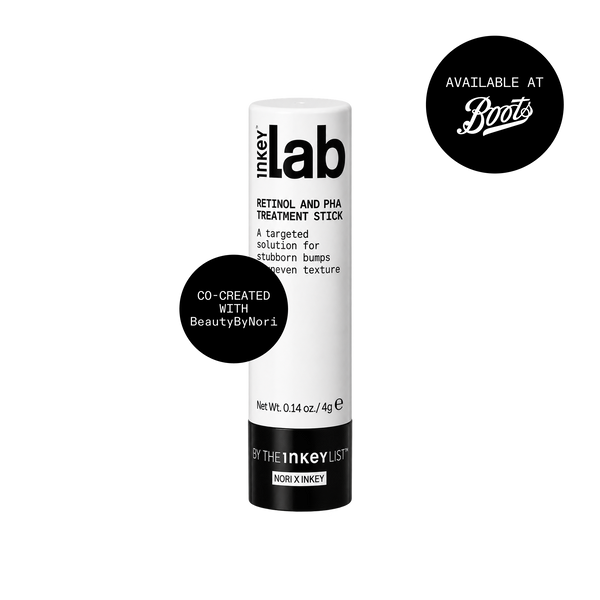
Because milia are such a targeted concern, the product we point to most in this article is our Retinol & PHA Treatment Stick, £11.00. It combines slow-release retinol with gentle PHA exfoliation in a precise stick format, so you can treat the small, firm bumps and areas of uneven texture directly rather than applying a retinoid across your whole face when you only need to target a few spots. For retinol as part of a broader routine, beginners and sensitive skin often prefer our gentle Starter Retinol Serum, £13.00, while confident retinoid users sometimes reach for the higher-strength Advanced 0.2% Retinal Serum, £18.00. And if you simply want to understand the science of how retinoids behave on skin, our pillar guide What is Retinol? is the go-deeper resource we will refer back to throughout this piece.
In one line: retinol may help support milia-prone skin over time, but it is not a guaranteed cure, it works gradually, and stubborn milk spots often still need professional extraction.
With that promise set, let us start with the answer most people actually came here for.
The Short Answer: Can Retinol Help With Milia?
Here is the honest, plain-spoken answer. Retinol can support your skin’s natural renewal process, and that means it may help with some types of milia over a period of weeks when used consistently. It is not a magic eraser. It will not dissolve a bump overnight, and it is not guaranteed to clear every single milium you have. Anyone promising otherwise is overselling what a topical ingredient can realistically do.
This matters because milia are a very specific kind of blemish. They are not blocked pores in the usual sense and they are not pimples waiting to be popped. They are tiny pockets of trapped keratin, the protein that makes up the outer layer of your skin. Because of that, the useful question is not “which product removes them” but “what encourages healthier surface turnover so build-up is less likely to happen in the first place.” That is the lane where retinol can genuinely contribute, and it is also why a format that pairs retinol with a gentle exfoliating acid, like our Retinol & PHA Treatment Stick, tends to be a smarter match for this specific concern than retinol alone.
To answer the cluster of related questions people ask in one tidy place:
- Does retinol help milia? It can help some people, gradually, by supporting surface cell turnover. It is not a certainty.
- Can retinol get rid of milia? It may reduce the conditions that let certain milia build up, but it cannot be relied upon to physically clear an established bump.
- Will retinol get rid of milia? Sometimes, over time, and never guaranteed. Long-standing milk spots frequently need hands-on removal.
- Is retinol good for milia? It can be a reasonable part of a milia-prone routine for the right person, used sensibly.
There is one important nuance to flag early. Stubborn, deep, or long-standing milk spots usually will not budge with a serum alone and often need professional extraction, which we cover later in this article. That is not a failure of retinol. It is simply the reality of how these little keratin pockets form and sit in the skin.
It is also worth taking the pressure off entirely. According to Cleveland Clinic guidance on milia, milia are harmless and often clear on their own without any treatment at all. So whatever you decide to do, you are not dealing with something that requires panic or aggressive intervention. You are deciding how, and whether, to nudge your skin along.
That is the “what happens.” To understand why retinol is even part of this conversation, it helps to look at the mechanism.
How Retinol Actually Works on Skin (and Why That Matters for Milia)
To understand whether retinol can help with milk spots, you first need to understand how milia form, because the two stories are connected. Milia appear when keratin and dead skin cells become trapped in a tiny pocket just beneath the surface of the skin, rather than shedding away as they normally would. As Healthline explains in its overview of milia, these little cysts are essentially dead cells that have been sealed in instead of sloughing off. The result is the familiar firm, pearly bump that does not respond to squeezing the way a spot might.
Once you frame it that way, the relevant question becomes obvious. If milia are partly a story about skin cells that have not turned over and shed as they should, then anything that gently encourages the skin’s natural renewal is at least worth understanding. That is precisely what retinoids do.
Here is the step-by-step version, kept deliberately simple:
- Dead skin cells and keratin accumulate near the surface instead of shedding cleanly.
- That build-up gets trapped in a small pocket just under the top layer of skin.
- The trapped material hardens into the small, visible bump we call a milium, or milk spot.
Retinoids work on the first part of that chain. They are vitamin A derivatives that signal to the skin to speed up its natural cell renewal and support healthier turnover at the surface. In plain terms, they encourage the skin to shed and refresh more efficiently, which can help reduce the kind of surface build-up that contributes to some milia forming. This is also why retinoids are so widely used for smoothing texture and refining the look of the skin’s surface overall.
Why pairing retinol with gentle exfoliation makes sense
Here is where the science gets genuinely useful for milia specifically. Retinol works from within the skin’s renewal process. A gentle exfoliating acid works on the surface. Put them together and you address milia-prone skin from two complementary angles at once, which is the thinking behind our Retinol & PHA Treatment Stick.
PHA, or polyhydroxy acid, is one of the gentlest exfoliating acids available. It helps lift away dead surface cells without the harshness that can come with stronger acids, which makes it well suited to delicate or milia-prone areas where you do not want to irritate the skin. The Treatment Stick combines that gentle PHA exfoliation with slow-release retinol in a precise stick you apply directly to the bumps, so you get targeted, controlled treatment rather than spreading a retinoid across skin that does not need it. If you would like the full story behind the product, our launch article goes into detail.
Retinol versus retinal, briefly
You will see two closely related words in this space, and they are not the same. Retinol and retinal (short for retinaldehyde) are both vitamin A derivatives, but they sit at different points in how the skin converts them, which affects their strength and how quickly they get to work. We will not relitigate the full comparison here because it deserves its own space, and we have one. For the complete explanation, read our dedicated guide to retinol vs retinal, and for the broader science of how all of this works, our pillar page What is Retinol? is the place to go.
The reason this distinction matters for milia is less about chasing the strongest formula and more about matching the right level to your skin. For most people, gentleness and consistency do far more good than reaching for the highest percentage on day one. A lower-strength retinoid used calmly several times a week, without irritation, is almost always more useful over time than an aggressive approach that leaves skin red and compromised. That principle sits behind the choice between our gentle Starter Retinol Serum and our higher-strength Advanced 0.2% Retinal Serum, which we will come back to.
None of this is a pitch. It is the mechanism, laid out so you can judge for yourself. Retinol is in the milia conversation because milia are partly a turnover story, and turnover is exactly what retinoids influence. What they cannot do is just as important, so let us set realistic expectations next.
What Retinol Can Realistically Do for Milia (and What It Cannot)
This is the section that protects you from disappointment, and it is the heart of an honest answer to “is retinol good for milia.” The truth lives in the gap between what a retinoid genuinely supports and what it simply cannot do, no matter how diligently you use it.
Let us start with the realistic, achievable side.
Realistic outcomes retinol can support:
- Smoother-looking skin texture over time, as surface renewal is encouraged.
- A reduction in some of the conditions that allow certain milia to build up, by supporting healthier turnover.
- An overall refined appearance to the skin’s surface, which many people value independently of milia.
Notice the language there. These are supportive, gradual, look-and-feel outcomes. That is deliberate, because that is what the evidence supports. Milia often resolve without any treatment at all, and gentle measures such as exfoliation can help, which is consistent with guidance from Medical News Today on milia treatment and prevention. Retinol fits into that “gentle measures” category. It is a nudge, not a lever.
Now the equally important other side of the ledger.
What retinol will not do:
- It will not instantly dissolve an existing, established milium, especially a deeper one.
- It is not a guaranteed cure, and no honest brand will promise you percentages or timelines.
- It cannot physically extract a trapped keratin pocket the way a trained professional can with the proper tools.
Timelines deserve a moment of honesty too. If retinol helps your skin, it does so over weeks of consistent use, not days, and the degree of benefit varies from person to person. Your skin type, how long a milium has been present, how deep it sits, and your overall routine all influence what you will actually see. We are not going to hand you a number, because a responsible number does not exist for this.
What about retinol around the eyes?
A very common version of this question is “does retinol eye cream get rid of milia,” because milk spots so often appear in the delicate under-eye area. This is where care matters most. The skin around the eyes is thinner and more reactive, so it rewards a gentle, considered approach rather than enthusiastic layering. Rather than duplicate the detail here, we have built a complete walkthrough for exactly this scenario. For the full step-by-step approach to the under-eye area, read our guide to milia under the eyes, which owns that routine properly.
The honest framing throughout is simple. Retinol may help improve the look of milia-prone skin and may support the conditions that reduce build-up. It does not cure, remove, or guarantee anything. Holding that line is not pessimism. It is respect for your time and your money.
With expectations set, it is time to confront the single biggest misconception people carry into this topic.
Can Retinol Cause Milia? Clearing Up the Myth
Let us say it plainly, because it is the answer people are searching for. No, retinol is not a recognised cause of milia.Milk spots form from trapped keratin and dead skin cells that have not shed properly. They do not form because you applied a retinoid. As Cleveland Clinic sets out in its explanation of what causes milia, these bumps are about keratin becoming trapped under the surface, not about any single active ingredient being the culprit.
So where does the myth come from? Usually from a mix of timing and association. People often begin a new skincare routine, change several products at once, and then notice bumps. Because the retinol was new, it gets the blame. This is correlation being mistaken for cause. In many cases the real contributing factors are things like rich, heavy, occlusive products being layered around the delicate eye area, which can sit on the skin and are more easily associated with milia than a lightweight serum is. The retinoid is simply the most recent thing you added, so it becomes the suspect.
Here is the myth-versus-fact pairing, kept clean and simple.
Myth: Retinol triggers milia, so you should avoid it if you are prone to milk spots.
Fact: Milia come from trapped keratin, not from retinoids. If anything, by supporting surface turnover, a well-tolerated retinoid is working on the same part of the process that milia relate to. The sensible precaution is not avoiding retinol, it is being thoughtful about how you layer heavier products near the eyes.
Purging is not the same as milia
One more point clears up a lot of confusion. When some people start a retinoid, they experience a temporary adjustment period sometimes described as purging, where skin can look less settled for a short while as it adapts. That is a different thing from milia. Milia are firm, keratin-filled bumps with their own distinct cause. Blurring the two together is a big reason the “retinol caused my milia” idea persists.
So what is the calm, practical takeaway? You do not need to fear retinol if you are prone to milk spots. You simply need to layer sensibly. Keep products around the eyes on the lighter side, avoid piling heavy, occlusive textures into that delicate zone, and give any new active time to be judged fairly before you blame it. For a fuller understanding of how retinoids behave on skin so you can make these calls with confidence, our pillar guide What is Retinol? is there whenever you want it.
Once you accept that retinol is not the villain, a more useful picture emerges, one where retinol and gentle exfoliation are teammates rather than rivals.
Retinol vs Gentle Exfoliation: How They Work Together
A lot of skincare confusion comes from treating ingredients as if they are competing for the same job. Retinol and gentle chemical exfoliation are a good example, because people often assume they have to choose one. In reality, they do different things, and when used sensibly they complement each other rather than clash.
Here is the clearest way to think about the two.
How they differ:
- Retinoids work from a signalling angle. They encourage the skin’s natural renewal and support healthier turnover over time. Think of them as influencing the process.
- Gentle chemical exfoliation works more directly at the surface. It helps loosen and lift away dead surface cells so they can shed rather than linger. Think of it as helping clear what is already there.
How they pair:
- Because milia relate to both sluggish turnover and trapped surface build-up, an approach that gently addresses both angles can make more sense than relying on a single product.
- Exfoliation can help lift surface debris, while a retinoid supports the ongoing renewal underneath. One tidies the surface, the other supports the cycle.
The evidence supports the exfoliation side of this story specifically for milk spots. Healthline’s guidance on getting rid of milia notes that gentle exfoliation can help, which is exactly why a sensible routine often pairs mild surface support with a well-tolerated retinoid rather than choosing between them.
This is precisely why our Retinol & PHA Treatment Stick, £11.00 is our go-to recommendation for this concern. It brings both angles together in one targeted format: slow-release retinol to support renewal underneath, and gentle PHA to help clear the surface, applied directly to the bumps so you treat only what needs treating. You can read more about the thinking behind it in our article Meet the Retinol & PHA Treatment Stick.
The golden rule: gentle wins
There is a catch, and it is an important one. More is not better. The fastest way to irritate your skin is to stack strong actives on top of each other, exfoliate aggressively, and then wonder why your skin is red and unhappy. That is especially true around delicate areas like the under-eyes. The goal is a calm, consistent routine, not a daily chemistry experiment. If you are introducing a retinoid and an exfoliant, you generally do not want to use everything at full intensity on the same night, and you want to build up slowly. One advantage of a combined format like the Treatment Stick is that the two actives are already balanced together, so you are not left guessing how to layer them yourself.
The principle to carry forward is “clear, not complicated.” Retinol and gentle exfoliation are allies when used with restraint. With their roles understood, let us look at how to actually introduce a retinoid safely.
How to Use Retinol on Milia Safely
This section is deliberately a summary, not a full protocol, because the complete step-by-step routine for the under-eye area lives in our dedicated milia under the eyes guide. What follows is the responsible, high-level version that applies to most people starting out.
Here is a simple quick-start approach.
- Start low and slow. Begin with a couple of nights a week and build up only once your skin is comfortable.
- Use it in the evening. Apply your retinoid as part of your PM routine on clean, dry skin. If you are using our Retinol & PHA Treatment Stick, swipe it directly onto the areas where milia and uneven texture appear, which makes targeting simple.
- Keep a patch-test mindset. Introduce one new active at a time so you can tell what your skin is responding to.
- Pair it with hydration. Follow with a comforting moisturiser to support your skin barrier as you build tolerance.
- Be especially gentle near the eyes. Use a light touch in that delicate zone and avoid over-layering heavy products there.
On choosing a product, the decision really comes down to how targeted the concern is and your experience with retinoids. If your milia are concentrated in a few spots, the precise, combined action of our Retinol & PHA Treatment Stick, £11.00 is the most direct fit. If you would rather bring retinol into a full-face routine, our gentle Starter Retinol Serum, £13.00 is the beginner-friendly option designed to be easy to tolerate, and our higher-strength Advanced 0.2% Retinal Serum, £18.00 is the step up for experienced users. There is no prize for starting stronger than your skin is ready for, and for milia-prone skin in particular, consistency beats intensity every time.
A quick word on mixing, because this is where people trip up. Not every active plays nicely alongside a retinoid on the same night, and layering the wrong things together is a common cause of irritation that then gets blamed on the retinol itself. If you want to get this right before you start combining products, read our guide on what not to mix with retinolso you can build a routine that stays calm and effective.
Finally, resist the urge to rush results. You will not see milia-related change in a day or two, and pushing harder to speed things up usually backfires. Give any routine a fair, consistent run of weeks before you judge it, and remember the complete under-eye routine is only a click away in our full milia under-eye routine guide.
Even a perfect routine has limits though, and knowing where those limits are is part of looking after your skin properly.
When Retinol Is Not the Answer
Part of being genuinely helpful is being clear about what topical skincare cannot do. For some milia, the honest advice is that retinol, or any serum, is not going to be the thing that clears them, and recognising that early saves you months of frustration.
Stubborn, deep, or long-standing milk spots often need professional extraction. A trained professional can safely remove a trapped keratin pocket using the correct sterile technique, which is simply not something a cream or serum can replicate. If a milium has been sitting in the same spot for a long time and has not responded to a sensible routine, that is usually your cue to seek hands-on help rather than keep trying new products.
Here is a short checklist for when to see a professional.
- A milium has been present for a long time and has not changed with a consistent, gentle routine.
- You have several stubborn bumps you would like removed properly rather than waiting them out.
- A bump is growing, changing in appearance, becoming painful, or you are simply not sure what it is.
- You are tempted to pick or squeeze at home, in which case stop and let a professional handle it instead.
That last point is worth underlining. Please do not try to dig out milia yourself. Picking and squeezing can damage the surrounding skin and will not safely release a trapped keratin pocket the way a proper extraction does. A GP, dermatologist, or qualified skincare professional has the tools and training to do it cleanly, and Medical News Today notes that a doctor can remove milia when needed.
If any of this is making you anxious, take a breath. There is no cause for alarm. Milia are harmless and extremely common, as Cleveland Clinic confirms in its overview. Seeking professional help for stubborn cases is not an emergency, it is simply the most effective route when at-home care has done what it can. The only sensible rule is that anything genuinely changing or uncertain deserves a professional eye.
With the limits honestly drawn, let us pull every thread together into one clear picture.
The Key Takeaways on Retinol for Milia
Before we close, here is the clean recap so the verdict is easy to carry away, especially if you have skimmed to this point.
In one line: retinol can support milia-prone skin over time but is not a guaranteed cure, and it does not cause milia.
Key takeaways:
- Does retinol help milia? It can, gradually, by supporting surface turnover, but results vary and are never guaranteed.
- Can retinol get rid of milia? It may reduce the build-up that contributes to some milia, but it cannot reliably clear established bumps on its own, which is why a targeted format that pairs retinol with gentle exfoliation often suits this concern better.
- Can retinol cause milia? No. Milk spots come from trapped keratin, not from using a retinoid.
- When is retinol not enough? Stubborn, deep, or long-standing milia usually need professional extraction, not a serum.
If you want to understand the science underneath all of this in more depth, our pillar guide What is Retinol? remains the best next read. That sets us up for the final word.
Bringing It All Together
So, can you use retinol on milia? Yes, and for some people it has a genuinely useful supportive role, provided you use it gently and consistently and hold realistic expectations about what a topical can do. It is not a guaranteed cure, it works gradually rather than overnight, and it is not the cause of milk spots despite the persistent myth. For stubborn or deep-seated milia, professional extraction is sometimes simply the right route, and there is no shame in choosing it.
That measured, no-overpromising approach is the whole point. Clear guidance, proven ingredients, and real results matter far more than hype that sets you up for disappointment. For this specific concern, a targeted format that pairs retinol with gentle PHA exfoliation gives you the most complete approach, which is why our Retinol & PHA Treatment Stick, £11.00 is our go-to recommendation here. For retinol as part of a wider routine, our Starter Retinol Serum and Advanced 0.2% Retinal Serum are there depending on your experience level, and if your milia need more, you now know exactly when to seek help.
Your Next Step
If this has helped you decide where to begin, keep it simple and match the product to the concern. If your milia are concentrated in a few spots and you want targeted treatment, explore our Retinol & PHA Treatment Stick, £11.00. If you are new to retinoids or have sensitive skin and want a full-face option, explore our gentle Starter Retinol Serum, £13.00, and if you are already a confident retinoid user looking for more intensity, explore our Advanced 0.2% Retinal Serum, £18.00. There is no pressure to rush, and the gentler option is a perfectly smart place to start.
And if your milia are concentrated around the delicate eye area, go straight to the complete walkthrough in our full milia under-eye routine, which gives you the step-by-step approach for that specific zone.
Frequently Asked Questions
Got a question?
Our askINKEY team are a friendly bunch of skincare experts with deep product knowledge and zero judgement. Whether you're an ingredient obsessive or just starting out, we'll make it make sense. No question too big. No question too small. We Give A Care, Every Day.


