



Is Hyaluronic Acid Good for Acne-Prone Skin? Everything You Need to Know
Hydration is not the enemy of clear skin. Here is what hyaluronic acid actually does for blemish-prone skin, and how to use it properly.
Author
askINKEY skincare advisor
Published
17 May, 2026
Time to read
12 minutes
Yes. Hyaluronic acid is good for blemish-prone skin, and it will not clog your pores.
That answer surprises a lot of people, because one of the most persistent ideas in skincare is that hydration and breakouts do not mix. If your skin is oily, congested or breaking out, adding moisture can feel like the last thing you should do. In practice, the opposite is closer to the truth.
This article is about blemish-prone skin specifically. Not dry skin, not ageing skin, not oily skin in general. Skin that breaks out, gets congested, and is frequently left tight, red and stripped by the very products used to clear it.
Here is the argument in one line: hyaluronic acid is not a blemish product. It is the hydration step that makes your blemish-targeting products bearable to use, and lets the rest of your routine work properly.
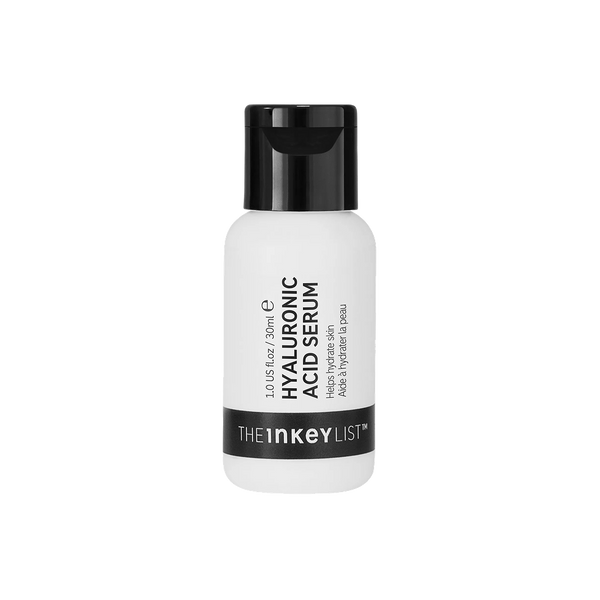
The product referenced throughout is the Hyaluronic Acid Serum, £12 for 30ml. Water-based, fragrance-free and non-comedogenic.
What this article covers:
- What hyaluronic acid actually does, and why blemish-prone skin needs it
- Can hyaluronic acid cause breakouts or clog pores
- How hyaluronic acid supports blemish-prone skin
- Hyaluronic acid, blemish marks and post-breakout skin
- How to use it, including full morning and evening routines
- The products that work alongside it
- Your questions answered
If you are earlier in your hyaluronic acid journey and not sure you need it at all, start with 5 Signs You Need a Hyaluronic Acid Serum and come back here.
What Hyaluronic Acid Actually Does, and Why Blemish-Prone Skin Needs It
Let us be precise about what this ingredient is, because most of the confusion starts here.
Hyaluronic acid is a humectant. That is its whole job. It attracts water and holds it in the upper layers of your skin. It does not exfoliate. It does not control oil directly. It does not clear blemishes. Despite the word “acid” in the name, it does nothing acidic to your skin at all.
Being clear about that matters, because it is the foundation for everything else in this article.
Dry skin and dehydrated skin are not the same thing
This is the distinction that changes how most people think about their routine.
Dry skin lacks oil. Dehydrated skin lacks water. They are different conditions, they need different solutions, and they very often turn up together on the same face.
Blemish-prone skin that is being managed with active products is almost always dehydrated, even when it looks shiny. That shine is not proof that your skin has enough moisture. It can be the opposite.
Find out more on the dehydrated skin and oily skinpages.
Why blemish-prone skin ends up dehydrated
Look at what a typical blemish routine involves. Salicylic acid cleansers exfoliate inside the pore. BHA serums reduce excess oil. Targeted spot products dry out individual breakouts. Prescription topicals can be extremely drying.
Every one of those does a job worth doing. And every one of them costs your skin water.
When skin is repeatedly stripped without anything putting that water back, the barrier starts to struggle. Your skin barrier is the outermost layer, made of lipids, proteins and water, and it depends on adequate hydration to work. As it weakens, skin loses water faster than it can hold on to it, becomes more easily irritated, and reacts more to things that never used to bother it.
None of that helps blemish-prone skin. It makes it harder to manage. There is more on this on the damaged skin barrier page, and in dry skin and blemishes: what you need to know.
Where hyaluronic acid fits
Hyaluronic acid puts water back without adding anything that congests skin. It contains no oils, no waxes and no pore-blocking compounds.
The Hyaluronic Acid Serum uses 2% hyaluronic acid at three different molecular weights:
- High molecular weight sits on the surface and reduces how much water your skin loses
- Medium molecular weight works through the upper layers
- Low molecular weight reaches deeper within the epidermis
That layered approach delivers hydration at more than one level, which a single-weight formula cannot do.
The formula also contains Matrixyl 3000, a peptide associated with firmness and smoothness. In consumer testing, 82% agreed their skin felt firmer, smoother and more elastic after four weeks, and 86% agreed it is quick-absorbing, lightweight and non-tacky. That last point matters more than it sounds when your skin already feels congested.
For the full ingredient story, see the hyaluronic acid guide and the hyaluronic acid collection.
Can Hyaluronic Acid Cause Breakouts or Clog Pores?
No. It cannot.
Hyaluronic acid is a water-binding molecule. It contains no oils, no waxes and no occlusive compounds, so there is no mechanism by which it could block a pore. This is chemistry, not marketing.
So why do some people say it broke them out? There are four real explanations, and none of them is the hyaluronic acid.
It is the rest of the formula. Plenty of hyaluronic acid products are built on rich, heavy bases. Thick butters, certain plant oils and heavy silicones can contribute to congestion on skin that is already prone to it. The hyaluronic acid is innocent. The base is not.
It is fragrance. Fragrance can irritate skin that has already been sensitised by active products. Irritation can look a lot like a breakout.
It was applied to dry skin and left unsealed. This is the most overlooked cause and worth understanding properly. A humectant draws water from wherever it can find it. Applied to bone-dry skin in a dry room, with no moisturiser on top, it has very little to work with and the water it does attract simply evaporates. Skin can end up feeling tighter than before.
It was coincidence. Skin fluctuates with hormones, stress and your cycle. A new product started mid-flare tends to get the blame.
What about purging?
Hyaluronic acid cannot cause purging.
Purging happens when an ingredient speeds up cell turnover and brings congestion that was already forming to the surface faster. That is retinol and exfoliating acids. Hyaluronic acid does not exfoliate and has no effect on turnover, so it has no way of causing a purge. Anything that appears after you start using it is either coincidental or a reaction to something else in the formula.
How to choose a hyaluronic acid product for blemish-prone skin
- Water-based, not oil-based
- Lightweight and fast-absorbing, gel or thin serum rather than cream
- Non-comedogenic
- Fragrance-free
- No heavy occlusives sitting alongside the hyaluronic acid
The Hyaluronic Acid Serum meets all five. The texture is genuinely thin, close to water, and absorbs in seconds without leaving a film.
If your skin is reactive as well as blemish-prone, sensitive skin and breakouts covers a gentler approach.
How Hyaluronic Acid Supports Blemish-Prone Skin
Being safe is the minimum. Here is what it actively contributes.
It protects your barrier while your other products work. Blemish-targeting products work by exfoliating and drying, and that effect does not stop neatly at the blemish. Hyaluronic acid maintains hydration in the barrier while those products do their job, so your routine does not end up creating a second problem alongside the one you are solving.
It helps break the oil feedback loop. This is the counterintuitive one. When skin is short of water, oil glands can produce more oil to compensate. So dehydrated skin can actually become oilier skin. By addressing the water shortage directly, hyaluronic acid helps support more balanced oil levels over time. You are not adding oil. You are removing the reason your skin was overproducing it.
It makes everything else work better. Well-hydrated skin is more receptive to what goes on top. Applying hyaluronic acid first, on damp skin, means your niacinamide or salicylic acid goes onto a properly hydrated surface. Better absorbed, and better tolerated.
It supports recovery. When a blemish settles, it leaves behind a small area of stressed, disrupted skin. That recovers more efficiently when the surrounding skin is well hydrated and the barrier is intact.
Hydration is not the opposite of clear skin. It is the condition that makes clear skin easier to reach.
Worth knowing: hyaluronic acid pulls water in, and ceramides help hold it there. They work well together rather than competing.
If your barrier is genuinely compromised, from over-exfoliating or a long stretch of strong actives, the Ectoin Hydro-Barrier Serum at £16 is the stronger option. It combines 2% ectoin, 2.5% hyaluronic acid and a 1% blend of three ceramides, and is clinically proven to repair the skin barrier in 15 minutes. See ectoin vs hyaluronic acid if you are deciding between the two.
Hyaluronic Acid, Blemish Marks and Post-Breakout Skin
The breakout clears. The mark stays. This is where expectations need to be realistic, so here is the honest version.
“Blemish marks” is not one thing. It covers three different concerns that respond to completely different treatments.
Post-inflammatory hyperpigmentation is the flat brown, grey or deep purple mark left behind after a blemish heals. It is caused by excess pigment produced in response to inflammation.
Post-inflammatory erythema is the flat pink or red mark. It is not pigment at all. It is dilated blood vessels that have not yet settled.
Textural scarring is the rolling, boxcar or ice pick indentation left by actual tissue damage. This is a structural change, not a colour change.
Here is the straight answer: hyaluronic acid is not a pigmentation ingredient. It will not fade a dark mark on its own, and anyone telling you otherwise is overselling it.
What it does genuinely contribute is twofold. Its plumping effect can temporarily improve how shallow textural irregularity looks, by drawing water into the skin and smoothing the way light falls across the surface. And a well-hydrated barrier supports more efficient recovery in the weeks after a breakout settles, which can influence how pronounced a mark becomes in the first place.
For the marks themselves, you need targeted ingredients:
- 10% Niacinamide Serum, £12 for 30ml. Helps reduce excess oil, blemishes and redness, and contains 1% hyaluronic acid so it layers beautifully with your serum.
- 10% Azelaic Acid Serum for Redness Relief. The targeted option for redness and pink marks. More on the azelaic acid page.
- 15% Vitamin C + EGF Serum. Uses a stable form of vitamin C that converts on the skin to target dark marks and uneven tone, so it is gentler than pure L-ascorbic acid. See the vitamin C page.
- Tranexamic acid is another targeted option for stubborn pigmentation.
Further reading on hyperpigmentation and blemish marks and scars, or browse the blemish scars collection.
How to Use Hyaluronic Acid on Blemish-Prone Skin
Everything above only matters if you apply it correctly. Two rules, then the full routines.
Rule one: apply to damp skin
Hyaluronic acid draws water towards it. Applied to completely dry skin in a dry environment, it has very little available water to work with. Applied to slightly damp skin straight after cleansing, it has an immediate source.
Two to three drops for face and neck. Pat it in, do not rub. This is always your first step after cleansing.
If you are not applying your serum at a sink, or your skin dries out before you get to it, the Hydro-Surge Dewy Face Mist solves this neatly. A quick mist re-dampens skin before your serum, and works as a hydration top-up during the day. It contains 3% Aquaxyl to help strengthen the moisture barrier and reduce water loss, 3% Hydroviton cucumber fruit extract for instant hydration, and 2% Earth Marine Water.
Rule two: always seal it in
Hyaluronic acid attracts water. It does not hold it there. Without a moisturiser on top, that water evaporates and you have gained very little.
This is the single most common mistake, and the reason some people conclude hyaluronic acid does not work for them.
Two options depending on your skin:
- Oily, combination or congestion-prone:Omega Water Cream, £14 for 50ml. Oil-free and non-comedogenic, with a 0.2% ceramide complex rich in omegas 3, 6 and 9, 5% niacinamide to help control oil and even tone, and 3% betaine.
- Breaking out but also dry, tight or stripped:Bio-Active Ceramide Moisturiser, £20. Bio-Active Ceramide NP to help visibly firm, smooth and strengthen the barrier, plus 5% Gransil Blur and shea butter.
Your morning routine
- Cleanse. Salicylic Acid Cleanser, £14 for 150ml. 2% salicylic acid, 1% zinc compound to help with oil control and 0.5% allantoin to soothe. 90% agreed skin looks visibly clearer after three days. More on the salicylic acid page.
- Hyaluronic Acid Serum. Two to three drops on damp skin, patted in. Give it 30 seconds.
- Targeted serum. 10% Niacinamide Serum at £12 for everyday oil control and marks, or 360° Skin Clearing Serum at £16 when you are dealing with active breakouts.
- Moisturise. Omega Water Cream, £14.
- SPF. Dewy Sunscreen SPF 30, £15 for 50ml. Non-comedogenic, broad spectrum, and 97% said it was invisible on their skin tone.
Do not skip step five. UV exposure darkens post-blemish marks, which quietly undoes the work everything else in your routine is doing. More on the SPF page and in sunscreen for oily, blemish-prone skin.
Your evening routine
- First cleanse. Oat Cleansing Balm, £15 for 150ml. 1% colloidal oatmeal and 3% oat kernel oil remove SPF and makeup without stripping.
- Second cleanse. Salicylic Acid Cleanser, £14.
- Hyaluronic Acid Serum. Same as the morning. Damp skin, two to three drops.
- Spot care. Succinic Acid Treatment directly onto individual spots, or Hydrocolloid Invisible Pimple Patches at £9 for a pack of 22, which show visible results in four hours and sit invisibly under makeup.
- Targeted serum. 360° Skin Clearing Serum, £16. 1% dioic acid, 2% salicylic acid and 0.4% Dendriclear, working across the three stages of a breakout.
- Moisturise. Omega Water Cream at £14, or Bio-Active Ceramide Moisturiser at £20 if your skin needs more support.
A note on layering: hyaluronic acid always goes first after cleansing. And you do not need every active every night. Alternating your stronger products gives your skin room to recover between them.
Want to put the whole routine together and save up to 20%? Use the Bundle Builder.
The Products That Work Alongside Hyaluronic Acid
Hyaluronic Acid Serum - £12, 30ml
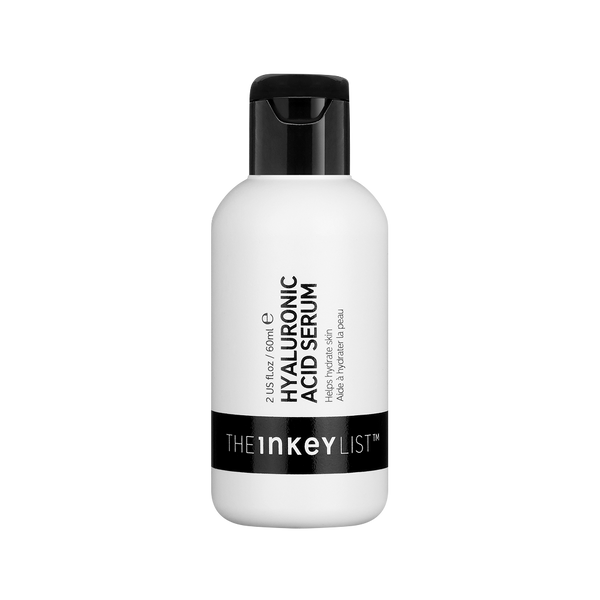
The hero. 2% hyaluronic acid at three molecular weights plus Matrixyl 3000. Water-based, fragrance-free, non-comedogenic. Also available in 60ml.
Hydro-Surge Dewy Face Mist £12
3% Aquaxyl, 3% Hydroviton and 2% Earth Marine Water. Use it to dampen skin before your serum, or to top up hydration through the day.
Salicylic Acid Cleanser - £14, 150ml
2% salicylic acid, 1% zinc compound for oil control, 0.5% allantoin to soothe. For blemishes, blackheads and congested pores. 90% agreed skin looks visibly clearer after three days.
Oat Cleansing Balm - £15, 150ml
1% colloidal oatmeal and 3% oat kernel oil. The gentle first cleanse that removes SPF and makeup without stripping.
10% Niacinamide Serum - £12, 30ml
Helps reduce excess oil, blemishes and redness. Contains 1% hyaluronic acid, so it layers seamlessly.
360° Skin Clearing Serum - £16
1% dioic acid, 2% salicylic acid and 0.4% Dendriclear, working across all three stages of a breakout.
Succinic Acid Treatment £13
Targeted care applied directly to individual spots.
Hydrocolloid Invisible Pimple Patches - £9, pack of 22
99% hydrocolloid, 0.4% salicylic acid, 0.4% succinic acid. Visible results in four hours, invisible under makeup.
Omega Water Cream - £14, 50ml
Oil-free and non-comedogenic. 0.2% ceramide complex, 5% niacinamide, 3% betaine.
Bio-Active Ceramide Moisturiser - £20
For blemish-prone skin that is also dry or barrier-stressed. Bio-Active Ceramide NP, 5% Gransil Blur and shea butter.
Ectoin Hydro-Barrier Serum - £16
2% ectoin, 2.5% hyaluronic acid and a 1% blend of three ceramides. Clinically proven to repair the skin barrier in 15 minutes.
Dewy Sunscreen SPF 30 - £15, 50ml
Broad spectrum protection with an 8% hydration trio of polyglutamic acid, glycerin and squalane. Non-comedogenic.
Browse the full blemishes and breakouts collection, or use the Breakout Analyser Pro for a personalised recommendation.
Hydration Is Not Optional for Blemish-Prone Skin
Let us be clear one last time about what this ingredient is and is not.
Hyaluronic acid will not clear a spot. It will not fade a dark mark. It does not replace salicylic acid, niacinamide or azelaic acid, and if you are expecting it to transform your skin on its own, you are working with an incomplete routine.
What it is: the hydration step that puts back what your blemish-targeting products take away, supports the barrier they put under pressure, and creates the conditions for everything else to work properly.
Blemish-prone skin does not need less skincare. It needs smarter skincare. Routines that tackle breakouts without dismantling your barrier along the way.
That is the knowledge. Now use it.
Build Your Routine
- Start with the hero. The Hyaluronic Acid Serum at £12, the hydration step most blemish-prone routines are missing.
- Get a personalised recommendation. The Breakout Analyser Pro, our AI-powered, dermatologist-backed skin scanner built for breakout-prone skin.
- Build the full routine and save. Use the Bundle Builder and save up to 20%.
- Not sure where to start? The Skincare Quizbuilds you a personalised routine in about two minutes.
Because at The INKEY List, We Give A Care.
Frequently Asked Questions
Got a question?
Our askINKEY team are a friendly bunch of skincare experts with deep product knowledge and zero judgement. Whether you're an ingredient obsessive or just starting out, we'll make it make sense. No question too big. No question too small. We Give A Care, Every Day.


