
Is Hyaluronic Acid Good for Oily Skin? The Complete Guide
Yes - hyaluronic acid is good for oily skin. Full stop. If you have been avoiding this ingredient because you assumed your skin is already too oily to need it, this guide is going to change how you think about your skin entirely. The question of whether hyaluronic acid is good for oily skin is one of the most common in skincare - and it rests on a very understandable but fundamentally flawed assumption: that oily skin and hydrated skin are the same thing. They are not. Understanding that distinction is the single most important thing you can take from this article.
Oiliness and hydration are governed by completely different mechanisms. Oiliness is the result of your sebaceous glands producing sebum - an oil. Hydration refers to the water content within your skin. These two systems operate independently, which means that oily skin can simultaneously be dehydrated skin. When it is, your sebaceous glands can actually go into overdrive, producing even more oil to compensate for the moisture your skin is lacking. Hyaluronic acid - a water-based, non-comedogenic humectant - addresses that water deficit without adding a single drop of oil to your skin.
In this guide, we will cover the science of how hyaluronic acid works, why oily skin still needs hydration, the most persistent myths holding people back, exactly how to use it correctly, the power-pairing it forms with niacinamide, and the specific products - including The INKEY List’s Hyaluronic Acid Serum - that make this ingredient work hardest for oily and blemish-prone skin. No jargon. No padding. Just the information you need.
What Hyaluronic Acid Is - and Why Oily Skin Needs It
Before anything else, it is worth understanding what hyaluronic acid actually is - because the name alone trips people up. “Acid” implies something harsh, stripping, or drying. In reality, hyaluronic acid is one of the gentlest, most universally compatible ingredients in skincare. It is a molecule that occurs naturally in the human body - found in the skin, eyes, and joints - where its primary job is to retain water and keep tissues lubricated and cushioned. In the context of skincare, it functions as a humectant: an ingredient that draws water molecules into the skin and binds them there.
The numbers attached to hyaluronic acid are genuinely remarkable. A single molecule of HA can hold up to 1,000 times its own weight in water. It does not generate that water itself; it draws moisture from the surrounding environment and from deeper layers of the skin, pulling it up towards the surface where it can plump, smooth, and support the skin’s structure. The result is skin that feels more hydrated, looks more even, and has a more resilient barrier - all without adding any oil or grease to the equation.
Now here is where the distinction becomes critical for anyone with oily skin.
Oily skin is defined by what your sebaceous glands are producing. These glands sit beneath the surface of the skin and produce sebum - a lipid-based oil that serves a genuinely useful purpose in protecting the skin’s surface and preventing moisture loss. Some people’s sebaceous glands are simply more active than others, due to genetics, hormones, environment, and skin type. The result is excess oil on the skin’s surface: a shine that appears by midday, enlarged pores, a tendency toward congestion and breakouts.
Dehydrated skin is defined by what is missing in the epidermis: water. Unlike dry skin, which is a skin type characterised by a lack of oil, dehydrated skin is a skin condition that any skin type can experience - including oily skin. When the outermost layers of the skin do not hold enough water, the barrier becomes compromised, the skin can appear dull or tight, fine lines look more pronounced, and the skin loses its natural resilience.
The critical overlap - and the reason this guide exists - is that oily skin and dehydrated skin are not mutually exclusive. They coexist constantly. And when oily skin becomes dehydrated, the body’s response is often to produce more sebum in an attempt to compensate for the lost moisture. This is how harsh cleansers, skipping moisturiser, and over-stripping routines can actively make oily skin worse. By removing the water from the skin, you can trigger a feedback loop that increases the very oiliness you were trying to control.
The American Academy of Dermatology explicitly recommends that people with oily skin still apply moisturiser after cleansing: “Although you have oily skin, it is still important to apply moisturiser to keep your skin hydrated.” The caveat is simply that the formulation should be oil-free and non-comedogenic - and that is exactly where hyaluronic acid excels.
Hyaluronic acid adds no oil to the skin. It adds water. It is water-based, non-comedogenic, and non-occlusive - meaning it does not create a heavy seal on the skin’s surface. It is not an emollient, it is not an occlusive, and it will not clog your pores. For oily skin, this makes it an ideal hydration ingredient: it gives the skin precisely what it is missing without contributing to what it already has in excess.
The INKEY List’s Hyaluronic Acid Serum is formulated specifically with this lightweight, water-based delivery in mind - giving oily and blemish-prone skin the hydration step it needs without compromising on texture, feel, or breakout risk.
Understanding what hyaluronic acid is sets the foundation. Now it is worth looking at how it actually interacts with oily skin at a biological level - because the science here is more compelling than most people realise.
The Science Behind Hyaluronic Acid and Oily Skin
Most skincare advice on this topic stops at “HA is hydrating, therefore it is fine for oily skin.” That is true, but it dramatically undersells the relationship between hyaluronic acid and oil production. There is peer-reviewed research suggesting that HA’s influence on oily skin goes beyond simply not worsening it - it may actively help to bring it into balance.
To understand how, it helps to understand what type of ingredient hyaluronic acid is. In the world of skincare, moisturising ingredients fall into three broad categories:
- Humectants — draw water into the skin and hold it there. Examples: hyaluronic acid, glycerin, urea.
- Emollients — soften and smooth the skin by filling gaps in the skin barrier. Examples: squalane, fatty acids, ceramides.
- Occlusives — create a physical barrier on the skin’s surface to prevent water from escaping. Examples: petrolatum, shea butter, heavy waxes.
Hyaluronic acid is a humectant - and only a humectant. It does not layer oil onto the skin. It does not create a thick, occlusive film. It works entirely in the domain of water. This is the fundamental reason it is categorically different from the heavier, richer ingredients that people with oily skin have good reason to avoid.
But the science goes further. A landmark study published in the Journal of Investigative Dermatology — Jung YR et al., 2017 — examined hyaluronic acid’s relationship with sebaceous gland activity directly. The research found that hyaluronic acid may play a role in regulating sebum production. In a double-blind, split-face clinical trial involving 20 participants with oily skin, the HA-treated side of the face exhibited a significant, dose-dependent decrease in sebum production compared to the placebo side. The study concluded that HA decreased lipid synthesis in sebaceous glands — indicating that, for oily skin, hyaluronic acid is not merely a neutral addition to a routine. It may be an actively beneficial one.
This research supports what many skincare professionals have observed clinically: that properly hydrating oily skin, rather than stripping it, helps to reduce the dehydration-triggered overproduction of sebum. The skin, when it senses adequate water content, has less reason to compensate through excessive oil production.
“The key is to strike a balance between having too much oil and maintaining your skin’s natural moisture.”
— American Academy of Dermatology
The INKEY List’s Hyaluronic Acid Serum is formulated with 2% hyaluronic acid delivered at three molecular weights - high, medium, and low - which is a clinically significant distinction. High molecular weight HA sits on the surface of the skin, creating an immediate plumping and smoothing effect. Medium molecular weight penetrates the upper layers of the epidermis for mid-level hydration. Low molecular weight HA reaches deeper into the skin, delivering lasting hydration where it is needed most. The result of this multi-weight approach is hydration that works at every layer of the skin — not just at the surface - providing both immediate results and sustained, long-term moisture balance.
The serum also contains Matrixyl 3000™ - a peptide blend of Palmitoyl Tetrapeptide-7 and Palmitoyl Tripeptide-1 - which supports skin firmness and helps to target the appearance of fine lines. This is not a one-note hydration product; it is a multi-functional serum that delivers skincare benefits well beyond a single function.
A well-hydrated skin barrier is also a more resilient skin barrier. When the skin’s moisture levels are properly balanced, the barrier functions as it should: protecting the skin from environmental stressors, reducing sensitivity and reactivity, and supporting a more even, consistent complexion. A compromised, dehydrated barrier is more prone to irritation, inflammation, and - critically for blemish-prone skin breakouts. Giving the skin the water it needs through a lightweight humectant like HA is not an indulgence; it is basic barrier maintenance.
Hyaluronic acid also serves a secondary function that is particularly valuable for oily skin: it primes the skin to absorb subsequent active ingredients more effectively. A well-hydrated skin surface is more receptive to actives like niacinamide, which directly targets and regulates oil production at the source. This means that applying HA before your treatment serums is not just about hydration - it is about making the rest of your routine work better.
With the science firmly behind hyaluronic acid’s compatibility with oily skin, it is time to confront the myths that are still convincing people to leave it off their shelves.
Five Persistent Myths About Hyaluronic Acid and Oily Skin - Debunked
The internet has not been kind to hyaluronic acid when it comes to oily skin. Misinformation spreads fast in the skincare space, and a few persistent myths have done a lot of damage. Let’s address them directly.
MYTH 1: “Hyaluronic acid will make my skin oilier.”
False. This is the most common misconception, and it stems from a misunderstanding of what hyaluronic acid actually does. HA is a water-based humectant. It does not stimulate the sebaceous glands, it does not add sebum to the skin, and it has no mechanism by which it could increase oiliness. Oiliness is governed entirely by sebaceous gland activity - a process driven by hormones, genetics, and environment. Hyaluronic acid operates in a completely separate system: the water content of the epidermis. Adding water to the skin cannot make it oilier, for the same reason that drinking a glass of water cannot make your hands greasier.
MYTH 2: “Hyaluronic acid causes breakouts.”
False - with an important nuance. Hyaluronic acid itself is non-comedogenic. It does not clog pores. As a molecule, it does not have the structure or properties to block follicles or contribute to the formation of comedones. However - and this is worth understanding - if a product containing hyaluronic acid also contains heavy, occlusive, or pore-blocking ingredients, those other ingredients could contribute to congestion. The HA is not the culprit. The formulation is what matters. A lightweight, water-based Hyaluronic Acid Serum formulated without pore-blocking ingredients is safe for blemish-prone skin. Always check the full formulation, not just one ingredient.
MYTH 3: “Oily skin doesn’t need hydration.”
False. This is the foundational misconception that the entire guide exists to correct. Oily skin and dehydrated skin are not opposites - they coexist. Oiliness (sebum) and hydration (water) are produced and governed by entirely different processes. Stripping oily skin of its moisture - through harsh cleansers, alcohol-based toners, or simply skipping moisturiser - can actively trigger the sebaceous glands to produce more oil as a compensatory response. The AAD confirms that even oily skin needs moisturising. The answer is not to skip hydration; it is to choose the right, oil-free hydrating ingredients.
MYTH 4: “Only dry skin benefits from hyaluronic acid.”
False. Hyaluronic acid is a universally beneficial ingredient because every skin type requires water to function well. The skin barrier needs water. Cells need water. Active ingredients absorb better into hydrated skin. The benefits of HA - barrier support, plumping, moisture retention, improved absorption of subsequent actives - apply across all skin types, not just dry skin. Oily skin benefits specifically from HA’s ability to hydrate without adding oil, support the barrier without heaviness, and potentially assist with sebum regulation. The myth that HA is “for dry skin” is a failure of categorisation, not a clinical reality. Read more about how hyaluronic acid works across different skin types.
MYTH 5: “A serum is too much product for oily skin.”
False. This one gets the delivery format entirely backwards. Serums - particularly water-based ones - are among the most appropriate formats for oily skin, precisely because they are lightweight, fast-absorbing, and leave no greasy residue. A heavy cream can feel uncomfortable and occlusive on oily skin. A water-based HA serum has almost no weight to it at all. It absorbs within seconds, leaves the skin feeling smooth rather than tacky, and delivers a higher concentration of active ingredients in a fraction of the texture of a cream. For oily and blemish-prone skin, the serum format is ideal.
If concerns about over-cleansing are contributing to oily skin’s dehydration, swapping to a targeted cleanser - like The INKEY List’s Salicylic Acid Cleanser, which cleanses deeply without stripping the skin’s moisture barrier - is a far better approach than avoiding hydration entirely.
With the myths cleared, it is time to get practical. Knowing that HA is good for oily skin is one thing. Using it correctly - so that it actually delivers results — is another.
How to Use Hyaluronic Acid If You Have Oily Skin
Hyaluronic acid is one of the most forgiving ingredients in skincare - but there is one cardinal rule for getting the best from it, particularly in the UK’s often dry indoor environments. Get this right, and you will notice the difference immediately.
Apply to Damp Skin - Every Time
Hyaluronic acid works by binding to water molecules. It needs water molecules to be present in order to do its job. If you apply HA serum to completely dry skin - especially in a low-humidity environment - there is less ambient moisture for it to draw from the surface. In some conditions, it can pull moisture from deeper layers of the skin towards the surface, which can paradoxically lead to a feeling of tightness rather than plumpness.
The solution is simple: apply your HA serum to slightly damp skin. Cleanse your face, and while your skin still holds a little moisture from rinsing, apply 2 to 3 drops of the Hyaluronic Acid Serum immediately. Alternatively, mist your face lightly with water before applying. This gives the HA the water molecules it needs to bind to at the surface, ensuring you get the full plumping, hydrating effect without any tightness.
Always Seal It In
This step is non-negotiable, even for oily skin. Once you have applied your HA serum, you need to follow it with a moisturiser to lock the hydration in place. Without a moisturiser on top, the HA - having drawn moisture to the skin’s surface - can allow that moisture to evaporate, leaving the skin feeling drier than before.
For oily and blemish-prone skin, the moisturiser needs to be the right one: oil-free, lightweight, and non-comedogenic. The INKEY List’s Omega Water Cream is formulated exactly for this purpose. It is a gel-water texture that absorbs quickly, contains 5% niacinamide and a ceramide complex, and will not add any greasiness to the skin. It seals in the hydration from your HA serum while delivering its own active treatment benefits.
Your Morning and Evening Routine Order
Hyaluronic acid is gentle enough to use twice daily - morning and evening - without any irritation risk or adjustment period. There is no reason to limit it to once a day. Here is the recommended routine for oily and blemish-prone skin:
- Cleanse — Salicylic Acid Cleanser to clear pores and manage excess oil
- HA Serum — Hyaluronic Acid Serum applied to damp skin (2–3 drops)
- Treatment Serum — Niacinamide Serum for oil regulation and blemish reduction
- Moisturiser — Omega Water Cream to seal in hydration
- SPF (morning only) — broad-spectrum sun protection to finish
For broader guidance on building a layered skincare routine, the Skincare Routine Guide provides a comprehensive reference for routine order and ingredient compatibility.
How Much to Use
Less is genuinely more when it comes to HA serum. Two to three drops is sufficient for the face and neck. Using more than this will not deliver better results - it may simply leave a slight tackiness on the skin, which nobody with oily skin wants. Apply with clean fingertips, gently pressing the serum into the skin rather than rubbing it, and allow it to absorb for 30 to 60 seconds before applying your next step.
What to Avoid
Avoid applying HA serum to completely dry skin in very low humidity conditions without a moisturiser to follow. Avoid using occlusive, oil-based moisturisers to seal in the HA - they will counteract the lightweight effect you are aiming for. And avoid skipping the moisturiser step altogether; sealing the hydration in is as important as delivering it in the first place.
For readers wanting the complete pre-curated routine for oily and blemish-prone skin, The INKEY List’s Oily Blemish-Prone Skin Routine brings these products together in a single, considered set.
Now that the how is clear, it is worth exploring the single most powerful partnership in oily skin care: hyaluronic acid and niacinamide used together.
Niacinamide and Hyaluronic Acid for Oily Skin - The Power Pairing
One of the most common questions about oily skin care is whether to use niacinamide or hyaluronic acid - as if a choice needs to be made between them. It does not. This is not an either/or situation. These two ingredients do entirely different jobs, they do them at the same time, and they work better together than either does alone. For oily and blemish-prone skin specifically, this is one of the most effective ingredient pairings in skincare.
Here is why.
Hyaluronic acid is a humectant. Its job is to draw and hold water in the skin, supporting the skin barrier, plumping the skin’s surface, and addressing dehydration. It does not regulate oil production. It does not treat blemishes. It does not minimise pores. It does one thing - hydration - and it does it exceptionally well.
Niacinamide is a form of Vitamin B3 and a multi-functional active ingredient. For oily skin, it targets the problem at the source: it regulates sebaceous gland activity, reducing the amount of oil the skin produces. It also visibly reduces the appearance of enlarged pores, calms inflammation, and helps to fade the marks that blemishes leave behind. What niacinamide does not do is hydrate the skin with water - that is not its function.
Used together, these two ingredients address every key concern of oily and blemish-prone skin simultaneously:
- Dehydration? Handled by the hyaluronic acid.
- Excess oil? Handled by the niacinamide.
- Active blemishes? Reduced by the niacinamide’s anti-inflammatory action.
- Post-blemish marks? Faded by the niacinamide over time.
- Compromised skin barrier? Restored by the HA and sealed by the moisturiser.
Neither ingredient competes with or counteracts the other. They do not interfere with each other’s mechanisms. There is no reason to choose one over the other when you can have both — applied in the correct order (HA first, then niacinamide), so that the skin is hydrated and primed to absorb the active treatment step that follows.
The niacinamide ingredient page describes this pairing clearly: “Hyaluronic Acid delivers immediate, lightweight hydration… Niacinamide provides the active treatment step. Neither ingredient competes with or counteracts the other.”
For oily and blemish-prone skin, the complete recommended routine with this pairing is:
- Salicylic Acid Cleanser
- Hyaluronic Acid Serum (damp skin)
- Niacinamide Serum
- Omega Water Cream — which itself contains 5% niacinamide, adding an additional layer of oil-control benefit within the moisturising step
- SPF (morning)
The beauty of this pairing is in its simplicity. Two serums, two different jobs, one balanced result: skin that is properly hydrated and meaningfully less oily - without irritation, without heaviness, without compromise.
With the science, the myths, the how-to, and the best ingredient pairing all covered, here is a full breakdown of the specific INKEY List products that bring this routine to life.
The Best INKEY List Products for Oily Skin Featuring Hyaluronic Acid
Every product in an effective oily skin routine should earn its place. Each of the INKEY List products below has been selected for a specific reason - not as a collection of random bottles, but as a considered, complementary system that addresses oily and blemish-prone skin at every step.
Hyaluronic Acid Serum — from £9 | 30ml
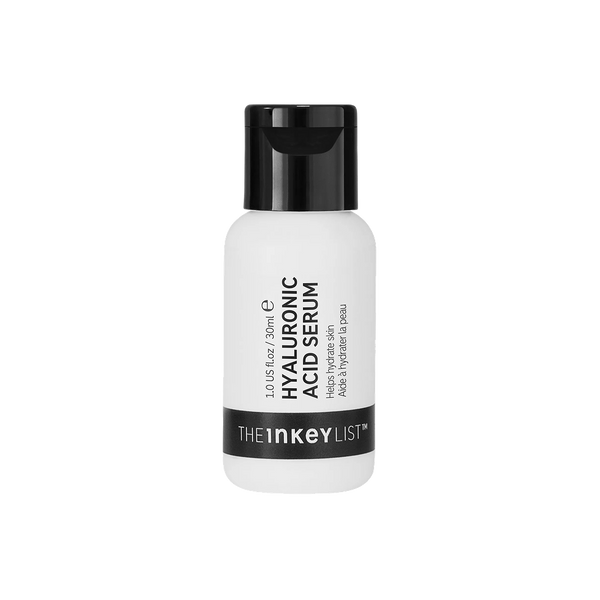
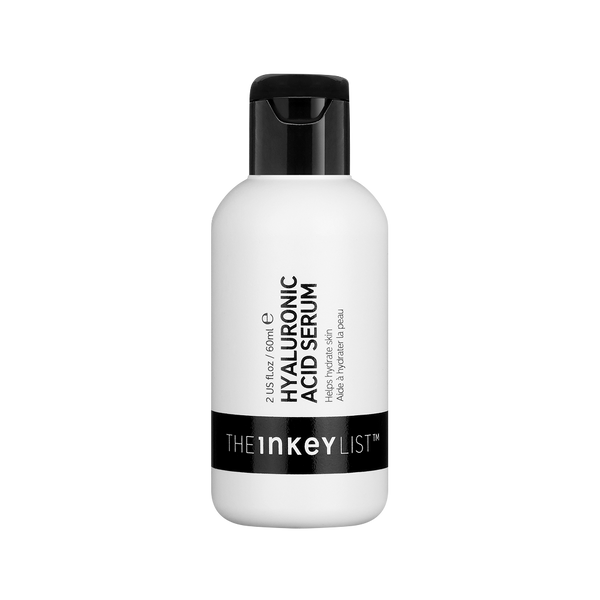
The cornerstone of hydration for oily skin. Our Hyaluronic Acid Serum contains 2% hyaluronic acid at three molecular weights — high, medium, and low - ensuring that hydration is delivered at every layer of the skin, not just at the surface. Matrixyl 3000™ adds a peptide-based benefit, supporting skin firmness and targeting the appearance of fine lines. The texture is completely water-based and weightless — it absorbs in seconds and leaves no residue. Fragrance-free, non-comedogenic, and suitable for blemish-prone skin. This is your first serum step, applied to damp skin after cleansing.
Niacinamide Serum — £10 | 30ml
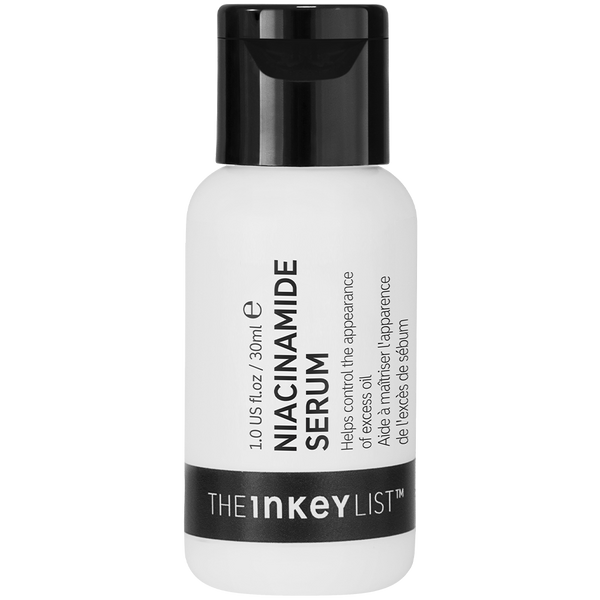
The oil-control treatment step. Our Niacinamide Serum contains 10% niacinamide - a clinically effective concentration for regulating sebaceous gland activity — plus 1% hyaluronic acid, which means it brings its own light hydration alongside the active treatment. It visibly reduces excess shine, minimises the appearance of enlarged pores, reduces active blemishes, and helps to fade the post-blemish marks that oily skin is prone to. Applied after the HA Serum, it takes the routine from purely hydrating to actively therapeutic.
Omega Water Cream — from £11 | 50ml
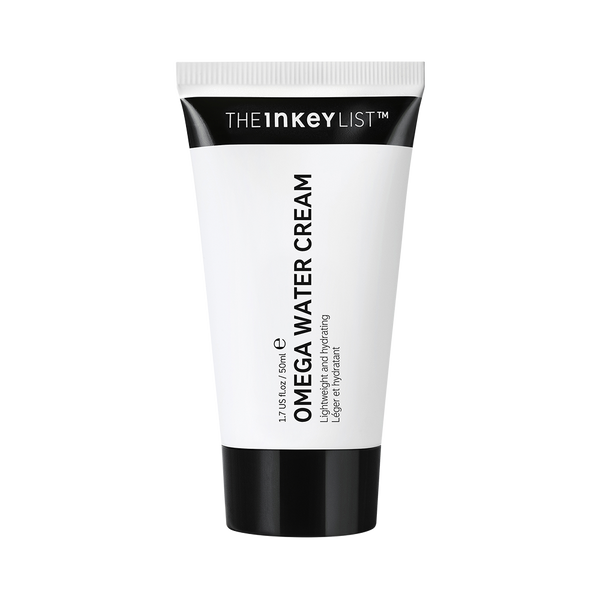
The final - and essential - hydration lock. Our Omega Water Cream is an oil-free, gel-water moisturiser that delivers 5% niacinamide, 0.2% ceramide complex, and 3% betaine in a texture that oily skin will actually enjoy wearing. It absorbs immediately, leaves no greasiness, and simultaneously seals in the hydration from the HA step while continuing the oil-control and barrier-repair work of the niacinamide. In an independent consumer study involving 22 people over 4 weeks, 95% agreed their skin tone looked more even, and 100% said their skin felt deeply hydrated after 14 days.* For oily skin, this is the moisturiser: lightweight, active, and genuinely effective.
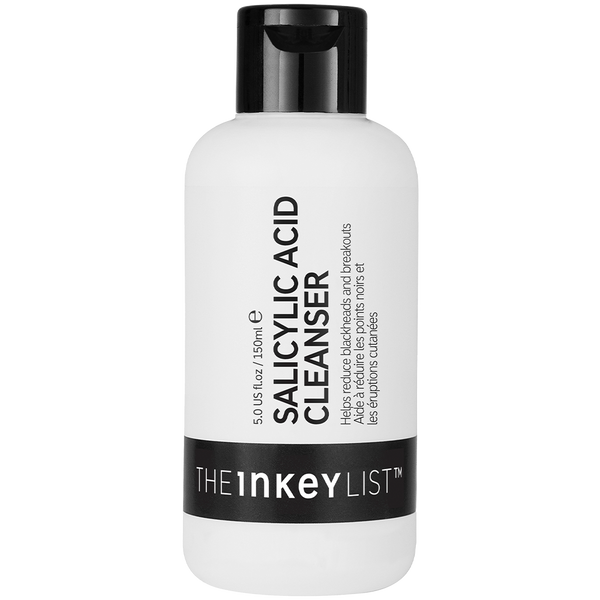
Salicylic Acid Cleanser — from £10 | 150ml
The starting point for every routine. The Salicylic Acid Cleanser contains 2% salicylic acid, 1% zinc compound, and 0.5% allantoin - a trio that clears pores deeply, manages excess oil, and calms the skin simultaneously. Salicylic acid is a BHA (beta hydroxy acid) that is oil-soluble, meaning it can penetrate into pores and clear congestion from within. Zinc helps control oil production at the surface. Allantoin soothes. Together, they create a clean canvas so that the HA serum and treatment steps that follow can do their jobs without barrier. Formulated for oily and blemish-prone skin.
\4-week independent consumer study, 22 people. Individual results may vary.*
For readers who want everything in one place, The INKEY List’s Oily Blemish-Prone Skin Routine curates these products into a single, complete routine set.
Before we close, here are the most frequently asked questions about hyaluronic acid and oily skin - answered directly.
Frequently Asked Questions About Hyaluronic Acid for Oily Skin
Is hyaluronic acid good for oily skin?
Yes. Hyaluronic acid hydrates the skin with water rather than oil, making it suitable for - and genuinely beneficial to - oily skin. It is non-comedogenic, does not stimulate sebum production, and supports the skin barrier without adding grease or heaviness. Research suggests it may even help to reduce compensatory sebum overproduction when oily skin is properly hydrated.
Can hyaluronic acid cause oily skin?
No. HA is a water-based humectant - it binds water molecules, not oil. It has no mechanism by which it could stimulate or increase sebum production. If you notice increased oiliness after introducing a new product, look at the other ingredients in the formulation - particularly the moisturiser applied on top - before attributing it to the HA.
Does hyaluronic acid make skin oily?
No. A water-based HA serum absorbs quickly, leaves no oily residue, and adds no oil to the skin whatsoever. It typically has a clean, gel-like texture that sits completely comfortably on oily skin. If anything, by addressing dehydration, it may help to reduce the compensatory oiliness that dehydrated skin produces.
Does hyaluronic acid help with oily skin?
Indirectly, yes. By properly hydrating the skin and supporting the barrier, HA reduces the dehydration-triggered feedback loop that causes oily skin to overproduce sebum. For direct oil regulation, pair HA with niacinamide - which targets sebaceous gland activity at the source.
Does oily skin need hyaluronic acid?
Yes. Oily does not mean hydrated. The sebaceous glands and the skin’s water-retention systems operate independently. Oily skin can be - and very often is - simultaneously dehydrated, and when it is, the skin compensates with more oil. Hyaluronic acid addresses the water side of skin health and is one of the most appropriate hydration ingredients for oily skin precisely because it adds nothing oily to the equation.
Can oily skin use hyaluronic acid serum?
Absolutely. A lightweight, water-based Hyaluronic Acid Serum is one of the best formats for oily skin - high concentration of active ingredient, minimal texture, rapid absorption, no pore-clogging risk. Apply to damp skin and follow with a lightweight, oil-free moisturiser.
Is hyaluronic acid good for oily, blemish-prone skin?
Yes. HA is non-comedogenic, fragrance-free, and gentle enough to use alongside blemish-targeting actives like salicylic acid and niacinamide. It supports the skin barrier - which blemish-prone skin often has compromised —-without contributing to congestion or irritation.
Is niacinamide and hyaluronic acid good for oily skin?
Yes - and this is one of the most effective combinations for oily and blemish-prone skin. The Hyaluronic Acid Serumhandles hydration; the Niacinamide Serum handles oil regulation and blemish reduction. Apply HA first on damp skin, then niacinamide, then seal with an oil-free moisturiser. These two ingredients do not compete with or cancel each other out - they complement each other perfectly.
What should I look for in a hyaluronic acid moisturiser for oily skin?
Look for oil-free, non-comedogenic formulations with a lightweight gel or water-cream texture. Avoid heavy, occlusive creams that will feel greasy and potentially clog pores. The Omega Water Cream is specifically formulated for oily and combination skin: oil-free, with 5% niacinamide and a ceramide complex, in a gel-water texture that absorbs immediately and leaves skin feeling balanced rather than burdened.
The Bottom Line on Hyaluronic Acid for Oily Skin
Hyaluronic acid is not only safe for oily skin - it is one of the most intelligently chosen ingredients oily skin can use. The misconception that oily skin does not need hydration is exactly that: a misconception. Oiliness and hydration are different things, governed by different systems, and both need to be addressed for skin to be genuinely healthy and balanced.
Hyaluronic acid gives oily skin the water it needs, without a single drop of the oil it already has. Pair it with niacinamide and you have both sides of the equation covered: hydration and oil control, working simultaneously, without interference. Choose the right formulations - lightweight, water-based, oil-free, fragrance-free — and the results are clear skin that feels balanced, not stripped, and hydrated without any heaviness.
The right routine makes all the difference. The right ingredients make all the difference. Now you know why - and exactly what to do with that knowledge.
Ready to get started? Shop The INKEY List’s Hyaluronic Acid Serum - from £9 - and give your oily skin the hydration it has been missing.
Prefer everything in one place? Build your complete routine with the Oily Blemish-Prone Skin Routine - a curated set of everything oily and blemish-prone skin needs, in the right order, at the right price.
Not sure where to start? Take The INKEY List Skincare Quiz for a personalised routine recommendation tailored to your skin’s specific needs.