



In-Flight Skincare: How to Protect and Hydrate Your Skin at 35,000 Feet
Flying can leave your skin dehydrated and dull - discover a science-backed in-flight skincare routine to protect your skin barrier, lock in hydration and keep your complexion healthy from take-off to landing.
Author
askINKEY skincare advisor
Published
03 July, 2026
Time to read
15 minutes
Aircraft cabin humidity sits between 10% and 20% - significantly lower than the 40% to 60% relative humidity found in most comfortable indoor environments. That gap is not a minor fluctuation. It is a consistently dehydrating environment, and every hour you spend in it, your skin is actively losing moisture faster than it can retain it. The mechanism behind this is called transepidermal water loss (TEWL) - the process by which water evaporates through the surface layers of the skin into the surrounding air. In low-humidity environments, TEWL accelerates dramatically. The result is dehydration, tightness, dullness, fine lines appearing where they had no business showing up, worsening dark circles, and puffiness that has nothing to do with how much sleep you got before boarding.
This affects every skin type. Oily skin, combination skin, dry skin - dehydration does not discriminate. It is a condition caused by water loss, not oil production, and the cabin environment strips water from all of them equally.
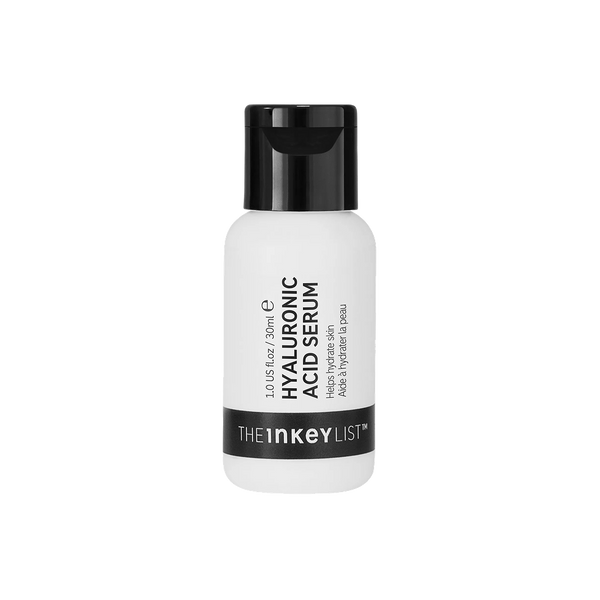
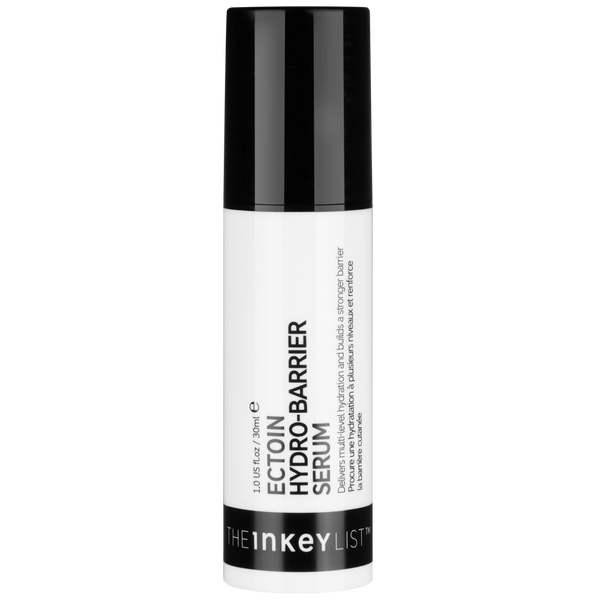
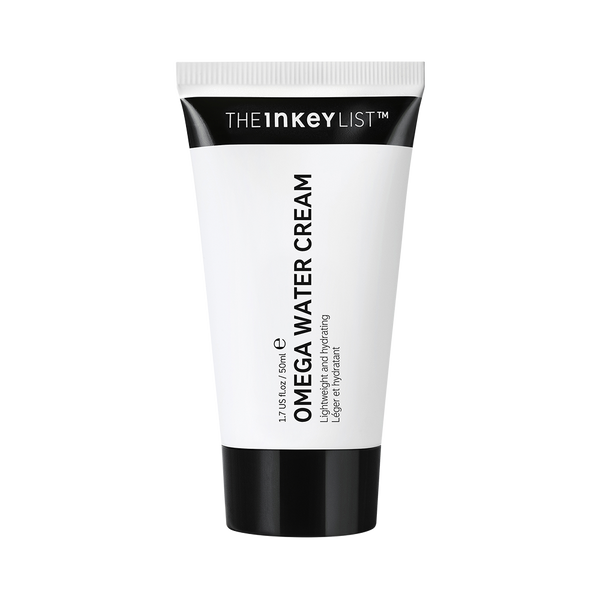
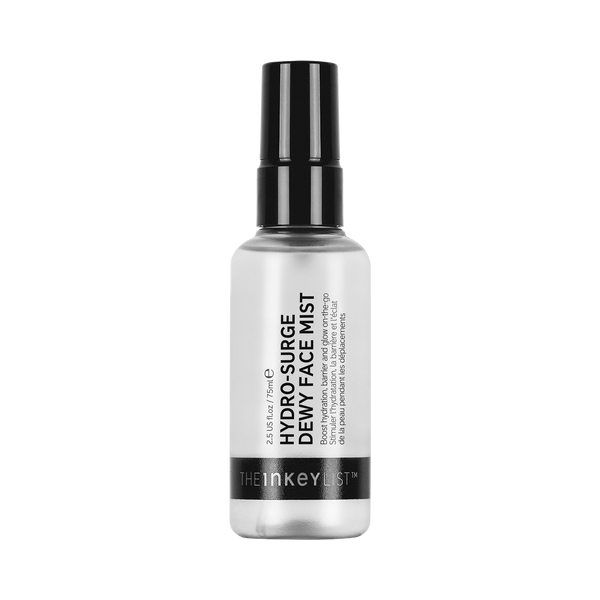
This guide covers everything you need to know about protecting your skin in the air: the science behind why flying dehydrates you, the specific skin concerns it causes, how to pack your skincare for travel, and a step-by-step in-flight skincare routine you can follow on any flight - short-haul or long-haul. The featured products throughout this guide are our Hyaluronic Acid Serum (£9), our Ectoin Hydro-Barrier Serum (£15), our HydroSurge Dewy Face Mist (£11), our Omega Water Cream (£11), and our Caffeine Eye Cream (£10) - a complete in-flight skincare kit built around the core problem of TEWL in a low-humidity environment.
If your skin already runs dehydrated, explore our Dehydrated Skin collection for the full range of targeted solutions. Otherwise, start with the science - because understanding why flying affects your skin so significantly is the foundation for everything that follows.
Why Flying Dehydrates Your Skin
The Science of Cabin Air and Transepidermal Water Loss
At 35,000 feet, the environment outside an aircraft is hostile to human physiology in almost every measurable way. The cabin’s environmental control system works hard to make the interior tolerable - managing pressure, temperature, and air circulation - but there is one variable it cannot adequately address: humidity. And for your skin, that variable is everything.
Commercial aircraft cabins maintain a relative humidity that typically falls between 6% and 20% during flight. This happens because the air circulated inside the cabin is drawn partly from the cold, arid air at cruising altitude. At approximately 30,000 feet, outside air temperature sits around -40°C - air so cold it holds virtually no moisture at all. When this air is conditioned and pumped into the cabin, it brings almost no humidity with it. Exhaled moisture from passengers and crew raises it slightly, but only to a fraction of what your skin is accustomed to. According to research published in Travel Medicine and indexed by the National Center for Biotechnology Information (NCBI), cabin humidity during cruise typically sits well below 20% - and in many aircraft, significantly lower. For comparison, the Sahara Desert averages around 25% relative humidity. Your aircraft cabin is, in purely atmospheric terms, drier than one of the driest places on Earth.
The consequence for your skin is significant. Under normal conditions, the outermost layer of the skin - the stratum corneum - maintains its water content through a combination of natural moisturising factors (NMFs) and the skin’s lipid barrier, which slows the rate at which water escapes into the environment. This process of water moving from the skin’s surface into the surrounding air is TEWL: transepidermal water loss. In a humidity-balanced environment of 40% to 60%, this happens at a manageable rate. In a cabin environment, the moisture gradient between the skin and the surrounding air becomes extreme - and water is pulled from the skin’s surface layers at an accelerated rate that the skin simply cannot compensate for in real time.
The skin’s barrier - the interlocking lipid matrix of the stratum corneum - is the primary line of defence against TEWL. When it is functioning well and adequately supported, it slows water loss significantly. When it is stressed by a depleting environment - cold, dry, recirculated air over several hours - water escapes faster than the barrier can manage. The result is progressive dehydration of the stratum corneum: the skin loses plumpness, surface smoothness, and the ability to reflect light evenly. It tightens, dulls, and becomes more reactive to anything it encounters.
According to the Cleveland Clinic, low cabin humidity is a well-documented physiological stressor during air travel, contributing directly to skin dryness and the associated discomfort many passengers experience mid-flight. It also affects the mucous membranes, the eyes, and the respiratory system - but for skin specifically, the effects are both visible and progressive throughout the duration of the flight.
There is an additional factor that many people overlook: air vents. A significant number of passengers spend their flight with the overhead vent directed at their face - either for cooling or simply out of habit. Directing a stream of dry, recirculated cabin air at the skin’s surface increases local TEWL further, compounding the dehydrating effect of the cabin environment as a whole.
One more important point: oily skin is not immune. The sebaceous glands that produce oil and the skin’s water-retention system operate entirely independently. Your skin can be producing excess sebum while simultaneously losing water at an accelerated rate. Flying dehydrates all skin types equally, regardless of how much oil the skin produces. If this applies to you, read our full explainer on why oily skin gets dehydrated too - it is a nuance that changes how you approach in-flight skincare entirely.
Understanding why cabin air depletes the skin makes everything that follows - product choices, application techniques, routine timing - feel purposeful rather than arbitrary. The next step is recognising exactly how this dehydration manifests in the skin, concern by concern.
How Flying Affects Your Skin - The Specific Concerns
Recognising the Visible Signs of In-Flight Skin Dehydration
The science of TEWL translates into a very specific set of skin concerns during and after a flight. Some are universal - every passenger on every flight will experience some degree of these effects. Others become more pronounced on longer routes or in passengers whose skin barrier is already compromised before boarding. Understanding what you are dealing with makes it significantly easier to address it correctly.
Dehydration and Tightness
This is the most immediate and universally felt effect of cabin air. The sensation of tightness - a pulling, uncomfortable feeling across the cheeks, forehead, and around the mouth - is the direct result of the stratum corneum losing water content. As the outer skin layers dehydrate, they contract slightly and lose the supple quality that characterises well-hydrated skin. The surface becomes rougher at a microscopic level, and the skin feels uncomfortable in a way that makeup, foundation, or face washing will not address. Only restoring water content resolves it. If you notice your skin feeling parched and tight within the first hour of a flight, this is exactly what is happening.
For more on recognising dehydration in your skin, read our guide on how to tell if your skin is dehydrated: 7 signs you might be missing.
Dullness
Healthy, well-hydrated skin reflects light evenly. It has a natural luminosity that comes from the smooth, plump surface of an adequately hydrated stratum corneum. When that water content is depleted, the surface becomes microscopically uneven - and instead of reflecting light, it scatters it. The visible result is a flat, grey, lifeless complexion. The longer the flight, the more pronounced this dullness becomes. It is one of the most commonly noticed post-flight skin complaints, and it is entirely caused by water loss at the surface level - not tiredness, not diet, not makeup. Hydration is the fix.
Dehydration Lines
Fine, superficial lines that appear or worsen during a flight are almost always dehydration lines rather than structural wrinkles. They form when the stratum corneum loses enough water content that its normally smooth surface becomes crinkled and uneven. They are particularly visible around the eyes, cheeks, and forehead, and many passengers notice their makeup settling into them mid-flight in a way that did not happen at the start of the journey. The key distinction from wrinkles is reversibility: dehydration lines resolve with proper rehydration. Apply water content back to the skin and they diminish significantly. For a detailed explanation of how to tell them apart, read dehydration lines vs wrinkles.
Under-Eye Puffiness
The skin under the eye is approximately 0.5mm thick - the thinnest skin on the face. It loses moisture faster than anywhere else and is the first area to show the effects of dehydration. During flights, particularly long-haul routes, fluid redistribution occurs as a result of extended periods of inactivity and the effects of low cabin pressure on the body’s circulation. Fluid tends to pool in the under-eye area, particularly during sleep, producing visible puffiness on waking. The combination of dehydration and fluid pooling makes the under-eye area one of the most visibly affected zones on the face during and after a flight.
Dark Circles Worsening
As the under-eye skin dehydrates, it becomes progressively more translucent. The blood vessels and tissue beneath the skin become more visible through this thinning layer, making dark circles appear more prominent than they would on the ground. This is compounded by disrupted sleep during the flight and the general physiological stress of air travel. Dark circles that are manageable at home can look significantly more pronounced after a long-haul flight, even if the underlying cause has not changed - the visibility of the vasculature simply increases as the skin loses its hydration-related opacity.
Increased Sensitivity
Dehydration compromises the skin’s barrier function. A weakened barrier allows irritants, allergens, and environmental aggressors to penetrate more easily than they would through a healthy, well-hydrated stratum corneum. This makes the skin more reactive during flight - more likely to feel uncomfortable with products it normally tolerates, more likely to redden, and more likely to feel itchy or irritated in the dry cabin air. For oily and combination skin types, there is an additional twist: the sebaceous glands may actually increase oil production mid-flight as a response to the dehydrating environment. If your skin looks shinier rather than more hydrated as the flight progresses, that shine is a sign of dehydration - not adequate hydration. The skin is overproducing oil to compensate for a lack of water.
With these concerns clearly identified, the next practical question is one that every traveller faces before packing: what skincare can you actually bring on board, and how do you pack it correctly?
What Skincare Can You Take on a Plane
Packing Smart - Check Your Airport’s Current Security Guidelines
Before any in-flight skincare routine can happen, your products need to make it through security. It is important to note that liquid restrictions for carry-on baggage can vary between UK airports, as individual airports are at different stages of rolling out updated security technology. Before you travel, check your departure airport’s website for their current carry-on liquids policy to make sure your skincare is compliant.
Your In-Flight Skincare Kit - Sizes and Packing
All five featured products are compact and travel-friendly in their standard sizing:
- Hyaluronic Acid Serum - 30ml (£9)
- Ectoin Hydro-Barrier Serum - 30ml (£15)
- HydroSurge Dewy Face Mist - 75ml (£11)
- Omega Water Cream - 50ml (£11)
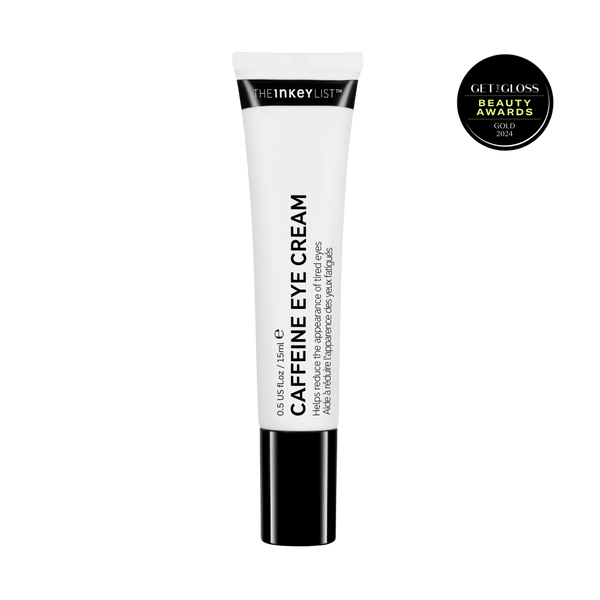
- Caffeine Eye Cream - 15ml (£10)
Keep the skincare bag in your hand luggage - not your checked baggage. You will need it during the flight and during airport layovers, not when you collect your bags at the destination.
A few additional packing principles worth following:
- Apply pre-flight skincare at home or in the airport lounge before boarding. The moments before you walk onto the plane are the best opportunity to load the skin with hydration whilst still in a normal-humidity environment. The products will absorb more effectively, and you will start the flight in a stronger position.
- If you typically use larger sizes of your products at home, decant into travel bottles before your trip. The standard sizes of all five INKEY products are already travel-friendly, so for most people this step is unnecessary.
- Skip active exfoliants in your travel kit entirely. AHAs, BHAs, retinol, and strong vitamin C formulations are not appropriate for mid-flight application. Dehydrated, barrier-compromised skin in a low-humidity environment is not the right state for exfoliating actives. Your in-flight kit should focus exclusively on hydration and barrier support. Save the actives for your regular home routine once you have landed and recovered.
- Refrigerating the Caffeine Eye Cream for 30 minutes before travel adds a cooling effect to application that enhances its de-puffing action. If you have a hotel mini-fridge before your flight, it is worth doing.
With your kit assembled and packed, the most important part of this guide follows: what to apply, when to apply it, and in what order - from the moment before you board to the hours after you land.
Your Step-by-Step In-Flight Skincare Routine
The Complete Timeline - Before, During, and After Your Flight
The in-flight skincare routine is not just about what happens in the air. It begins before you board and continues after you land. Each phase serves a specific function in the overall strategy of managing TEWL, maintaining barrier function, and restoring hydration to the skin under pressure.
Before You Board
Cleanse thoroughly before leaving for the airport. Remove makeup, SPF, pollution, and any product buildup from the previous day. Walking into a dehydrating cabin environment with a barrier already compromised by a full day’s exposure - oxidised SPF, makeup residue, environmental pollutants - is the worst possible starting point. A clean surface gives your hydrating products the best chance to absorb and perform.
Apply our Ectoin Hydro-Barrier Serum (£15) to damp skin immediately after cleansing. This is the first and most important protective step in the pre-flight routine. Ectoin is a naturally derived extremolyte - originally found in desert microorganisms that have evolved to survive in environments with virtually no moisture. It works by forming hydration shells around skin cells, protecting them from water loss even in arid environments. Clinically, it has been proven to hydrate and strengthen the skin barrier in as little as 15 minutes. Applied before boarding, it begins reinforcing the barrier before the dehydrating environment takes effect - which is exactly when that reinforcement is most valuable.
Follow immediately with our Hyaluronic Acid Serum (£9) on still-damp skin. Two to three drops, patted gently into the face and neck. Do not rub. The skin should still be slightly damp from the Ectoin application - this moisture provides the environment that Hyaluronic Acid needs to draw water into the skin effectively. Our formula uses multi-molecular Hyaluronic Acid, meaning multiple molecular weights of HA are present in the same formulation. Smaller molecules penetrate deeper into the skin’s layers; larger molecules sit at the surface. The result is hydration at multiple depths simultaneously - not just a temporary surface plumping effect.
Lock in with our Omega Water Cream (£11). Omega fatty acids - specifically Omega 3, 6, and 9 - are essential components of the skin’s lipid barrier. This lightweight, oil-free cream replenishes those lipids at the surface, creating a physical seal over the hydration layers applied beneath it. This seal is the mechanism by which TEWL is slowed - by reducing the rate at which water can escape from the stratum corneum into the dry cabin air. Despite being a barrier-sealing cream, it is non-comedogenic and appropriate for all skin types including oily and combination, because the barrier function it supports is about water, not oil.
Apply our Caffeine Eye Cream (£10) around the orbital bone with your ring finger. Use light tapping motions - no pulling or dragging on the delicate under-eye tissue. Pre-flight application begins addressing the eye area before puffiness and dark circle intensification have a chance to accumulate. Caffeine at 0.3% constricts blood vessels beneath the skin, reducing the visibility of the vasculature that makes dark circles appear prominent. Matrixyl 3000 supports the collagen structure of the delicate eye contour. If you have refrigerated the tube before travel, the cooling effect on application gives an immediate de-puffing boost.
During the Flight
Our HydroSurge Dewy Face Mist (£11) is your primary in-flight tool. Spritz it across the face in a thin, even layer as needed throughout the flight - over makeup, over bare skin, over the Omega Water Cream applied before boarding. 3% Hydroviton Insta delivers instant surface hydration that has been shown in clinical testing to last up to 12 hours. 3% Aquaxyl works alongside this to strengthen the barrier and actively reduce TEWL. The formula was confirmed safe to use over makeup without disruption in a 2-week consumer trial of 103 people. Carry it in the seat pocket in front of you, not in the overhead bin.
On longer flights - anything over 5 hours - reapply the Hyaluronic Acid Serum mid-flight. To do this correctly: first, spritz the HydroSurge Dewy Face Mist across the face to create a damp surface. Then, within 30 to 60 seconds - before the mist dries - apply 1 to 2 drops of the Hyaluronic Acid Serum over the top. Do not wait for the mist to evaporate before applying the serum. Hyaluronic Acid is a humectant: it draws water into the skin from the environment around it. If the skin is damp when you apply it, it draws that moisture in. If the skin is dry, it has nothing to draw from - and in the extremely low humidity of a cabin, it may actually pull from deeper skin layers, worsening surface dehydration. Using the face mist before the serum has been shown to boost the hydration outcome by 39% compared to applying the serum alone, based on a 48-hour comparative hydration and skin barrier study on 31 participants. Read more about this in our dedicated guide: Hyaluronic Acid Serum + Face Mist: The Power Duo That Boosts Hydration by 39%.
Reapply the Caffeine Eye Cream if you have slept during the flight or if puffiness becomes noticeable. The ring finger, light tapping motions, orbital bone only - the same technique as pre-boarding.
Drink water consistently throughout the flight. Avoid alcohol and excessive caffeine intake during the journey. Both act as diuretics that accelerate internal dehydration, compounding the TEWL-driven surface dehydration happening simultaneously. Internal hydration will not prevent TEWL - it is a skin-surface issue - but it supports overall physiological function and gives the skin one fewer stressor to contend with.
Do not touch your face with unwashed hands during the flight. Tray tables, armrests, and seatback screens carry high bacterial loads. In a cabin where your skin barrier is already compromised and reactive, unnecessary contact is an easy risk to avoid.
After Landing
Cleanse thoroughly on landing or at your destination. The combination of cabin air, multiple skincare reapplications during the flight, and general travel grime means the skin needs a proper cleanse before it can truly begin to recover. Skipping this step and going straight to bed is a common mistake that slows recovery.
Repeat the full rehydration routine post-landing: Ectoin Hydro-Barrier Serum on damp skin, followed by the Hyaluronic Acid Serum, sealed with the Omega Water Cream. The skin will continue to experience TEWL-related water loss for several hours after a long-haul flight - it does not simply normalise the moment you step off the plane. A full routine post-landing accelerates recovery and means you wake up the following morning in a significantly better position than if you had skipped it.
Avoid active exfoliants for 24 hours after a long-haul flight. Retinol, AHAs, BHAs, and strong actives should be temporarily paused whilst the barrier recovers. A dehydrated, barrier-compromised stratum corneum is far more susceptible to irritation from exfoliating actives than healthy, well-supported skin. Give it 24 hours of focused hydration before reintroducing anything that increases cell turnover or surface shedding.
The step-by-step routine addresses the timeline in full. The next section zooms into specific, commonly searched concerns - if you are reading this mid-flight because one particular issue is already bothering you, this is where to find your targeted answer.
Targeting Specific In-Flight Skin Concerns
Focused Solutions for What You Are Actually Experiencing
Not every reader arrives at this guide in the same situation. Some are planning ahead; others are already on a flight with tight skin and shadowed eyes. This section provides targeted guidance for the four most common in-flight skin concerns, with specific product application advice for each.
Dark Circles and Under-Eye Puffiness
The under-eye area is the first place that in-flight dehydration makes itself visible. The skin here is already the thinnest on the face - approximately 0.5mm - with minimal fat padding and a naturally translucent quality that increases as water content drops. As cabin humidity depletes the skin’s surface moisture, the under-eye area becomes progressively more translucent, and the underlying vasculature becomes more visible. Dark circles that are mild at ground level can look significantly more prominent mid-flight - not because anything has changed beneath the skin, but because less skin is between your eyes and the blood vessels beneath.
Puffiness compounds the issue. Long periods of inactivity reduce lymphatic drainage; low cabin pressure affects fluid distribution in the body; sleeping upright or in a semi-reclined position causes fluid to settle under the eyes rather than dispersing. The result is a combination of discolouration and swelling that can make a straightforward 10-hour flight look like a three-day sleep deficit on your face.
The targeted solution is our Caffeine Eye Cream (£10). Caffeine at 0.3% vasoconstricts the blood vessels beneath the under-eye skin, reducing their visibility and thereby reducing the appearance of dark circles. Matrixyl 3000 provides peptide-based support to the delicate tissue of the eye contour. Apply with the ring finger - the weakest finger on the hand, which applies the least pressure to tissue that should never be tugged or stretched - using light tapping motions around the entire orbital bone.
INKEY tip: keep the Caffeine Eye Cream in a cool bag during the flight. The temperature contrast on application enhances the immediate de-puffing response - cold constricts, reduces swelling, and feels genuinely soothing on the thin, stressed skin of the eye contour.
Dehydration and Skin Tightness
Tightness is the most direct symptom of TEWL in action - the stratum corneum contracting as it loses water content, reducing the skin’s flexibility and comfort. It tends to feel worst during and after long-haul flights, and is often described as feeling like the face has been shrink-wrapped.
The solution is layered hydration applied correctly. Spritz the HydroSurge Dewy Face Mist (£11) first to create a damp surface. Then immediately - within 30 to 60 seconds - apply 2 to 3 drops of the Hyaluronic Acid Serum (£9)over the still-damp skin. Pat gently. Do not wait for the mist to dry before applying the serum - the damp surface is what enables the multi-molecular Hyaluronic Acid to draw moisture into the skin rather than from it. Follow with the Omega Water Cream (£11) to seal everything in and slow the rate at which it evaporates back into the cabin air.
The sequence - mist, serum, cream - is the key. Each step has a specific role: the mist creates the hydration environment, the serum drives water into the skin at multiple depths, and the cream slows the TEWL that would otherwise undo the work of the previous two steps. Skipping the mist or allowing it to dry before applying the serum significantly reduces the outcome. For more on dehydrated skin, browse the full collection.
Dullness
Dull, flat skin mid-flight is not a mystery. It is the direct optical consequence of surface dehydration. The stratum corneum, when fully hydrated, has a smooth surface that reflects light consistently - producing the luminosity associated with healthy, glowing skin. When it loses water, the surface becomes microscopically uneven, and light is scattered in multiple directions instead of being reflected. The skin looks flat, grey, and tired regardless of how much sleep you got before the flight.
Washing the face will not help. Exfoliating will not help - and would actively worsen things by disrupting an already-stressed barrier. The only thing that addresses dullness caused by dehydration is restoring water content to the surface.
Our HydroSurge Dewy Face Mist (£11) addresses this directly. In addition to Hydroviton Insta and Aquaxyl, the formula contains 2% Earth Marine Water - a mineral-rich marine water ingredient that delivers a natural, visible glow effect by restoring surface moisture and light-reflecting quality to the skin. Apply it mid-flight, over makeup, and the difference in surface luminosity is visible almost immediately. For longer flights, follow the mist with a mid-flight reapplication of the Hyaluronic Acid Serum as described in the routine section above - restoring water content at depth is what sustains the glow effect beyond the immediate surface refresh.
Dehydration Lines Appearing or Worsening
If you look in the airplane bathroom mirror two hours into a flight and see lines you did not have when you boarded, those are dehydration lines. They are not wrinkles. They are not evidence of accelerated ageing. They are the stratum corneum, depleted of water, becoming too thin and crinkled to maintain a smooth surface - and they are fully reversible with hydration.
They appear most often around the eyes, across the cheeks, and on the forehead. If you are wearing foundation, you will likely see it settling into these lines in a way it was not doing on the ground. This is one of the most reliable real-time indicators that your skin is significantly dehydrated.
Our Ectoin Hydro-Barrier Serum (£15) is the most directly targeted product for this concern. Ectoin works at the mechanism level - forming hydration shells around skin cells and actively reducing TEWL, which is the process that causes dehydration lines to appear in the first place. Clinically, it has been shown to hydrate and strengthen the barrier in 15 minutes. Applied mid-flight on a mist-dampened face, followed by the Omega Water Cream to seal, it addresses both the symptom (water loss) and the mechanism (TEWL acceleration) simultaneously.
Follow this with the Hyaluronic Acid Serum if the lines are pronounced. Apply it to damp skin immediately after the face mist, then follow with the Omega Water Cream. The multi-molecular approach of the Hyaluronic Acid Serum means it restores water at multiple depths - not just the surface - which is what produces a visible reduction in those dehydration lines. Read more in our guide to dehydration lines vs wrinkles.
In-Flight Skincare for Every Skin Type
One Environment, Every Skin - Why the Routine Works for All of Them
One of the most common misconceptions about in-flight skincare is that it only applies to people with dry skin. It does not. The cabin environment dehydrates every skin type - and the products in this guide have been chosen specifically because they work across all of them, without aggravating oil production, clogging pores, or triggering sensitivity.
Dry and Dehydrated Skin
If your skin is already dry before you board, you are starting the flight with a barrier that is likely less robust than average. The cabin environment will feel more aggressive on dry skin, and the effects - tightness, dullness, dehydration lines - will become apparent sooner and more severely than for other skin types.
The full routine described in this guide is the recommended approach. Do not abbreviate it. If you are on a very long flight - 10 hours or more - consider repeating the full serum and moisturiser step after the first 4 to 5 hours rather than waiting for the mid-flight check-in. Dry skin needs more frequent intervention because it starts with less water reserve to draw from.
Dry skin in particular benefits from the Ectoin Hydro-Barrier Serum’s barrier-repair function. Dry skin often has a compromised barrier by default - insufficient lipid content in the stratum corneum leads to baseline TEWL that is already elevated compared to normal skin. Ectoin addresses this directly by reinforcing the barrier and forming hydration shells around cells, slowing the rate at which water escapes even in the most arid environments.
Oily and Combination Skin
This is the skin type most likely to skip an in-flight skincare routine entirely, based on the incorrect assumption that oily skin does not need extra hydration. It does. Oil production and water retention are governed by entirely different biological systems. The sebaceous glands produce oil; the barrier manages water. Flying does not pause oil production - but it does accelerate water loss, regardless of how much oil is being produced.
In fact, if your skin appears shinier mid-flight than it did at the start of the journey, that is likely a sign that it is dehydrated. The sebaceous glands increase oil production as a compensatory response to surface water loss. More shine, in this context, means more dehydration - not more hydration.
The featured products in this guide were selected partly with oily and combination skin in mind:
- Hyaluronic Acid Serum (£9) - entirely water-based; adds zero oil to the skin.
- Omega Water Cream (£11) - oil-free, non-comedogenic, lightweight. Replenishes the lipid barrier without contributing to congestion.
- HydroSurge Dewy Face Mist (£11) - oil-free, non-comedogenic, safe throughout the flight on oily skin.
- Ectoin Hydro-Barrier Serum (£15) - oil-free, fragrance-free, and lightweight enough that it will not feel heavy or greasy on combination skin.
The full routine works for oily and combination skin without any modification. For more on why this matters, read why oily skin gets dehydrated too.
Sensitive Skin
Sensitive skin faces a particular challenge in the air. Dehydration compromises barrier function, and a compromised barrier makes the skin more reactive - more likely to flush, itch, tighten uncomfortably, or respond to products it would normally tolerate without issue. The cabin environment simultaneously depletes the skin and lowers its tolerance threshold. These two effects compound each other.
The approach for sensitive skin is the same routine but with additional emphasis on simplicity. Stick to products you know your skin tolerates. This is not the time to try a new formulation or introduce an unfamiliar ingredient - the cabin is not a controlled environment, and an adverse reaction at 35,000 feet is difficult to address.
All five featured products are fragrance-free and suitable for sensitive skin. The Caffeine Eye Cream and HydroSurge Dewy Face Mist have both been tested for sensitive skin compatibility and are confirmed safe for use during pregnancy and breastfeeding. If you have reactive skin, the Ectoin Hydro-Barrier Serum is particularly relevant - Ectoin is clinically proven to be gentle for sensitive and compromised skin, and its barrier-repair function directly addresses the mechanism that makes sensitive skin more reactive in low-humidity environments.
All Skin Types - The Three Non-Negotiables
Whatever your skin type, the in-flight routine can be distilled to three products that together address the core problem of TEWL in a low-humidity environment:
- Hyaluronic Acid Serum (£9) - applied to mist-dampened skin. The core humectant that drives water into the skin at multiple depths.
- Omega Water Cream (£11) - applied immediately after the serum. Seals in hydration and slows TEWL by reinforcing the lipid barrier.
- HydroSurge Dewy Face Mist (£11) - used throughout the flight. Provides hydration on demand, creates the damp surface needed for mid-flight serum application, and actively reduces TEWL with its Aquaxyl content.
These three products, used in the correct sequence, address every skin type’s in-flight hydration needs. The Ectoin Hydro-Barrier Serum and Caffeine Eye Cream add targeted depth for barrier repair and under-eye concerns respectively - but if you are packing light or prioritising three products, these are the three.
Your Skin, Recovered - What to Take Away From This
Aircraft cabin humidity at 10% to 20% is a measurably dehydrating environment, and it affects all skin types via the same mechanism: accelerated transepidermal water loss from the stratum corneum into the surrounding dry air. The longer the flight, the more pronounced the effects. The solution is not complicated - but it requires the right products applied in the right order at the right times.
The framework is straightforward:
Before boarding: Cleanse thoroughly, apply the Ectoin Hydro-Barrier Serum to damp skin, follow with the Hyaluronic Acid Serum, seal with the Omega Water Cream, apply the Caffeine Eye Cream to the orbital bone.
During the flight: Use the HydroSurge Dewy Face Mist as needed throughout. On flights over 5 hours, reapply the Hyaluronic Acid Serum mid-flight over a fresh layer of mist. Reapply the Caffeine Eye Cream after sleeping or if puffiness develops. Drink water; avoid alcohol.
After landing: Cleanse properly, repeat the full hydration routine, avoid exfoliating actives for 24 hours.
The single most important technique across the entire routine is the damp-skin application method. Always apply your Hyaluronic Acid Serum to damp skin - and if there is no moisture present, create it first with the HydroSurge Dewy Face Mist. This one step, applied consistently, is what elevates the outcome from adequate to genuinely effective.
Here is the complete product reference for your in-flight skincare kit:
- Hyaluronic Acid Serum - £9 - the core humectant; multi-molecular HA for hydration at multiple skin depths
- HydroSurge Dewy Face Mist - £11 - hydration on demand throughout the flight; clinically reduces TEWL
- Omega Water Cream - £11 - barrier seal for all skin types; oil-free and non-comedogenic
- Caffeine Eye Cream - £10 - targeted under-eye de-puffing and dark circle support
- Ectoin Hydro-Barrier Serum - £15 - barrier repair and deep hydration; clinically proven in 15 minutes
Flying does not have to mean skin you spend three days recovering from. With the right routine in place - one built around the actual science of what cabin air does to the stratum corneum - you can land looking as close to how you boarded as the environment will allow.
Shop the In-Flight Skincare Routine
Build your in-flight kit:
- Hyaluronic Acid Serum - £9
- HydroSurge Dewy Face Mist - £11
- Omega Water Cream - £11
- Caffeine Eye Cream - £10
- Ectoin Hydro-Barrier Serum - £15
Browse the full dehydrated skin range: Dehydrated Skin Collection
Build your routine and save up to 20%: Bundle Builder
Not sure where to start? Take the Skincare Quiz for a personalised routine in under two minutes.
Have a question? Chat to askINKEY - expert skincare guidance, no jargon.
Keep Reading
Got a question?
Our askINKEY team are a friendly bunch of skincare experts with deep product knowledge and zero judgement. Whether you're an ingredient obsessive or just starting out, we'll make it make sense. No question too big. No question too small. We Give A Care, Every Day.


