



Do You Need Hyaluronic Acid? 5 Signs to Look For
Five clear signals your skin is short on hydration, and how to tell whether hyaluronic acid is the ingredient that will fix it.
Author
askINKEY skincare advisor
Published
25 January, 2023
Time to read
10 minutes
Hyaluronic acid is one of the most recommended ingredients in skincare. It appears in serums, moisturisers, mists, masks and cleansers, and it gets suggested for almost every skin concern going. Popular is not the same as necessary, though, and the honest question is not whether hyaluronic acid works. It is whether your skin currently needs what it does.
Here is the plain definition. Hyaluronic acid is a humectant, which means it is an ingredient that draws water into the skin and holds it there. That is the whole job. It is very good at that job, and it does almost nothing else.
So the useful question becomes specific. Is your skin actually short of water? Because if it is not, adding a hydrating serum will not do much beyond taking up a step in your routine and a space on your shelf.
This article sets out five signs that suggest your skin is short of water, what each one actually indicates, and what to do about it if you recognise yourself. Some are things you feel. Some are things you see. One of them has nothing to do with your skin type at all and everything to do with what you have been doing to your skin lately.
Read them, and count how many apply to you. If two or more land, hyaluronic acid is probably worth adding. If none of them do, the honest answer is that you may not need it right now, and there is nothing wrong with that. A shorter routine that suits your skin will always beat a longer one that does not.
What Hyaluronic Acid Actually Does, and Who Needs It
Moisturising ingredients fall into three broad groups, and knowing which is which makes the rest of this article far easier to follow.
Humectants attract water. They pull it in from the environment when the air is humid enough, and they draw it up from deeper in the skin toward the surface, then hold it in place. Hyaluronic acid is a humectant. So is glycerin, which is why the two often appear in the same formula.
Emollients soften. They sit between the cells on the skin’s surface and smooth the texture, which is why skin feels supple rather than rough after using them.
Occlusives seal. They form a layer over the top that slows the rate at which water evaporates away from the skin.
A humectant on its own is only doing a third of the work. It draws water in, but something still has to hold that water in place, which is why hyaluronic acid performs best underneath a moisturiser rather than instead of one. Keep that pairing idea in mind, because the last of the five signs comes back to it.
Water is not the same thing as oil
This is the distinction that decides whether this ingredient is right for you, so it is worth stating bluntly. Hyaluronic acid addresses water. It does not address oil.
If your skin is genuinely dry, meaning it produces less oil than it needs, a humectant alone will not fix that. You need lipids, and something to seal them in. If your skin is short of water, a humectant is precisely the right tool. Plenty of people have both situations at once, and plenty of people with visibly oily skin are also short of water, which is a point the next section deals with properly.
Why three molecular weights matters
Hyaluronic acid molecules come in different sizes, and size determines where they end up. A 2022 review of topical hyaluronic acid published in Dermatologic Therapy describes this clearly: larger, high molecular weight hyaluronic acid has very limited permeability and largely stays on the surface, where it forms a thin hydration layer, while lower molecular weight hyaluronic acid can pass beyond the outermost layer of skin.
That is the argument for using more than one weight. A formula built on a single molecular size delivers hydration to a single depth. The Hyaluronic Acid Serum uses 2% Pure Hyaluronic Acid at 3 molecular weights, so hydration is delivered across more than one level rather than sitting flat on top of the skin.
The rest of the formula is deliberately simple. It includes Matrixyl 3000, a peptide that helps plump, firm and smooth the skin’s appearance. The pH is 6.21. It is vegan, water based and oil free.
An ingredient your skin already recognises
One more thing before the signs. Hyaluronic acid is not a foreign substance being introduced to your face. It is a molecule your skin already produces, and it is a normal component of your skin’s own structure. That is a large part of why it is among the better tolerated ingredients in skincare, and it becomes very relevant in Sign 4.
Now for the practical part. Below are five signs. Read them and count how many describe your skin as it is right now, not how it was last summer. The clearest one shows up within about sixty seconds of washing your face.
Sign 1: Your Skin Feels Tight After Cleansing
Wash your face, pat it dry, then do nothing for a minute. Smile. Raise your eyebrows. If your skin feels taut, as though there is slightly less of it than there should be, that is the single most recognisable signal on this list.
It is also the most useful one, because it is immediate and it is hard to talk yourself into or out of. You either feel it or you do not.
Tightness is usually a water signal, not an oil signal
Here is where most people go wrong. Tightness feels like dryness, so the instinct is to reach for something richer, heavier and more buttery. Sometimes that helps. Often it does not, and the reason is that a rich cream is mostly solving for a lack of oil while the actual shortfall is a lack of water.
If you have ever layered on a thick moisturiser, felt comfortable for an hour, then felt tight again by mid-morning, you have experienced the difference between sealing and hydrating. Sealing a barrel that has very little water in it does not fill the barrel.
A humectant approaches it from the other direction. Hyaluronic acid and glycerin both draw water toward the surface and hold it there, which is why applying to slightly damp skin matters so much. A humectant needs water available to work with. Give it a dry surface in a dry room and you have made its job considerably harder.
Oily skin can be short of water too
This is the point worth sitting with, because it contradicts how most people categorise their own skin.
Oil production and water content are two separate systems. Your skin can produce a generous amount of oil and still be short of water at the same time. In fact the combination is common, and it tends to be self-perpetuating. Skin feels greasy, so it gets cleansed harder and more often, sometimes with something foaming and astringent. That strips water along with the oil, and the tightness that follows gets read as a sign to cleanse again.
If that pattern sounds familiar, the fix is rarely a stronger cleanser. It is usually more water and less stripping.
This is also where the formula details start to matter for real. The Hyaluronic Acid Serum is water based and oil free, so it adds hydration without adding heaviness or a greasy finish. That makes it workable for oily and blemish prone skin, which is not true of every hydrating product on the market. If your skin sits firmly in that camp, we have written about the oily-but-dehydrated situation in more depth in is hyaluronic acid good for oily skin.
A note on scope. Tightness after cleansing is one signal among several, and dehydration has a long list of contributing causes that this article is not going to work through. If you want the full picture, including causes and how to manage it day to day, our dehydrated skin guide covers it properly, and there is a longer self-check in how to tell if your skin is dehydrated.
Tightness is what dehydration feels like. The next two signs are what it looks like.
Signs 2 and 3: Fine Lines Stand Out and Skin Looks Dull
These two belong together, because they are the same phenomenon viewed from two angles. Both are about how light behaves when it meets your skin.
Sign 2: Fine Lines Look More Obvious Than Usual
Skin that holds water sits smoothly. Skin that is short of water does not, and an uneven surface catches shadow differently.
The tell is inconsistency. Structural lines, the ones that come from years of expression and time, look broadly the same from one day to the next. Dehydration lines do not. They are more visible on the morning after a long flight, or during a cold snap when the heating has been running for a fortnight, and less visible after a weekend with plenty of sleep and water. If you have ever looked in the mirror and thought your skin aged overnight, then thought the opposite three days later, you were most likely watching hydration levels move rather than watching your face change.
Let us be precise about what hydration can and cannot do here. Hydrating the skin improves how fine lines look, because a smoother, better hydrated surface reflects light more evenly and catches less shadow. It does not erase lines and it is not a structural change. Anyone promising otherwise from a water-based serum is overselling.
What supports the appearance side beyond hydration alone is the peptide content. Matrixyl 3000 is a peptide that helps plump, firm and smooth the skin’s appearance, and if you want to understand how this category of ingredient works, our peptides page explains it without the jargon.
There is reasonable published evidence for topical hyaluronic acid on this point, and it is worth quoting properly rather than gesturing at.
A 2022 review in Dermatologic Therapy summarised randomised controlled trials of topical hyaluronic acid, including one in 40 women that found improvement in wrinkle volume compared with placebo after 30 days of using six types of hyaluronic acid at different molecular weights, and another in 65 women that found significant improvement in skin hydration and elasticity compared with placebo after 60 days. The same review notes that higher molecular weight hyaluronic acid improves hydration of the upper layers, which translates into lower transepidermal water loss. - Bravo et al., Benefits of topical hyaluronic acid for skin quality and signs of skin aging, Dermatologic Therapy, 2022
Two things stand out in that summary. The first is that the results were measured against placebo, which is the comparison that matters. The second is that both trials used hyaluronic acid at multiple molecular weights, which is the same principle behind formulating at 3 weights rather than one.
On our own formula, in an in-house study, 82% agreed skin felt firmer and smoother after 4 weeks. That is a four week timeframe on a specific measure, which is a more realistic thing to expect than transformation.
Sign 3: Your Skin Looks Dull and Flat
Well hydrated skin reflects light evenly, which is what people are describing when they say skin looks fresh or awake. Dehydrated skin scatters light instead of bouncing it back cleanly, and the result reads as flat, tired or lacklustre even when your skin tone is perfectly even.
That last part is the critical qualifier, and this is where honest guidance matters more than a product recommendation, because dullness has two very different causes and they need two very different answers.
Dullness from dehydration responds to hydration. The signature is that it fluctuates. It is worse when you are tired, travelling, or spending long days in air conditioning, and it improves noticeably within a day or two of drinking more water and hydrating your skin properly. If you press a fingertip gently to your cheek and the skin looks momentarily brighter and plumper as it settles, hydration is likely the lever.
Dullness from uneven tone does not respond to hydration, and no amount of hyaluronic acid will change it. If the flatness comes from patchiness, lingering marks or a general lack of clarity in your skin’s colour, what you need is a brightening ingredient rather than a hydrating one. That is the job of vitamin C, and our 15% Vitamin C + EGF Serumis formulated for exactly that case.
The good news for anyone whose answer is “honestly, both” is that the two are not in competition. They address different problems and can be used together, and we have answered the sequencing question in can you use hyaluronic acid with vitamin C rather than repeating it here.
Texture is not a trivial concern when you are layering for glow, either. A serum that pills, drags or leaves a tacky film ruins everything applied over it, makeup included. In our in-house study, 86% found the Hyaluronic Acid Serum quick absorbing and non-tacky, which is the practical reason it sits comfortably under other steps.
Those first three signs are about how your skin feels and how it looks. The fourth is about how it behaves when it is under pressure.
Sign 4: Your Skin Is Reactive, Red or Sensitive
Some skin is reactive by nature. Some skin becomes reactive, and that shift is the signal worth paying attention to.
The pattern usually announces itself gradually. A product you have used happily for a year starts to sting faintly on application. Redness that used to fade in twenty minutes now hangs around for an hour. Your skin objects to a change in weather, a new fabric, a hotel’s water, things it previously handled without comment.
Signs your barrier may be under pressure include:
- Products that were fine now tingle, sting or feel warm going on
- Redness that lingers longer than it used to
- Skin that feels rough and tight at the same time
- Increased sensitivity to weather, temperature changes or water
- Flaking in patches, often alongside areas that still feel oily
- A general sense that your skin has become unpredictable
Your skin barrier is the outermost layer, and its job is to keep irritants out and water in. When it is working well you do not notice it at all. When it is compromised, both of those functions slip at once, which is why reactivity and dehydration so often arrive together. Skin that is losing water more easily than it should will start ticking the boxes in Signs 1, 2 and 3 as a knock-on effect, which is why this sign sits underneath the others rather than beside them. If you want the full explanation of what the barrier is and how to support it, that lives on our damaged skin barrier page.
Why this is one of the gentlest options available
Here is the reassurance, and it is grounded in the ingredient itself rather than in enthusiasm.
The concern people have about adding anything to reactive skin is entirely reasonable. Most actives work by changing something. Exfoliating acids remove surface cells. Retinoids alter how skin cells behave. Both can deliver excellent outcomes, and both come with an adjustment period during which skin is often less comfortable, not more.
Hyaluronic acid does not work that way. It is not exfoliating and it is not resurfacing. It mirrors a molecule your skin already produces, which is why it is generally so well tolerated, and there is no adjustment period to work through. Considering hyaluronic acid for sensitive skin is one of the more straightforward decisions in skincare, because the mechanism is simply adding water to skin that is short of it.
The details that tend to matter most to cautious readers are worth stating plainly. The pH is 6.21, which sits close to a comfortable range for skin. The formula is vegan. It is safe to use during pregnancy and breastfeeding.
When the issue is the barrier itself
There is a distinction worth drawing before you choose. If your primary problem is that your skin is short of water, a hydration-focused serum is the right answer. If your primary problem is that your barrier is struggling, and hydration is a symptom rather than the root, you may want something that does both.
That is what the Ectoin Hydro-Barrier Serum is built for. It combines 2% Ectoin with 2.5% Hyaluronic Acid and a 1% Barrier Blend of 3 ceramides, so you get hydration alongside direct barrier support rather than hydration alone. Ectoinitself is worth reading about if the ingredient is new to you, since it works quite differently from a standard humectant.
The one-line version: choose the Hyaluronic Acid Serum if the issue is water, and the Ectoin Hydro-Barrier Serum if the issue is resilience.
Barrier pressure is not always something that builds slowly over months, though. Sometimes it arrives in a single afternoon, and sometimes you booked it in advance.
Sign 5: Your Skin Is Recovering From a Facial or the Weather
The final sign has nothing to do with your skin type. It is about circumstance, and it is the one people most often miss, because they are looking for a permanent characteristic when what they actually have is a temporary situation.
After an in-clinic appointment
If you have recently had a professional facial, a peel, a microneedling session or a laser session, your skin is in a temporary state that is not representative of how it normally behaves. It is more sensitive than usual, and it tends to lose water more readily while it settles.
This is precisely the window where simple, lightweight hydration earns its place, and where active ingredients are usually best paused. Your skin is not asking to be worked on. It is asking to be left alone with something comfortable.
There is published support for this specific use. The same 2022 Dermatologic Therapy review notes that topical hyaluronic acid has been studied following procedures including peels, microneedling and lasers, and reports a split-face trial in which post-procedure use of a hyaluronic acid serum was well tolerated and showed significantly greater improvement in measures including hydration, firmness and elasticity than untreated areas. The review also cites a multi-country meta-analysis in more than two thousand people supporting topical hyaluronic acid use following a range of dermatological procedures.
One important caveat, and it is not a formality. Protocols differ between practitioners, between procedures and between individuals. Always follow the aftercare advice given by the person who carried out your procedure. They know what was done to your skin and what it needs next. Hyaluronic acid is the kind of simple, non-active hydration that is often welcome during recovery, but it is a complement to professional guidance, never a substitute for it.
The environmental case
The second half of this sign is far more common and much easier to overlook, because the cause is your surroundings rather than anything you did.
Central heating is the classic British version. From roughly October onward, most of us spend the day moving between cold outdoor air that holds very little moisture and heated indoor air that holds even less. Skin loses water in both environments, and the swing between them adds its own stress.
The other reliable culprits:
- Air conditioning, which is the summer equivalent, dehumidifying continuously in offices and cars
- Long flights, where cabin humidity sits far below anything you experience on the ground
- Cold wind, which strips moisture from exposed skin quickly, particularly on cheeks
- Genuinely low humidity days, including bright cold winter mornings that feel refreshing and behave like a dehydrator
This is why someone with entirely balanced skin can suddenly find themselves ticking three of the earlier signs at once with no change to their routine at all. Nothing about their skin changed. The air did.
Which leads to a genuinely useful conclusion: needs are seasonal. The same person may rely on hyaluronic acid through February and barely think about it in June. That is not inconsistency, it is responsiveness, and adjusting your routine as conditions change is a sign you are paying attention rather than a sign you got it wrong before. If you want to go deeper on environmental causes, dehydrated skin covers the full range.
Draw water in, then hold it there
This is where the article closes its own loop. Section one made the point that a humectant only does part of the job, and recovery periods are when that becomes most obvious.
Drawing water into skin that is losing water quickly is a leaky arrangement unless something holds it in place. That is the role of ceramides, the lipids that form part of your barrier’s natural structure and help slow water loss. Applying the Bio-Active Ceramide Moisturiser over your hydrating serum completes the pairing: the serum brings water in, the moisturiser keeps it there.
If two or more of these five signs describe your skin, the remaining question is how to use it. That answer is shorter than you would expect.
How to Use Hyaluronic Acid: The Short Version
Three steps, morning and evening.
- Cleanse, and do not fully dry your face.
- Apply a pea-sized amount (around 2-3 drops) to damp skin, pressing it in with your fingertips.
- Seal with a moisturiser over the top.
The damp skin instruction is the one people skip, and it is the one that matters most: a humectant needs available water to draw on, so damp skin gives it something to work with.
If your skin dries within seconds of cleansing, or you find you have missed the window by the time you have picked up the bottle, the HydroSurge Dewy Face Mist is the easiest fix. A quick mist recreates the damp base whenever you need it. We have written about that pairing in hyaluronic acid serum and face mist, the power duo.
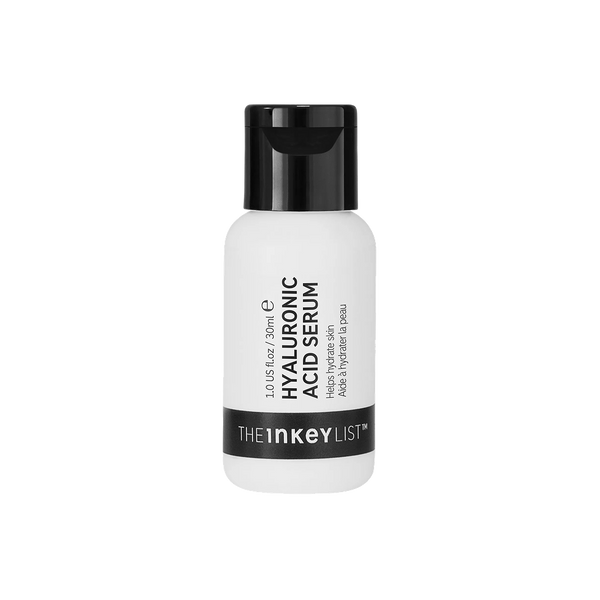
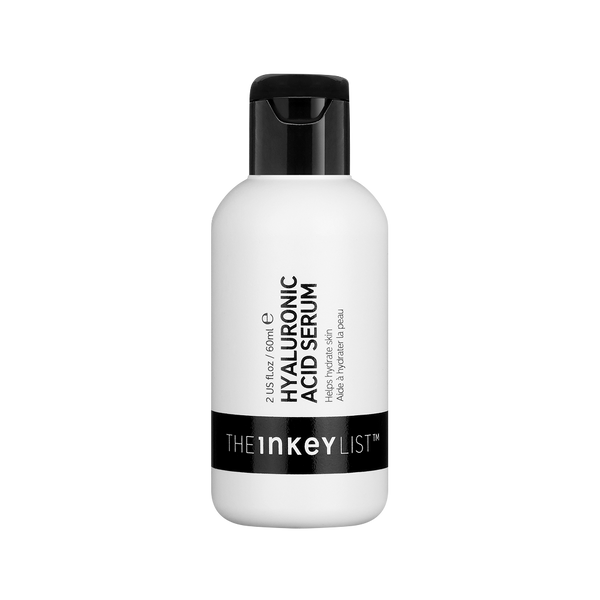
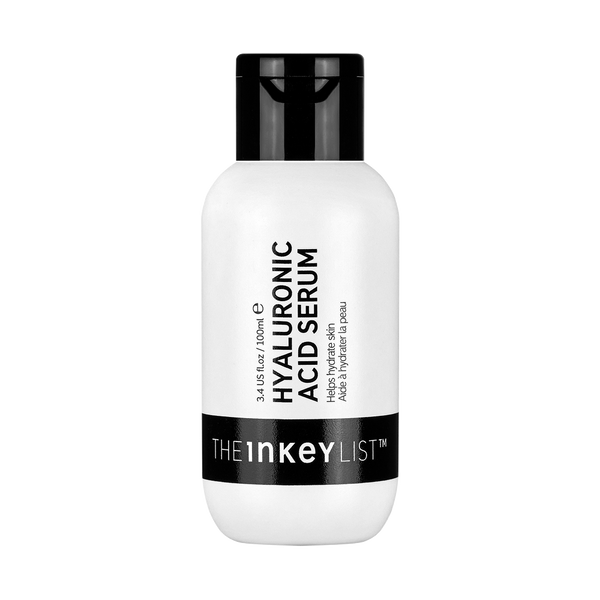
The serum comes in 30ml, 60ml and 100ml.
On layering, hyaluronic acid is one of the easiest ingredients to work with, because it does not compete with most actives and has no notable conflicts. It sits comfortably alongside niacinamide, and pairing it with the Niacinamide Serum is a sensible route if oil control and the appearance of pores are also on your list. For the specific combinations people ask about most, we have covered hyaluronic acid and retinol, what products should I not layer together and what not to mix with retinol.
That is deliberately the abbreviated version, and here is where the full one lives. For the complete method, including order of application, timing and how to adapt it to your routine, read hyaluronic acid, are you using it correctly, and see our hyaluronic acid ingredient page for the full picture.
A few specific questions come up repeatedly, so here they are with direct answers.
So, Do You Actually Need Hyaluronic Acid?
Count your signs:
- Your skin feels tight in the minutes after cleansing
- Fine lines look more obvious on some days than others
- Your skin looks flat or dull despite even tone
- Your skin has become reactive, red or unpredictable
- You are recovering from an in-clinic appointment, or the weather and indoor air have turned against you
The decision rule is simple. If two or more apply, hyaluronic acid is very likely worth adding, and you will probably notice the difference reasonably quickly. If one applies, it is worth trying, particularly if that one is tightness after cleansing. If none apply, your skin may genuinely not need it at the moment, and there is no benefit in adding a step for the sake of owning the ingredient everyone talks about.
Worth revisiting, though. Skin needs move with the seasons, with travel, with hormones and with life stage, and the answer you reach today may not hold in six months. Someone who genuinely does not need this in July may find it essential by January.
If you take one idea away, make it the pairing. Draw water in, then seal it in. A humectant with nothing over the top is half a routine, and a rich moisturiser over skin that is short of water is the other half. Together they work. Separately, each is doing a job the other has left unfinished.
That is the whole logic of hydration, and it is why the honest answer to the question in the title is: it depends on what your skin is telling you, and now you know how to read it.
Where to Go From Here
If the signs sounded familiar, the Hyaluronic Acid Serum is the place to start, formulated with 2% Pure Hyaluronic Acid at 3 molecular weights plus Matrixyl 3000, and available in 30ml, 60ml and 100ml.
If what you recognised most was reactivity and a barrier under pressure, the Ectoin Hydro-Barrier Serum is the better fit, pairing hydration with direct barrier support.
And if you are still weighing it up, read the hyaluronic acid ingredient page first. We would always rather you understood an ingredient and decided against it than bought it without knowing what it does.
Clear guidance, proven ingredients, real results. That is the whole idea.
Frequently Asked Questions
Got a question?
Our askINKEY team are a friendly bunch of skincare experts with deep product knowledge and zero judgement. Whether you're an ingredient obsessive or just starting out, we'll make it make sense. No question too big. No question too small. We Give A Care, Every Day.


