



Why Your Cleansing Balm Should Come in a Tube, Not a Pot
Published
21 April, 2026
Most people pick a cleansing balm based on two things: what’s in it and what it costs. That’s a reasonable starting point. But there’s a third factor that almost nobody considers - and it quietly determines whether the formula you paid for on day one is still the formula you’re using on day one hundred.
The packaging format.
There are two dominant formats for cleansing balms: wide-mouth open-top pots, and sealed tubes. The choice between them is not cosmetic. It has measurable consequences for hygiene, ingredient integrity, and ultimately, what’s actually happening to your skin every time you cleanse. This blog lays out the science behind bacterial contamination from finger-dipping, explains how air exposure degrades the oil-based ingredients that make a cleansing balm work, and makes the case for why tube packaging structurally eliminates both risks. It also covers what this means specifically for sensitive and blemish-prone skin, and how the INKEY Oat Cleansing Balm addresses all of it in one formula.
No hype. Just the facts.
The Hygiene Problem Hidden Inside Every Open-Top Pot
The ritual is familiar. You unscrew the lid of a wide-mouth jar, press two fingers in, scoop out a portion of balm, and go to work. It feels perfectly normal. It is, in fact, a direct route for contamination into your skincare product - every single time.
Every time fingers enter an open jar, they transfer whatever is on the skin’s surface directly into the formula. That includes skin bacteria, environmental debris, trace residues of previously applied products, and - if your hands are even slightly damp - water. None of these are welcome additions to a product that will be applied to your face, near your eyes, mouth, and nose.
This is not a theoretical concern. Research published in Scientific Reports found aerobic microbes in 40.8% of cosmetic samples tested. The transfer of cosmetics by hand was identified as a significant contamination risk factor, and semi-solid products - the category that cleansing balms sit squarely within - were among the most susceptible to contamination. That is a meaningful number. Four out of every ten samples tested showed measurable microbial presence.
A separate study published in Applied and Environmental Microbiology via PMC went further, testing the direct relationship between container closure type and in-use microbial contamination. Its conclusion was unambiguous: the type of dispensing closure is a primary factor in whether a product becomes contaminated during consumer use. Open screw-cap containers showed contamination incidence rates of up to 71% after just two to three weeks of real-world use. Protective closures that eliminated direct finger contact dropped that figure to as low as 0%.
The spatula is often suggested as a workaround. In theory, a clean spatula eliminates finger contact. In practice, most people do not use one consistently. And if a spatula is not cleaned between uses, it simply becomes an alternative contamination vector. The problem is the open format itself, not just the fingers.
Contamination is not always visible. There are no reliable outward signs that a formula has been compromised. The product can look, smell, and feel exactly as it did on day one while bacteria have been introduced and sustained within it. The preservative system in a well-formulated product is designed to handle a degree of contamination - but not repeated, ongoing exposure over months of daily use.
The cleanser is the first step in any routine. It should be removing impurities from the skin, not reintroducing them. Open-pot format packaging works against that fundamental purpose in ways that the industry rarely discusses openly.
With bacterial contamination established as a real and measurable risk, the next question is what else open-pot packaging does to the formula itself - specifically to the oil-based ingredients that make a cleansing balm work.
How Air Exposure Silently Degrades the Ingredients That Matter Most
The problem with open-top pots does not stop at what comes in from the outside. There is an equally important issue with what happens to the formula itself each time it’s exposed to air. For oil-based skincare products - and a cleansing balm is, by definition, an oil-based product - repeated air exposure triggers a chemical process that gradually undermines the efficacy of the formula’s most important ingredients.
That process is oxidation.
Oxidation occurs when the fatty acid chains in plant-derived oils react with oxygen. It is the same process that turns a bottle of cooking oil rancid after it has been open on a kitchen shelf for a few months. The chemistry is not complicated: fatty acids, particularly polyunsaturated ones, are structurally unstable when exposed to oxygen, and they break down over time. In a skincare context, these breakdown products can irritate the skin and reduce the functional effectiveness of the formula they came from.
Two of the most significant ingredients in the reformulated INKEY Oat Cleansing Balm are Oat Kernel Oil and Sea Buckthorn Oil - both of which are particularly vulnerable to oxidative degradation.
5% Oat Kernel Oil is rich in omega-3 and omega-6 fatty acids and ceramide precursors. These are skin-identical lipids that dissolve makeup and SPF while actively supporting the skin’s moisture barrier. They are also among the most oxidation-prone compounds in cosmetic formulation. When they oxidise, the moisturising properties and barrier-supporting benefits they deliver diminish - exactly when you need them most. If your skin barrier is already struggling, this formula degradation becomes especially significant.
Sea Buckthorn Oil, added in the reformulation for its antibacterial and antioxidant properties, is rich in carotenoids and tocopherols - bioactives that are protective and soothing by nature, but susceptible to degradation when repeatedly exposed to air. The antioxidant capacity that makes it a meaningful addition to a sensitive-skin formula will diminish with every lid removal from an open pot.
As the product level drops, the air gap above it increases. More airspace means more oxygen available to interact with the formula. The problem scales with every use. The preservative system is simultaneously managing contamination and oxidative stress - a compounded strain it was never designed to sustain across the full lifespan of a product in an open pot.
The formula you bought on day one is not the same formula you are using on day 45 if it has been stored in an open-top pot.
For people already prone to dehydrated skin - where barrier-supporting oils are most needed - this formula degradation argument is particularly significant. Dehydration and barrier damage often go hand in hand, and addressing both starts at the cleansing step.
Both problems - contamination through finger contact and oxidative degradation through air exposure - are structural consequences of the open-pot format. And both have a structural solution.
Why Tube Packaging Structurally Eliminates Both Risks
A tube is a sealed system. Product exits through a narrow opening and the rest of the formula remains enclosed. There is no open surface. There is no air gap. There is no direct contact between fingers and the product reservoir. The architecture of the format eliminates the primary routes of both contamination and oxidation simultaneously.
On contamination: Because the user squeezes from the outside of the tube, fingers never touch the formula itself. The bacteria present on fingertips - which are always present, regardless of how recently hands were washed - never enter the product.
On oxidation: Because the tube collapses as product is dispensed, there is minimal airspace inside at any point during its life. On day one, the tube is full and sealed. On day forty-five, the tube has collapsed inward to accommodate the reduced volume - the remaining product is still in contact with the tube walls rather than with an expanding air gap.
Here is what a tube format achieves that a pot cannot:
- No finger contact with the product reservoir - eliminating the primary contamination route entirely.
- No significant air gap above the product - dramatically reducing ongoing oxidative exposure throughout the product’s life.
- Controlled dispensing - the user determines exactly how much product exits the tube, reducing waste and limiting unnecessary formula exposure.
The result is a product that performs more consistently across its entire lifespan, because the packaging has been designed to preserve the formula rather than expose it.
As noted in Kyndarex’s independent analysis of packaging formats, tubes offer better hygiene than open-top formats as a core structural benefit - not an incidental one.
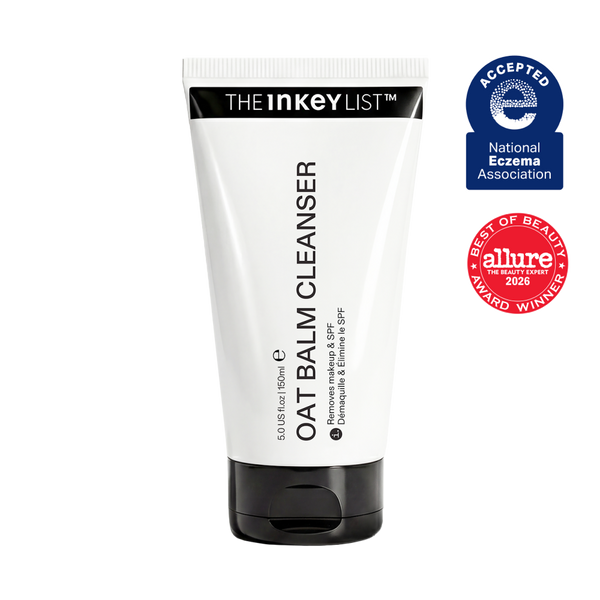
The new INKEY Oat Cleansing Balm tube was specifically redesigned to be softer and thinner, making it easier to squeeze out every last drop - including when nearly empty. This resolved real feedback from users who found the original tube harder to compress. The formula has not changed. The packaging has been refined to make sure every last drop is accessible and the experience from first use to last is as consistent as possible.
For those building a double cleansing routine, the hygiene argument becomes even more relevant. If the first cleanse introduces bacterial contamination via an open pot, you are beginning a process designed to remove impurities from the skin with a product that is already carrying some. A tube-packaged first cleanse eliminates that contradiction from the start.
Understanding why the tube format matters sets the stage for understanding who it matters most for - and for those with sensitive or blemish-prone skin, the stakes are meaningfully higher.
What This Means for Sensitive and Blemish-Prone Skin
The argument for tube packaging applies to everyone. But it applies with particular force to two groups: people with sensitive skin, and people with blemish-prone skin. For both, the cleanser is not just a makeup-removal step. It is the foundation of the entire routine - and a compromised cleanser can undermine everything that follows.
The cleanser is the step most likely to disrupt the skin barrier - or support it. Packaging format determines which one.
For sensitive skin: Sensitive skin is characterised by a compromised or reactive skin barrier. Cleansing is the first step of the routine - it sets the conditions for everything that follows. Introducing bacteria or a degraded formula at this stage, before any other product has been applied, can trigger reactivity before the routine has even properly begun. For sensitive skin, this is not a minor inconvenience. It can manifest as redness, tightness, stinging, or prolonged reactivity that affects the skin’s response for the rest of the day.
For blemish-prone skin: The purpose of cleansing in a blemish-prone routine is, in part, to reduce surface bacteria and clear congestion. A cleanser that introduces bacteria with every use - because it has been stored in an open pot that is repeatedly accessed by hand - is working against its own objective. The preservative system cannot fully compensate for ongoing contamination when the contamination source is the packaging format itself.
The skin around the eyes - where a cleansing balm is often doing its most important work as a makeup remover - is the thinnest and most reactive skin on the face. It is the area least equipped to manage external irritants, and the area where a compromised formula poses the highest relative risk.
Tube packaging removes one avoidable variable from the equation. When skin is already sensitive, reactive, or managing ongoing breakouts, the goal is to reduce the number of potential triggers in the routine. A sealed, hygienic formula is not a luxury consideration. It is a baseline requirement.
It is also worth drawing a parallel to face wipes. Just as face wipes introduce friction and residue that can disrupt the skin barrier, open-pot cleansing balms introduce hygienic risks that undermine the skin’s stability. Both feel like a reasonable shortcut. Both carry trade-offs that become visible over time.
For those already dealing with skin dehydration - which often accompanies both blemish-prone and sensitive skin types as a consequence of barrier disruption - a cleanser that strips or irritates makes the underlying condition harder to manage. The tube format is not a cure for dehydration, but it removes a variable that, in an open-pot cleanser, would be working against you every time you opened the jar.
With the skin-focused case made, the next section moves into the INKEY Oat Cleansing Balm specifically - covering what is in the formula, how it performs, and what the clinical evidence shows.
The INKEY Oat Cleansing Balm: Formula, Performance, and Value
The INKEY Oat Cleansing Balm 150ml is a 150ml product priced at £15, housed in a sealed, soft, squeezable tube. At just 15p per cleanse - approximately 100 uses per tube - it is one of the most cost-efficient cleansing balm formats available. The tube format is not incidental to that value; it is what ensures the formula delivers on its clinical claims from use one to use one hundred.
5% Oat Kernel Oil is the lead active in the formula, increased from 3% in the previous version. Rich in ceramides and omega-3 and omega-6 fatty acids, it dissolves makeup, waterproof SPF, and long-wear formulas without stripping the skin’s natural oils. These are barrier-supportive ingredients - and they are, as discussed above, among the most oxidation-prone compounds in cosmetic formulation. The sealed tube is what keeps them intact at 5% throughout the product’s use, not just at the beginning of it.
Sea Buckthorn Oil is a new addition in the reformulation. Rich in carotenoids and tocopherols, it brings antibacterial and antioxidant properties to the formula - particularly relevant for oily and blemish-prone skin. Non-comedogenic.
Natural Wax Blend provides the balm’s characteristic texture and conditions the skin during the cleansing process.
Improved emulsifier system eliminates the post-rinse residual film reported with the previous formula. Rinses away completely - a critical update for blemish-prone skin in particular.
The clinical data behind this formula is specific and measurable:
- Removes 100% of waterproof makeup and SPF in 30 seconds*
- Leaves no residue on skin*
- Clinically proven 12-hour hydration*
- Clinically proven to instantly improve skin texture and radiance**
- Clinically proven to reduce skin redness after 4 weeks**
- Clinically proven to improve skin plumpness after 4 weeks**
- 96% agreed it effortlessly cleaned their skin*
- Non-comedogenic, fragrance-free, dermatologically tested, ophthalmologically tested
- Suitable for all skin types, sensitive skin, sensitive eyes, blemish-prone skin, pregnancy and breastfeeding, under-12s and teenagers
Based on a consumer trial with 29 participants. Based on a clinical trial with 29 participants over 4 weeks. Based on a clinical trial with 23 participants over 24 hours.*
How to use it correctly:
- Squeeze a raspberry-sized amount onto dry fingertips.
- Massage gently across dry skin for 30 to 60 seconds, focusing on areas with makeup or sunscreen.
- Add warm water to emulsify - the formula will transform into a milky texture.
- Rinse thoroughly until no residue remains.
- If double cleansing, follow immediately with a gel or water-based second cleanser.
Alternatively, apply to dry skin and leave on for up to 10 minutes as a nourishing face mask before rinsing - a secondary use that makes this one of the more effective two-for-one skincare formats available.
If you are new to building a skincare routine, the Oat Cleansing Balm functions naturally as the first step in any regimen. The Mini Oat Cleansing Balm 50ml is available for travel or those wanting to try before committing to the full size.
Better for the Planet Too
The case for tube packaging is a skin case first. But it is also an environmental one - and in the case of the INKEY Oat Cleansing Balm, the two are not in tension. They point in exactly the same direction.
The redesigned, softer and thinner tube has reduced INKEY’s plastic use by 16 tonnes per year. This is a material reduction - not a marginal saving dressed up as sustainability. Wide-mouth pot packaging is, by design, a heavier format: thicker walls, wider bases, heavier lids, and often secondary outer packaging to present the product as premium. A tube requires none of this.
Because the tube collapses as product is dispensed, virtually all of the product can be used. Pots commonly leave a significant amount stuck to the sides and base - inaccessible and ultimately wasted. The tube format is more efficient from manufacture to the final squeeze.
16 tonnes less plastic per year. Same great formula. Cleaner for your skin. Cleaner for the planet.
INKEY's packaging is 100% recyclable. For more on recycling your INKEY packaging, see How to Recycle the INKEY Way. For a full view of INKEY’s environmental and social commitments, the INKEY 2024 Impact Report has the detail.
The Takeaway
The format of a cleansing balm’s packaging is not a cosmetic choice. It directly shapes three things that matter: the hygiene of the product throughout its life, the efficacy of the formula, and the environmental impact of its production.
Pot packaging creates two compounding problems: repeated finger contact introduces bacteria from day one, and repeated air exposure degrades sensitive ingredients over time. Tube packaging resolves both structurally - no finger contact, no significant airspace, and controlled dispensing.
For sensitive and blemish-prone skin, where every variable in the routine matters, this is not a marginal benefit. It is meaningful. The INKEY List Oat Cleansing Balm is designed to cleanse effectively, protect the skin barrier, and stay hygienic from the first squeeze to the last. The tube is the reason the last point is true.
Shop the Oat Cleansing Balm - 150ml - £15 | 100 uses | 15p per cleanse
Not sure where the Oat Cleansing Balm fits in your routine? Read how to build your skincare routine for a step-by-step guide.
Want to know everything that changed in the new formula? The new Oat Cleansing Balm: what’s changed and whycovers every update in detail.
Learn more about double cleansing and how the Oat Cleansing Balm works as the ideal first cleanse in a two-step routine.
Got a question?
Our askINKEY team are a friendly bunch of skincare experts with deep product knowledge and zero judgement. Whether you're an ingredient obsessive or just starting out, we'll make it make sense. No question too big. No question too small. We Give A Care, Every Day.


