



Can You Mix Azelaic Acid and Salicylic Acid?
Yes, you can mix azelaic acid and salicylic acid. The answer depends on whether your salicylic acid rinses off or stays on. Here's how to do both safely.
Author
askINKEY skincare advisor
Published
13 September, 2026
Time to read
13 minutes
Yes, you can mix azelaic acid and salicylic acid. How you do it depends on one thing above all others: whether your salicylic acid is a rinse-off cleanser or a leave-on serum. That distinction changes the entire answer, and it is the part most articles leave out.
This guide covers the short answer, what azelaic acid actually does, what salicylic acid actually does, how the two differ, whether a cleanser even counts as layering, three ways to mix them, which one goes first, how much irritation risk you are really taking on, and a simple AM and PM routine you can copy straight into your own.
Starting from scratch? Our 10% Azelaic Acid Serum for Redness Relief (£16) and our Salicylic Acid Cleanser (£14) are the easiest pair to run together in one routine.
The Short Answer
Yes. Use a salicylic acid cleanser and an azelaic acid serum in the same routine: cleanse, rinse, pat dry, then apply azelaic acid. If your salicylic acid is a leave-on serum instead, do not mix the two in one sitting. Split them across morning and evening, or alternate nights.
What Azelaic Acid Actually Does
Azelaic acid is a dicarboxylic acid, and that piece of chemistry does a lot of work. It is not an AHA. It is not a BHA. It sits in a category of its own, which is exactly why the familiar “never mix two acids” rule does not transfer to it cleanly.
Its main job is calming what you can see. Azelaic acid acts through anti-inflammatory pathways, and a peer-reviewed review of its mechanism of action describes activity across PPAR-gamma and NF-kB signalling, alongside inhibition of tyrosinase, the enzyme involved in producing pigment. That pairing explains its reputation for doing two things at once: settling visible redness, and gradually evening out tone where past marks have lingered. The same evidence describes azelaic acid as anti-keratinising, meaning it helps normalise how skin cells behave rather than stripping them from the surface.
Our formula is 10% azelaic acid with 0.3% allantoin, at a pH of 4.0 to 4.3. It is lightly tinted with natural Gardenia extracts, which visually neutralise redness the instant it goes on while the actives work underneath. In an independent clinical study of 22 people, it was clinically proven to minimise redness in 4 days, and 91% agreed skin felt instantly soothed. It suits sensitive and rosacea-prone skin, which is not something you can say about many actives.
For the full ingredient story, What is Azelaic Acid? goes further than this article needs to.
What Salicylic Acid Actually Does
Salicylic acid is a beta hydroxy acid, and its defining feature is that it is oil-soluble. Most exfoliating acids are water-soluble and work across the surface of skin. Salicylic acid dissolves into oil, which means it can get inside the pore lining rather than working on top of it.
Once it is in there, it breaks down the mix of excess oil and dead skin cells that blocks pores in the first place. A review of over-the-counter ingredients describes salicylic acid as lipophilic and desmolytic, penetrating the pilosebaceous unit, which in plain English means it clears congestion from inside the pore outwards. That is why it is the ingredient of choice for blackheads, oily skin and blemish-prone skin, rather than for redness.
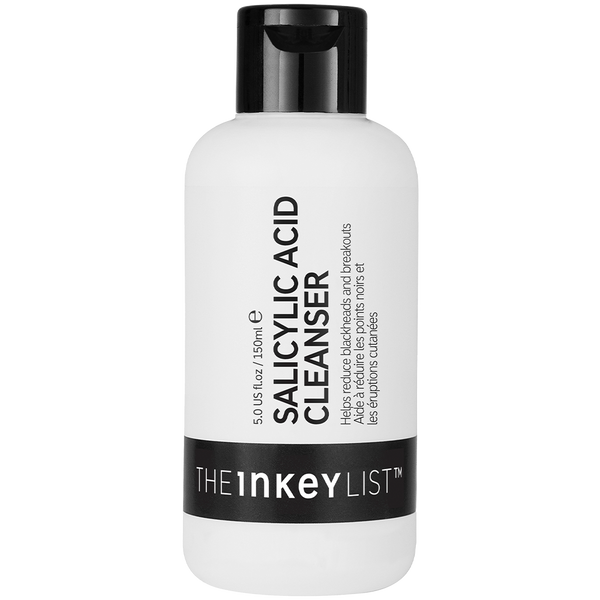
Our Salicylic Acid Cleanser is built around 2% salicylic acid, a 1% zinc compound and 0.5% allantoin, at a pH of 4.5 to 5.0. In a four-week independent consumer trial of 66 people, 90% agreed skin looked visibly clearer after just 3 days.
We will not repeat the whole ingredient explainer here. What is Salicylic Acid? does that job.
Now you know what each does, the obvious next question is how they differ.
Azelaic Acid vs Salicylic Acid: How They Differ
Search “azelaic acid vs salicylic acid” and you will find plenty of content framing it as a head to head. It is not. These two ingredients solve different problems, and the reason they work well together is that they barely overlap.
The contrast in plain terms:
- What they target. Azelaic acid targets visible redness, uneven skin tone and rough texture. Salicylic acid targets excess oil, congestion, blackheads and breakouts.
- How they work. Azelaic acid works through anti-inflammatory pathways, tyrosinase inhibition and anti-keratinising action. Salicylic acid works by getting inside the pore and dissolving the oil and dead cell build-up there.
- Solubility. Azelaic acid is a dicarboxylic acid and is not classed as an AHA or a BHA. Salicylic acid is oil-soluble, which is what gives it pore access.
- Best-suited skin. Azelaic acid suits sensitive, reactive and rosacea-prone skin. Salicylic acid suits oily, congested and blemish-prone skin.
- Tolerability. Azelaic acid is well tolerated overall, though published tolerability data reports transient stinging or burning in roughly 5 to 10% of users, usually settling within the first few weeks. Salicylic acid can be drying if overused, and a rinse-off format lowers that risk considerably.
So is azelaic acid better than salicylic acid? Neither is better. They answer different questions. If your skin is red, reactive and marked from past breakouts, azelaic acid is the one. If it is oily, congested and prone to blackheads, salicylic acid is. If both descriptions sound like your skin, you are precisely the reader this article is for, and the answer is both.
Unsure where to begin? Lead with your dominant concern. Choose azelaic acid if redness is the first thing you notice in the mirror. Choose salicylic acid if it is shine, texture and clogged pores. Add the second once the first is properly established, and never introduce both in the same week.
For the wider context, your guide to using acids in your skincare routine covers the full picture, and Salicylic Acid for Blackheads goes deeper on congestion. If blackheads keep returning, how to prevent blackheads long term is the follow-up.
Having established they do different jobs, the practical question is whether a cleanser even counts when you are mixing them.
Does a Salicylic Acid Cleanser Count as Layering?
This is the question almost nobody answers properly, and it decides your entire routine.
Layering, strictly speaking, means two products sitting on your skin at the same time. A leave-on serum stays on your face for hours, delivering active ingredient the whole while. A cleanser is something else entirely: roughly 60 seconds on skin, then washed away.
Contact time is the heart of it. How much active your skin is exposed to is not just the percentage on the label, it is the percentage multiplied by how long it stays there. A 2% salicylic acid cleanser and a 2% salicylic acid serum share a concentration but not a workload. One is a brief pass. The other is an all-night commitment.
That is why our own Salicylic Acid Cleanser page advises using the cleanser first in your routine and following with other treatments, because the rinse-off formula minimises interaction risks while still providing effective breakout control. It is the same reason that cleanser is cleared to use alongside retinol in a PM routine. Salicylic acid does not change character. The format changes the exposure.
So, stated plainly, here is our position:
A rinse-off salicylic acid cleanser followed by an azelaic acid serum is fine in the same routine. Cleanse, rinse thoroughly, pat dry, then apply your azelaic acid. If you have searched “can I use azelaic acid after salicylic acid cleanser”, that is your answer, and it is a clear yes.
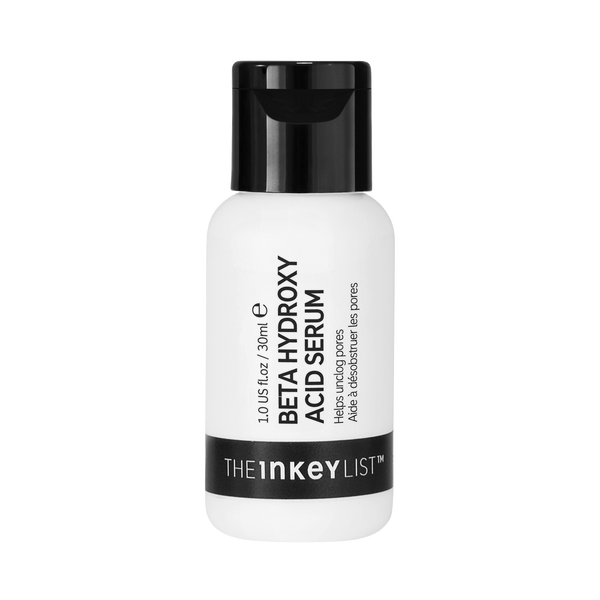
A leave-on salicylic acid serum plus an azelaic acid serum in the same routine is not recommended. Two leave-on actives sitting together for hours is a genuinely different level of exposure. Split them across AM and PM, or alternate nights instead. If you are using our Beta Hydroxy Acid (BHA) Serum (£12), which is 2% salicylic acid with 1% low molecular weight hyaluronic acid at pH 4.5 to 5.3, this is the scenario that applies to you. Beta Hydroxy Acid Serum: what you need to know has the detail.
Now the honest caveat, because lower risk is not the same as no risk. Cumulative load still counts. If your barrier is already struggling, if products you used to tolerate have started to sting, or if you are running other actives alongside these, a salicylic cleanser plus a leave-on azelaic acid can still be too much. Rinse-off reduces risk. It does not remove it. Judge it against the skin you actually have today.
One more point that gets skipped: the cleanse step sets the tone for everything that follows. Sixty seconds is the target, worked gently over damp skin, then rinsed properly. Over-strip at the cleanse and every product afterwards spends its energy repairing rather than working. That is why a first-step balm such as our Oat Cleansing Balm (£15) can make an evening salicylic cleanse far more comfortable, lifting SPF and makeup so the active cleanser reaches skin rather than sitting on top of a layer of product. The complete guide to double cleansing walks you through it.
For the wider rulebook, what products should I not layer together is our established reference.
With the cleanser question settled, here are the three practical ways to run this.
Three Ways to Mix Them in a Routine
Choose one and stick with it. You do not need all three, and swapping between them every week is how routines unravel.
- Same routine, cleanser plus serum. Cleanse with the salicylic acid cleanser, rinse, pat dry, apply the azelaic acid serum, then moisturiser. This is what we recommend for most people, and it applies only when your salicylic acid is rinse-off.
- AM and PM split. Salicylic acid in the morning, azelaic acid in the evening, or the other way round. This is the approach to take if your salicylic acid is a leave-on BHA serum. Both still get daily contact time, they simply never share a layer.
- Alternate nights. Salicylic acid on Monday, azelaic acid on Tuesday, and so on. The gentlest option, and the right place to start for sensitive or reactive skin, or if you have reacted to actives before.
If in doubt, run option three for a fortnight and build from there. A slower start rarely costs you results. Rushing often does.
Which Goes First? Order of Application
The rule is simpler than the internet suggests. Work by format first, then by consistency, thinnest to thickest.
- Cleanse. Salicylic acid cleanser, 60 seconds, rinse thoroughly, pat dry.
- Toner or essence, if you use one.
- Thinnest serum first. Watery hydrating serums before richer treatment serums.
- Azelaic acid serum. Thicker than a hydrating serum, so it follows.
- Moisturiser, then SPF in the morning.
So, azelaic acid before or after salicylic acid? After, when the salicylic acid is a cleanser, because cleansing is always step one regardless of what is in the formula. If both are leave-on serums, you should not be applying them back to back at all, which makes the order question redundant. Split them.
How to build your skincare routine and The Complete Skincare Guide cover the full running order, and what’s your skin type is worth five minutes if you are not certain.
Do You Need to Wait Between Them? The pH Myth
You have probably read that you must wait 20 to 30 minutes between acids, or use a toner to “rebalance” your pH first. You do not.
Skin re-establishes its own pH without any help, and reasonably quickly at that. With a rinse-off cleanser the question barely arises, because the product is no longer on your face. There is nothing left to interact with. Counting minutes after a cleanse is counting for the sake of it.
What genuinely matters is formulation. Research on targeted salicylic acid delivery found that irritation rises at lower pH and depends heavily on the vehicle a product is built in. The variable worth watching is how a product is formulated and how your skin responds, not how long you stand at the sink. Our cleanser sits at pH 4.5 to 5.0 and our azelaic serum at pH 4.0 to 4.3, both comfortably skin-friendly.
If you prefer to let each layer settle for a minute or two, that is absolutely fine. Just file it under comfort and application preference rather than chemistry.
Routine sorted, the honest next question is whether doing both is simply too much.
Is This Too Much Exfoliation?
Usually not, and the reason is categorical. Azelaic acid is not an AHA or a BHA, and it does not work through the same surface-shedding mechanism that exfoliating acids use. Its primary actions are anti-inflammatory, anti-keratinising and pigment-related. It does help refine tone and texture over time, and skin does feel smoother for it, but it is not classed as an exfoliating acid and it does not sit in the AHA/BHA category.
So pairing a salicylic acid cleanser with an azelaic acid serum is not the same as stacking two exfoliating acids. It is closer to pairing an exfoliant with a calming active. Different mechanisms, different jobs, far less overlap than the shared word “acid” implies.
Will Using Both Irritate Your Skin? What the Evidence Says
This is where we would rather be honest than sound certain.
There are no robust randomised controlled trials on mixing azelaic acid with salicylic acid specifically. None. Anyone claiming the combination is clinically proven to be safe, or clinically proven to be risky, has gone past what the evidence actually supports.
What we do know is that combining multiple topical actives may increase irritation, redness, itching, scaling or drying compared with using either on its own. That is a general principle of active layering and it applies here. We also know that current dermatology guidance does not address this pairing directly. The American Academy of Dermatology’s 2023 guidelines on managing breakouts discuss salicylic acid and azelaic acid as individual options but make no recommendation about combining them. That silence is neither a hidden endorsement nor a warning. It is simply ground the research has not covered. NHS guidance on spots and breakouts and the British Association of Dermatologists patient information leaflets are both worth reading if your skin concerns go beyond what an over-the-counter routine can reasonably handle.
What is left is each ingredient’s individual tolerability record, plus sensible sequencing. Azelaic acid’s own data reports transient stinging or burning in roughly 5 to 10% of users, typically settling within the first few weeks. Salicylic acid at 2% in a rinse-off format is well tolerated by most skin. Bring them together thoughtfully, with the rinse-off doing the salicylic work and a reasonable frequency on the azelaic, and most people get on well. Bring them together carelessly, two leave-ons at full pelt from day one, and a proportion of people will not.
That is the real answer, and we would rather hand it to you straight than sell you a certainty that does not exist.
How to Introduce Both Without Upsetting Your Barrier
Patch test first. Apply a small amount to a discreet area, leave it 24 hours and check before you commit it to your whole face. Why do I need to do a patch test? explains the method, and the British Association of Dermatologists also recommends patch testing and building up gradually with new topical products.
In week one, use the salicylic acid cleanser daily and the azelaic acid serum twice across the whole week, on evenings when nothing else demanding is going on. In week two, if there is no lingering sting, no tightness and no flaking, move the azelaic acid to every other evening. From week three onwards, build towards daily if your skin is genuinely comfortable. Plenty of people settle at five evenings a week and stay there, and that is a perfectly good place to land rather than a failure to get to daily.
Introduce one new active at a time, never two in the same week. Add both at once and, if something goes wrong, you will have no idea which one to blame.
For very reactive skin there is a useful halfway house called short-contact application: apply the azelaic acid, leave it 10 to 15 minutes, then rinse. You get meaningful contact at a fraction of the exposure, and you can extend the time as your tolerance builds.
Support your barrier throughout, because that is what determines how much your skin can take. A hydrating layer underneath and a proper moisturiser on top will do more for tolerance than any amount of careful timing. Our Ectoin Hydro-Barrier Serum (£16) is built for exactly that, and our Hyaluronic Acid Serum (£12) is the simpler hydration route.
Purging or irritation? Purging is a temporary increase in breakouts in the areas where you normally break out, as congestion already forming comes to the surface sooner. It usually settles within 4 to 6 weeks. Irritation looks different: spots appearing somewhere you do not normally get them, stinging that persists, redness that will not calm, or large painful lesions. Purging you can ride out. Irritation means cutting back or stopping. Does azelaic acid cause purging?has the full explanation.
One genuinely useful note to finish on: both our azelaic acid serum and our 2% rinse-off salicylic acid cleanser are listed as pregnancy and breastfeeding safe on their own product pages, which is unusual for an effective blemish-focused pairing. Always check with your doctor or midwife first.
With general risk covered, two specific groups deserve a direct answer.
Using Both on Sensitive or Redness-Prone Skin
If your skin is sensitive, reactive or rosacea-prone, this combination can still work, but the settings change. Azelaic acid is genuinely well suited to this skin type, and our 10% Azelaic Acid Serum for Redness Relief (£16) is clinically proven to minimise redness in 4 days. Begin on alternate nights rather than daily, and get your salicylic acid in through the rinse-off cleanser rather than a leave-on serum, because that is the lowest-exposure route available to you. The Redness collection has the rest of the calming lineup.
Adding Niacinamide to the Mix
Yes, niacinamide belongs alongside both. It is one of the most cooperative ingredients in skincare and it supports the barrier while the others work. Our own guidance suggests azelaic acid in the PM and our 10% Niacinamide Serum(£12) in the AM, so each gets room to perform. Azelaic Acid and Niacinamide: Can You Use Them Together? covers it in full. Already using retinol? Can you use azelaic acid with retinol? has that answer.
Everything is explained. Here is a routine you can copy.
A Simple INKEY Routine Using Both
AM
- Salicylic Acid Cleanser (£14). Sixty seconds on damp skin, rinse thoroughly, pat dry.
- Hyaluronic Acid Serum (£12). Onto slightly damp skin, for hydration underneath everything else.
- 10% Azelaic Acid Serum for Redness Relief (£16). A pea-sized amount across the face. The light Gardenia tint visually neutralises redness on contact.
- Omega Water Cream (£14). A lightweight gel-cream that suits oily and combination skin without feeling heavy. If your barrier needs more support, Biome Balancing Moisturiser (£12) is the alternative.
- Dewy Sunscreen SPF 30. Every morning, no exceptions, and especially while you are working on tone.
Worth knowing: the azelaic serum sits beautifully under SPF and makeup. No pilling, no white cast, which is the thing people worry about most with a tinted treatment.
PM
- Cleanse. Oat Cleansing Balm (£15) first if you have worn makeup or SPF, then the Salicylic Acid Cleanser.
- Hydrate. Hyaluronic Acid Serum, or Ectoin Hydro-Barrier Serum (£16) if your barrier needs extra help.
- 10% Azelaic Acid Serum for Redness Relief.
- Moisturise. Omega Water Cream, or Biome Balancing Moisturiser for barrier support.
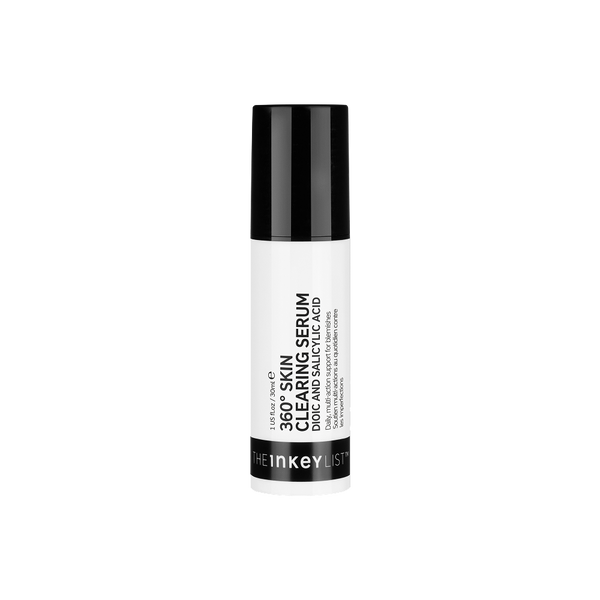
If breakouts are your main concern, the Blemishes and Breakouts collection has the wider range, including the 360° Skin Clearing Serum (£16). The full Salicylic Acid collection is there too.
The Bottom Line
If your salicylic acid rinses off, use it and your azelaic acid serum in the same routine. If it stays on, split them across morning and evening, or alternate nights. That single distinction answers nearly every version of this question.
The rest is the unglamorous advice that genuinely works: patch test, add one new active at a time, build frequency slowly, and keep your barrier supported throughout. You do not need more skincare. You need clarity you can trust. Clear guidance, proven ingredients, real results.
Not sure where your skin fits? Take the skincare quiz for a personalised routine in about two minutes. If breakouts are your priority, Breakout Analyser Pro™ will read your skin and point you towards the right starting products, and Build Your Own Routine is there when you are ready to put it all together.
Frequently Asked Questions

Got a question?
Our askINKEY team are a friendly bunch of skincare experts with deep product knowledge and zero judgement. Whether you're an ingredient obsessive or just starting out, we'll make it make sense. No question too big. No question too small. We Give A Care, Every Day.


