



What is EGF? Understanding the Growth Factor Peptide in Your Skincare
Discover what EGF (Epidermal Growth Factor) is, how this clinically studied growth factor peptide supports skin renewal and collagen production, and why it's a powerful addition to your routine for brighter, firmer, healthier-looking skin.
Author
askINKEY skincare advisor
Published
13 July, 2026
Time to read
14 minutes
Epidermal Growth Factor - EGF - is a naturally occurring protein produced by the body that signals skin cells to renew and regenerate. In skincare, it is one of the most scientifically substantiated growth factor peptides available, with a research history stretching back decades and a Nobel Prize to its name. Despite that pedigree, it remains widely misunderstood: what it actually does, where it comes from, and whether it is safe are questions that deserve clear, evidence-based answers.
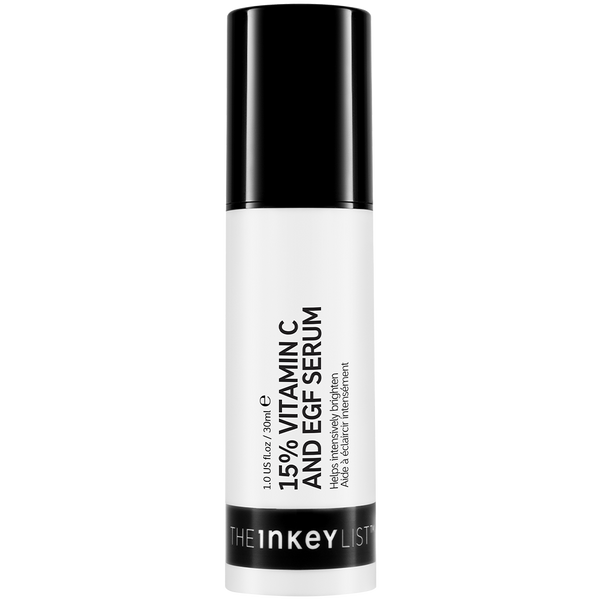
This guide covers everything you need to know about EGF skincare - the biology behind how it works, the visible benefits it delivers, how it is sourced and formulated, its safety profile, and how to build it into your daily routine. If you want to get straight to using it, the most accessible entry point is the 15% Vitamin C + EGF Serum (£16), which pairs 1% Epitensive plant-derived EGF with stable Vitamin C in a single, affordable formula.
Start with the science - understanding what EGF is at a biological level makes everything else about its role in skincare far easier to grasp.
What EGF Is and the Science Behind the Growth Factor Peptide
EGF stands for Epidermal Growth Factor. It is a naturally occurring signalling protein - a growth factor peptide - that plays a central role in regulating how skin cells grow, divide, and repair themselves. The body produces EGF as part of its normal biological function, and the skin relies on it to maintain the cycle of cellular renewal that keeps complexion looking healthy, firm, and clear.
To understand how EGF works, it helps to understand what happens at the cellular level when it is present. EGF binds to specific receptors on the surface of skin cells - known as EGF receptors, or EGFR. When EGF makes contact with these receptors, it triggers a signalling cascade: a sequence of biochemical events that effectively instructs the cell to grow and divide. The result is accelerated cell renewal, improved structural integrity, and better repair capacity. This is not a cosmetic invention - it is a core mechanism of human biology, and it is what makes EGF such a compelling active ingredient for skincare.
The discovery of EGF is not recent. American biochemist Stanley Cohen first identified and characterised the protein in the 1960s, and his work on EGF earned him the Nobel Prize in Physiology or Medicine in 1986. This is an ingredient underpinned by foundational biology - not a trend-driven extract or a marketing construct. According to a 2021 systematic review published in PubMed, EGF has a well-established role in skin cell renewal and regeneration, with a growing body of research supporting its application in aesthetics and regenerative medicine.
Within the wider world of skincare ingredients, EGF sits within the peptide family - but it occupies a specific and distinct category. Peptides in skincare are broadly defined as short chains of amino acids that communicate with the skin to support structure, repair, and hydration. EGF is a signalling peptide: rather than providing structural building blocks directly, it communicates with skin cells at a receptor level, instructing them to behave in a particular way. On cosmetic ingredient lists, EGF appears under its INCI name - Oligopeptide-1. If you are scanning an ingredient list and want to confirm whether a product contains EGF, that is the name to look for.
Here are the essential facts about EGF as an ingredient:
- Full name: Epidermal Growth Factor
- INCI name on ingredient lists: Oligopeptide-1
- Ingredient category: Growth factor peptide (signalling peptide)
- Biological role: Binds to EGFR receptors to trigger skin cell growth, division, and repair
- Discovery: Stanley Cohen, Nobel Prize in Physiology or Medicine, 1986
- Relevance to ageing: Natural EGF activity in the skin declines with age
That final point is particularly important in the context of skincare. As the body ages, the natural production and activity of EGF at the skin level decreases. The signalling that once drove efficient cell turnover and renewal slows down. The practical consequences of this are familiar: fine lines begin to form, the skin loses some of its firmness and elasticity, and the complexion can appear duller and less even. Applying EGF topically is a way of reinforcing a signalling process that the body naturally performs - but performs less efficiently as time passes.
Understanding the biology of EGF creates a useful foundation for what comes next: translating that mechanism into the visible, tangible results that matter to real skin.
What EGF Does for Skin: Benefits, Results, and Realistic Timelines
The most commercially important question about any skincare active is straightforward: what will it actually do for my skin? With EGF, the answer is grounded in a combination of well-established biology and peer-reviewed evidence - and the results, while not instantaneous, are meaningful.
Cell renewal and surface regeneration are EGF’s primary contribution to skin health. By signalling skin cells to divide and replenish, EGF supports the skin’s natural process of shedding older cells and generating healthier replacements. Over time, this leads to a more refined skin texture - pores appear less prominent, the surface becomes smoother, and the overall quality of the complexion improves. This is not a cosmetic trick; it is a biological process being supported and reinforced.
Collagen and elastin are indirectly but meaningfully supported through EGF’s activity. EGF stimulates fibroblast activity - fibroblasts are the skin cells responsible for producing collagen and elastin, the two proteins that give skin its structure and bounce. By prompting these cells to remain active and responsive, EGF contributes to firmer, more elastic-looking skin over consistent use. The effect on collagen is not the same as a direct collagen supplement, but the signalling support EGF provides to the cells that make collagen is genuinely significant. A 2012 study published in PubMed directly demonstrated improved skin texture and appearance following daily topical EGF serum application - providing peer-reviewed backing for what the biology predicts.
Radiance and skin tone also improve as cellular turnover accelerates. Fresher cells at the surface reflect light more evenly, and the complexion develops a brighter, more even quality. For skin that has appeared dull, grey, or uneven - often the result of accumulated older surface cells or reduced renewal activity - this is one of the first and most noticeable changes.
Fine lines and early signs of ageing respond to EGF over sustained use. The combination of renewed cell activity and structural protein support means that fine lines - particularly those caused by reduced skin renewal rather than deep muscular movement - can visibly diminish with regular application. This is an ingredient for long-term investment in the skin’s quality, not a single-use fix.
The consumer data from an independent 4-week trial of 64 participants using the 15% Vitamin C + EGF Serum reflects these outcomes in practice:
- 87% agree skin looks brighter
- 88% saw a visible improvement in the tone and texture of their skin
- 84% agree skin looks healthier and less dull
These are strong outcomes for a 4-week window, and they align closely with what the underlying biology would predict. It is worth being clear about timelines, however: EGF is not a quick-fix ingredient. Hydration and texture improvements are typically the first things users notice, often within the first one to two weeks of consistent use. Firming, elasticity, and more meaningful renewal benefits develop over four to eight weeks. The key word is consistent - EGF requires daily use to accumulate its effect.
Skin renewal is a process, not an event. EGF works by supporting that process continuously - the results it delivers are proportional to the consistency with which it is used.
Who benefits most from EGF? The short answer is almost everyone. EGF is particularly well-suited to mature skin that has lost some of its natural renewal pace, skin showing the first signs of ageing such as early fine lines and reduced firmness, and skin that has become dull or uneven over time. It is also suitable for sensitive skin - it does not cause irritation, and there is no adaptation period required. All skin types can use EGF, and it works well as a daily active regardless of whether the primary concern is ageing, texture, or radiance.
With the benefits clearly established, the next logical question is where the EGF in a cosmetic formula actually comes from - and whether the source matters for safety, efficacy, and values alignment.
Plant-Derived EGF vs Traditional EGF: Sourcing, Biotechnology, and What to Look For
When EGF was first studied in clinical and medical contexts, it was isolated from biological sources - including, in the earliest research, mouse submandibular glands, where the protein was first identified. These origins are scientifically fascinating but entirely unsuitable for mass cosmetic production. The quantities required, the ethical considerations, and the consistency challenges all make animal-derived EGF a non-starter for modern skincare formulation.
The EGF used in contemporary skincare is produced through biotechnology. Scientists use biotech fermentation and synthesis processes to produce growth factor peptides that are bioidentical or functionally equivalent to naturally occurring EGF - without relying on human or animal material. This represents a significant step forward in both ethics and consistency, and it is the scientific challenge of formulating EGF effectively in cosmetic products that the skincare industry has worked to solve over the past two decades.
The specific form of EGF used in the 15% Vitamin C + EGF Serum (£16) is 1% Epitensive - a trademarked ingredient developed by ingredient innovator Lipotrue. Epitensive is a plant-derived Oligopeptide-1: a growth factor peptide produced through biotechnology from plant sources. It delivers the signalling activity of EGF without any animal-derived material, making it both vegan-suitable and sustainably scalable.
Here is what makes Epitensive a meaningful choice:
- Plant-derived: Produced from plant sources through biotech fermentation - no animal material involved
- Vegan-suitable: The 15% Vitamin C + EGF Serum is certified by The Vegan Society
- Biotech-produced: Manufactured through controlled fermentation processes that ensure consistent quality from batch to batch
- INCI name: Oligopeptide-1 - the name you will see on the ingredient list
- Concentration: Used at 1% in the 15% Vitamin C + EGF Serum - a meaningful, studied level
That last point matters more than it might seem. Concentration is not a minor detail in active skincare. An ingredient present at a fraction of a percent may contribute negligibly to a formula’s performance, while a meaningfully studied concentration - like 1% Epitensive EGF - is positioned to actually deliver the cellular signalling activity the ingredient is known for. When evaluating any EGF product, checking both the INCI name (Oligopeptide-1) and the concentration is essential.
The shift to plant-derived, biotech-produced EGF also aligns with the broader direction of high-performance skincare: ingredients that are rigorously studied, sustainably produced, and accessible without ethical compromise. Epitensive represents exactly that - a modern, responsible answer to the sourcing question that earlier generations of EGF research had no good solution to.
Sourcing is one pillar of confidence in an ingredient; safety is another. And EGF, precisely because it interacts with cellular receptors and has some association in clinical literature with cancer pathways, deserves a thorough and honest safety assessment.
Is EGF Safe? Sensitive Skin, Pregnancy, and Addressing the Cancer Question
EGF is a naturally occurring protein. It is produced by your body right now, as part of normal healthy skin function. That context matters enormously when assessing its safety profile as a topical ingredient - because applying EGF to the skin is not introducing a foreign substance; it is reinforcing a biological process that already happens.
At the concentrations used in cosmetic formulations - such as the 1% Epitensive EGF in the 15% Vitamin C + EGF Serum - EGF is very well tolerated. There is no irritation associated with it, no sensitisation risk at cosmetic concentrations, and - importantly - no purging phase. This distinguishes it meaningfully from high-strength acids or retinol, which often require a slow introduction period as the skin adapts. EGF can be introduced into a routine immediately and used daily from the first application.
Who is EGF suitable for?
- All skin types, including sensitive, dry, oily, and combination
- Skin showing early or established signs of ageing
- Dull, uneven, or textured skin
- Those who are pregnant or breastfeeding
- Vegan skincare users (when using Epitensive EGF, certified by The Vegan Society)
On the subject of pregnancy and breastfeeding: EGF at cosmetic concentrations is considered safe for use during both. The 15% Vitamin C + EGF Serum is listed as suitable for pregnancy and breastfeeding. If you are building a routine specifically for this life stage, a guide to pregnancy-safe skincare provides broader context on which ingredients to prioritise and which to avoid. As with any new skincare addition during pregnancy, consulting your healthcare provider if you have specific concerns is always sensible.
Addressing the EGF and cancer concern directly: Some readers will have encountered online claims linking EGF to cancer risk, and this question deserves a clear, honest response rather than dismissal. The concern typically arises because EGF receptors (EGFR) are associated with certain cancer pathways in clinical and pharmaceutical research - particularly in oncology, where EGFR inhibitors are used as part of cancer treatment. This is a real area of research, and it is reasonable to ask how it relates to topical cosmetic use.
The distinction is one of context and concentration. The clinical research linking EGFR to cancer involves pathological receptor overactivation at a cellular level - not the topical application of cosmetic concentrations of EGF to intact skin. A 2023 dermatological review published in PubMed assessed the use of EGF in dermatological practice and confirmed that topical EGF at cosmetic concentrations has a well-established safety profile for use on the skin. Multiple dermatological studies have reached the same conclusion. The concentrations present in a cosmetic serum are simply not comparable to the clinical contexts in which EGFR activity becomes a concern.
The 15% Vitamin C + EGF Serum is dermatologically tested and fragrance-free - additional markers of a formula designed for broad suitability and minimal irritation risk.
With safety clearly established, the practical question becomes: how does EGF work alongside other active ingredients - and specifically the two it is most commonly paired with?
EGF Pairings: How It Works with Vitamin C and Retinol
Building an effective skincare routine is as much about choosing the right combinations as it is about choosing the right individual ingredients. EGF pairs well with many actives, but two come up repeatedly in the context of renewal, brightening, and ageing: Vitamin C and retinol. Understanding the relationship between EGF and each of these helps clarify not just what to use, but when and how.
EGF and Vitamin C: Complementary Mechanisms in a Single Formula
Vitamin C is one of the most well-researched brightening and protective actives in skincare. As a powerful antioxidant, it neutralises free radicals generated by UV exposure and pollution - environmental aggressors that accelerate skin ageing and contribute to pigmentation. It also inhibits the enzyme responsible for melanin production, making it an effective ingredient for fading existing dark spots and uneven tone. The net result of consistent Vitamin C use is a brighter, more even complexion that is better protected against daily environmental damage.
EGF, as established, works at the signalling level - prompting skin cells to renew, supporting fibroblast activity, and encouraging the generation of healthier new cells from beneath the surface. Where Vitamin C is addressing the skin’s surface (existing pigmentation, oxidative damage, dullness), EGF is addressing the renewal process underneath (new cell generation, structural support, elasticity). They are not competing for the same mechanism; they are complementing each other across different layers of skin function.
This is what makes the 15% Vitamin C + EGF Serum (£16) a genuinely intelligent formulation rather than a marketing combination. It pairs 15% Ascorbyl Glucoside - a stabilised, gentle form of Vitamin C that converts to active Vitamin C on contact with the skin - with 1% Epitensive EGF, in a single formula that avoids the complexity of layering two separate serums. Ascorbyl Glucoside is worth understanding as a choice: unlike L-Ascorbic Acid, the most potent form of Vitamin C, it is significantly more stable in formulation and gentler on the skin, making it well-suited to those who find pure Vitamin C irritating or difficult to use consistently.
For those interested in how Vitamin C compares to other glow-enhancing actives, a detailed comparison of Vitamin C, Niacinamide, and Exosomes provides a useful wider context for understanding which brightening ingredient makes most sense for different skin goals.
EGF and Retinol: Different Pathways, Different Times of Day
EGF and retinol are highly complementary - and completely compatible - but they are best used at different times of day. Understanding why makes the pairing more intuitive.
Retinol works primarily by accelerating cell turnover at the surface level, increasing the rate at which older skin cells shed and are replaced. It is one of the most evidence-backed ingredients available for reducing the appearance of fine lines, improving texture, and addressing early signs of ageing. Its key limitation for routine placement is photosensitivity: retinol can increase the skin’s sensitivity to UV radiation, which makes evening application the standard recommendation.
EGF, by contrast, works at a signalling level deeper in the skin’s biology - prompting renewal through receptor communication rather than direct surface acceleration. It is well-suited to morning use, particularly alongside Vitamin C, which provides antioxidant protection during daytime hours when UV and pollution exposure is highest.
Used together - EGF in the morning, retinol in the evening - these two ingredients address ageing from different directions simultaneously. Retinol resurfaces and accelerates turnover at the surface; EGF signals deeper renewal and supports the structural integrity of the new skin being generated. The combination is powerful precisely because neither ingredient is doing the other’s job. For more detail on navigating actives across morning and evening routines, guidance on using Vitamin C and retinol together outlines the same AM/PM separation principle in more depth.
The practical implication of all this pairing knowledge is the same: building a well-structured routine that places EGF correctly and combines it with the right supporting ingredients. That is exactly what the next section covers.
How to Use EGF in Your Skincare Routine and Which Products to Choose
Application Guidelines: Getting the Most from EGF
EGF serum fits into the treatment serum step of a routine - after cleansing, after any hydrating serums, and before moisturiser. In practice, that means EGF serum is applied to skin that has already been cleansed and prepped with a hydrating base, allowing the active ingredient to absorb effectively without competing with anything applied after it.
The recommended time of day for EGF is the morning. Vitamin C - which is combined with EGF in the hero formulation - performs its antioxidant function most valuably during daytime hours, when the skin is exposed to UV and environmental pollution. Using both together in the AM routine means the protection and renewal benefits are working in alignment throughout the day.
A few practical application notes worth knowing:
- Amount: A pea-sized amount is sufficient for the face and neck. More product does not accelerate results.
- Technique: Pat gently into the skin - do not rub. Patting encourages absorption without disrupting the formula.
- Timing: Apply to damp, freshly cleansed skin. Wait approximately 60 seconds before applying the next product. This allows the formula to begin absorbing properly and prevents pilling when subsequent layers are applied.
- Always follow with SPF in the morning. This is non-negotiable when using Vitamin C: SPF protects the brighter, renewed skin that EGF is helping to generate. Without it, UV exposure will counteract many of the benefits being worked toward.
- Do not combine with retinol, AHAs, BHAs, or PHAs in the same routine step. These are best reserved for the evening routine.
A complete AM routine using EGF:
- Cleanser
- Hyaluronic Acid Serum (£12) - applied to damp skin
- 15% Vitamin C + EGF Serum (£16) - pea-sized amount, patted in, wait 60 seconds
- Caffeine Eye Cream (£12) - applied to the eye area
- Peptide Moisturiser (£16)
- SPF
For readers who are newer to building a structured routine from scratch, a full guide on how to build your skincare routine covers the foundational logic of routine order and layering in more detail.
The Products That Work with EGF
15% Vitamin C + EGF Serum - £16
This is the core EGF product. It is the only formulation in the range that delivers 1% Epitensive EGF (Oligopeptide-1) alongside 15% Ascorbyl Glucoside Vitamin C. The formula is fragrance-free, dermatologically tested, suitable for all skin types including sensitive, and certified by The Vegan Society. It is listed as suitable during pregnancy and breastfeeding. For anyone looking to introduce EGF into their routine, this is the starting point. Shop the 15% Vitamin C + EGF Serum.
Hyaluronic Acid Serum - £12
Applied before the EGF serum, the Hyaluronic Acid Serum creates an optimally hydrated base that supports the absorption of subsequent actives. It contains 2% Multi-Molecular Hyaluronic Acid alongside Matrixyl 3000 Peptide, delivering both immediate hydration and longer-term plumping support. Applying it to damp skin and allowing it to absorb before layering the EGF serum ensures both formulas work at their best. Shop the Hyaluronic Acid Serum.
Peptide Moisturiser - £16
Following the EGF serum with a peptide-rich moisturiser creates a layered approach to skin renewal and firmness across the full routine. The Peptide Moisturiser contains Royal Epigen P5 and Diffuporine - two distinct peptide technologies that operate at different levels of skin signalling, complementing the EGF activity delivered by the serum step. The result is a morning routine in which peptides are working at multiple levels: signalling renewal through EGF in the serum, and supporting structural integrity and hydration through the moisturiser. Shop the Peptide Moisturiser.
Caffeine Eye Cream - £12
A supporting step in the AM routine sequence, the Caffeine Eye Cream addresses the delicate eye area with 0.3% Caffeine and Matrixyl 3000 Peptide. Caffeine helps to depuff and improve circulation around the eyes; Matrixyl 3000 supports firmness and hydration in this thin-skinned area. As part of a complete morning routine alongside the EGF serum, it ensures the eye area is not overlooked in a renewal-focused routine. Shop the Caffeine Eye Cream.
EGF in Skincare: The Key Takeaways
EGF is not a trend. It is a scientifically grounded growth factor peptide with a Nobel Prize-backed discovery, decades of clinical research, and a clearly understood mechanism of action. At cosmetic concentrations - specifically 1% Epitensive EGF - it is safe, well-tolerated across all skin types, and effective when used consistently as part of a structured daily routine.
Its most valuable quality is what it does over time. EGF does not produce overnight transformations; it supports a biological process - cellular renewal, structural protein production, skin regeneration - that compounds with consistent use. Texture improves. Radiance builds. Fine lines become less prominent. The skin, given the right signalling support, does what it is designed to do more efficiently.
The most straightforward way to experience this is through a formulation that pairs EGF with an equally evidence-backed active. The 15% Vitamin C + EGF Serum (£16) does exactly that - combining stable Vitamin C and plant-derived EGF in one lightweight, affordable formula that fits into any morning routine without complexity.
Clear ingredients. Studied concentrations. Real results. That is what EGF in skincare should look like.
Shop the 15% Vitamin C + EGF Serum (£16) - stable Vitamin C and plant-derived EGF in one lightweight formula, for brighter, firmer, more renewed skin.
Not sure where EGF fits in your wider routine? Take the Skincare Quiz for a personalised routine recommendation built around your skin type and concerns.
Frequently Asked Questions
Got a question?
Our askINKEY team are a friendly bunch of skincare experts with deep product knowledge and zero judgement. Whether you're an ingredient obsessive or just starting out, we'll make it make sense. No question too big. No question too small. We Give A Care, Every Day.


