
Salicylic Acid Or Benzoyl Peroxide: Which Is Better For Acne?

Salicylic acid and benzoyl peroxide are two of the most widely used over-the-counter ingredients for tackling blemishes, blackheads, and breakouts. You will find them on pharmacy shelves, in dermatologist recommendations, and across countless skincare routines worldwide. But despite often being mentioned in the same breath, they work in entirely different ways - and that difference matters enormously when it comes to choosing the right one for your skin.
This guide covers exactly that. We will break down how each ingredient works at a scientific level, compare them across the dimensions that actually matter - skin type suitability, tolerability, the type of breakouts each addresses, and real-world usability - and then give you a clear, skin-specific framework for deciding which belongs in your routine. We will also cover whether you can use both together, and how to build an effective blemish-fighting routine whichever path you choose.
One important note worth stating upfront: INKEY does not formulate with benzoyl peroxide. That means this comparison is genuinely impartial - grounded in clinical evidence and ingredient science, not product bias. By the end of this guide, you will know exactly which ingredient belongs in your routine - and why.
If you are already confident that salicylic acid is the right choice, you can browse our salicylic acid collection now. Otherwise, read on - the full picture is worth having.
Understanding how each ingredient works is the foundation for making the right choice, so let us start there.
What Is Salicylic Acid and How Does It Work?
Salicylic acid is a beta hydroxy acid, or BHA - and the single most important thing to understand about it is that it is oil-soluble. This might sound like a minor chemistry detail, but it is actually what makes salicylic acid uniquely effective for blemish-prone skin. Unlike water-soluble alpha hydroxy acids (AHAs) such as glycolic acid, which can only work on the skin’s surface, salicylic acid can travel through the sebum - the natural oil - that fills a pore. Once inside, it gets to work on the actual source of the blockage.
The primary mechanism behind salicylic acid is something called keratolytic action. In plain language, this means it dissolves the bonds that hold dead skin cells together. Instead of those cells accumulating and forming the plugs that lead to blackheads, whiteheads, and comedones, salicylic acid encourages them to shed naturally. The result is cleaner, clearer pores from the inside out - not just a surface-level clean.
Beyond its pore-clearing ability, salicylic acid also has well-documented anti-inflammatory properties. This is no coincidence: salicylic acid is chemically related to aspirin (acetylsalicylic acid), and shares some of its capacity to calm redness and reduce inflammation around blemishes. It also has mild antimicrobial properties, which means it helps reduce the presence of blemish-causing bacteria in follicles - though this is a secondary benefit rather than its primary mode of action.
For salicylic acid to work optimally, it needs to be formulated at the right pH - typically between 3 and 4. This is where well-made products make a meaningful difference. In over-the-counter (OTC) formulations, effective concentrations range from 0.5% to 2%. The 2% concentration is both the maximum permitted OTC level and the sweet spot that clinical evidence consistently points to for blemish treatment.
A 2024 randomised controlled trial published in PubMed found salicylic acid-based formulations to be as effective as benzoyl peroxide 5% in treating mild-to-moderate acne - while being significantly better tolerated. This finding is central to the comparison we will make throughout this guide. And in foundational clinical research, patients treated with a salicylic acid cleanser as part of their regimen showed significant early improvement in blemish presentation, underlining the value of even rinse-off SA formats.
If you want to go deeper on salicylic acid specifically, our complete guide to salicylic acid covers everything from formulation science to ingredient layering in detail. For product browsing, the salicylic acid collection is the best place to start.
With a clear picture of how salicylic acid works from the inside out, it is time to examine benzoyl peroxide - which operates through a fundamentally different mechanism entirely.
What Is Benzoyl Peroxide and How Does It Work?
Benzoyl peroxide - often abbreviated to BP or BPO - is an antiseptic and antimicrobial agent. Where salicylic acid works primarily by dissolving pore blockages, benzoyl peroxide works primarily by killing bacteria. Specifically, it targets Cutibacterium acnes (formerly known as Propionibacterium acnes), the anaerobic bacteria closely linked to inflammatory breakouts.
The mechanism is oxidation. When applied to skin, benzoyl peroxide releases oxygen into the pore environment. Because C. acnes is anaerobic - meaning it cannot survive in the presence of oxygen - this creates conditions hostile to the bacteria driving spots and pustules. It is an effective approach for certain breakout types, which we will cover in detail in the next section.
Unlike salicylic acid, benzoyl peroxide is not oil-soluble. It works more on the surface and within the upper portion of the pore rather than penetrating deeply into sebum-filled follicles. It does have some keratolytic properties - it can help loosen dead skin cells to some degree - but this is a secondary effect. Its primary value is antibacterial, and it should be chosen on that basis.
In OTC formulations, benzoyl peroxide is typically available at concentrations of 2.5%, 5%, and 10%. NHS guidance on benzoyl peroxide notes that 5% gel or wash is the standard OTC option in the UK, and that it generally takes around four weeks to show initial results, with full effect potentially taking two to four months.
The honest trade-offs with benzoyl peroxide are significant and worth knowing upfront. It is more drying and more likely to cause irritation than salicylic acid, particularly for sensitive, dry, or reactive skin. Redness, peeling, and a compromised skin barrier are common side effects, especially in the early weeks. There is also a practical daily consideration that many users underestimate: benzoyl peroxide is known to bleach hair, towels, and clothing on contact. White pillowcases, bathroom towels, and clothing that touches the face can all be affected - something that makes consistent daily use a logistical consideration alongside a skincare one.
Benzoyl peroxide is most relevant for active, inflamed breakouts - the red, pus-filled pustules where bacterial overgrowth is the primary driver. For congestion, blackheads, and blemish-prone texture without active inflammation, it is a less targeted tool. Our blemish and breakout resource hub explores the full spectrum of what drives breakouts, from oil overproduction and pore congestion through to bacterial and hormonal drivers.
With both ingredients clearly understood, the next section delivers the head-to-head comparison - across every dimension that actually matters.
Salicylic Acid vs Benzoyl Peroxide: The Key Differences
This is the core of the guide. Rather than a surface-level summary, what follows is a structured comparison across six dimensions: how each ingredient targets blemishes, which skin types they suit, their respective side effect profiles, the specific breakout types each addresses best, their relevance to hormonal versus bacterial blemishes, and the practical realities of using them day to day.
How Each Ingredient Targets Blemishes
Salicylic acid works by dissolving the blockage inside the pore. Its oil-soluble nature allows it to penetrate sebum, break down the dead skin cell debris and excess oil causing congestion, and clear the pore from within. This makes it the more effective choice for blackheads, whiteheads, comedonal (non-inflammatory) blemishes, and ongoing congestion prevention.
Benzoyl peroxide works by killing bacteria. It is most directly relevant when active bacterial overgrowth is driving inflamed, pustular spots. It does not address pore congestion or excess oil in the same way SA does.
The honest answer is that for the majority of everyday blemish concerns - including many mild-to-moderate inflammatory breakouts - salicylic acid holds its own. A 2024 clinical study found SA-based formulations to be as effective as 5% benzoyl peroxide for mild-to-moderate acne overall, with meaningfully better tolerability.
Skin Type Suitability
Salicylic acid is suitable for oily, combination, and normal skin, and can work well even for some sensitive skin types when used in appropriate formats (such as a rinse-off cleanser). At 2%, it is designed for daily use and is generally well tolerated across a wide range of skin types.
Benzoyl peroxide is more aggressive in its action. It tends to be poorly suited to sensitive, dry, or reactive skin due to its higher likelihood of causing dryness, irritation, and barrier disruption. Even at lower concentrations like 2.5%, it can cause significant peeling and redness in those with less tolerant skin.
Side Effects and Tolerability
Both ingredients carry some risk of side effects, but the profiles are notably different. Salicylic acid may cause mild tingling on first use and some initial dryness, particularly in leave-on formulations. Users with sun-sensitive skin should use SPF in the morning when incorporating SA into their routine.
Benzoyl peroxide carries a greater risk of dryness, peeling, redness, and irritation. Some users experience contact allergy. The fabric-bleaching risk, while not a skin concern, is a real everyday consideration. Clinical evidence is clear here: SA is the better-tolerated option, with the 2024 randomised controlled trial supporting this across multiple tolerability measures.
The Types of Breakouts Each Addresses Best
Salicylic acid is the more versatile option across breakout types. It is most effective for blackheads, whiteheads, clogged pores, congested skin texture, and mild inflammatory spots - particularly where excess oil and pore blockage are the root cause. If your main concern is what causes clogged pores and ongoing congestion, salicylic acid is the more directly targeted ingredient.
Benzoyl peroxide is most relevant for active inflammatory pustules and papules - red, raised, pus-filled spots - where bacterial overgrowth is specifically the primary driver.
Hormonal vs Bacterial Blemishes
This is a dimension that most ingredient comparison articles overlook - and one of the most practically useful distinctions to understand.
Hormonal blemishes - often deep, tender, cystic, and appearing around the jawline, chin, and lower face in a cyclical pattern - are driven by hormonal fluctuations that trigger excess sebum production. The primary issue is oil and congestion, not bacterial overgrowth. Salicylic acid is better suited to this type of breakout because it directly addresses the sebum and pore congestion that hormonal activity creates. Benzoyl peroxide’s antibacterial action is less relevant when bacteria is not the primary driver. For a deeper look at this, our hormonal breakout guide and adult breakout guide are both worth reading alongside this article.
Bacterial-driven breakouts - often appearing as clusters of red, pustular spots across the T-zone or forehead, sometimes spreading quickly - are where benzoyl peroxide has more targeted relevance.
Practical Everyday Use
Salicylic acid is easy to integrate into a daily routine. It is available in both rinse-off (cleansers) and leave-on (serums, treatments) formats. It carries no fabric-bleaching risk, is suitable for AM and PM use, and can be applied to blemish-prone areas on the face and body.
Benzoyl peroxide requires more care in daily use. Contact with fabrics must be avoided to prevent bleaching. Application is generally recommended once daily (AM or PM), and the higher risk of irritation means it often requires a slower introduction and more careful monitoring than salicylic acid.
Cost and Accessibility
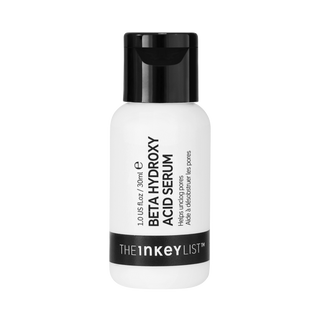
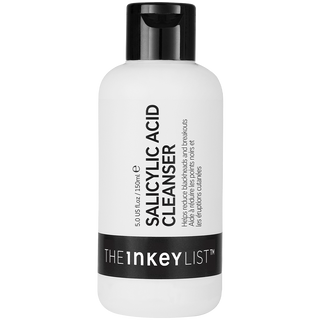
Our Salicylic Acid Cleanser (£12) and Beta Hydroxy Acid (BHA) Serum (£10) both deliver 2% salicylic acid at accessible price points - clinical-level concentration with no compromise on formulation quality. SA products across the INKEY range are designed to make effective, evidence-backed blemish care achievable for everyone.
With the head-to-head comparison done, the natural next question is the most important one: which of these two ingredients is actually right for your specific skin?
Which One Is Right for Your Skin?
Most ingredient comparison articles end their analysis at the general level and leave the reader to figure out the rest. This section does something different. What follows is a skin-specific decision framework, built around the most common breakout profiles we hear about. Find the one that sounds most like you.
If Your Skin Is Oily or Combination, with Blackheads and Congestion
Salicylic acid is the clear choice. It directly addresses excess oil, pore congestion, and blackhead formation - the core concerns for oily and combination skin types. Starting with our Salicylic Acid Cleanser (£12) as a twice-daily step gives the ingredient consistent, regular contact with skin without the risk of over-treating. For a more targeted pore treatment, our Beta Hydroxy Acid (BHA) Serum (£10) delivers a leave-on 2% BHA directly to the pore. Browse the full blemishes and breakouts collection to see the complete range of SA-led options.
If You Have Inflamed, Red, Pustular Spots
Benzoyl peroxide may have more direct antibacterial relevance for active, bacterial-driven pustular spots - and for severe or persistent cases, a dermatologist may well recommend it. However, salicylic acid remains effective for mild-to-moderate inflammatory breakouts: clinical evidence shows comparable results with significantly better tolerability.
For those who want to address active spots without reaching for benzoyl peroxide, our 360 Skin Clearing Serum (£16) is a strong option. It combines 2% salicylic acid with dioic acid and Dendriclear to target three stages of blemish formation - prevention, active spots, and post-blemish marks - in a single leave-on treatment.
If You Have Sensitive or Reactive Skin
Salicylic acid is the better-tolerated option here, and clinical evidence supports this unambiguously. If your skin reacts easily to actives, start with a low-contact format: a rinse-off cleanser gives salicylic acid time to work without leaving the ingredient on skin for an extended period. Once your skin has built tolerance, leave-on treatments can be introduced gradually. Benzoyl peroxide is generally not recommended for sensitive skin without dermatological guidance due to its higher irritation potential.
If You Are Dealing with Hormonal Blemishes Along the Jawline and Chin
Salicylic acid is the more relevant choice here. Hormonal blemishes are sebum-driven, not primarily bacterial, making BP’s antibacterial mechanism largely beside the point. Pairing salicylic acid with our Niacinamide Serum (£10) creates a particularly effective combination for hormonal skin concerns: SA addresses congestion and cell turnover inside the pore, while niacinamide tackles oil regulation, pore appearance, and redness at the surface level - all without added irritation. Our hormonal breakout guide and does niacinamide help with breakouts guide both go deeper on this pairing.
If You Have Body Breakouts on the Back, Chest, or Shoulders
Salicylic acid is again the practical choice - and the absence of a fabric-bleaching risk makes this a straightforward decision. Our Salicylic Acid Cleanser is safe and effective for use on blemish-prone areas across the body, applied in the same way as on the face. Our back blemish treatment guide covers the specifics of treating body breakouts in more detail.
If You Are Dealing with Post-Blemish Marks or Scarring
Neither salicylic acid nor benzoyl peroxide directly targets post-blemish hyperpigmentation. However, SA supports faster skin cell turnover, which gradually helps fade marks over time. For more targeted post-blemish action, our 360 Skin Clearing Serum (£16) includes dioic acid specifically formulated to address post-blemish discolouration. Our Succinic Acid Treatment (£11) is also worth considering - it helps calm active spots and reduce the surrounding redness that often makes marks look more prominent.
If You Are Pregnant or Breastfeeding
Low-concentration topical salicylic acid under 2% is generally considered safe in limited application during pregnancy and breastfeeding. Our Salicylic Acid Cleanser is listed as pregnancy and breastfeeding safe on the product page. As with any active ingredient during pregnancy, consulting a healthcare provider before use is always the right step.
The picture should now be clear: salicylic acid is the more versatile, better-tolerated, and more practically useful option across the majority of blemish concerns. With that established, many readers will have a follow-up question - can you use both ingredients together, or is there a smarter way to combine treatments?
Can You Use Salicylic Acid and Benzoyl Peroxide Together?
This is one of the most frequently asked questions when it comes to blemish-fighting ingredients, and it deserves a straight answer rather than a hedge.
Using both salicylic acid and benzoyl peroxide on the same skin area, at the same time, is generally not recommended. The combination increases the risk of excessive dryness, irritation, and a compromised skin barrier - without meaningfully improving outcomes over using a well-chosen single ingredient. When you layer two potent actives that both have the potential to disrupt the barrier, you are more likely to end up with red, flaky, sensitised skin than with clearer skin.
If someone is set on using both: applying them to separate areas (for example, SA as an all-over cleanser and BP only as a very localised spot treatment) or at separate times of day (SA in the PM, BP in the AM) can reduce the risk of over-treating. But this approach still requires careful monitoring, and for most people it is an unnecessary complication.
The smarter alternative - and the one supported by both clinical evidence and practical use - is pairing salicylic acid with ingredients that complement rather than compete with it.
The most effective pairing for most blemish-prone skin types is salicylic acid and niacinamide. Here is why this works so well: SA targets congestion and the debris inside the pore that triggers breakouts, while niacinamide addresses the factors that contribute to those conditions in the first place - excess oil production, enlarged pore appearance, and surface redness. Together they address the root causes of most everyday blemish concerns without compounding irritation risk. Our Niacinamide Serum (£10) contains 10% niacinamide and 1% hyaluronic acid - a clinically effective concentration paired with a hydrating buffer that keeps the skin barrier supported while actives do their work. For a deeper look at this pairing, our guide to niacinamide and breakouts is worth reading.
For targeted spot treatment alongside a salicylic acid cleansing routine, two additional products are worth knowing about. Our Succinic Acid Treatment (£11) is a focused active spot treatment that calms active blemishes and reduces the redness that makes spots so visible. And our Hydrocolloid Invisible Pimple Patches (£9) create a physical barrier over active spots, drawing out fluid and protecting the blemish from bacteria and picking - clinically proven to visibly reduce blemishes in as little as four hours. They can be worn overnight or discreetly under makeup.
The American Academy of Dermatology notes that combining certain actives without clinical guidance can worsen skin irritation rather than improve breakouts - a principle that applies equally here. For readers who want to understand ingredient layering more broadly, our guide to using acids in your skincare routine covers everything from application order to timing and compatibility.
With the combination question answered, the final piece of the puzzle is how to actually build a practical, effective, SA-led blemish-fighting routine.
How to Build a Blemish-Fighting Routine with Salicylic Acid
Education is only useful when it translates into action. This section takes everything covered so far and turns it into concrete, step-by-step routine guidance - structured across three tiers to match where you are in your skincare journey.
Starter Routine: The Right Foundation
If you are new to salicylic acid or are just beginning to address blemish-prone skin, this is where to start. Simple, consistent, and effective.
AM and PM - Cleanse: Our Salicylic Acid Cleanser (£12) contains 2% salicylic acid - the maximum OTC concentration. Apply to damp skin, massage gently for around 60 seconds to give the active ingredient time to work, then rinse thoroughly. This step alone provides meaningful pore-clearing action twice daily without any leave-on risk.
AM and PM - Moisturise: Always follow an active cleanser with a moisturiser. Our Omega Water Cream (£11) is oil-free, lightweight, and clinically proven to balance oil production while delivering deep hydration - making it an ideal match for blemish-prone skin that still needs barrier support.
As needed - Spot treat: Apply our Hydrocolloid Invisible Pimple Patches (£9) directly to active spots overnight or under makeup for discreet, on-the-spot treatment.
AM - SPF: Follow your morning routine with our Dewy Sunscreen SPF 30. Salicylic acid increases photosensitivity, so SPF is a non-negotiable step in any SA routine.
90% of users in a consumer trial of our Salicylic Acid Cleanser agreed their skin looks visibly clearer after just 3 days.
Intermediate Routine: Adding a Leave-On Treatment
Once your skin has adjusted to daily salicylic acid use and you are ready to go further, adding a leave-on BHA treatment introduces a more sustained level of pore-clearing action.
AM and PM - Cleanse: Continue with the Salicylic Acid Cleanser as above.
PM - Treat: Apply our Beta Hydroxy Acid (BHA) Serum (£10) after cleansing. This is a leave-on 2% BHA serum formulated specifically for targeted pore treatment and blackhead clearing. Introduce it two to three times per week first and build up gradually as your skin adjusts.
PM - Balance: Layer our Niacinamide Serum (£10) on top of the BHA serum to address oil control and surface redness simultaneously. This is the SA and niacinamide pairing discussed in the previous section, working together in a single PM routine.
AM and PM - Moisturise: Omega Water Cream as before.
Advanced Routine: Multi-Stage Blemish Treatment
For persistent blemish concerns, post-blemish marks, or skin that needs a comprehensive approach addressing prevention, active spots, and scarring together, this routine brings in the most targeted tools.
AM and PM - Cleanse: Salicylic Acid Cleanser as above.
PM - Treat: Our 360 Skin Clearing Serum (£16) is a 3-in-1 leave-on treatment that works at three stages of blemish formation simultaneously. The 2% salicylic acid addresses pore congestion and prevention; dioic acid targets post-blemish marks and hyperpigmentation; Dendriclear works on active and future spots. This is the most comprehensive single-product treatment within the range.
PM - Balance: Niacinamide Serum as above.
As needed - Spot treat: Hydrocolloid Patches on any active spots for overnight or daytime treatment.
AM and PM - Moisturise: Omega Water Cream.
For Body Blemishes
Our Salicylic Acid Cleanser is fully suitable for use on breakout-prone areas on the back, chest, and shoulders - the same application method applies. For more guidance on treating body breakouts specifically, our back blemish treatment guide and clogged pores guide are both useful companions.
What to Expect as You Build Tolerance
Introducing any new active ingredient is a process, and salicylic acid is no different. In the first one to two weeks, mild tingling is normal, particularly with leave-on formats. Some users experience an initial purging phase as increased cell turnover brings existing congestion to the surface - this is a normal part of the process and not a sign that the ingredient is wrong for your skin.
By weeks three and four, skin typically begins to visibly clear, with blackheads reducing and texture improving. At the four-to-six week mark, most users see significant improvement. As with any new product, patch testing before a full application is always recommended - our best cleanser for blemish-prone skin guide is a helpful resource for first-time active users. Explore all SA products through the salicylic acid pillar page, and build your routine as a bundle to save across multiple steps.
The Verdict: Clear Skin Starts with the Right Ingredient
The right ingredient is not always the same for every person - and the honest answer is that both salicylic acid and benzoyl peroxide have their place in evidence-based skincare. But the place each occupies is quite different.
For the vast majority of people dealing with everyday blemishes - blackheads, congested pores, oily skin, breakout-prone texture, hormonal spots, and mild-to-moderate inflammatory blemishes - salicylic acid is the more practical, more versatile, and better-tolerated option. Its oil-soluble mechanism means it works where most blemishes actually begin: inside the pore. Its anti-inflammatory and mild antimicrobial properties give it relevance across a wide range of breakout types. And clinical evidence confirms that it matches benzoyl peroxide for efficacy in mild-to-moderate cases while significantly outperforming it on tolerability.
Benzoyl peroxide has genuine relevance for bacterial-driven inflammatory pustular breakouts where killing C. acnes is the most direct route to improvement. For persistent or severe breakout concerns - particularly those that have not responded to OTC treatments - consulting a dermatologist is always the right move. Our cystic blemish guide and acne vulgaris explainer are useful starting points if you are dealing with more complex concerns.
What INKEY believes - and what our formulations reflect - is that knowledge is the most powerful skincare tool you have. When you understand what is driving your breakouts and which ingredients actually address those drivers, choosing the right routine stops being guesswork and starts being science.
Find Your Routine
Not sure where to start? Try our Breakout Analyser Pro - AI-powered and dermatologist-backed, it analyses your breakout patterns and recommends the right products for your specific skin.
Want a quick recommendation? Take our Skincare Quiz and get a personalised routine in two minutes.
Ready to build? Build Your Own Bundle and save up to 20% across your blemish-fighting routine.
Shop the Routine
- Salicylic Acid Cleanser - £12
- Beta Hydroxy Acid (BHA) Serum - £10
- 360 Skin Clearing Serum - £16
- Niacinamide Serum - £10
- Omega Water Cream - £11
- Hydrocolloid Invisible Pimple Patches - £9
- Succinic Acid Treatment - £11