



Retinol During Pregnancy and Breastfeeding: What You Need to Know
Retinol is off the menu during pregnancy, but breastfeeding is a different question. Here is what the guidance actually says, and what to use instead.
Author
askINKEY skincare advisor
Published
12 September, 2026
Time to read
12 minutes
A note before you read: This article is general information, not medical advice. Skincare during pregnancy and breastfeeding is personal, and your own circumstances matter. Please speak to your GP or midwife before starting, stopping or changing anything, including anything mentioned here.
What This Guide Covers
Retinol is advised against throughout pregnancy. The guidance for breastfeeding is different, and that difference is where most articles on this subject go wrong, because they treat the two situations as one question with one answer.
This guide covers six things. What UK health authorities say about retinol during pregnancy, and the reasoning behind it. Why breastfeeding guidance is more nuanced, including the specific caveats that come with it. What to use instead, organised by skin concern, with products and prices. What to do if you used retinol before you knew you were pregnant. When to stop retinol if you are trying to conceive. And how to reintroduce it safely afterwards.
Retinol is a vitamin A derivative and one of the most researched ingredients in skincare, which is exactly why the caution around it in pregnancy is so consistent. If you want the wider picture on how it works, what the different forms do and how strengths compare, our retinol guide covers the fundamentals. This article stays focused on the pregnancy and breastfeeding question specifically.
One more thing before we begin. We are a skincare brand, not a clinic. Everything below reports what recognised health authorities say. Where the evidence is genuinely uncertain, we say so rather than filling the gap with confidence we have not earned. Your GP or midwife is the person who can apply any of this to you.
The Short Answer for Pregnancy and Breastfeeding
Here is the summary, separated properly, because the answer is not the same for both.
If you are pregnant: No. UK health authorities advise avoiding topical retinoids for the whole of your pregnancy as a precaution. That covers retinol, retinal, retinyl esters and prescription retinoids. The advice is precautionary rather than a statement that a face serum has been proven to cause harm, but it is consistent and it is firm.
If you are breastfeeding: More nuanced. Authorities generally treat topical retinoids as likely low risk while breastfeeding, because very little is absorbed into the bloodstream and less still would be expected to reach breast milk. There are clear caveats attached, covered in full further down, and plenty of people still choose to wait. That is a completely reasonable choice.
That distinction is the single most useful thing on this page. Pregnancy and breastfeeding are treated differently by the people who write the guidance, so it makes very little sense for skincare articles to merge them into one blanket rule.
Now for the practical part, which is what most people actually need next.
What to Use Instead of Retinol
Stopping retinol does not mean stopping skincare. The most common mistake we see is people abandoning their entire routine out of caution and ending up with skin that is drier, more reactive and more prone to breakouts than before. A well-built routine without retinol is still a genuinely effective routine.
Here is what to swap to, organised by what you were using retinol for in the first place.
- For hydration and plumpness: our Hyaluronic Acid Serum (£12), or the 60ml size (£21, was £24) if you are going through it quickly. Ectoin Hydro-Barrier Serum (£16) is the one to reach for if your skin has turned reactive and easily upset, which pregnancy hormones are very good at causing.
- For brightness and uneven tone: our 15% Vitamin C + EGF Serum (£16). Vitamin C is a sensible daytime replacement for the tone-evening work you were relying on retinol for.
- For oil, visible pores and redness: 10% Niacinamide Serum (£12) for oil control and pore appearance, and 10% Azelaic Acid Serum for Redness Relief (£16) if redness and blemish-prone skin are the issue.
- For barrier support and moisture: Bio-Active Ceramide Moisturiser (£20) for a proper barrier rebuild, Omega Water Cream (£14) for something lighter, or Biome Balancing Moisturiser (£12) if your skin is feeling generally unsettled.
To make this easier, our site lets you filter by “Suitable for pregnancy and breastfeeding”, which currently returns 57 products. You can browse the full range at skincare and apply the filter from there. We would still always say the same thing: confirm anything new with your GP or midwife before you start using it, particularly if you are managing a skin condition rather than a cosmetic concern.
A note on how we talk about this. We do not describe our products as “pregnancy safe” on our own authority, because that is a claim we are not in a position to make about your individual pregnancy. The filter tells you which products contain no ingredients flagged for pregnancy and breastfeeding. Your healthcare professional tells you what is right for you. Those are two different jobs.
Why Retinol Is Advised Against During Pregnancy
To understand the advice, it helps to understand where it comes from, because the reasoning is often lost in the retelling.
Retinol belongs to the retinoid family, all of which are derivatives of vitamin A. The serious, well-documented risks associated with retinoids in pregnancy come from high-dose oral retinoid medicines, taken as tablets, which circulate through the whole body at concentrations far beyond anything a cosmetic serum produces. That evidence base is unambiguous and it is why oral retinoids carry strict pregnancy prevention requirements.
Topical products are a different exposure entirely. Very little of what you apply to intact skin makes it into your bloodstream. But because the family relationship exists and the potential consequences are serious, guidance errs firmly on the side of caution rather than waiting for proof of harm from face creams that would be unethical to gather.
The NHS states plainly that topical retinoids are not suitable for use during pregnancy because of the risk they might cause birth defects. NICE guideline NG198 goes further, describing topical retinoids as contraindicated during pregnancy and when planning a pregnancy, and advising that effective contraception or an alternative treatment should be used by anyone of childbearing potential.
The MHRA explains the logic behind that position more fully than anyone else, which is why it is worth quoting directly.
“Systemic exposure is thought to be negligible following application of topical retinoids during pregnancy. However, since risk cannot be excluded, use of topical retinoids is contraindicated during pregnancy as a precaution.” Medicines and Healthcare products Regulatory Agency (MHRA), Drug Safety Update
Read that carefully, because it contains both halves of the truth at once. Absorption is thought to be negligible. Risk cannot be excluded. Caution follows. That is not the same as saying a serum has been shown to cause harm, and the difference matters enormously if you are lying awake worrying about a product you used three weeks ago.
So the honest framing is this: the advice to avoid retinol in pregnancy is precautionary, it is universal across UK authorities, and it is easy to follow because there are genuinely good alternatives. It is not a verdict on something you have already done.
Anything specific to your pregnancy should be confirmed with your GP or midwife. They know your history, and this article does not.
Retinol and Breastfeeding: The More Nuanced Answer
This is where most articles stop being useful, because they simply carry the pregnancy rule across and apply it unchanged. The authorities do not do that, and neither should we.
The reasoning starts with how little gets in. Topical retinoids applied to intact skin are poorly absorbed into the bloodstream. For an ingredient to reach your baby through breast milk, it first has to reach your blood in meaningful quantity, and then pass into milk. With a topical product, both steps are working against it.
DermNet’s review of lactation and medicines used in dermatology describes topical retinoids as probably low risk during breastfeeding, while attaching specific practical precautions. A peer-reviewed review of treating blemishes and breakouts in pregnancy and lactation reaches broadly similar conclusions about topical products applied to limited areas. The NHS also publishes general guidance on breastfeeding and medicines that is worth reading if you are weighing up anything else alongside your skincare.
It is worth being honest about one thing, though. “Probably low risk” is not the same as “studied extensively and confirmed safe”. Topical retinoid use during breastfeeding has not been the subject of large dedicated studies. The reassurance comes from what we know about absorption rather than from trials that directly measured outcomes in breastfed babies. That is a real distinction and you deserve to have it stated rather than smoothed over.
The Caveats, Stated Plainly
If you do use a topical retinoid while breastfeeding, the precautions consistently given are:
- Never apply it to the nipple or areola. This is the firmest of the three. It removes any possibility of your baby ingesting the product directly during a feed.
- Do not let your baby’s skin come into contact with treated areas. Babies press their faces, hands and heads against you constantly. If you have applied a retinoid to your face, neck or chest, think about where your baby actually goes.
- Keep the treated area limited. Apply to the smallest area that addresses what you are treating, rather than sweeping it across large expanses of skin.
Sensible additions to those: wash your hands after applying, and if you have used anything on your chest area, wash it off before feeding.
Choosing to Wait Anyway
Plenty of people read all of that, understand that the risk is considered low, and decide to wait until they have finished breastfeeding regardless. That is not an overreaction and we are not going to talk you out of it.
Breastfeeding is often an exhausting, all-consuming period, and the mental load of remembering which parts of your face your baby can safely press against is a cost in itself. If skipping retinol for another few months removes one thing from your head, that is a legitimate reason on its own. Your skin will not fall apart in the meantime, particularly if you have built a decent hydration and barrier routine in its place.
The right answer here is the one you are comfortable with, made with your GP or midwife rather than from a search results page.
As always, your GP or midwife can advise on your own situation, including anything you have been prescribed.
Retinal, Retinyl Esters and Prescription Retinoids
Briefly, because the answer is the same across the board. Retinal, retinyl esters such as retinyl palmitate, and prescription options all belong to the same vitamin A family as retinol, so the same precautionary advice applies during pregnancy. A gentler form is still a retinoid.
If you have been prescribed a topical treatment for a skin condition, do not simply stop it after reading this. Speak to your GP or midwife, who can weigh up whether to pause it, change it or manage it differently. Prescribed treatment decisions are theirs to make with you, not ours.
We will be publishing a dedicated guide on retinol compared with tretinoin and adapalene, and will link it here once it is live.
I Used Retinol Before I Knew I Was Pregnant
First, breathe. This is one of the most common questions asked on this entire topic, and the fact that so many people ask it should tell you something reassuring in itself.
Pregnancy is very often confirmed several weeks in, which means using your normal skincare in the meantime is not carelessness. It is simply what happens. You cannot stop using a product for a pregnancy you do not yet know about.
The practical response is short. Stop using it now, and mention it at your next appointment so it is on record and your GP or midwife can answer any questions in the context of your actual pregnancy rather than in the abstract.
Go back to the MHRA wording quoted earlier, because it was written for exactly this moment. Systemic exposure from topical retinoids is thought to be negligible. The contraindication exists because risk cannot be entirely excluded, not because harm from a cosmetic serum has been demonstrated. Precaution and evidence of damage are not the same thing, and the distinction should make you feel steadier rather than worse.
We are not going to speculate about outcomes, because that is not our role and speculation is the last thing you need. Your GP or midwife is the right person for that conversation, and they will almost certainly have had it many times before.
If you are worried, raise it with your GP or midwife. That is exactly what appointments are for.
Trying for a Baby: When to Stop Using Retinol
If you are trying to conceive, many people choose to stop retinol once they are actively trying rather than waiting for a positive test. NICE guidance refers to topical retinoids being contraindicated when planning a pregnancy as well as during it, so this is a reasonable and well-supported approach.
There is a practical advantage too. Swapping early gives your skin time to adjust before you are also managing pregnancy hormones, and it means you are not making a sudden change during a week that already feels overwhelming.
How to phase it without upsetting your skin:
- Stop the retinol first, and change nothing else. Give your skin a week or two on your existing cleanser and moisturiser so you can see how it behaves without the retinoid.
- Add hydration next. Hyaluronic acid or ectoin will cover any dryness or tightness that appears.
- Then add your targeted treatment. Vitamin C for tone, niacinamide for oil and pores, azelaic acid for redness and blemish-prone skin.
- Leave your barrier products until last. If your moisturiser is working, do not replace it just because everything else is changing.
Changing everything in one go is how you end up unable to tell which product caused which reaction. One change at a time is slower and far more informative.
Ingredient Swaps by Skin Concern
Rather than replacing retinol with a single product, it is more useful to think about what you were asking retinol to do, then choose accordingly.
Hydration and Dullness
Hyaluronic acid, ectoin and glycerin all work by holding water in the skin rather than changing how it behaves. Pregnancy commonly brings dryness and tightness, and hydration alone often resolves a surprising amount of what people interpret as “dull skin”. Our hyaluronic acid guide explains how the different molecular weights work if you want the detail.
Brightening and Dark Spots
Vitamin C is the most reliable daytime swap for tone and brightness. Pregnancy-related pigmentation is extremely common, often appearing across the cheeks, forehead and upper lip, and it is strongly influenced by sun exposure as well as hormones. Our vitamin C guide covers formulation and stability, and our hyperpigmentation guide goes deeper on uneven tone generally. Manage expectations here: hormonal pigmentation often fades gradually after pregnancy, and daily sun protection does more for it than any serum.
Breakouts and Blemish-Prone Skin
Hormonal changes frequently trigger breakouts, sometimes in people who have not had them since their teens. Niacinamide helps with oil production and the appearance of pores, while azelaic acid is often discussed in the context of pregnancy for both blemish-prone skin and redness. Our niacinamide guide and azelaic acid guide cover how each works.
On salicylic acid, which comes up constantly: guidance generally distinguishes between low-concentration topical use on limited areas and oral or high-strength treatment. This is precisely the sort of question to put to your GP or midwife rather than settle from an article, because the answer depends on concentration, area and how often you are using it.
Barrier Support
Ceramides and peptides support the skin’s barrier rather than driving change in it, which makes them well suited to a period when you want stability. Our Peptide Moisturiser (£16) is a good option if your skin is feeling thin or easily irritated. If you are rebuilding from scratch, the complete skincare concerns guide is a useful starting point.
Eyes and Neck
Retinol eye products are off the list for now, so for the eye area try Caffeine Eye Cream (£12) for puffiness and the look of dark circles, or Bio-Active Ceramide Eye Cream (£15) for dryness and barrier support. The Bio-Active Ceramide Neck Stick (£15) covers the neck and chest, which are frequently forgotten.
Two more ingredients people ask about constantly. Hyaluronic acid is widely regarded as unproblematic because it works on the skin’s surface and is not associated with pregnancy concerns in the way retinoids are. Niacinamide is similarly not flagged in the way vitamin A derivatives are. In both cases we are reporting the general position rather than issuing a verdict, and your GP or midwife remains the right person to confirm.
A Simple AM and PM Routine
Fewer steps, done consistently, will always outperform an elaborate routine you abandon by week three. If you are unsure where to start, our skincare routine guide and how to build your skincare routine both walk through the fundamentals, and what’s your skin type is worth five minutes if pregnancy has changed how your skin behaves.
Morning
- Cleanse with Milk Cleanser (£15) if your skin is dry, or Glycerin Gentle Purifying Cleanser (£14) if it is oilier.
- Hydrate with hyaluronic acid or ectoin on damp skin.
- Treat with vitamin C or niacinamide, depending on your main concern.
- Moisturise.
- Apply SPF, every single day. Dewy Sunscreen SPF 30 (£15) works well under makeup, and our SPF guideexplains application amounts, which is where most people fall short.
Evening
- Cleanse. Oat Cleansing Balm (£15) removes SPF and makeup properly, and our double cleansing guide explains when a second cleanse is actually worth it.
- Apply your treatment serum.
- Moisturise.
The sun protection step is not optional padding. Pregnancy-related pigmentation is driven substantially by UV exposure, and daily SPF is the most effective thing you can do to stop it deepening. If you make one change from this entire article, make it that one.
Bakuchiol and Other Natural Retinol Alternatives
Bakuchiol is marketed extremely heavily as a plant-based alternative to retinol, and you will find it recommended for pregnancy all over the internet with a confidence the evidence does not support.
Here is the honest position. Bakuchiol has not been well studied in pregnancy. The comparisons drawn between bakuchiol and retinol come from cosmetic research on general skin appearance, not from pregnancy safety research. Those are entirely different questions, and an ingredient performing similarly to retinol in a skin study tells you nothing about how it behaves in pregnancy.
It is also worth naming the logic error in the marketing, because it appears everywhere. Natural does not mean confirmed safe. Plenty of plant-derived compounds are pharmacologically active, and a botanical origin is a description of where something came from, not a safety assessment. Vitamin A is itself a nutrient, which has not stopped high-dose retinoids from carrying the strictest pregnancy warnings in dermatology.
We would rather lose a sale than tell you an under-studied ingredient is fine because it sounds gentle. If bakuchiol appeals to you, ask your GP or midwife rather than trusting a product label. In the meantime, the ingredients covered earlier in this article have far more established positions behind them.
When Can You Go Back to Retinol?
Good news: retinol will still be there. There are two scenarios.
If you are not breastfeeding, most people reintroduce retinol once they feel ready after birth, with their GP or midwife’s agreement. There is no universal date, and postnatal recovery is not a race.
If you are breastfeeding, you have a choice. As covered earlier, topical retinoids are generally treated as likely low risk with the caveats attached, and some people restart before weaning. Others wait until breastfeeding has finished. Both are defensible.
Whenever you return, go back slowly. Skin that has not seen a retinoid for a year does not pick up where it left off.
- Patch test first, even with a product you used before. Our guide on why you need to do a patch test explains how.
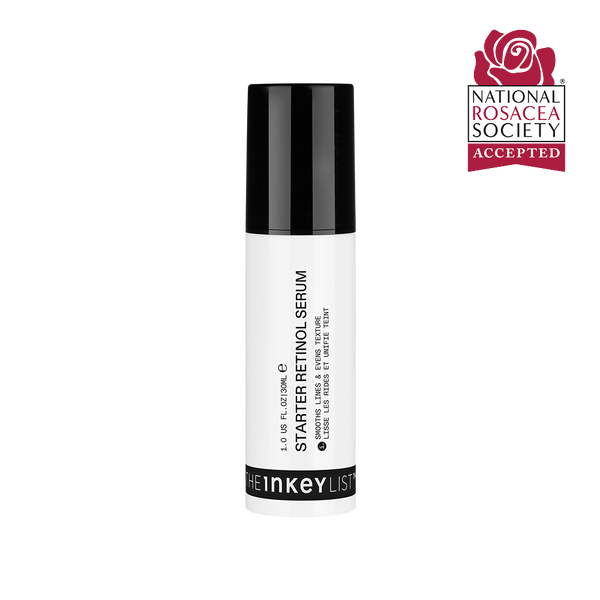
- Start low. Starter Retinol Serum (£13) is built for exactly this.
- Two nights a week to begin with, on dry skin, after cleansing.
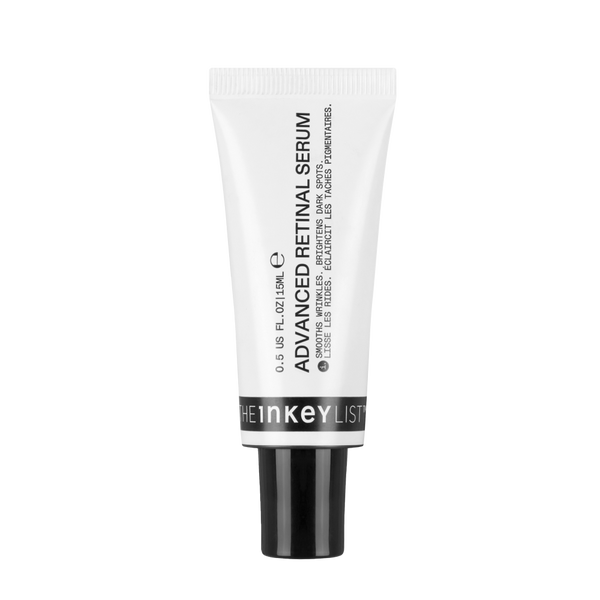
- Build up gradually over several weeks. If you want more once your skin has settled, Advanced 0.2% Retinal Serum (£18) is the step up, and Retinol Eye Cream (£13) is formulated for the eye area.
Two practical points. Layering matters, so read what not to mix with retinol before you rebuild your routine, and if you are unsure which strength suits you, which retinol product is right for you walks through the options. Our full retinol guide covers the wider context.
If you are looking at your routine more broadly at this point, ingredients like exosomes and PDRN have become part of the conversation around skin rejuvenation. Our exosome formula is designed for 6-in-1 skin rejuvenation with clinically proven results in 14 days. As with anything new, confirm with your GP or midwife if you are still breastfeeding.
Explore More Guides
If you are rebuilding a routine, these are the most useful places to go next.
- Start with our retinol guide for the full picture on how retinoids work and what to expect when you return to one.
- For ingredient deep dives, see hyaluronic acid, niacinamide and vitamin C.
- If you are building a routine from scratch, try our Recipe Builder or the Bundle Builder.
- Still unsure about something? Ask INKEY and a real person will answer.
The Bottom Line
Retinol is advised against for the whole of pregnancy, as a precaution rather than because a face serum has been shown to cause harm. Breastfeeding guidance is more relaxed, with topical retinoids generally treated as likely low risk, provided you never apply to the nipple or areola, keep treated areas away from your baby’s skin and limit where you use it. Waiting until you have finished breastfeeding is equally valid.
What often goes unsaid is that this is a pause, not a loss. Hyaluronic acid, vitamin C, niacinamide, azelaic acid and a decent SPF will keep your skin in genuinely good condition, and retinol will be waiting when you are ready.
When that time comes, browse the full range at skincare and use the “Suitable for pregnancy and breastfeeding”filter to narrow things down quickly. Build a full routine with our Recipe Builder, or ask us a question if you would rather talk it through. Free UK delivery on orders over £30.
And whatever you decide, confirm anything specific with your GP or midwife. They know your pregnancy. We know ingredients. You deserve both.
Frequently Asked Questions
Got a question?
Our askINKEY team are a friendly bunch of skincare experts with deep product knowledge and zero judgement. Whether you're an ingredient obsessive or just starting out, we'll make it make sense. No question too big. No question too small. We Give A Care, Every Day.


