



Hyaluronic Acid Supplements: Oral vs Topical - What Actually Works for Your Skin?
Discover what the latest science says about supplements versus serums, how each hydrates the skin, and which approach delivers the most reliable results for a plumper, healthier-looking complexion
Author
askINKEY skincare advisor
Published
07 July, 2026
Time to read
15 minutes
Hyaluronic acid is one of the most searched skincare ingredients in the world - and now it is turning up not just in serums and moisturisers, but in capsules, gummies, and powders too. The question being asked more and more frequently is a reasonable one: if hyaluronic acid is so effective on the skin, does taking it orally give you even better results? Or is applying it directly to the skin still the most reliable approach?
This blog covers everything you need to know to make an informed decision. We will look at what oral hyaluronic acid supplements actually are, what the current clinical research shows - including both the promising findings and the important limitations - how topical HA works differently, who might reasonably consider supplementation, and what the honest verdict looks like when you weigh up the evidence. There is no hype here, and no marketing spin. Just a straightforward, science-first breakdown grounded in what the research actually says.
If you want a deeper foundation before reading on, our complete Hyaluronic Acid ingredient guide explains what HA is, how it functions in skin, and why it has become such a cornerstone of modern skincare. That guide works as a useful companion to everything covered here.
The first thing to establish is exactly what oral hyaluronic acid supplements are - and what they are actually claiming to do.
What Are Hyaluronic Acid Supplements - and What Do They Claim to Do?
Hyaluronic acid is not a synthetic ingredient invented by the skincare industry. It is a molecule that your body produces naturally, found throughout the tissues - in the skin, the joints, the eyes, and the connective tissue that holds everything together. Its primary role is to attract and retain water. In the skin specifically, HA sits within the extracellular matrix, helping to maintain that characteristic plumpness, suppleness, and moisture that healthy skin possesses.
The problem is that the body’s ability to produce hyaluronic acid declines with age. This process begins gradually in your mid-twenties and becomes more pronounced over the following decades. As HA levels fall, the skin loses some of its capacity to hold water, which contributes to dryness, a reduction in visible plumpness, and the appearance of fine lines. The loss of HA in the joints is also associated with reduced lubrication and increased stiffness - which is why HA has long been a focus of interest in both dermatology and orthopaedics.
Oral hyaluronic acid supplements are designed around the idea of addressing this decline from the inside out. Available in formats including capsules, tablets, gummies, and powders, these products claim to replenish HA levels systemically - meaning through the bloodstream - rather than through direct application to the skin. The proposed benefit is broader than topical skincare alone: by increasing circulating HA levels, manufacturers suggest that the skin, joints, and connective tissue may all benefit simultaneously.
Typical doses used in clinical studies range from 80mg to 200mg per day, though the dosing across commercially available supplements varies considerably. The molecular weight of the HA used in supplements also differs between products, and this matters because it influences how the molecule is processed in the body - a point we will return to when examining the research.
It is worth noting that oral HA supplements sit within the broader “beauty from within” or ingestible beauty category, which has grown significantly over the past several years. These products are frequently marketed alongside collagen peptides and other nutrient supplements, appealing to consumers who want to address skin health through their diet and supplementation routine. That positioning makes them commercially appealing - but commercial appeal and clinical efficacy are two different things.
The central question is this: does taking hyaluronic acid orally actually result in meaningful improvements to the skin? Can a molecule ingested through the gut reach the skin in a form that makes a genuine difference? Our Hyaluronic Acid ingredient guide explains the molecule’s structure in more detail, but what we need now is to look at what the clinical research actually shows.
What the Science Says About Oral Hyaluronic Acid - The Research So Far
This is the section that matters most if you are trying to make a genuinely informed decision. The scientific evidence on oral HA supplementation is neither as strong as supplement marketing suggests, nor as dismissible as sceptics might claim. The honest picture is more nuanced - and that nuance is worth understanding properly.
The most comprehensive piece of evidence available is a 2025 meta-analysis published in the Journal of Drugs in Dermatology by Amin et al., which reviewed seven randomised controlled trials (RCTs) on oral HA supplementation and performed a meta-analysis comparing outcomes between treatment and placebo groups. Meta-analyses carry more statistical weight than individual studies because they pool data across multiple trials, giving a broader and more reliable picture of an intervention’s effects.
The results were genuinely interesting. The meta-analysis found statistically significant improvements in three key skin parameters following oral HA supplementation: skin hydration, skin elasticity, and wrinkle depth. These are meaningful outcomes - they are the metrics that people taking these supplements are actually hoping to improve.
However, the same analysis found that the effects on skin firmness, wrinkle volume, and transepidermal water loss (TEWL - a measure of how much water evaporates from the skin surface) were not statistically significant. There was a general trend of improvement across these parameters too, but it did not reach the threshold required to draw firm conclusions. And the researchers themselves were candid about the limitations of their findings, calling for “larger, more robust trials” to confirm the results, citing the limited sample sizes and heterogeneity - meaning variation in methodology, dosing, and participant populations - across the included studies.
A 2023 randomised controlled trial published in Skin Research and Technology by Gao et al. also examined oral HA supplementation and found improvements in skin moisture and elasticity following consistent use over several weeks. This adds further weight to the emerging picture - but it is a single RCT, and it carries the same limitations that affect much of the research in this area: relatively small participant groups, short study durations, and variability in how the outcomes were measured.
One of the most important questions in this area is how oral HA actually reaches the skin at all. The proposed mechanism centres on what happens during digestion. When HA is broken down in the gut, it produces smaller molecular fragments called oligosaccharides. The current hypothesis is that these oligosaccharides may stimulate fibroblasts - the cells in the skin responsible for producing HA, collagen, and elastin - effectively prompting the body to produce more of its own hyaluronic acid rather than simply delivering HA directly to the skin. If this mechanism holds up under further investigation, it would represent a genuinely interesting systemic pathway. But it also means that oral HA does not function like a direct top-up of the skin’s HA reserves.
Bioavailability - the degree to which an ingested substance is absorbed and reaches its target tissues - is another critical variable. Not all oral HA is absorbed equally. Molecular weight, the specific formulation of the supplement, and the individual’s gut health all influence how much HA (or its breakdown products) actually enters the bloodstream and reaches the skin. This makes it difficult to draw universal conclusions about effectiveness, and it is one reason why standardising research in this area is so challenging.
The overall picture from the current evidence base is this: oral HA supplementation shows early promise, particularly for skin hydration, elasticity, and wrinkle depth. But the research is still at a relatively early stage. Most studies involve fewer than 100 participants, run for between four and twelve weeks, and use varying doses and formulations. The findings are encouraging enough to take seriously - but not robust enough to treat as settled science.
What this means practically is that topical HA remains the more thoroughly evidenced approach to skin hydration - and its mechanism of action is fundamentally different. Understanding that difference is the logical next step.
How Topical Hyaluronic Acid Works - and Why It Is Different
Where oral HA works through an indirect, systemic route that depends on digestion, gut absorption, and cellular signalling, topical hyaluronic acid takes an entirely different approach. It acts directly where it is applied, with no dependence on the digestive system and no uncertainty around bioavailability. This distinction matters enormously when evaluating the two approaches.
Topical HA functions as a humectant. When applied to the skin, it draws moisture from the environment and from the deeper layers of the skin towards the surface, delivering an immediate and measurable improvement in hydration. You can feel this on application - the skin becomes more supple, softer, and more comfortable within minutes. This is not a delayed or systemic effect; it is a direct, local response that begins as soon as the product contacts the skin.
One of the key advances in topical HA formulation is the use of multiple molecular weights. Hyaluronic acid molecules of different sizes penetrate the skin to different depths. Larger molecules remain on the surface, forming a hydrating film that creates an immediate plumping and smoothing effect while helping to reduce moisture loss from the skin’s outermost layer. Smaller, lower-molecular-weight forms of HA - including sodium hyaluronate - can penetrate more deeply into the upper layers of the skin, providing longer-lasting hydration from within. If you are interested in understanding the specific differences between sodium hyaluronate and hyaluronic acid, our blog on Sodium Hyaluronate vs Hyaluronic Acid covers this in detail.
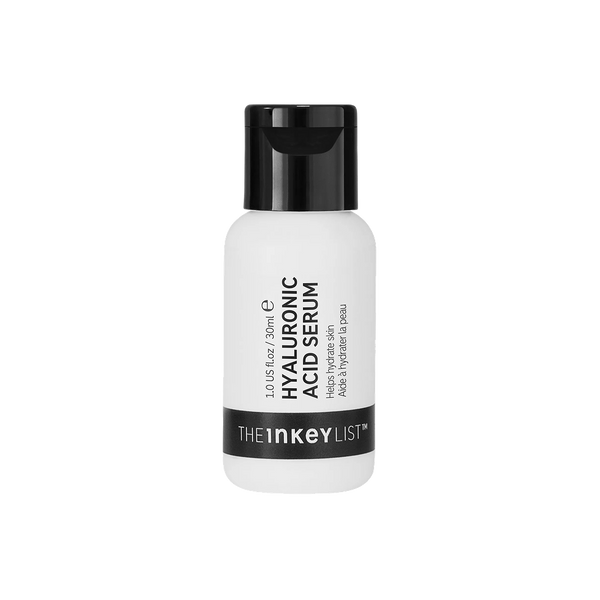
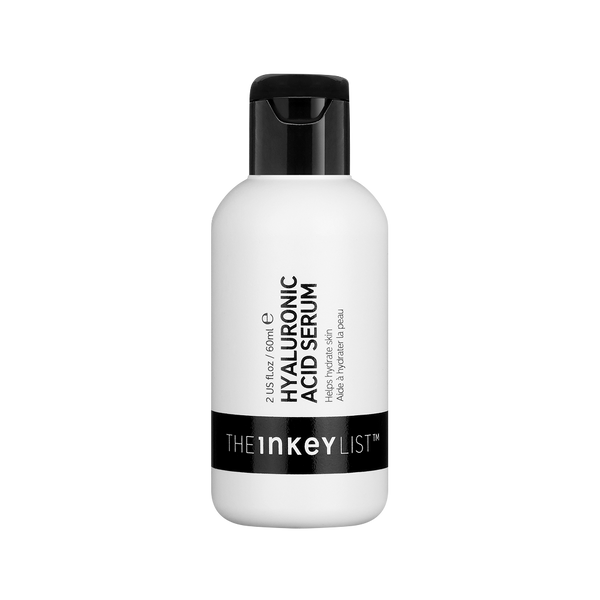
Our Hyaluronic Acid Serum - available from £12 for 30ml and £21 for the 60ml size - uses 2% Multi-Molecular Hyaluronic Acid at three distinct molecular weights, ensuring hydration is delivered at multiple layers simultaneously. It also contains Matrixyl 3000 Peptide, which provides additional firming support. Clinical evidence backs its performance: 82% of users report firmer, smoother skin after four weeks of consistent use.
For those whose skin also needs barrier support - particularly relevant for dry, sensitive, or compromised skin - our Ectoin Hydro-Barrier Serum (£16) combines 2.5% multi-molecular Hyaluronic Acid with 2% Ectoin and three ceramides. This formulation goes beyond surface hydration, clinically proven to strengthen the skin’s protective barrier while simultaneously delivering deep hydration. It is the kind of formulation that addresses the root causes of dehydrated skin, not just the symptoms.
Importantly, topical HA delivers results from the very first application - there is no four-to-twelve-week waiting period required to see results. And because it works locally, there is no variability introduced by individual differences in gut health or absorption. You apply it to the area of concern, and it works in that area. This specificity is one of its core advantages over the systemic route.
A practical note on application: for maximum effectiveness, topical HA should be applied to damp skin - ideally within 60 seconds of cleansing, before the skin has fully dried. This allows the HA molecules to draw in the moisture already present on the skin’s surface, amplifying the hydrating effect. Applying HA to completely dry skin in a very low-humidity environment can occasionally have the opposite effect, drawing moisture from the deeper layers rather than from the environment - so that damp-skin tip is worth taking seriously.
Browse our full HA product collection for all the options available. Now that we understand how each approach works individually, it is time to put them side by side in a direct, evidence-based comparison.
Oral vs Topical Hyaluronic Acid - An Honest Comparison
There is a version of this comparison that simply declares one approach the winner and moves on. That is not what we are doing here. Both oral and topical HA have a place in the conversation - but they are not equal in terms of the strength of evidence behind them, the speed at which they work, or the reliability of their outcomes. An honest comparison requires acknowledging both what the research supports and where the gaps are.
Speed of results is perhaps the most immediately obvious difference. Topical HA delivers hydration from the moment it is applied. Skin feels softer, more supple, and more comfortable within minutes. Oral HA supplements, by contrast, typically require four to twelve weeks of consistent daily use before measurable results are observed in clinical studies. That is not inherently a reason to dismiss oral supplementation - some interventions require time to produce systemic change - but it is an important practical consideration for anyone expecting quick results.
The evidence base for each approach is also very different in size and maturity. Topical hyaluronic acid has decades of dermatological research behind it, with a broad and well-established body of clinical evidence supporting its efficacy for skin hydration, barrier support, and plumping. Oral HA research is growing - the 2025 Amin et al. meta-analysis is a meaningful step forward - but it currently amounts to seven RCTs with relatively small sample sizes and inconsistent methodologies. The direction of the evidence is encouraging, but the body of evidence is still in its early stages. For topical HA, the science is settled. For oral HA, the science is promising but still developing.
Mechanism of action is where the two approaches differ most fundamentally. Topical HA acts directly on the skin’s surface and upper layers, delivering hydration exactly where it is needed through a well-understood humectant mechanism. Oral HA works indirectly - through the proposed stimulation of fibroblasts by HA oligosaccharides produced during digestion. This indirect mechanism means results are slower, less targeted, and dependent on variables outside your control, including gut health and individual absorption rates.
Specificity matters too. If your concern is the skin around your eyes, or dry patches on your cheeks, or overall facial dehydration, topical HA lets you direct the intervention precisely where you need it. Oral supplements work systemically, meaning any benefit is distributed across the whole body - which can be an advantage if you are interested in joint health alongside skin hydration, but is less efficient if your primary concern is a specific area of the face.
Cost accessibility is also worth considering. Our Hyaluronic Acid Serum starts from £12, making high-quality topical HA genuinely accessible. Oral supplement regimens - particularly those using established, transparent formulations at clinically relevant doses - typically cost more per month, and the evidence supporting their effectiveness is less robust. For those on a budget, the cost-to-evidence ratio strongly favours topical application.
Where oral supplements may offer something additional is in their potential systemic effects. Some research suggests that oral HA may support joint lubrication over time, and the systemic nature of supplementation means it could theoretically support HA levels across tissues beyond the skin. If you are approaching this from a holistic, whole-body wellness perspective rather than a targeted skincare perspective, that broader scope is worth factoring in.
The honest verdict is this: for direct, proven, fast-acting skin hydration results, topical HA is the more reliable, better-evidenced, and more immediately effective choice. Oral HA supplements may offer a complementary benefit over time for those interested in systemic support - but they are not a replacement for topical skincare, and they should not be positioned as such. Our blog on How to Get Plump Skin explores the topical routine approach in more depth if that is where your interest lies, and our HA ingredient guide offers a thorough foundation if you want to understand the molecule more fully before deciding.
With the comparison established, the next practical question is: who might actually benefit from oral HA supplements, and what should they know before starting?
Who Might Consider Oral Hyaluronic Acid Supplements - and What to Know First
Despite the limitations of the current evidence, there are groups of people for whom oral HA supplementation may be worth exploring as a complement to their existing topical routine. The key word is complement - not replacement. No credible reading of the current research supports the idea that oral supplementation alone is sufficient for meaningful skin hydration results.
Those who are already consistent with a topical skincare routine and are curious about adding a systemic dimension to their approach may find oral HA an interesting addition. The emerging evidence suggests that, over time and with consistent daily use, there may be modest improvements in hydration and elasticity that add to what topical application is already providing. If you approach it with realistic expectations and a willingness to commit to at least eight weeks of use before evaluating results, it is a reasonable experiment.
Those with joint concerns may find the evidence for oral HA slightly more compelling in this specific context. The research on HA supplementation for joint lubrication has a somewhat longer history than the skin-focused literature, and if joint comfort is a concurrent concern alongside skin health, that dual potential benefit may tip the scales towards supplementation being worthwhile.
There are also some important cautions to be aware of before starting any oral supplement regime. Oral HA is not recommended during pregnancy or while breastfeeding without first consulting a healthcare professional. The clinical data on safety in these populations is insufficient to draw confident conclusions, and the precautionary approach is always to seek professional guidance. Our Hyaluronic Acid Serum is confirmed safe for use during pregnancy and breastfeeding, making it the appropriate choice for skin hydration during this period.
Anyone who is currently taking medication, or who has an existing health condition, should also consult a healthcare professional before introducing a new supplement. Hyaluronic acid is generally considered well-tolerated, but interactions and contraindications are always possible, and individual circumstances vary.
Supplement quality is another variable that deserves serious attention. Unlike licensed medicines, supplements are not subject to the same regulatory scrutiny, which means that quality, dosing accuracy, and ingredient transparency can vary enormously between products. When evaluating an oral HA supplement, look for products that clearly disclose the molecular weight of the HA used, the daily dose per serving, and any third-party testing. A product that is vague about these details is a product worth approaching with caution.
For those combining HA supplementation with a topical routine - which is the approach most likely to deliver meaningful results - understanding how different active ingredients interact is useful knowledge. Our blog on Can You Use Hyaluronic Acid with Vitamin C? addresses one of the most common questions about combining HA with other key ingredients, and our skincare routine guide provides a broader framework for building an effective routine.
For most people focused on achieving visible, measurable skin hydration results, the most direct and effective route remains a well-formulated topical routine. The next section outlines exactly what that looks like in practice.
Building Your Topical Hyaluronic Acid Routine - Products That Actually Deliver
Understanding the science is one thing. Translating it into a practical daily routine is another. The following steps lay out how to build an effective hyaluronic acid-based skincare routine using formulations that are clinically backed and designed to work together.
The single most important practical tip before diving into the steps: apply hyaluronic acid to damp skin. After cleansing, do not wait for your skin to fully dry before applying your serum. Aim to apply within 60 seconds while the skin is still slightly damp. This gives the HA molecules moisture to draw from immediately, maximising their hydrating effect.
Step 1 - Hydration Serum
Our Hyaluronic Acid Serum is the foundation of any HA-focused routine. Available at £12 for 30ml or £21 for 60ml, it uses 2% Multi-Molecular Hyaluronic Acid at three molecular weights to deliver hydration across multiple skin depths simultaneously. Larger molecules hydrate at the surface for immediate plumping; smaller molecules penetrate deeper for longer-lasting moisture retention. The addition of Matrixyl 3000 Peptide provides supporting firming benefits, making this more than a one-dimensional hydrating serum. Apply it as your first serum step, directly to clean, damp skin, and allow it to absorb fully before the next step.
Step 2 - Barrier Support
For skin that is dry, sensitive, or showing signs of a compromised barrier - tightness, redness, reactivity, or a rough texture - the Ectoin Hydro-Barrier Serum (£16) offers something that goes beyond simple hydration. It combines 2.5% multi-molecular Hyaluronic Acid with 2% Ectoin and three ceramides, working simultaneously to deeply hydrate the skin and actively repair and reinforce the skin’s protective barrier. A compromised barrier is one of the most common causes of chronic skin dehydration - water simply evaporates through it too easily. This serum addresses that root cause while providing immediate hydration at the same time.
Step 3 - Lock In Moisture
Our Polyglutamic Acid Serum (£15) is the sealing step. Polyglutamic acid is a naturally derived ingredient that holds approximately four times more moisture than hyaluronic acid, and when applied as the final serum step - after HA - it works to seal in the hydration already delivered by the earlier steps. Think of it as the barrier between your serum layers and the moisture loss that would otherwise occur throughout the day. Apply it as the last serum before your moisturiser and allow it to absorb.
Step 4 - Moisturise
Every well-constructed routine finishes with a moisturiser to lock everything in and provide a sustained hydrating environment for the skin throughout the day or night. Our Bio-Active Ceramide Moisturiser (£20) is clinically proven to firm, plump, and visibly reduce six signs of ageing in 28 days. It works as the final occlusive and nourishing layer that completes the routine, preventing water loss and supporting the skin’s structure over time.
Used together as a routine, these four steps provide hydration at multiple layers, barrier repair, moisture sealing, and long-term skin health support. They also represent a well-evidenced, directly effective approach to the skin concerns that many people are turning to oral supplements to address - but through a faster-acting, more targeted, and better-evidenced route. Explore the full range at our Hyaluronic Acid product collection, or visit our skincare routine guidefor further guidance on building around your specific skin concerns.
The Honest Verdict: Science Should Drive Your Skincare Decisions
The research on oral hyaluronic acid supplements is genuinely interesting. The 2025 meta-analysis by Amin et al. represents real progress in understanding what oral HA can and cannot do for the skin - and the finding that it may deliver statistically significant improvements in hydration, elasticity, and wrinkle depth is not something to dismiss. For those curious about the “beauty from within” approach, there is enough emerging science to make supplementation a reasonable experiment, provided expectations are calibrated appropriately.
But the evidence as it stands does not make a compelling case for oral HA as a replacement for a well-formulated topical routine. Topical hyaluronic acid is faster, more targeted, more directly effective, and backed by a far more substantial body of clinical research. It bypasses the uncertainty of gut absorption, the variability of individual bioavailability, and the four-to-twelve-week lag time associated with systemic supplementation. When you apply it to damp skin, it begins working immediately.
For those who are pregnant, breastfeeding, or on existing medication, the decision about oral supplementation is one to make with guidance from a healthcare professional. Safety in these groups is not yet well-characterised in the literature, and the precautionary principle applies. Topical HA remains the safe, effective choice across all of these circumstances.
What this all comes down to is making decisions based on evidence, not marketing. Supplement labels can be persuasive. Claims of transformative results from a single capsule a day are appealing. But the science - at least as it currently stands - points clearly to topical application as the more reliable and proven route to real skin hydration results.
Start with our Hyaluronic Acid Serum from £12 and experience the results that clinical evidence and 82% of users confirm. Read more about what makes HA such a foundational skincare ingredient in our complete HA ingredient guide. And if you are interested in building a broader hydration-focused routine, our blog on How to Get Plump Skin is the natural next step.
Knowledge should drive your skincare decisions - not claims.
Shop our Hyaluronic Acid Serum from £12 - clinically proven to deliver instant hydration from the first application.
Explore all Hyaluronic Acid products and find the right HA step for your skin’s specific needs.
Not sure where to begin? Take our Skincare Quiz and get a personalised routine built around your skin type, concerns, and goals.
Frequently Asked Questions
Got a question?
Our askINKEY team are a friendly bunch of skincare experts with deep product knowledge and zero judgement. Whether you're an ingredient obsessive or just starting out, we'll make it make sense. No question too big. No question too small. We Give A Care, Every Day.


