



Does Caffeine Work for Hair Growth? What the Science Actually Says
Does caffeine actually work for hair growth? We break down what the science really shows, how topical caffeine compares with drinking coffee, and how to use it on your scalp for fuller-looking hair.
Author
askINKEY skincare advisor
Published
19 October, 2026
Time to read
13 minutes
Does Caffeine Work for Hair Growth? What the Science Actually Says
Does caffeine work for hair growth, and is caffeine good for hair at all? Those are the two questions this article sets out to answer in plain, honest language, without the hype you often find around hair products. We will look at what caffeine does when it reaches the scalp, what the research actually shows, how topical caffeine compares with drinking coffee, whether caffeine can cause hair loss, how caffeine shampoo stacks up against a leave-on treatment, how to use it properly, and how long it realistically takes to see a difference.
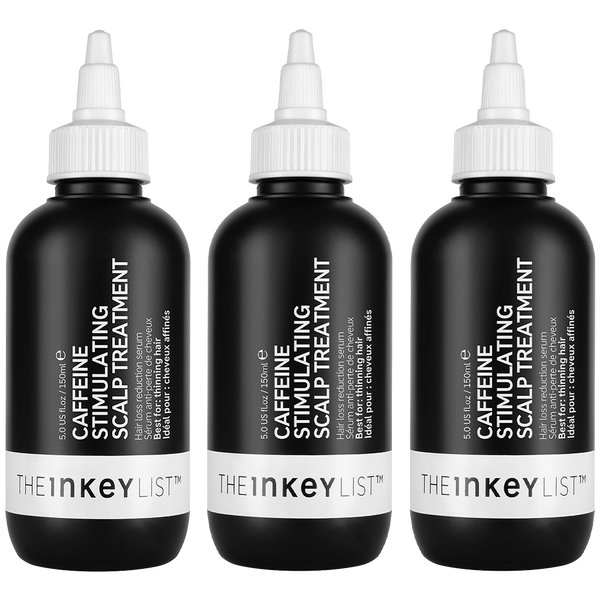
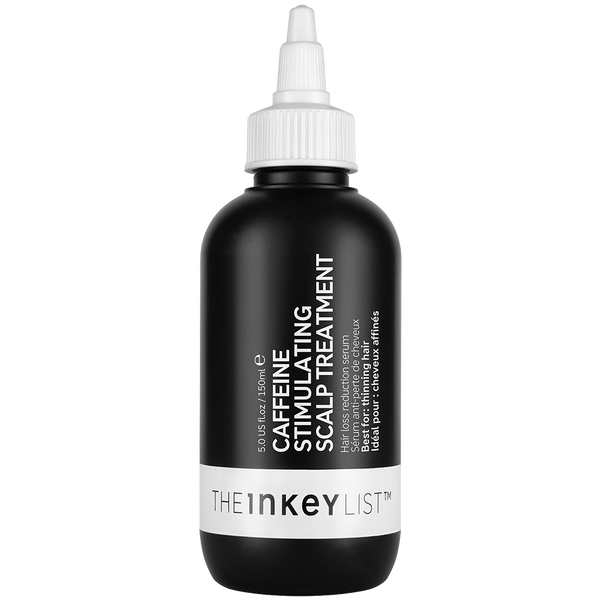
If you want to put the ingredient to work straight away, our Caffeine Stimulating Scalp Treatment is a lightweight, leave-on option, and you can explore the wider picture of looking after your scalp over on our scalp health hub.
Here is the tone we are setting from the start: caffeine is a genuinely well-researched, supportive ingredient for the look of fuller hair. It is not a miracle cure, and anyone promising overnight regrowth is overselling. We would rather be straight with you. For readers who want the bottom line fast, the short answer comes first.
The short answer: does caffeine help hair growth?
Applied to the scalp, caffeine shows real promise as a supportive ingredient for the appearance of fuller, thicker-looking hair, but it works best as part of a consistent routine rather than as a one-off fix. That is the honest headline.
The important nuance is this: the most promising evidence is for topical caffeine, meaning caffeine applied directly to the scalp, not caffeine that you drink. Because hair grows slowly, any changes take time to show, so set your expectations around three months of consistent use before you judge the results.
So caffeine for hair growth is worth considering, and the answer to “is caffeine good for hair” is a cautious yes when used topically and consistently. If you want the deeper background, it helps to understand how the natural hair growth cycle works. To understand why caffeine matters, it helps to know what it actually does once it reaches the scalp.
What caffeine actually does at the scalp
Caffeine is a small molecule, and that matters more than it might sound. Its small size is one of the reasons it can penetrate the skin of the scalp when it is applied topically, which is the first requirement for any active ingredient that wants to reach the hair follicle. An ingredient that simply sits on the surface cannot do much. Caffeine, by contrast, is able to travel down towards the follicle, which is where the interesting biology happens.
Researchers have focused on two headline ideas about how caffeine behaves at the scalp. The first is its potential to support the active growth phase of the hair cycle, which is the phase that determines how full and dense hair looks over time. The second is its association with blood flow at the scalp, which is relevant because follicles rely on a healthy local environment to function well. Both of these mechanisms are cosmetic and supportive in nature. None of this is about curing anything, and it is worth saying that plainly.
To keep things clear, we have split the mechanism into two short sections. The first looks at caffeine and the hair growth cycle. The second looks at caffeine and DHT, the hormone that comes up again and again in conversations about thinning. Let us start with the cycle, because everything else makes more sense once you understand it.
Caffeine and the hair growth cycle (anagen phase)
Your hair does not grow continuously. Each follicle moves through a repeating cycle with three broad stages: a growth phase known as anagen, a short transition phase, and a resting and shedding phase. During anagen, the hair is actively lengthening. When more hairs than usual shift out of the growth phase and into the resting and shedding phase, that is what tends to show up in the mirror as thinning and increased shedding. In other words, the balance between these phases is a big part of how dense your hair looks.
This is exactly where caffeine becomes interesting. It has been studied for its potential to support follicles staying in the active growth phase for longer, which, if it holds up, would help with the appearance of density over time. The foundational laboratory work here is a 2007 study by Fischer and colleagues, published in the International Journal of Dermatology. In that research, caffeine was observed to counteract testosterone-related suppression of hair follicle growth in human hair follicles cultured in the laboratory.
Here is the plain-English version of that finding, and the caveat matters: in a controlled in-vitro setting, caffeine appeared to push back against a hormonal signal that otherwise slowed follicle growth. That is a promising mechanism, not a promise of regrowth, and a dish in a lab is not the same as a human scalp. Still, it is a credible reason the ingredient earned its reputation, and it is why people keep asking “does caffeine thicken hair” and “can caffeine make your hair grow”. One reason this matters so much is the role of a hormone called DHT.
Caffeine and DHT (the hormone linked to thinning)
DHT, short for dihydrotestosterone, is a hormone that is strongly linked to hereditary hair thinning in people who are genetically sensitive to it. In those individuals, DHT is associated with follicles gradually producing finer, shorter hairs over time, which is the familiar pattern of hereditary thinning. It is a normal hormone, not a villain, but its effect on susceptible follicles is well documented.
Caffeine enters this conversation because it has been studied for its potential to counteract DHT-related suppression of follicle growth in laboratory settings, which is essentially what the Fischer research explored. This is the part where language really matters, so we will be precise. Caffeine has been studied for and may help counteract in lab researchthe kind of follicle suppression linked to this hormone. We are not saying caffeine blocks DHT, and we are not saying it stops hair loss. Those would be medical claims, and the honest, cosmetic framing is that caffeine offers appearance-focused support.
The good news for everyday use is that caffeine is considered gentle and suitable for most people and scalp types, which is part of why it has become such a popular cosmetic ingredient. A 2025 systematic review that pulled together the clinical evidence noted that caffeine products are generally well tolerated by users, with few reported issues. You can read the systematic review of caffeine for hair loss if you want the detail. So what does the wider body of research actually conclude when you put the studies together?
What the science says: a plain-English summary of the research
When you step back from any single study, the picture becomes more balanced and, frankly, more useful. The strongest current overview is the 2025 systematic review published in the journal Healthcare, which gathered the available clinical trials of topical caffeine products for hair loss. Across the included studies, the conclusions consistently leaned in favour of topical caffeine, and participants generally reported good tolerability and satisfaction. That is an encouraging signal.
The same review is refreshingly honest about the limitations, and so are we. The authors of the 2025 systematic reviewgraded most of the included trials as medium to very low quality, pointing to issues such as a lack of randomisation, missing placebo or control groups, and incomplete information about the caffeine concentration used. In plain terms: the direction of the evidence is positive, but we need larger, better-designed trials before anyone can speak in absolutes. Results also vary from person to person, which is true of almost every hair and scalp ingredient.
What the science says about caffeine for hair growth, then, is best summarised like this. Topical caffeine is one of the more studied cosmetic hair ingredients, the available evidence is supportive, and it is a reasonable, well-tolerated choice to include in a routine. It is not a guaranteed outcome, and it is not a medicine. If you would like a reader-friendly interpretation written for a professional audience, dermatology media covered the same review, including this write-up on how topical caffeine may provide a hair growth benefit. Think of caffeine as a supportive ingredient within a consistent routine, not a cure. Since the research points so clearly to topical use, a common question naturally follows: does drinking coffee do anything for your hair?
Topical caffeine vs drinking coffee: does drinking coffee help hair growth?
Let us be blunt, because this is one of the most common myths. Caffeine applied to the scalp beats caffeine in a mug when it comes to your hair. Topical caffeine delivers the ingredient to the place it is actually needed, around the follicle, which is exactly what the research on the ingredient is built around.
The reason drinking coffee does so little for your hair comes down to basic physiology. When you drink a cup of coffee, the caffeine is absorbed and processed by your entire body. It is distributed, metabolised, and used in all sorts of places long before any meaningful amount could concentrate at your hair follicles. To get a follicle-relevant dose through drinking alone, you would need to consume an unrealistic and genuinely unwise amount of caffeine. That is simply not how you deliver an active ingredient to the scalp.
So if you have been wondering “does drinking coffee help hair growth” or weighing up topical versus oral caffeine, the answer is clear and a little bit freeing. Enjoy your coffee for the reasons you already love it. Just do not count it as a hair growth strategy. If you want to see where scalp application fits into a broader approach, our scalp health hub is a useful starting point. That brings us neatly to the biggest worry people tend to have about caffeine and hair.
Does caffeine cause hair loss?
Let us answer this one head-on and reassuringly: there is no good evidence that applying caffeine to the scalp causes hair loss. If anything, the entire research interest in caffeine runs in the opposite direction, studying it as a supportive ingredient for the look of fuller hair, not as a cause of shedding. So whether you have typed “does caffeine cause hair loss”, “will caffeine cause hair loss”, “can caffeine cause hair loss”, or “does caffeine affect hair loss” into a search bar, you can relax on that front.
Where does the worry come from, then? A likely source of confusion is lifestyle. General factors such as ongoing stress, poor sleep, and an unbalanced diet genuinely can affect hair. People who consume very high amounts of caffeine are sometimes living stressful, stretched, under-slept lives, and it is that overall picture, rather than the caffeine itself, that is more plausibly linked to changes in hair. In other words, high caffeine intake can be a marker of a demanding lifestyle rather than a direct cause of shedding. There is no need for alarm here, just a bit of honest context.
One more thing worth knowing, because it prevents unnecessary panic. When you begin any new scalp routine, a short-term, temporary increase in shedding can sometimes occur, and this often reflects the natural rhythm of the hair cycle rather than anything going wrong. It is a pattern reported with many actives, and it typically settles. If you want to understand the natural hair growth cycle and what actually drives shedding, that guide is worth a read. Keeping all of this in appearance-based terms: caffeine is studied to help reduce the look of shedding over time, not to trigger it. If you are now convinced caffeine is worth a try, the next question is how to get it onto your scalp effectively.
Is caffeine shampoo or a leave-on treatment better?
This is where a simple idea makes a big difference: contact time. A rinse-off caffeine shampoo is only on your scalp for a short window, often well under a couple of minutes before you rinse it away. A leave-on treatment, by contrast, stays on the scalp for hours, giving caffeine far more time to do what it does. If you are delivering an active ingredient, more contact time is generally better, and that single fact shapes the whole comparison.
This matters directly to the questions people ask most in the UK: is caffeine shampoo good for hair, does caffeine shampoo help hair growth, and does caffeine shampoo thicken hair? The honest answer is that caffeine shampoo can contribute, and the research does include shampoo studies with positive signals. But a leave-on format is generally the smarter way to deliver an active like caffeine, precisely because of that extended contact time. A shampoo has a tough job: it needs to cleanse, foam, and rinse away, all within a minute or two, which leaves very little opportunity for an ingredient to work.
An overnight leave-on product sidesteps that problem entirely. It pairs caffeine with your scalp for the whole night, every night, which is exactly the kind of consistent, prolonged exposure that suits the ingredient. This is a comparison about formats and contact time, not about one brand versus another. On that note, our own Caffeine Stimulating Scalp Treatment is a leave-on, overnight format for this very reason, though we will come to the full picture of it shortly. So how do you actually use caffeine on your scalp, and how long before you see anything?
How to use caffeine for hair growth (and how long it takes)
Using caffeine well is genuinely simple, and the routine is easy to build into your evening. Here is the straightforward version.
- Start with a clean, dry scalp at night, ideally as part of winding down.
- Apply the treatment directly to the scalp, not just the lengths of your hair.
- Massage it in gently with your fingertips for a few seconds to spread it evenly.
- Focus on the areas where you notice thinning or shedding most.
- Leave it on. There is no need to rinse, and you simply carry on with your usual morning routine the next day.
If there is one secret here, it is this: consistency is the real active ingredient. Applying caffeine at the same time each night, so it becomes an automatic habit, matters more than any single application. The scalp responds to steady, repeated exposure, not to occasional bursts of enthusiasm followed by a forgotten bottle at the back of a cupboard.
Now for honest timelines, because this is where a lot of disappointment comes from. Hair grows slowly, roughly half an inch a month, so there is simply no way to see meaningful change overnight. Give it around three months of consistent use before you judge whether it is working for you. Changes tend to appear gradually, in the look of fullness and in reduced visible shedding, rather than arriving as a dramatic before-and-after moment. That answers both “how to use caffeine for hair growth” and “how long caffeine takes to work”.
One more reassurance on suitability, because it widens who this is for. A well-formulated caffeine leave-on is gentle enough for sensitive scalps and suitable for coloured hair, so you do not have to choose between caring for your colour and caring for your scalp. If you are unsure where to begin, our Hair and Scalp Quiz can point you in the right direction, and you can see the exact routine on our Caffeine Stimulating Scalp Treatment page. Here is how our own caffeine treatment is built around exactly these principles.
How our Caffeine Stimulating Scalp Treatment fits in
Everything above leads naturally to how we have designed our Caffeine Stimulating Scalp Treatment. The formula pairs 1% Caffeine with 1% Redensyl in a lightweight, non-greasy leave-on that you apply overnight to a dry scalp. It is fragrance-free, suitable for sensitive scalps and coloured hair, and vegan, which keeps it accessible to as many people as possible.
The formula is a direct reflection of the science we have walked through. The caffeine is there for scalp stimulation and for its studied role in supporting the active growth phase of the hair cycle. Redensyl is a well-known cosmetic complex designed to help support the natural hair growth process and the appearance of density, which complements caffeine rather than competing with it. The leave-on, overnight format is a deliberate choice, built around the contact-time argument we made earlier, so the ingredients have hours to work rather than seconds.
On price, we will be as transparent as we have been with the science. In the UK it is £15, which we think is a genuinely affordable, science-backed option without the inflated pricing that often surrounds hair products. We make appearance-based claims only, and we mean them literally: it supports the natural hair growth cycle, helps promote thicker-looking and fuller-looking hair, and helps reduce the look of shedding over time with consistent use. We do not promise to cure, treat, or regrow hair, because that would not be honest.
That consistency message bears repeating one final time: give it three months or more, used nightly, before you decide. This is the heart of our philosophy, which is clear guidance, proven ingredients, and real results at an honest price. If thinning or shedding is your main concern, a good place to start is our guide on how to prevent hair loss and thinning hair, and for the broader routine you can always return to our scalp health hub. If you deal with build-up or flakiness, a gentle exfoliating step such as our salicylic acid scalp treatment used before you wash can pair nicely with an overnight caffeine step, keeping the scalp clear so your leave-on can get to work. Still have questions? Here are the ones people ask most.
Conclusion
Here is the honest verdict in a few lines. Topical caffeine shows genuine, research-backed promise as a supportive ingredient for thicker-looking, fuller-looking hair. It works best when it is applied to the scalp rather than drunk, used consistently, and given around three months to show what it can do. And reassuringly, there is no good evidence that caffeine causes hair loss.
That is the whole philosophy in a nutshell: clear guidance, proven ingredients, and realistic results at an honest price. No miracle claims, no pressure, just a well-studied ingredient used the right way.
If you would like the easy way to put caffeine to work on your scalp, our Caffeine Stimulating Scalp Treatment is a simple, affordable place to start at £15, and when you are ready to build out the rest of your routine, our scalp health hub is there to guide you.
Frequently Asked Questions
Got a question?
Our askINKEY team are a friendly bunch of skincare experts with deep product knowledge and zero judgement. Whether you're an ingredient obsessive or just starting out, we'll make it make sense. No question too big. No question too small. We Give A Care, Every Day.


