



Retinol vs Tretinoin vs Adapalene: What’s the Difference?
Retinoid, retinol, tretinoin and adapalene are all related, but only some are available without a prescription in the UK. Here's where each one sits.
Author
askINKEY skincare advisor
Published
12 September, 2026
Time to read
18 minutes
Retinoid is the family name for every vitamin A derivative used on skin. Retinol, retinal, adapalene and tretinoin are all members of that family, sitting at different points on a scale of strength and accessibility.
Retinol, retinoid, tretinoin, adapalene and retinal get used online as if they all mean the same thing. They do not. They are related, they work through the same underlying mechanism, and they are absolutely not interchangeable, which is why so much of the advice you read contradicts itself.
This guide sorts the whole category out. By the end you will understand the difference between a retinoid and a retinol, which is the distinction that trips up most people before they get anywhere near choosing a product. You will be able to place every one of these molecules on a single strength ladder. You will understand how tretinoin and retinol genuinely differ and why one of them needs a prescription. And you will know exactly what you can buy in the UK today and what requires a trip to your GP.
Here is the honest framing that shapes everything below. Some of these are cosmetic skincare ingredients you can buy now and start using tonight. Others are medicines. In the UK, both tretinoin and adapalene are prescription-only, which is a genuinely important point given how much skincare content online is written for a market where that is not the case. We will tell you plainly which is which rather than blurring the line the way the beauty industry usually does. If you want the wider picture on the ingredient most people start with, our retinol guide covers it in depth.
The whole category makes sense the moment you stop treating these as five competing products and start seeing them as one family tree.
What Is a Retinoid? Retinoid vs Retinol Explained
A retinoid is any vitamin A derivative used on the skin. Retinol is one type of retinoid. That is the entire distinction, and once it lands, most of the confusion in this category dissolves.
All retinols are retinoids, but not all retinoids are retinols.
Think of it the way you think about citrus. Citrus is the category. Lemon is one fruit inside it. Nobody argues about whether a lemon is better than citrus, because the question does not make sense. “Retinoid vs retinol” is the same shape of question: you are comparing a family to one of its members. What people usually mean when they ask it is something more useful, which is whether the prescription-strength members of the family work differently from the cosmetic ones. They do, and we will get to exactly how.
The confusion is not the reader’s fault. The beauty industry has spent two decades using “retinol” as a loose catch-all for anything vitamin A related, because it is the word shoppers recognise. That habit quietly erases the line between a cosmetic ingredient and a regulated medicine. The American Academy of Dermatology is clear on the distinction: retinoid is the umbrella term covering both prescription and non-prescription vitamin A derivatives, while retinol specifically refers to the gentler, over-the-counter form.
The family splits cleanly into two branches:
- Cosmetic retinoids. These are formulated into skincare and regulated as cosmetics. The branch includes retinyl esters, retinol and retinal. You can buy all of them without a prescription.
- Pharmaceutical retinoids. These are regulated as medicines, with dosing, labelling and safety oversight to match. The branch includes tretinoin and adapalene, plus other prescription-only forms such as tazarotene and trifarotene that you are less likely to encounter.
Underneath both branches sits one principle that explains almost everything else about how these molecules behave. Your skin can only actually use vitamin A in one final form: retinoic acid. That is the molecule your skin cells recognise. Everything else on the list has to be converted into retinoic acid by enzymes in your skin before anything happens at all. The more conversion steps a molecule needs, the gentler and slower it tends to be. The fewer it needs, the faster and stronger it tends to be. That single idea is the engine of the strength ladder, and we unpack the full pathway properly in the tretinoin section, where it does the most work.
Retinal, sometimes written retinaldehyde, sits between retinol and the active form and is the fastest-acting cosmetic option. We have a dedicated comparison if that is the specific question you came with, so rather than repeating it here, head to our guide on retinol vs retinal.
Now that the family is established, the useful next move is to line its members up in order.
The Retinoid Strength Ladder: Where Each One Sits
Every retinoid can be placed on a single scale running from gentlest to strongest, and that scale is defined by how many conversion steps the molecule needs before your skin can use it. Fewer steps means more potency and, honestly, more potential for irritation.
Here is the ladder, from the bottom rung up:
- Retinyl esters (such as retinyl palmitate and retinyl acetate). The gentlest rung and the furthest from the active form. These need the most conversion steps, which makes them very well tolerated but also the slowest to show results. You will often find them in formulas aimed at very sensitive skin or in products where vitamin A is a supporting act rather than the headline.
- Retinol. The best known cosmetic retinoid and the default starting point for most people. It converts in the skin across two steps and has decades of formulation science behind it. Widely available, no prescription needed, and the rung where the majority of people find a sustainable balance between results and comfort.
- Retinal (retinaldehyde). One conversion step away from the active form, which is why it works faster than retinol while still being a cosmetic ingredient you can buy freely. We cover the head-to-head properly in our retinol vs retinal guide.
- Adapalene. A synthetic retinoid that arrives already active, so no conversion is required. It behaves differently from everything below it because it was designed in a lab as a medicine rather than adapted into a cosmetic. In the UK it is prescription-only, and it gets its own full section further down.
- Tretinoin. Retinoic acid itself. This is the form your skin uses, delivered directly, with nothing for your skin to convert. That is precisely why it is the strongest rung and why it is prescription-only.
A systematic review of topical retinoids published on PubMed supports the general shape of this hierarchy: efficacy broadly tracks with how close a molecule sits to retinoic acid, and so does the likelihood of irritation. The two travel together. That is the trade-off at the heart of the entire category.
Stronger is not automatically better. The right rung is the one your skin tolerates consistently.
That is not a softening of the science, it is the practical consequence of it. A prescription retinoid abandoned after three weeks because your face was peeling in a work meeting delivers less than a gentle cosmetic retinoid used three nights a week for eight months. Potency only counts if it stays in your routine.
Where our own products sit
We are going to be straightforward about this, because the whole point of a ladder is that things occupy specific rungs rather than floating.
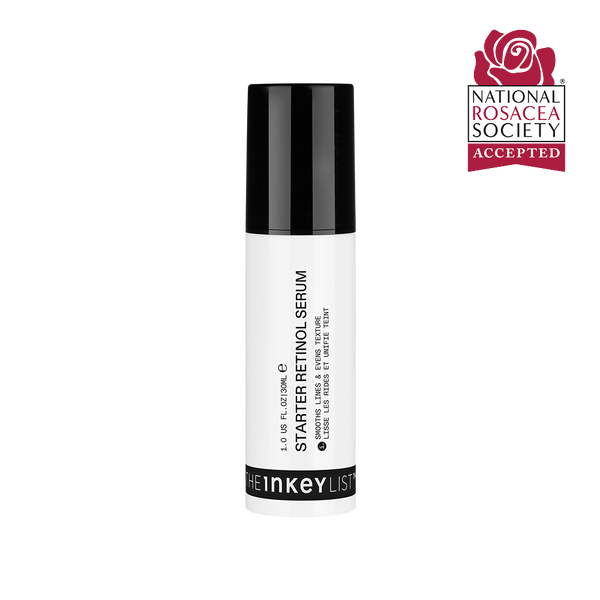
Our Starter Retinol Serum (£13.00) sits in the cosmetic tier, built for people beginning their retinoid journey or for anyone whose skin has pushed back against retinoids before. It uses an encapsulated slow-release Dual-Retinoid Complex of 1% Granactive Pro+ and 0.01% Retinal. The encapsulation matters: it releases the actives gradually rather than all at once, which is how you get meaningful results without the disruption. It is clinically proven to smooth fine lines from 7 days without irritation, based on a 4-week clinical study with 30 participants, and 95% of participants experienced zero irritation or redness. It tested as 2x more effective than standard retinol in a 4-week in vitro study, and it is suitable for sensitive and rosacea-prone skin. We advise it from age 25 onwards.
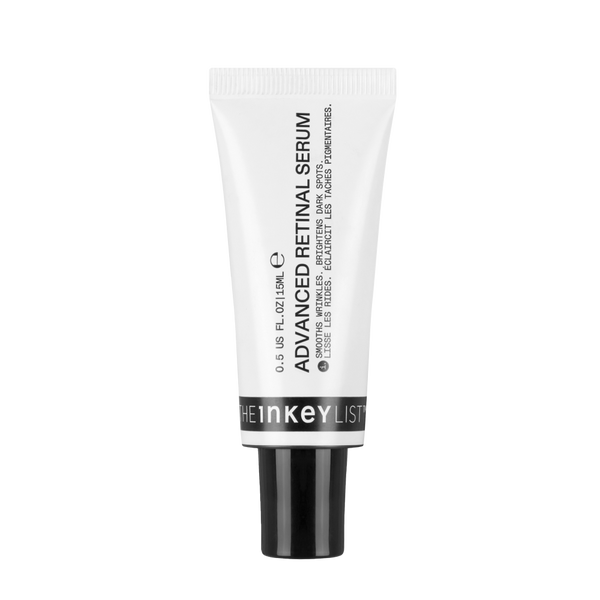
Our Advanced 0.2% Retinal Serum (£18.00) sits a rung higher, using 0.2% retinal, which works 11x faster than standard retinol. This one is for confident, experienced retinoid users whose skin has already proven it can handle the category.
Both live in the non-prescription tier, alongside the rest of our retinol range. Neither is equivalent to a prescription retinoid, neither is as strong as one, and neither is a substitute for one. Prescription retinoids are stronger. We would rather tell you that than dress up a cosmetic product as something it is not, because the moment a brand blurs that line, nothing else it tells you is reliable either. If you want help choosing between our own options specifically, our guide to which retinol product is right for you walks through it.
With every molecule placed, we can turn to the comparison most people actually arrive looking for.
Tretinoin vs Retinol: The Full Comparison
This is the comparison that generates the most confusion, the most conflicting advice, and the most abandoned routines. It deserves a proper answer rather than a paragraph.
Is tretinoin a retinol?
No. Tretinoin is not a retinol. Tretinoin is retinoic acid, the active form of vitamin A that your skin can use directly and immediately. Retinol is a precursor that your skin has to convert into retinoic acid first. Both are retinoids, which is where the mix-up comes from, but they are different molecules occupying different rungs and different regulatory categories.
Put simply: tretinoin arrives finished. Retinol arrives as raw material.
How they work: the conversion step
The difference between these two molecules is entirely a story about conversion, and it is worth understanding because it explains every practical difference that follows.
Your skin cells contain receptors that respond to retinoic acid. When retinoic acid binds to them, it sets off a chain of activity that speeds up cell turnover, supports collagen production and helps normalise how pores behave. That is the mechanism behind every result any retinoid delivers, from the gentlest ester to the strongest prescription.
Retinol cannot bind to those receptors as it is. It has to be converted, in two enzymatic steps. Retinol becomes retinal, an intermediate form. Retinal then becomes retinoic acid, the active form. Only at that point does anything happen. Each step is a handover, and each handover loses some of the original material along the way, which is why a given percentage of retinol is not remotely as potent as the same percentage of retinoic acid.
Tretinoin skips the entire process. It is already retinoic acid, so there is no conversion, no loss, and no delay.
Two practical consequences follow. The first is that tretinoin acts faster and more powerfully, because the full dose reaches the receptors. The second is that tretinoin is considerably more likely to irritate, because there is no buffering step in between. Retinol’s conversion process is not just an inefficiency, it is also a natural throttle: your skin converts roughly what its enzymes can handle at a given moment, which moderates the intensity on its own.
There is a wrinkle worth knowing. Conversion efficiency varies from person to person, influenced by things like age, skin condition and individual enzyme activity. Two people using identical retinol products can have genuinely different experiences and timelines. This is part of why retinol results feel less predictable than prescription results, and also why it is more forgiving for reactive skin.
Results and how long they take
Both tretinoin and retinol are used for broadly the same concerns, because they act through the same receptors: fine lines, uneven tone, rough or congested texture, and general skin renewal. Tretinoin is also prescribed for persistent breakouts and blemish-prone skin, which is one of its primary medical uses. The difference is pace and intensity rather than category.
Be realistic about timelines, because unrealistic expectations are the single biggest reason people quit.
- The first few weeks. Early changes tend to be textural. Skin often feels smoother before it looks visibly different. With stronger retinoids this window can also be the least comfortable.
- Six to twelve weeks. This is where most people using a cosmetic retinoid start noticing tone and clarity shifting. Prescription retinoids generally reach this point sooner, since there is no conversion delay.
- Three to six months and beyond. Collagen-related changes accumulate slowly. Fine lines soften gradually rather than dramatically. Retinoid results compound, and people often report their best skin after a year or more of consistent use.
For our own product, we will stick to exactly what we have tested. Our Starter Retinol Serum (£13.00) is clinically proven to smooth fine lines from 7 days without irritation, in a 4-week clinical study with 30 participants. That is a specific, measured claim about a specific formula, not a general promise about retinoids.
We are deliberately not going to invent timelines for prescription products. How quickly tretinoin works depends on strength, frequency, skin type and what it is being used for, and that is a conversation for the GP or doctor prescribing it.
Side effects and what to expect
Every rung of the ladder can cause some version of the same handful of side effects, and the likelihood rises as you climb. Expect the possibility of dryness, flaking, tightness, mild stinging on application, redness and increased sun sensitivity.
With stronger retinoids, particularly prescription ones, there is a well-documented adjustment phase often called retinisation. During it, skin can genuinely look worse before it looks better: visible peeling, patchy redness, a sunburn-like tightness. It is not a sign the product is failing, but it is real, and people are rarely warned about the social side of it. Turning up to work or a wedding mid-flake is a lot less fun than the before-and-after photos suggest. If you are starting something strong, it is reasonable to time it for a quieter few weeks.
This is exactly why the gentler rungs exist and why slow-release formulation technology matters. Not everyone wants to trade three difficult months for a faster result, and nobody has to.
A few specifics worth holding onto:
- Sun sensitivity is not optional to manage. Retinoids make skin more vulnerable to UV, and UV damage actively undoes what a retinoid is working toward. Daily broad-spectrum sunscreen of at least SPF 30, applied every morning and reapplied through the day, is part of using a retinoid properly rather than an optional extra. Our Dewy Sunscreen SPF 30 is one way to cover it. This one is non-negotiable for everyone on the ladder.
- Buffering can help. Applying moisturiser before your retinoid, or sandwiching the retinoid between two thin layers of moisturiser, slows absorption slightly and can take the edge off irritation while you build tolerance.
- Irritation is a signal to scale back, not necessarily to quit. Dropping from three nights a week to two, or one, usually resolves it. Stopping entirely resets all the tolerance you have built.
- Some early breakouts may be purging rather than a reaction. We will not unpack it here since it has its own guide, so read what is skin purging if that is what you are seeing.
- Patch test before you commit. It takes a couple of days and can save you a fortnight of regret. Here is why a patch test matters and how to do one properly.
Can you get tretinoin without a prescription?
No. Tretinoin is prescription-only in the UK, and in the US, and in most other markets. There is no over-the-counter version, no legitimate cosmetic equivalent, and no product on a shelf that is secretly the same thing under another name.
If you want to use tretinoin, the route is a conversation with your GP or doctor, who can assess whether it suits your skin and prescribe an appropriate strength. If you are already using a prescription retinoid, any change to it is a decision for the person who prescribed it, not for a skincare article.
That covers the molecule most people have heard of. Now for the one most people are confused by.
Is Adapalene a Retinol? What Adapalene Actually Is
No, adapalene is not a retinol. Adapalene is a retinoid, specifically a synthetic third-generation retinoid. It arrives already in an active form, so unlike retinol it does not need to be converted by your skin before it can work.
Adapalene is the outlier in this family, and the reason is that it was not adapted from anything found in nature. It was designed in a lab, deliberately, to bind selectively to particular retinoid receptors in the skin rather than engaging with all of them indiscriminately. That selectivity is the whole point of the molecule. It is why adapalene is generally better tolerated than its position on the strength ladder would lead you to expect, and why it became such a widely used option. Its usefulness comes from being targeted rather than from raw strength, which is a genuinely different design philosophy from ingredients that were adapted into skincare from vitamin A itself.
It is also chemically more stable than retinol, which degrades relatively easily when exposed to light and air. Adapalene holds up better, which is partly why it works reliably as a straightforward gel.
Adapalene is prescribed as a treatment for blemish-prone skin and persistent breakouts. It works largely by preventing pores from becoming clogged in the first place, which is why it is used continuously as a maintenance treatment rather than dabbed onto individual blemishes.
You will also see adapalene referred to as Differin. That is simply the brand name it is sold under, and we mention it once purely so the connection is clear when you come across it.
Adapalene vs retinol
The core distinction is regulatory before it is chemical: adapalene is a medicine, and retinol is a cosmetic ingredient. Everything else follows from that.
Adapalene is active the moment it is applied, with no conversion required, and it is developed, dosed and labelled as a medicine. Its concentration is fixed and specified, its use instructions are standardised, and it comes with a defined purpose approved by regulators.
Retinol has to be converted by your skin across two steps before it does anything. It is formulated for gradual cosmetic improvement in tone, texture and the appearance of fine lines, and its performance depends heavily on how it has been formulated, stabilised and delivered. Two retinol products at the same percentage can behave quite differently depending on the technology behind them.
Neither is a better version of the other. They are built for different jobs. If your main concerns are fine lines, dullness and overall skin quality, a cosmetic retinoid is the natural fit. If you are dealing with persistent breakouts that are not settling, that is a medical conversation. Our complete skincare concerns guide can help you work out which bucket you are actually in before you buy anything.
Adapalene vs tretinoin
Both are prescription retinoids in the UK, and both arrive already active with no conversion needed. The differences are in receptor selectivity and tolerability.
Tretinoin engages retinoid receptors broadly. Adapalene binds more selectively. In practice, adapalene is generally regarded as the more tolerable of the two, while tretinoin is generally regarded as the more potent. Neither is universally superior, and which one suits a particular person depends on their skin, their history and their goals. That assessment belongs to your GP or doctor, not to an article.
Can you buy adapalene over the counter in the UK?
No. Adapalene is prescription-only in the UK in all commonly available strengths, and it cannot be bought over the counter. The patient information leaflet published on the electronic medicines compendium sets out its prescription-only status along with the directions and warnings that come with it. If you think adapalene might suit your skin, the route is a conversation with your GP or doctor, who can assess whether it is appropriate and prescribe it if so. The NHS guidance on medicines is a useful general reference on how prescription medicines work and what to ask.
This is worth stating clearly because of something you have almost certainly run into. A great deal of the skincare content online is written for the US market, where adapalene 0.1% gel was moved to over-the-counter status and can be bought without a prescription. That is genuinely true there, and it is genuinely not true here. Same molecule, same evidence base, different regulatory decision. So if you have read an American article or watched a video telling you to simply pick up adapalene, that advice does not transfer to the UK, and the confusion is not your fault.
Having placed every molecule, the practical question is what you can actually get hold of.
Prescription vs Non-Prescription Retinoids: What You Can Actually Buy in the UK
Knowing where a molecule sits on the ladder is only half useful. The other half is knowing whether you can buy it today or need an appointment first. In the UK, the picture breaks down like this.
Available without a prescription:
- Retinyl esters. Cosmetic ingredient, found in gentle formulations and often in eye products.
- Retinol. Cosmetic ingredient, the most widely available retinoid in skincare.
- Retinal (retinaldehyde). Cosmetic ingredient, faster acting than retinol, still freely available.
Requires a prescription:
- Adapalene. Prescription-only in the UK in all commonly available strengths.
- Tretinoin. Prescription-only in all strengths, with no over-the-counter equivalent.
- Other prescription retinoids, including tazarotene and trifarotene.
The dividing line is cleaner here than in some other markets, and the reason is simply that medicines regulators make their own independent decisions about what is safe to sell without professional supervision. The UK has kept both adapalene and tretinoin in the prescription tier. Some other countries, including the US, have taken a different view on adapalene specifically. This is also why so much online skincare advice contradicts itself: a lot of it is accurate somewhere and wrong where you happen to live.
What this means in practice is refreshingly simple. If you want a prescription retinoid, the route is a conversation with your GP or doctor. If you want to start tonight, the cosmetic tier is what that tier is for, and it is not a consolation prize. It is a different, gentler, more sustainable way into the same family.
Pregnancy and breastfeeding. Retinoids should not be used during pregnancy or while breastfeeding. That includes cosmetic retinoids such as retinol and retinal as well as prescription retinoids like tretinoin and adapalene. If you are pregnant, breastfeeding or planning a pregnancy, speak to your GP or doctor about your routine and what to use instead in the meantime. This is standard, well-established guidance rather than cause for alarm, and there are plenty of effective alternatives to bridge the gap.
We will say the honest thing one more time, because it matters more than any product pitch: we are not going to tell you our retinol is the same as a prescription. It is not. It is a different tier of the same family, formulated to be used consistently without wrecking your barrier or your week. That is a real and valuable job, and it is the job most people actually need done.
If you are starting in the non-prescription tier, our Starter Retinol Serum (£13.00) is designed exactly for that entry point, advised from age 25 onwards. Before you pick a strength, it is genuinely worth knowing what your skin type is, because tolerance varies far more than percentages suggest.
Access sorted, the question becomes which rung to actually step onto.
Which Retinoid Is Right for Your Skin?
There is no universally correct answer, but there is a reliable decision framework. These five principles will get most people to the right rung without an expensive trial-and-error phase.
Start at the bottom of the ladder. Almost nobody regrets starting gentle. Plenty of people regret starting strong, reacting badly, and writing off the entire category. Beginning with a slow-release cosmetic retinoid lets you build tolerance while learning how your skin behaves under increased cell turnover. You can always climb. Recovering from a compromised barrier takes considerably longer than easing in would have.
Consistency beats strength, every time. A gentle retinoid used three nights a week for six months will do more for your skin than a stronger one abandoned after a fortnight. Retinoid benefits compound, which means the variable that matters most is not potency but persistence. Choose the product you will still be using in March.
Match the molecule to the concern. Fine lines, uneven tone, dullness and rough texture are well served by cosmetic retinoids, and that is the majority of what people want from this category. Persistent breakouts that are not settling with over-the-counter options are a medical conversation rather than a shopping decision, and your GP or doctor is the right next step. Being clear about which problem you are actually solving saves both money and time.
Be realistic about your tolerance. Sensitive or reactive skin, rosacea-prone skin, or a barrier that is already struggling all point to starting lower and slower. That is not a lesser routine, it is an accurate one. Our Starter Retinol Serum is suitable for sensitive and rosacea-prone skin, with 95% of participants in testing experiencing zero irritation or redness, which is the kind of profile that makes starting realistic rather than daunting.
Support the barrier alongside it. A retinoid performs better on skin that is not compromised, and barrier support is what keeps irritation from ending your routine. A ceramide-rich moisturiser does most of this work: our Bio-Active Ceramide Moisturiser (£20.00) is built for exactly this job. Niacinamide is another useful companion for barrier support and oil balance. If redness and uneven tone are part of the picture, azelaic acid is worth knowing about. For marks and hyperpigmentation, retinoids help via turnover, and vitamin C is the other major player for brightening.
How to start a retinoid safely
The mechanics are simple, and getting them right prevents most of the problems people run into.
- Nighttime only. Retinoids belong in your PM routine. Apply in the evening, always.
- Two to three nights a week to begin. Build up gradually as your skin tolerates it. There is no prize for going nightly in week one.
- A pea-sized amount for the entire face. More is not more. Excess product increases irritation without increasing results.
- Clean, dry skin. Cleanse, then wait until skin is fully dry. Applying to damp skin increases penetration and, with it, the chance of irritation.
- Moisturise afterwards. Or before, if you are buffering. Either way, moisturiser is part of the routine, not an afterthought.
- Sunscreen every morning, without exception. Broad-spectrum SPF 30 or higher, applied daily and reapplied as needed. Retinoids increase photosensitivity, and unprotected UV exposure works directly against everything the retinoid is doing.
- Patch test first. Always worth the two days. Here is how and why.
If irritation shows up, reduce frequency before you consider stopping. Most people can stay in the game with a small adjustment.
Two things we are deliberately not covering here, because they each have a dedicated home. For which actives to keep apart from your retinoid, read what not to mix with retinol. For where a retinoid slots into a complete routine and what order everything goes in, our skincare routine guide has the full sequence.
The Retinoid Family, Summed Up
Strip away the marketing and this category is genuinely simple. Retinoid is the umbrella term for every vitamin A derivative used on skin. Retinyl esters, retinol and retinal are the cosmetic members you can buy and start using tonight. Adapalene and tretinoin are the pharmaceutical members, designed and regulated as medicines.
Tretinoin and retinol differ in one decisive way: tretinoin is already retinoic acid, while retinol has to be converted by your skin first. That single fact explains why tretinoin is faster, stronger, more likely to irritate, and available only on prescription.
In the UK, the access picture is clean. Both adapalene and tretinoin require a prescription from your GP or doctor. Everything in the cosmetic tier, meaning retinyl esters, retinol and retinal, is yours to buy whenever you like.
And the thing worth carrying away above all else: stronger is not automatically better. The most effective retinoid is not the one highest on the ladder, it is the one still in your bathroom cabinet six months from now, being used on a Tuesday night without any drama. Potency is only potential. Consistency is what turns it into results.
If you are ready to step onto the ladder, our Starter Retinol Serum at £13.00 is the gentle entry point, with a slow-release Dual-Retinoid Complex clinically proven to smooth fine lines from 7 days without irritation. Already confident with retinoids? Our Advanced 0.2% Retinal Serum at £18.00 works 11x faster than standard retinol. Browse the full retinol collection, and enjoy free UK delivery on orders over £30.
Because at The INKEY List, We Give A Care.
Frequently Asked Questions
Got a question?
Our askINKEY team are a friendly bunch of skincare experts with deep product knowledge and zero judgement. Whether you're an ingredient obsessive or just starting out, we'll make it make sense. No question too big. No question too small. We Give A Care, Every Day.


