



Is NAD+ a Peptide? What It Actually Is (and What It Means for Your Skin)
NAD+ is a coenzyme, not a peptide. Here is what it actually is, how it links to niacinamide, and the proven ingredients worth using now.
Author
askINKEY skincare advisor
Published
18 October, 2026
Time to read
8 minutes
If you have been wondering is NAD+ a peptide, you are not alone, and the short answer is no. NAD+ and peptides tend to appear in the same skincare conversations, the same longevity threads, and the same ingredient explainers, which makes it easy to assume they are two names for the same thing. They are not. They are completely different kinds of molecule that happen to get talked about in the same breath.
Here is the one-line version so you have certainty before we go any further: NAD+ is a coenzyme, not a peptide. That distinction matters, because understanding what NAD+ actually is helps you cut through the noise and focus on what you can realistically use on your skin today.
In this guide we will cover what NAD+ really is, how it differs from a peptide, the honest and genuinely useful link between NAD+ and niacinamide (vitamin B3), what the science does and does not say about NAD+ for skin, and the proven ingredients worth reaching for right now. No hype, just clarity.
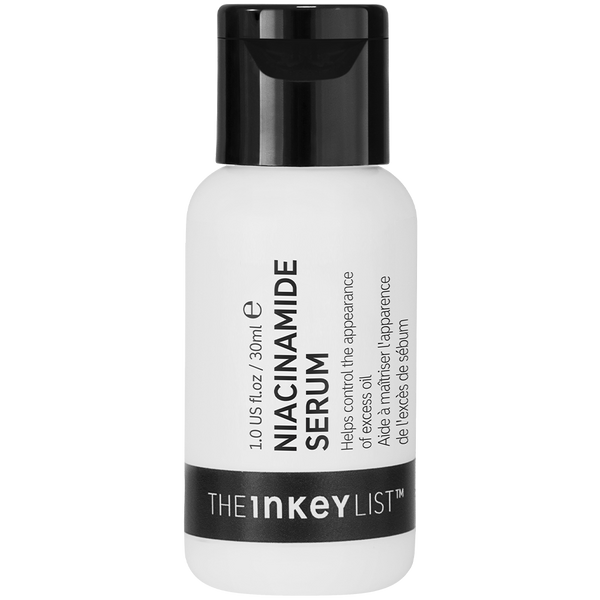
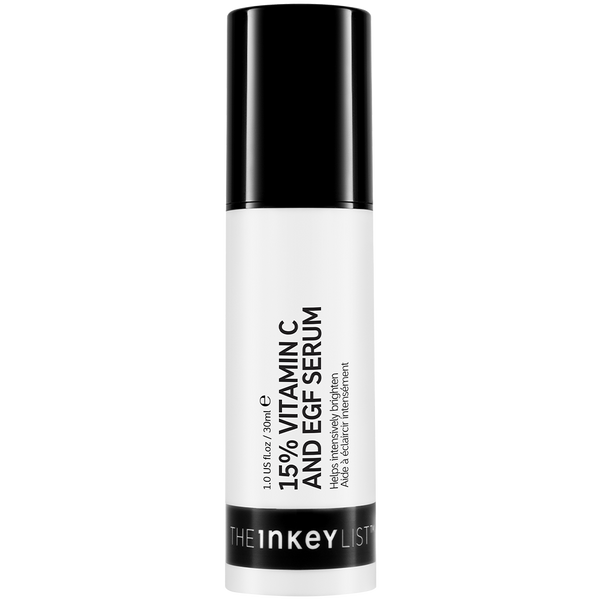
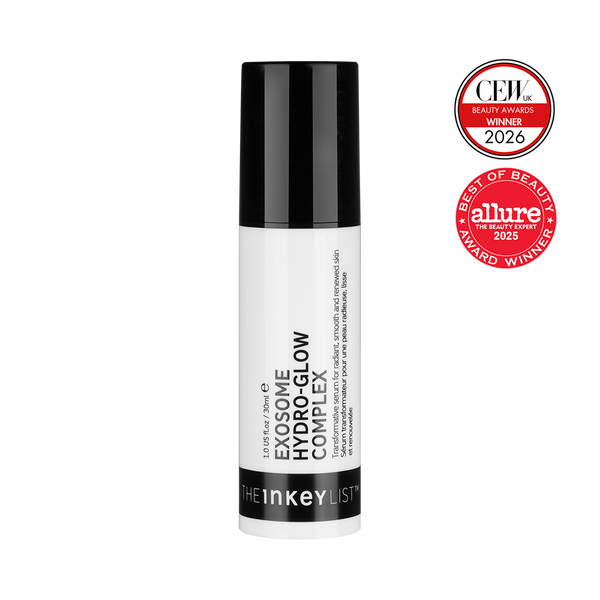
Shop the proven ingredients: our 10% Niacinamide Serum (£12), our 15% Vitamin C + EGF Serum (£16), and our Exosome Hydro-Glow Complex (£20).
The short answer: no, NAD+ is not a peptide
Let us settle the core question first. NAD+ is a coenzyme, not a peptide. A peptide is a short chain of amino acids, and amino acids are the building blocks of proteins. NAD+ is not built from amino acids at all, which is precisely why it cannot be a peptide. The two sit in entirely separate categories of molecule.
NAD+ stands for nicotinamide adenine dinucleotide, which is a mouthful, but the name itself hints at its chemistry rather than anything to do with proteins. The reason so many people mix the two up is simple: both NAD+ and peptides get discussed constantly in skin-science and anti-ageing content, both sound suitably technical, and both have become shorthand for “advanced” skincare. Being talked about together, though, does not make them the same. As the Cleveland Clinic explains, NAD+ is a coenzyme found throughout the body, which is a very different role from a skincare peptide. The rest of this piece explains what that difference actually means for your skin and your shopping choices.
So what is NAD+? (coenzyme, not a protein)
If NAD+ is not a peptide and not a protein, it helps to understand what it genuinely is. A coenzyme is a small helper molecule. Enzymes in your cells do the heavy lifting of chemical reactions, and coenzymes are the partners that let those enzymes do their jobs properly. Think of an enzyme as a worker and a coenzyme as the essential tool that worker needs to get anything done.
NAD+ is one of the most important coenzymes in the body. It is found in every cell, and its best-known job is helping turn the food you eat into usable energy. That is a general biological function, not a skincare claim, and it is worth keeping it in that honest, everyday context rather than treating it as some miracle ingredient.
Crucially, NAD+ is not a protein and not a peptide. Peptides and proteins are both chains of amino acids. NAD+ is assembled from a different set of building blocks entirely, including nucleotides and a form of vitamin B3. So when someone asks what does NAD do, the plain-English answer is that it is a cellular helper molecule involved in energy, built from ingredients that have nothing to do with the amino-acid chains that define peptides.
We are deliberately keeping this scoped to definition and skin relevance. You will see a great deal of NAD+ content online about supplements, IV drips and injections. That is a separate world, and it is not what this guide is about. Our focus is on what the NAD+ conversation realistically means for the products you put on your skin.
NAD+ vs a coenzyme vs an enzyme
A quick clarification, because the terms get tangled. An enzyme is the worker that carries out a reaction. A coenzyme is the helper the enzyme relies on to work. NAD+ is the helper, not the worker.
So the honest, straightforward answers are these. Is NAD+ a coenzyme? Yes. Is NAD+ an enzyme? No. Is NAD+ a peptide? No. Three short answers, one clear molecule. With NAD+ defined, let us look at the other half of the confusion: peptides.
What is a peptide, and why do people mix the two up?
Peptides are short chains of amino acids. Since amino acids are the building blocks of proteins, you can think of a peptide as a small, specific fragment of protein. That is a very different structure from a coenzyme like NAD+, which, as we have covered, is not made from amino acids at all.
In skincare, peptides are typically used as signal-style ingredients that support a firmer, smoother-looking complexion. They have earned a strong reputation in the category, which is part of why they come up so often in the same discussions as NAD+.
So why the mix-up? Both NAD+ and peptides appear constantly in “advanced skin science” and anti-ageing content. Both sound technical and impressive. Both get grouped under the broad “longevity” chatter that has taken over so much of the internet. But grouping them together linguistically does not make them the same molecule. To be absolutely clear one more time: a peptide is a chain of amino acids, while NAD+ is a vitamin-B3-derived coenzyme. Different structures, different jobs.
Peptides in skincare, explained simply
In a routine, peptides are generally reached for to support the look of firmness and smoothness over time. That is the useful shorthand, and it is enough grounding for the purposes of this piece.
This blog is about NAD+, so we will not rebuild a full peptides guide here. If you are curious about the category itself, you can explore our peptide range when it suits you. For now, let us pivot to the genuinely useful, on-strategy connection: how NAD+ relates to niacinamide.
The real link: NAD+ and niacinamide (vitamin B3)
Here is where the NAD+ conversation becomes practically useful rather than purely academic. Your body makes NAD+ from precursors, and one of those precursors is a form of vitamin B3. That is the same vitamin family as niacinamide. This is the honest, scientifically accurate bridge between the NAD+ discussion and an ingredient you can actually buy and use.
It is important to be precise, though, because this is exactly where over-claiming tends to creep in. Niacinamide is not NAD+. Applying niacinamide topically is not the same thing as “getting NAD+” into your cells. The relationship is a family connection through vitamin B3, not an equivalence. So if you have wondered is NAD+ the same as niacinamide, the answer is no. They are related, but they are not the same.
What makes this link genuinely valuable is that niacinamide is a proven topical skincare ingredient in its own right, entirely independent of the NAD+ hype. In other words, the real, buyable takeaway from this whole nad vs niacinamide conversation is not a mysterious NAD+ cream. It is a well-formulated niacinamide product, which has decades of research behind it and does not need to borrow credibility from anything.
Why niacinamide is the ingredient you can actually use today
Niacinamide, also known as vitamin B3, is one of the most researched and versatile topical skincare ingredients available. Part of its appeal is how much it does across different skin types and concerns without being harsh.
On skin, niacinamide helps control excess oil, minimise the look of pores, reduce the appearance of redness, and support a healthy-looking barrier. That is a genuinely useful combination, and it is why it features in so many routines.
Our 10% Niacinamide Serum (£12) is suitable for all skin types, including sensitive skin, and is also suitable to use during pregnancy and breastfeeding. Rather than repeat the full ingredient story here, we would point you to our deeper guide on what niacinamide is and how it works, which covers the detail without us duplicating it. Having given you the one ingredient you can genuinely act on today, let us be equally honest about the limits of the NAD+ science for skin.
NAD+ and your skin: what the science does and does not say
Transparency builds trust, so let us be straight about something. The vast majority of NAD+ attention online is about supplements, injections and IV drips. That is a different topic entirely from topical skincare, and it is not what this piece is about. We are not going to blur those lines to sound more impressive.
What we can reasonably say is this. The useful, buyable takeaway from the NAD+ conversation, as far as your skin is concerned, is a proven niacinamide (vitamin B3) product, alongside other evidence-backed ingredients. That is the honest payoff.
What we will not do is make medical claims, or promise that any cream delivers NAD+ into your cells. That is simply not how topical skincare works, and suggesting otherwise would be exactly the kind of hype this guide exists to cut through. We believe you do not need more products or more buzzwords. You need clarity you can trust and ingredients that earn their place.
If you want the complete context, including everything the NAD+ research covers, you can read the full NAD+ picture. And because readers exploring actives often want to know what pairs safely, it can help to understand which ingredients you should not layer together before you build a routine. With the honest limits set out, let us move to the practical, shoppable part: the proven ingredients.
Proven ingredients to support healthy-looking, energised skin now
Instead of chasing NAD+ substitutes, here are the proven ingredients genuinely worth reaching for. Each one is evidence-backed, accessible, and does a clear job. Here is the shortlist.
Niacinamide for oil, pores and redness
Niacinamide remains the hero of this story for good reason. It helps control excess oil, minimise the look of pores, reduce the appearance of redness, and support the skin barrier. That makes it one of the most reliable actives you can add to a routine.
Our 10% Niacinamide Serum (£12) is designed for daily AM and PM use and is gentle enough for sensitive skin, which is part of why it works for so many people.
Vitamin C for brightness and even tone
If brightness is on your list, vitamin C is a natural partner. It helps brighten and supports a more even-looking tone over time.
Our 15% Vitamin C + EGF Serum (£16) is formulated to be compatible with niacinamide, which makes it a straightforward choice for anyone building a layered routine without worrying about clashes.
Exosomes for glow and renewal
For a premium glow option, our Exosome Hydro-Glow Complex (£20) is formulated for radiance and a renewed, fresher-looking complexion. It delivers 6-in-1 skin rejuvenation: clinically proven to visibly improve radiance, hydration, tone, firmness, elasticity, and texture. In testing, 100% saw more glowing skin, clinically proven, with clinic-worthy rejuvenated skin in 14 days. There was also a 63% increase in skin renewal activity in 8 hours,** and it helps support natural collagen production.
4-week clinical study of 26 people.
**In-vitro testing of Cica Exosomes.
With the proven options laid out, here is the concise wrap-up.
The bottom line
To restate it plainly: NAD+ is a coenzyme, not a peptide, and it is not the same thing as niacinamide. Those are the facts underneath all the noise.
The practical takeaway is refreshingly simple. The buyable, proven ingredient that connects to this entire NAD+ conversation is niacinamide (vitamin B3). That is the thing you can genuinely use today, and it stands on its own research regardless of any NAD+ trend.
Our promise is clarity you can trust, proven ingredients, and real results, without the hype. So the next time someone asks is NAD+ a peptide, you can answer confidently: no, it is a coenzyme. For the complete context, you can read the full NAD+ guide, and if you want a simple first step, our 10% Niacinamide Serum is a great place to start.
Frequently Asked Questions
Got a question?
Our askINKEY team are a friendly bunch of skincare experts with deep product knowledge and zero judgement. Whether you're an ingredient obsessive or just starting out, we'll make it make sense. No question too big. No question too small. We Give A Care, Every Day.


