



Guide to Using Acids in Your Skincare Routine
Not all skincare acids exfoliate. Here's what each one actually does, and how to choose the right one for your skin.
Author
askINKEY skincare advisor
Published
20 May, 2026
Time to read
20 minutes
The word “acid” does a lot of heavy lifting in skincare, and it hides more than it explains. The different types of acids in skincare behave in completely different ways: some loosen dead cells from the surface, some travel inside pores, some hold water in the skin, and some interrupt the process that creates dark spots. Grouping them under one word is how people end up using three products that all do the same job, or assuming every acid on the shelf is exfoliating them.
This guide covers four groups. Alpha hydroxy acids (AHAs), which work across the surface. Beta hydroxy acids (BHAs), which work inside pores. Polyhydroxy acids (PHAs), the gentlest exfoliating family. And the acids that do not exfoliate at all: hyaluronic, azelaic and tranexamic.
By the end you will know what each one actually does, which suits your skin, how to introduce one without irritating yourself, and how to match an acid to a specific concern rather than to a trend.
If you have not built a base routine yet, start with our complete skincare routine guide, because acids sit on top of a routine rather than replacing one. If you already know what you are dealing with, our 10 most common skin concerns page will take you straight to it.
Skincare has become far more complicated than it needs to be. What most people need is not another product, it is clarity about the ones they already own.
Before choosing an acid, it helps to understand what acids actually do to skin.
What Skincare Acids Actually Do to Skin
Your skin sheds dead cells constantly. The process is called desquamation, which simply means the natural shedding of the outermost layer, and it happens without you noticing when everything is working well. That process slows with age. It is also disrupted by dryness, by excess oil, and by environmental stress.
When shed cells linger instead of releasing, three things follow. Skin looks dull because a rough, uneven surface scatters light rather than reflecting it. It feels rough to the touch. And pores become more easily congested, because dead cells and oil have somewhere to accumulate.
Exfoliating acids intervene at exactly this point. They loosen the bonds holding dead cells to the surface so those cells release more evenly and on a more regular schedule. They are not sanding anything down. They are unsticking what was already on its way out.
Chemical Exfoliant Versus Physical Scrub
A physical scrub removes cells through friction. It works, but it is genuinely difficult to apply evenly, because pressure varies across your face and between one use and the next. You are almost always exfoliating your cheeks more aggressively than your jawline without meaning to.
A chemical exfoliant works through a controlled chemical reaction instead. The same concentration is doing the same thing across every part of your face, which makes the outcome more uniform and considerably more predictable.
Neither approach is automatically superior. The practical advantage of chemical exfoliants is control: you can adjust concentration and frequency precisely, and dial back just as precisely if your skin objects. That is much harder to do with your hands. Our chemical exfoliating toners are the most common entry point for exactly this reason.
Molecular Size Is the Master Variable
Here is the single principle that explains almost everything that follows.
Smaller molecules penetrate further and faster. More penetration means more potency, and it also means more irritation risk, because those two things are not separable. Larger molecules stay closer to the surface, act more gently, and are far less likely to sting.
Glycolic acid has a molecular weight of roughly 76 Daltons, making it the smallest of the common AHAs. That is not a piece of trivia. It is precisely why glycolic is the most potent AHA and the one most likely to tingle uncomfortably on application. The research published in MDPI’s journal Cosmetics on formulating glycolic acid sets this out clearly.
Hold onto this principle. It is the entire reason AHAs, BHAs and PHAs sit on a gentleness gradient, and it will make the PHA section make immediate sense.
Why the Percentage on the Label Is Only Half the Story
A percentage tells you how much acid is in the bottle. It does not tell you how much of that acid is actually available to work on your skin.
Acids are only active in what chemists call the free acid form, meaning the uncharged version of the molecule that can cross into the skin. How much sits in that form depends on the formula’s pH relative to the acid’s pKa, which is just the pH at which exactly half the acid is in its active free form.
For glycolic acid, the pKa is around 3.8. At pH 3.8, roughly half the glycolic acid in a formula is doing something. At pH 4.5, considerably less is. Same percentage on the label, meaningfully different behaviour on skin.
This is why formulation context matters more than the number on the front. The same MDPI review notes that daily at-home products typically sit around 5 to 10% at a moderated pH, deliberately, while professional peels use 20 to 70% at a pH of roughly 1 to 3 where almost all of the acid is in free form. Those are different tools for different jobs, not better and worse versions of the same thing.
A well formulated lower percentage can comfortably outperform a badly formulated higher one. Chasing the biggest number on a label is one of the most common and least rewarding mistakes in skincare.
The Critical Point: Not All Acids Exfoliate
This is the idea that changes how people use their existing products.
- Hyaluronic acid is a humectant. It draws water in and holds it there. It does not exfoliate.
- Tranexamic acid interrupts the signalling pathway that leads to excess pigment. It does not exfoliate.
- Azelaic acid calms visible redness and helps even tone. It does not exfoliate in the way AHAs and BHAs do.
- AHAs, BHAs and PHAs are the exfoliating families. These are the ones you need to count.
Readers who assume acid equals exfoliation end up over exfoliating without ever realising it, because they are counting hyaluronic acid as one of their weekly exfoliating steps when it is doing something else entirely. Counting correctly is most of the battle.
One more thing to carry forward: AHAs increase your skin’s sensitivity to the sun. The FDA’s guidance on labelling for cosmetics containing alpha hydroxy acids confirms this, and we will come back to what it means in practice.
The largest and most familiar family of exfoliating acids is the AHAs, and that is where most people start.
Alpha Hydroxy Acids (AHAs): Surface Exfoliation Explained
AHAs are water soluble. That one property determines everything about how they behave.
Because they dissolve in water rather than oil, AHAs work across the surface of your skin. They spread over the top layer and loosen the bonds between dead cells there. What they do not do is travel down into pores, because pores are lined with sebum, and a water soluble ingredient does not get far in oil.
This makes AHAs the right tool for a specific set of jobs: dullness, rough texture, uneven tone and the appearance of fine lines. It also makes them the wrong first choice for congestion sitting inside the pore, which is a different problem in a different location requiring different chemistry.
AHAs increase sun sensitivity. Daily SPF alongside them is not a nice-to-have, it is part of using them properly, and we cover the detail in the safety section below.
Glycolic Acid
Glycolic acid is the smallest AHA molecule, which makes it the deepest penetrating and the most potent of the family. It is the strongest option for dullness, rough texture and uneven tone, and it is also the most likely to irritate. Both of those facts come from the same property.
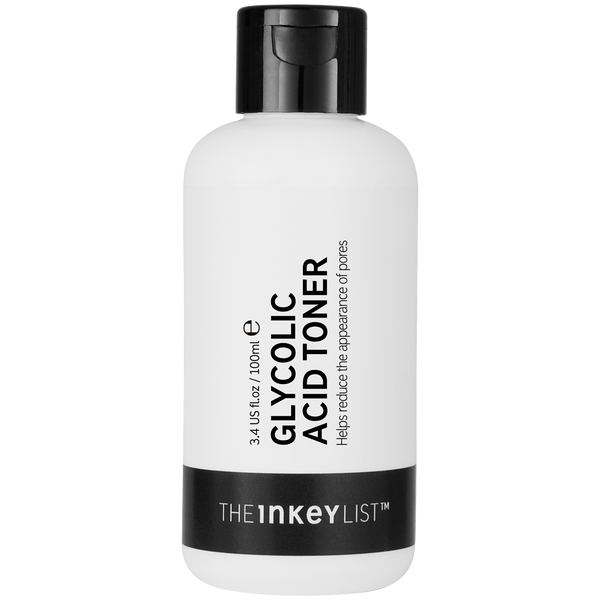
Our Glycolic Acid Toner pairs 10% glycolic acid with 5% witch hazel. It is a leave on step, PM only, starting at one to three times weekly. It can be used on the face, chest and back.
For rough body skin, the Glycolic Acid Exfoliating Body Stick targets keratosis pilaris bumps, ingrown hairs and general rough texture.
There is far more to say about this ingredient than belongs in a general guide, so if glycolic is what brought you here, the full range and the deeper detail live over in shop glycolic acid.
Lactic Acid
Lactic acid is the other AHA you are most likely to encounter, and it is worth understanding even though we do not currently make one.
Its molecule is larger than glycolic’s, so it penetrates less deeply. That translates directly into better tolerance, particularly for drier or more reactive skin. The molecular size principle again, doing exactly what it did in the last section.
Lactic acid also has mild humectant behaviour, meaning it attracts a little water as it works. It is therefore less likely to leave skin feeling tight afterwards, which is a common complaint with glycolic among people whose skin runs dry.
In practice, lactic acid is the step down option. If glycolic feels too stimulating but you still want surface renewal, this is the direction people usually move in.
AHAs at a Glance
- Glycolic acid: smallest molecule, strongest surface renewal, highest irritation risk, best for dullness and rough texture
- Lactic acid: larger molecule, gentler, mildly hydrating, better suited to dry or reactive skin
- Both: water soluble, surface acting, increase sun sensitivity, use in the evening, wear SPF the following day
If accumulated dead cells and rough surface texture are your main concern, our guide on how to improve skin texture picks up where this section leaves off.
AHAs sweep the surface. But if the actual problem is sitting inside the pore, you need a different chemistry entirely.
Beta Hydroxy Acids (BHAs): Why Oil Solubility Changes Everything
When people search aha vs bha, they are usually looking for a distinction that has been made unnecessarily complicated. It comes down to one property.
AHAs are water soluble. BHAs are oil soluble.
That is it. Because BHAs dissolve in oil, they can travel through the sebum that fills a pore and reach the pore lining itself. AHAs cannot, because they will not move through oil. Every practical difference between the two families follows from this single fact.
The framing worth remembering: AHAs sweep the surface, BHAs get inside the pore.
Which means the choice is not really about which acid is better. It is about where your concern is physically located. If it sits on top of the skin (dullness, roughness, uneven tone), you want an AHA. If it sits inside the pore (blackheads, visible pores, congestion, oiliness), you want a BHA.
Salicylic Acid
Salicylic acid is the best known BHA and the reason most people encounter the category at all. Being oil soluble, it works inside pores rather than only on top of them, which is why it is the standard choice for blackheads and blemish prone skin.
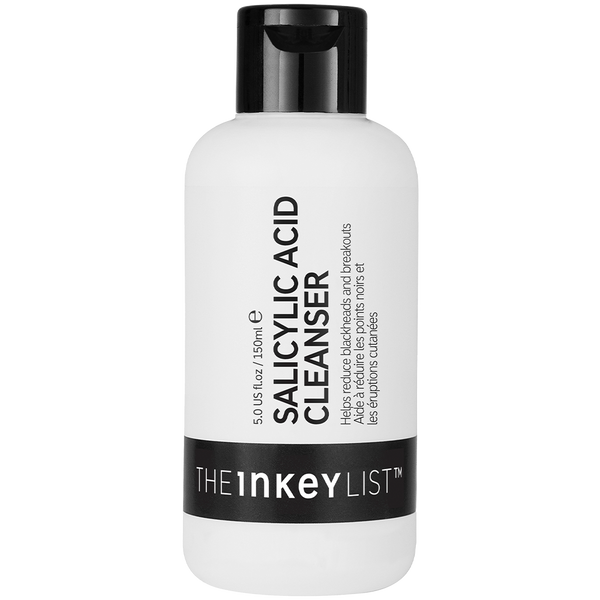
Our Salicylic Acid Cleanser contains 2% salicylic acid, 1% of a zinc compound to help control oil and 0.5% allantoin to soothe. It is non stripping and suitable for daily use, on the chest and back as well as the face.
For a leave on step, the Beta Hydroxy Acid (BHA) Serum gently unclogs pores and targets blackheads.
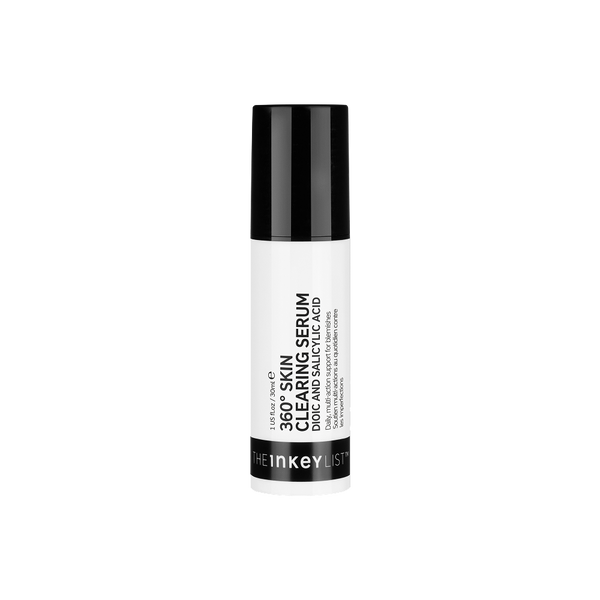
For blemish prone skin specifically, the 360 Skin Clearing Serum combines 1% Dioic Acid, 2% Salicylic Acid and 0.4% Dendriclear, working across three stages of breakouts: excess oil, active blemishes and post blemish marks.
There is a full breakdown of the ingredient over on our page explaining what salicylic acid does, and if blackheads are the specific issue, read salicylic acid for blackheads.
Salicylic acid also pairs well with niacinamide for oil control and visible redness, which is a combination worth knowing about if oiliness is a persistent concern.
Succinic Acid
Succinic acid is the more targeted option, designed for individual blemishes rather than for sweeping across your whole face.
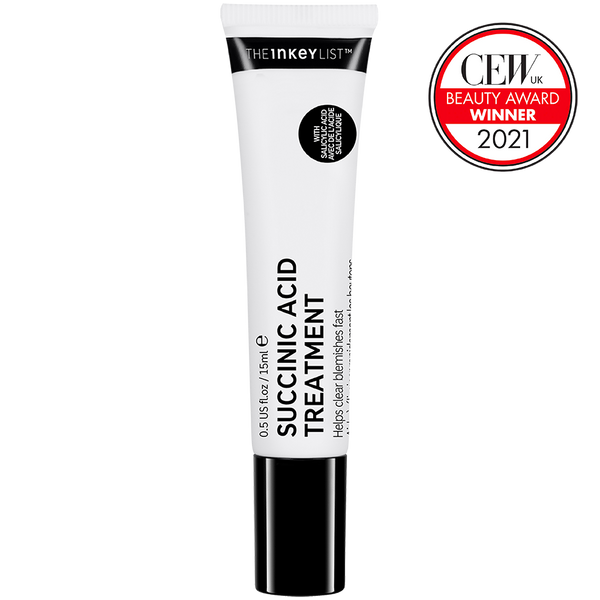
Our Succinic Acid Treatment contains 2% succinic acid, 2% sulfur, 1% salicylic acid and 0.4% hyaluronic acid, at a pH of 5.0 to 6.0. That higher pH is part of why it tends to suit more reactive skin: less of the acid sits in its most aggressive free form, as covered earlier.
Apply a thin layer to blemishes only, up to three times daily. One honest note: it has a slight sulfur scent. Sulfur smells like sulfur, and no amount of formulating fully disguises that. It fades, but you will notice it on application, and we would rather tell you now than have you discover it yourself.
AHA or BHA: How to Choose
- Dullness, rough texture, uneven tone: AHA, because the concern is on the surface
- Blackheads, visible pores, oily skin: BHA, because the concern is inside the pore
- Both at once: pick one, use it consistently for a few weeks, then reassess
- Sensitive or reactive skin: neither as a starting point, begin with a PHA
Both AHAs and BHAs can be too much for some skin. That is where the gentlest exfoliating family comes in, alongside the acids that do not exfoliate at all.
PHAs, Hyaluronic Acid, Azelaic Acid and Tranexamic Acid
Three of the four acids in this section do not exfoliate. That is not a technicality, it is the most practically useful thing in this guide, and it is the reason so many people are over exfoliating while believing they are being careful.
Polyhydroxy Acids (PHAs)
A polyhydroxy acid is an exfoliating acid with a notably larger molecule than either an AHA or a BHA. Larger molecule, less penetration, markedly less irritation. This is the molecular size principle from earlier paying off exactly as you would predict.
Gluconolactone is the most common PHA and the one you will see on ingredient lists. It does two things at once. It exfoliates gently, loosening dead cells at the surface. And it functions as a humectant, drawing water into the skin while it works.
That dual action is why PHAs rarely leave skin feeling stripped. Most exfoliating acids take something away. Gluconolactone takes something away and puts something back at the same time.
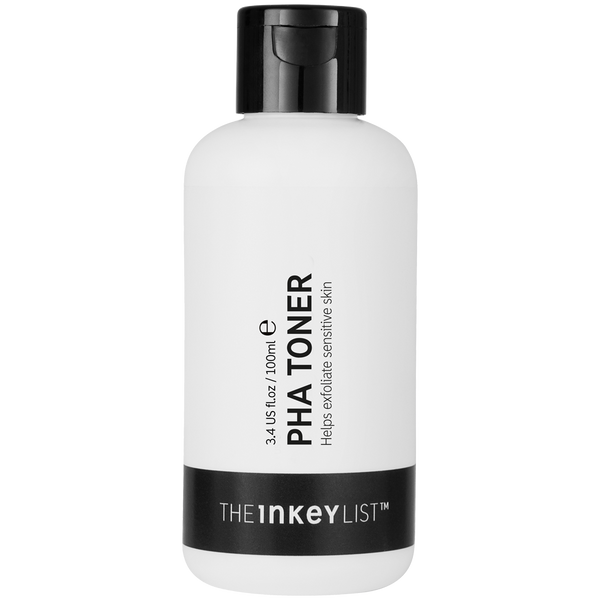
Our PHA Toner uses 3% gluconolactone. It is gentle enough for frequent use and it is the sensible starting point if you have sensitive skin, if previous attempts at chemical exfoliation have gone badly, or if you have simply never used an exfoliating acid before and would rather not begin at the strong end.
For the body, the PHA Body Water Cream brings the same approach to larger areas, combining light exfoliation with hydration for sensitive skin.
Hyaluronic Acid
Hyaluronic acid does not exfoliate. It is a humectant, which means it binds water and holds it in the skin. Nothing is being loosened, dissolved or shed.
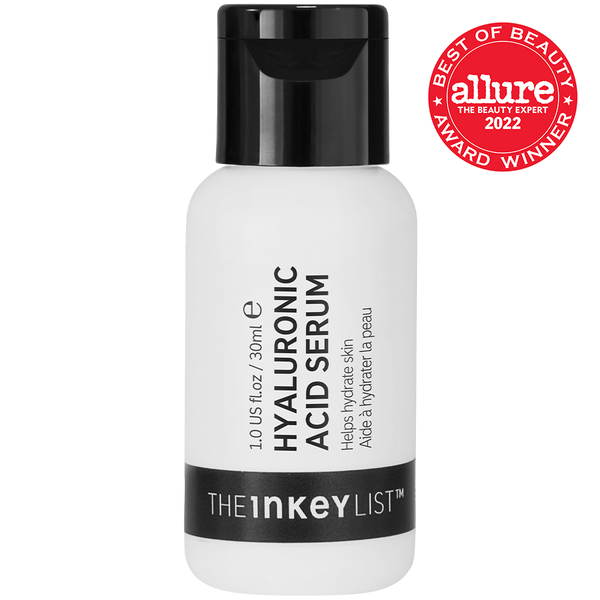
Our Hyaluronic Acid Serum delivers 2% pure hyaluronic acid at three molecular weights, so hydration reaches multiple layers of the skin rather than sitting only at the very top, plus Matrixyl 3000 peptide to help smooth and plump the look of skin.
Apply it to damp skin. This genuinely matters. A humectant works by drawing on available water, so applying it to bone dry skin in a dry room gives it very little to work with.
So why does it appear in a guide about acids? Because it is the acid that makes every other acid more tolerable. Well hydrated skin with an intact barrier copes with exfoliation far better than dehydrated skin does. If you are planning to introduce an exfoliating acid, getting hydration right first is the highest return preparation you can do. There is more detail on what hyaluronic acid does if you want it.
Azelaic Acid
Azelaic acid does not exfoliate in the way AHAs and BHAs do. It calms visible redness, helps even tone and works on post blemish marks.
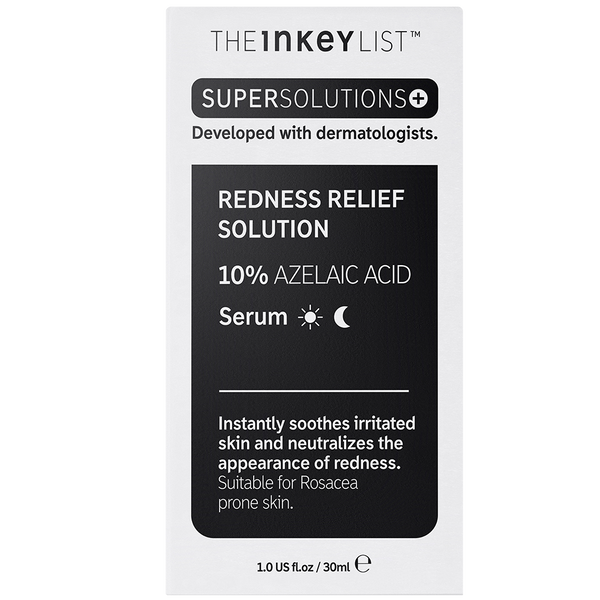
Our 10% Azelaic Acid Serum for Redness Relief contains 10% azelaic acid with 0.3% allantoin to soothe, at a pH of 4.0 to 4.3.
Notably, it does not increase photosensitivity, which makes it unusual among the acids covered here and means it can be used morning and evening. It is suitable for sensitive and rosacea prone skin.
One important caveat, stated plainly: our guidance is not to layer azelaic acid with AHAs, BHAs, PHAs, retinol or vitamin C in the same routine. Alternate instead, on different days or at different times of day. If retinol is already in your routine, can you use azelaic acid with retinol answers the obvious follow up, and azelaic acid explained covers the ingredient in full.
Tranexamic Acid
Tranexamic acid does not exfoliate either. It works further upstream, interrupting the signalling pathway that drives excess pigment production.
This is why it is used for dark spots and uneven tone rather than for texture. It is not removing pigmented cells from the surface, it is reducing how much pigment gets made in the first place. Different mechanism, different timeline, different expectations.
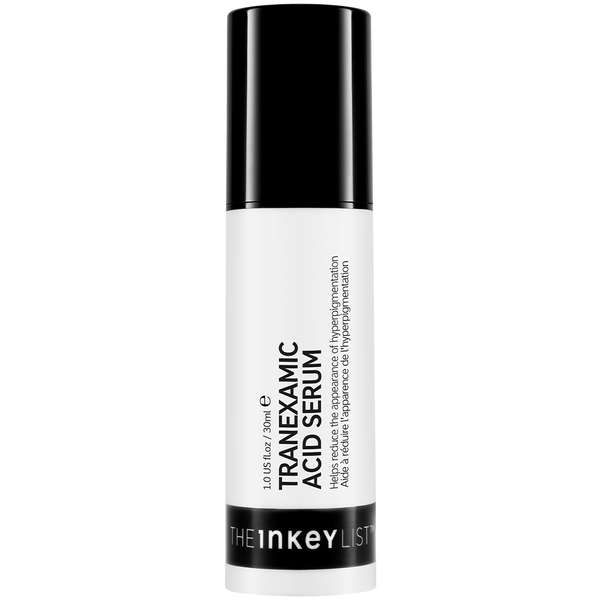
Our Tranexamic Acid Serum is the relevant option, and it should be paired with daily SPF without exception. Pigment concerns are driven and worsened by UV exposure, so working on pigment without sun protection means running to stand still. For background on the concern itself, see what hyperpigmentation is.
Knowing what each acid does is only half of it. Using them without irritating your skin is the other half.
How to Add Acids to Your Routine Safely
Most bad experiences with acids are not caused by the acid. They are caused by how it was introduced: too much, too fast, alongside three other actives, with no SPF. The method matters as much as the molecule.
Five steps, in order.
Step 1: Start With One Acid
One new active at a time. If you introduce two simultaneously and your skin reacts, you have no way of identifying which one caused it, and you will probably abandon both.
Give any new acid a few weeks before forming a judgement. Surface renewal is not instant, and the first fortnight is rarely representative of what a product will eventually do.
Step 2: Less Is More
Begin at one to two times weekly. Build to three as your skin tolerates it. That is the whole progression.
More frequent application is not more effective. Past a certain point it simply compromises your skin barrier, at which point you are not exfoliating more efficiently, you are just irritated.
Signs you have gone too far:
- Tightness that does not resolve after moisturiser
- Stinging on application when there was none before
- Unexpected flaking, particularly in patches
- New sensitivity to products you have used comfortably for months
- Redness that lingers rather than settling within the hour
If any of these sound familiar, what to do if you have over exfoliated is the practical recovery route. It is a common situation and an entirely fixable one.
Step 3: Patch Test
Apply a small amount to a discreet area, the inner forearm or behind the ear, and wait before going anywhere near your whole face.
This is non negotiable for anyone with sensitive or reactive skin, and sensible for everyone else. It costs you a day. A full face reaction costs considerably more than that. Our guide on why you need to patch test covers the method properly.
Step 4: Get the Order Right, and Know What Not to Combine
Layer thinnest to thickest:
- Cleanse
- Hyaluronic acid on damp skin
- Your acid
- Moisturiser
- SPF, in the morning only
Applying hyaluronic acid first gives your skin a hydrated cushion before the exfoliating step, which is a small sequencing decision that makes a noticeable difference to comfort.
What not to combine in the same routine:
- Two exfoliating acids together. You are not doubling results, you are doubling irritation.
- Acids with retinol. Both accelerate cell turnover through different routes. See what not to mix with retinol and our retinol page.
- Acids with vitamin C. Alternate rather than stack. Our vitamin C page explains why.
None of these are permanently incompatible. They just do not belong in the same routine on the same night. Alternate across days, or split between morning and evening. Skin cycling is a genuinely useful structured framework for rotating actives without overloading your skin, and what products you should not layer together covers the broader picture.
One more thing worth knowing before you panic in week two: a temporary increase in breakouts when starting an exfoliating acid is often purging rather than a reaction. What is skin purging explains how to tell the difference, and it has saved a lot of people from abandoning a product that was working.
Step 5: Daily SPF, Without Exception
AHAs increase your skin’s sensitivity to the sun. This is well established rather than a matter of opinion.
According to FDA guidance on AHAs and sun sensitivity, that increased sensitivity persists while you are using the product and for roughly a week after you stop, which is why the recommended labelling includes a sunburn alert. The clinical studies behind it found measurable increases in sun sensitivity from concentrations as low as 4%, so this is not a concern confined to high strength formulas.
The practical consequence is straightforward. Exfoliating without daily SPF undoes the work, and it can actively worsen the uneven tone you were trying to improve, because UV exposure drives pigment production. Our Dewy Sunscreen SPF 30 is the closing step, and what SPF is and how it works covers the fundamentals.
Azelaic acid is the exception among the acids here, as it does not increase photosensitivity. Wear SPF daily anyway. The reasons for daily sun protection extend well beyond whichever acid you happen to be using.
With the method covered, the remaining question is which acid to choose, and that depends entirely on your concern.
Which Acid Is Right for Your Skin Concern
Nine common concerns, matched to the chemistry that actually addresses them. If you are not sure which category you fall into, what’s your skin type is a useful starting point.
Dull Skin and Uneven Texture
AHAs. Dullness and roughness are caused by dead cells accumulating on the surface, and surface acting exfoliation is precisely the right tool for a surface problem. Start with the Glycolic Acid Toner in the evening, building frequency slowly. For a fuller approach, read how to improve skin texture.
Oily Skin and Blackheads
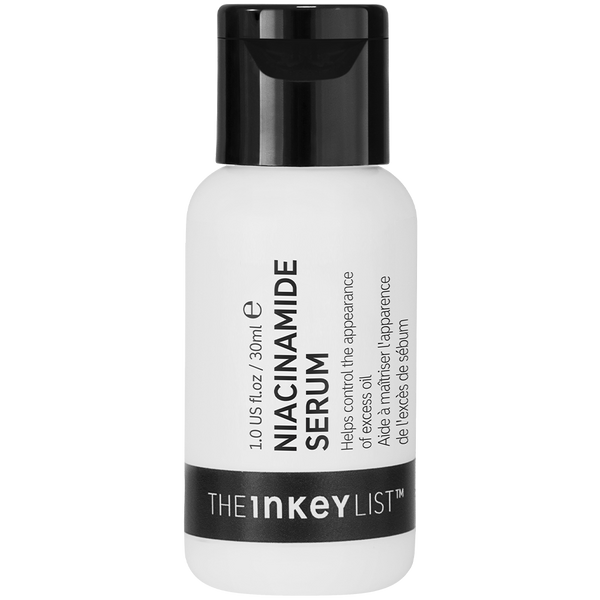
BHAs, because oil solubility lets salicylic acid reach inside the pore where the congestion actually sits. Use the Salicylic Acid Cleanser daily, with the Beta Hydroxy Acid (BHA) Serum as your leave on step. The Niacinamide Serum, at 10% niacinamide with 1% hyaluronic acid, pairs well for oil control. Worth clarifying: not every dark dot is a blackhead. Sebaceous filaments vs blackheads explains why some of them are normal and not meant to be eliminated.
Blemish Prone Skin and Breakouts
A layered approach works best here. The 360 Skin Clearing Serum addresses three stages at once: excess oil, active blemishes and post blemish marks. The Succinic Acid Treatment handles individual blemishes as they appear. And Hydrocolloid Invisible Pimple Patches are the practical option for surface blemishes with a visible head.
Sensitive Skin and First Time Acid Users
Begin with the PHA Toner. Largest molecule, gentlest action, and it hydrates while it exfoliates, so it is far less likely to leave skin feeling stripped. If you have tried an acid before and it did not go well, this is where to restart rather than giving up on the category.
Dehydration
The Hyaluronic Acid Serum, applied to damp skin. This is not an exfoliant and does not need to be counted as one. Important sequencing point: rehydrate dehydrated skin before adding an exfoliating acid, not after it has already reacted. Dehydrated skin tolerates exfoliation poorly, and fixing that first makes everything afterwards easier.
Visible Redness
The 10% Azelaic Acid Serum for Redness Relief calms rather than exfoliates, which is the distinction that matters when your skin is already reactive. It does not increase photosensitivity, so it is safe morning and evening, and it suits rosacea prone skin.
Dark Spots and Hyperpigmentation
The Tranexamic Acid Serum, paired with daily SPF. The pairing is not optional advice. Pigment work without sun protection is close to pointless, because UV exposure continually re-triggers the process you are working against. SPF for hyperpigmentation explains the relationship in more detail.
Rough Body Skin
Two routes depending on sensitivity. The Glycolic Acid Exfoliating Body Stick handles keratosis pilaris, ingrown hairs and rough texture on arms and legs. The PHA Body Water Cream is the gentler option for more sensitive skin. Browse the full body range for context.
Early Signs of Ageing
AHAs for surface renewal, plus a retinol step as a separate evening routine. Starter Retinol and Advanced Retinal are the two options, depending on how much your skin tolerates, and our retinol page explains how the ingredient works and how to introduce it. Separate is the operative word. Acids and retinol should not be layered in the same routine, so alternate nights rather than stacking them.
A few questions come up repeatedly. Here are direct answers.
Conclusion: The Bottom Line
There is an acid for very nearly every concern, which is precisely why the choice should be driven by what your skin actually needs rather than by whichever ingredient is currently having a moment.
One well chosen acid, used consistently, will comfortably outperform three stacked actives used erratically. Consistency beats intensity, every single time, and it beats it by a wider margin than most people expect.
The correction worth carrying away is the one we started with: not all acids exfoliate. Hyaluronic acid hydrates. Azelaic acid calms. Tranexamic acid works on pigment. Only the AHAs, BHAs and PHAs are exfoliating your skin, and knowing which is which is what stops people from over exfoliating while believing they are being careful.
Skincare has become far more complicated than it needs to be. We exist to cut through that with clear guidance and proven ingredients, explained honestly, so you can make an informed decision rather than a hopeful one. Browse all skincare when you are ready, or build the wider routine your new acid will sit within with our complete skincare routine guide.
Because at The INKEY List, We Give A Care.
Not Sure Which Acid Suits Your Skin?
Take our skincare quiz for a personalised routine built around your specific concerns rather than around guesswork. If you would rather compare options yourself, the chemical exfoliating toners collection puts the AHA and PHA choices side by side, and the wider exfoliants range covers everything else.
Frequently Asked Questions
Got a question?
Our askINKEY team are a friendly bunch of skincare experts with deep product knowledge and zero judgement. Whether you're an ingredient obsessive or just starting out, we'll make it make sense. No question too big. No question too small. We Give A Care, Every Day.


