



How to Plump Your Lips Without Fillers: The Science of Peptide Lip Balms
Discover how to achieve fuller, healthier-looking lips without fillers by using peptide-powered skincare that hydrates, supports collagen and delivers natural-looking plumping over time.
Author
askINKEY skincare advisor
Published
13 July, 2026
Time to read
12 minutes
Fuller lips are one of the most searched aesthetic goals in beauty today. And the conversation around how to achieve them has shifted considerably - from a fairly binary choice between “do nothing” or “book a filler appointment” to a much more nuanced, ingredient-led discussion about what topical science can genuinely accomplish. This blog covers exactly that: the biology of lip volume, how it changes over time, what peptides and hyaluronic acid actually do at a cellular level, and what results are realistically achievable from a well-formulated peptide lip balm used consistently.
This is not a sales piece. It is a science-led breakdown of a specific and increasingly well-evidenced ingredient category - one that has moved well beyond the novelty phase into clinically tested territory. The claim at the centre of it - that a peptide lip balm can plump lips by up to 40% in 4 weeks* - is not marketing language. It is a verifiable clinical result, and it is worth understanding how it works before you decide whether it belongs in your routine.
If you are already looking for a starting point, our lip treatments collection covers the full range of options. For the science, read on.
The growing interest in non-invasive lip plumping is not a fringe trend. It sits at the intersection of two significant shifts in beauty culture: a widespread reassessment of the costs and risks of cosmetic procedures, and a much greater consumer appetite for understanding the ingredients in the products they use. Both of those shifts point in the same direction - towards topical alternatives that have the evidence to back them up.
Why More People Are Reconsidering Lip Fillers
Lip filler has been one of the most popular aesthetic procedures in the UK for over a decade. The demand is well-documented, driven in large part by social media aesthetics that placed a premium on a specific kind of full-lipped look. At its peak, lip augmentation via injectable hyaluronic acid became almost routine for a significant segment of beauty consumers - something you booked between haircuts, or discussed openly with friends over coffee.
That cultural moment has not disappeared, but it has become considerably more complicated. According to Allure’s coverage of the “beyond fillers” conversation, a growing number of people who previously had regular filler treatments are stepping back - not necessarily because they regret the results, but because the cumulative cost, commitment, and maintenance required no longer feels worth it. That is a meaningful shift in consumer behaviour, and the beauty industry has responded with an entire generation of science-led topical alternatives.
The practical realities of lip filler in the UK are worth stating plainly. A single session with a qualified practitioner typically costs between £300 and £700 or more, depending on the clinic, the location, and the product used. Results last anywhere from six to eighteen months, after which the treatment needs to be repeated to maintain the effect. Most people who commit to fillers are, in effect, committing to an ongoing expense - one that can add up to well over £1,000 per year. Beyond the financial reality, there are physical considerations: swelling and bruising in the days following treatment are common, and the risk of complications such as migration, asymmetry, or an overfilled appearance is real, even with an experienced practitioner.
There is also a more cultural dimension at play. The aesthetic pendulum has swung noticeably away from the very full, defined lip look that characterised much of the 2010s. A more natural, proportionate approach to lip enhancement has become the dominant preference - and that shift has made many people reassess whether injectable augmentation is actually aligned with the look they want.
None of this is to suggest that lip fillers are inherently problematic. They remain a legitimate, widely performed procedure with excellent results in skilled hands. But a significant proportion of the people searching “how to plump lips without fillers” are not ideologically opposed to procedures - they simply want to understand what topical science can achieve before making a decision. That is a reasonable and intelligent place to start.
As Byrdie notes in their needle-free lip alternatives guide, non-invasive alternatives have moved from being a consolation category to a genuinely recognised area of efficacy in their own right. The science behind the best of these products has matured significantly, and peptide-based formulations in particular represent the most evidence-grounded option in the topical plumper category.
It is also worth noting something that sometimes gets overlooked in conversations about lip plumping: wanting fuller, more defined lips is not vanity in any shallow sense. Lips naturally lose volume, hydration, and definition over time. This is not a cosmetic trend - it is biology. And understanding that biology is the most useful place to begin.
What Actually Makes Lips Look Full: The Biology of Lip Volume
To understand how a peptide lip balm works, you first need to understand what determines lip fullness in the first place. The answer is more structural and biochemical than most people realise - and it explains precisely why certain ingredients, applied topically and consistently, can produce measurable results.
Lips are structurally unusual compared to the rest of the face. The skin of the lips is significantly thinner - comprising just three to five cell layers in the vermillion border, compared to the fifteen to sixteen cell layers found on the cheeks. Lip skin also contains no sebaceous glands, which means it has no capacity to self-moisturise through the production of natural oils. This combination of thinness and inability to self-hydrate makes lips particularly vulnerable to environmental stress, moisture loss, and the visible effects of ageing.
Lip volume and definition are determined by three primary structural components. First: collagen fibres, which provide the scaffolding that gives lips their shape and firmness. Second: hyaluronic acid (HA) in the dermal layer, which draws in water and maintains the plumped, hydrated quality of healthy lip tissue. Third: the orbicularis oris muscle and the surrounding fat pads, which provide the three-dimensional projection that gives lips their characteristic fullness and forward curve.
All three of these components change with age - and the process begins earlier than most people expect. Collagen synthesis starts slowing from the mid-20s onwards. Hyaluronic acid production declines steadily with age, accelerated by UV exposure and dehydration. The fat pads around the mouth gradually shift and reduce. The result is a progressive flattening and thinning of the lips that becomes more pronounced through the 30s, 40s, and 50s - along with the development of fine vertical lines at the lip border, often called lip lines or perioral lines, which are partly a consequence of repeated expression and partly a result of volume loss in the surrounding tissue.
Environmental factors compound this process considerably. UV radiation degrades both collagen and hyaluronic acid in the skin, accelerating the loss of structural support. Habitual behaviours - smoking, drinking through straws, or any repeated pursing motion - can contribute to the deepening of expression lines around the mouth over time. And chronic dehydration, whether from lifestyle factors or simply from using products that do not adequately address moisture retention, creates a visible flattening effect on the lips even in younger skin.
This last point is important: dehydration and volume loss are not the same thing, but they produce overlapping visual effects. When lip tissue is depleted of moisture, it appears flatter, more textured, and more creased than when it is properly hydrated. This is why hydration is not just a comfort factor in lip care - it is a direct driver of how full and defined lips appear. As explored in our dehydrated skin guide, even mildly dehydrated skin reads as less plump and more lined to the eye, and lips are especially susceptible to this effect.
Lip skin is thinner, drier, and more structurally vulnerable than any other area of the face. Addressing its specific biology - rather than just masking symptoms - is what separates a genuinely effective lip treatment from a standard balm.
Understanding this biology matters because it directly maps to the ingredient logic behind the best topical plumpers. Tripeptides target the collagen side of the equation - stimulating the cells responsible for producing structural proteins. Hyaluronic acid targets the moisture and dermal hydration side. Together, they address two of the three main drivers of lip volume at a cellular level. As we explore further in our peptides ingredient guide, this approach represents a meaningful step forward from older-style lip products that only addressed surface hydration.
What Are Peptides and How Do They Work on Lips?
The word “peptides” appears on a great many skincare products, and for good reason - it is one of the most well-researched and evidence-supported ingredient categories in modern topical skincare. But what peptides actually are, and how specific ones function in the context of lip plumping, is worth understanding clearly before you put anything in your routine.
Peptides are short chains of amino acids - the same building blocks that make up proteins. In the context of skincare, certain peptides function as biological messengers. Rather than simply sitting on the skin surface, they signal to specific cells to perform particular functions. Think of them as instructions delivered at a molecular level - prompting cellular behaviour that produces real, measurable structural change over time. For a fuller breakdown of how peptide signalling works across different skin applications, our complete peptides guide and introductory peptides article are both worth reading alongside this piece.
The peptides most relevant to lip plumping are what are known as signal peptides - specifically, Palmitoyl Tripeptide-1 and Palmitoyl Tripeptide-38. Both belong to a class of peptides that communicate with fibroblasts: the specialised cells in the dermal layer of skin that are responsible for synthesising collagen and other components of the extracellular matrix. As fibroblast activity declines with age, collagen production slows - and signal peptides work by essentially prompting those cells to be more active again.
Palmitoyl Tripeptide-38 is particularly well-studied in this context. Research into this ingredient has demonstrated its capacity to stimulate the production of six key components of the skin matrix, including collagen types I, III, and IV, fibronectin, and hyaluronic acid. This is not a trivial outcome - collagen type I is the primary structural protein responsible for skin firmness and elasticity, while collagen type III provides flexibility and is found in abundance in younger, more resilient skin. Fibronectin plays a crucial role in organising the extracellular matrix and supporting cell adhesion. Together, the stimulation of these components contributes to genuine structural improvement in lip tissue over time.
The palmitoyl prefix is also significant. It refers to a fatty acid chain that has been attached to the peptide molecule, making it more lipid-soluble and therefore better able to penetrate the outer layer of skin. This is important in any topical application - ingredients that cannot cross the skin barrier cannot reach the cells they need to reach. The palmitoylation of these peptides makes them considerably more bioavailable in a topical context.
There is also a practical advantage specific to lip application: the thinness of lip skin means that active ingredients do not need to penetrate as deeply to reach the dermal layer where fibroblasts reside. The structural peculiarity of lips that makes them vulnerable to volume loss also makes them, in this sense, more receptive to well-formulated topical actives.
It is worth being clear about what differentiates a peptide-based lip treatment from the older generation of “plumping” lip products. The traditional approach to topical lip plumping involved mild irritants - menthol, capsicum extract, cinnamon oil, or niacin - which cause temporary swelling by triggering a localised mild inflammatory response. The visual effect is immediate but short-lived, typically lasting between thirty minutes and a few hours, and it comes with the characteristic tingling or burning sensation that many people find uncomfortable and that sensitive lips tolerate poorly.
Peptide-based plumpers work through a fundamentally different mechanism. There is no irritation, no tingling, no temporary inflammation. Instead, the effect is cumulative - building progressively with consistent use as the signal peptides support increasing collagen synthesis and structural improvement in the lip tissue. The results take longer to reach their peak, but they reflect actual change in lip architecture rather than a temporary cosmetic response to irritation.
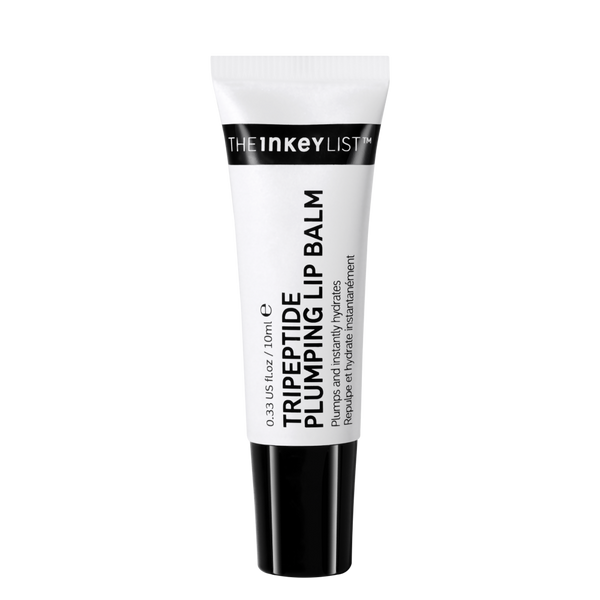
The Tripeptide Plumping Lip Balm uses a 6% Tripeptide Complex featuring both Palmitoyl Tripeptide-1 and Palmitoyl Tripeptide-38 as its primary active. It contains no irritants, no tingling agents, and no artificial plumping mechanisms. The formula is vegan-certified and clinically assessed as pregnancy-safe - making it suitable for a much wider range of users than many comparable products. The clinical protocol that produced the 40%* volume result is based on three applications per day for four weeks - a consistent, cumulative approach that reflects how peptide signalling genuinely works in practice.
Understanding the peptide mechanism naturally raises the question of the second active ingredient in the formula - one that operates through a different but equally important pathway. Hyaluronic acid, and specifically the delivery technology used to administer it, deserves its own careful examination.
Hyaluronic Acid and Lips: Why Hydration Drives Volume
Hyaluronic acid has become one of the most widely used and well-understood ingredients in modern skincare, but its role in lip tissue specifically is more nuanced than general discussions of hydration tend to acknowledge. In the context of lip plumping, HA is not just about comfort or moisture retention - it is a direct structural contributor to lip volume, and the mechanism by which it is delivered to the lip tissue matters considerably.
Hyaluronic acid is a naturally occurring polysaccharide - a long-chain sugar molecule - found throughout the body, including in the skin, connective tissue, and eyes. Its defining property is its remarkable capacity to bind water: a single molecule of HA can hold up to one thousand times its own weight in moisture. In healthy, young lip tissue, HA in the dermal layer is responsible for maintaining that characteristic plumped, soft, well-defined appearance. It essentially keeps the tissue inflated from within.
As we age, endogenous HA production declines - steadily and progressively. This decline is compounded by UV exposure, which degrades both HA and the enzymes involved in its synthesis, and by chronic dehydration, which depletes the moisture-binding capacity of the tissue. The result is a gradual but visible flattening and thinning of lip tissue that goes beyond simple dryness. The structural “filling” effect of HA is diminished, and lips lose the quality of appearing naturally full even when they are not particularly dry to the touch.
This is why injectable hyaluronic acid fillers produce such immediate and visible results: they physically replace the HA that has been lost, using a cross-linked gel that holds its form within the tissue and displaces volume mechanically. The effect is immediate because the mechanism is direct. But it is also why those results require maintenance - the body gradually breaks down the filler over months, and the treatment must be repeated.
Topical HA operates differently. Applied to the surface of the skin, HA hydrates the outer and mid layers of the lip tissue, reducing the appearance of fine dehydration lines and restoring surface plumpness that dehydration has diminished. It does not replicate the deep volumising mechanism of an injectable. However, the right delivery technology can meaningfully extend how far topical HA penetrates - and this is where the Ultra Filling Spheres technology in our formulation becomes particularly relevant.
Ultra Filling Spheres are dehydrated hyaluronic acid microspheres. When applied to the lip surface, they come into contact with the moisture present in the lip tissue, absorb it, and expand - effectively delivering hyaluronic acid at multiple depths within the lip surface rather than simply sitting on the outermost layer. The 2% concentration of Ultra Filling Spheres in the Tripeptide Plumping Lip Balm is designed to deliver this multi-depth hydration in a way that standard topical HA formulations do not achieve.
As Allure’s guide to peptide lip treatments notes, the combination of hydrating and structural-support technologies in the most effective topical lip plumpers is what separates them from standard balms. The dual mechanism - HA for hydration and surface volume, peptides for collagen signalling and cumulative structural improvement - is precisely what makes a well-formulated product in this category meaningfully different from a moisturising lip salve.
The practical implications are immediate and cumulative simultaneously. Because HA hydration acts quickly on visible surface plumpness, users typically notice an improvement in lip appearance from early use - with the 95% instant hydration figure from first application reflecting this immediate surface effect. The peptide mechanism then builds progressively over four weeks, contributing the deeper, longer-term volume change that constitutes the clinical 40%* result.
The formula is also waterless, which has a practical benefit: it is fully compatible with any lip colour, gloss, or finish applied over it, making it equally functional as a standalone treatment and as a plumping base under makeup.
The combination of these two mechanisms - and the understanding of how they operate differently but complementarily - sets up a natural question: how does the overall result compare to what lip filler actually delivers, and where does it fall short? That requires an honest look at both sides.
Peptide Lip Balm vs Lip Fillers: An Honest Comparison
This is the question that sits at the heart of the “how to plump lips without fillers” search intent, and it deserves a direct, balanced answer. A peptide lip balm and injectable lip filler are not the same thing. They operate through different mechanisms, they deliver different magnitudes of result, and they serve somewhat different purposes. Pretending otherwise would not be useful to anyone.
What lip fillers deliver is well-established. Injectable HA filler - administered by a qualified practitioner - produces immediate, often dramatic volumisation. Flat or thin lips can be meaningfully augmented in a single session. The results are visible from day one, and with a skilled practitioner, can be precisely controlled and shaped. In the UK, the typical cost is £300-£700 or more per session, and results last between six and eighteen months depending on the individual’s metabolism and the product used. The experience involves needles, some degree of discomfort, and a recovery period of a few days during which bruising and swelling are common. Repeat treatment is required to maintain the result.
According to Cosmopolitan’s coverage of lip filler substitutes, the conversation around alternatives has matured significantly - with science-backed topical options now recognised as delivering genuine, measurable results, even if the mechanism and outcome differ from injectables.
What a peptide lip balm delivers is progressive, cumulative, and natural in its mechanism - but it is not immediate or dramatic in the same way. The clinical data behind the Tripeptide Plumping Lip Balm is specific: up to 40% increase in lip volume in 4 weeks*, with visible results beginning to appear from approximately two weeks of consistent use. That figure is derived from a clinical study using a minimum of three daily applications. The result represents genuine structural and hydration-driven improvement - not a temporary response to irritation.
To be clear about what a peptide lip balm cannot do: it cannot replicate the immediate, dramatic structural change of an injectable. If a person’s goal is to meaningfully increase lip volume in a matter of hours, a topical product is not going to achieve that. It is not a needle-free filler in the sense of producing filler-equivalent results on the same timeline. Stating this honestly matters - because overpromising is how the topical plumper category earned a sceptical reputation in the first place.
What a peptide lip balm does well, it does consistently and without risk. It delivers progressive, natural-looking volume improvement that builds over weeks. It improves lip hydration, reduces the appearance of fine lip lines, and maintains lip health over time. It is suitable for daily use without any concerns about overdoing it. And for those who already have filler, it works excellently as a complementary product - maintaining lip condition between sessions and extending the quality of results.
The cost-to-result ratio is also worth addressing directly. One session of UK lip filler at the lower end of the price range costs approximately thirty times the price of a 10ml tube of our Tripeptide Plumping Lip Balm at £11. At three applications daily, one tube typically lasts six to eight weeks. The clinical peak result - 40%* volume increase - occurs within a four-week period that costs less than £11 in product. The comparison is not a takedown of fillers. It is simply a factual framing of what each option requires of you financially and physically.
- Lip fillers: Immediate dramatic results. £300-£700+ per session. Practitioner-dependent. Maintenance required every 6-18 months. Involves needles, downtime, and some recovery.
- Peptide lip balm: Progressive, cumulative results. Up to 40%* volume in 4 weeks. £11. No needles, no practitioner, no downtime. Daily use. Pregnancy-safe, vegan.
The consistency requirement is worth flagging. Unlike a filler appointment, which is a single event, a peptide lip balm requires consistent daily application to deliver its results. Three times a day, every day, for four weeks. That is the clinical protocol. If used sporadically, the results will be proportionally less significant. The commitment is a different kind from a cosmetic procedure, but it is a commitment nonetheless.
For anyone exploring the full range of options in this space, our ultimate guide to lip plumpers covers the broader category in detail. With a clear understanding of how these two approaches compare, the practical question becomes: how do you use a peptide lip balm correctly to get the most from it?
Building a Lip Care Routine Around a Peptide Lip Balm
Getting the most from a peptide lip treatment is less about complexity and more about consistency. The science works through repetition - the cumulative signalling of the tripeptide complex building over time, supported by continuous hyaluronic acid hydration. The routine itself is straightforward, but the details matter.
The application basics are simple: apply to clean, dry lips. A small amount - approximately the size of a grain of rice - is sufficient to cover both lips fully. Do not apply on top of product-coated lips or over lipstick, as this reduces contact with the lip surface and limits absorption. The goal is direct contact between the formula and the lip tissue.
Frequency is the most important variable. The clinical 40%* result is based on a minimum of three applications per day over four weeks. In practical terms, this means: once in the morning as part of your AM routine, once mid-day, and once in the evening as part of your PM routine. If you find yourself applying more frequently - particularly in cold or dry weather when lips feel depleted - this is entirely fine. More applications will not cause any adverse effects.
Within your existing routine, placement is straightforward. In the morning: apply after any serum or moisturiser to the face, as a final step before leaving the house. There is no need to wait for it to dry before applying lip colour over the top - the formula absorbs quickly and the clear version creates a natural, glossy finish that works as a standalone or as a base under any lipstick or gloss. In the evening: apply as part of your overnight routine after your other skincare steps. Lips do much of their renewal work overnight, and applying the balm before sleep ensures the peptide complex has extended contact time with the lip surface.
One brief preparation step worth incorporating is gentle exfoliation. Lips accumulate dead skin cells that can create a rough or textured surface, and this can limit how evenly and effectively any topical product makes contact with the skin underneath. A gentle weekly exfoliation - using a soft cloth or a very mild physical exfoliator designed for lips - removes this barrier and allows the balm to work on fresh skin. Do not over-exfoliate: once or twice a week is sufficient, and the lip skin is delicate enough that any more frequent or aggressive exfoliation can cause sensitivity.
For those who want to take a more comprehensive approach to lip and eye area care, the Eye & Lip Hydration Duo at £21.85 pairs the Tripeptide Plumping Lip Balm with targeted eye area hydration in a single, excellent-value set. The logic behind pairing these two areas is straightforward: the skin around the eyes and around the mouth is the thinnest on the face, and both respond particularly well to concentrated hydration and peptide support. Treating them together as part of a consistent routine addresses two of the most visible areas of early-onset skin changes with an elegant, uncomplicated approach.
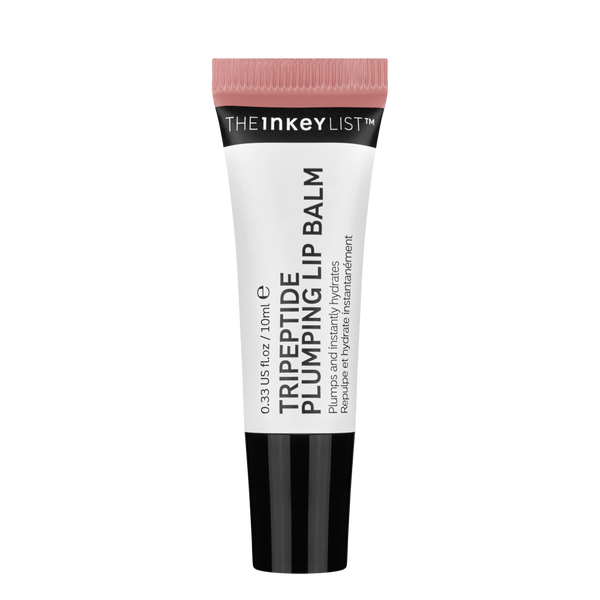
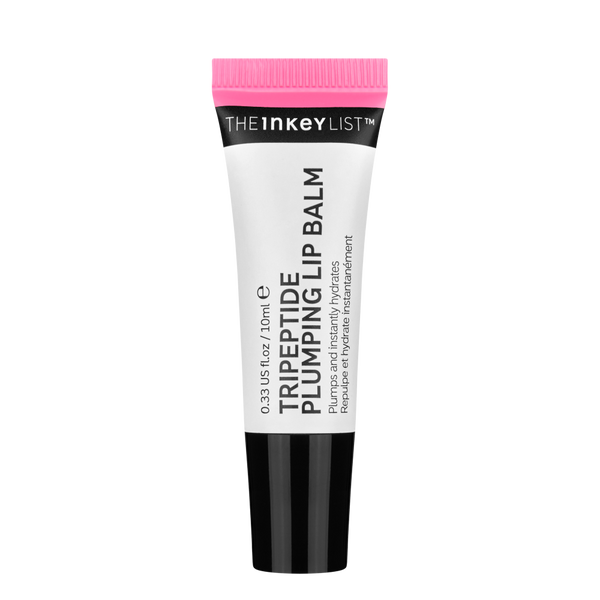
If you are looking to explore the full range of shades before committing to one, the Lip Balm Gift Set includes all four variants - a useful way to find your preferred finish. The four options are:
- Tripeptide Plumping Lip Balm in Clear - £11, for a natural glossy finish that works over or under any colour
- Tripeptide Plumping Lip Balm in Pink Tint - £11, a subtle rosy wash of colour
- Tripeptide Plumping Lip Balm in Berry Tint - £11, a slightly deeper berry tone
- Tripeptide Plumping Lip Balm in Mocha Tint - £11, a warm nude-brown finish
All four deliver the identical 6% Tripeptide Complex and 2% Ultra Filling Spheres formula. The tints are designed to be wearable across a wide range of skin tones, and each provides a natural, flattering finish that works both as an everyday balm and as a lip treatment. The full range is available to browse in our lip treatments collection.
The key to getting results from any peptide-based product is treating it like what it is: a functional skincare treatment, not a balm you apply when you happen to remember. Three times a day, consistently, for four weeks - that is the protocol that produces the clinical data.
At £11 per tube and six to eight weeks of use at the recommended frequency, the value proposition is clear. But the questions that most commonly arise before someone adds this product to their routine tend to be practical and specific - and those deserve direct answers.
The Takeaway: Understanding Your Options Is the First Step
Lips lose volume because biology dictates that they do. Collagen synthesis slows, hyaluronic acid production declines, and the structural support that gives lips their fullness gradually diminishes - beginning earlier than most people realise, and progressing steadily from the mid-20s onwards. This is not a cosmetic concern in any trivial sense; it is a biological reality with a clear and increasingly well-understood set of ingredient-led responses.
Peptides - specifically Palmitoyl Tripeptide-1 and Palmitoyl Tripeptide-38 - address the collagen signalling side of this equation. Hyaluronic acid, delivered via Ultra Filling Spheres technology at multiple depths within the lip surface, addresses the hydration and surface volume side. Together, formulated at clinically active concentrations, they represent the most evidence-grounded topical approach to lip plumping available. The results are real: up to 40% volume increase in 4 weeks*, visible improvement beginning at two weeks, 95% instant hydration from first use. These are not aspirational claims - they are the output of clinical testing conducted on the actual formulation.
A peptide lip balm is not a filler. It does not produce filler-equivalent results on a filler-equivalent timeline, and saying otherwise would be dishonest. What it does produce is progressive, natural-looking volume improvement - driven by the same biological mechanisms that govern lip fullness in the first place, supported by consistent use, and achieved without needles, without practitioners, without downtime, and without the financial and maintenance commitment of regular cosmetic procedures.
The right choice between these options depends on what you are looking for, what your timeline is, and what your relationship with cosmetic procedures happens to be. What this blog has tried to provide is the science to make that decision clearly - not a push in either direction, but the information needed to understand both.
If a peptide lip balm sounds like the right starting point, the evidence suggests it is a well-grounded one.
Shop the Range
Our Tripeptide Plumping Lip Balm is £11, clinically proven to plump lips by up to 40% in 4 weeks*, and available in four shades:
- Clear - a natural, glossy finish for everyday wear
- Pink Tint - a subtle, flattering rose wash
- Berry Tint - a slightly deeper, berry-toned finish
- Mocha Tint - a warm, wearable nude-brown
Explore our wider range:
- Browse the full Lip Treatments collection for all available options.
- Shop the Eye & Lip Hydration Duo at £21.85 for a combined approach to the most delicate areas of the face.
- Discover the Lip Balm Gift Set to try all four shades.
- Not sure where to start? Take our Skincare Quiz for a personalised routine recommendation built around your specific concerns.
\Clinical study results. Individual results may vary.*
Frequently Asked Questions
Got a question?
Our askINKEY team are a friendly bunch of skincare experts with deep product knowledge and zero judgement. Whether you're an ingredient obsessive or just starting out, we'll make it make sense. No question too big. No question too small. We Give A Care, Every Day.


