



How to Get Glowing Skin: The Complete INKEY Guide
The science of radiant skin — and the step-by-step AM and PM routine built on cleansing, Vitamin C and exosomes.
Author
askINKEY skincare advisor
Published
16 May, 2026
Time to read
18 minutes
This is the complete, ingredient-led guide to glowing skin. Not a list of lifestyle tips. Not "drink more water and get more sleep." This guide covers the actual biology of why skin loses its glow, the specific ingredients science has validated for restoring radiance, how to build a full AM and PM skincare routine for glowing skin, and the common mistakes that quietly undermine even the best routines.
The INKEY approach is simple: understand the ingredient, use it correctly, and trust the process. Everything in this guide is built on that principle — accessible, science-backed, and free of the noise that fills most skincare content.
The three products at the centre of this guide are:
- Oat Cleansing Balm 150ml — £15
- 15% Vitamin C + EGF Serum — £16
- Exosome Glow Serum — £20
Most guides stop at the serum. This one covers both morning and evening - because the routine you build around your ingredients is just as important as the ingredients themselves. Start here.
Why Skin Loses Its Glow - What's Actually Happening Beneath the Surface
Glowing skin is not one single thing. It's the outcome of several biological processes all working correctly at the same time - and when any one of them falls out of sync, the result is a complexion that looks flat, dull, or uneven. Understanding why that happens is the first step towards fixing it with the right ingredients, not just the most expensive ones.
Light Reflection Starts at the Surface
The way skin catches and reflects light depends almost entirely on how smooth and even its surface is. Healthy skin with a regular cell turnover cycle presents a flat, refined surface - one that bounces light back evenly, giving that lit-from-within appearance. But when dead skin cells accumulate on the surface, that smoothness is disrupted. Instead of reflecting light, the skin scatters it - and the result is a dull, flat-looking complexion regardless of what's underneath.
Think of it like dust settling on a mirror. The mirror hasn't changed, but the surface layer blocks the reflection. Your skin's natural renewal cycle - typically every 28 to 40 days - is designed to clear that surface automatically. The problem is that this cycle slows with age, stress, and environmental exposure. By your mid-thirties, cell turnover has already begun to decelerate, meaning that newer, brighter skin cells take longer to reach the surface and replace the old ones.
UV Damage and Environmental Pollution Are Constant Threats
Even on overcast days - and the UK has plenty of those - UV radiation is triggering oxidative stress in your skin. Free radicals generated by UV exposure damage skin cells at a structural level — breaking down collagen, accelerating melanin production, and destabilising the even tone that makes skin look radiant. The result over time: dark spots, uneven texture, and a complexion that's lost its clarity. Environmental pollution compounds this further, introducing airborne particulates and toxins that trigger the same inflammatory cascade and increase melanin overproduction.
According to Healthline, antioxidant protection is one of the most evidence-backed strategies for defending against this kind of damage - which is why ingredients like Vitamin C have become the cornerstone of any serious brightening routine. But protection alone isn't enough if the other causes of dullness aren't also addressed.
Dehydration: The Most Overlooked Glow Killer
Dehydration is not the same as dry skin — and this distinction matters. Dry skin is a skin type, defined by a lack of oil production. Dehydration is a skin condition that can affect any skin type, including oily skin. Dehydrated skin cells lack the plumpness to reflect light evenly, which creates a flat, lacklustre appearance even in people with otherwise healthy complexions.
The good news is that dehydration is one of the most responsive causes of dullness — the right hydration-supporting ingredients can make a visible difference quickly. For a deeper look at how hydration affects skin radiance, read our guide to the importance of hydration for healthy, glowing skin.
Stress, Blue Light, and the Inflammation Factor
Modern skin is under constant environmental pressure. Lack of sleep, prolonged blue light exposure, pollution, and psychological stress all trigger measurable inflammatory responses in the skin - redness, puffiness, and uneven tone that collectively dull the complexion. These stress signals aren't just cosmetic inconveniences; they're biological indicators that the skin's barrier and renewal systems are working overtime and losing ground.
Understanding these five root causes - dead cell accumulation, UV damage, dehydration, slowed renewal, and environmental stress - reframes how you approach a glow routine entirely. It's not about layering on more brightening products. It's about addressing each cause with a targeted, validated ingredient. And that work begins before any serum ever reaches your skin.
Now that you understand what's causing dullness, here's where to start fixing it - and it begins before any serum reaches your skin.
Start Here - Why Cleansing Is the Foundation of Glowing Skin
Cleansing is the most underestimated step in any glow-focused routine. Most people treat it as a formality - a quick rinse before the "real" skincare begins. But here's what that logic gets wrong: if SPF residue, makeup, pollution particles, and accumulated dead skin cells aren't properly cleared from the skin's surface, no brightening serum can penetrate or perform effectively. You're essentially applying your most expensive ingredients to a contaminated canvas.
The first step to getting glowing skin isn't a serum. It's a cleanse - done properly.
The Double Cleanse: The Framework for Glow-Ready Skin
The double cleanse is not a trend. It's a logical two-step framework with a clear rationale. The first cleanse is designed to break down and remove surface-level impurities: waterproof SPF, makeup, excess sebum, and the pollution particles that cling to the skin throughout the day. The second cleanse works on the skin itself — clearing residue, balancing the surface, and preparing it for the treatments that follow.
For anyone serious about achieving glowing skin, this is the routine framework. A single cleanse, particularly with a water-based formula, is rarely sufficient to remove the full accumulation of a day's worth of SPF and environmental exposure. And when that residue remains, it acts as a physical barrier between your skin and every active ingredient you apply afterwards.
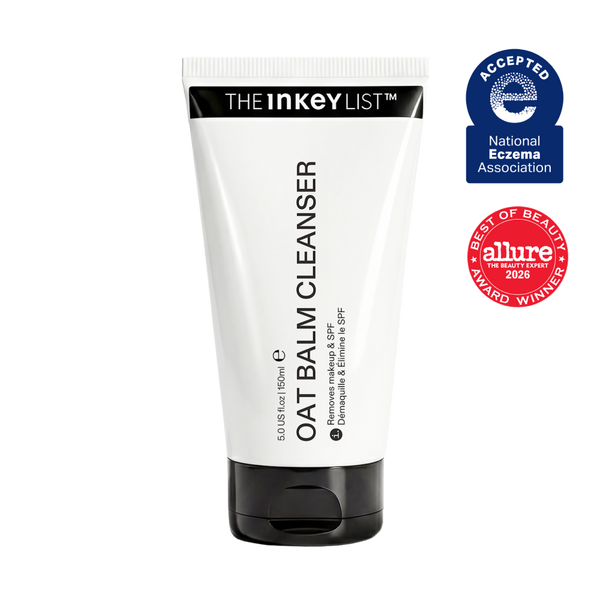
INKEY Oat Cleansing Balm 150ml - The First Cleanse for Glowing Skin
Our Oat Cleansing Balm 150ml (£15) is formulated specifically for this first-cleanse step - and it does considerably more than just remove makeup. Powered by 5% Oat Kernel Oil and Sea Buckthorn Oil, it dissolves 100% waterproof makeup and SPF in 30 seconds whilst delivering clinically proven 12-hour hydration. Independent testing shows it visibly improves skin texture, radiance, and smoothness, and reduces redness - making it an active contributor to your glow results, not just a prep step.
It's suitable for all skin types, including sensitive and blemish-prone skin, and is pregnancy safe. For those looking for an immediate radiance boost, it also works brilliantly as a 10-minute nourishing mask - apply a generous layer, leave it on whilst you go about your evening routine, and rinse to reveal noticeably smoother, more luminous skin. For the full story on what makes the reformulated balm worth knowing, read what's changed with the Oat Cleansing Balm.
INKEY Tip: Cleanse for a full 60 seconds. It's the step that makes everything else work harder.
The 60-second rule isn't arbitrary. Most people cleanse for 10 to 15 seconds — barely enough time for the formula to emulsify and begin breaking down SPF and makeup bonds. A deliberate 60-second massage gives the product time to work properly, ensures thorough coverage across the hairline, jawline, and neck, and gently increases circulation in the skin - which itself contributes to a healthy glow.
For the second cleanse, the right formula depends on your skin type. Rather than covering every option here, our guide to choosing the right cleanser for you walks through exactly which formulas work best for oily, dry, combination, and sensitive skin.
With a clean canvas, skin is ready for the ingredients that actually deliver the glow. And the one to know first is Vitamin C.
The Brightening Ingredient Your Skin Has Been Waiting For - Vitamin C Serum Benefits for Glowing Skin
Vitamin C is not skincare marketing. It is one of the most extensively researched topical ingredients in dermatology, with a well-established mechanism of action and decades of clinical validation behind it. For glowing skin specifically, its benefits operate at the root cause level - not as a surface fix, but as a biological intervention that works on the processes responsible for dullness, uneven tone, and loss of radiance.
For the complete breakdown of how Vitamin C works across every skin type, all its forms, and how to build it into any routine, read our full Vitamin C guide.
Why Vitamin C Is the Gold Standard for Skin Brightening
Vitamin C works through three primary mechanisms that collectively address the major causes of dull, uneven skin. First, it inhibits tyrosinase - the enzyme responsible for triggering melanin production. By interrupting this pathway, Vitamin C slows the formation of dark spots and helps existing hyperpigmentation fade over time. Second, it neutralises free radicals generated by UV exposure and pollution, protecting skin cells from the oxidative damage that degrades collagen and disrupts even tone. Third, it actively supports collagen synthesis — contributing to the structural integrity that gives skin its firmness and smooth, light-reflecting surface.
Research supports that topical Vitamin C is among the most effective antioxidant ingredients available for addressing the dual threat of UV damage and hyperpigmentation - both of which are primary drivers of dullness. But the form of Vitamin C used in a formula determines much of how well these benefits actually translate on skin.
Why the Form of Vitamin C Matters
Most Vitamin C serums use L-Ascorbic Acid - the purest, most potent form of the ingredient. The problem is that L-Ascorbic Acid is notoriously unstable. It oxidises quickly on exposure to light and air, turning products orange and rendering them significantly less effective. It also requires a very low pH to remain active on skin, which can cause stinging, irritation, and sensitivity - particularly in those with reactive or sensitive skin types.
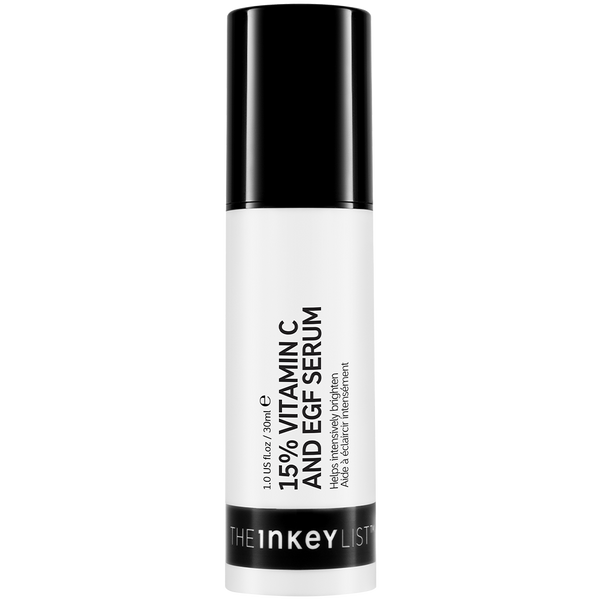
INKEY's approach is different. The 15% Vitamin C + EGF Serum (£16) uses Ascorbyl Glucoside — a stabilised derivative of Vitamin C that maintains its efficacy from the first use to the last drop of the bottle. On contact with skin, Ascorbyl Glucoside converts to active Vitamin C, delivering the same brightening, antioxidant, and collagen-supporting benefits — without the instability, without the oxidation, and without the irritation risk. It's gentle enough for sensitive skin, and it won't turn orange in the bottle.
The Full Formula - 15% Vitamin C + EGF Serum
Beyond the 15% Ascorbyl Glucoside, this serum includes 1% Epitensive™ EGF - a plant-derived Epidermal Growth Factor developed by Lipotrue. Epidermal Growth Factor signals skin cells to renew and regenerate, supporting elasticity and accelerating the surface turnover that brings fresher, brighter skin cells to the top. It's a meaningful addition that elevates this formula beyond a standard brightening serum into genuine skin renewal territory. The texture is lightweight and fast-absorbing — no greasiness, no residue, no white cast.
87% agree skin looks brighter after just 4 weeks.†
The clinical evidence is specific and compelling. In an independent consumer trial of 64 participants over four weeks:
- 87% agreed their skin looks brighter
- 88% saw visible improvement in skin tone and texture
- 84% agreed their skin looks healthier and less dull
These aren't vague impressions - they're the results of consistent, daily application of a serum that addresses the root causes of dullness rather than temporarily illuminating the surface.
How to Use the 15% Vitamin C + EGF Serum
Apply in the morning only, to slightly damp skin after cleansing, before moisturiser and SPF. A pea-sized amount is sufficient — pressed gently into the skin rather than rubbed. Vitamin C is a morning ingredient because it works synergistically with SPF to protect against UV-triggered oxidative damage throughout the day. Using it at night is not harmful, but the antioxidant protection it provides is most valuable during daylight hours.
It's suitable for all skin types, including sensitive skin, and is fragrance-free, certified vegan, and safe during pregnancy and breastfeeding.
Why Ascorbyl Glucoside over L-Ascorbic Acid? Stability. Gentleness. Same results, without the sting.
Want to go deeper on the ingredient science? Our full Vitamin C guide covers every form, every skin type, and every compatibility question you might have.
Vitamin C is your daily brightening essential. But if your skin is ready for the next level - or nothing seems to be working - there's a newer generation of ingredient that goes even deeper.
Next-Generation Glow - What Exosome Serums Actually Do for Skin Radiance
Everything covered so far - cleansing, Vitamin C - works at the level of the skin's surface and its immediate chemistry. Exosomes work differently. Naturally found in plants, they're rich in proteins, lipids and skin-loving actives that support your skin's natural renewal — delivering visible rejuvenation without needles, clinical procedures or downtime. It's a meaningful distinction, and it explains why exosome serums are generating serious attention in both clinical dermatology and consumer skincare.
What Makes Exosomes Different from Every Other Active
Most skincare actives have a defined, single-pathway function. Hyaluronic acid draws moisture into the skin. Vitamin C inhibits melanin production. Retinol accelerates cell turnover. Exosomes are different because they don't perform one function - they're rich in proteins, lipids and skin-loving actives that support skin's natural renewal across multiple visible measures at once.
Critically, exosomes are approximately 300 times smaller than a pore. This means they can reach the skin without needles, clinical treatments, or any of the delivery technology concerns associated with larger actives. They reach the surface layers of the skin where visible renewal shows — delivering their glow-boosting benefits where they're needed most.
For readers who want to understand the full biology, our complete exosomes guide covers the science in depth.
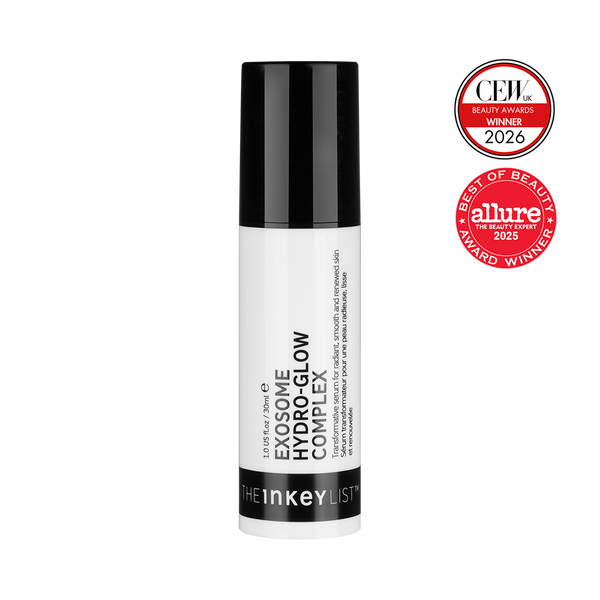
INKEY's Exosome Glow Serum - The Formula
The Exosome Glow Serum (£20) delivers a clinically validated complex of ingredients built around plant-derived Cica Exosomes from Centella Asiatica. Each bottle contains 3 million exosomes. The full formula includes:
- 1% Cica Exosomes (plant-derived, from Centella Asiatica) — clinically proven to support skin renewal and visible radiance
- 1% Kollaren™ Peptide — visibly improves firmness and skin structure
- 1% Hyaluronic Acid — multi-molecular hydration for immediate and sustained plumpness
- 1% Ectoin — barrier-strengthening, locks in moisture for up to 12 hours
- Prickly Pear Extract — gentle resurfacing for smoother, more even glow
- Q10/Ubiquinone — antioxidant protection against free radical damage
6-in-1 skin rejuvenation: clinically proven to visibly improve radiance, hydration, tone, firmness, elasticity, and texture* — in a single serum applied twice daily.
100% saw more glowing skin, clinically proven.*
The Clinical Evidence Behind Exosome Technology
The data behind the Exosome Glow Serum is among the most compelling INKEY has produced:
- 100% saw more glowing skin, clinically proven*
- 55% reduction in visible signs of skin stress (redness, puffiness, visible irritation)***
- 63% increase in skin renewal activity in 8 hours*
- Proven to deliver up to 12-hours of hydration**
Combined with the 55% reduction in visible signs of skin stress — redness, puffiness and visible irritation*** — this is a formula that supports skin's natural renewal whilst helping calm the visible effects of daily stress.
Who It's For - and When to Use It
The Exosome Glow Serum is suitable for all skin types — including sensitive skin — and is fragrance-free, alcohol-free, paraben-free, certified vegan, and safe during pregnancy and breastfeeding. It's particularly valuable for skin that has plateaued — where existing serums have stopped delivering visible improvement, or where the complexion remains persistently dull despite a well-constructed routine.
Apply morning and evening, immediately after cleansing on damp skin, as the first serum step before all other treatments. If you're also using retinol in your PM routine, the Exosome Glow Serum is a great pairing alongside it. See how exosomes and retinol work together here.
Vitamin C brightens. Exosomes deliver 6-in-1 rejuvenation. Together, they're your morning glow system.
Now you have the three ingredients. Here's exactly how to use them together - morning and evening - in a full routine built for glowing skin.
Your Full Skincare Routine for Glowing Skin - AM & PM Step-by-Step
A great ingredient applied in the wrong order, at the wrong time of day, or on unprepared skin is a wasted ingredient. The routine framework below is built around the three hero products in this guide, with supporting steps to maximise what each active can do. Follow it consistently for 4 to 8 weeks, and the results are not just visible - they're clinically validated.
Morning Routine for Glowing Skin
Step 1 — Cleanse: Begin with the Oat Cleansing Balm 150ml. Even in the morning, skin accumulates overnight product residue and natural sebum that needs to be cleared before actives can penetrate. Massage in for 60 seconds, then rinse thoroughly.
Step 2 — Exosome Glow Serum: Apply the Exosome Glow Serum immediately after cleansing, to damp skin. This is always the first serum step — it works best when it reaches skin first, before other actives. Press in a pea-sized amount, allow 30 seconds to absorb.
Step 3 — Vitamin C Treatment: Apply the 15% Vitamin C + EGF Serum after the Exosome Serum, whilst skin is still slightly damp. Press in gently - don't rub. This is your daily antioxidant shield and brightening treatment working in tandem.
Step 4 — Moisturise: Choose a moisturiser suited to your skin type. For oily or combination skin, the Omega Water Creamdelivers lightweight hydration without heaviness. For dry or mature skin, the BioActive Ceramide Moisturiser provides richer, barrier-restoring nourishment.
Step 5 — SPF: Non-negotiable. The Dewy Sunscreen SPF 30 finishes your morning routine and protects the Vitamin C brightening results you're actively building. Without SPF, UV exposure reverses the work your actives are doing daily.
Evening Routine for Glowing Skin
Step 1 — First Cleanse: The Oat Cleansing Balm 150ml is your non-negotiable PM opener. It dissolves waterproof SPF and makeup in 30 seconds, clearing the day's full accumulation before your second cleanse can work properly.
Step 2 — Second Cleanse: Follow with a second cleanser suited to your skin type. For guidance on which formula works best for you, our cleanser guide covers every option clearly.
Step 3 — Exosome Glow Serum: Apply the Exosome Glow Serum to damp skin as the first serum step. Overnight is when skin's natural renewal is most active — supported by a 63% increase in skin renewal activity in 8 hours.***
Step 4 — Optional Active Treatment: If retinol is part of your routine, this is where it goes — evening only, and never in the same routine as your Vitamin C serum. The Exosome Glow Serum is a great pairing with retinol as part of your evening routine.
Step 5 — Moisturise: For evening, a richer formula supports overnight skin repair. The BioActive Ceramide Moisturiser is a strong choice for dry, mature, or barrier-compromised skin.
The Principles That Make This Routine Work
The routine structure above follows a few non-negotiable rules that determine whether your ingredients perform or underperform. Apply serums in order from thinnest to thickest consistency - lighter textures need to reach skin first, before heavier formulas create a layer they can't penetrate through. Always apply to damp (not soaking wet, not completely dry) skin - both the Vitamin C Serum and Exosome Glow Serum absorb significantly more effectively when skin retains a small amount of moisture. Keep Vitamin C in the morning and retinol in the evening — using both in the same routine doesn't double the results; it increases irritation risk without meaningful benefit.
Above all: give this routine time. Vitamin C delivers significant brightness improvement at 4 to 8 weeks of consistent use. The Exosome Glow Serum delivers clinic worthy rejuvenated skin in 14 days,* with results building over continued use. Skincare is not an event - it's a process. Consistency is the active ingredient that makes everything else work.
Now you have the routine. But even with the right products, certain habits quietly undermine the results. Here's what to watch out for.
Glow-Killing Mistakes - What's Actually Stopping Your Skin from Looking Radiant
You can have the right ingredients, in the right order, from a well-researched brand - and still not see the results you're expecting. In most cases, it's not the products that are failing. It's one of these common errors quietly working against everything you're doing right.
Skipping SPF After Morning Vitamin C
This is the single most damaging mistake in any brightening routine. Vitamin C's ability to fade dark spots, even skin tone, and restore radiance depends on protecting the skin from UV exposure throughout the day. If you apply your Vitamin C serum and then step outside without SPF, you're actively allowing UV radiation to trigger the same melanin production and oxidative damage that the Vitamin C is working to reverse. As covered in our Vitamin C guide, SPF is not optional when using brightening actives - it's the step that locks in and protects the results you're building.
Applying Serums to Dry Skin
When skin is completely dry - particularly post-shower, when the surface has had several minutes to lose all moisture - its ability to absorb actives is reduced. Both the Exosome Glow Serum and the 15% Vitamin C + EGF Serum are formulated to perform on damp skin. That slight residual moisture acts as a transport medium, improving penetration and efficacy. The adjustment is simple: apply your first serum within 60 seconds of patting skin dry, whilst it still retains some surface moisture.
Rushing the Cleanse
When you cleanse for less than 60 seconds, SPF residue, makeup, and pollution particles remain on the skin's surface. Treatments applied afterwards are working through a layer of contamination - and their ability to reach the skin is significantly compromised. The 60-second cleanse isn't a preference; it's the minimum required for a proper cleanse to function. This is especially critical in the evening, when a full day's worth of SPF accumulation needs to be thoroughly dissolved.
Expecting Results in Days, Not Weeks
Skincare impatience is one of the most common reasons people abandon routines that are actually working. The Exosome Glow Serum delivers clinic worthy rejuvenated skin in 14 days* with consistent use. Meaningful Vitamin C brightening - particularly for hyperpigmentation and dark spots - takes 4 to 8 weeks of daily AM application. These aren't slow results; they're the expected timelines for clinically validated ingredients working at a biological level. Switching products every two weeks before a cycle has completed means you'll never know what any single ingredient is capable of.
Using Vitamin C and Retinol in the Same Routine
Both are powerful actives. Using them together — in the same session — increases irritation risk without improving results. The solution is straightforward: Vitamin C belongs in your morning routine; retinol belongs in the evening. They don't compete; they complement each other across the 24-hour cycle.
Neglecting Hydration as a Glow Factor
Dehydrated skin can't reflect light evenly, regardless of how many brightening actives you're using. Even oily skin can be dehydrated — and when it is, the complexion looks flat and tired rather than radiant. Layering actives on top of dehydrated skin is like painting a wall that hasn't been primed. For a comprehensive look at why hydration is foundational to glowing skin, our hydration guide covers the science in full.
Over-Exfoliating Without Supporting the Barrier
Exfoliation is valuable for clearing dead skin cell build-up — but more is not better. Over-exfoliation strips the skin's natural barrier, triggering redness, sensitivity, and inflammation that dulls the complexion rather than brightening it. Balance any exfoliating actives with barrier-supporting products — ceramides, peptides, and hydrating ingredients that help the skin recover and function properly.
Consistency over 4–8 weeks is where the real transformation happens. Good ingredients + patience = visible results.
Still have questions? Here are the most common ones we hear about getting glowing skin - answered.
Glowing Skin Isn't a Mystery - It's an Ingredient System
Glowing skin is not the result of one product or one lifestyle change. It is the outcome of a consistent, ingredient-led routine that addresses the actual biology of dullness: clearing the surface, protecting against daily damage, and supporting skin's natural renewal.
The three-product system at the centre of this guide does exactly that. The Oat Cleansing Balm creates the clean, prepared canvas that makes every active work harder. The 15% Vitamin C + EGF Serum delivers daily antioxidant protection and targeted brightening via one of the most clinically validated ingredients in skincare. And the Exosome Glow Serum delivers 6-in-1 skin rejuvenation — clinically proven to visibly improve radiance, hydration, tone, firmness, elasticity and texture.*
Results build over weeks — and that is exactly how clinically validated skincare is supposed to work. All three products are suitable for every skin type, including sensitive, so there is no barrier to starting. The routine is simple, the ingredients are proven, and the results are measurable.
That's the INKEY approach: no BS, just better skin. For the complete deep-dive on the cornerstone ingredient in this system, everything you need to know about Vitamin C for skin is right here.
Shop the Glow Edit
Ready to build your routine? Start with the three products that anchor this guide — all £15–£20, all clinically validated, all suitable for every skin type.
- Oat Cleansing Balm 150ml — £15 — The glow-ready cleanse
- 15% Vitamin C + EGF Serum — £16 — Your daily brightening treatment
- Exosome Glow Serum — £20 — 6-in-1 skin rejuvenation
Not sure where to start? Take our 2-minute Skincare Quiz and get a routine personalised for your skin.
* 4-week clinical study of 26 people
** Clinical study of 31 people
*** In-vitro testing of Cica Exosomes showed a 55% reduction in pro-inflammatory markers and a 63% increase in markers associated with skin renewal after 8 hours.
† 4-week independent consumer trial, 64 participants
Frequently Asked Questions
Got a question?
Our askINKEY team are a friendly bunch of skincare experts with deep product knowledge and zero judgement. Whether you're an ingredient obsessive or just starting out, we'll make it make sense. No question too big. No question too small. We Give A Care, Every Day.


